
Thesaurus : Doctrine
► Référence complète : M. Brochier & S. Darrois, "Les potentielles actions judiciaires en matière d’information extra-financière", Banque & Droit, n°216, juillet-août 2024, pp.10-12
____
► Résumé de l'article (fait par MAFR) : Les auteurs partent d'un constat : la multiplication des obligations pesant sur les entreprises en matière d’information extra-financière, laquelle entraîne mécaniquement une multiplication des potentiels faits générateurs de responsabilité de ces entreprises. Dans le même temps, bien qu'ils constatent pour l'heure une absence de procès en la matière, ils mettent l'accent sur le nid à contentieux que pourraient constituer ces règles.
À cet égard, les auteurs mettent en avant le risque d'instrumentalisation de ces actions en responsabilité, tantôt par des "acteurs de la société civile", tantôt par des actionnaires minoritaires ou dits "activistes", les uns et les autres cherchant à peser sur la gestion de la société. Ils relèvent également que les émetteurs d'information extra-financière pourraient être amenés à agir en responsabilité contre les agences de notation RSE, champ d'activité pour l'heure relativement peu réglementé alors même qu'il peut avoir des conséquences considérables pour l'entreprise.
Ils concluent sur l'importance de l'information. Si l'information, en l'occurence extra-financière, est bien sûr l'objet des règles évoquées, ils relèvent qu'en cas de crise et face au risque de réputation la seule solution efficace est de communiquer rapidement au public une information claire, fiable et intelligible. Ils soulignent enfin que cette transparence demandée aux grandes entreprises quant à leur impact sur leur environnement est la contrepartie de leur puissance.
____
🦉Cet article est accessible en texte intégral pour les personnes inscrites aux enseignements de la Professeure Marie-Anne Frison-Roche
________

Thesaurus : Doctrine
► Full Reference: R. Sève, "Compliance Obligation and changes in Sovereignty and Citizenship", in M.-A. Frison-Roche (ed.), Compliance Obligation, Journal of Regulation & Compliance (JoRC) and Bruylant, "Compliance & Regulation" Serie, to be published
____
📘read a general presentation of the book, Compliance Obligation, in which this article is published
____
► Summary of the article (done by the Journal of Regulation & Compliance - JoRC):
The contribution describes "les changements de philosophie du droit que la notion de compliance peut impliquer par rapport à la représentation moderne de l’Etat assurant l’effectivité des lois issues de la volonté générale, dans le respect des libertés fondamentales qui constituent l’essence du sujet de droit." ("the changes in legal philosophy that the notion of Compliance may imply in relation to the modern representation of the State ensuring the effectiveness of laws resulting from the general will, while respecting the fundamental freedoms that constitute the essence of the subject of law").
The contributor believes that the definition of Compliance is due to authors who « jouer un rôle d’éclairage et de structuration d’un vaste ensemble d’idées et de phénomènes précédemment envisagés de manière disjointe. Pour ce qui nous occupe, c’est sûrement le cas de la théorie de la compliance, développée en France par Marie-Anne Frison-Roche dans la lignée de grands économistes (Jean-Jacques Laffont, Jean Tirole) et dont la première forme résidait dans les travaux bien connus de la Professeure sur le droit de la régulation. » ( "play a role in illuminating and structuring a vast set of ideas and phenomena previously considered in a disjointed manner. For our purposes, this is certainly the case with the theory of Compliance, developed in France by Marie-Anne Frison-Roche in the tradition of great economists (Jean-Jacques Laffont, Jean Tirole) and whose first form was in her well-known work on Regulatory Law").
Drawing on the Principles of the Law of the American Law Institute, which considers compliance to be a "set of rules, principles, controls, authorities, offices and practices designed to ensure that an organisation conforms to external and internal norms", he stresses that Compliance thus appears to be a neutral mechanism aimed at efficiency through a move towards Ex Ante. But he stresses that the novelty lies in the fact that it is aimed 'only' at future events, by 'refounding' and 'monumentalising' the matter through the notion of 'monumental goals' conceived by Marie-Anne Frison-Roche, giving rise to a new jus comune. Thus, "la compliance c’est l’idée permanente du droit appliquée à de nouveaux contextes et défis." ("Compliance is the permanent idea of Law applied to new contexts and challenges").
So it's not a question of making budget savings, but rather of continuing to apply the philosophy of the Social Contract to complex issues, particularly environmental issues.
This renews the place occupied by the Citizen, who appears not only as an individual, as in the classical Greek concept and that of Rousseau, but also through entities such as NGOs, while large companies, because they alone have the means to pursue the Compliance Monumental Goals, would be like "super-citizens", something that the digital space is beginning to experience, at the risk of the individuals themselves disappearing as a result of "surveillance capitalism". But in the same way that thinking about the Social Contract is linked to thinking about capitalism, Compliance is part of a logical historical extension, without any fundamental break: "C’est le développement et la complexité du capitalisme qui forcent à introduire dans les entités privées des mécanismes procéduraux d’essence bureaucratique, pour discipliner les salariés, contenir les critiques internes et externes, soutenir les managers en place" ("It is the development and complexity of capitalism that forces us to introduce procedural mechanisms of a bureaucratic nature into private entities, in order to discipline employees, contain internal and external criticism, and support the managers in place") by forcing them to justify remuneration, benefits, and so on.
Furthermore, in the words of the author, "Avec les buts monumentaux, - la prise en compte des effets lointains, diffus, agrégés par delà les frontières, de l’intérêt des générations futures, de tous les êtres vivants - , on passe, pour ainsi dire, à une dimension industrielle de l’éthique, que seuls de vastes systèmes de traitement de l’information permettent d’envisager effectivement." ("With the Monumental Goals - taking into account the distant, diffuse effects, aggregated across borders, the interests of future generations, of all living beings - we move, so to speak, to an industrial dimension of ethics, which only vast information processing systems can effectively envisage").
This is how we can find a division between artificial intelligence and human beings in organisations, particularly companies, or in decision-making processes.
In the same way, individual freedom does not disappear with Compliance, because it is precisely one of its monumental goals to enable individuals to make choices in a complex environment, particularly in the digital space where the democratic system is now at stake, while technical mechanisms such as early warning will revive the right to civil disobedience, invalidating the complaint of "surveillance capitalism".
The author concludes that the stakes are so high that Compliance, which has already overcome the distinctions between Private and Public Law and between national and international law, must also overcome the distinction between Information and secrecy, particularly in view of cyber-risks, which requires the State to develop and implement non-public Compliance strategies to safeguard the future.
____
🦉This article is available in full text to those registered for Professor Marie-Anne Frison-Roche's courses
________
Thesaurus : Doctrine
► Full Reference: D. Gutmann, "Tax Law and Compliance Obligation", in M.-A. Frison-Roche (ed.), Compliance Obligation, Journal of Regulation & Compliance (JoRC) and Bruylant, "Compliance & Regulation" Serie, to be published
____
📘read a general presentation of the book, Compliance Obligation, in which this article is published
____
► Summary of the article (done by the Journal of Regulation & Compliance - JoRC): The author takes up the hypothesis of a Compliance Law defined by its Monumental Goals, the realisation of which is entrusted to "crucial operators" and confronts it with Tax Law. The link is particularly effective since these operators possess what governments need in this area: relevant Information.
Going further, Compliance Law can give rise to two types of obligations on the part of these operators, either towards others operators who need to be monitored, corrected or denounced, or towards themselves, when they need to make amends.
In the first part of this contribution, the author shows that Compliance Obligation reproduces the mechanism of a Tax Law which, for large companies, is embroiled in a process of increasing Globalisation. It enables Governments to aspire to the "Monumental Goals" of combating tax optimisation and impoverishing governments, victims of the erosion of the tax base, in the face of the strategies of companies that are more powerful than they are themselves, by using this very power of firms to turn it against them. Companies become the willing or de facto allies of governments, particularly when it comes to recovering tax debts, or assist them in their stated ambition to achieve social justice. In this way, the State "manages" Tax Law by cooperating with companies.
In the second part, the author outlines the contours of this business Compliance Obligation, which is no longer simply a matter of paying tax. Beyond this financial obligation, it is more a question of mastering Information, particularly when multinational companies are subject to specific tax reporting obligations and are required to reveal their tax strategy, presumed to be transparent and coherent within the group : this legal presumption gives rise to obligations to seek information and ensure coherence, since a single tax strategy is not self-evident in a group.
The author emphasises that companies have accepted the principles governing these new compliance obligations and are tending to transform these obligations, particularly Transparency, into a communication strategy, in line with the ESG criteria that have been developed and a desire for fruitful relations with stakeholders. Therefore the tax relations developed by major companies are being extended not only to the tax authorities, but also to NGOs, by incorporating a strong ethical dimension. This is leading to new strategies, particularly in the area of Vigilance.
The author concludes: "A n’en pas douter, l’obligation de compliance existe bel et bien en matière fiscale." ("There is no doubt that the Compliance Obligation does exist in tax matters").
____
🦉This article is available in full text to those registered for Professor Marie-Anne Frison-Roche's courses
________

Compliance and Regulation Law bilingual Dictionnary

In principle, the very mechanism of the market is governed by freedom, the freedoms of the agents themselves - the freedom to undertake and contract - and the competitive freedom that marks the market itself, the convergence of these freedoms allowing the self-regulated functioning of The "market law", namely the massive encounter of offers and demands that generates the right price ("fair price").
But in the case of financial markets, which are regulated markets, "market abuses" are sanctioned at the very heart of regulation. Indeed, the regulation of the financial markets presupposes that the information is distributed there for the benefit of investors, or even other stakeholders, possibly information not exclusively financial. This integrity of the financial markets which, beyond the integrity of information, must achieve transparency, justifies that information is fully and equally shared. That is why those who hold or must hold information that is not shared by others (privileged information) must not use it in the market until they have made it public. Similarly, they should not send bad information to the market. Neither should they manipulate stock market prices.
These sanctions were essentially conceived by the American financial theory, concretized by the American courts, then taken back in Europe. To the extent that they sanction both reproachable behavior and constitute a public policy instrument of direction and protection of markets, the question of cumulation of criminal law and administrative repressive law can only be posed with difficulty in Europe.

Thesaurus : Doctrine
► Référence complète : B. Lecourt, "Des obligations d'information en matière de droit de l'homme et d'environnement au devoir de vigilance", in B. Lecourt (dir.) Lebvre - Dalloz, coll. "Thèmes et commentaires", 2025, pp
____
📗lire une présentation générale de l'ouvrage, Le devoir européen de vigilance, dans lequel cet article est publié
____
🦉Cet article est accessible en texte intégral pour les personnes inscrites aux enseignements de la Professeure Marie-Anne Frison-Roche
________
Oct. 2, 2025
Thesaurus : Doctrine
► Full Reference: D. Gutmann, "Droit fiscal et obligation de compliance" (Tax Law and Compliance Obligation), in M.-A. Frison-Roche (dir.), L'Obligation de Compliance, Journal of Regulation & Compliance (JoRC) and Dalloz, coll. "Régulations & Compliance", 2025, pp.199-207.
____
► English summary of this contribution (done by the Journal of Regulation & Compliance): The author takes up the hypothesis of a Compliance Law defined by its Monumental Goals, the realisation of which is entrusted to "crucial operators" and confronts it with Tax Law. The link is particularly effective since these operators possess what governments need in this area: relevant Information.
Going further, Compliance Law can give rise to two types of obligations on the part of these operators, either towards others operators who need to be monitored, corrected or denounced, or towards themselves, when they need to make amends.
In the first part of this contribution, the author shows that Compliance Obligation reproduces the mechanism of a Tax Law which, for large companies, is embroiled in a process of increasing Globalisation. It enables Governments to aspire to the "Monumental Goals" of combating tax optimisation and impoverishing governments, victims of the erosion of the tax base, in the face of the strategies of companies that are more powerful than they are themselves, by using this very power of firms to turn it against them. Companies become the willing or de facto allies of governments, particularly when it comes to recovering tax debts, or assist them in their stated ambition to achieve social justice. In this way, the State "manages" Tax Law by cooperating with companies.
In the second part, the author outlines the contours of this business Compliance Obligation, which is no longer simply a matter of paying tax. Beyond this financial obligation, it is more a question of mastering Information, particularly when multinational companies are subject to specific tax reporting obligations and are required to reveal their tax strategy, presumed to be transparent and coherent within the group : this legal presumption gives rise to obligations to seek information and ensure coherence, since a single tax strategy is not self-evident in a group.
The author emphasises that companies have accepted the principles governing these new compliance obligations and are tending to transform these obligations, particularly Transparency, into a communication strategy, in line with the ESG criteria that have been developed and a desire for fruitful relations with stakeholders. Therefore the tax relations developed by major companies are being extended not only to the tax authorities, but also to NGOs, by incorporating a strong ethical dimension. This is leading to new strategies, particularly in the area of Vigilance.
The author concludes: "A n’en pas douter, l’obligation de compliance existe bel et bien en matière fiscale." ("There is no doubt that the Compliance Obligation does exist in tax matters").
____
📕read the general presentation of the book, L'obligation de Compliance, in which this contribution is published
________
Oct. 2, 2025
Thesaurus : Doctrine
► Full Reference: R. Sève, "L'Obligation de Compliance et les mutations de la souveraineté et de la citoyenneté" ("Compliance Obligation and changes in Sovereignty and Citizenship"), in M.-A. Frison-Roche (ed.), L'obligation de Compliance, Journal of Regulation & Compliance (JoRC) and Dalloz, coll. "Régulations & Compliance", 2025, pp.97-107.
____
📕read the general presentation of the book, L'obligation de Compliance, in which this article is published.
____
► English Summary of this article (done by the Journal of Regulation & Compliance - JoRC) : The contribution describes "les changements de philosophie du droit que la notion de compliance peut impliquer par rapport à la représentation moderne de l’Etat assurant l’effectivité des lois issues de la volonté générale, dans le respect des libertés fondamentales qui constituent l’essence du sujet de droit." ("the changes in legal philosophy that the notion of Compliance may imply in relation to the modern representation of the State ensuring the effectiveness of laws resulting from the general will, while respecting the fundamental freedoms that constitute the essence of the subject of law").
The contributor believes that the definition of Compliance is due to authors who « jouer un rôle d’éclairage et de structuration d’un vaste ensemble d’idées et de phénomènes précédemment envisagés de manière disjointe. Pour ce qui nous occupe, c’est sûrement le cas de la théorie de la compliance, développée en France par Marie-Anne Frison-Roche dans la lignée de grands économistes (Jean-Jacques Laffont, Jean Tirole) et dont la première forme résidait dans les travaux bien connus de la Professeure sur le droit de la régulation. » ( "play a role in illuminating and structuring a vast set of ideas and phenomena previously considered in a disjointed manner. For our purposes, this is certainly the case with the theory of Compliance, developed in France by Marie-Anne Frison-Roche in the tradition of great economists (Jean-Jacques Laffont, Jean Tirole) and whose first form was in her well-known work on Regulatory Law").
Drawing on the Principles of the Law of the American Law Institute, which considers compliance to be a "set of rules, principles, controls, authorities, offices and practices designed to ensure that an organisation conforms to external and internal norms", he stresses that Compliance thus appears to be a neutral mechanism aimed at efficiency through a move towards Ex Ante. But he stresses that the novelty lies in the fact that it is aimed 'only' at future events, by 'refounding' and 'monumentalising' the matter through the notion of 'monumental goals' conceived by Marie-Anne Frison-Roche, giving rise to a new jus comune. Thus, "la compliance c’est l’idée permanente du droit appliquée à de nouveaux contextes et défis." ("Compliance is the permanent idea of Law applied to new contexts and challenges").
So it's not a question of making budget savings, but rather of continuing to apply the philosophy of the Social Contract to complex issues, particularly environmental issues.
This renews the place occupied by the Citizen, who appears not only as an individual, as in the classical Greek concept and that of Rousseau, but also through entities such as NGOs, while large companies, because they alone have the means to pursue the Compliance Monumental Goals, would be like "super-citizens", something that the digital space is beginning to experience, at the risk of the individuals themselves disappearing as a result of "surveillance capitalism". But in the same way that thinking about the Social Contract is linked to thinking about capitalism, Compliance is part of a logical historical extension, without any fundamental break: "C’est le développement et la complexité du capitalisme qui forcent à introduire dans les entités privées des mécanismes procéduraux d’essence bureaucratique, pour discipliner les salariés, contenir les critiques internes et externes, soutenir les managers en place" ("It is the development and complexity of capitalism that forces us to introduce procedural mechanisms of a bureaucratic nature into private entities, in order to discipline employees, contain internal and external criticism, and support the managers in place") by forcing them to justify remuneration, benefits, and so on.
Furthermore, in the words of the author, "Avec les buts monumentaux, - la prise en compte des effets lointains, diffus, agrégés par delà les frontières, de l’intérêt des générations futures, de tous les êtres vivants - , on passe, pour ainsi dire, à une dimension industrielle de l’éthique, que seuls de vastes systèmes de traitement de l’information permettent d’envisager effectivement." ("With the Monumental Goals - taking into account the distant, diffuse effects, aggregated across borders, the interests of future generations, of all living beings - we move, so to speak, to an industrial dimension of ethics, which only vast information processing systems can effectively envisage").
This is how we can find a division between artificial intelligence and human beings in organisations, particularly companies, or in decision-making processes.
In the same way, individual freedom does not disappear with Compliance, because it is precisely one of its monumental goals to enable individuals to make choices in a complex environment, particularly in the digital space where the democratic system is now at stake, while technical mechanisms such as early warning will revive the right to civil disobedience, invalidating the complaint of "surveillance capitalism".
The author concludes that the stakes are so high that Compliance, which has already overcome the distinctions between Private and Public Law and between national and international law, must also overcome the distinction between Information and secrecy, particularly in view of cyber-risks, which requires the State to develop and implement non-public Compliance strategies to safeguard the future.
________
🦉Cet article est accessible en texte intégral pour les personnes inscrites aux enseignements de la Professeure Marie-Anne Frison-Roche

Sept. 17, 2025
Thesaurus : Doctrine
► Référence complète : K. H. Elle, « The Information Architecture of Corporate Accountability Inside Corporate Reporting Regimes in Global Value Chains", in H.Shamir, B.Arora, S. Banerjee & T. Barkay (ed.), Modern Slavery and the Governance of Global Value Chains, Cambridge University Press, series "Development Trajectories in Global Value Chains", 2025.
____
📗Lire l'ouvrage dans lequel cet article est publié
____
____

July 2, 2025
Conferences

🌐follow Marie-Anne Frison-Roche on LinkedIn
🌐subscribe to the Newsletter MAFR Regulation, Compliance, Law
🌐subscribe to the Video Newsletter MAFR Surplomb
🌐subscribe to the Newsletter MaFR Droit & Art
____
► Full Reference: M.-A. Frison-Roche, "L'enjeu de la crédibilité des rapports de durabilité. Temps long, Simplicité et Stratégie" (The credibility of sustainability reports. Time, Simplicity and Strategy), concluding speech, in Rencontres de la Haute Autorité de l'Audit (H2A), 2025, Mise en œuvre de la directive CSRD. Premiers constats et perspectives (Annual Manifestation of the French Audit Regulatory Body Haute Autorité de l'Audit - H2A, Implementation of the CSRD directive. Initial findings and outlook),, 2 July 2025, La Défense, 1pm-6pm
____
This manifestation, which takes place face-to-face with simultaneous translation, begins with a presentation by Florence Peybernès, President of the French High Audit Authority ( Haute Autorité de l'Audit -H2A).
It is followed by 3 round-table discussions:
🪑🪑🪑 Round table 1: Feedback on the first appointments
🪑🪑🪑 Round table 2: Cross-perspectives between preparers, verifiers and stakeholders
🪑🪑🪑 Round table 3: Perspectives for CSRD
It is following on from this that the more legal, more judicial perspective, in an articulation between Ex Ante and Ex Post, will take shape.
____
► English summary of the speech, as prepared : n view of the information available at the time of preparation for this event, the considerable interest aroused by the CSRD, and also its contestation, which led to its modification, is it counter-intuitive in view of the technicality of the remarks, the flood of criticism and the number of pages one reads, the impression of the weight, constraints and uselessness of the thing which would deprive companies of their freedom, but what emerges rather is Simplicity. Why: because the sustainability report is only a tool and it is the goal it serves that needs to be considered (more generally that's how the judge looks at it), a tool that serves a European strategy (Green Deal, sustainable finance). It is this strategy that needs to be identified, and the company has a free hand in it. What we are looking at the company in its contribution to this goal that is simple, a contribution which it can, in information that is admittedly standardised, draw the outlines of
Long-term and Strategy: Investors and stakeholders are not hostile to this approach: the key is the credibility of the information made available. Because Long-Term Thinking puts the future at the centre, and we don't know what that future will be. This essential element, which the courts have recalled in relation to Vigilance Obligation, must also be borne in mind, because it is first and foremost a question of providing information about the future.
To express the Information they want to give on this subject, companies need to understand the Goal of the European Plan (where Simplicity lies), to adjust their own plan to it (under the more familiar term of "Strategy") the councils and lawyers need to help them with this; to blend their strategies with the European strategy, to rely on the authorities and the auditors so that what they say is credible. Credibility is at the heart of it, which is why auditors are at the heart of it.
Because the only obligation they have is to say. Not to do. The CSRD should not be interpreted as imposing obligations on the companies subject to it to do things (such as the obligation of vigilance generates); the CSRD only imposes an obligation on them to say things. The CSRD imposes on them only an obligation to inform. While this may be onerous, standardised and certified, there is no obligation to do or disclose anything. Moreover, that is part of the company's own strategy, a strategy over which the company retains full control. In this respect, although standardised, the information is free and it is the credibility of the information that is crucial, but not participation in a plan whose terms would be written by the Authorities or the stakeholders.
Therefore, after learning from each other, it seems that there are three fairly simple things that are sometimes buried under the complication of the details accumulated and the violence of the arguments exchanged around the European Omnibus package. These three points will be developed at the end of the round-tables.
The first is the simplicity of the breadcrumb trail of credible, accessible information imposed by the European Union to put the Green Deal into practice. This breadcrumb trail is held in particular by the various regulators.
The second is the existence of a single, simple obligation on the part of the company: to say what it has done, is doing and plans to do, without being obliged to do anything in the European Action Plan (the CRSD does not forcibly enroll companies in the European action plan). This limitation to an obligation to say is essential. Its articulation with obligations to act, arising in particular from texts on Vigilance, or even identical terms, must not lead to confusion in qualifications.
The third is the benefit that the company derives from the articulation of a double "singular strategy": that of the European Union, which wants to build its future, a strategy of the Union to which it is free to contribute or not to contribute, and that of its own strategy which is articulated with the first and in which green gives way to many other colours according to the will of the company.
► English Summary of speech, as made with regard to what effectively was said during the 2 round tables: During the event itself, I preferred to place myself rather in the direct continuation of what had been said. In the fifteen minutes allotted, this was the reason for not proceeding in this way, but rather to highlight the fact that what has emerged, all these efforts, uncertainty, trial and error and goodwill to elaborate that went into drawing up the first sustainability reports, runs the risk of being erased because in retrospect, in 2 or 5 years' time, particularly if a lawsuit were be brought, we will have the impression that everything was self-evident, that we knew everything, that everything was clear and decided. And it's that future, which will be the future of the judge who will be called upon by a stakeholder, a regulator, a prosecutor, who always takes the past for granted, that we have to think about. We need to think in terms of evidence. Evidence of uncertainty. And always remember that the sustainability report is also a piece of evidence. Which will fuel liability claims, disputes over information, and so on.
Plus encore, parce que le report de durabilité n'est qu'un outil, pour une stratégie, qui est une stratégie d'ensemble, où la CSRD n'est qu'un élément du puzzle, des éléments du rapport de durabilité peuvent être pris pour être utilisés plus tard pour alimenter d'autres documents et rapports, et d'autres litiges. Cela est notamment le cas du plan de vigilance, puisque la cartographie des risques est souvent commune au rapport de durabilité et au plan de vigilance, ce qui est logique puisque la CSRD et la CS3D se font miroir dans le grand plan d'action de l'Union que constitue le Pacte vert. Mais cela est amplifié par les entreprises, qui parfois confondent l'un et l'autre, dans la présentation même au sein du rapport de gestion. Il est pourtant essentielle de distinguer nettement l'obligation de dire (rapport de durabilité) et l'obligation de faire (plan de vigilance). L'ambiguïté des "engagements" accroît cela. Il est essentiel de veiller à un travail ex ante entre expert de la gestion, de la finance, de l'audit et du droit pour éviter que les points de contact ne se transforment en confusions, maintenant et /ou plus tard, confusions qui pourraient être préjudiciables à tous.
________


June 12, 2025
Thesaurus : 01. Conseil constitutionnel

Référence complète : Cons. const., DC n°2025-885 12 juin 2025, Loi visant à sortir la France du piège du narcotrafic
____
Lire la décision
____
🌐Lire le dossier relatif à la décision
________

April 18, 2025
Conferences

🌐suivre Marie-Anne Frison-Roche sur LinkedIn
🌐s'abonner à la Newsletter MAFR Regulation, Compliance, Law
🌐s'abonner à la Newsletter en vidéo MAFR Surplomb
🌐s'abonner à la Newsletter MaFR Droit & Art
____
► Référence complète : M.-A. Frison-Roche, "Appréhender la CSRD à travers sa ratio legis", synthèse de CSRD : une nouvelle grammaire pour l'économie de la durabilité, colloque organisé par le Centre de recherches Louis Josserand sous la direction de Luc-Marie Augagneur, Faculté de Droit, Université Jean Moulin - Lyon 3, 8 avril 2025,
____
Cette conférence constitue l'intervention de synthèse du colloque. C'est pourquoi elle a été construite à partir d'une méthode qui lui est propre à savoir la recherche et le respect de ce qui a justifié l'adoption de la CSRD, tout en s'appuyant sur chacun des propos qui ont été présentés lors de cette journée pour en rendre compte et les mettre en perspective de cette idée.
____
🧮consulter le programme complet de cette manifestation
____
🪑🪑🪑Participent notamment également à cette manifestation :
🪑Jean-Christophe Roda
🪑Luc-Marie Augagneur
🪑Gilles Martin
🪑Grégoire Leray
____
► Résumé de l'intervention :
________

Feb. 5, 2025
Publications

🌐follow Marie-Anne Frison-Roche sur LinkedIn
🌐subscribe to the Newsletter MAFR Regulation, Compliance, Law
🌐subscribe to the Video Newsletter MAFR Surplomb
____
► Full Reference: M.-A. Frison-Roche, Who is responsible for making the Compliance provision effective? Is it the company or the public authority? Example of data: CE, 27 January 2025, B. c/ CNIL, Working Paper, February 2025.
____
🎤 This Working Paper was developed as a basis for the Overhang👁 video on 8 February 2025 : click HERE (in French)
____
🎬🎬🎬In the collection of the Overhangs👁 It falls into the News category.
►Watch the complete collection of the Overhangs👁 : click HERE
____
► Summary of this Working Paper: In its decision of 27 January 2025, B. v CNIL, the French Administrative Supreme Court (Conseil d'État ) had to provide a solution to a case that the Compliance rules applicable to data had not expressly provided for. Can a person who believes that another person has failed to fulfill their obligations under the GDPR refer the matter to the French Data Protection Regulator (CNIL) and not the data controller?
The Conseil d'État considers that the question is clear and that there is no point in referring a preliminary question to the ECJ. Indeed, the texts require the person alleging that his or her right has been infringed to first contact the data controller to have the information deleted before subsequently referring the matter to the CNIL. Furthermore, this case involved personal information inserted by doctors in an expert report submitted to a court. The Conseil d'Etat agreed with the CNIL that it was not required to review and assess the evidence, which is the role of the court.
This shows that, while the right to alert can be used to refer cases directly to the administrative authorities, here the specific takes precedence over the general, with the spirit of the Law entrusting the direct preservation of rights to the data controller, with the CNIL's supervisory and sanctioning role coming only at a later stage. This illustrates the more general nature of Compliance Law, which relies primarily on the operators themselves. Furthermore, as a melting pot of various subjective rights, in this case the right to erasure but also the right to contribute to the debates, the Conseil d'Etat stresses that it is the role of the judicial judge to ensure the fairness of the debates.
____
🔓read the developments below⤵️
Dec. 7, 2024
Law by Illustrations

► Référence complète : M.-A. Frison-Roche., "Description d'un risque systémique : Description d'un risque systémique : 🎬𝑲𝒆𝒓𝒗𝒊𝒆𝒍 - 𝒖𝒏 𝒕𝒓𝒂𝒅𝒆𝒓 - 𝟓𝟎 𝒎𝒊𝒍𝒍𝒊𝒂𝒓𝒅𝒔", billet décembre 2024.
🎞️voir le film-annonce
___
Dans le documentaire proposé en novembre 2024 par la chaîne Max, le propos est de décrire ce qui est présenté comme l'engrenage déclenché par le comportement solitaire d'un trader, Jérôme Kerviel, sur l'ensemble de la banque Société générale.
On y voit et on y écoute tous les protagonistes s'exprimer en français, doublés en anglais, le quartier de La Défense faisant le fond du décor, pour préserver le marché financier d'une crise systémique.
____
Nov. 7, 2024
Thesaurus : Doctrine
► Référence complète : Th. Favario, "Le contenu du "rapport de durabilité"", JCP E, 7 nov. 2024, n° 45, doss. 1319, pp. 28-33
____
► Résumé de l'article (fait par l'auteur) : "Mesure emblématique de la directive du 14 décembre 2022 (directive CSRD) désormais transposée en droit interne, le « rapport de durabilité » complète l'information due par les sociétés les plus importantes. Tenues d'y rendre compte de la manière dont elles intègrent « les enjeux de durabilité », ce rapport impose en creux à ces sociétés de s'inscrire dans une dynamique de « durabilité » de nature à influer sur leur organisation et leur activité.".
____
🦉Cet article est accessible en texte intégral pour les personnes inscrites aux enseignements de la Professeure Marie-Anne Frison-Roche
________
Nov. 5, 2024
Publications

🌐follow Marie-Anne Frison-Roche on LinkedIn
🌐subscribe to the Newsletter MAFR Regulation, Compliance, Law
____
► Full Reference: M.-A. Frison-Roche, "Naissance d'une branche du Droit : le Droit de la Compliance" ("Birth of a branch of Law: Compliance Law"), in Mélanges offerts à Louis Vogel. La vie du droit, LexisNexis - Dalloz - LawLex - LGDJ, 2024, pp.177-188.
____
📝read the article (in French)
____
____
► English Summary of the article: The study focuses on the various movements that have given rise to Compliance Law, with particular emphasis on Competition Law.
After a preliminary reflection on the construction of the legal system into branches of Law, their classification in relation to each other, the difficulty encountered in this respect by Economic Law, and the various movements that give rise to one of them, the diversity of which the branch subsequently keeps track of, the study is constructed in 4 parts.
To find out what gave rise to Compliance Law, the first part invites everyone to reject the narrow perspective of a definition that is content to define it by the fact of "complying" with the applicable regulations in the sens to obey them automatically. This has the effect of increasing the effectiveness of the regulations, but it does not produce a branch of Law, being only an efficiency tool like any other.
The second part of the study aims to shed light on what appears to be an "enigma", because it is often claimed that this is the result of a flexible method through the "soft law", or of an American regulation (for instance FCPA), or of as many regulations as there are occasions to make. Instead, it appears that in the United States, in the aftermath of the 1929 crisis, it was a question of establishing an authority and rules to prevent another atrocious collapse of the system, while in Europe, in 1978, in memory of the use of files about Jews, it was a question of establishing an authority and rules to prevent an atrocious attack on human rights. A common element that aims for the future ("never again"), but not the same object of preventive rejection. This difference between the two births explains the uniqueness and diversity of the two Compliance Law, the tensions that can exist between the two, and the impossibility of obtaining a global Compliance Law.
The third part analyses the way in which Competition Law has given rise to conformity mechanisms: they had only constituted a secondary branch which is a guarantee of conformity with competition regulations. Developed in particular through the soft law issued by the competition authorities, the result is a kind of "soft obedience", a well-understood collaboration of a procedural type through which the company educates, monitors and even sanctions, without going outside Competition Law, of which compliance (in the sens of conformity) is the appendix. The distance between a conformity culture and Compliance Law can be measured here.
The fourth part aims to show that Competition Law and Compliance Law are two autonomous and articulated branches of Law. Since Compliance Law is a autonomous and strong branch of Law built around Monumental Goals, in particular the sustainability of systems and the preservation of the human beings involved so that they are not crushed by these systems but benefit from them : the current challenge of European integration is to build the pillar of Compliance Law alongside the competitive pillar. Jurisdictions are in the process of doing this and articulating them.
________

Oct. 24, 2024
Thesaurus : Soft Law
► Référence complète : H2A, Lignes directrices sur la mission de certification des informations en matière de durabilité et de contrôle des exigences de publication des informations prévues à l'article 8 du Règlement 2020/852, octobre 2024.
____
____
Sept. 9, 2024
Conferences

🌐follow Marie-Anne Frison-Roche on LinkedIn
🌐subscribe to the Newsletter MAFR Regulation, Compliance, Law
____
► Full Reference: M.-A. Frison-Roche, "Pourquoi les textes et la pratiques sur le rapport de durabilité vont engendrer un Contentieux Systémique" ("Why the texts and practices on sustainability reporting will give rise to Systemic Litigation"), in Le rapport de durabilité : obligation et Contentieux Systémiques Émergents (The Sustainability Report: Emerging Systemic Obligation and Litigation), in cycle of conference-debates "Contentieux Systémique Émergent" ("Emerging Systemic Litigation"), organised on the initiative of the Cour d'appel de Paris (Paris Cour of Appeal), with the Cour de cassation (French Court of cassation), the Cour d'appel de Versailles (Versailles Court of Appeal), the École nationale de la magistrature - ENM (French National School for the Judiciary) and the École de formation des barreaux du ressort de la Cour d'appel de Paris - EFB (Paris Bar School), under the scientific direction of Marie-Anne Frison-Roche, September 19, 2024, 11h-12h30, Cour d'appel de Paris, Cassin courtroom
____
🧮see the full programme of this event
____
► English summary of the conference: Systemic Litigation refers to a specific category whose proposed category in 2021 refers to "cases" brought before the courts, sometimes specialised, sometimes under ordinary law courts: these are cases in which not only are the parties involved in their dispute but also a system is itself involved, with the procedure and the judge having to allow the interests of the system to be taken into consideration.
However, what is also the subject of new terminology, namely the "Sustainability Report", reflects the same legal revolution: the company must be able to assess not only its economic and financial performance, which is the subject of accounting, but also its development in terms of what it does externally in terms of ESG and what the outside world does about it.
In this perspective, the whole Information System is being transformed, and in different ways depending on the standards adopted, in the United States, Europe or elsewhere, either it is sufficient to obtain Information, no more, so that third parties can adjust their behaviour, mainly investments, or, as in Europe, Law includes a more substantial perspective, so that the company itself adjusts its own behaviour, its Governance, its position in the world, in a renewed relationship with its stakeholders. In Europe, saying and doing are intertwined, CSRD being twinned with CS3D.
Moreover, we can therefore consider that non-financial information, through the sustainability report, its assurance of credibility and the regulation of the audit carried out on it, is itself a system.
The sustainability report, inside the sustainability system, is then interwoven with other systems, which are themselves the subject of Emerging Systemic Litigation: firstly Vigilance, which has been studied as a field of systemic litigation, and then artificial intelligence field, which has been studied in the same way.
The Sustainability Report, insofar as it intersects with the sustainability obligation implied by the duty of Vigilance, may be attracted to the Systemic Litigation to which Vigilance gives rise. In the same way, algorithms can be a tool for data accumulating and matching ESG criteria, which could have the same attraction effect. If this happens, this dimension will have to be present and understood, for example through amici curiae mechanism, in conjunction with the Regulators and the professions concerned.
In addition, as in any emerging mechanism, and as we have seen for example in relation to rating agencies, Tort Law may interfere if the liability of either the company or the person who carried out the audit were to be appreciated, the systemic perspective then having to be integrated into the handling of the case, even before the non-specialised judge.
________
March 7, 2024
Conferences

🌐follow Marie-Anne Frison-Roche on LinkedIn
🌐subscribe to the Newsletter MAFR Regulation, Compliance, Law
____
► Full Reference: M.-A. Frison-Roche, "L’enjeu de la confidentialité des avis juridiques internes au regard des « Buts Monumentaux » de la Compliance" ("The issue of confidentiality of in-house legal opinions with regard to the "Monumental Goals" of Compliance"), in L’instauration d’un Legal Privilege à la française. Le temps de l’action au service de la souveraineté et de la compétitivité de nos entreprises, Association française des juristes d'entreprise (AFJE), Association nationale des juristes de banque (ANJB) et Cercle Montesquieu, March 7, 2024, Maison de la Chimie, 28 rue Saint Dominique Paris
____
📝On the same topic, read the article of Marie-Anne Frison-Roche "La compliance, socle de la confidentialité nécessaire des avis juridiques élaborés en entreprise" ("Compliance, the cornerstone of the confidentiality required for in-house legal opinions")
________
Feb. 8, 2024
Thesaurus : Doctrine
► Référence complète : Th. Baudesson, "L'évolution des rapports entre avocats et autorités de poursuites depuis l'introduction de la CJIP", in M.-A. Frison-Roche et M. Boissavy (dir.), Compliance et droits de la défense. Enquête interne – CJIP – CRPC, Journal of Regulation & Compliance (JoRC) et Dalloz, coll. "Régulations & Compliance", 2024, sous presse.
____
📕consulter une présentation générale de l'ouvrage, Compliance et droits de la défense. Enquête interne – CJIP – CRPC, dans lequel cet article est publié
____
► Résumé de la contribution (résumé fait par le Journal of Regulation & Compliance - JoRC) : L''auteur estime que la CJIP, évolution la plus marquante de la procédure pénale, fait dialoguer le Barreau et les autorités de poursuite, qui passent d'une logique de confrontation à la coopération. Il s'agit d'une relation d'un type nouveau. Le Procureur concerné est avant tout le PNF qui bénéficie d'une expertise en la matière qu'il diffuse par sa soft law et apporte plus de sécurité aux entreprises.
Il illustre ses propos notamment par la CJIP dite Airbus dans laquelle il y eut confrontation avec les pratiques anglaises et américaines dans des "enquêtes de coopérations" qui requièrent une confiance réciproque. Mais il reconnaît les progrès qui restent à faire, aussi bien du côté des avocats qui en France semblent demeurer comme par principe en opposition aux magistrats et peu sensibles à ce qui pourrait être leur rôle dans la recherche de la vérité, que du côté des magistrats qui semblent percevoir les avocats comme des sortes de "mercenaires" dont il faudrait par principe se méfier. C'est pour cela que dans leur guide sur les enquêtes internes l'AFA et le PNF demandent que l'avocat qui mène l'enquête et celui qui assure la défense pénale de l'entreprise ne puisse pas être le même, ce que l'auteur explique par cette défiance, présumant des enquêtes de complaisance, suspicion de principe que l'auteur regrette. De la même façon, le refus des magistrats de reconnaître le secret professionnel couvrant le rapport d'enquête paraît à l'auteur archaïque par rapport aux conceptions anglo-saxonnes, car le DOJ comme le SFO admettent aisément le legal privilege attaché à ce rapport. De ce fait, la France ne serait pas au même niveau d'État de Droit que les États-Unis et le Royaume-Uni.
L'auteur en conclut que des progrès restent donc à faire pour que la France achève son évolution pour devenir pleinement attractive pour que des entreprises qui, confrontées à des pratiques répréhensibles, soient effectivement menées à entreprendre une démarche d'auto-révélation.
____
🦉Cet article est accessible en texte intégral pour les personnes inscrites aux enseignements de la Professeure Marie-Anne Frison-Roche
________

Dec. 5, 2023
Organization of scientific events

► Référence complète : M.-A. Frison-Roche, M. Mekki et J.-Ch. Roda (dir.), La Vigilance, pointe avancée de l'Obligation de Compliance, Journal of Regulation & Compliance (JoRC), Institut de Recherche Juridique de la Sorbonne (André Tunc - IRJS), Université Paris 1 Panthéon-Sorbonne, 5 décembre 2023.
____
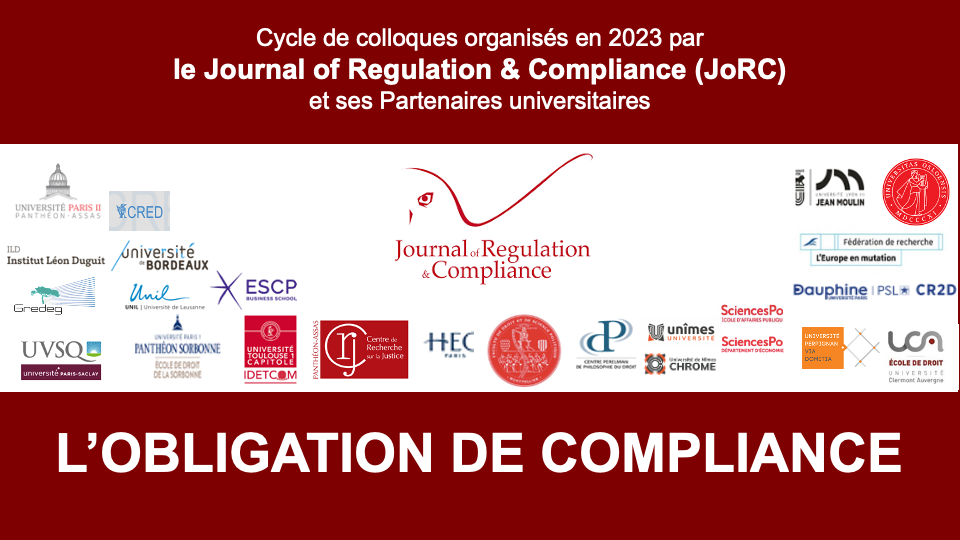
🏗️Ce colloque s'inscrit dans le cycle de colloques organisé par le Journal of Regulation & Compliance (JoRC) et ses Universités partenaires, portant en 2023 sur le thème général de L'Obligation de Compliance.
____
📚Les travaux s'inséreront ensuite dans les ouvrages :
📕L'obligation de Compliance, à paraître dans la collection 📚Régulations & Compliance, coéditée par le Journal of Regulation & Compliance (JoRC) et Dalloz, publié en langue française.
📘Compliance Obligation, à paraître dans la collection 📚Compliance & Regulation, coéditée par le Journal of Regulation & Compliance (JoRC) et Bruylant, publié en langue anglaise.
____
► Présentation générale du colloque : L'Obligation de Vigilance est difficile à cerner à travers la multiplicité des textes et les cas dans lesquels on peut l'appréhender. Cela est particulièrement perceptible à travers le mécanisme de Vigilance qui tout à la fois illustre, voire force le trait, de l'Obligation de Vigilance. A travers les textes internationaux, la loi française et les textes européens adoptés ou en gestation, les contraintes de vigilance, mais aussi les structures et actions mises en place que les entreprises ont organisé ainsi que les actions que les parties prenantes ont engagé, la Vigilance a mis en lumière des aspects de l'Obligation de Compliance, voire a modifié celle-ci.
L'effet de révélation ainsi produit et le mouvement ainsi déclenché, dont les racines sont profondes et les effets systémiques très importants, justifient que l'on cerne davantage des mécanismes qui sont articulés entre eux alors qu'ils sont parfois perçus en silo, ce qui rend difficile la compréhension d'ensemble. De la même façon, parce que la Vigilance est la pointe avancée de l'Obligation de Compliance, l'on peut ainsi mieux distinguer et articuler ce qui relève des spécificités sectorielles, notamment en matière bancaire et financière ou bien en matière numérique, et les articuler avec ce que la Vigilance a, comme la Compliance, de plus général. Plus encore, l'intensité de la Vigilance varie selon les ambitions quelle porte et selon la position de l'entreprise assujettie, ce que traduisent les variations de qualification juridique qui vont du devoir à l'obligation pénalement sanctionnée.
Les différents systèmes juridiques traduisent ces évolutions dans leur loi, leur jurisprudence et la pratique des entreprises et des parties prenantes de façon spécifique car ces différents techniques expriment des normes de comportement et de reddition de comptes dont les exigences probatoires, les conceptions de la responsabilité et les traductions institutionnelles à travers de possibles organes de régulation sont la traduction directe.
En conséquence, le colloque est construit en trois temps. Après une Introduction générale sur les rapports systémiques entre la Vigilance et la Compliance, une première partie porte sur la variation des Intensités de la Vigilance, pointe avancée de la Compliance, une deuxième partie porte sur les Tensions que la Vigilance engendre ou exacerbe, une troisième partie porte sur les Modalités que la Vigilance emprunte dans les systèmes de Compliance.
____

____
► Interviennent :
🎤Laurence Dubin, Professeure à l'Université Paris 1 Panthéon-Sorbonne
🎤Marie-Anne Frison-Roche, Professeure de Droit de la Régulation et de la Compliance, directrice du Journal of Regulation & Compliance (JoRC)
🎤Bernard Haftel, Professeur à l'Université Paris-Nord
🎤Marie Lamoureux, Professeure à Aix-Marseille Université
🎤Grégoire Loiseau, Professeur à l'Université Paris 1 Panthéon-Sorbonne
🎤Véronique Magnier, Professeure à l'Université Paris-Saclay
🎤Gilles J. Martin, Professeur émérite à l'Université Côte d'Azur, membre du Groupe de Recherche en Droit, Économie, Gestion (GREDEG) du CNRS
🎤Mustapha Mekki, Professeur à l'Université Paris 1 Panthéon-Sorbonne
🎤Jean-Christophe Roda, Professeur à l'Université Jean Moulin Lyon 3
🎤Anne-Claire Rouaud, Professeure à l'Université Paris 1 Panthéon-Sorbonne
____
Lire une présentation détaillée de la manifestation ci-dessous⤵️

Nov. 28, 2023
Thesaurus : Doctrine

► Référence complète : D. Mainguy, Droit de la "guerre atypique". Réflexions sur les conflits non armés et non militaires (lawfare, guerre économique et informationnelle), LGDJ, 2023, 336 p.
____
____
📗lire le sommaire de l'ouvrage
____
____
► Résumé de l'ouvrage (fait par l'éditeur) : "Les logiques de conflictualité ont changé de forme depuis une vingtaine d’années. À des conflits majoritairement armés se surajoutent ou se substituent parfois des formes d’agressions non armées et non militaires, souvent ressenties comme de véritables actes de « guerre ». Ces actes sont par ailleurs généralement situés en deçà du « seuil » du droit des conflits armés. Or, précisément, il n’existe pas, de manière explicite en tout cas, de règles conventionnelles internationales permettant de contrôler ces nouvelles formes d’agressions.
Cet essai propose une réflexion générale sur ces nouvelles formes de guerre « atypique », d’abord pour identifier ses formes et ses acteurs, et surtout pour formuler une proposition, celle de l’hypothèse de l’existence d’un ensemble de règles internationales, issues de coutumes internationales, de jus cogens, susceptibles d’être mobilisées pour former un embryon de droit international des conflits non armés, le tout à l’origine de l’institution moderne de l’arbitrage international. Elles peuvent conduire à un contrôle des décisions prises et des actes de guerre atypique par des juridictions internes, internationales ou des arbitres internationaux. C’est déjà d’ailleurs le cas dans quelques situations spécifiques. Elles permettent de proposer un panorama de l’essentiel de ces actes de guerre atypique et d’en définir les termes : lawfare, guerre économique, guerre informationnelle, les règles applicables existantes ou à créer et un certain nombre de cas concrets, sans prétendre bien entendu à l’exhaustivité.".
________

Nov. 9, 2023
Publications
🌐follow Marie-Anne Frison-Roche on LinkedIn
🌐subscribe to the Newsletter MAFR Regulation, Compliance, Law
____
► Full Reference: M.-A. Frison-Roche, "La compliance, socle de la confidentialité nécessaire des avis juridiques élaborés en entreprise" ("Compliance, the cornerstone of the confidentiality required for in-house legal opinions"), D. 2023, p.
____
📝read the article (in French)
____
► English Summary of the article: The French Law about the Ministry of Justice's 2023-2027 Orientation and Programming ("loi d'orientation et de programmation du ministère de la justice 2023-2027") had introduced into the French legal system the confidentiality of in-house lawyers' opinions (before the French Constitutional Council, on a question of parliamentary procedure, annulled this disposition, thus leaving the question still open).
This development is necessary in order to respond to the injunction for companies to comply more and more with the regulations, which is itself only one of the tools of a wider movement: Compliance Law.
This branch of the law, notably through the French so-called Sapin 2 Act of 2016, the French Vigilance Act of 2017 and the European Digital Services Act (DSA), requires companies to implement the necessary means to satisfy the Monumental Goals contained in the laws or regulations. This presupposes, firstly, that companies have information (via alerts, risk mapping, vigilance, sustainability reports, etc.), enabling them to identify their conformity and non-conformity, so that they can, secondly, take effective action to put an end to current breaches, prevent future breaches and achieve the goals set by the Legislator.
This Compliance System requires that the information made available to managers is reliable and honest. However, if non-conformity is not analysed and communicated in a way that is protected by confidentiality, the company will prefer not to know about it and will therefore be unable to take appropriate action, which will deprive the social community of its power to act in the future. This is why the confidentiality of in-house lawyers' opinions is based on the very definition of Compliance Law itself.
________
Sept. 28, 2023
Thesaurus : Doctrine
► Référence complète : B. François, "La communication renouvelée: du reporting financier au reporting de durabilité", in F. Barrière et M. Zolomian (dir.), Le droit des sociétés saisi par le climat, JCP E, n° 39, 28 septembre 2023, pp. 27-34.
____
► Résumé de l'article (fait par l'auteur) : "Les entreprises sont aujourd’hui encouragées à aller au-delà de la publication statique d’informations environnementales, sociales et de gouvernance (ESG) en indiquant de manière dynamique où elles se situent sur cette trajectoire de la transition écologique et comment elles comptent progresser sur le court et le moyen termes avec l’ensemble de leurs parties prenantes. Par ailleurs, ces dernières, se méfiant de toute tentation d’éco- blanchiment (greenwashing) ou de blanchiment sociétal (corporate washing) de la part des entreprises, sont désireuses d’obtenir d’elles des informations fiables. Il s’ensuit une communication renouvelée.".
____
🦉Cet article est accessible en texte intégral pour les personnes inscrites aux enseignements de la Professeure Marie-Anne Frison-Roche
_________
Sept. 7, 2023
Publications
🌐follow Marie-Anne Frison-Roche on LinkedIn
🌐subscribe to the Newsletter MAFR Regulation, Compliance, Law
____
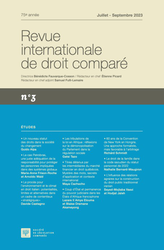
► Full Reference: M.-A. Frison-Roche & Arnoldo Wald, "Le cas Petrobras, une juste adéquation de la responsabilité pour protéger les personnes impliquées dans des systèmes globaux" ("The Petrobras case: the right balance of responsibility to protect those involved in global systems"), RIDC, July-September 2023, No. 3, pp. 563-582.
____
► Summary of the article: This article briefly outlines the main aspects of corporate liability in the capital market under Brazilian law, arising from the company’s duty to inform shareholders and investors, followed by a commentary on the recent partial award in an arbitration brought by minority shareholders against Petrobras, which underlines the legitimacy of the minority shareholders to engage the company’s liability.
________
March 15, 2023
Thesaurus : Doctrine
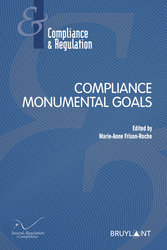
► Full Reference: J.-Ch. Roda, "Compliance, Internal Investigations and International Competitiveness: What are Risks for the French Companies (in the Light of Antitrust Law)?", in M.-A. Frison-Roche (ed.), Compliance Monumental Goals, Journal of Regulation & Compliance (JoRC) and Bruylant, "Compliance & Regulation" Serie, 2023, pp.355-368.
____
📘read a general presentation of the book, Compliance Monumental Goals, in which this article is published
____
► Summary of the article: The author draws on American and European Competition Law to measure whether internal investigations, as far as they provide factual elements, can provide foreign authorities and competitors, here American, with "sensitive information" (notably via leniency programs), and as such constitute a competitive handicap. But this turns out to be quite difficult, whereas compliance audits, for example under the legal duty of vigilance, can provide American litigants with useful information, drawn from internal documents, in particular the reports of compliance officers, which can be captured by procedures of discovery.
French Law remains weak in the face of these dangers, due to its refusal to recognise the legal privilege mechanism concerning these internal documents, contrary to American Law and the consequent effectiveness of discovery in international procedures, concerning internal documents, in particular resulting from internal investigations. Solutions have been proposed, the activation of a new conception of blocking statutes being complex, the prospect of adopting a legal privilege being more effective, but there would remain the hypothesis of an international conflict of privilege, American Law having a strict design of legal advice justifying it and judges checking that powerful companies do not use it artificially.
____
🦉This article is available in full text to those registered for Professor Marie-Anne Frison-Roche's courses
________