Collaboration

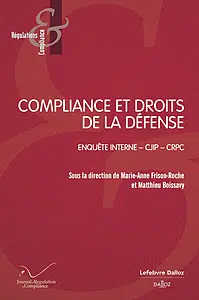
Couverture – Compliance et droits de la défense

Articles in a JoRC book

📝Théorie et pratique de la négociation dans la justice pénale, in 🕴️M.-A. Frison-Roche &🕴️ M. Boissavy (ed.), 📕Compliance et Droits de la défense – Enquête interne, CIIP, CRPC

► Full reference : S-M.. Cabon, « Théorie et pratique de la négociation dans la justice pénale » (Theory and Practice of Negotiation in Criminal Justice), in M.-A. Frison-Roche & M. Boissavy (dir.), Compliance et Droits de la défense – Enquête interne, CIIP, CRPC, Journal of Regulation & Compliance (JoRC) et Dalloz, coll. “Régulations & Compliance“, 2024, pp. 241-252. - ► English Summary of this article (made by the Journal of Regulation & Compliance – JoRC) : The author defines the technique of “negotiation” as the one by which “each party will attempt to reconcile [interests] through a process of cooperation and mutual concessions”. French criminal justice uses it not so much because of the attraction of the American model, but in an attempt to resolve the difficulties caused by the flow of litigation, the process having been extended to punitive litigation, notably before administrative regulatory authorities. Its principle is therefore the cooperation of the offender. The author highlights the “practical” satisfactions claimed, since cases are resolved and sanctions are accepted, and the “theoretical” concerns, since fundamental principles, such as the rights of the defence, seem to be set aside, the claim being made that the practical advantages and the fact that nothing obliges companies to accept CJIPs and CRPCs justify not dwelling on these “theoretical” considerations. The article is therefore built on the confrontation between “the Useful” and “the Just”, because this is how the system is presented, utility and consent being emphasised in particular in the guidelines of the public authorities. Against this background, the author examines how the texts continue, or not, to protect the person who risks being sanctioned in fine, notably in inquiries and investigations; the fact that this person consents to waive this protection, in particular by providing the evidence that will form the basis of the finding of guilt, while the public authority does not at the same time waive prosecution, is problematic with regard to “the Just”. The second part of the article is therefore devoted to “the Useful compelled to be Just”. In this respect, the author considers that the independence of the public prosecutor should be stronger, on the model of the European Public Prosecutor’s Office, and that the review by the judicial courts should be deeper, since the current procedure for validating CJIPs seems governed by the principle that the parties control the proceedings, a principle ill-suited to criminal justice.
Couverture – Compliance et droits de la défense

Articles in a JoRC book

📝Quand se justifie et quand s’arrête la collaboration ? À propos de la CJIP, in 🕴️M.-A. Frison-Roche et 🕴️M. Boissavy (dir.), 📕Compliance et droits de la défense. Enquête interne – CJIP – CRPC

► Full reference : P. Goossens, « Quand se justifie et quand s’arrête la collaboration ? À propos de la CJIP » (When Is Cooperation Justified and When Does It End? On the CJIP), in M.-A. Frison-Roche and M. Boissavy (eds.), Compliance et droits de la défense. Enquête interne – CJIP – CRPC, Journal of Regulation & Compliance (JoRC) and Dalloz, coll. “Régulations & Compliance“, 2024, pp. 309-315. - ► English Summary of this article (made by the Journal of Regulation & Compliance – JoRC) : The author explains that, in the classical legal system, the lawyer engages in a “defence by opposition”. The so-called “Sapin 2” law adds to it a “defence by cooperation”, which fits more or less well with the former. The article lists both the advantages and the drawbacks of the logic of cooperation that the lawyer must take on. With pragmatism, the lawyer must handle both, in particular so that the rights of the defence of the company and its interests find their place in the CJIP mechanism.
Couverture – Compliance et droits de la défense

Articles in a JoRC book

📝L’évolution des rapports entre avocats et autorités de poursuites avec la CJIP, in 🕴️M.-A. Frison-Roche et 🕴️M. Boissavy (dir.), Collection Régulations & Compliance Compliance et droits de la défense. Enquête interne – CJIP – CRP

► Full reference : Th. Baudesson, « L’évolution des rapports entre avocats et autorités de poursuites depuis l’introduction de la CJIP » (The Evolution of Relations between Lawyers and Prosecuting Authorities since the Introduction of the CJIP), in M.-A. Frison-Roche and M. Boissavy (eds.), Compliance et droits de la défense. Enquête interne – CJIP – CRPC, Journal of Regulation & Compliance (JoRC) and Dalloz, coll. “Régulations & Compliance“, 2024, pp. 299-305. - ► English Summary of this article (made by the Journal of Regulation & Compliance – JoRC) : The author considers that the CJIP, the most striking development in criminal procedure, brings the Bar and the prosecuting authorities into dialogue, moving from a logic of confrontation to one of cooperation. This is a new type of relationship. The prosecutor concerned is above all the PNF, which has expertise in this area, disseminates it through its soft law and provides more legal certainty to companies. He illustrates his remarks in particular with the so-called Airbus CJIP, in which there was a confrontation with English and American practices in “cooperation investigations” which require mutual trust. But he acknowledges the progress that remains to be made, both on the side of lawyers, who in France seem to remain as a matter of principle in opposition to magistrates and little attentive to what could be their role in the search for truth, and on the side of magistrates, who seem to perceive lawyers as a kind of “mercenaries” to be distrusted as a matter of principle. This is why, in their guide on internal investigations, the AFA and the PNF require that the lawyer who conducts the investigation and the one who ensures the criminal defence of the company cannot be the same, which the author explains by this distrust, presuming investigations of convenience, a suspicion of principle that the author regrets. Likewise, the refusal of magistrates to recognise the professional secrecy covering the investigation report seems to the author archaic in comparison with Anglo-Saxon conceptions, since the DoJ and the SFO readily accept the legal privilege attached to this report. As a result, France would not be at the same level of Rule of Law as the United States and the United Kingdom. The author concludes that progress remains to be made for France to complete its evolution and become fully attractive, so that companies confronted with reprehensible practices are effectively led to undertake a self-reporting approach.
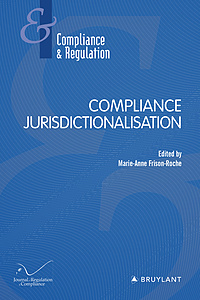
Couverture – Compliance Jurisdictionalisation

Articles in a JoRC book

SILLAMAN, Bryan🕴️

📝Privilege Lessons from the U.S., in 🕴️M.-A. Frison-Roche (ed.), Collection Compliance & Regulation Compliance Jurisdictionalisation

► Full Reference: B. Sillaman, “Privilege Lessons from the U.S.”, in M.-A. Frison-Roche (ed.), Compliance Jurisdictionalisation, Journal of Regulation & Compliance (JoRC) and Bruylant, coll. “Compliance & Regulation“, 2024, pp. 251-255. - read a general presentation of the book, Compliance Jurisdictionalisation, in which this article is published - ► Summary of the article (done by the Journal of Regulation & Compliance): The French legal system is evolving, organizing interaction between lawyers with regulators and prosecutors, specially in investigations about corruption or corporate misconduct, adopting U.S. negotiated resolutions such as the Convention judiciaire d’intérêt public, which encourages “collaboration” between them. The author describes the evolution of the U.S. DOJ doctrine and askes French to be inspired by the U.S. procedural experience, U.S. where this mechanism came from. Indeed, the DOJ released memoranda about what the “collaboration” means. At the end (2006 Memorandum), the DOJ has considered that the legal privilege must remain intact when the information is not only factual in order to maintain trust between prosecutors, regulators and lawyers. French authorities do not follow this way. The author regrets it and thinks they should adopt the same reasoning as the American authority on the secret professionnel of the avocat, especially when he intervenes in the company internal investigation. - 🦉This article is available in full text to those registered for Professor Marie-Anne Frison-Roche’s courses -

Articles

💬Les juges vont être de plus en plus présents dans le droit de la compliance

🌐follow Marie-Anne Frison-Roche on LinkedIn 🌐subscribe to the Newsletter MAFR Regulation, Compliance, Law  - ► Full reference: M.-A. Frison-Roche, , F. Ancel, N. Roret, "Les juges vont être de plus en plus présents dans le droit de la compliance" ("Judges will be more and more involved in Compliance Law"), interview with Olivia Dufour, Actu-Juridique, 1st March 2023. - 💬read the interview (in French) - ► Presentation of the interview by the journal (in French) : "À l’instigation du professeur Marie-Anne Frison-Roche, l’École nationale de la magistrature (ENM) a proposé pour la première fois début février une formation en compliance à destination des magistrats et des avocats. François Ancel, conseiller la Cour de cassation, Nathalie Roret, avocate et directrice de l’ENM et Marie-Anne Frison-Roche plaident d’une seule voix pour le renforcement du rôle des acteurs judiciaires dans la compliance." - ► Questions asked (in French):  D’où est venue l’idée d’aborder ce droit en cours d’émergence qui semble encore très confidentiel ? En effet, on croit souvent savoir ce qu’est la compliance, en la confondant avec la conformité, pouvez-vous expliquer ce qui les distingue ?​​ On constate, en lisant le programme de la formation, que toutes les branches du droit sont concernées par la compliance depuis le droit des sociétés jusqu’au pénal en passant par les contrats et la responsabilité. Pouvez-vous nous donner des exemples ?​ Comment se redistribuent les rôles entre les avocats, les juges et les entreprises dans cette nouvelle configuration qu’est la compliance ?​ En quoi est-ce important pour les magistrats d’appréhender ce nouvel univers ?​ Ces transformations sont-elles cantonnées à la compliance ou peuvent-elles sortir de son champ ?​ Par exemple qu’en est-il de la question très controversée du rôle de l’avocat à l’égard du juge ?​ Avez-vous constaté lors de cette formation une amélioration du dialogue entre les différents acteurs ?​ Cette formation va-t-elle être instituée de manière permanente dans la formation des magistrats et des avocats ? Une autre manifestation est-elle prévue ? -
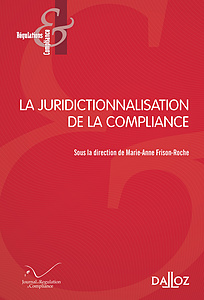
Couverture – La juridictionnalisation de la Compliance

Articles in a JoRC book

SILLIMAN, Bryan🕴️

📝Secret professionnel et coopération : les leçons de procédure tirées de l’expérience américaine pour une application universelle, in 🕴️M.-A. Frison-Roche (ed.), Collection Régulations & Compliance La juridictionnalisation de la Compliance

► Full Reference: B. Silliman, “Secret professionnel et coopération : les leçons de procédure tirées de l’expérience américaine pour une application universelle” (“Privilege and cooperation, procedural lessons learned from the U.S for global application”), in M.-A. Frison-Roche (ed.), La juridictionnalisation de la Compliance, coll. “Régulations & Compliance“, Journal of Regulation & Compliance (JoRC) and Dalloz, 2023, pp. 231-234. - read a general presentation of the book, La juridictionnalisation de la Compliance, in which this article is published - ► English summary of the article (done by the Journal of Regulation & Compliance): The French legal system is evolving, organizing interaction between lawyers with regulators and prosecutors, especially in investigations about corruption or corporate misconduct, adopting U.S. negotiated resolutions such as the Convention judiciaire d’intérêt public, which encourages “collaboration” between them. The author describes the evolution of the U.S. DOJ doctrine and askes French to be inspired by the U.S. procedural experience, U.S. where this mechanism came from. Indeed, the DOJ released memoranda about what the “collaboration” means. At the end (2006 Memorandum), the DOJ has considered that the legal privilege must remain intact when the information is not only factual to maintain trust between prosecutors, regulators, and lawyers. French authorities do not follow this way. The author regrets it and thinks they should adopt the same reasoning as the American authority on the secret professionnel of the avocat, especially when he intervenes in the company internal investigation. - 🦉This article is available in full text for those registered for Professor Marie-Anne Frison-Roche’s courses