Food for thoughts

Compliance and Regulation Law bilingual Dictionnary

Le légicentrisme exprime avant tout une bataille de normes, puisque cette doctrine pose que la loi est la seule et unique expression de la souveraineté de la Nation. En cela, la loi dispose d'une autorité indépassable et c'est elle qui fonde l'État légal.

Ainsi, si l'on devait donner une figure au système juridique, ce serait un cercle avec en son cœur d'une façon unique la loi souveraine, à la fois autosuffisante dans son fondement (souveraineté) et dans sa production (principe de légalité).

Cette conception moniste (unité de la loi) a pour principale source la philosophie politique de Jean-Jacques Rousseau, c'est encore sur celui-ci que la France conserve le principe de souveraineté parlementaire (le Gouvernement est responsable devant le Parlement) et de souveraineté de la loi. Mais depuis la Révolution française, les esprits et les faits ont changé.

Ainsi, s'est construite une doctrine inverse : le "pluralisme juridique" qui pose en contradiction que le droit vient de nombreuses sources, comme la coutume, les pratiques, les jugements, etc. Il n'est pas étonnant que les auteurs qui affirment le pluralisme juridique ne viennent pas de la philosophie politique mais davantage de la sociologie comme Gurvitch ou Carbonnier.

En outre, les frontières nationales ont perdu de leur consistance, de fait et de droit. C'est pourquoi un auteur comme Mireille Delmas-Marty s'appuie sur le fait même de la construction de l'Europe des droits de l'homme d'une part et de la globalisation d'autre part pour affirmer que le légicentrisme a fait place à un pluralisme juridique généralisé.

Cependant, en droit positif les textes restent les mêmes. C'est ainsi que l'article 6 de la Déclaration des droits de l'homme et du citoyen de 1789, qui fait partie du bloc de constitutionnalité, dispose de la loi que "la loi est l'expression de la volonté générale".

De la même façon, l'article 5 du Code civil continue d'interdire au juge de rendre des jugements contraignants pour d'autres cas que celui particulier sur lequel il se prononce.

Cette permanence des textes les plus gradés, à savoir l'article 5 du Code civil et l'article 6 de la déclaration pose de nombreux problèmes aux juges. En effet, depuis l'arrêt du Tribunal des conflits Blanco, le droit administratif n'est plus lié par ce qui est posé par le Code civil et sans doute la puissance normative du Conseil d'Etat s'exprime plus ouvertement que celle de la Cour de cassation, qui feint de ne rendre que des arrêts de principe pour pouvoir affirmer qu'elle ne rend pas d'arrêt de règlement.

D'une façon plus complexe, le Conseil constitutionnel rappelle régulièrement que certes il est le gardien de la norme constitutionnelle supérieure à la loi mais quand le même temps, seul le législateur, puisque celui est le souverain, peut exprimer la volonté générale, ce à quoi le Conseil constitutionnel ne peut se substituer.

Mais le Droit de l'Union européenne, qui constitue un Ordre juridique à la fois autonome et dont les normes sont pourtant intégrées dans les ordres juridiques des Etats-membres, rend difficilement soutenable la conception du légicentrisme. Y a succédée une hiérarchie des normes complexes. Mais les fondements politiques de l'idée de légicentrisme alimente en grande partie l'hostilité à l'égard de l'Europe, aussi bien celle de l'Union que celle de la CEDH.


Editorial responsibilities : Responsabilités éditoriales antérieures

Rédacteur en chef de la revue des Archives de Philosophie du Droit, Sirey puis Dalloz, 1993-2003.

Consulter les volumes dont Marie-Anne Frison-Roche s'est plus particulièrement occupée :


Thesaurus : Doctrine

Référence complète : Bossuet, sermon De l’éminente dignité des pauvres, 1659.

Édité par Alain Supiot, 64 p. , Éditions Mille et un nuits, 2015.

Thesaurus : Doctrine

Complete reference : Archives de Philosophie du Droit (APD), La philosophie du droit aujourd'hui, tome 33, ed. Sirey, 1988, 467 p. 


Read the table of contents.

Read the summaries of the articles in English


See the presentation of other volumes of Archives de Philosophie du Droit.

Thesaurus : Doctrine

Complete reference : Archives de Philosophie du Droit (APD), Le procès, tome 39, ed. Sirey, 1995, 545 p. 


Read the forth of cover.

Read the table of contents.

Read the summaries of the articles in English. 


See the presentation of other volumes of Archives de Philosophie du Droit.

Thesaurus : Doctrine
Complete reference : Archives de Philosophie du Droit (APD), La création du droit par le juge, tome 50, Dalloz, 2007, 471 p. 


Read the forts of cover.

Read the table of contents

Read the summaries of the articles in english. 


See the presentation of other volumes of Archives de Philosophie du Droit.

Thesaurus : Doctrine
Complete reference : Archives de Philosophie du Droit (APD), Le sujet de droit, tome 34, ed. Sirey, 1989, 430 p. 


Read the table of contents.

Read the summaries of the articles in English


See the presentation of other volumes of Archives de Philosophie du Droit.

Thesaurus : Doctrine

Complete reference : Archives de Philosophie du Droit (APD), Droit et économie, tome 37, ed. Sirey, 1992, 426 p. 


Read the table of contents.

Read the summaries of the articles in english. 


See the presentation of others volumes of Archives de Philosophie du Droit.

Thesaurus : Doctrine

Référence complète : Jeanneney, J.-N., XIXième siècle : la haine, un ressort puissant, émission "Concordance des temps", France Culture, 29 mai 2021. 

Ecouter l'émission


L'émission est bâtie sur cet ouvrage : 


Présentation du thème par Jean-Noël Jeanneney :

"Les messages de haine qui sont charriés sur les réseaux sociaux doivent-ils être censurés par les responsables de ceux-ci ? Et peuvent-ils l’être ? Une loi récente, portée au Parlement par Laetitia Avia, députée de Paris, le leur imposait, sous peine de lourdes amendes. Et même si ce texte a été censuré, pour une large part, par le Conseil constitutionnel, il témoigne d’une inquiétude qui est aujourd’hui répandue. 

Il s’agit de la découverte que l’intensité des haines en circulation sur la Toile, qui figent le dialogue démocratique et qui exaspèrent les passions les plus sinistres et les plus délétères, constituent une grave menace pour la prédominance de la raison sur la passion, pour la sérénité des citoyens et pour la cohésion nationale. 

Je ne songe certes pas à minimiser ce souci, qui peut devenir taraudant, mais seulement, pour resituer les choses, à rappeler la violence des imprécations que nos ancêtres ont déjà échangées entre eux, dans tout le champ de la politique, de la société et même de la vie familiale. Leur support a changé, mais leurs ressorts et leurs débordements probablement pas. ".

Thesaurus : Doctrine

Complete reference : Archives de Philosophie du Droit (APD), L'obligation, tome 44, Dalloz, 2000, 525 p. 


Read the forth of cover.

Read the table of contents.

Read the summaries of the articles in english. 


See the presentation of other volumes of Archives de Philosophie du Droit.

Thesaurus : Doctrine

Référence complète : Gibert, M., Faire la morale aux robots. Une introduction à l'éthique des algorithmesFlammarion, 2021, 168 p.


Lire le commentaire de l'ouvrage sur le site NonFiction. 

Thesaurus : Doctrine

► Référence complète : B. Frydman, "Comme l'IA transforme le droit et la justice", in Formes de l'intelligence, Collège de France, 16 octobre 2025

____

► Voir le colloque Formes de l'intelligence, dans lequel la conférence s'insère.

____

► regarder la conférence

____

Résumé par l'auteur : "Les techniques d’IA ont été introduites depuis longtemps dans le domaine du gouvernement et de la régulation, et se déploient désormais à grande vitesse dans toutes les branches du droit en transformant considérablement les outils et la logique de l’action administrative et judiciaire. Ce développement s’inscrit dans le projet formulé déjà par Leibniz au XVIIsiècle d’un droit mathématisé et calculable, mais recourt à des techniques, comme le profilage, qui trouvent leur source première dans l’usage normatif des probabilités au XIXsiècle. Leur déploiement à large échelle, souvent de manière prématurée et sans contrôle adéquat, met au défi les bases de l’État de droit, spécialement le contrôle des pouvoirs, la protection des droits et la motivation des décisions qui les affectent. En dépit de plusieurs catastrophes d’ampleur industrielle déjà causées par les erreurs qu’elles ont provoquées, ces innovations s’inscrivent dans un modèle de régulation qui est là pour durer et qui nécessite la mise en place de contre-feux et de garanties adaptées qui reposent également sur l’innovation technologique."

____

Notes prises : Soulignant que la population est de plus en plus favorable à ce que les I.A.  gouvernent et jugent à la place des êtres humains, l'orateur insiste sur le fait que le modèle auquel on se réfère est le modèle scientifique. Le gouvernement n'est plus adossé sur la légitimité politique mais sur la formalisation "scientifique". L'IA est le prolongement de cela et notamment Grotius demande un Droit laïc reposant sur la force de la Raison euclidienne reprise par le Droit à travers le syllogisme. Domat poursuit en mettant les lois dans leur "ordre naturel".

C'est surtout Leibniz qui revendique le caractère scientifiquement incontestable du droit et de son application, pouvant se passer de l'approximation des juges et des avocat. Cette conception est aujourd'hui reprise. L'analyse économique du droit, concevant celui-ci comme un mode de gestion de la société, reprend l'idée (Coase).

L'histoire de l'IA est construite de la même façon, tout d'abord en matière de "conforme / non-conforme", puis en profilage des personnages (pour détecter notamment les fraudes, avec des cas préoccupants d'erreurs). Or, on ne connait pas les critères de qualification utilisés par l'IA.

L'orateur proteste car l'IA connexionniste qui choisit la décision ne révéle pas la façon de choisir la décision. Or, c'est une autre IA qui motivera la décision. Et c'est encore une autre IA, agentique, qui mettra en oeuvre. 

La Loi a interdit les décisions automatiques : loi 1978, RGPD (mais exceptions possibles et c'est de fait autorisé dans le privé et par des lois spécialtes cela est possible dans l'Etat si justifié),  IA (exceptions pour le crédit social, IA à haut risque sont autorisés mais il faut des garanties).

________


May 29, 2026

Publications

🌐Follow Marie-Anne Frison-Roche on LinkedIn

🌐Subscribe to the Newsletter MAFR Regulation, Compliance, Law

🌐Subscribe to the video newsletter MAFR Overhang

🌐Subscribe to the Newsletter MaFR Law & Art

____

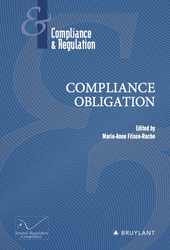
► Full ReferenceM.-A. Frison-Roche, "In Compliance Law, the legal consequences for Entreprises of their commitments and undertakingsn", in M.-A. Frison-Roche (ed.), Compliance ObligationJournal of Regulation & Compliance (JoRC) and Bruylant, "Compliance & Regulation" Serie, 2026, forthcoming.

____

📝read the article

____

🚧read the bilingual Working Paper on the basis this article has been written, with more developments, technical references and hyperlinks

____

📘read a general presentation of the book, Compliance Obligation, in which this article is published

____

 Summary of this article: The innocents might believe, taking the Law and its words literally, that "commitments" are binding on those who make them. Shouldn't they be afraid of falling into the trap of the 'false friend', which is what the Law wants to protect them from (as stated in the prolegomena)?

Indeed, the innocent persons think that those who make commitments ask what they must do and say what they will do. Yet, strangely enough, the 'commitments' that are so frequent and common in compliance behaviours are often considered by those who adopt them to have no binding value! Doubtless because they come under disciplines other than Law, such as the art of Management or Ethics. It is both very important and sometimes difficult to distinguish between these different Orders - Management, Moral Norms and Law - because they are intertwined, but because their respective standards do not have the same scope, it is important to untangle this tangle. This potentially creates a great deal of insecurity for companies (I).

The legal certainty comes back when commitments take the form of contracts (II), which is becoming more common as companies contractualise their legal Compliance Obligations, thereby changing the nature of the resulting liability, with the contract retaining the imprint of the legal order or not having the same scope if this prerequisite is not present.

But the contours and distinctions are not so uncontested. In fact, the qualification of unilateral undertaking of will is proposed to apprehend the various documents issued by the companies, with the consequences which are attached to that, in particular the transformation of the company into a 'debtor', which would change the position of the stakeholders with regard to it (III).

It remains that the undertakings expressed by companies on so many important subjects cannot be ignored: they are facts (IV). It is as such that they must be legally considered. In this case, Civil Liability will have to deal with them if the company, in implementing what it says, what it writes and in the way it behaves, commits a fault or negligence that causes damage, not only the sole existence of an undertaking. 

________


________

Dec. 10, 2025

Conferences

🌐Follow Marie-Anne Frison-Roche on LinkedIn

🌐Subscribe to the Newsletter MAFR Regulation, Compliance, Law

🌐Subscribe to the video newsletter MAFR Overhang

🌐Subscribe to the Newsletter MaFR Law & Art

____

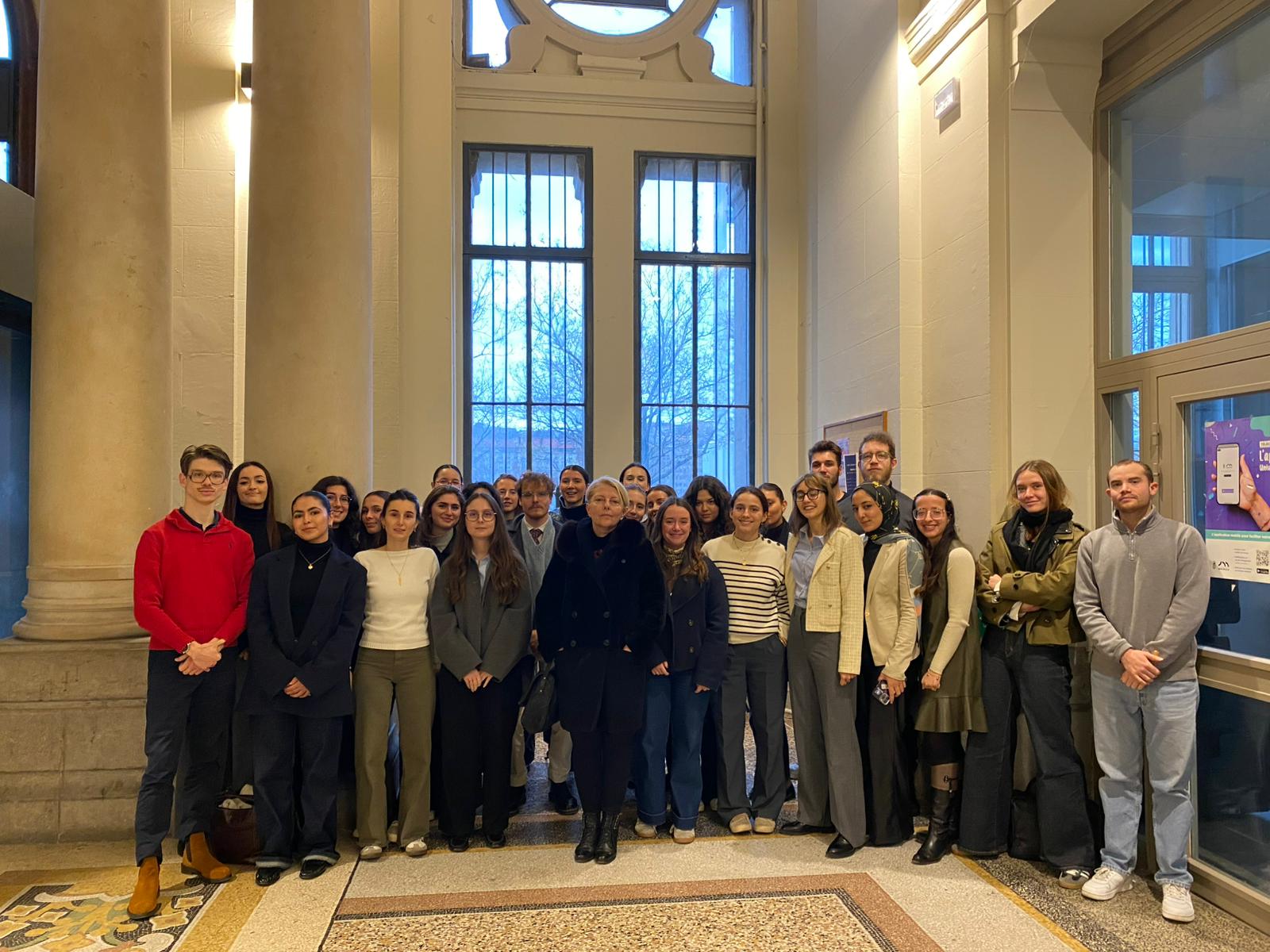
 Full reference : M.-A. Frison-RocheSaisir les principes du Droit de la Compliance à travers l'actualité (Understanding the principles of compliance law through current current legal cases and events), Jean Moulin  - Lyon 3 University Law Faculty, 10 December 2025.

____

► Methodological presentation of this 4-hour MasterClass : It is difficult to teach a branch of law that is still being developed, to find a way to open its doors, because if by explaining its principles ex abrupto, the risk exists of remaining at the door, even though the aim is to open it. This door is all the more blocked by the accumulation of multiple regulatory corpus, which are now perceived as being linked to Compliance Law: GDPR, Sapin 2, Vigilance, Nis2, Dora, FCPA, etc.; These are highly technical and complicated, and tend to be studied in silos, with little connection between them and little articulation with the traditional branches of Law. Therefore, the principles that form the backbone of Compliance Law as an autonomous branch of Law are all the less apparent, even though they would make these "compliance blocks" more intelligible and manageable. However, setting out these principles, which shed light not only on the current positive law but also on how it will evolve, seems "theoretical".

In order to open the door to this new branch of Law, which already occupies a significant place in practice and is set to expand, so that it can be handled by lawyers who understand its spirit and is not entirely dominated by those from other disciplines who will master its tools (risk mapping, assessment, internal investigation, etc.), most often through algorithms and platforms (compliance by design), it is relevant to start with a few cases, a few decisions, a few texts, and a few comments, to gauge what they reveal.

Because the principles are already there. They are gradually emerging. The challenge is that they often emerge quickly, in a manner that is sufficiently consistent with other branches of Law, and that the legal aspect takes precedence. That is what is at stake today.

Each hour is devoted to a different case, based on a document of a different legal genre.

____

🌐read a post on LinkedIn (in French)

____
⛏️Find out more  :

🕴🏻M.-A. Frison-Roche, 📝Compliance Law, 2016

🕴🏻M.-A. Frison-Roche, 📝Monumental Goals, the beating heart of Compliance Law, 2023

🕴🏻M.-A. Frison-Roche, 📝In Compliance Law, the legal consequences for Entreprises of their commitments and undertakings, 2025

🕴🏻M.-A. Frison-Roche, 📝Compliance Law and Systemic Litigation, 2025


________

Nov. 25, 2025

Thesaurus : Doctrine

 Référence complète : É. Schmit et A. Peter, "Introduction", in Justices manifestes , Clio - Thémis, n°29, 2025.

____

📝lire l'article

____

📗Consulter l'ensemble de la publication

____

► Résumé de l'article : Les auteurs présentent le sujet même de ce dossier : montrer la place de l'écrit dans les procédures comme mode spécifique de rituels qui eux-aussi rendent la justice "manifeste".  Présentation par les auteurs : "

"Ce dossier se situe au croisement de deux manières d’aborder et d’écrire l’histoire de la justice : celle, d’une part, qui s’intéresse aux manifestations rituelles du processus judiciaire ; et celle, d’autre part, qui traite des enjeux et des pouvoirs de l’écrit dans l’action de la justice. En repartant de la métaphore théâtrale, c’est-à-dire en envisageant la scène judiciaire comme cadre spatio-temporel du déploiement du rituel, il s’agit d’en étudier précisément les modalités d’enregistrement, pour mieux comprendre comment l’écrit participe du caractère manifeste des justices médiévales et modernes – dans leur diversité. À l’intersection entre rituel et écrit judiciaires, il y a bien sûr la procédure, entendue à la fois comme la succession des étapes conduisant à l’exécution d’une décision de justice, et comme l’ensemble des règles qui encadrent chacune de ces étapes. Faire l’histoire des modalités d’enregistrement du rituel judiciaire implique dès lors d’expliciter à la fois les rapports entre rituel et procédure, et entre procédure et écrit. Les contributions qui suivent témoignent de l’intérêt, pour les historiennes et historiens de la justice, d’articuler ces deux approches, chacune ayant fait l’objet d’une historiographie féconde.".

C'est la quatrième partie de l'article qui est plus particulièrement consacré au rôle des "écrits judiciaires", évoquant le gouvernement par l'écrit, le réseau des écritures, les écritures judiciaires grises, etc.

Le contenu des 5 articles composant le dossier est présenté ainsi : "Voilà quelques-unes des questions auxquelles les cinq articles de ce dossier apportent de précieux éléments de réponse, à partir de contextes documentaires, temporels, géographiques et juridictionnels bien différents. À partir d’une série de 70 arrêts criminels rendus au parlement de Paris au xive siècle, Isabelle D’Artagnan analyse la façon dont l’enregistrement façonne la jurisprudence de la cour quant à l’usage de deux peines infamantes, l’amende honorable et le pilori. En étudiant au plus près les modalités de l’enregistrement, elle montre combien celui-ci est en lui-même performatif : il constitue non seulement une première satisfaction pour les parties, mais oriente aussi l’action future des juges. Rudi Beaulant interroge quant à lui le rôle des écritures judiciaires comme outil de gouvernement urbain, dans un contexte de partage du pouvoir judiciaire entre ville et prince à Dijon à la fin du Moyen Âge. La multiplication et la répartition des informations enregistrées montrent que les écritures judiciaires constituent à la fois un instrument d’administration et de légitimation pour les officiers urbains, tout autant qu’elles participent de la construction de la mémoire judiciaire de la ville. Dominique Adrien s’intéresse, dans la Bavière de la fin du xve siècle, à une charte rédigée à la demande des parties qui s’opposent devant le tribunal urbain de Kempten, et dont il donne l’édition et la traduction. À partir de cette charte qui permet, dans un contexte juridictionnel concurrentiel, de consolider les droits de la plaignante mais aussi la décision du tribunal, l’auteur analyse les modalités spécifiques de l’enregistrement du procès, et notamment la place importante accordée aux témoignages oraux. Dans sa contribution, Rémi Demoen piste dans les comptes municipaux d’Amboise, Chinon et Loches au second xvie siècle les traces indirectes du rituel spécifique du jugement des comptes, dans le contexte documentaire particulièrement lacunaire de la Chambre des comptes. Il apparaît que l’écrit, davantage qu’une simple trace du rituel, joue un rôle central dans le processus même de vérification des comptes. Enfin, Mathias Boussemart consacre son article aux bandeaux gravés qui ornementent un grand nombre d’impressions judiciaires au xviiie siècle. S’il s’intéresse aux scènes judiciaires que ces bandeaux représentent, il montre surtout comment ces bandeaux, qui participent de l’ultime phase du rituel judiciaire – l’impression sur papier de décisions jugées remarquables – contribuent à la diffusion, à grande échelle, de petites scénettes judiciaires. Toutes attentives aux mécanismes d’enregistrement à l’œuvre, ces contributions affinent, dans la diversité des cas étudiés, notre compréhension des rituels judiciaires.".

________

Nov. 12, 2025

Thesaurus : Doctrine

 Référence complète : B. Mathieu, « Contraintes et liberté du juge constitutionnel dans l'exercice de son travail d'interprétation », in Cahiers de droit constitutionnel, Les méthodes d'interprétation nov. 2025.

____

► Résumé de l'article : S'appuyant sur les décisions du Conseil constitutionnel, l'auteur montre que celui-ci ne se contraint que peu lorsqu'il s'agit de contrôler les normes constitutionnelles, notamment parce qu'il choisit les contours du bloc de constitutionnalité, mais qu'il se limite davantage lorsqu'il contrôle les normes législatives, respectant davantage la séparation des pouvoirs (puisqu'il est lui-même une juridiction). 

____

📝Lire l'article

________


Nov. 4, 2025

Thesaurus : Doctrine

► Référence complète : M. Cirotteau, Le pouvoir administratif des personnes privées, préf. Th. Perroud, Éd. Panthéon-Assas, coll. "Nouvelle recherche", 2025, 768 p.

____

► Résumé de l'ouvrage (fait par l'éditeur) : "Le pouvoir administratif des personnes privées n’est pas une « monstruosité » du droit administratif, mais une notion originale qui désigne la capacité des personnes morales de droit privé à prendre des actes juridiques.

Ce pouvoir se traduit par la détention de fonctions de police administrative spéciale, par des personnes privées, qui s’exerce sur les opérateurs économiques. Par opposition avec la théorie normativiste qui associe l’acte juridique à la volonté, plusieurs exemples sélectionnés dans le droit positif permettent de penser ce phénomène en s’appuyant sur la théorie du pouvoir.

L’auteure applique un régime, qui s’inspire des principes irriguant le droit administratif, au pouvoir administratif des personnes privées, et questionne son encadrement par les méthodes du contentieux administratif. Elle propose finalement d’introduire une logique concurrentielle dans les secteurs où ce pouvoir fait irruption et perturbe le fonctionnement des marchés. Ce faisant, Marie Cirotteau nous invite à repenser les conditions qui ont construit le savoir juridique, et propose des réponses inédites face aux défis posés par l’accroissement du pouvoir de certaines grandes entreprises aujourd’hui.".

________

Oct. 15, 2025

Thesaurus : Doctrine

 Référence complète : C.S. Sunstein, Imperfect Oracle: What AI Can and Cannot Do,  Université of Penn Press, 2025, 208 p.

____

 Résumé de l'ouvrage (fait par l'éditeur") : 'Imperfect Oracle is about the promise and limits of artificial intelligence. The promise is that in important ways AI is better than we are at making judgments. Its limits are evidenced by the fact that AI cannot always make accurate predictions—not today, not tomorrow, and not the day after, either.

Natural intelligence is a marvel, but human beings blunder because we are 
biased. We are biased in the sense that our judgments tend to go systematically wrong in predictable ways, like a scale that always shows people as heavier than they are, or like an archer who always misses the target to the right. Biases can lead us to buy products that do us no good or to make foolish investments. They can lead us to run unreasonable risks, and to refuse to run reasonable risks. They can shorten our lives. They can make us miserable.

Biases present one kind of problem; 
noise is another. People are noisy not in the sense that we are loud, though we might be, but in the sense that our judgments show unwanted variability. On Monday, we might make a very different judgment from the judgment we make on Friday. When we are sad, we might make a different judgment from the one we would make when we are happy. Bias and noise can produce exceedingly serious mistakes.

AI promises to avoid both bias and noise. For institutions that want to avoid mistakes it is now a great boon. AI will also help investors who want to make money and consumers who don’t want to buy products that they will end up hating. Still, the world is full of surprises, and AI cannot spoil those surprises because some of the most important forms of knowledge involve an appreciation of what we cannot know and why we cannot know it. Life would be a lot less fun if we could predict everything."

Oct. 15, 2025

Thesaurus : Doctrine

► Full Reference: Y. Feldman,Can the Public Be Trusted?: On the Promise and Perils of Voluntary Compliance, Cambridge University Press, 2025. 

____

► Presentation of the book (done by the Author) : "When do citizens voluntarily comply with regulations rather than act out of fear of sanctions? Can the Public Be Trusted? challenges prevailing regulatory paradigms by examining when democratic states can rely on voluntary compliance. Drawing on behavioral science, law, and public policy research, Yuval Feldman explores why voluntary compliance, despite often yielding superior and more sustainable outcomes, remains underutilized by policymakers. Through empirical analysis of policy implementation in COVID-19 response, tax compliance, and environmental regulation, Feldman examines trust-based governance’s potential and limitations. The book presents a comprehensive framework for understanding how cultural diversity, technological change, and institutional  shape voluntary cooperation.".

____


📗Read the book

Oct. 2, 2025

Hearings by a Committee or Public organisation

🌐suivre Marie-Anne Frison-Roche sur LinkedIn

🌐s'abonner à la Newsletter MAFR Regulation, Compliance, Law

🌐s'abonner à la Newsletter en vidéo MAFR Surplomb

🌐s'abonner à la Newsletter MaFR Droit & Art

____

 Référence complète : M.-A. Frison-Roche, Audition par le collège thématique "RSE" de l'Observatoire des litiges judiciaires de la Cour de cassation, " Points de contact entre le Droit de la Compliance et la RSE", Cour de cassation, 2 octobre 2025.

____

► Résumé de la présentation : La présentation dure une demie-heure. Elle est construite en deux temps, tout d'abord une présentation générale sur les "points de contact entre Droit de la compliance et RSE", en ce qu'ils dépendent de la conception que l'on a en pratique du Droit de la compliance, puis, dans la mesure où cette perspective intéresse plus particulièrement le collège thématique, un approfondissement sur les conséquences processuelles qu'il convient d'en tirer.


PREALABLE. DISTINGUER NETTEMENT LE DROIT DE LA COMPLIANCE DE LA RSE, SEULE VOIE POUR LES ARTICULER

1. ne pas confondre la morale, source d'inspiration du Droit, et le Droit. 

Le Droit a des sources multiples, économiques, sociales, morales et religieuses. Les impératifs moraux inspirent le Droit, guident ceux qui adoptent des règles juridiques, guident les comportements. Mais ce sont deux ordres différents. Kelsen a construit sa "théorie pure" du Droit pour protéger le système juridique afin qu'il ne soit qu'inspiré par des valeurs qui sont dans une Norme fondamentale hors du système juridique. Ce que l'on appelle RSE est une norme qui inspire de nombreux blocs de compliance, par exemple Sapin 2, la loi Vigilance, la CSRD, la CS3D, etc. mais, de la même façon que la responsabilité juridique ne transforme pas le Deutéronome en Droit, ces textes ne transforment pas la RSE en Droit. Le Droit demeure autonome, n'est pas l'agent d'efficacité de l'éthique, qui trouverait enfin la puissance du Droit à son service.

De la même façon que le Droit économique n'est pas la façon dont des "lois économiques" trouvent une plus grande efficacité. Cela serait une erreur de pénétration entre deux ordres, et une vassalisation pour le Droit qui deviendrait l'agent d'effectivité d'une norme qui lui est hétéronome. Les économistes ne veulent pourtant au bénéfice de ce qui serait la loi économique. Carl Schmitt le voulait au bénéfice de ce qui serait la loi politique. Il est impératif dans un Etat de Droit que le Droit garde son autonomie par rapport à l'économie, à la politique et à l'éthique (ESG, RSE).


2. la loi peut, pour des motifs moraux, imposer à l'entreprise des obligations juridiques légales

Le Droit l'a toujours fait.


3. la responsabilité morale et la responsabilité juridique sont distinctes : la première n'entraîne pas ipso facto la seconde


l'entreprise peut par sa volonté s'imposer des obligations qui expriment des choix moraux, dès l'instant qu'ils ne contredisent pas la loi : elle juridicise sa responsabilité morale, les deux obligations se superposant

🔴mafr, 📝"Obligation sur obligation vaut", 2025


I. CE QU'EST EN PRATIQUE LE DROIT DE LA COMPLIANCE, BATI SUR L'OBLIGATION DE COMPLIANCE A LAQUELLE L'ENTREPRISE EST ASSUJETTIE 


1. définition faible et définition forte de la compliance : ne pas réduire le Droit à une peau de chagrin, aider par sa "juridictionnalisation" à ce que la branche naissante du Droit de la compliance grandisse dans sa conception européenne

🔴 mafr  (dir.),📕  Pour une Europe de la Compliance, 2019

🔴 mafr  (dir.),📕  Les buts monumentaux de la compliance, 2022

🔴 mafr  (dir.),📕  L'obligation de compliance , 2025


2. le rôle central du juge dans le droit européen de la compliance, en construction

🔴 mafr  (dir.),📕  La juridictionnalisation de la compliance , 2024


3. l'obligation de vigilance, pointe avancée de l'obligation de compliance, 

🔴mafr, 📝La vigilance, pointe avancée et part totale de l'obligation de compliance, 2025


II. POINTS DE CONTACT ENTRE L'OBLIGATION DE COMPLIANCE DES ENTREPRISES CRUCIALES ET LA RESPONSABILITE SOCIETALE DES ENTREPRISES 

1. définition de l'obligation de compliance à laquelle l'entreprise cruciale est assujettie

🔴mafr, 📝Obligation de compliance : construire une structure de compliance produisant des effets crédibles au regard des Buts Monumentaux visés par le législateur, 2025 


2. "Obligation sur obligation vaut"

🔴mafr, 📝"Obligation sur obligation vaut", 2025


3. cumul possible des deux natures, engagement de droit, engagement de fait : régime juridique (ex. La Haye, 12 nov. 2024, Shell)

🔴mafr, 📝A quoi engagent les engagements, 2025


4ll n'existe pas d'obligation juridique générale de veiller sur autrui ; il existe des obligations spéciales, une obligation spéciale sur l'entreprise maîtresse de sa chaine de valeur et, par exemple un souci éthique que l'entreprise, par sa volonté, peut juridiciser

🔴mafr, 📝Compliance, vigilance et responsabilité civile : mettre en ordre et raison garder, 2025


III. PERSPECTIVE PROCESSUELLES DES POINTS DE CONTACT ENTRE DROIT DE LA COMPLIANCE ET RSE 


1. Nature transitivement systémique du contentieux de la compliance

🔴mafr, 📝Les causes systémiques portées devant le juge, 2021

🔴mafr,  📝Droit de la compliance et contentieux systémique, 2025

🔴mafr (dir.), 📕 Contentieux systémique émergent2025


2. Double primauté : trouver des solutions ; avoir souci du futur

🔴🧮Dans l’espace de justice, les pratiques juridictionnelles au service du futur2024

🔴Th. Goujon-Bethan, 📝Les enjeux présents et à venir de l'articulation des principes de procédure civile et commerciale avec la logique de compliance, 2025


3. Régression de la méthode punitive, efficacité du principe contradictoire et de l'accusatoire comme mode d'obtention des informations, engagements et "programmes"

🔴F. Ancel, 📝Devoir de vigilance et litiges commerciaux : une compétence à partager ?, 2025

🔴M. Chapuis, 📝Le juge de l'amiable et la compliance, 2025

🔴Th. Goujon-Bethan, 📝Les enjeux présents et à venir de l'articulation des principes de procédure civile et commerciale avec la logique de compliance, 2025


4. Préserver les droits de la défense et la sagesse probatoire dont les pavés sont attaqués dans le paradis de la RSE

🔴mafr, 📝Le juge, l'obligation de compliance et l'entreprise. Le système probatoire de la Compliance, 2023

🔴 mafr et M. Boissavy (dir.),📕 Compliance et droits de la défense. Enquêtes internes, CJIP, CRPC, 2024 

🔴J.-Ch. Roda, 📝La preuve de la bonne exécution de la vigilance au regard du système probatoire de compliance,2025

____


Oct. 2, 2025

Publications

🌐follow Marie-Anne Frison-Roche on LinkedIn

🌐subscribe to the Newsletter MAFR Regulation, Compliance, Law

🌐subscribe to the VideoNews  MAFR Surplomb

🌐subscribe to the Newsletter MaFR Law & Art

____

 Full ReferenceM.-A. Frison-Roche (dir.), L'Obligation de Compliance, coll."Régulations & Compliance", Journal of Regulation & Compliance (JoRC) and Dalloz, 2025, 816 p.

____

📘 At the same time, a book in English, Compliance Obligation, is published in the collection copublished by the Journal of Regulation & Compliance (JoRC) and the Éditions Bruylant.

____

📚This volume is one of a series of books devoted to Compliance in the series edited by Marie-Anne Frison-Roche.

___

► General presentation of this book: Compliance is sometimes presented as something that cannot be avoided, which is tantamount to seeing it as the legal obligation par excellence, Criminal Law being its most appropriate mode of expression. It is sometimes presented as something that the company does out of ethical concern, self-regulation which is the opposite of legal obligation. For the moment, therefore, there is no single vision of the Compliance Obligation. This is all the less the case because of the multitude of texts, themselves constantly evolving and changing, which inject such a wide range of compliance obligations that we give up trying to establish any unity, thinking that, on a case-by-case basis, we will define a regime and a legal constraint of greater or lesser strength, aimed at one subject or debtor or another, for the benefit of one or other.

This lack of unity, due to the absence of a definition of the Compliance Obligation, makes the application of the texts difficult to foresee and therefore makes the Judge fearful, even though he/she is going to take on more and more importance.

This book asks the practical questions: What is Compliance obliging? Who is obliged to comply? and How far are we obliged to comply? and provides answers, Compliance practices, constraints and innovations will be better mastered and anticipated by all those they affect: companies, stakeholders, technicians, lawyers, consultants, institutions and courts.

____

🏗️general construction of this Book: The book opens with a double Introduction.  The first, which is freely accessible, consists of a summary of the book, while the second, which is substantial, deals with the unified conception that we can, and indeed should, have, of the "Compliance Obligation", without losing the concrete and active character that characterises this branch of law.

The first Part of the book aims to define the Compliance Obligation. To this end, Chapter I deals with the Nature of this obligation. Chapter II deals with the Spaces of the Compliance Obligation.

The Part II aims to articulate the Compliance Obligation with other branches of Law. 

The Part III of the book looks at the way in which the possibility of obliging and the means of obliging are provided.  To this end, Chapter I deals with the Convergence of the Sources of the Compliance Obligation. Chapter II considers International Arbitration as a reinforcement of the Compliance Obligation. To this end, Chapter I deals with the Convergence of the Sources of the Compliance Obligation. Chapter II considers International Arbitration as a reinforcement of the Compliance Obligation. 

The last Part of the book is devoted to Vigilance, the leading edge of the Compliance Obligation. Chapter I is devoted to a study of the various sectors, and analyses the Intensities of the Vigilance Obligation. Chapter II deals with the Variations in Tension generated by the Vigilance Obligation. Finally, Chapter III deals with the New Modalities of the Compliance Obligation, highlighted by the Vigilance Imperative.

____

TABLE OF CONTENTS 


ANCRER LES OBLIGATIONS DE COMPLIANCE SI DIVERSES  

 DANS LEUR NATURE, LEURS REGIMES ET LEUR FORCE 

POUR DEGAGER  L'UNITE DE L'OBLIGATION DE COMPLIANCE

LA RENDANT COMPREHENSIBLE ET PRATIQUABLE 

(ANCHOR COMPLIANCE OBLIGATIONS, SO DIVERSE

 IN THEIR NATURE, THEIR REGIMES AND THEIR FORCE,

TO BRING OUT THE UNITY OF THE COMPLIANCE OBLIGATION

MAKING IT COMPREHENSIBLE AND PRACTICABLE)

♦️ Obligation de Compliance : construire une structure de compliance produisant des effets crédibles au regard des Buts Monumentaux visés par le Législateur (Compliance Obligation: building a compliance structure that produces credible results with regard to the Monumental Goals targeted by the Legislator), by 🕴️Marie-Anne Frison-Roche


TITRE I.

CERNER L’OBLIGATION DE COMPLIANCE 

(IDENTIFYING THE COMPLIANCE OBLIGATION)


CHAPITRE I : LA NATURE DE L’OBLIGATION DE COMPLIANCE (THE NATURE OF THE COMPLIANCE OBLIGATION)

Section 1 ♦️ La volonté, le cœur et le calcul, les trois traits cernant l'Obligation de Compliance  (Will, Heart and Calculation, the three traits encercling the Compliance Obligation), by 🕴️Marie-Anne Frison-Roche

Section 2 ♦️ De la dette à l’obligation de compliance (From the Debt to the Compliance Obligation), by 🕴️Bruno Deffains

Section 3 ♦️ Obligation de Compliance et droits humains (Compliance Obligation and Human Rights), by 🕴️Jean-Baptiste Racine

Section 4 ♦️ L'Obligation de Compliance et les mutations de la souveraineté et de la citoyenneté (Compliance Obligation and changes in Sovereignty and Citizenship), by 🕴️René Sève

Section 5 ♦️ La définition de l''obligation de compliance confrontée au droit de la cybersécurité (The definition of the Compliance Obligation in Cybersecurity Law) by🕴️Michel Séjean


CHAPITRE II : LES ESPACES DE L’OBLIGATION DE COMPLIANCE (SPACES OF THE COMPLIANCE OBLIGATION)

Section 1 ♦️ Entités industrielles et Obligation de compliance (Industrial entities and Compliance Obligation), by 🕴️Etienne Maclouf

Section 2 ♦️ L'Obligation de Compliance dans les chaînes de valeur (The Compliance Obligation in Value Chains), by 🕴️Lucien Rapp

Section 3 ♦️ Compliance et conflits de lois. Le droit international de la vigilance-conformité à partir de quelques applications récentes sur le continent européen (Compliance and conflict of laws. International Law of Vigilance-Conformity, based on recent applications in Europe), by 🕴️Louis d'Avout 


TITRE II.

ARTICULER L’OBLIGATION DE COMPLIANCE AVEC DES BRANCHES DU DROIT

(ARTICULATING THE COMPLIANCE OBLIGATION WITH BRANCHES OF LAW)


Section 2 ♦️ Droit fiscal et obligation de compliance (Tax Law and Compliance Obligation), by 🕴️Daniel Gutmann

Section 3 ♦️ Le droit processuel, prototype de l'Obligation de Compliance (General Procedural Law, prototype of the Compliance Obligation), by 🕴️Marie-Anne Frison-Roche

Section 4 ♦️ Le droit des sociétés et des marchés financiers face à l'Obligation de Compliance (Corporate and Financial Markets Law facing the Compliance Obligation), by 🕴️Anne-Valérie Le Fur

Section 5 ♦️ Le rapport entre le Droit de la responsabilité civile et l'Obligation de Compliance (The link between Tort Law and Compliance Obligation), by 🕴️Jean-Sébastien Borghetti

Section 6 ♦️ Dimensions environnementales et climatiques de l'Obligation de Compliance (Environmental and Climatic Dimensions of the Compliance Obligation), by 🕴️Marta Torre-Schaub

Section 7 ♦️ Droit de la concurrence et Droit de la Compliance (Competition Law and Compliance Law), by 🕴️Jean-Christophe Roda

Section 8 ♦️ L'Obligation de Compliance en Droit global (The Compliance Obligation in Global Law), by 🕴️Benoît Frydman & 🕴️Alice Briegleb

Section 9 ♦️ Les juges du droit des entreprises en difficulté et les obligations de compliance (Judges of Insolvency Law and Compliance Obligations), by 🕴️Jean-Baptiste Barbièri


TITRE III.

COMPLIANCE : DONNER ET SE DONNER LES MOYENS D’OBLIGER

(COMPLIANCE : GIVE AND TAKE THE MEANS TO OBLIGE)


CHAPITRE I : LA CONVERGENCE DES SOURCES (CONVERGENCE OF SOURCES)

Section 1 ♦️ Obligation sur obligation vaut (Compliance Obligation on Obligation works), by 🕴️Marie-Anne Frison-Roche

Section 2 ♦️ Les technologies disponibles, prescrites ou proscrites pour satisfaire Compliance et Vigilance (Technologies available, prescribed or prohibited to meet Compliance and Vigilance requirements), by 🕴️Emmanuel Netter

Section 3 ♦️ Contrainte légale et stratégie des entreprises en matière de Compliance (Legal Constraint and Company Strategies in Compliance matters), by 🕴️Jean-Philippe Denis & Nathalie Fabbe-Costes

Section 4 ♦️ La loi, source de l’Obligation de Compliance (The Law, source of the Compliance Obligation), by 🕴️Jean-Baptiste Blanc

Section 5 ♦️ Opposition et convergence des systèmes juridiques américains et européens dans les règles et cultures de compliance (Opposition and Convergence of American and European Legal Systems in Compliance Rules and Cultures), by 🕴️Raphaël Gauvain & 🕴️Blanche Balian

Section 6 ♦️ Ce à quoi les engagements engagent qu'est un engagement (What a ), by 🕴️Marie-Anne Frison-Roche


CHAPITRE II : L’ARBITRAGE INTERNATIONAL EN RENFORT DE L’OBLIGATION DE COMPLIANCE (INTERNATIONAL ARBITRATION IN SUPPORT OF THE COMPLIANCE OBLIGATION)

Section 1 ♦️ Comment l'arbitrage international peut être un renfort de l'Obligation de Compliance (How International Arbitration can reinforce the Compliance Obligation), by 🕴️Laurent Aynès

Section 2 ♦️ La considération par l'Arbitrage de l'Obligation de Compliance pour une place d'arbitrage durable (Arbitration' consideration of Compliance Obligation for a Sustainable Arbitration Place),  by 🕴️Marie-Anne Frison-Roche 

Section 3 ♦️ L’usage de l’arbitrage international pour renforcer l’obligation de Compliance : l’exemple du secteur de la construction (The use of International Arbitration to reinforce the Compliance Obligation: the example of the construction sector), by 🕴️Christophe Lapp

Section 4 ♦️ L’arbitre, juge, superviseur, accompagnateur  ? (The Arbitrator, Judge, Supervisor, Support) , by 🕴️Jean-Baptiste Racine


TITRE IV.

LA VIGILANCE, POINTE AVANCÉE DE L’OBLIGATION DE COMPLIANCE

(VIGILANCE, SPEARHEAD OF THE COMPLIANCE OBLIGATION)

Section 1 ♦️ La Vigilance, pointe avancée et part totale de l'Obligation de Compliance (....), by 🕴️Marie-Anne Frison-Roche

CHAPITRE I : LES INTENSITÉS DE L’OBLIGATION DE VIGILANCE, POINTE AVANCÉE DU SYSTÈME DE COMPLIANCE (INTENSITIES OF THE VIGILANCE OBLIGATION, SPEARHEAD OF THE COMPLIANCE SYSTEM)

Section 2 ♦️ L’intensité de l’Obligation de Vigilance selon les secteurs : le cas des opérateurs financiers (Intensity of the Vigilance Obligation by Sectors: the case of Financial Operators), by 🕴️Anne-Claire Rouaud

Section 3 ♦️ L’intensité de l’Obligation de Vigilance selon les secteurs : le cas des opérateurs bancaires et d’assurance (Intensity of the Vigilance Obligation by Sectors: the case of Banking and Insurance Operators), by 🕴️Mathieu Françon

Section 4 ♦️ L’intensité de l’obligation de vigilance selon les secteurs : le cas des opérateurs numériques (Intensity of the Vigilance Obligation by Sectors: the case of Digital Operators), by 🕴️Grégoire Loiseau

Section 5 ♦️ L’Obligation de vigilance des opérateurs énergétiques (The Vigilance obligation of Energy Operators), by 🕴️Marie Lamoureux

Section 2 ♦️ Transformation de la gouvernance et obligation de Vigilance (Transformation of Governance and Vigilance Obligation), by 🕴️Véronique Magniermag


CHAPITRE II : LES DISPUTES AUTOUR DE L'OBLIGATION DE VIGILANCE, POINTE AVANCÉE DU SYSTÈME DE COMPLIANCE, DANS SON RAPPORT AVEC LA RESPONSABILITÉ

Section 1 ♦️ Le rapport entre le droit de la responsabilité civile et l'obligation de compliance, by 🕴️Jean-Sébastien Borghetti

Section 2 ♦️ Repenser le concept de responsabilité civile à l’aune du devoir de vigilance, pointe avancée de la complianc(Rethinking the Concept of Civil Liability in the light of the Duty of Vigilance, Spearhead of Compliance), by 🕴️Mustapha Mekki

Section 3 ♦️ Tensions et contradictions entre les instruments relatifs à la vigilance raisonnable des entreprises, by 🕴️Laurence Dubin

Section 4 ♦️ Compliance, Vigilance et Responsabilité civile : mettre en ordre et raison garde (Compliance, Vigilance  and Civil Liability: put in order and keep the Reason), by 🕴️Marie-Anne Frison-Roche


CHAPITRE III : LES MODALITÉS NOUVELLES DE L'OBLIGATION DE COMPLIANCE, MISES EN LUMIÈRE PAR L'IMPÉRATIF DE VIGILANCE (NEW MODALITIES OF THE COMPLIANCE OBLIGATION, HIGHLIGHTED BY THE VIGILANCE IMPERATIVE)

Section 1 ♦️ Clauses et contrats, modalités de l’obligation de vigilance (Clauses and Contracts, terms and conditions of implementation of the Vigilance Obligation), by 🕴️Gilles J. Martin

Section 2 ♦️ La preuve de la bonne exécution de la Vigilance au regard du système probatoire de Compliance (Proof that Vigilance has been properly carried out with regard to the Compliance Evidence System), by 🕴️Jean-Christophe Roda


TITRE V.

LE JUGE ET L'OBLIGATION DE COMPLIANCE

(THE JUDGE AND THE COMPLIANCE OBLIGATION)

Section 1 Section 1 ♦️ Devoir de vigilance et litiges commerciaux : une compétence à partager ?, par 🕴️François Ancel

Section 2 ♦️ Les enjeux présents à venir de l’articulation des principes de procédure civile et commerciale avec la logique de compliance (Present and Future Challenges of Articulating Principles of Civil and Commercial Procedure with the Logic of Compliance), by 🕴️Thibault Goujon-Bethan

Section 3 ♦️ Le juge de l’amiable et la compliance (The amicable settlement judge and compliance), by 🕴️Malik Chapuis

Section 4 ♦️ Le Juge requis pour une Obligation de Compliance effective (The Judge required for an Effective Compliance Obligation), by 🕴️Marie-Anne Frison-Roche


L’OBLIGATION DE COMPLIANCE : VISION D’ENSEMBLE

(COMPLIANCE OBLIGATION : OVERVIEW)

♦️ L'obligation de compliance, charge portée par les entreprises systémiques donnant vie au Droit de la Compliance. - lignes de force de l'ouvrage (The Compliance Obligation, a burden borne by Systemic Companies giving life to Compliance Law -  key points of the book (free access) by 🕴️Marie-Anne Frison-Roche

________

Oct. 2, 2025

Editorial responsibilities : Direction of the collection "Regulations & Compliance", JoRC & Dalloz

🌐follow Marie-Anne Frison-Roche on LinkedIn

🌐subscribe to the Newsletter MAFR Regulation, Compliance, Law

🌐subscribe to the VideoNews  MAFR Surplomb

🌐subscribe to the Newsletter MaFR Law & Art


____

 Full ReferenceM.-A. Frison-Roche (dir.), L'Obligation de Compliance, coll."Régulations & Compliance", Journal of Regulation & Compliance (JoRC) and Dalloz, to be published.

____

📘 At the same time, a book in English, Compliance Obligation, is published in the collection copublished by the Journal of Regulation & Compliance (JoRC) and the Éditions Bruylant.

____

🧮the book follows the cycle of colloquia 2023 organised by the Journal of Regulation & Compliance (JoRC) and its Universities partners.

____

📚this volume is one of a series of books devoted to Compliance in this collection.

 read the presentations of the other books:

  • further books:

🕴️M.-A. Frison-Roche (ed.), 📕Le système probatoire de la Compliance, 2027

🕴️M.-A. Frison-Roche (ed.), 📕Compliance et Contrat, 2026


  • previous books:

🕴️M.-A. Frison-Roche & M. Boissavy (eds.), 📕Compliance et droits de la défense. Enquête interne - CJIP - CRPC, 2024

🕴️M.-A. Frison-Roche (ed.), 📕La juridictionnalisation de Compliance, 2023

🕴️M.-A. Frison-Roche (ed.), 📕Les Buts Monumentaux de la Compliance, 2022

🕴️M.-A. Frison-Roche (ed.), 📕Les outils de la Compliance2021

🕴️M.-A. Frison-Roche (ed.), 📕Pour une Europe de la Compliance2019

🕴️N. Borga, 🕴️J.-Cl. Marin and 🕴️J.-Ch. Roda (eds.), 📕Compliance : l'Entreprise, le Régulateur et le Juge, 2018

🕴️M.-A. Frison-Roche (ed.), 📕Régulation, Supervision, Compliance2017

🕴️M.-A. Frison-Roche (ed.), 📕Internet, espace d'interrégulation, 2016


📚see the global presentation of all the books of the collection.

___

► General presentation of this book: Compliance is sometimes presented as something that cannot be avoided, which is tantamount to seeing it as the legal obligation par excellence, Criminal Law being its most appropriate mode of expression. It is sometimes presented as something that the company does out of ethical concern, self-regulation which is the opposite of legal obligation. For the moment, therefore, there is no single vision of the Compliance Obligation. This is all the less the case because of the multitude of texts, themselves constantly evolving and changing, which inject such a wide range of compliance obligations that we give up trying to establish any unity, thinking that, on a case-by-case basis, we will define a regime and a legal constraint of greater or lesser strength, aimed at one subject or debtor or another, for the benefit of one or other.

This lack of unity, due to the absence of a definition of the Compliance Obligation, makes the application of the texts difficult to foresee and therefore makes the Judge fearful, even though he/she is going to take on more and more importance.

This book asks the practical questions: What is Compliance obliging? Who is obliged to comply? and How far are we obliged to comply? and provides answers, Compliance practices, constraints and innovations will be better mastered and anticipated by all those they affect: companies, stakeholders, technicians, lawyers, consultants, institutions and courts.

____

🏗️general construction of this Book: The book opens with a double Introduction.  The first, which is freely accessible, consists of a summary of the book, while the second, which is substantial, deals with the unified conception that we can, and indeed should, have, of the "Compliance Obligation", without losing the concrete and active character that characterises this branch of law.

The first Part of the book aims to define the Compliance Obligation. To this end, Chapter I deals with the Nature of this obligation. Chapter II deals with the Spaces of the Compliance Obligation.

The Part II aims to articulate the Compliance Obligation with other branches of Law. 

The Part III of the book looks at the way in which the possibility of obliging and the means of obliging are provided.  To this end, Chapter I deals with the Convergence of the Sources of the Compliance Obligation. Chapter II considers International Arbitration as a reinforcement of the Compliance Obligation. To this end, Chapter I deals with the Convergence of the Sources of the Compliance Obligation. Chapter II considers International Arbitration as a reinforcement of the Compliance Obligation. 

The last Part of the book is devoted to Vigilance, the leading edge of the Compliance Obligation. Chapter I is devoted to a study of the various sectors, and analyses the Intensities of the Vigilance Obligation. Chapter II deals with the Variations in Tension generated by the Vigilance Obligation. Finally, Chapter III deals with the New Modalities of the Compliance Obligation, highlighted by the Vigilance Imperative.

____

TABLE OF CONTENTS 


ANCRER LES OBLIGATIONS DE COMPLIANCE SI DIVERSES  

 DANS LEUR NATURE, LEURS REGIMES ET LEUR FORCE 

POUR DEGAGER  L'UNITE DE L'OBLIGATION DE COMPLIANCE

LA RENDANT COMPREHENSIBLE ET PRATIQUABLE 

(ANCHOR COMPLIANCE OBLIGATIONS, SO DIVERSE

 IN THEIR NATURE, THEIR REGIMES AND THEIR FORCE,

TO BRING OUT THE UNITY OF THE COMPLIANCE OBLIGATION

MAKING IT COMPREHENSIBLE AND PRACTICABLE)

♦️ Obligation de Compliance : construire une structure de compliance produisant des effets crédibles au regard des Buts Monumentaux visés par le Législateur (Compliance Obligation: building a compliance structure that produces credible results with regard to the Monumental Goals targeted by the Legislator), by 🕴️Marie-Anne Frison-Roche


TITRE I.

CERNER L’OBLIGATION DE COMPLIANCE 

(IDENTIFYING THE COMPLIANCE OBLIGATION)


CHAPITRE I : LA NATURE DE L’OBLIGATION DE COMPLIANCE (THE NATURE OF THE COMPLIANCE OBLIGATION)

Section 1 ♦️ La volonté, le cœur et le calcul, les trois traits cernant l'Obligation de Compliance  (Will, Heart and Calculation, the three traits encercling the Compliance Obligation), by 🕴️Marie-Anne Frison-Roche

Section 2 ♦️ De la dette à l’obligation de compliance (From the Debt to the Compliance Obligation), by 🕴️Bruno Deffains

Section 3 ♦️ Obligation de Compliance et droits humains (Compliance Obligation and Human Rights), by 🕴️Jean-Baptiste Racine

Section 4 ♦️ L'Obligation de Compliance et les mutations de la souveraineté et de la citoyenneté (Compliance Obligation and changes in Sovereignty and Citizenship), by 🕴️René Sève

Section 5 ♦️ La définition de l''obligation de compliance confrontée au droit de la cybersécurité (The definition of the Compliance Obligation in Cybersecurity Law) by🕴️Michel Séjean


CHAPITRE II : LES ESPACES DE L’OBLIGATION DE COMPLIANCE (SPACES OF THE COMPLIANCE OBLIGATION)

Section 1 ♦️ Entités industrielles et Obligation de compliance (Industrial entities and Compliance Obligation), by 🕴️Etienne Maclouf

Section 2 ♦️ L'Obligation de Compliance dans les chaînes de valeur (The Compliance Obligation in Value Chains), by 🕴️Lucien Rapp

Section 3 ♦️ Compliance et conflits de lois. Le droit international de la vigilance-conformité à partir de quelques applications récentes sur le continent européen (Compliance and conflict of laws. International Law of Vigilance-Conformity, based on recent applications in Europe), by 🕴️Louis d'Avout 


TITRE II.

ARTICULER L’OBLIGATION DE COMPLIANCE AVEC DES BRANCHES DU DROIT

(ARTICULATING THE COMPLIANCE OBLIGATION WITH BRANCHES OF LAW)


Section 2 ♦️ Droit fiscal et obligation de compliance (Tax Law and Compliance Obligation), by 🕴️Daniel Gutmann

Section 3 ♦️ Le droit processuel, prototype de l'Obligation de Compliance (General Procedural Law, prototype of the Compliance Obligation), by 🕴️Marie-Anne Frison-Roche

Section 4 ♦️ Le droit des sociétés et des marchés financiers face à l'Obligation de Compliance (Corporate and Financial Markets Law facing the Compliance Obligation), by 🕴️Anne-Valérie Le Fur

Section 4 ♦️ Transformation de la gouvernance et obligation de vigilance, by 🕴️Véronique Magnier

Section 5 ♦️ Le rapport entre le Droit de la responsabilité civile et l'Obligation de Compliance (The link between Tort Law and Compliance Obligation), by 🕴️Jean-Sébastien Borghetti

Section 6 ♦️ Dimensions environnementales et climatiques de l'Obligation de Compliance (Environmental and Climatic Dimensions of the Compliance Obligation), by 🕴️Marta Torre-Schaub

Section 7 ♦️ Droit de la concurrence et Droit de la Compliance (Competition Law and Compliance Law), by 🕴️Jean-Christophe Roda

Section 8 ♦️ L'Obligation de Compliance en Droit global (The Compliance Obligation in Global Law), by 🕴️Benoît Frydman & 🕴️Alice Briegleb

Section 9 ♦️ Les juges du droit des entreprises en difficulté et les obligations de compliance (Judges of Insolvency Law and Compliance Obligations), by 🕴️Jean-Baptiste Barbièri


TITRE III.

COMPLIANCE : DONNER ET SE DONNER LES MOYENS D’OBLIGER

(COMPLIANCE : GIVE AND TAKE THE MEANS TO OBLIGE)


CHAPITRE I : LA CONVERGENCE DES SOURCES (CONVERGENCE OF SOURCES)

Section 1 ♦️ Obligation sur obligation vaut (Compliance Obligation on Obligation works), by 🕴️Marie-Anne Frison-Roche

Section 2 ♦️ Les technologies disponibles, prescrites ou proscrites pour satisfaire Compliance et Vigilance (Technologies available, prescribed or prohibited to meet Compliance and Vigilance requirements), by 🕴️Emmanuel Netter

Section 3 ♦️ Contrainte légale et stratégie des entreprises en matière de Compliance (Legal Constraint and Company Strategies in Compliance matters), by 🕴️Jean-Philippe Denis & Nathalie Fabbe-Costes

Section 4 ♦️ La loi, source de l’Obligation de Compliance (The Law, source of the Compliance Obligation), by 🕴️Jean-Baptiste Blanc

Section 5 ♦️ Opposition et convergence des systèmes juridiques américains et européens dans les règles et cultures de compliance (Opposition and Convergence of American and European Legal Systems in Compliance Rules and Cultures), by 🕴️Raphaël Gauvain & 🕴️Blanche Balian

Section 6 ♦️ Ce à quoi les engagements engagent qu'est un engagement (What a ), by 🕴️Marie-Anne Frison-Roche


CHAPITRE II : L’ARBITRAGE INTERNATIONAL EN RENFORT DE L’OBLIGATION DE COMPLIANCE (INTERNATIONAL ARBITRATION IN SUPPORT OF THE COMPLIANCE OBLIGATION)

Section 1 ♦️ Comment l'arbitrage international peut être un renfort de l'Obligation de Compliance (How International Arbitration can reinforce the Compliance Obligation), by 🕴️Laurent Aynès

Section 2 ♦️ La considération par l'Arbitrage de l'Obligation de Compliance pour une place d'arbitrage durable (Arbitration' consideration of Compliance Obligation for a Sustainable Arbitration Place),  by 🕴️Marie-Anne Frison-Roche 

Section 3 ♦️ L’usage de l’arbitrage international pour renforcer l’obligation de Compliance : l’exemple du secteur de la construction (The use of International Arbitration to reinforce the Compliance Obligation: the example of the construction sector), by 🕴️Christophe Lapp

Section 4 ♦️ L’arbitre, juge, superviseur, accompagnateur  ? (The Arbitrator, Judge, Supervisor, Support) , by 🕴️Jean-Baptiste Racine


TITRE IV.

LA VIGILANCE, POINTE AVANCÉE DE L’OBLIGATION DE COMPLIANCE

(VIGILANCE, SPEARHEAD OF THE COMPLIANCE OBLIGATION)

Section 1 ♦️ La Vigilance, pointe avancée et part totale de l'Obligation de Compliance (....), by 🕴️Marie-Anne Frison-Roche

CHAPITRE I : LES INTENSITÉS DE L’OBLIGATION DE VIGILANCE, POINTE AVANCÉE DU SYSTÈME DE COMPLIANCE (INTENSITIES OF THE VIGILANCE OBLIGATION, SPEARHEAD OF THE COMPLIANCE SYSTEM)

Section 2 ♦️ L’intensité de l’Obligation de Vigilance selon les secteurs : le cas des opérateurs financiers (Intensity of the Vigilance Obligation by Sectors: the case of Financial Operators), by 🕴️Anne-Claire Rouaud

Section 3 ♦️ L’intensité de l’Obligation de Vigilance selon les secteurs : le cas des opérateurs bancaires et d’assurance (Intensity of the Vigilance Obligation by Sectors: the case of Banking and Insurance Operators), by 🕴️Mathieu Françon

Section 4 ♦️ L’intensité de l’obligation de vigilance selon les secteurs : le cas des opérateurs numériques (Intensity of the Vigilance Obligation by Sectors: the case of Digital Operators), by 🕴️Grégoire Loiseau

Section 5 ♦️ L’Obligation de vigilance des opérateurs énergétiques (The Vigilance obligation of Energy Operators), by 🕴️Marie Lamoureux


CHAPITRE II : LES DISPUTES AUTOUR DE L'OBLIGATION DE VIGILANCE, POINTE AVANCÉE DU SYSTÈME DE COMPLIANCE, DANS SON RAPPORT AVEC LA RESPONSABILITÉ

Section 1 ♦️ Le rapport entre le droit de la responsabilité civile et l'obligation de compliance, by 🕴️Jean-Sébastien Borghetti

Section 2 ♦️ Repenser le concept de responsabilité civile à l’aune du devoir de vigilance, pointe avancée de la complianc(Rethinking the Concept of Civil Liability in the light of the Duty of Vigilance, Spearhead of Compliance), by 🕴️Mustapha Mekki

Section 3 ♦️ Tensions et contradictions entre les instruments relatifs à la vigilance raisonnable des entreprises, by 🕴️Laurence Dubin

Section 4 ♦️ Compliance, Vigilance et Responsabilité civile : mettre en ordre et raison garde (Compliance, Vigilance  and Civil Liability: put in order and keep the Reason), by 🕴️Marie-Anne Frison-Roche


CHAPITRE III : LES MODALITÉS NOUVELLES DE L'OBLIGATION DE COMPLIANCE, MISES EN LUMIÈRE PAR L'IMPÉRATIF DE VIGILANCE (NEW MODALITIES OF THE COMPLIANCE OBLIGATION, HIGHLIGHTED BY THE VIGILANCE IMPERATIVE)

Section 1 ♦️ Clauses et contrats, modalités de l’obligation de vigilance (Clauses and Contracts, terms and conditions of implementation of the Vigilance Obligation), by 🕴️Gilles J. Martin

Section 2 ♦️ La preuve de la bonne exécution de la Vigilance au regard du système probatoire de Compliance (Proof that Vigilance has been properly carried out with regard to the Compliance Evidence System), by 🕴️Jean-Christophe Roda


TITRE V.

LE JUGE ET L'OBLIGATION DE COMPLIANCE

(THE JUDGE AND THE COMPLIANCE OBLIGATION)

Section 1 Section 1 ♦️ Devoir de vigilance et litiges commerciaux : une compétence à partager ?, par 🕴️François Ancel

Section 2 ♦️ Les enjeux présents à venir de l’articulation des principes de procédure civile et commerciale avec la logique de compliance (Present and Future Challenges of Articulating Principles of Civil and Commercial Procedure with the Logic of Compliance), by 🕴️Thibault Goujon-Bethan

Section 3 ♦️ Le juge de l’amiable et la compliance (The amicable settlement judge and compliance), by 🕴️Malik Chapuis

Section 4 ♦️ Le Juge requis pour une Obligation de Compliance effective (The Judge required for an Effective Compliance Obligation), by 🕴️Marie-Anne Frison-Roche


L’OBLIGATION DE COMPLIANCE : VISION D’ENSEMBLE

(COMPLIANCE OBLIGATION : OVERVIEW)

♦️ L'obligation de compliance, charge portée par les entreprises systémiques donnant vie au Droit de la Compliance. - lignes de force de l'ouvrage (The Compliance Obligation, a burden borne by Systemic Companies giving life to Compliance Law -  key points of the book (free access) by 🕴️Marie-Anne Frison-Roche

________

Oct. 2, 2025

Publications

🌐follow Marie-Anne Frison-Roche on LinkedIn

🌐subscribe to the Newsletter MAFR Regulation, Compliance, Law

🌐subscribe to the Video Newsletter MAFR Surplomb

🌐subscribe to the Newsletter MaFR Droit & Art

____

 Full ReferenceM.-A. Frison-Roche, "La volonté, le cœur et le calcul, les trois traits cernant l'Obligation de Compliance" ("Will, Heart and Calculation, the three marks surrounding the Compliance Obligation"), in M.-A. Frison-Roche (ed.), L'Obligation de ComplianceJournal of Regulation & Compliance (JoRC) and Dalloz, coll. "Régulations & Compliance" 2025, pp.49-65.

____

📝read the article (in French)

____

🚧read the bilingual Working Paper on the basis this contribution has been built, with  more developments, technical references and hyperlinks. 

____

📕read the general presentation of the book, L'Obligation de Compliance, in which this article is published

📚see the general presentation of the series "Régulations & Compliance" in which this book is published

____

 English summary of this contribution : There is often a dispute over the pertinent definition of Compliance Law, but the scale and force of the resulting obligation for the companies subject to it is clear.  It remains difficult to define. First, we must not to be overwhelmed by the many obligations through which the Compliance Obligation takes shape, such as the obligation to map, to investigate, to be vigilant, to sanction, to educate, to collaborate, and so on. Not only this obligations list is very long, it is also open-ended, with companies themselves and judges adding to it as and when companies, sectors and cases require. 

Nor should we be led astray by the distance that can be drawn between the contours of this Compliance Obligation, which can be as much a matter of will, a generous feeling for a close or distant other in space or time, or the result of a calculation. This plurality does not pose a problem if we do not concentrate all our efforts on distinguishing these secondary obligations from one another but on measuring what they are the implementation of, this Compliance Obligation which ensures that entities, companies, stakeholders and public authorities, contribute to achieving the Goals targeted by Compliance Law, Monumental Goals which give unity to the Compliance Obligation.  Thus unified by the same spirit, the implementation of all these secondary obligations, which seem at once disparate, innumerable and often mechanical, find unity in their regime and the way in which Regulators and Judges must control, sanction and extend them, since the Compliance Obligation breathes a common spirit into them.

 In the same way that the multiplicity of compliance techniques must not mask the uniqueness of the Compliance Obligation, the multiplicity of sources must not produce a similar screen. Indeed, the Legislator has often issued a prescription, an order with which companies must comply, Compliance then often being perceived as required obedience. But the company itself expresses a will that is autonomous from that of the Legislator, the vocabulary of self-regulation and/or ethics being used in this perspective, because it affirms that it devotes forces to taking into consideration the situation of others when it would not be compelled to do so, but that it does so nonetheless because it cares about them. However, the management of reputational risks and the value of bonds of trust, or a suspicious reading of managerial choices, lead us to say that all this is merely a calculation.

Thus, the contribution sets out to identify the Compliance Obligation by recognising the role of all these different sources. It emphasises that, in monitoring the proper performance of technical compliance obligations by Managers, Regulators and Judges, insofar as they implement the Compliance Obligation, it is pointless to limit oneself to a single source or to rank them abruptly in order of importance. The Compliance Obligation is part of the very definition of Compliance Law, built on the political ambition to achieve these Monumental Goals of preserving systems - banking, financial, energy, digital, etc. - in the future, so that human beings who cannot but depend on them are not crushed by them, or even benefit from them. This is the teleological yardstick by which the Compliance Obligation is measured, and with it all the secondary obligations that give it concrete form, whatever their source and whatever the reason why the initial standard was adopted.

In order to define Compliance's Obligation, the study endeavours to recognise the contribution of all these three sources: Will, Heart and Calculation.


________

May 12, 2025

Thesaurus : Doctrine

 Référence complète : L. Murphy,  "Legal Practice et the Responsibility of Individuals", conférence au Collège de France,12 mai 2025.

____

📹regarder la video

📻écouter la conférence

____

 Présentation de la conférence (faite par le Collège de France) : Some legal practices, such as the private law of obligations and property, are justified by the good that general compliance with their rules bring about. It cannot be said, however, that each particular act of compliance by individuals itself contributes to that good outcome. And yet there is clearly an ethical tie between individuals and the rules of the practices. Leaving aside cases where the law simply protects independent moral rights, the same points can be made about compliance with law generally.

This lecture explores the question of how we should understand the ethical tie between individuals and legal practices that are justified in terms of the social good produced by general compliance. An imperfect duty of impartial beneficence will play a central role in the account.

________

May 10, 2025

Thesaurus : Doctrine

 Référence complète : G. Beaumier & L. Gjesvik, "Digital Governance in a Rubber Band: Structural Constraints in Governing a Global Digital Economy", Global Studies Quarterly, vol. 5, issue 2.

____

📝lire l'article

____

► Résumé de l'article (fait les auteurs) : L’on représente souvent les États-Unis, l’Union européenne et la Chine comme l’incarnation de trois modèles de gouvernance numérique qui s’opposent. Leurs approches « de marché », « démocratique » et « autoritaire » refléteraient leurs préférences respectives s’agissant des acteurs qui devraient contrôler le développement et l’utilisation des technologies numériques. Nous affirmons qu’outre le fait de représenter différentes préférences, chaque modèle se distingue par la façon dont il résout les tensions inhérentes au gouvernement d’une économie numérique dans un contexte mondial. Lors de la création de nouvelles politiques numériques, les juridictions doivent composer avec les tensions pour atteindre trois objectifs: le maintien d’une autonomie réglementaire, la promotion de la compétitivité sur le marché et le soutien d’écosystèmes numériques ouverts et interopérables. Chose remarquable, plus elles s’efforcent d’atteindre au moins l’un de ces objectifs, plus il est difficile de progresser sur les autres, mécanisme qui met en évidence un « effet d’élastique ». Nous utilisons cet argument pour comprendre les changements de politique numérique au cœur de chaque juridiction, soulignant ce faisant qu’elles font montre de plus de dynamisme que l’on ne l’imagine généralement.

____

The United States, the European Union, and China are often portrayed as representing three competing models of digital governance. Their so-called market, democratic, and authoritarian approach supposedly reflects their respective preferences over which actors should control the development and use of digital technologies. We argue that more than representing different preferences, each model differs in how it resolves inherent tensions associated with governing a digital economy in a global context. When devising new digital policies, jurisdictions must navigate tensions between achieving three policy objectives: maintaining regulatory autonomy, promoting market competitiveness, and supporting open and interoperable digital ecosystems. Significantly, the more they push to achieve one or more of these objectives, the harder it becomes to pursue the other(s), reflecting what we call a “rubber band” effect. We use this argument to make sense of changes in the digital policy in each jurisdiction, highlighting in the process their greater dynamism than often assumed.

____

Con frecuencia, se tiende a presentar a Estados Unidos, la Unión Europea y China como representantes de tres modelos de gobernanza digital que compiten entre sí. Sus respectivos enfoques (de mercado, democrático y autoritario) reflejan, supuestamente, sus respectivas preferencias con respecto a qué actores deben controlar el desarrollo y el uso de las tecnologías digitales. Argumentamos que, más que representar preferencias diferentes, cada modelo difiere en la forma en que resuelve las tensiones inherentes asociadas con la gobernanza de una economía digital en un contexto global. A la hora de diseñar nuevas políticas digitales, las jurisdicciones deben sortear las tensiones entre el logro de tres objetivos en materia de políticas: mantener la autonomía regulatoria, promover la competitividad del mercado y apoyar ecosistemas digitales abiertos e interoperables. Resulta significativo que cuanto más se esfuerzan los Gobiernos por lograr uno o más de estos objetivos, más difícil se vuelve perseguir el otro o los otros, lo que se refleja en lo que llamamos un efecto de «banda elástica». Utilizamos esta hipótesis con el fin de dar sentido a los cambios en materia de política digital de cada jurisdicción, destacando, en el proceso, que tienen un mayor dinamismo de lo que muchas veces se supone.


________

🦉Cet article est accessible en texte intégral pour les personnes inscrites aux enseignements de la Professeure Marie-Anne Frison-Roche

________