
June 18, 2020
Publications

♾️follow Marie-Anne Frison-Roche on LinkedIn
♾️subscribe to the Newsletter MAFR Regulation, Compliance, Law
____
► Full Reference: M.-A. Frison-Roche, The dreamed Compliance Law, Working Paper, June 2020.
____
This Working Paper, "The Dreamed Compliance Law", is the basis for an article, written in French, "La compliance" (Compliance), inserted in the collective work to be published under the direction of Jean-Baptiste Racine, Le Droit économique du XXIème siècle (The XXIe century Economic Law , in the Serie Droit & Economie, LGDJ-Lextenso, 2020.
________
No one can know what the Law of the 21st century will be. Pretending to know it is just not to realize its ignorance. Why then writing about it, since the future is always surprising?
One can only write about the unknown part of the Law of tomorrow. If the future is then modeled on what was written, so much the better for the prophet, a tribute that can, for example, be paid to Pierre Godé
Lévi-Strauss argued that teaching is defined as dreaming out loud. Teaching and describing the Law of a century that we will never know gives even more freedom to dream about it. This freedom increases when the object is a branch of Law in the process of being born, state of the stammering "Compliance Law" of which some still maintain, as it was made for Regulation Law, that there is not existing. The hand can then, as it pleases, trace its beautiful or hideous features: what face will Compliance Law have, as soon as we assume that it will exist?
It may as well be a nightmare (I) as a happy dream (II).
It is up to us to choose in which category this branch of Law will flourish. Because what we can be sure of is this fulfillment. It is certainly already taking sides to presuppose the very existence of Compliance Law. Not only to consider it possibility with hostility because to be an enemy of something or someone is already to recognize their existence. Before that, two objections radically block the very existence of Compliance Law and their shadow remains in the future of it
Firstly, it is said that Compliance does not come under Law, but for example only ethics since it would consist in keeping well in companies which care about the interest of others or the planet, for example by spontaneous care of the environment; Compliance being a crystallization of social responsibility, the one for which we have our conscience, we express our "raison d'être" and we are not accountable
Second, there would be many Compliance mechanisms but insufficient to constitute a branch of Law. Indeed we would find Compliance in Company Law, Labor Law, Financial Law, Banking Law, Criminal Law, Administrative Law, European Law, International Law, etc.
These classic branches, which have been formed for so long, depending on the point of view adopted, would gain in modernity or be threatened with decay by this kind of extension which will be Compliance. There would thus be as many "little legal sectoral rules" as there are branches of law. These new internal developments would be like a new bud, on which care should be taken - if the tree regains its strength - or a weed to be eradicated - if the French garden loses its perspective.
Thus the matter being scattered as many as specialist lawyers, often criminalists or specialists in banking and Financial Law, then tomorrow all specialists in all branches of Law, this could constitute the most radical obstacle to the constitution of Compliance Law. Indeed, we would come back to confuse Compliance and the "modernization" of Law itself as a whole, since it would only be a question of perfecting each of the classic branches of the legal system.
If we keep in this half-sleep that is any projection in the future the hope of a constituted branch of Law, we must discard these two perspectives of annihilation, either in the total absence of Law or in recovery by all Law. To dismiss the sorrowful spirits who see no future in Compliance and keep only its enemies in the space of this article, let us assume that Compliance Law will exist in the 21st century. In what form and by what means, in the palm of which institutions, in the shadow of which legal system? Since it is a question of projecting ourselves onto the black screen of our nights of dreamy lawyers, let us take the current state only as a trailer. Like the one developed by the genius who by the contempt not only brought down into the flames of hell the cinema which has become a consumer industry with which producers force-feed us but offered us the vision of its future. What is what we see today the trailer? We let our imagination run wild since the trailer films are autonomous works compared to the film which follows them.
We have no idea what will happen and what we are watching from the brief and violent current images of Compliance Law, the cinema of which rather makes a hero of the whistleblower
Everything will depend on the concept that we will retain of Compliance Law. Because the script is not written, because Compliance Law is a Law with a political dimension, that it is defined by the ambitions that we can claim to have by setting monumental goals that we are going to achieve, a claim that will make it one major branch of the Law of tomorrow, or we can abandon any claim, lower our heads and arms, and reject any claim. It is then that the power of Compliance Law, which will be no less great, will turn against us, human beings, as in a nightmare.
Mélanges Pierre Godé, off-trade book, 2019.
Godé, P., Le Droit de l'avenir (Un Droit en devenir), 1999.
It is in particular the idea of the movement of analysis of Law & Literature which poses that by telling the past in one way or another, by thus inventing it, Law, and in particular the Judge, invents the future and being written, creates it. On this movement which was powerful in the United States, v. Cabrillac, R. et Frison-Roche, M.-A., Droit et Littérature, à paraître.
See infra I. Compliance Law as nightmarish octopus.
On the fact that "social responsibility" makes it possible not to be legally responsible, cf. Supiot, A., Du nouveau au self-service normatif: la responsabilité sociale des entreprises, 2004; this is not the subject of this article and this question will not be developed here.
See, for instance, ..., Replace Regulation by norm by Regulation by Data, 2020.
See, for instance, Frison-Roche, M.-A., Compliance Law (monography), 2016 ; Compliance Law, 2020.
On what the cinema does with the whistleblower, with the availability of trailers and extracts from the films, see Frison-Roche, M.-A., introduction of the article The impossible unicity of the legal category of whistleblowers, 2019.
Frison-Roche, M.-A., ... (retrouver sur LinkedIn).

May 28, 2020
Publications

Full reference: Frison-Roche, M.-A., L'impossible unicité juridique de la catégorie des "lanceurs d'alertes" ("The impossible legal unicity of the category of "whistleblowers""), in Chacornac, J. (dir.), Lanceurs d'alertes, regards comparatistes, ("Whistleblowers, comparative perspectives"), Publications of the Centre français de droit comparé ("French Comparative Law Center"), May 2020, Volume 21, p.13-31.
Read the article (in French).
Read the general presentation of the collective book in which this article is published
Read the bilingual working paper which had served of basis for this article.
Read the presentation of the conference "Les lanceurs d'alertes: glose" (Whistleblowers: glose") and especially the slides elabored for the colloquium organized by the Centre français de droit comparé ("French Comparative Law Center") on 23th of November 2018 under the direction of Jérôme Chacornac
____
Introduction of the article
"Whistleblowers". This is a new expression. Which is a great success. Barely heard once, we hear it everywhere ...
A topic not of course or knowledge test, but rather a topic of daily conversation. Because it is spoken to us every day, in more or less gracious terms. For example President Donald Trump on October 1, 2019 declared to the press "want to question" the whistleblower who would have illegally denounced him and would not, according to him, have the right to conceal his identity, proof in this according to him of the lying character of his assertions against him, while his lawyer indicates on October 6, 2019 that he is not speaking on behalf of a single whistleblower thus taken to task but of a plurality of people who gave information against the President of the United States. Even the most imaginative screenwriters would not have written such brutal and rapid twists and turns. Spectators, we are waiting for the next episode, secretly hoping for the escalation.
And precisely if we go to the cinema, it is still a whistleblower whose dedication and success, we are told about, even the drama, for the benefit of global society, and in particular democracy, since the secrets are fought for the benefit of the truth. The Secret Man designates Mark Felt as the first whistleblower. Returning to what we often present as being a more "serious" media!footnote-1391, we listen to France-Culture and here is another story told by a historian who worked as an archivist on events that political power would have liked to keep hidden by possibly destroying their traces but which its trade led to preserve: here it is expressly presented to the studious listeners like a "whistleblower" .... While the same radio tries to find the one who could well be, as in a kind of contest the "first whistleblower"!footnote-1727? .... This rewriting of History can be defended because ultimately what did other Voltaire do for Calas, or Zola for Dreyfus?
It is also a subject of legislative discussion since in the United States the Dodd-Frank law of 2010 inserted in the law of 1934 which established the Securities & Exchanges Commission a complete device of remuneration and remuneration of the whistleblowers, whereas after having developed flexible but guiding lines in this regard in 2012!footnote-1698, the European Commission published on November 20, 2018 the text of what will become a Directive intended to give a unified European status to the character, in the system gradually developed to protect the one who was presented in 2018 as that "cannot be punished for having done what is right".
In Europe, the Directive first approved by a Resolution of the European Parliament on April 16, 2019 on the protection of persons denouncing breaches of Union Law and then adopted on October 7, 2019 (Directive of the European Parliament and of the Council of European Union on the Protection of Persons who Report Violations of European Union Law, different title, it should be noted, will have to be transposed into the laws of the Member States within the next two years. , since only "violations of Union Law" are targeted, but the character of the "whistleblower" is more generally targeted: he is "whole"!footnote-1699.
In short, the whistleblower is a star!footnote-1390. A sort of historical figure, covered in blows and glory, going from Voltaire to Snowden, both of whom find themselves embodied on the screens!footnote-1681 ....,
Consecrated by law, which associates with it a legal regime of protection to such an extent that, like a Nessus tunic, it is this legal regime which will define the character and not the reverse. When we read the law of December 9, 2016 relating to transparency in the fight against corruption and the modernization of economic life, known as "Sapin 2", we notice that the Legislator makes much of this character, since 'he dedicates its chapter II to him!footnote-1682: "From the protection of whistleblowers", and that it is by his very protection that he formally opens the door of Right to him.
But why a plural? Admittedly when we read the recitals of the Community Directive of October 7, 2019 on the protection of whistleblowers!footnote-1702, it is only a list of all the subjects on which it is a good idea to protect them, which therefore prompts us to see in this plural only the index of this non-exhaustive list of subjects which it is good to tell us, a sign of the lack of definition of who should alert us. Reading the French law known as "Sapin 2" makes it less severe but more perplexing. Indeed, this plurality referred to by the title of the chapter devoted to "whistleblowers", there is no longer any question in the rest of the law, in the very definition which follows, article 6 which opens this chapter devoted to "whistleblowers" offering the reader immediately a singular since it begins as follows: "A!footnote-1684 whistleblower is a person ...". No mention of diversity. The art of legislative writing would however have required that the qualifying article not only be singular but that it should not yet be undefined. Stendhal if he had still deigned to have the law for bedside book would have wanted to find at the beginning of chapter a sentence like: "The!footnote-1683 whistleblower is a person ...".
Thus seem to contradict themselves within the law "Sapin 2 the very title which presents the character, in that it uses a defined plural (the) while the defining article which presents it is in the undefined singular (one). ...
Here is a first reason not to advance any more but in a very careful way, in this "step by step" that constitutes a reading word for word: a gloss. This consists of taking the expression itself literally. The second reason for this technical choice is that the gloss is well suited to the introduction of a collective work, thus allowing more targeted developments to take place in other contributions, on the techniques, the difficulties and the limits of this protection, or on its history, or the reasons for the arrival in French law of these whistleblowers and the way they develop, or not, elsewhere.
I am therefore going to content myself with taking this already legal expression to the letter: The (I) whistle (III). blowers (II).
March 22, 2020
Publications

This working paper is the basis for an article in the French Law Journal Le Clunet.
When we compare the terms "Compliance" and "Extraterritoriality", it is often with dissatisfaction, even anger and indignation. On the momentum, after having expressed a principle of disapproval of such a merger, attention is focused on how we can fight against it, to break the link between Compliance and Extraterritoriality. But do we have to go so fast? Is this negative initial assessment correct?
Indeed, thus gone, it is frequently explained that the binding mechanisms of Compliance are suffered, that they come from abroad!footnote-1750, that they apply with efficiency but in an illegitimate way, without agreement of the one who must submit to it, whose resistance is therefore certainly ineffective but nevertheless justified. In the same spirit, when we start to shell the cases, like so many scars, sort of rosary, even crown of thorns, BNPP case!footnote-1718, Astom case!footnote-1717, etc., the wounds not yet closed turn into reproaches made against the rules, public authorities, even reproaches made against named people.
We are leaving this kind of complaint against X, which targets what would be this appalling "Compliance", this Law which would be both hostile and mechanical which would not have been able to stay within the limits of borders, Compliance being thus placed in contrast to sovereignty and protection, which presuppose staying within its limits!footnote-1716 and being able to protect companies from abroad. More concretely, this presentation targets more directly the United States, which uses "the legal weapon", slipped under what is then designated as "the artifice of the Law" with extraterritorial scope. But this effect would in reality be the very object of the whole: their hegemonic will to better organize at least a global racket, notably through the Foreign Corrupt Practices Act (FCPA) and at best a world government through notably the embargoes.Those who believed otherwise would be naive or foolish. This silences the opponents because who likes this costume? So the world would be put in a ruled cut; what the mafia could not have done, Compliance Law would have obtained, offering the whole world to the United States thanks to the extraterritoriality of its national Law.
Compliance Law would thus become the very negation of Law, since it has the effect, even the purpose (barely concealed by strategic, powerful and shameless States), of counting borders for nothing, whereas Public International Law, in that it is built between the sovereign subjects of law that are the States presupposes the primary respect for borders to better exceed them while Private International Law takes the same postulate to better welcome foreign Law in situations presenting a foreign element!footnote-1726. Jurists believed in the force of Law; by Compliance, we would return to the sad reality that only the powerful, here the United States, dominate and - ironically - it is under the pretext of Law that they do it. It would be necessary to be well duped, or accomplice, to see there still legal where there is only the balance of powers. When one is more intelligent or skilful than that, one understands that the "small" can only be "subject" to the Compliance Law, one would have to be powerful to be the normative source and its enforcement agent. It is then towards this mis-named Department of Justice (DoJ) that the fearful, hateful and resigned glances turn.
If you see it that way, what should you do then? The answer is obvious: react!
It is necessary to save the sovereignty, France, companies, the Law itself. If that is how the question is posed, how can we disagree? It is therefore necessary to destroy the Compliance Law and the extra-territoriality of American Law which had found this "Trojan horse", an expression so frequently used. This is the basis for the administrative reports available, for example the Berger-Lellouche!footnote-1719 parliamentary reports and the Gauvainfootnote-1720 report. Both of them broadly develop the two preceding claims, namely that the extra-priority of compliance mechanisms is illegitimate and harmful, since it is a mechanism invented by the Americans and harming the Europeans, or even invented by the Americans to harm Europeans, the description being made in much more violent terms than those used here. The description seems acquired, the reflections therefore relate to the remedies. The reaction is most often to "block" the Compliance Law in its extraterritorial effect.
But without discussing the effectiveness of the remedies proposed downstream, it is necessary to return to this description so widely shared made upstream. Because many elements on the contrary lead to affirm that ComplianceLaw first of all and by nature can only be extraterritorial and that it must be. Whether or not the State in which it was created has malicious intentions. The description which is made to us most often describes particular cases from which we draw generalities, but we cannot reduce Compliance Law to the already cooled cases, as BNPP case, or to the always hot case of the American embargo on Iran. Furthermore, one cannot take the issue of embargoes and draw conclusions, legitimate for it, but which would apply to the whole of Compliance Law. The fact that theCompliance Law is a branch of Law at the stage still of emergence can lead to this confusion which consists in taking the part for the whole, but it is very regrettable because what is justified for the embargoes does not is in no way relevant for all Compliance Law, of which precisely the Law of embargoes is only a small part, even an abusive use. This overlapping is not often perceived, because the definition of Compliance Law and its criterion are not clearly enough defined, namely the existence of a "monumental goal"!footnote-1725, which does not exist in an embargo decided unilaterally by an order decreed by the President of the United States, but which exists in all other cases and fully justifies extraterritoriality, extraterritoriality which is even consubstantial with Compliance Law (I).
Once we have distinguished the embargoes, as an atypical, sometimes even illegitimate part, of Compliance Law, we should continue this work of distinction by emphasizing that the United States has certainly invented Compliance Law!footnote-1721 but only developed a mechanical concept for the prevention and management of systemic risks. Europe has taken up this systemic conception of the protection of systems, for example financial or banking, but superimposed another conception, drawing on its deep humanist tradition!footnote-1722, whose protection of personal data is only an example and whose monumental goal is the protection of the human being. This primary concern then justifies the European use of Compliance mechanisms to interfere with global objects regardless of their location, especially the environment, and to block the entry onto the ground of objects that enter, which is contrary to Competition Law but builds a legitimate barrier under this Compliance Law, in the indifference of an extraterritorial origin (II).
Indeed, this branch of the new Law which is Compliance Law is not reducible to Competition Law!footnote-1723, any more than it is not reducible to a method. It is a substantial, extraterritorial Law because the "monumental goals" which give it substantial unity are extraterritorial. This can directly contribute to the future of a Europe which on the one hand will be able to pursue, in an extraterritorial manner, monumental humanist goals, in the field of the environment or the protection of personal information or access to the Law (in particular by the technique of compliance programs) and which, on the other hand, by the techniques of traceability of products!footnote-1724, will have the means not to bring in products manufactured in an indecent manner, except in countries which do not grant value than in Competition Law to enter the WTO.
Read the developments below.
Updated: Oct. 8, 2019 (Initial publication: Nov. 22, 2018)
Publications

This working paper served as a basis for a conference done in French for the Centre de droit comparé (Center for Comparative Law) in Paris on 23 November 2018.
Updated, it has served as a basis for an article published in French in a book of the Société de Législation comparé (Society of Comparative Legislation).
________
"The whistleblowers". This is a new expression. Which wins a full success. Barely heard once, we hear it everywhere ...
A theme not only of academic teaching, but rather a topic of daily conversation. Because it is every day that we speak about it, in terms more or less graceful. For example President Donald Trump on October 1, 2019 told the press he "wants to interrogate" the whistleblower who would have unlawfully denounced him and would not have, according to him, the right to conceal his own identity, evidence in this according Donald Trump of the false character of his assertions against him, while his lawyer indicates on October 6, 2019 that he does not speak on behalf of a single whistleblower thus taken apart but of a plurality people who gave information against the President of the United States. Even the most imaginative scriptwriters would not have written twists as abruptly or so fast. Spectators, we wait for the next episode, secretly hoping for climbs and slashs.
Precisely if we go to the cinema, it is still a whistleblower whose dedication and success, or even drama, we are told, for the benefit of the global society, and especially of Democracy, since the secrets are fought for the benefit of the truth. Thus, the movie The Secret Man designates Mark Felt as the first whistleblower. Returning to what is often presented as a more "serious" media, for example in France the radio "France Culture" we can learn the story of a historian who worked as an archivist on events that the political power would have wanted to keep hidden by possibly destroying their traces but that his profession led to preserve
It is also a topic of legislative debate since in the United States the Dodd-Frank Act of 2010 inserted in the 1934 law that established the Securities & Exchanges Commission (SEC) a complete system for retribution and remuneration of whistleblowers, while after elaborating guidelines about about in 2012
In Europe, the Directive first approved by a Resolution of the European Parliament on 16 April 2019 on protection of persons reporting breaches of Union law and then adopted on 7 October 2019 (Directive 2019/78 (EU) of the European Parliament European Union and the Council of the European Union on the Protection of Persons Reporting Breaches of Union law, will have to be transposed in the next two years to the legal systems of the Member States. is not general, since only "violations of European Union Law" are targeted but the character of the "whistleblower" is more generally referred to: it is "whole"
In short, the whistleblower is a star
Recognized by national legislations, which associate to him a legal regime of protection to such a point that, like a tunic of Nessus, it is this legal regime which will define his character and not the opposite. When we read the French law of December 9, 2016 relative à la transparence à la lutte contre la corruption et à la modernisation de la vie économique (on transparency in the fight against corruption and the modernization of economic life), usually known as "Sapin 2 Act", we note that the lawmaker makes much of this character, because he devotes to him the chapter II: "De la protection des
But why a plural? Certainly when we read the recitals of the European Directive of 7 October 2019 on the protection of whistleblowers
Thus seem to contradict in this law "Sapin 2" itself the very title which presents the character, in that it uses a definite plural ("the whistleblowers") while the article of definition which presents the topic does it by using the singular indefinite : "a whistleblower....".
This is a first reason to move forward only in a very cautious way, in this "step by step" that constitutes a word-by-word reading: a gloss. This method consists in taking literally the expression itself. The second reason for this technical choice is that the gloss is well suited to an introduction of a collective work, allowing more specific developments to take place in other contributions, for example on the techniques, the difficulties and the limits of this protection, or the history of it, or the reasons for the arrival in French law of these American or Brithish whistleblowers and the way they develop, or not, in other legal systems or other countries.
I will therefore content myself with taking again literally this already legal expression: The (I) launchers (II) of alert (III).
See below developments.
On the more general fact that cinema is undoubtedly the medium which most seriously restores the state of the Law, c. Frison-Roche, M.-A., Au coeur du Droit, du cinéma et de la famille : la vie, 2016.
L'histoire du premier lanceur d'alerte, France Culture, septembre 2019.
European Commission, Guidelines on Whistleblowing, 6 of December 2012, SEC(2012) 679 final, updated on 23 of April 2018.
However, precisely the so common use of plurality ("whistleblowers") raises doubts about the uniqueness of the character. On this question, see. all the first part of the developments of this study, which leads to the conclusion rather than beyond the multitude of particular cases, there are rather two kinds of whistleblowers. V. infra I.
The director of the film La fille de Brest says that she considers the whistleblower at the origin of the case of the Pick as a "movie character".
Thus, the adventures of Snowden were brought to the screen by Oliver Stone in 2016, Snowden. On the question of knowing whether this film "faithfully reproduces" or not the case, Schetizer, P., Le film Snowden est-il à la hauteur de la réalité?, 2017. This article is favorable to the whistleblower, and to the film which tells us with emotion his case, in particular because (sic), it is easier than to read the Washington Post.
Underlined by us.
Underlined by us.
About this directive, v. the developments infra
Underlined by us.
Updated: Sept. 25, 2019 (Initial publication: June 17, 2019)
Publications

This working document is the basis for an article published in the Archives of Philosophy of Law (APD).
Summary: Painting so well that the canvas is a living object is a technical feat that was achieved by little
_______
In numerous writings and interviews, The painter Francis Bacon explains his act as a painter: it is "preserving the vitality of the canvas". In the book he devoted to it, Gilles Deleuze pointed out that Bacon said that "the procedures used do not force the Figure to stand still"
With the same pedagogical friendliness, in numerous writings and interviews, the jurist Carbonnier explains his act as a legislator, in particular in his collection of texts Essais sur les lois: legislate well, and let life unfold through texts, well after their adoption, because posed on pages which are never white, written compositions which are only the "varnish" of the life which must be able to throb in these Laws which one presents however so often but so strangely as "engraved in marble ". While on the contrary it is only a question of "preserving" the vitality of what is under the letter of the Law, the life of each one, life which does not resemble that of the neighbor, to obtain that the web of the legislative system is so flexible that this system lives by itself after the promulgation of the texts.
But it may seem to force the line to find elements common to two characters who undoubtedly were unaware of their reciprocal existence or at least, although living at the same time, did not appear similar. Before showing how similar their action is, therefore, put them face to face beforehand.
PREREQUISITES REQUIRED: FACING FRANCIS BACON AND JEAN CARBONNIER
Thus, the family painted in broad outlines by a few new articles of the Civil Code written by Carbonnier could nevertheless flourish afterwards, in each family, without the need to rewrite the text. One might be surprised that Carbonnier expressly only likes the Law and not the judiciary, this association of the Right to the Law often being worth rigidity; yet - and the formula made him famous - he conceived of the Law as only "flexible", without recognizing the judge as a general source of the Law, without recognizing him the power to soften over time the edge of the adapted law formerly, then once. In fact, the Flexible Droit volume brings together almost only texts relating to laws, while in his latest work, Droit et passion du Droit sous la Vième République, he challenges the influence of the courts over the Law.
Carbonnier abides by the Law. These laws which we are constantly told us that their quality should be never to move .... And to evoke in order to convince us the imperative of legal certainty, predictability, etc., each new report on the subject saying the same thing as the previous one, this one serving as a reference for the next one.
Thus, all these numerous works explain to us that, in the ideal towards which one should tend, the Law does not move in the main lines while the judge, by "jurisprudence" comes to adapt it and that thanks to "dialogue ", even to the" dialectic "between legislation and jurisprudence", cahin-caha we arrive at something suitable. In practice. And here is legal security well served, since it would be the only concern. A universal model to apply everywhere , at everything.
But this presentation, now very common and also constituting the vulgate of the economic analysis of law, does not correspond to the conception of Carbonnier, who did not admit the creative power of the Judge, being, like Motulsky, above all a jurist . Because if he asked as a question "Any law in itself is an evil?", It is only to answer it firmly: No, going so far as to compare in this article the announcement of a new law with the announcement made by the angel Gabriel.
Perhaps it is his attachment to the Law, his refusal to consider the jurisprudence as the source of the law, his respect for the legal matter itself that make his work today less cited than the work of sociologists who do not know not more the legal technique than the economists who describe the "legal regulation" to adopt to be effective? It should also be noted that its legislative art is little used today
It is true that to make a painting, to have the strength to fade in front of your canvas, you must master the technicality to return to the childhood of art, ambition of all artists, all teachers, all the Masters. Francis Bacon, also a wise reader of writers, rejecting the modern opposition between painted lines and written texts, repeated at each interview that he awaits "the accident" which comes alone to get the flesh out of the skin that traps him
The theme of Carbonnier Sociologie juridique's book is this necessary presence of law in a sociological analysis which would not betray the law presented while managing to keep its distance: that is to say, let it breathe, allowing us to watch live. This is why, like Truffaut, he took an interest in children's pocket money.
By a game of mirrors, Carbonnier explained, for example about the reform he conceived of the Law of matrimonial regimes and whose genesis he explained in an article in L'Année sociologique
Admittedly, one could underline that if Francis Bacon signed his tables, which attaches to him the work and holds the Figure which moves there, it was not the case for Carbonnier. You must already be a scholar to know that the author of the train of reforms of the XXth century which transformed the Civil Code has for patronym "Jean Carbonnier": the Legislator is an abstract character, who, like the State, always carries this same title , like the King, and passes indifferently from head to head, from the dead instant to the crowned instant. Whoever looks at the painting will attribute it to Francis Bacon because it is written on it, while on the contrary he will designate for example the law of July 15, 1975 as the law reforming the law of divorce, without referring to the human being who designed it. Yes, it is the Parliament, which, in the name of the People via the Representation, is the author of the Laws. And not such and such.
So the comparison would not be worth. But let's take a detour by Romain Gary. The action of this one showed what one could call "the right of the literature", ie what can go the power of this one. Its power is so great that the author can never appear in it
There is no need to go to Law & Literrature, a current which dries up the Law rather to cover it with a conception of the Law as a fabric of strategic lies and retrospective narratives of justification of decisions. No, Carbonnier, far too erudite and far too good a jurist to go towards a thought above all critical of an object, made sociology to show us a living Law and at the same time had a sociological conception of Legislative Art , writing laws which capture in their austere lines the daily and various lives which will come after the writing of a law which writes only in capital letters, general, aiming nothing special so that the particular remains in the hands of each individual
But how, if we get the judge out of the normative game, can the law be "flexible"? If not by drawing up laws which "preserve" in themselves, in their "canvas" even their vitality, which allows them to move, in an ink which must never be dry or reach marble?
Why not make the connection between the two creators, Francis Bacon and Jean Carbonnier?
How even not to do it, the design and the method are so similar to them.
When Bacon paints scenes of daily life as a field of ruin, while Carbonnier aims only "the interest of the child", on which one glosses so much, only as "a key which opens on a vacant lot"
For the two authors, painting for one and the law for the other, both must tear them away from their static support so that there is expressed and "preserves" life in its mobility itself. Even more, it is thanks to this support, which we thought motionless, that the fluidity of life appears to us. Thus life is, for them, the common object of painting and the law. This definition is carried by few people, because we find so often in the presentations which are made of the Law the imperative of a choice to operate, to put on the side of the immobile or on the side of the mobile, but not this conception of mobility expressed by an immobile support (I). It must be recognized that few have the level of technical mastery and thinking of Bacon and Carbonnier.
But if we go back to Carbonnier's conception of the law, while at a distance, as would do, in his own words, in his own country a "foreign" legislator

The two authors thus put life at the center, one of the tables, the other of the laws. Yet two motionless objects, some made of "canvas", others made of "marble".
But both wanted - emphasizing the difficulty of the task - forcibly reinserted into the materially intrinsic immobility of the object - the canvas of the table that the flaking of the paint by the passage of time will damage , the letter of the Law that subsequent reforms will challenge - life. That is to say, finally give them their true object. And yet impossible to restore. And they got there. Undoubtedly by their own qualities: mastered technicality, modesty, perseverance, effacement before life itself which unfolds and occupies all the space and "does its work" on the support, which becomes mobile. Thus Francis Bacon's paintings move as the laws written by Carbonnier live, which is natural since it was directly inserted. What modesty was it worth to fade to this point.
Achieve by technical prowess that life is still throbbing in the canvas, in the text published in the Official Journal. Only in what by nature is fixed: the canvas, the Law, not only does life still throb, as if by "inadvertence", as Francis Bacon says, because life has a hard life, but because the masters that they were so delicate and so masters of their Art that they made everything that it was the very object of their work: the canvas of the picture was for Francis Bacon what life was made of, the marble of the law was for Carbonnier that by law life was made.
So as when the Master of Sewing removes the thread, the canvas no longer exists, the diary has long been lost, but life is still there. This is no coincidence, as sociologists who seem to boast of knowing nothing about law seem to present, speak of a "legislative vacuum" and always ask for more "new laws", sometimes stressing that Carbonnier was also arbitrary in law that bad in sociology - because there is to say it.
On the contrary, it is the Law bringing to its perfection: practical art, the Law relates to life and if in advance, in its very conception, it knows how to fade in front of life, it then joins in practice the art of painting because it takes a painter to force life on canvas (I). This requires a painter, because we often talk about legislative art but it is also appropriate to talk about artists who hold the pen. These do not "regulate", they draw a picture which, through the effect of correspondence, can let life continue to unfold because the ink is never dry. Of this table, it is the law which forms the framework, a light framework which allows to keep contours to what is the Right and what is not. Carbonnier always knew that in relation to life, Law was only a "thin varnish". Like all great masters, it was modest, drawing up great pictures, that were the complete reforms of the Civil Code that he wrote, never forgetting to conceive them only as a varnish so that life always finds its way out, breathe, in the same movement of a woman coming down the stairs or of a Pope who rules on his throne (II).
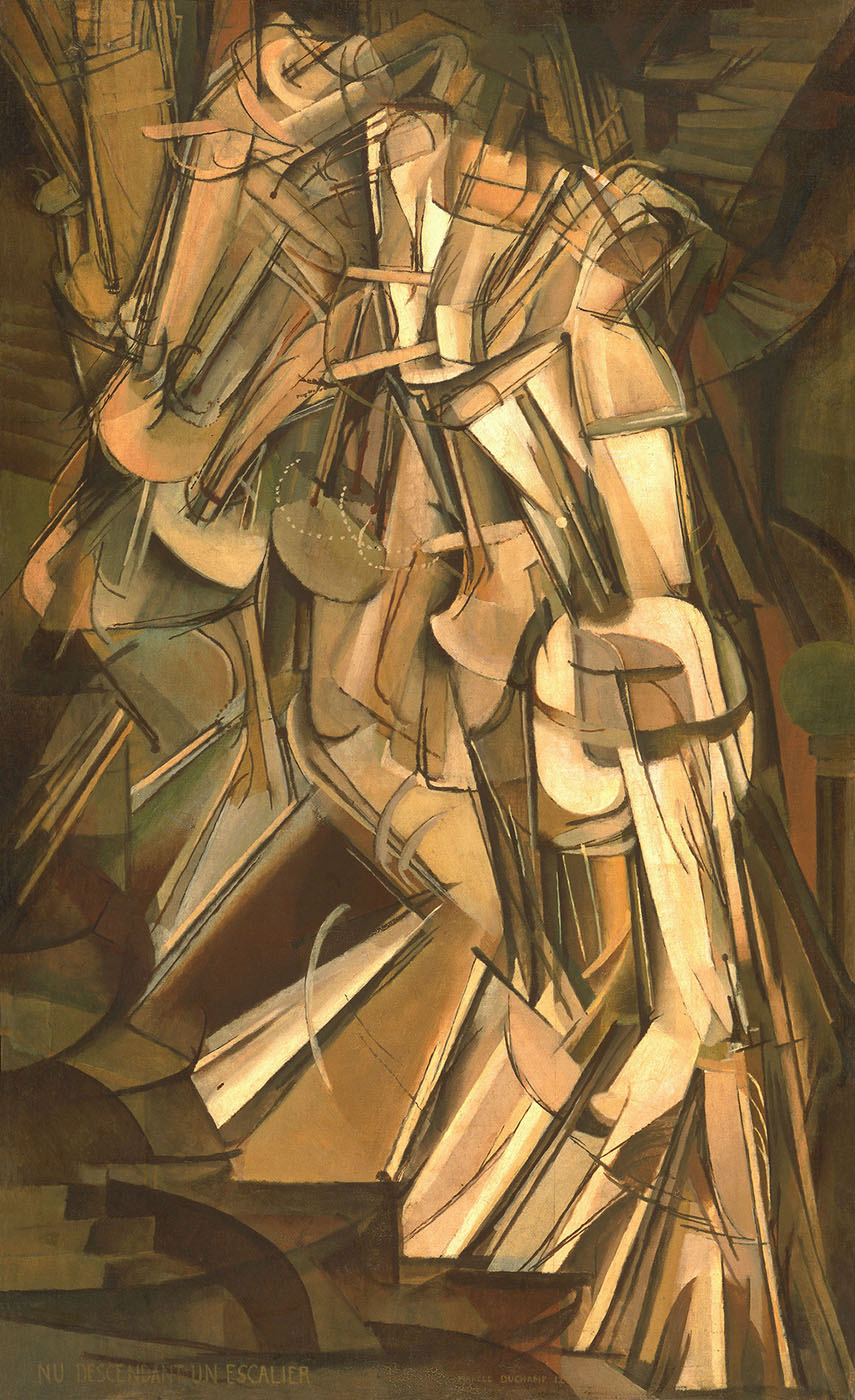
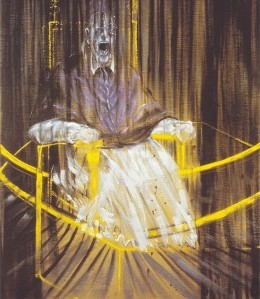
Il est remarquable que pour Bacon, Van Gogh, que le premier considére comme un "héros", a peint d'une "façon littérale" et que c'est grâce à celui qu'il a pu grâce à son "technicité" restitué "la vie" désertique du paysage.
Deleuze, G., Francis Bacon, rééd. par Badiou, A. et Cassin, B.,
...., in Verdier, R. (dir.), Jean Carbonnier. L'homme et l'oeuvre.
Comment dès lors ne pas penser à la définition de l'écriture par Céline, la définition comme le fait de tanner sa peau sur la table de l'écrivain ?
Terré, Fr., Jean Carbonnier et l'année sociologique, L'Année sociologique, 2007/2, vol.57, pp.555-569.
"le droit de la littérature est de n'y apparaître jamais comme auteur".
Comme le souligne très bien Frédérique Niboyer, pour montrer que les lois actuelles qui visent tous le cas possibles (ce qui est impossible) empruntent une méthode contraire à celle de Carbonnier : ""Le doyen Carbonnier avait une autre conception : une loi générale devait pouvoir s’adapter à tous (d’où le pluralisme du droit de la famille) tout en ouvrant des champs à d’autres ordres normatifs, alors qu’aujourd’hui le « légicentrisme » devient roi : la seule norme à laquelle on fasse confiance serait ici la loi qui, partant, doit être spécialisée pour chaque catégorie.".
Cité par Frédérique Niboyet, L'héritage de Carbonnier dans le droit matrimonial actuel : entre continuité et rupture, 2012, n°5.
Carbonnier, "A beau mentir qui vient de loin",
Updated: Sept. 24, 2019 (Initial publication: Aug. 31, 2019)
Publications

Summary : In August 2019, about the fire devastating the Amazon, the French Minister of Ecology says that this fact "is not just the business of a state" (n'est pas que l'affaire d'un Etat). This assertion denies the postulates of Public International Iaw (I). This supposes a new system, based on the idea that the power of the State on its territory is erased when the object that is there is no longer related to this "part" but to the All that is Universe (II). Let's accept the augur. First question: if it is not only the case of a State, whose business is it? (III). Second question: to anticipate the other cases that fall under this regime, what should be the criteria in the name of which the All will have to prevail over the part and who will then take care of the case of which the "local" State is divested? (IV). Because the perspective goes beyond the environment, beyond Brazil, beyond the States. It leads to Compliance Law animated by "monumental goals" that are the concern for the Universe and humans, in a humanist spirit. Let's go.
___
On August 27, 2019, on the French radio France Inter, Elisabeth Borne, French Minister of Ecology (Transition écologique) expresses it clearly: "Quand on est sur un enjeu tel que l'Amazonie, ça n'est pas que l'affaire d'un État", that can be translated : "When we are on a stake such as the Amazon, it is not only the business of one State ".
Starting from one case, "the Amazon", the Minister, thus taking up the position of the French President, associates a general consequence: "it is not only the affair of one State".
This is not a trivial sentence.
This affirmation denies, and why not, the entire system of Public International Law (I). By a new reasoning based on the idea that the All prevails, as by an effect of nature, on the Part (II).
Admitting this, it leads to opening two sets of questions. The first is related to the following main question: if it is not only the case of one State, of which is this the concern (III)? The second set of questions revolves around the questioning of the criteria on behalf of which other cases must be seized in the name of "All " and how to do it (IV).
A. The postulate of Public (and Private) International Law: parties (States) which, because of common interests, are in contact
The notion of State includes in its very definition the notion of territory (a territory, a population, institutions).
Thus the State governs through its institutions what is happening on its territory. For example, if there is a fire, or a risk of fire, the State makes arrangements through all legal, financial, technical and human instruments available to it. It is accountable for what it does through its political and legal responsibility.
When what is happening on its territory exceeds this one, in fact (epidemic, catastrophe with the consequences exceeding the borders, migrations, etc.) either according to its own opinion or according to that of the other States, the States, being sovereign subjects of Law in the international system, act together on a pre-built legal basis: bilateral or/and multilateral treaties!footnote-1675, having created legal integrated zones (like the European Union or the United States) or international institutions (like the IMF).
A particular technique has been developed for several millennia - but here again the seniority is not sufficient to keep the system: diplomacy, anchored in each state in a particular ministry: the Ministry of Foreign Affairs, which each national government has. If one State totally excludes one phenomenon in the territory of another, the progressive procedure of ceasing diplomatic ties begins.
This can result in wars.
In the "case of the Amazon" both the President of Brazil and the President of the United States stick to the classical construction of Law.
Indeed, the former asserted that the Amazon is in the territory of Brazil, thus falls under the jurisdiction of the power of the Brazilian State and the Brazilian Law, from which it follows that another State does not have to come to interfere. However, the French President takes the floor not as this forest extends also on a French territory but as it is the business of the World. On the contrary, the President of Brazil claims the closing effect, which excludes a third State from taking over directly something - even a difficulty - that takes place in the territory of another.
The President of the US federal State has said that these are joint decisions between the President of Brazil and other heads of State, sovereign subjects of Law, who must agree to organize a solution to solve a local problem . Because in the same way that States can declare war, they can help each other!footnote-1676.
The whole Public (and Private) International Law is therefore based on this assumption: "parts" of the world, on which sovereign parties (States) have taken contact, because circumstances make something that falls within one of them or several others.
This is precisely what is called into question. The notion of the "right of interference", whose evocation we hardly hear any more, had already done so. But on another basis.
B. The "right of interference": idea that somebody can directly interfere with what happens in a country , an idea that does not question the postulate of the International Maw, an idea that rests on something else: a " right for the other "
The "right of interference" is the idea that in certain territories, things happen that are inadmissible.
In memory of the jus cogens, a kind of "Natural Law" of Public International Law, Another, that could be another state, can come to meddle with what is happening in a territory that is closed, without declaring war. to the state that keeps its borders.
It is the need of others, for example those who die in mass on this territory, or the nature that is devastated in the indifference of the State on whose soil the disaster is happening, which founds this "right" of another state to come and take charge.
The foundation of this "right" is therefore a "duty".
C. The new idea: a territory is only part of the Globe, whose fate is everyone's concern
The idea is new because it is not based on altruism. And no more about self-interest. Yet, de facto and de jure , the Amazon is not on the sole territory of Brazil.
France is particularly well placed to say something about it since part of the Amazon is on French territory.
Thus the inaction of the main concerned Brazil directly affects the interest of France, a "forest" being a block that can not be divided. If we were in Property Law, we would say that we are in indivision with Brazil and that in this respect, with the other States on whose territories this forest extends, a solution must be found.
Because of the indivisibility of this particular object which is this particular fores!footnote-1644, it is necessary that the States whose territory is concerned have a say in the matter.
But this is not the argument put forward by France, particularly by the President of the Republic.
It is said that the whole world is concerned about the fate of the Amazon. It could be said that, in this respect, when what could be described as a "global forest" is well treated, its management does indeed fall within the power of Brazil, Brazilian companies and the Brazilian State, but when it is abused to the point of seeing its future compromised, when fires may make it disappear, then this forest appears not to be localized in Brazil but being located in the World, of which Brazil is only a part!footnote-1648.
This reasoning, which then gives voice to everyone, for in the world every state is included in it, is a new reasoning.
The economic-political theory of the "commons" does not account for it because it is not a very legal theory!footnote-1656.
II. THE NEW REASONING THAT COVERS THE CLASSIC REASONING OF PUBLIC INTERNATIONAL LAW
The new reasoning adopted by the Minister consists in saying that the Amazon does not concern only Brazil. This forest should therefore be directly related to the World (A). This is a welcome change in the system but based on a paradox (B).
A. When the Amazon is in danger of death, then it should no longer be attached to this part of the World that is Brazil, but directly to the World
This forest is presented as the "lung" of the planet, it is the "future" of humanity. In this, it can concern only one State, not even the one on whose territory this "Humanity good" is located!footnote-1643.
As such, without the need to declare war to Brazil, another State may speak, for example the French State through the one that represents it in the international order, that is to say its President, to say what to do, since according to him the President of Brazil does not say or do what it is absolutely necessary to do for the whole planet and for the future of Humanity.
This induces a complete renewal of international institutions.
Indeed a direct attachment to the World and no longer to Brazil gives the forest object a special status because of a goal that exceeds Brazil: save the Amazon would impose because it would save the world. Therefore, it can no longer be the subject of Brazil, which would be like "dispossessed" by a goal that is imposed on it: to save the Amazon rainforest, even though it is mainly on its territory, while other States become legitimate to dispose of this object, even if the forest would not be in part in their territory, even if they would not be affected in their own interests.
This contradicts all Public International Law!footnote-1645; because the agreement of the political representatives of Brazil is no longer required and no one yet evokes the need to declare war to Brazil, and fortunately!
Such an upheaval justifies that such an affirmation is accepted with difficulty. One understands better than first consequence, which is not so innocuous, one of the first rules of diplomacy which is the politeness, between the heads of state, with regard to the spouses of these , have be broken!footnote-1657, that the remarks have slipped on personal questions, etc.
B. A welcome but paradoxical change in the system
Why not change the system?
This is difficult to admit, not only because it is brutal, but because it is paradoxical.
The paradox is the following. It is recognized that the theme of the disappearance of borders by "globalization"!footnote-1647 no longer reproduces the reality of facts!footnote-1646, especially not the Chinese situation, the digitalization having on the contrary allowed the construction of even stronger boundaries. What we called "globalization" now belongs to the pastWhat we called "globalization" now belongs to the past!footnote-1660. So today we should recognize on one side the reality of borders - which had not disappeared or are reborn - but only to better step over them, since - based on the concern of the world - states, yet each in their borders, would be legitimate to go directly to intervene in the business of others.
The paradox is therefore, on the one hand, the rejection of the allegation of a de facto disappearance of borders by an economic interdependence, technology having denied "globalization" as a fact !footnote-1649 and the linked resurgence of borders allowing States to affirm more than ever that they would be "sovereign masters at home", which should logically lead to let Brazil decide for the Amazon, while yet on the other side we witness the questioning of the postulate of Public International Law as recognition of sovereignty and construction from agreements between states, requiring the agreement of the state whose territory is concerned (except war), questioning which leads to allow all to meddle with the fate of the Amazon, as if there was no border.
This paradox leads to two questions.
The first question is: if "it's not juste one State affair", who's concerned?
The second question is: after the "case of the Amazon", what are the other cases? And how are we going to provide solutions, if we no longer have the solutions of Public International Law, that is to say, the agreement of the country whose territory is concerned and which we do not want not go to war?
If we have clear ideas on the answers to be given to these two sets of questions, then because indeed when the future of all is in progress it can not be the affair of a single State, it is necessary to question Public International Law. But do we have clear ideas on these two questions? And what are the possibilities for possible solutions?
See the text following below.
Updated: July 4, 2019 (Initial publication: April 30, 2019)
Publications

► Complete reference : Frison-Roche, M.-A., Having a good behavior in the digital space, working paper, April 2019.
____
Summary: The jurist sees the world through the way he learns to speak
The Law of the Environment has already come to blur this distinction, so finally so strange because this classical conception refers to a person taken firstly in his immobility (Law of individuals), and then in his only actions (Contrats and Tort Law, Property Law). Indeed, the very notion of "environment" implies that the person is not isolated, that he/she is "surrounded", that he/she is what he/she is and will become because of what surrounds him/her ; in return the world is permanently affected by his/her personal action. On second thought, when once "Law of Individuals" was not distinguished from Family Law, the human being was more fully restored by this division in the legal system that not only followed him/her from birth to death but also in him/her most valuable interactions: parents, siblings, couples, children. Thus Family Law was finer and more faithful to what is the life of a human being.
To have instituted Law of Individuals, it is thus to have promoted of the human being a vision certainly more concrete, because it is above all of their identity and their body about what Law speaks, astonishing that we have not noticed before that women are not men like the others. To have instituted the Law of the people, it is thus to have promoted of the human being a vision certainly more concrete, because it is above all of his identity and his body that one speaks to us, astonishing that the we have not noticed before that women are not men like the others
From this concrete vision, we have all the benefits but Law, much more than in the eighteenth century, perceives the human being as an isolated subject, whose corporeality ceases to be veiled by Law
This freedom will come into conflict with the need for order, expressed by society, social contract, state, law, which imposes limits on freedom of one to preserve freedom of the other, as recalled by the French Déclaration des Droits de l'Homme of 1789. Thus, it is not possible de jure to transform every desire in action,, even though the means would be within reach of the person in question, because certain behaviors are prohibited in that they would cause too much disorder and if they are nevertheless committed, they are punished for order to return. Thus, what could be called "law of behavior", obligations to do and not to be put in criminal, civil and administrative Law, national and international Law, substantial Law and procedural Law :they will protect the human being in movment pushed by the principle of freedom forward others and thing, movement inherent in their status as a Person.
The human being is therefore limited in what they want to do. In the first place by the fact: their exhausting forces, their death that will come, the time counted, the money that is lacking, the knowledge that they does not even know not holding, all that is to say by their very humanity; Secondly, by the Law which forbids so many actions ...: not to kill, not to steal, not to take the spouse of others, not to pass as true what is false, etc. For the human being on the move, full of life and projects, Law has always had a "rabat-joy" side. It is for that reason often ridiculous and criticized because of all its restraining regulations, even hated or feared in that it would prevent to live according to our desire, which is always my "good pleasure", good since it is mine. Isolated and all-powerful, the human being alone not wanting to consider other than its desire alone.
Psychoanalysis, however, has shown that Law, in that it sets limits, assigns to the human being a place and a way of being held with respect to things and other persons. If one no longer stands themselves by the prohibition of the satisfaction of all desire (the first of which is the death of the other), social life is no longer possible
But this presentation aims to make it possible to admit that the criterion of Law would be in the effectiveness of a sanction by the public power: the fine, the prison, the confiscation of a good, which the rudeness does not trigger whereas Law would imply it: by this way we are thus persuaded of the intimacy between the public power (the State) and Law... But later, after this first lesson learned, the doubt comes from the consubstansuality between Law and State. Is it not rather appropriate to consider that Law is what must lead everyone to "behave well" with regard to things and people around them? The question of punishment is important, but it is second, it is not the very definition of Law. The French author Carbonnier pointed out that the gendarme's "kepi" is the "Law sign", that is to say what it is recognized without hesitation, but it is not its definition.
The first issue dealt with by Law is then not so much the freedom of the person as the presence of others. How to use one's freedom and the associated deployment of forces in the presence of others? How could I not using it when I would like to harm them, or if the nuisance created for them by the use of my free strength is indifferent to me
We do not use our force against others because we have interest or desire, we do not give him the support of our strength while he indifferent us, because Law holds us. If the superego was not enough. If Law and the "parental function of the States" did not make alliance. We do it because we hold ourselves
Or rather we were holding ourselves.
Because today a new world has appeared: the digital world that allows everyone not to "hold" himself, that is to say to constantly abuse others, never to take them into consideration, to attack massively. It's a new experience. It is not a pathological phenomenon, as is delinquency (which simply leads to punishment), nor a structural failure in a principle otherwise admitted (which leads to regulatory remedies) but rather a new use, which would be a new rule: in the digital space, one can do anything to everyone, one is not held by anything or anyone, one can "let go" (I). This lack of "good behavior" is incompatible with the idea of Law, in that Law is made for human beings and protect those who can not afford to protect themselves; that is why this general situation must be remedied (II).
Cornu, G., Linguistique juridique, 2005.
Frison-Roche, M.-A. & Sève, R., Le Droit au féminin (ed.), 2003.
Under this "mask" of the "subject of Law", we are all equal. S. Archives de Philosophie du Droit, Le sujet de droit, 1989.
Baud, J.P., L'affaire de la main volée. Histoire juridique du corps humain, 1993.
On neurosis as a constitutive mode of child sociability, s. Lebovici, S., "C'est pas juste", in La justice. L'obligation impossible, 1994.
Read the article of Alain Supiot about the idée of Rule common of all, under the discussion between all, presented by this author through the artwork of Kafka : "Kafka, artiste de la loi", 2019; Kafka is very present in the work of Alain Supiot, for example in his First Lesson in the Collège de France, 2012, or in an Introduction of La Gouvernance par les nombres ; This latter book is now available in English : Governance by numbers. The making a legal model of allegiance, 2017 (translated by S. Brown).
That's why splitting Persons Law and Family Law masks another reality: the family is not made up of third parties. The links are there. They pre-exist. Starting from the only Persons Law pushes to think one can "build" his/her family by links drawn on white paper: the contracting of the families made up of individuals becomes thinkable, even natural.

Feb. 13, 2019
Publications

Full reference: Frison-Roche, M.-A., Creating "Regulation Law" at Dauphine, in Huault, I. and Bouchard, B. (ed.), 50 years of Research in Dauphine. 1968-2019, 2019, pp. 110-114
Read Marie-Anne Frison-Roche's article (in French)
Read also:
The foreword of the book written by Bruno Bouchard (in French)
Feb. 9, 2019
Publications

► Référence complète : Frison-Roche, M.-A., Pour une conception humaniste du Droit des affaires et de son enseignement, document de travail, février 2019
____
📝ce document de travail a été élaboré pour servir de base à un article publié un an et demie après sa remise, en novembre 2020 dans les 📘
____
Alain Couret est un grand professeur de Droit et un très bon technicien de celui-ci. On se surprend soi-même non seulement à devoir souligner cette maîtrise technique insérée dans l'activité d'enseignement mais à prévenir qu'il s'agit d'une grande qualité. Cette maîtrise technique et l'aptitude à transmettre le savoir juridique par la compréhension de ses principes de base, n'est-ce pas le métier même de professeur ? Si chacun l'admet, alors désigner ainsi Alain relèverait du pléonasme...
Mais l'on entend souvent aujourd'hui que l'art juridique ne serait plus qu'un art de tordre les textes et les mots dans tous les sens, que ceux-ci s'y prêteraient, voire qu'ils seraient faits pour cela, qu'il faudrait apprendre avant tout à argumenter et à contredire si habilement que le tiers spectateur, qu'il soit juge, auditoire ou opinion publique, sera persuadé à la fin que, dans le cas particulier auquel la discussion est cantonné, l'intérêt défendu est bien le meilleur, que c'est bien celui-ci qu'il faut protéger et non pas celui de l'adversaire, qu'il faut rendre effectif cet intérêt singulier-là. Quitte à penser différemment dans le cas suivant. D'ailleurs, il sera possible par la suite de soutenir une autre cause, puisque les situations ne sont jamais semblables. Dans cette façon de faire, connaître techniquement le Droit et ses principes de base apparaît secondaire. La technique ? Cela serait les machines qui s'en chargeront. Les principes ? Ils seraient à éviter, parce que cela ne servira à rien : à chaque cas sa solution.
Par ses enseignements et ses écrits, Alain Couret exprime le contraire : le Droit des affaires n'est pas réductible à un amas réglementaire, repose sur des principes qui reflètent la conception que l'on se fait de la place des êtres humains dans les échanges, dans l'entreprise, dans l'organisation marchande. Enseigner le Droit des affaires, c'est transmettre ces principes. C'est aussi les discuter. Ecrire, dans une continuité avec l'enseignement, c'est au besoin inventer d'autres principes, tandis que les machines continuent de stocker par milliers les dispositions techniques posées là, chacune équivalente à une autre. Enseigner des principes, seuls les êtres humains sont aptes et soucieux de le faire, à l'exemple d'Alain Couret. Si on l'oublie, alors les professeurs étant devenus des répétiteurs, les machines répéteront bien mieux qu'eux par un débit infatigable les "paquets réglementaires". Mais inventer de nouveaux principes, seuls les êtres humains ont souci à le faire, à travers des idées. Lorsqu'un auteur prit l'image d'algorithmes qui "rêvent", c'était pour mieux poser qu'ils ne le font pas!footnote-1485, tandis que Lévi-Strauss définissait l'enseignement comme le fait pour une personne particulière de rêver tout haut.
Et le Droit des affaires, n'est-à-ce pas d'imagination et d'humanisme dont il a besoin, plus que jamais, puisque l'intimité des affaires et de la technologie mécanise les êtres humains ? , à travers des personnalités comme celle d'Alain Couret, alors même que nous allons toujours plus vers un pointillisme et une déshumanisation, à laquelle sa conception réglementaire participe ?
Nov. 21, 2018
Publications

Référence générale : Frison-Roche M.-A., Pour protéger les êtres humains, l'impératif éthique de la notion juridique de personne, in in "Droit et Ethique" (dossier spécial des Archives de Philosophie du Droit) Archives de Philosophie du droit (APD), La justice prédictive, Dalloz, 2018, z, pp. 363-378.
Résumé : C'est par le Droit que l'être humain a acquis en Occident une unité (I). Ce que la Religion avait pu faire, le Droit l'a également fait en posant sur chaque être humain la notion indétachable de lui de « personne » (I.A). Mais c'est cela qui est remis en cause aujourd'hui, non pas la personnalité et le pouvoir que l'être humain a d'exprimer sa liberté mais l'unité que cela implique dans la disposition que l'on a de soir en repoussant le désir qu'autrui a toujours eu de disposer de nous. Le Droit actuel tend en effet à « pulvériser » les êtres humains en données et à transformer en prestations juridique de « consentement », cessant d'être une preuve d'une volonté libre mais devenue une notion autonome , y suffirait (I.B.).
Pour empêcher que ne règne plus que la « loi des désirs », laquelle ne fait que traduire l'ajustement des forces, il faut requérir ici et maintenant la souveraineté éthique du Droit, parce que le Droit ne peut pas être qu'une technique d'ajustement des intérêts (II). L'on peut former cette requête si l'on ne veut pas vivre dans un univers a-moral (II.A), si l'on constate que l'unité de la personne est l'invention juridique qui protège l'être humain faible (II.B.). Si on en admet l'impératif, il faut alors se demander enfin qui en Droit va l'exprimer et l'imposer, notamment de la Loi, ou du Juge, car nous semblons avoir perdu la capacité de rappeler ce principe de la Personne sur laquelle l'Occident fut si centré. Or, les principes qui ne sont plus dits disparaissent. Il ne resterait plus alors que l'ajustement au cas par cas des intérêts entre êtres humains dans champ mondial des forces particulières. À cette aune, le Droit ne serait plus qu'une technique de sécurisation des ajustements particuliers. (II.C). Réduit à cela, le Droit aurait perdu son lien avec l'Éthique.
Consulter une présentation de l'ouvrage dans lequel l'article est publié.
Voir la présentation d'autres tomes des Archives de Philosophie du Droit.
Nov. 7, 2018
Publications

►Référence complète : M.-A. Frison-Roche, M.-A., "Le système juridique français constitue-t-il un atout ou un handicap pour nos entreprises et nos territoires ?" in M. Pébereau, M. (dir.), Réformes et transformations, PUF, 2018.
____
Résumé de l'article : La formulation de la question posée est comme une fermeture de tout débat, posant implicitement que le Droit devrait servir l'Économie et le servir "bien" (atout) plutôt que "mal" (handicap), alors qu'il faudrait s'accorder sur une méthode consistant pour chaque discipline à l'œuvre à ne prendre l'ascendant sur l'autre (I). Ce jugement doit être global, porter sur le droit en tant qu'il est un système. Quand on lit les différents travaux, ils ne portent que sur tel ou tel mécanisme, au mieux sur tel ou tel branche du Droit, ce qui méconnaît le fait que le Droit français est un système (II). C'est pourtant bien qu'en tant qu'il est un système que le Droit français doit être saisi, l’appréhender non seulement par ses signaux forts, mais aussi par ses signaux faibles Ceux-ci peuvent constituer les atouts les plus précieux (III). Plus encore, il est fructueux de donner plein effet à ce terme si particulier et peu souvent valorisé qu’est le terme de « territoire », placé dans la question, terme si ancien et aujourd'hui si intriguant puisque de "nouveaux territoires" s'offrent à nous : le digital, l’Europe. Et là, le système juridique français, que peut-il apporter, portant alors ce que l’on pourrait appeler la gloire française, car le Droit est comme le Politique une discipline qui porte des « prétentions », par exemple celle de construire l’Europe, par exemple l’Europe digitale (IV).
____
____
🚧Lire le document de travail ayant servi de base à l'article.
________
Updated: Sept. 8, 2018 (Initial publication: April 30, 2018)
Publications

► This working document was intended to serve as a support for a conference pronounced in French in the conference Droit et Ethique ( Law & Ethics) of May 31, 2018 in a symposium organized by the Court of Cassation and the Association Française de Philosophie du Droit. French Association of Philosophy of Law on the general theme Law & Ethics.
See a general presentation of this conference.
Rather, it has served as a support for the article to be published in the Archives de Philosophie du Droit (APD). This article is written in French.
► Summary: It is through the Law that the human being has acquired a unity in the West (I). What religion could have done, the Law also did by posing on each human being the indetachable notion of him of "person" (I.A). But this is what is challenged today, not the personality and the power that the human being has to express his freedom but the unity that implies in the disposition that we have of ourselves in repelling the desire that others have always had to dispose of us. Current law tends to "pulverize" human beings into data and transform into neutral legal services what was considered before as the devouring of others. The legal concept of "consent", ceasing to be proof of a free will but becoming an autonomous concept, would suffice (I.B.).
To prevent the reigning of the "law of desires", which merely reflects the adjustment of forces, we must demand here and now the ethical sovereignty of Law, because Law can not be just just be just the interests adjustment (II). We can form this request if we do not want to live in an a-moral universe (II.A), if we see that the unity of the person is the legal invention that protects the weak human being (II.B.). If we admit this imperative, then we must finally ask who in the legal system will express and impose it, especially the legislator or the judge, because we seem to have lost the ability to recall this principle of the Person on which the West was so centered. But the principles that are no longer said disappear. There would then remain only the case-by-case adjustment of interests between human beings in the world field of particular forces. At this yardstick, Law would be more than a technique of securisation of particular adjustments. Law would be reduced at that and would have lost its link with Ethics. (II.C).
Updated: Sept. 1, 2018 (Initial publication: May 10, 2018)
Publications

This working paper has served as a basis for an article written in French in the book Compliance : Entreprise, Régulateur, Juge ("Compliance: Enterprise, Regulator, Judge"), published in May 2018 in the Regulations Series of Dalloz editions (Paris).
See the other books published in this collection (presentation in French), directed by Marie-Anne Frison-Roche (presentation in English).
ABSTRACT: The Company, the Regulator and the Judge are three key figures for the construction of an emerging Compliance Law. An important risk lies in a confusion of their respective roles, the company becoming a regulator, the regulator becoming a board of a place that goes to the conquest of others, the judge standing back. It is appropriate that each plays his role and that their respective function is not distorted. If this confusion is avoided, then the points of contact can multiply and one observes it. But as soon as everyone remains in its place, we can go further than these points of contact and if they agreed, the three characters can reach common goals. This is all the more legitimate since Compliance Law, as Regulation Law, is teleological in nature, which makes these branches of law profoundly political. These common goals are technical, such as risk prevention. They can be more political and higher, if there is a shared will, without ever one of the characters being captured by another: it is then to concern by the human being. The designation of this common goal to the Company, the Regulator and the Judge can be expressed in one word: Europe.
Aug. 2, 2018
Publications

► Complete reference: Frison-Roche, M.-A., Yes to the principle of the will, No to the pure consents, working document for an article written in French Oui au principe de volonté, Non aux consentements purs, to Mélanges dedicated to Pierre Godé, 2018, available at http://mafr.fr/ en / article / yes-in-principle-of-the-desire-not in the consent /
► Summary: Pierre Godé devoted his thesis to defend the freedom of the human being, freedom that the person exercises by showing his will. This will manifests itself, even tacitly, by this trace of "consent". In a liberal society, politically and economically, that is to say a society based on the principle of the will of the person, consent must always be defined as the manifestation of the will, this link between consent and will being indivisible ( I). But by a perversion of liberalism, "consent" has become an autonomous object of the freedom of the person, mechanical consent that has made it possible to transform human beings into machines, machines to desire and machines to be desired, in a world of " pure consents","where we keep clicking, consenting to all without ever wanting. This consent, which has been split from the free will of the person, is the basis of the markets of the Human and the illiberal democracies, threats against human beings (II). The future of Law, in which Pierre Godé believed, is to continue to aspire to protect the human being and, without countering the free will of the human being as the movement of the law of the consumption had been tempted to, to renew with a liberal movement of Law and to fight against these systems of pure consents (III).
🔻read the article below (in French).
June 7, 2018
Publications

L'on semble bien obnubilé par le "RGPD"... Que l'on étudie virgule après virgule. Cela se comprend puisqu'il faut bien des modes d'emploi.
Il convient aussi de regarder ce qui a constitué son terrain et son contexte, avant de comprendre de quoi ce Règlement est porteur.
Pour le comprendre, il faut sans doute regarder certains détails, certains mots (sa "lettre"), son but (son "esprit"). D'ailleurs,classiquement en Droit dans le Code civil il est rappelé que pour connaître l'esprit d'un texte il faut partir de sa lettre, c'est-à-dire de ses mots. Et là, l'on est bien ennuyé pour que nous ne parlons que par sigles : RGPD, RGPD ... Mais ce sigle est-il même exact ? Est-ce là le titre du Règlement de 2016 ? Non. Le juriste, qu'il soit européen ou américain, de Civil Law ou de Common Law, ne lit pas les commentaires : il lit les textes, les lois et les jurisprudences. Il cherche les définitions et les qualifications. Il replace les mots qui se saisissent des réalités dans l'ensemble : par exemple : la "donnée". Il en cherche la définition. Qui définit ce qu'est une "donnée" ?
Puis il prend une perspective. Non pas parce qu'il est un bel esprit, qui aime les perspective. Non, le juriste est plutôt un esprit besogneux, assez plat. La perspective vient de la matière. Mais on sommes en "Droit économique". Et même en "Droit de la régulation". Or, dans ces matières-là, il n'est pas contesté que la "norme", le principe, celui qui donne un sens aux définitions, aux qualifications, aux règles techniques, qui donnent des solutions aux cas non prévus par le texte, est dans le but poursuivi par les dispositions : c'est un Droit de nature "téléologique".
Quel est le but du "RGPD". Il suffit de lire le titre de ce Règlement. Cela est bien difficile, puisqu'un sigle l'a désormais recouvert ... Mais ce règlement du 27 avril 2016 est relatif à la protection des personnes physiques à l'égard du traitement des données à caractère personnel et à la libre circulation de ces données
Il a donc deux buts : la protection des personnes ; la circulation des données.
Il faut donc poser que le but du Règlement est la construction de l'Europe numérique, sur le principe de circulation des données, principe libéral classique qui construit un espace par la dynamique de la circulation : c'est la perspective de l'Europe numérique qui anime le Règlement (I). Pour ce faire, quelle est la nouveauté du système ? Elle tient en une seule chose. Car le Parlement français a insisté sur le fait que la nouvelle loi de transposition adoptée le 17 mai 2018 vient modifier la loi informatique et Libertés de 1978 sans la remplacer. La nouveauté tient dans le fait que ce ne sont plus les Autorités publiques, nationales ou de l'Union qui sont en charge de l'effectivité du dispositif, mais les entreprises elles-mêmes : la Régulation digitale (qui demeure publique) a été internalisée dans les entreprises. Il s'agit désormais d'un mécanisme de "Compliance". En cela, le "RGDP" est non seulement le bastion avancé de l'Europe numérique, mais encore le bastion avancé de "l''Europe de la Compliance". Celle-ci a un grand avenir, notamment vis-à-vis des Etats-Unis, et les entreprises y ont un rôle majeur. Le numérique n'en est qu'un exemple, le Droit européen de la Compliance étant en train de se mettre en place.
Updated: May 30, 2018 (Initial publication: Sept. 23, 2017)
Publications
This working document served as a basis for a lecture given in French at the Académie des Sciences morales et politiques (French Academy of Moral and Political Sciences) on September 25, 2017, in the cycle of conferences conducted under the presidency of Michel Pébereau, Quelles réformes ? (What reforms?)
Consult the presentation (in French) of the conference cycle (2017).
It served as the basis for the publication of an article published in French in 2018 in the book directed by Michel Pébereau Réformes et transformations (Reforms and transformations).
Updated: April 4, 2018 (Initial publication: Nov. 12, 2017)
Publications

Pour lire l'article en français, cliquer sur le drapeau français.
This working paper serves as a support for an article published in French in the Recueil Dalloz.
In Lisbon, in the Web Summit of November 2017, a machine covered with a skin-like material and a sound-producing device gave a speech in public at this conference on digital. For example, a French article tells the event by this title : Le premier robot citoyen donne sa propre conférence au web summit (The first citizen robot gives his own conference to the web summit).
Some time later, reports show the same robot walking and taking more than 60 facial expressions, the text laudatif that accompanies the images designating the automaton by the article: she.
The machine, which falls legally within the category of "things", is thus presented as a person.
Let's look elsewhere.
Women, who are human beings, sign contracts by which they agree to give birth to children, with whom they claim they have no connection, that they are not mothers, that they will hand them over immediately at the exit of their belly to those who desired their coming, this desire for parenthood creating by hitself the true and only link between the child and his "parents of intent". The mother-carrier is often openly referred to as "oven".
The woman, who falls legally within the category of the "person", is thus presented as a thing.
The two sensational phenomena are of the same nature.
They call two questions:
1. Why? The answer is: money. Because both are the result of the new construction of two fabulous markets by supply.
2. How? The answer is: by the destruction of the distinction between the person and things.
The distinction between person and things is not natural, it is legal. It is the base of the western legal systems, their summa divisio.
If this distinction disappears, and for money to flow, it must actually disappear, then the weak human being will become the thing of the strong one.
Read below the developments.
It is true that in 1966, the BBC already presented a sort of robot being the "ideal" servant and designating it by the article "she".

March 6, 2018
Publications

Référence complète : Frison-Roche, M-A., La violence, ce lien qui unit la GPA et le mouvement #MeToo, Huffington Post, 6 mars 2018.
Lire le document de travail bilingue ayant servi de base à l'article.
La GPA est un des moyens par lequel la Route de la Violence dont les femmes sont les pavés est construite par les entreprises.
Le mouvement de lutte contre les violences faites aux femmes proteste contre cela.
Il souligne que cette violence est bâtie sur le "consentement" et le "sourire" des victimes.
Les auteurs de cette violence la justifie en se prévalant de ces consentements et de ces sourires : ils les font circuler comme "preuve" : le mouvement #metoo montre que c'est faux, que cela doit s'arrêter.
Nous-même, nous devons arrêter d'emprunter comme consommateurs cette Route de la Violence.
Nov. 30, 2017
Publications
► Référence complète : M.-A. Frison-Roche, La disparition de la distinction de jure entre la personne et les choses : gain fabuleux, gain catastrophique, in Recueil Dalloz, n°41, 30 novembre 2017, pp. 2386-2389.
____
► Résumé de l'article : Les robots se présentent comme des personnes, des systèmes juridiques leur conférant ce statut. Des femmes se présentent comme des purs et simples moyens, réification avalisée par certains. La cause est commune : les profits sans limite pour les concepteurs d'un marché mondial où des machines humanoïdes offrent toutes prestations sans limite, notamment sexuelles, miroir du marché des femmes, objets sexuels ou reproducteur (GPA). Cette évolution juridique archaïque est bloquée par la summa divisio entre la personne et les choses. Le Politique doit maintenir cette distinction qui n'est pas de fait mais "de droit".
____
lire le document de travail bilingue ayant servi de base à l'article.
____
________
Nov. 28, 2017
Publications
Référence générale : Abécassis, É. et Frison-Roche, M.-A., Au nom du "droit à l'enfant", la proposition de loi sur la résidence alternée conçoit l’enfant comme une chose à partager, Huffington Post, 28 novembre 2017.
Une proposition de loi a été déposée devant le bureau de l'Assemblée Nationale et arrive en discussion à la séance du 30 novembre 2017.
Elle vise à déposséder le juge de sa fonction de choisir dans l'unique intérêt de l'enfant les modalités de la vie quotidienne de celui-ci.
Le "principe" devrait être la garde alternée, le juge ne pouvant plus s'en écarter qu'à titre exceptionnel.
Pourquoi un tel "principe" que la loi imposerait ?
C'est comme si les parents étaient propriétaires de l'enfant, qu'ils se partageraient à la fin de leur couple. Car si le "couple parental" survit au "couple conjugal", alors ils adopteraient la nouvelle procédure mise en place par la Réforme du divorce du 17 novembre 2016 qui place le divorce par consentement mutuel hors du contrôle du juge.
Le couple qui se dispute se partagerait donc par "principe" l'enfant, comme on se partage les petites cuillères.
L'enfant coupé en deux.
Pauvre enfant.
Lire l'article sur le site du Huffington Post.
Updated: Oct. 25, 2017 (Initial publication: May 27, 2016)
Publications

► Full Reference: Frison-Roche, M.-A., Globalization from the point of view of Law, working paper, May 2017.
____
🎤 This working paper initially served as a basis for a synthesis report made in French in the colloquium organized by the Association Henri Capitant in the International German Days on the subject of "Le Droit et la Mondialisation" (Law and Globalization).
📝 Il sert dans un second temps de base à l'article paru dans l'ouvrage La Mondialisation.
📝 it serves as a second basis for the article (written in English, with a Spanish Summary) to be published in the Brezilian journal Rarb - Revista de Arbitragem e Mediação (Revue d`Arbitrage et Médiation).
It uses the Bilingual Dictionary of the Law of Regulation and Compliance.
____
► Summary of the Working: Globalization is a confusing phenomenon for the jurist. The first thing to do is to take its measure. Once it has been taken, it is essential that we allow ourselves to think of something about it, even if we have to think about it. For example, on whether the phenomenon is new or not, which allows a second assessment of what is taking place. If, in so far as the law can and must "pretend" to defend every being, a universal claim destined to face the global field of forces, the following question - but secondary - is formulated: quid facere? Nothing ? Next to nothing ? Or regulate? Or can we still claim that the Law fulfills its primary duty, which is to protect the weak, including the forces of globalization?
____
read the Working Paper below⤵️
Oct. 2, 2017
Publications
Un lien, voire une intimité, voire une confusion est souvent faite entre PMA et GPA.
Il ne faut pas le faire.
Parce que l'ouverture de l'insémination avec donneur anonyme (IAD) aux femmes seules ou en couple n'a pas les mêmes conséquences ni les mêmes enjeux que la GPA. L'enjeu de civilisation est situé dans la GPA, laquelle met en danger l'humanité elle-même, notamment dans l'asservissement des femmes et la production industrielle et eugénique de l'humain, en articulation avec la construction d'un marché mondial de l'humain, dimension que n'a pas la PMA.
March 30, 2017
Publications

Compliance. Trust. Two words that come more and more often than before at our readers' eyes or listeners' ears. And yet they do not seem to match well. They even seem to repel each other.
Indeed, Compliance is the way in which Public Authorities trust certain private operators, not in themselves, but with their structural capacities to mechanically capture the information that these authorities need (I).
This presupposes a vision of the world in which Companies are powerful and powerful alone but are not virtuous, while Public Authorities, such as the Public Prosecutor's Office or Regulators, are weak but virtuous alone. Such a conception of Compliance transforms companies into automata. Such a vision of the world has no future: only human beings can be trusted, whose fallibility must be accepted, as Compliance is then the expression of a relationship built on trust that is to be seen between non-mechanical operators, namely public Institutions and private Operators, who can both have in common concern for an interest which goes beyond them and which was formerly called the general interest (II).
From this reality, no new doubt for private companies, but which explains the strange intimacy between the violent Compliance Law and the new spontaneous order of Corporate Social Responsibility, it is up to them to demonstrate this concern Cf others that it shares with the Public Authorities, except to fall in Compliance reduced to costly procedures, empty endless staked out of sanctions without control.
It is thus for Companies to make this branch of Compliance Law emerging become what can be the best, when it is possible that it becomes what would be the worst.
Jan. 31, 2017
Publications

Référence complète : Frison-Roche, M.-A., La GPA, ou comment rendre juridiquement disponible les corps des êtres humains par l’élimination de la question, in Feuillet-Liger, B. et Oktay-Ozdemir, S. (dir.), La non-patrimonialité du corps humain : du principe à la réalité. Panorama international, coll. "Droit, Bioéthique et Société", n°17, éd. Bruylant, 2017, p. 365-382.
Pour une présentation générale de l'ouvrage.
Lire une présentation détaillée de l'ouvrage.
Ce article s'appuie sur un working paper qui inclut des développements supplémentaires, des références des notes et des liens hypertextes.
Le système juridique a posé sur le principe premier de la dignité de la personne humaine le principe secondaire de l'indisponibilité du corps de celle-ci, puisque disposer du corps humain permet d'une façon transitive de disposer de la personne comme l'on ferait d'une chose. Dans la mesure où le Droit a posé la summa divisio entre la "personne" et les choses comme première protection des personnes, il s'oppose ainsi à la cession des personnes à travers ce qui serait la disponibilité de fait ou de droit de leur corps.
L'engendrement par des femmes fertiles d'un enfant à seule fin de le délivrer à des personnes qui ont conçu le projet de devenir les parents de celui-ci (Gestation pour autrui -GPA) bute sur les deux principes articulés de la dignité des deux personnes que sont la mère et l'enfant et de l'indisponibilité des corps de la femme et de l'enfant. C'est pourquoi les entreprises qui organisent cette industrie qui alimente ce commerce mondial développent un discours juridique visant à désincarner cette pratique non pas tant pour justifier cette mise à disposition des corps des femmes afin de livrer les bébés à ceux qui versent les honoraires aux intermédiaires afin de devenir parents mais plus radicalement pour que la question même de la disponibilité ou de l'indisponibilité des corps impliqués par la pratique de la GPA soit une question qui ne se pose pas.
Il est pourtant nécessaire de rappeler qu'il n'y a GPA qu'appuyée sur une réalité corporelle, celle de la grossesse (I). Pour passer sous silence cet usage du corps de la femme, la GPA est présentée par ceux à qui cela rapporte comme un "don", cette qualification non-patrimoniale de ce qui est cédé, don pur de bonheur, permettant de rendre juridiquement licite l'usage du corps et la cession de l'enfant (II). La filiation est alors promue comme issue de la seule volonté et de la seule affection, qui fait naître l'enfant, l'effacement des corps permettant de mieux en disposer dans un marché mondial hautement profitable. Un Droit qui se scinde ainsi de la réalité corporelle devient proprement délirant.

Updated: Nov. 30, 2016 (Initial publication: Sept. 29, 2016)
Publications

► Full reference: M.-A. Frison-Roche, "Le Droit de la compliance" ("Compliance Law"), D.2016, Chron., pp.1871-1874.
____
► English Summary of the article: Constraints weighing on companies in terms of Compliance multiply and get heavier. But the notion is contradictory, uncertain, "strange", the expression of "conformity" being only a transposition in French.
Compliance appears today as the world internalisation of a public regulation, often conceived in the United-States, in firms, transformed in effectivity agents of global monumental goals: competition equity, fight against terrorism or States deemed unworthy (embargos).
Rather than borrowing scattered solutions, it is essential to build a "Compliance Law", properly European, to which everyone will be accountable.This new branch of Law is built teleologically on its Monumental Goals. It is driven by crucial businesses. The Judge is at its centre.
____
📝read the article (in French)
____
🚧Read the bilingual Working Paper on the basis of which the article was written.