Food for thoughts

Feb. 2, 2023
Thesaurus : Doctrine
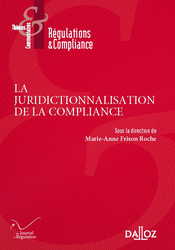
► Full Reference: A. Bruneau, "L'entreprise juge d'elle-même : la fonction compliance dans la banque" ("The company judge of itself: the compliance function inside the bank"), in M.-A. Frison-Roche (ed.), La juridictionnalisation de la Compliance, coll. "Régulations & Compliance", Journal of Regulation & Compliance (JoRC) and Dalloz, 2023, p. 115-131.
____
📕read a general presentation of the book, La juridictionnalisation de la Compliance, in which this article is published
____
► Summary of the article (done by the author): First of all, it should be remembered that the compliance function was born within finance, and that by being structured, it has evolved to support the transition from regulatory law to compliance law. Through these changes, compliance has gone from an ex-post controlling function to an ex-ante binding function. The LIBOR crisis imperfectly illustrates the primacy of this transition. The evolution of this role is illustrated by concrete examples
Firstly, the management of reputational risk is a fundamental part of the company as prosecutor and judge of itself. Reputational risk is a significant element for a financial institution, because it can have negative consequences on its capitalization, or even culminate in a systemic crisis. Avoiding a large-scale financial crisis is also part of the monumental goals of compliance.
In order to avoid complex and inopportune scenarios, compliance law intervenes as early as possible and identifies issues that may impact reputation. The regulations require the implementation of certain ex ante mechanisms. The French law known as "Sapin 2" requires the implementation of tools that concern all companies (and not just banks). Indeed, beyond the risk of reputation, it is essential to consider the risk of corruption. Consideration of reputational risk may justify refusing to execute certain transactions. From this perspective, compliance must assess the potential consequences of entering into a relationship with a new client upstream, sometimes to decline the provision of services. The compliance function therefore unilaterally judges the relationship with a view to managing the company reputational risk.
Secondly, the internal sanction mechanism established by compliance law is also discussed in this article, in particular the internal sanctions adopted by compliance in a financial institution.
Compliance can act as a prosecutor via management committees set up within the business lines. In addition, compliance can determine and apply sanctions against employees. In this way, there is a dual role of prosecutor and judge for the compliance function within the framework of an extraordinary mechanism of ordinary law.
Finally, the analysis deals with the case of the "judge-judged": following a decision by the bank, the regulator may take an even stricter position by believing that the bank is applying its guidelines incorrectly. Thus, the compliance law, which takes hold within the banking enterprise, finds itself under the judgment of its own regulator. The company finds itself judged and comes to be a prosecutor and judge of itself, but also of its clients.
__________
Feb. 2, 2023
Publications
► Full reference: M.-A. Frison-Roche, "Ajuster par la nature des choses le Droit processuel au Droit de la Compliance" ("Adjusting by the nature of things General Procedural Law to Compliance Law"), in M.-A. Frison-Roche (ed.), La juridictionnalisation de la Compliance, coll. "Régulations & Compliance", Journal of Regulation & Compliance (JoRC) and Dalloz, 2023, p. 251-262.
____
📝read the article (in French)
____
🚧read the bilingual Working Paper which is the basis of this article, with additional developments, technical references and hyperlinks
____
📕read a general presentation of the book, La juridictionnalisation de la Compliance, in which this article is published
____
► The principal elements of this articles had been presented during the scientific manifestation held on September 23, 2021, at Dauphine University in Paris, coorganised by the Journal of Regulation & Compliance (JoRC) and the Institute Droit Dauphine.
In the book this article is placed in the chapter II about the General Procedural Law in the Compliance Law.
____
► Summary of the article (done by the Journal of Regulation & Compliance): Procedural law is an invention, essentially due to professor Motulsky, going well beyond the gain that one always has in comparing types of procedures with each other. As he asserted, there is Natural Law in General Procedural Law, in that as soon as there is the Rule of Law Principle there cannot be, whatever the "procedure", even the "process" such and such way of doing things: for example, to decide, to seize the one who decides, to listen before deciding, to contest the one who has decided.
General Procedural Law therefore depends on the nature of things. However, Compliance Law organizes things in a new way. Therefore, both the simple and iron principles of General Procedural Law creep in where we do not expect them at first sight, because there is no judge, this character around whom ordinary procedures fit together. The principles of General Procedural Law are essential in companies. Even if the regulations do not breathe a word about it, it is up to the Judges, in particular the Supreme Courts, to recognize this nature of things because on this effect of nature that General Procedural Law is built: when compliance mechanisms oblige companies to strike, General Procedural law must oblige, even in the silence of the texts, to arm those who can be hit, even stand up against devices that would set aside too much these defenses that are easily considered contrary to efficiency (I).
But because it is a question of making room for this nature of the things of which the Rule of Law Principle entrusts the custody to the Judge and the Lawyer, the General Procedural Law must also adjust itself to what the extraordinary new branch of Law Compliance Law is. Indeed, Compliance Law is extraordinary in that it expresses the political pretention to act now so that the future will not be catastrophic, by detecting and preventing the realization of systemic risks, or even that it is better, by building effective equality or real concern for others. Because it is the Monumental Goals that defines this new branch of Law, a disputed systemic issue, possibly disputed by several parties before a judge, the procedural principles used by the court must be broadened considerably: they must then include civil society and the future (II).
General Procedural Law thus naturally acquires an even more place than in the classic branches of Law since on the one hand it imposes itself outside of trials, particularly in companies and on the other before the courts it involves people who had hardly any place to speak and thinks themselves, especially the systems entering the "causes" of Compliance now debated before the Judge.
________
Feb. 2, 2023
Publications
🌐 follow Marie-Anne Frison-Roche sur LinkedIn
🌐 subscribe to the Newsletter MAFR Regulation, Compliance, Law
____
► Full Reference: M.-A. Frison-Roche, "Le jugeant-jugé. Articuler les mots et les choses face à l'éprouvant conflit d'intérêts" ("The Judge-Judged. Articulating words and things in the face of the testing conflict of interest"), in M.-A. Frison-Roche, (ed.), La juridictionnalisation de la Compliance, coll. "Régulations & Compliance", Journal of Regulation & Compliance (JoRC) and Dalloz, 2023, p. 59-80.
____
📝read the article (in French)
____
🚧read the bilingual Working Paper which is the basis of this article, with additional developments, technical references and hyperlinks
____
📕read a general presentation of the book, La juridictionnalisation de la Compliance, in which this article is published
____
► Summary of the article (done by the Journal of Regulation & Compliance): Since the topic of this article is part of a chapter devoted to the Company established as Prosecutor and Judge of itself by Compliance Law, chapter aiming to use the relevant qualifications, it is appropriate therefore to worry about the adjustment of words and things, of the way in which the relationship between ones and the others evolve, and of the more particular question of knowing if this evolution is radical or not when one speaks of "judge ".
because "judging" is a word that the Law has disputed with other disciplines, but that it has appropriated not so much to confer more powers on those who act in its name, for example that who supervise and punish, but on the contrary to impose limits, since to the one who judges it has put the chains of the procedure under foot, thus making bearable for the other the exercise of such a power. Therefore, those who want the power to judge would often want to not have the title, because having de jure the title of judge is being subject to the correlated regime, it is to be submitted to procedural correctness.
It is therefore to better limit that the Law sees who judges, for obliging this so-powerful character to the procedure. But the Law also has the power to appoint a judge and to fix the contours of all the characters in the trial. He usually does it with clarity, distinguishing the ones of the others, not confusing them. This art of distinction has constitutional value. Thus, not only the one who judges must be named "judge" but the procedural apparatus which goes with this character, and which constitutes a way of doing things and fundamental rights, are not "granted" by kindness or in a second step: it is a block. If you didn't want to have to endure procedural rights, you didn't have to want to be a judge. Admittedly, one could conclude that the procedure would therefore have become "substantial"; by this elevation, it is rather a fashion of saying that the procedure would no longer be a "servant": it is a kind of declaration of love for the procedure, as long as one affirms that at the acts of judging , or investigating, or prosecuting, are "naturally" attached the procedural rights for the one who is likely to be the object of these powers.
Compliance Law, in search of allies to achieve the Monumental Goals for the aims of which it was instituted, will require, or even demand, private companies to go and seek themselves, in particular through investigations. internal or active vigilance on others, for finding facts likely to be reproached to them. Compliance Law will also require that they prosecute those who have committed these acts. Compliance La will again demand that they sanction the acts that people have committed in their name.
This is clearly understood from the point of view of Ex Ante efficiency. The confusion of roles is often very efficient since it is synonymous with the accumulation of powers. For example, it is more efficient that the one who pursues is also the one who instructs and judges, since he knows the case so well... Besides, it is more efficient that he also elaborates the rules, so he knows better than anyone the "spirit" of the texts. This was often emphasized in Regulatory Law. When everything is Information and risk management, that would be necessary ... But all this is not obvious.
For two reasons, one external and the other internal.
Externally, the first reason is that it is not appropriate to "name" a judge who is not. This would be too easy, because it would then be enough to designate anyone, or even to do it oneself to appropriate the regime that goes with it, in particular for obtain a so-called legitimate power for obtaining that others obey even though they are not subordinate or from them they transmit information, even though they would be competitors: it would then be necessary to remember that only the Law is able to appoint judge ; in this new Compliance era, companies would be judges, prosecutors, investigators! Maybe, if the Law says it, but if it didn't, it would be necessary to come back to this tautology ... But are we in such a radicalism? Moreover, do judges have "the prerogative" of judgment and the Law has not admitted this power for companies to judge for a long time? As soon as the procedure is there in Ex Ante and the control of the judge in Ex Post?
The second reason, internal to the company, situation on which the article focuses, is that the company investigates itself, judges itself, sanctions itself. However, the legal person expressing its will only through its organs, we underline in practice the difficulties for the same human being to formulate grievances, as he/she is the agent of the legal person, addressed to the natural person that he/she himself/herself is. The two interests of the two are not the same, are often opposed; how the secrets of one can be kept with respect to the other, represented by the same individual? ... It is all the mystery, even the artifice of legal personality that appears and we understand better that Compliance Law no longer wants to use this strange classical notion. Because all the rules of procedure cannot mask that to prosecute oneself does not make more sense than to contract with oneself. This conflict of interest is impossible to resolve because naming the same individual X then naming him/her Y, by declaring open the dispute between them does not make sense.
This dualism, which is impossible to admit when it comes to playing these functions with regard to corporate officers, can come back to life by setting up third parties who will carry secrets and oppositions. For example, by the designation of two separate lawyers for the human being agent and the human being representative of the legal person, each lawyer being able to have secrets for each other and to oppose each other. These spaces of reconstitution of the so "natural" oppositions in procedure between the one who judges and the one who is judged can also take the technological form of platforms: where there is no longer anyone, where the process has replaced the procedure, there is no longer any human judgment. We can thus see that the fear of conflicts of interest is so strong that we resign ourselves to saying that only the machine would be "impartial", a derisory conception of impartiality, against which it is advisable to fight.
This then leads to a final question: can the company claim to exercise the jurisdictional power to prosecute and judge and investigate without even claiming to be a prosecutor, an investigating judge, or a court? The company's advantage would be to be able to escape the legal regime that classical Law attaches to its words, mainly the rights of the defense and the rights of action for others, the principle of publicity of justice for everyone, which expresses the link between procedure and democracy. When Facebook said on June 12, 2021 "react" to the decision of May 5, 2021, adopted by what would only be an Oversight Board to decide "as a consequence" of a 2-year suspension of Donald Trump's account, the art of qualifications seem to be used in order to avoid any regime constraint.
But this art of euphemism is very old. Thus, the States, when they wanted to increase repression, presented the transformation of the system as a softening of it through the "decriminalization" of Economic Law, transferred from the criminal courts to the independent administrative agencies. The efficiency was greatly increased, since the guarantees of the Criminal Procedure ceased to apply. But 20 years later, Words found their way back to Things: under Criminal Law, slept the "criminal matter", which requires the same "Impartiality". In 1996, a judge once affirmed it and everything was changed. Let us therefore wait for what the Courts will say, since they are the masters of qualifications, as Article 12 of the French Code of Civil Procedure says, as Motulsky wrote it in 1972. Law has time.
________
Updated: Feb. 2, 2023 (Initial publication: March 31, 2021)
Thesaurus : Doctrine
► Full Reference: F.-X. Train, "Arbitrage et procédures parallèles exercées au titre de la compliance" ("Arbitration and parallel proceedings exercised in Compliance Procedure"), in M.-A. Frison-Roche (ed.), La juridictionnalisation de la Compliance, coll. "Régulations & Compliance", Journal of Regulation & Compliance (JoRC) and Dalloz, 2023, p. 355-368.
____
📕read a general presentation of the book, La juridictionnalisation de la Compliance, in which this article is published
____
► The summary below describes the article that follows an intervention in the scientific manifestation Compliance et Arbitrage, co-organised by the Journal of Regulation & Compliance (JoRC) and the University Panthéon-Assas (Paris II). This conference was designed by Marie-Anne Frison-Roche and Jean-Baptiste Racine, scientific co-directors, and took place in Paris II University on March 31, 2021.
In the book, the article will be published in the Chapter III, devoted to: Compliance et Arbitrage international.
____
► Summary of the article (done by the Journal of Regulation & Compliance): Firstly, the article insists on the principle of the autonomy of the international arbitration procedure, in relation to which parallel procedures remain watertight, whether they are criminal or done under Compliance Law. In the arbitral proceedings taking place independently, the arbitrators before whom the facts also referred to in these parallel proceedings, in particular the facts of corruption, are alleged before them as facts through their unlawful nature: it is at this title that they can and must apprehend them, using the standard of proof which is the bundle of clues.
Secondly, the article highlights the limits of the autonomy of international arbitration. These may be de facto limits because in the search for evidence by arbitrators, red flags are often insufficiently consistent evidence to establish a sentence, especially since this sentence may be subject to control by the judge of its conformity to international public order, the annulment by the judge being able to be based on external elements, even after the arbitration procedure. It may then be wise for the arbitrators, who are not forced to do so, to suspend their proceedings to wait the results of the parallel proceedings initiated under Compliance Law, so that the procedures and their results could be harmonious.
________
Feb. 2, 2023
Publications
♾️ follow Marie-Anne Frison-Roche on LinkedIn
♾️ subscribe to the Newsletter MAFR Regulation, Compliance, Law
____
► Full Reference: M.-A. Frison-Roche, "Conforter le rôle du Juge et de l'Avocat pour imposer la Compliance comme caractéristique de l'État de Droit" ("Reinforce the Judge and the Attorney to impose Compliance Law as a characteristic of the Rule of Law"), in M.-A. Frison-Roche (dir.), La juridictionnalisation de la Compliance, coll. "Régulations & Compliance", Journal of Regulation & Compliance (JoRC) and Dalloz, 2023, p. 29-55.
____
► This article is the introduction of the book.
____
📝read the article (in French)
____
🚧read the bilingual Working Paper which is the basis of this article, with additional developments, technical references and hyperlinks
____
📕read a general presentation of the book, La juridictionnalisation de la Compliance, in which this article is published
____
► Summary of the article (done by the Journal of Regulation & Compliance): One can understand that the compliance mechanisms are presented with hostility because they seem designed to keep the judge away, whereas there is no Rule of Law without a judge. Solid arguments present compliance techniques as converging towards the uselessness of the judge (I). Certainly, we come across magistrates, and of all kinds, and powerful ones, but that would be a sign of imperfection: its ex-ante logic has been deployed in all its effectiveness, the judge would no longer be required... And the lawyer would disappear so with him...
This perspective of a world without a judge, without a lawyer and ultimately without Law, where algorithms could organize through multiple processes in Ex Ante the obedience of everyone, the "conformity" of all our behaviors with all the regulatory mass that is applicable to us, supposes that this new branch of Law would be defined as the concentration of processes which gives full effectiveness to all the rules, regardless of their content. But supposing that this engineer's dream is even achievable, it is not possible in a democratic and free world to do without judges and lawyers.
Therefore, it is imperative to recognize their contributions to Compliance Law, related and invaluable contributions (II).
First of all, because a pure Ex Ante never existed and even in the time of the Chinese legists, people were still needed to interpret the regulations because a legal order must always be interpreted Ex Post by who must in any case answer the questions posed by the subjects of law, as soon as the political system admits to attributing to them the right to make claims before the Judge. Secondly the Attorney, whose office, although articulated with the Judge's office, is distinct from the latter, both more restricted and broader since he must appear in all cases where the judicial figure puts himself in square, outside the courts. However, Compliance Law has multiplied this since not only, extending Regulatory Law, it entrusts numerous powers to the administrative authorities, but it also transforms companies into judges, in respect of which the attorneys must deal with.
Even more so, Compliance Law only takes its sense from its Monumental Goals. It is in this that this branch of the Law preserves the freedom of human beings, in the digital space where the techniques of compliance protect them from the power of companies by the way that the Compliance Law forces these companies to use their power to protect people. However, firstly, it is the Judges who, in their diversity, impose as a reference the protection of human beings, either as a limit to the power of compliance tools or as their very purpose. Secondly, the Attorney, again distinguishing himself from the Judge, if necessary, reminds us that all the parties whose interests are involved must be taken into consideration. In an ever more flexible, soft, and dialogical Law, everyone presenting himself as the "advocate" of such and such a monumental goal: the Attorney is legitimate to be the first to occupy this place.
________

Updated: Feb. 2, 2023 (Initial publication: March 31, 2021)
Thesaurus : Doctrine
► Full Reference: J.-B. Racine, "Compliance et Arbitrage. Essai de problématisation" ("Compliance and Arbitration : Problematisation", in M.-A. Frison-Roche (ed.), La juridictionnalisation de la Compliance, coll. "Régulations & Compliance", Journal of Regulation & Compliance (JoRC) and Dalloz, 2023, p. 265-279.
____
📕read a general presentation of the book, La juridictionnalisation de la Compliance, in which this article is published
____
► The summary below describes an article that follows an intervention in the scientific manifestation Compliance et Arbitrage, co-organised by the Journal of Regulation & Compliance (JoRC) and the University Panthéon-Assas (Paris II). This conference was designed by Marie-Anne Frison-Roche and Jean-Baptiste Racine, scientific co-directors, and took place in Paris II University on March 31, 2021.
In the book, the article will be published in Title II, devoted to: Compliance et Arbitrage.
____
► Summary of the article (done by the author): Under the consideration of the "Compliance Juridictionalisation", it is necessary to study in the links between Compliance and Arbitration. The arbitrator is a judge, he is even the natural judge of international trade. Arbitration is therefore naturally intended to meet compliance which transforms the action of companies in an international context. However, the links between compliance and arbitration are not obvious. It is not a question of providing firm and definitive answers, but rather, and above all, of asking questions. We are at the start of reflection on this topic, which explains why there is, for the time being, little legal literature on the subject of the relationship between Compliance and Arbitration. It doesn't mean there aren't connections. Quite simply, these relations may not have come to light, or they are in the making. We should research the existing or potential bridges between two worlds that have long gravitated separately: Compliance on the one hand, Arbitration on the other. The central question is: is or can the arbitrator be a compliance judge, and, if so, how?
In any event, the Arbitrator is thus in contact with matters requiring the methods, tools and logic of Compliance. In addition to the prevention and suppression of corruption, three examples can be given.
- Arbitration has been facing economic sanctions (notably embargoes) for several years. The link with Compliance is obvious, insofar as texts providing for economic sanctions are often accompanied by compliance mechanisms, as in the United States. The arbitrator is concerned as to the fate he reserves in the treatment of the dispute with the measures of economic sanctions.
- Competition Law is a branch that came into contact with Arbitration from the end of the 1980s. The arbitrability of this type of dispute is now established and arbitrators apply it regularly. At the same time, Compliance has also entered Competition Law, admittedly more strongly in the United States than in France. The existence, absence or insufficiency of a compliance program aimed at preventing violations of the competition rules are thus circumstances which may assist the arbitrator in the assessment of anti-competitive behavior.
- Environmental Law is also concerned. There is environmental Compliance, for example with regard to the French law of March 27, 2017 on the duty of vigilance. Companies are thus responsible for participating in the protection of the environment, by internalizing these concerns in their internal and external operations (in their sphere of influence). As soon as an arbitrator is in charge for settling a dispute relating to Environmental Law, the question of the relationship to Compliance, from this angle, naturally arises.
It is therefore the multiple interactions between Compliance and Arbitration, actual or potential, which are thus open.
________
Feb. 2, 2023
Thesaurus : Doctrine
► Full Reference: O. Douvreleur, "Compliance et juge du droit" ("Compliance and Judge ruling only on points of Law"), in M.-A. Frison-Roche (ed.), La juridictionnalisation de la Compliance, coll. "Régulations & Compliance", Journal of Regulation & Compliance (JoRC) and Dalloz, 2023, p. 465-471.
____
📕read a general presentation of the book, La juridictionnalisation de la Compliance, in which this article is published
____
► Summary of the article (done by the Journal of Regulation & Compliance): Compliance maintains with the judge complex relations, and even more with the judge ruling only on points of Law (in France, the Court de Cassation in the judicial order, the one who, in principle, does not know the facts that he leaves to the sovereign appreciation of the judges ruling on the substance of the disputes. At first glance, compliance is a technique internalised in companies and the place occupied by negotiated justice techniques leave little room for intervention by the judge ruling only on points of Law
However, his role is intended to develop, in particular with regard to the duty of vigilance or in the articulation between the different branches of Law when compliance meets Labor Law, or even in the adjustment between American Law and the other legal systems, especially French legal system. The way in which the principle of Proportionality will take place in Compliance Law is also a major issue for the judge ruling only on points of Law.
________
Updated: Feb. 2, 2023 (Initial publication: June 23, 2021)
Thesaurus : Doctrine
► Full Reference: J.-M. Coulon, "Le droit de la compliance dans le secteur d'activité de la construction et les contradictions, impossibilités et impasses auxquelles les entreprises sont confrontées" ("Compliance Law in the construction sector and the contradictions, impossibilities and impasses facing companies"), in M.-A. Frison-Roche (ed.), La juridictionnalisation de la Compliance, coll. "Régulations & Compliance", Journal of Regulation & Compliance (JoRC) and Dalloz, 2023, p. 133-140.
____
📕read a general presentation of the book, La juridictionnalisation de la Compliance, in which this article is published
____
► The summary below describes an article following the colloquium L'entreprise instituée Juge et Procureur d'elle-même par le Droit de la Compliance (The Entreprise instituted Judge and Prosecutor of itself by Compliance Law) , co-organized by the Journal of Regulation & Compliance (JoRC) and the Faculté de Droit Lyon 3. This manifestation was designed under the scientific direction of Marie-Anne Frison-Roche and Jean-Christophe Roda and took place in Lyon on June 23, 2021. During this colloquium, the intervention was shared with Christophe Lapp, who is also a contributor in the book (see the summary of the Jean-Marc Coulon's Article).
In the book, the article will be published in Title I, devoted to: L'entreprise instituée Juge et Procureur d'elle-même par le Droit de la Compliance (The Entreprise instituted Judge and Prosecutor of itself by Compliance Law ).
____
► Summary of the article (done by the author): The construction industry is not a regulated sector. Its market is made up of a superposition of territorial strata which are all relevant markets, to which corresponds a specific microcosm of companies. Finally, the temporary association between companies for the purposes of carrying out a project or a work is consubstantial with this sector.
The penetration of Compliance in this sector is inevitably very heterogeneous and results from both exogenous factors (other partners within temporary associations, influence of economic operators from other sectors of activity, capital providers and lenders, incitations from professional organizations ) the endogenous (submission to a Financial Regulatory Authority because the company is listed ; application of the laws on duty of vigilance, and French Law called "Sapin 2"). For example, subject to all these factors combined, the Bouygues group is particularly sensitive to compliance.
Not only internal "legislator", the Bouygues group finds itself in turn "prosecutor and judge" both of itself and of others. Indeed, leading an investigation, filing a complaint, triggering an ethics alert, making use of the leniency program, this group is, however, no other than a sort of assistant for the Prosecutor. In addition, scrutinizing its stakeholders, sanctioning its employees, resorting to a Convention Judiciaire d'intérêt public (judicial agreement in the public interest) or negotiating its sanction within the framework of a procedure instituted by a multilateral bank, it fulfills the function of a judge. Legislator, prosecutor, judge, the Bouygues group is faced with a paradox, in a way encouraged to exercise “sovereignty”, yet it does not benefit from the attributes attached to it or from the unwavering support of the competent Public Authorities.
________

Feb. 1, 2023
Thesaurus : Doctrine
► Référence complète : J.-Ch. Roda, "Le Digital Markets Act (1re partie). Contrôler les contrôleurs d’accès", Communication - Commerce électronique, n° 2, février 2023, étude 4
____
► Résumé de l'article (fait par l'auteur) : "Le règlement (UE) 2022/1925 relatif aux marchés contestables et équitables dans le secteur numérique a été adopté le 14 septembre 2022. Mieux connu sous le nom de « Digital Markets Act », ou DMA, c’est un texte très technique de plus d’une soixantaine de pages. Il est destiné à « mettre au pas » les grandes plateformes américaines et européennes, en ancrant largement la régulation dans l’ex ante. Incontestablement, il s’agit d’un des dispositifs les plus ambitieux adoptés à l’échelon européen, qui doit permettre d’assurer une meilleure contestabilité sur les marchés numériques, et une plus grande loyauté des comportements. Un texte aussi important appelait un commentaire « grand format ». La première partie de celui-ci figure dans le présent numéro de la revue, et s’attache à cerner l’esprit et l’étendue du contrôle prévu par le DMA. La seconde partie, intitulée « Contraindre les contrôleurs d’accès », sera publiée dans le prochain numéro".
____
🦉Cet article est accessible en texte intégral pour les personnes inscrites aux enseignements de la Professeure Marie-Anne Frison-Roche
____
📝consulter une présentation de la première partie de cette étude de Jean-Christophe Roda, "Le Digital Markets Act (2e partie). Contraindre les contrôleurs d'accès"
________
Feb. 1, 2023
Thesaurus : Doctrine
► Référence complète : G. Loiseau, "Le Digital Services Act", Communication - Commerce électronique, n°2, février 2023, étude 3
____
Résumé de l'article (fait par l'auteur) : "Le règlement (UE) 2022/2065 du 19 octobre 2022, qui entrera en application dans les États membres début 2024, s'attaque aux effets toxiques de l’activité des plateformes, qu'il s'agisse de la diffusion de contenus illicites ou de certaines pratiques, comme la publicité ciblée ou les interfaces trompeuses. Sans rien changer au régime de semi-responsabilité des hébergeurs voulu par la directive du 8 juin 2000, il table, pour lutter contre les contenus illicites, sur la pratique de modération qu’il rend obligatoire sur l’intervention d’un tiers, comptant aussi sur les initiatives des opérateurs techniques qui ont eux-mêmes intérêt à traiter les éléments les plus nocifs. Prescriptif, il fait porter l'effort de réglementation sur les sanctions que les plateformes peuvent décider, sur la motivation de leurs décisions ainsi que sur le traitement interne des réclamations. En complément de l’action ex-post ciblant les contenus illicites, le règlement appréhende certains risques, liés à des pratiques potentiellement nuisibles ou présentant un caractère systémique, dont il dicte la gestion ex-ante par les plateformes.".
____
🦉Cet article est accessible en texte intégral pour les personnes inscrites aux enseignements de la Professeure Marie-Anne Frison-Roche
________

Feb. 1, 2023
Compliance: at the moment

♾️ suivre Marie-Anne Frison-Roche sur LinkedIn
♾️ s'abonner à la Newsletter MAFR Regulation, Compliance, Law
____
► Référence complète : M.-A. Frison-Roche, "Face à des professions régulées, l'Autorité de la concurrence se comporte en Régulateur", Newsletter MAFR Law, Compliance, Regulation, 1ier février 2023.
____
L'Autorité de la concurrence publie le 1ier février 2023 deux consultations publiques jumelées, relatives à la Liberté d'installation des notaires et des commissaires de justice.
Chacun a jusqu'au 22 mars 2023 pour y contribuer.
Ce faisant, l'Autorité se place dans une perspective de régulation car elle articule l'usage de ce pouvoir général de consultation - préalable à un avis à propos de l'installation de nouvelles études, en s'appuyant notamment sur les contributions, avec un pouvoir spécifique et direct que lui a donné la Loi : celui de superviser la carte de ces nouvelles ouvertures.
S'il ne s'agissait d'exercer ce dernier pouvoir que dans la perspective concurrentielle, il ne serait pas pertinent d'articuler cela à un avis et une consultation globale sur la politique générale du maillage territorial par lequel notaires et commissaires de justice exercent leurs activités.
La perspective de régulation, qui embrasse davantage et établit des équilibres à long terme entre la concurrence et d'autres soucis, est affirmée par l'Autorité de concurrence.
Cette perspective adoptée par l'Autorité est légitime, dès l'instant que la loi le lui permet, lui offrant tous les instruments pour le faire, et que les entreprises et/ou les activités dont il s'agit sont elles-mêmes régulées. C'est le cas lorsque les entreprises appartiennent à ce que l'on appelle souvent des "professions réglementées", la réglementation étant l'indice le plus certain de la régulation Ex Ante.
C'est même reconnaître leur nature que de le faire, ne pas les briser en ne leur appliquant que la pure et simple "loi de la concurrence".
Le Législateur permet à l'Autorité de le faire puisque, comme elle le rappelle dans son Communiqué, la loi dite Macron de 2015 lui a donné mission de contrôler le maillage d'ouverture sur le territoire concernant les notaires et ceux qui sont aujourd'hui les commissaires de justice. C'est l'Autorité qui formule les propositions d'ouverture, la carte devant être revue tous les 2 ans.
L'on avait à l'époque beaucoup considéré que la seule perspective était celle de la concurrence, qu'il ne s'agissait que de laisser le mécanisme concurrence entrer dans ces activités, quoi qu'il en résulte et que l'Autorité allait être chargée de cela, alors que le texte présentait déjà une perspective de régulation.
🔴 M.-A. Frison-Roche, 📝Notariat et Régulation font bon ménage, 2015
L'Autorité accroît cette perspective de régulation, c'est-à-dire de construction et de maintien d'équilibres à long terme, rappelant la pratique qu'elle a eue, qu'elle qualifie de "prudente", intégrant notamment les difficultés de la crise sanitaire et le souci du long terme.
Par le biais des consultations pour former des recommandations adéquates, parce que la consultation est un pouvoir général, celle-ci peut dépasser l'objet plutôt restrictif de la loi qui se soucie de l'équilibre territorial. Qu'on en juge, puisque les contributeurs sont invités à réfléchir dans la perspective suivante: "Outre les thèmes récurrents des consultations publiques (l’évaluation de la procédure de nomination, l’impact des créations d’offices sur les différentes parties prenantes ou la cohésion territoriale des prestations), l’Autorité a identifié plusieurs enjeux importants sur lesquels les acteurs intéressés sont invités à formuler des observations, dont notamment :
- les conséquences de la crise sanitaire sur le volume d’activité et l’organisation des offices ;
- les risques pesant sur l’activité des professionnels du fait de la dégradation de la conjoncture économique (ralentissement de la croissance, hausse de l’inflation, durcissement des conditions d’octroi de crédits immobiliers,…) ;
- l’impact de la réforme de la discipline et de la déontologie des professions du droit ;
- les implications de la fusion des professions d'huissier de justice et de commissaire-priseur judiciaire en une profession unique de commissaire de justice depuis juillet 2022".
Ainsi, plutôt que de ne regarder que l'aspect concurrentiel dans ce qui n'est qu'une recommandation, laissant au Gouvernement le soin d'intégrer le reste dans ses propres décisions, notamment parce qu'il mène par ailleurs ses réformes (fusion des professions, réformes de la discipline et déontologie), l'Autorité intègre l'ensemble dès son intervention.
Le président de l'Autorité, Benoît Cœuré, a d'ailleurs développé cette conception lors du premier colloque des Commissaires de justice le 8 décembre 2022.
L'Autorité a raison de le faire, car on connait le poids de ses "recommandations" dont l'encre est déjà le plus souvent celle des arrêtés ministériels en fin de process.
En ouvrant à chacun la possibilité d'exprimer sa conception sur ce qui doit être un maillage territorial adéquat, et au-delà un déploiement adéquat de ces professions, l'Autorité de la concurrence participe plus directement à la régulation de ces professions, qui sont des entreprises dont la mission spécifique implique à la fois des obligations (la discipline et la déontologie, par exemple), une supervision et des règles plus complexes que la libre rencontre de l'offre et de la demande.
Si une Autorité de concurrence n'est pas légitime à se transformer en Autorité de régulation concernant des activités économiques qui sont ordinaires, car la régulation, notamment en ce qu'elle est ex ante et implique des mécanismes de compliance sur les entreprises concernées, en revanche si les entreprises, ici les officiers publics ou les professions libérales, comme les avocats, les médecins ou les pharmaciens, sont elles-mêmes régulées, l'Autorité de concurrence reconnaît leur nature en s'associant à la supervision exercée par les Autorités publiques (dans le cas présent, par le Ministère de la justice).
En outre et en cela, l'Autorité de concurrence s'articule avec les structures professionnelles que sont les Ordres, à travers la notion de "mission".
🔴 M.-A. Frison-Roche, 🎤La compliance dans l'entreprise notariale : aspects théoriques et pratiques, 2022
🔴 M.-A. Frison-Roche, 🎥La compliance, perspective dynamique pour exprimer la raison d'être des commissaires de justice, 2022
🔴 M.-A. Frison-Roche, 🎥Régulation et Compliance, expression des missions d'un Ordre, 2022
________

Feb. 1, 2023
Thesaurus : 02. Cour de cassation
► Référence complète : Com., 1er février 2023, n° 20-21.844 (publié au Bulletin).
____
____
Texte intégral
AU NOM DU PEUPLE FRANCAIS
COMM.
FB
COUR DE CASSATION
______________________
Audience publique du 1er février 2023
Rejet
M. VIGNEAU, président
Arrêt n° 94 FS-B
Pourvoi n° H 20-21.844
R É P U B L I Q U E F R A N Ç A I S E
_________________________
AU NOM DU PEUPLE FRANÇAIS
_________________________
ARRÊT DE LA COUR DE CASSATION, CHAMBRE COMMERCIALE, FINANCIÈRE ET ÉCONOMIQUE, DU 1ER FÉVRIER 2023
L'ordre des architectes, dont le siège est [Adresse 4], domicilié en cette qualité au Conseil national de l'ordre des architectes, a formé le pourvoi n° H 20-21.844 contre l'arrêt rendu le 15 octobre 2020 par la cour d'appel de Paris (pôle 5, chambre 7), dans le litige l'opposant :
1°/ à l'Autorité de la concurrence, dont le siège est [Adresse 1], représentée par sa présidente, en exercice, domiciliée audit siège,
2°/ à M. [Z] [B], domicilié [Adresse 3],
3°/ au ministre de l'économie, des finances et de la relance, domicilié [Adresse 2], représentant la direction générale de la concurrence, de la consommation et la répression des fraudes,
défendeurs à la cassation.
Le demandeur invoque, à l'appui de son pourvoi, les trois moyens de cassation annexés au présent arrêt.
Le dossier a été communiqué au procureur général.
Sur le rapport de Mme Michel-Amsellem, conseiller, les observations de la SARL Matuchansky, Poupot et Valdelièvre, avocat de l'ordre des architectes, de la SCP Duhamel-Rameix-Gury-Maitre, avocat de l'Autorité de la concurrence, représentée par sa présidente, et l'avis de M. Douvreleur, avocat général, à la suite duquel le président a demandé aux avocats s'ils souhaitaient présenter des observations complémentaires, après débats en l'audience publique du 6 décembre 2022 où étaient présents M. Vigneau, président, Mme Michel-Amsellem, conseiller rapporteur, Mme Darbois, conseiller doyen, Mmes Poillot-Peruzzetto, Champalaune, conseillers, Mmes Comte, Bessaud, Bellino, M. Regis, conseillers référendaires, M. Douvreleur, avocat général, et Mme Labat, greffier de chambre,
la chambre commerciale, financière et économique de la Cour de cassation, composée, en application de l'article R. 431-5 du code de l'organisation judiciaire, des président et conseillers précités, après en avoir délibéré conformément à la loi, a rendu le présent arrêt ;
Faits et procédure
1. Selon l'arrêt attaqué (Paris, 15 octobre 2020), par une décision n° 19-D-19 du 30 septembre 2019, l'Autorité de la concurrence, qui s'était saisie d'office de pratiques mises en oeuvre dans le secteur d'activité des architectes, a sanctionné, sur le fondement des articles L. 420-1 du code de commerce et 101 du Traité sur le fonctionnement de l'Union européenne (TFUE), l'ordre des architectes, six sociétés d'architectes et quatre architectes pour avoir mis en oeuvre des décisions d'association d'entreprises constitutives d'ententes anticoncurrentielles. Ces décisions consistaient, pour la première, à diffuser et à imposer une méthode de calcul d'honoraires à l'ensemble des architectes de plusieurs régions, la seconde, à diffuser un modèle de saisine de la chambre de discipline en cas d'allégation de concurrence déloyale contre les architectes pratiquant des prix bas, ces saisines ayant vocation à être déposées et défendues par les conseils régionaux de l'ordre (CROA).
Examen des moyens
Sur le troisième moyen
2. En application de l'article 1014, alinéa 2, du code de procédure civile, il n'y a pas lieu de statuer par une décision spécialement motivée sur ce moyen qui n'est manifestement pas de nature à entraîner la cassation.
Sur le premier moyen
Enoncé du moyen
3. L'ordre des architectes fait grief à l'arrêt de n'annuler la décision n° 19-D-19 du 30 septembre 2019 de l'Autorité de la concurrence relative à des pratiques mises en oeuvre dans le secteur des prestations d'architecte qu'en ce qu'elle lui a infligé une sanction pécuniaire de 1 500 000 euros, de prononcer une sanction pécuniaire de 1 500 000 euros contre lui au titre des pratiques visées aux articles 1 à 5 de la décision et de rejeter pour le surplus ses autres moyens en annulation et réformation, alors :
« 1°/ qu'en vertu du principe de séparation des autorités administratives et judiciaires, le juge administratif est seul compétent pour se prononcer sur la conformité au droit de la concurrence d'actes ou de pratiques résultant de l'exercice de prérogatives de puissance publique, y compris lorsqu'un tel exercice apparaît manifestement inapproprié ; qu'en retenant, au contraire, pour justifier la compétence de l'Autorité de la concurrence, que celle-ci pouvait connaître, notamment, des pratiques relevant de l'exercice de prérogatives de puissance publique lorsqu'elles ont été mises en oeuvre de manière manifestement inappropriée et, par conséquent, détachable de la mission de service public, la cour d'appel a violé la loi des 16-24 août 1790 et le décret du 16 fructidor an III, ensemble les articles L. 410-1 et L. 464-8 du code de commerce ;
2°/ qu'à supposer que l'usage manifestement inapproprié de prérogatives de puissance publique puisse conférer à l'Autorité de la concurrence une compétence résiduelle pour apprécier si cet usage est constitutif de pratiques anticoncurrentielles, aucun des faits reprochés en l'espèce à l'ordre des architectes ne relève d'un usage de ses prérogatives de puissance publique qui, avec l'évidence requise, peut être qualifié de manifestement inapproprié, de sorte que l'appréciation des pratiques en cause pourrait échapper à la compétence de principe du juge administratif ; qu'en retenant le contraire, la cour d'appel a violé la loi des 16-24 août 1790 et le décret du 16 fructidor an III, ensemble les articles L. 410-1 et L. 464-8 du code de commerce ;
3°/ que le caractère manifestement inapproprié de l'usage de prérogatives de puissance publique ne saurait se déduire de la seule constatation du caractère anticoncurrentiel des pratiques reprochées ; qu'en l'espèce, pour estimer que l'Autorité de la concurrence avait, à juste titre, retenu sa compétence, la cour d'appel s'est bornée à relever, d'une part, que la procédure avait pour objet de déterminer si l'ordre des architectes avait mis en oeuvre des pratiques qui, sous couvert d'usage de son pouvoir disciplinaire, tendaient à unifier et à contrôler les prix pratiqués par ses membres, d'autre part, que de telles pratiques constituaient un usage manifestement inapproprié des prérogatives de puissance publique confiées à l'ordre des architectes ; qu'en se prononçant de la sorte, par un motif général impropre à établir le caractère manifestement inapproprié de l'exercice de ses prérogatives de puissance publique par l'ordre des architectes, la cour d'appel a privé sa décision de base légale au regard du principe de séparation des autorités administratives et judiciaires, ensemble les articles L. 410-1 et L. 464-8 du code de commerce. »
Réponse de la Cour
4. L'article 106, § 2, du Traité sur le fonctionnement de l'Union européenne (TFUE) dispose :
« Les entreprises chargées de la gestion de services d'intérêt économique général (...) sont soumises aux règles (...) de concurrence, dans les limites où l'application de ces règles ne fait pas échec à l'accomplissement en droit ou en fait de la mission particulière qui leur a été impartie ».
5. Selon la jurisprudence de la Cour de justice de l'Union européenne, si une activité, qui, par sa nature, les règles auxquelles elle est soumise et son objet, est étrangère à la sphère des échanges économiques ou se rattache à l'exercice de prérogatives de puissance publique, échappe à l'application des règles de concurrence du Traité, lorsqu'une organisation comme un ordre professionnel n'exerce pas de prérogatives typiques de puissance publique, elle apparaît comme l'organe de régulation d'une profession dont l'exercice constitue, par ailleurs, une activité économique entrant dans le champ d'application du TFUE (CJUE, 19 février 2002, Wouters e.a., C-309/99, §§ 57 et 58).
6. L'article L. 410-1 du code de commerce dispose :
« Les règles définies au présent livre s'appliquent à toutes les activités de production, de distribution et de services, y compris celles qui sont le fait de personnes publiques, notamment dans le cadre de conventions de délégation de service public. »
7. Par une décision du 18 octobre 1999 (Tribunal des conflits, 18 octobre 1999, Bull. 1999, T. conflits, n° 29), le Tribunal des conflits a retenu que, « si dans la mesure où elles effectuent des activités de production, de distribution ou de services les personnes publiques peuvent être sanctionnées par le Conseil de la Concurrence agissant sous le contrôle de l'autorité judiciaire, les décisions par lesquelles ces personnes assurent la mission de service public qui leur incombe au moyen de prérogatives de puissance publique, relèvent de la compétence de la juridiction administrative pour en apprécier la légalité et, le cas échéant, pour statuer sur la mise en jeu de la responsabilité encourue par ces personnes publiques. »
8. Il s'ensuit que les personnes publiques qui effectuent des activités de production, de distribution ou de services peuvent être sanctionnées par l'Autorité de la concurrence, sous le contrôle de la cour d'appel de Paris, sauf lorsque les pratiques s'inscrivent dans l'accomplissement de la mission de service public et/ou mettent en oeuvre des prérogatives de puissance publique pour effectuer les activités en cause.
9. Par une décision du 4 mai 2009 (Tribunal des conflits, 4 mai 2009, Bull. 2009, T. conflits, n° 12), ce même Tribunal a jugé que si les règles définies au livre IV du code de commerce relatif à la liberté des prix et à la concurrence s'appliquent à toutes les activités de production, de distribution et de services, y compris celles qui sont le fait de personnes publiques, notamment dans le cadre de conventions de délégation de service public, l'Autorité de la concurrence n'est pas, pour autant, compétente pour sanctionner la méconnaissance des règles prohibant les pratiques anticoncurrentielles en ce qui concerne les décisions ou actes portant sur l'organisation du service public ou mettant en oeuvre des prérogatives de puissance publique. Il a ensuite retenu que la pratique imputée au Centre des monuments nationaux, établissement public administratif qui exerce une activité de production, de distribution et de services, et consistant, au profit de son propre centre éditorial, à réduire, voire supprimer, les commandes et, partant, les ventes des ouvrages édités et diffusés par la société Jean-Paul Gisserot, objet d'un marché public liant les parties, et susceptible de constituer une pratique anticoncurrentielle, étrangère à l'organisation du service public géré par l'établissement public, ne constitue pas la mise en oeuvre de prérogatives de puissance publique.
10. Il en résulte que si les décisions par lesquelles les personnes publiques ou les personnes privées chargées d'un service public exercent la mission qui leur est confiée et mettent en oeuvre des prérogatives de puissance publique et qui peuvent constituer des actes de production, de distribution ou de services au sens de l'article L. 410-1 du code de commerce, entrant dans son champ d'application, ne relèvent pas de la compétence de l'Autorité de la concurrence, il en est autrement lorsque ces organismes interviennent par leur décision hors de cette mission ou ne mettent en oeuvre aucune prérogative de puissance publique.
11. Après avoir relevé que les pratiques reprochées à l'ordre des architectes d'avoir, d'une part, diffusé et imposé une méthode de calcul d'honoraires à l'ensemble des architectes de plusieurs régions via ses CROA, d'autre part, diffusé, au plan national, un modèle de saisine de la chambre de discipline en cas d'allégation de concurrence déloyale fondée sur le niveau, jugé trop faible, des honoraires pratiqués par un architecte, interviennent dans un secteur, celui des prestations d'architecte, régi par le principe de liberté des prix et dans un cadre, celui des marchés publics, soumis aux règles de la libre concurrence, l'arrêt retient que la procédure a eu pour objet de déterminer si et dans quelle mesure l'ordre des architectes avait concouru à la diffusion de tarifs et de méthodes de calcul des prix et mis en place un système de contrôle des prix généralisé, par des mesures de contrainte et menaces de procédures disciplinaires ayant pour finalité d'encadrer tant l'offre que la demande en matière de maîtrise d'ouvrage pour la construction d'ouvrages publics dans le sens de consignes tarifaires.
12. De ces énonciations, constatations et appréciations, faisant ressortir que les pratiques en cause ne relevaient pas de la mission de service public confiée à l'ordre des architectes ni des prérogatives de puissance publique qui lui étaient conférées pour cette mission, la cour d'appel, abstraction faite du motif erroné, critiqué par la première branche du moyen, a exactement déduit que l'Autorité de la concurrence était compétente pour les poursuivre et les sanctionner.
13. Le moyen n'est donc pas fondé.
Sur le deuxième moyen
Enoncé du moyen
14. L'ordre des architectes fait le même grief à l'arrêt, alors :
« 1°/ que le CNOA et les CROA, qui disposent de tous les attributs de la personnalité juridique, sont dotés chacun, individuellement et indépendamment de l'ordre des architectes, de la personnalité juridique ; qu'en retenant que seul l'ordre des architectes disposait de la personnalité morale pour en déduire que l'Autorité de la concurrence avait pu légalement imputer les pratiques litigieuses à l'ordre des architectes lui-même, la cour d'appel a violé les articles 26 de la loi n° 77-2 du 3 janvier 1977, 36 et 37 du décret n° 77-1481 du 28 décembre 1977, ensemble les articles L. 420-1 et L. 464-2 du code de commerce et 101 du Traité sur le fonctionnement de l'Union européenne (TFUE) ;
2°/ que les infractions au droit de la concurrence doivent être imputées à l'entité juridique responsable au sens du droit de la concurrence et susceptible de se voir infliger une sanction ; que la cour d'appel s'est bornée, en l'espèce, à relever que l'ordre des architectes avait la personnalité morale et que le CNOA et les CROA n'en étaient que des démembrements pour imputer à l'ordre des architectes lui-même les pratiques litigeuses, dont il n'est pourtant pas contesté qu'elles auraient été matériellement mises en oeuvre respectivement par le CNOA et par chacun des quatre CROA en cause ; qu'en se prononçant de la sorte, par des motifs impropres à justifier en quoi le CNOA et les CROA en cause ne pouvaient être tenus pour responsables des pratiques litigieuses au sens du droit de la concurrence ni comme étant aptes à se voir infliger une sanction, la cour d'appel a privé sa décision de base légale au regard des articles L. 420-1 et L. 464-2 du code de commerce et 101 du TFUE ;
3°/ que si l'Autorité de la concurrence peut choisir de ne poursuivre que certaines des différentes personnes responsables d'une même infraction, il résulte du principe de responsabilité personnelle, qu'elle ne peut imputer de griefs qu'à une entité qui en est responsable, au sens du droit de la concurrence, sans marge d'appréciation ; qu'en retenant, au contraire, que l'Autorité de la concurrence disposait d'une marge d'appréciation qui lui permettait en l'espèce de choisir, en opportunité, qui de l'ordre des architectes ou du CNOA et des CROA mis en cause elle souhaitait poursuivre pour les pratiques prétendument mises en oeuvre par ces derniers, la cour d'appel a violé les articles L. 420-1 et L. 464-2 du code de commerce et 101 du TFUE ;
4°/ qu'en relevant que l'Autorité de la concurrence pouvait choisir la personne morale qu'elle entendait poursuivre et qu'elle avait pu, en l'espèce, choisir d'imputer les faits au seul ordre des architectes, la cour d'appel a, implicitement mais nécessairement, admis que le CNOA et les CROA pouvaient, au même titre que l'ordre des architectes, être des personnes juridiques responsables ; qu'en se prononçant ainsi tout en énonçant par ailleurs que seul l'ordre des architectes disposait de la personnalité morale de sorte que les infractions devaient lui être imputées, la cour d'appel s'est contredite et a violé l'article 455 du code de procédure civile. »
Réponse de la Cour
15. Selon l'article 21 de la loi n° 77-2 du 3 janvier 1977 sur l'architecture, l'ordre des architectes, constitué par les architectes remplissant les conditions fixées par cette loi, a la personnalité morale et l'autonomie financière.
16. Il résulte des articles 22, 23, 25 et 26 de cette même loi qu'il est institué, dans chaque région, un conseil régional de l'ordre des architectes (CROA), qui assure la tenue du tableau régional des architectes, et un conseil national de l'ordre des architectes (CNOA), qui coordonne l'action des CROA.
17. Selon l'article 26, le CNOA et les CROA concourent à la représentation de la profession auprès des pouvoirs publics. Ils ont qualité pour agir en justice en vue notamment de la protection du titre d'architecte et du respect des droits conférés et des obligations imposées aux architectes par la présente loi. Ils peuvent concourir à l'organisation de la formation permanente et de la promotion sociale et au financement d'organismes intéressant la profession.
18. En premier lieu, c'est à bon droit que, par motifs propres et adoptés, la cour d'appel a déduit de la combinaison de ces textes que l'ordre des architectes était la seule entité dotée en l'espèce de la personnalité morale, tandis que le CNOA et les CROA ne sont ni totalement indépendants de cet ordre ni totalement autonomes entre eux, mais sont des organes décisionnels et opérationnels de celui-ci.
19. En second lieu, ayant énoncé à bon droit que l'Autorité de la concurrence dispose d'une marge d'appréciation quant à l'entité qu'elle entend poursuivre, c'est sans se contredire que la cour d'appel a exactement retenu, par motifs propres et adoptés, que l'Autorité pouvait décider de ne retenir que la seule responsabilité de l'ordre, unique entité dotée en l'espèce de la personnalité morale, en raison de la dimension nationale des pratiques et du fait que ces dernières avaient été mises en oeuvre par ses composantes que sont le CNOA et les CROA, de sorte qu'il devait être tenu pour responsable de I'infraction en cause en sa qualité d'auteur.
20. Le moyen n'est donc pas fondé.
PAR CES MOTIFS, la Cour :
REJETTE le pourvoi ;
Condamne l'ordre des architectes aux dépens ;
En application de l'article 700 du code de procédure civile, rejette la demande formée par l'ordre des architectes et le condamne à payer à la présidente de l'Autorité de la concurrence la somme de 3 000 euros ;
Ainsi fait et jugé par la Cour de cassation, chambre commerciale, financière et économique, et prononcé par le président en son audience publique du premier février deux mille vingt-trois. MOYENS ANNEXES au présent arrêt
Moyens produits par la SARL Matuchansky, Poupot et Valdelièvre, avocat aux Conseils, pour l'ordre des architectes.
PREMIER MOYEN DE CASSATION
(Sur l'incompétence de l'Autorité de la concurrence)
L'Ordre des architectes fait grief à l'arrêt attaqué de n'avoir annulé la décision n° 19-D-19 du 30 septembre 2019 de l'Autorité de la concurrence relative à des pratiques mises en oeuvre dans le secteur des prestations d'architecte qu'en ce qu'elle lui a infligé une sanction pécuniaire de 1 500 000 euros, d'avoir prononcé une sanction pécuniaire de 1 500 000 euros à l'encontre de l'Ordre des architectes au titre des pratiques visées aux articles 1er à 5 de la décision précitée et d'avoir rejeté pour le surplus les autres moyens en annulation et réformation présentés par l'Ordre des architectes ;
1° Alors qu'en vertu du principe de séparation des autorités administratives et judiciaires, le juge administratif est seul compétent pour se prononcer sur la conformité au droit de la concurrence d'actes ou de pratiques résultant de l'exercice de prérogatives de puissance publique, y compris lorsqu'un tel exercice apparaît manifestement inapproprié ; qu'en retenant, au contraire, pour justifier la compétence de l'Autorité de la concurrence, que celle-ci pouvait connaître, notamment, des pratiques relevant de l'exercice de prérogatives de puissance publique lorsqu'elles ont été mises en oeuvre de manière manifestement inappropriée et, par conséquent, détachable de la mission de service public (arrêt, p. 10 § 29), la cour d'appel a violé la loi des 16-24 août 1790 et le décret du 16 fructidor an III, ensemble les articles L. 410-1 et L. 464-8 du code de commerce ;
2° Alors, subsidiairement, qu'à supposer que l'usage manifestement inapproprié de prérogatives de puissance publique puisse conférer à l'Autorité de la concurrence une compétence résiduelle pour apprécier si cet usage est constitutif de pratiques anticoncurrentielles, aucun des faits reprochés en l'espèce à l'Ordre des architectes ne relève d'un usage de ses prérogatives de puissance publique qui, avec l'évidence requise, peut être qualifié de manifestement inapproprié, de sorte que l'appréciation des pratiques en cause pourrait échapper à la compétence de principe du juge administratif ; qu'en retenant le contraire (arrêt, p. 10 §§ 32-35), la cour d'appel a violé la loi des 16-24 août 1790 et le décret du 16 fructidor an III, ensemble les articles L. 410-1 et L. 464-8 du code de commerce ;
3° Alors, en tout état de cause, que le caractère manifestement inapproprié de l'usage de prérogatives de puissance publique ne saurait se déduire de la seule constatation du caractère anticoncurrentiel des pratiques reprochées ; qu'en l'espèce, pour estimer que l'Autorité de la concurrence avait, à juste titre, retenu sa compétence, la cour d'appel s'est bornée à relever, d'une part, que la procédure avait pour objet de déterminer si l'Ordre des architectes avait mis en oeuvre des pratiques qui, sous couvert d'usage de son pouvoir disciplinaire, tendaient à unifier et à contrôler les prix pratiqués par ses membres, d'autre part, que de telles pratiques constituaient un usage manifestement inapproprié des prérogatives de puissance publique confiées à l'Ordre des architectes ; qu'en se prononçant de la sorte, par un motif général impropre à établir le caractère manifestement inapproprié de l'exercice de ses prérogatives de puissance publique par l'Ordre des architectes, la cour d'appel a privé sa décision de base légale au regard du principe de séparation des autorités administratives et judiciaires, ensemble les articles L. 410-1 et L. 464-8 du code de commerce.
DEUXIEME MOYEN DE CASSATION
(sur l'imputation des pratiques à l'Ordre des architectes)
L'Ordre des architectes fait grief à l'arrêt attaqué de n'avoir annulé la décision n° 19-D-19 du 30 septembre 2019 de l'Autorité de la concurrence relative à des pratiques mises en oeuvre dans le secteur des prestations d'architecte qu'en ce qu'elle lui a infligé une sanction pécuniaire de 1 500 000 euros, d'avoir prononcé une sanction pécuniaire de 1 500 000 euros à l'encontre de l'Ordre des architectes au titre des pratiques visées aux articles 1er à 5 de la décision précitée et d'avoir rejeté pour le surplus les autres moyens en annulation et réformation présentés par l'Ordre des architectes ;
1° Alors que le CNOA et les CROA, qui disposent des tous les attributs de la personnalité juridique, sont dotés chacun, individuellement et indépendamment de l'Ordre des architectes, de la personnalité juridique ; qu'en retenant que seul l'Ordre des architectes disposait de la personnalité morale pour en déduire que l'Autorité de la concurrence avait pu légalement imputer les pratiques litigieuses à l'Ordre des architectes lui-même, la cour d'appel a violé les articles 26 de la loi n° 77-2 du 3 janvier 1977 et 36 et 37 du décret n° 77-1481 du 28 décembre 1977, ensemble les articles L. 420-1 et L 464-2 du code de commerce et 101 du TFUE ;
2° Alors, en tout état de cause, que les infractions au droit de la concurrence doivent être imputées à l'entité juridique responsable au sens du droit de la concurrence et susceptible de se voir infliger une sanction ; que la cour d'appel s'est bornée, en l'espèce, à relever que l'Ordre des architectes avait la personnalité morale et que le CNOA et les CROA n'en étaient que des démembrements pour imputer à l'Ordre des architectes lui-même les pratiques litigeuses, dont il n'est pourtant pas contesté qu'elles auraient été matériellement mises en oeuvre respectivement par le CNOA et par chacun des quatre CROA en cause (arrêt, pp. 12-13) ; qu'en se prononçant de la sorte, par des motifs impropres à justifier en quoi le CNOA et les CROA en cause ne pouvaient être tenus pour responsables des pratiques litigieuses au sens du droit de la concurrence ni comme étant aptes à se voir infliger une sanction, la cour d'appel a privé sa décision de base légale au regard des articles L. 420-1 et L 464-2 du code de commerce et 101 du TFUE ;
3° Alors encore que si l'Autorité de la concurrence peut choisir de ne poursuivre que certaines des différentes personnes responsables d'une même infraction, il résulte du principe de responsabilité personnelle, qu'elle ne peut imputer de griefs qu'à une entité qui en est responsable, au sens du droit de la concurrence, sans marge d'appréciation ; qu'en retenant, au contraire, que l'Autorité de la concurrence disposait d'une marge d'appréciation qui lui permettait en l'espèce de choisir, en opportunité, qui de l'Ordre des architectes ou du CNOA et des CROA mis en cause elle souhaitait poursuivre pour les pratiques prétendument mises en oeuvre par ces derniers (arrêt, p. 13), la cour d'appel a violé les articles L. 420-1 et L 464-2 du code de commerce et 101 du TFUE ;
4° Alors, enfin, qu'en relevant que l'Autorité de la concurrence pouvait choisir la personne morale qu'elle entendait poursuivre et qu'elle avait pu, en l'espèce, choisir d'imputer les faits au seul Ordre des architectes (arrêt, p. 13, § 57), la cour d'appel a, implicitement mais nécessairement, admis que le CNOA et les CROA pouvaient, au même titre que l'Ordre des architectes, être des personnes juridiques responsables ; qu'en se prononçant ainsi tout en énonçant par ailleurs que seul l'Ordre des architectes disposait de la personnalité morale de sorte que les infractions devaient lui être imputées (ibid., p. 12 § 50), la cour d'appel s'est contredite et a violé l'article 455 du code de procédure civile.
TROISIEME MOYEN DE CASSATION
(Sur les pratiques reprochées à l'Ordre des architectes)
L'Ordre des architectes fait grief à l'arrêt attaqué de n'avoir annulé la décision n° 19-D-19 du 30 septembre 2019 de l'Autorité de la concurrence relative à des pratiques mises en oeuvre dans le secteur des prestations d'architecte qu'en ce qu'elle lui a infligé une sanction pécuniaire de 1 500 000 euros, d'avoir prononcé une sanction pécuniaire de 1 500 000 euros à l'encontre de l'Ordre des architectes au titre des pratiques visées aux articles 1er à 5 de la décision précitée et d'avoir rejeté pour le surplus les autres moyens en annulation et réformation présentés par l'Ordre des architectes ;
1° Alors d'abord qu'il ressort du compte rendu de la réunion du groupe de travail Juriet du 27 novembre 2015, adressé le 18 avril 2016 aux différents CROA, que les travaux du « Cotech concurrence déloyale » se poursuivront « une fois tirées les conclusions par la DIRECCTE des actions menées par les CROA en matière de concurrence déloyale » (p. 29) ; que la cour d'appel a retenu que la suspension des travaux mentionnée dans ce document était sans portée s'agissant de la plainte type, dès lors qu'il n'était pas fait spécifiquement référence à cette plainte (arrêt, pp. 34-35, § 221) ; qu'en se prononçant ainsi cependant que, précisément, la mention litigieuse visait de manière générale et sans exclusion aucune, l'ensemble des travaux du « Cotech concurrence déloyale », dont relève le modèle de plainte type présenté lors de la réunion du 27 novembre 2015, la cour d'appel a dénaturé le document susvisé et violé le principe interdisant au juge de dénaturer l'écrit qui lui est soumis ;
2° Alors ensuite qu'en l'absence de diffusion du modèle de saisine disciplinaire litigieux en dehors des instances ordinales et de toute utilisation par ces dernières du modèle, la seule présentation du document aux CROA ne pouvait avoir aucun effet anticoncurrentiel ; qu'en retenant, au contraire, pour estimer qu'un tel effet s'attachait à la présentation aux CROA du modèle de plainte type, que ce document avait par nature vocation à être utilisé par les CROA de sorte qu'il importait peu qu'il n'ait été ni diffusé auprès des membres de la profession ou de tiers, ni utilisé (arrêt, p. 35, § 228), la cour d'appel a violé les articles L. 420-1 et L du code de commerce et 101 du TFUE ;
3° Alors, enfin, que pour juger que la diffusion du modèle de saisine disciplinaire constituait une restriction de concurrence par objet, la cour d'appel s'est bornée à relever que la plainte type, en ce qu'elle comprenait deux propositions alternatives de calcul des honoraires, était destinée à faciliter les actions disciplinaires lorsqu'un architecte ne respecte pas un barème prédéterminé (arrêt, p. 35, §§ 223-225) ; qu'en se prononçant de la sorte, sans rechercher, ainsi qu'elle y était expressément invitée (exposé des moyens récapitulatif, p. 68, § 155), s'il ne résultait pas des autres mentions de la plainte type que celle-ci, loin de se référer à une détermination mécanique de la sous-estimation des honoraires, invitait au contraire les CROA, avant tout dépôt de plainte, à instruire de manière complète le dossier en appréciant les honoraires pratiqués par un architecte, ainsi que son comportement, en fonction d'un faisceau d'indices, et à recueillir auprès de l'architecte concerné toute justification utile, la cour d'appel a privé sa décision de base légale au regard des articles L. 420-1 et L 464-2 du code de commerce et 101 du TFUE. ECLI:FR:CCASS:2023:CO00094
Analyse
-
Titrages et résumés
Cassation civil - CONCURRENCE - Dispositions diverses - Autorité de la concurrence - Compétence d'attribution - Construction d'ouvrages publics - Ordre professionnel - Diffusion de méthodes de calcul des prix et mise en place d'un système de contrôle des prix
Si les décisions par lesquelles les personnes publiques ou les personnes privées chargées d'un service public exercent la mission qui leur est confiée et mettent en oeuvre des prérogatives de puissance publique, et qui peuvent constituer des actes de production, de distribution ou de services au sens de l'article L. 410-1 du code de commerce, entrant dans son champ d'application, ne relèvent pas de la compétence de l'Autorité de la concurrence, il en est autrement lorsque ces organismes interviennent par leur décision hors de cette mission ou ne mettent en oeuvre aucune prérogative de puissance publique. Tel est le cas des pratiques par lesquelles un ordre professionnel diffuse une méthode de calcul des prix et met en place un système de contrôle des prix par des mesures de contrainte et menaces de procédures disciplinaires ayant pour finalité d'encadrer tant l'offre que la demande en matière de maîtrise d'ouvrage pour la construction d'ouvrages publics, lesquelles ne relèvent pas de la mission de service public qui lui est confiée ni des prérogatives de puissance publique qui lui étaient conférées pour cette mission. Il s'ensuit que c'est à bon droit que la cour d'appel de Paris retient que l'Autorité de la concurrence était compétente pour examiner de telles pratiques, de nature à entrer dans le champ d'application de l'article 101 du Traité sur le fonctionnement de l'Union européenne (TFUE) et L. 420-1 du code de commerce, abstraction faite du motif erroné mais surabondant par lequel elle a énoncé que ces pratiques avaient constitué un usage manifestement inapproprié des prérogatives de puissance publique dont l'ordre en cause était doté, qu'elle aurait été compétente pour examiner
Cassation civil - CONCURRENCE - Dispositions diverses - Domaine d'application - Personne privée chargée d'un service public - Décision hors de sa mission ou sans prérogative de puissance publique
CONCURRENCE - Dispositions diverses - Domaine d'application - Personne publique - Décision hors de sa mission ou sans prérogative de puissance publique -
Précédents jurisprudentiels
Sur la compétence du Conseil de la concurrence, à rapprocher :
Com., 16 mai 2000, pourvoi n° 98-11.800, Bull. Civ. 2000, IV, n° 99 (rejet). -
Textes appliqués
- Articles L. 410-1 et L. 420-1 du code de commerce ; article 101 du Traité sur le fonctionnement de l'Union européenne (TFUE).
________

Jan. 24, 2023
Thesaurus : Doctrine

► Référence complète : V. Catillon, La nature monétaire des cryptomonnaies, préf. L. Thibierge, avant-propos Th. Le Gueut, Presses Universitaires d'Aix-Marseille, Institut de Droit des Affaires, 2023, 340 p.
____
____
📗lire le sommaire de l'ouvrage
____
📗lire la table des matières de l'ouvrage
____
► Résumé de l'ouvrage (fait par l'éditeur) : "Le Bitcoin et à sa suite, la multitude des cryptomonnaies, révolutionnent les sphères financière, monétaire et juridique. Cette remise en cause de la norme monétaire tient aux procédés mis en œuvre : un fichier informatique, le coin, et un registre distribué, la Blockchain. Leur conjonction réussit à transformer un simple fichier copiable à l’infini, en une unité de monnaie non duplicable. Ces qualités numériques autorisent les transactions sans recourir aux tiers de confiance, les établissements de crédit. Délivrées de toutes contraintes matérielles et de toutes intermédiations, elles circulent librement par-delà les frontières, détachées du joug des États. Se pose dès lors la première problématique : une monnaie peut-elle être juridiquement reconnue en l’absence de tutelle étatique ? Leur forte volatilité complique en outre leur appréhension par le droit. En cela, elles ne pourraient faire fonction d’unité de compte, voire d’unité de paiement. Les cryptomonnaies commandent par conséquent un débat renouvelé de la nature juridique de la monnaie. Les recherches historiques révèlent qu’en tout temps il a circulé des monnaies privées. Cette évidence bouleverse la théorie juridique. La monnaie légale ne forme plus l’épicentre de la pensée dominante. L’autre pan de l’étude a trait à l’analyse fonctionnelle de la monnaie. Son traitement juridique autorise la compréhension des mécanismes monétaires à l’œuvre en droit et permet d’asseoir le caractère monétaire des cryptomonnaies.".
________

Jan. 18, 2023
Editorial responsibilities : Direction of the collection "Cours-Série Droit privé", Editions Dalloz (33)

► Référence complète : Ph. Pétel, Procédures collectives, Coll. "Cours Dalloz-Série Droit privé", Dalloz, 1ière éd., 1996, 11ième éd., 2023, 281 p.
____
► Présentation de l'ouvrage : La 11ième édition de ce manuel de référence, dont l'un des nombreux mérites est son volume maîtrisé (281 pages aérées, de lecture aisée), présente cette matière très technique en distinguant tout d'abord l'ouverture de la procédure collective, puis en décrivant le déroulement de la procédure collective.
Jadis infamantes sous le nom de "droit de la faillite", le droit des "procédures collectives" est depuis 1967 un droit de protection de l'entreprise, visant à la prévention de ses difficultés, à sa sauvegarde et à son redressement, sa liquidation et sa cession n'étant que la dernière hypothèse.
Ce souci a été encore accru par l'influence de la théorie économique.
Ce Cours est à jours des ordonnances du 15 septembre 2021 réformant le droit des sûretés et transposant la directive dite Restructuration.
____
Dans la même collection, voir les Cours ayant un lien direct :
🕴️V. Magnier, 📕Droit des sociétés
🕴️J.-B. Seube, 📕Droit des sûretés
Enregistrer

Jan. 16, 2023
Thesaurus : Soft Law
► Full Reference: Parquet national financier - PNF (National Financial Prosecutor's Office), Lignes directrices sur la mise en oeuvre de la convention judiciaire d'intérêt public (Guidelines on the implementation of the judicial public interest agreement (CJIP)), 16 January 2023.
____
► Read the guidelines (in French)
► Read a free translation of the original French document for information purposes
________
Jan. 15, 2023
Compliance: at the moment

♾️ suivre Marie-Anne Frison-Roche sur LinkedIn
♾️ s'abonner à la Newsletter MAFR Regulation, Compliance, Law
____
► Référence complète : M.-A. Frison-Roche, "Si l'algorithme engendre un risque systémique de fraude, l'entreprise doit trouver le moyen de prévenir et détecter celle-ci : cas d'école", Newsletter MAFR Law, Compliance, Regulation, 15 janvier 2023.
____
Le cas agite et inquiète à juste titre. Il est notamment relayé dans Le Parisien et dans Libération.
Il apparait qu'un professeur de master découvre que la moitié de la promotion de ses étudiants avait fait écrire sa copie par un algorithme (ChatGPT), dont on dit que les productions mécaniques se rapprochent, à s'y méprendre, du "langage naturel", c'est-à-dire manié par les êtres humains. Il en a résulté des copies correctes, mais si identiques que l'usage de l'outil par les étudiants avait été ainsi détecté.
La dimension systémique du phénomène mérite qu'on y réfléchisse car il s'agit non seulement de détecter mais encore de prévenir le recours à cet outil, si l'on veut que les travaux rendus par les étudiants permettent d'évaluer leurs niveaux.
L'on peut certes rechercher des solutions très radicales, comme obliger les étudiants à écrire à la main dans des contrôles faits sur table et surveillés..., ou interdire le recours aux algorithmes, interdiction dont l'effectivité va être difficile ; ou rêver d'une Université où l'on leur donnerait des sujets de réflexion à traiter chacun d'une façon originale, ce qui suppose sans doute un nombre d'étudiants moins élevés (d'ailleurs, les lycées et collègues sont aussi concernés).
Mais si l'on regarde le "but" : il s'agit bien de prévenir et détecter un comportement systémiquement dommageable, pour l'Université et pour les étudiants eux-mêmes (qui n'auront rien appris ; ce sont les premières victimes).
Or, la prévention et détection des comportements systémiquement dommageables non pas tant pour les sanctionner mais pour qu'ils ne prospèrent pas à l'avenir, ici garder les avantages des algorithmes comme outils et prévenir leur usage dolosif, c'est la définition du Droit de la Compliance comme mode de prévention et de détection des maux systémique. Cela constitue un "but monumental".
🔴 M.-A. Frison-Roche, 📕Les buts monumentaux de la Compliance, 2022
Pour concrétiser une telle ambition, notamment face à la puissance de ces outils neutres que sont les algorithmes, qui permettent d'ailleurs à des professeurs de rédiger sans difficulté des cours sur l'originalité desquels on ne leur demande pas de compte, le Droit de la Compliance présente un atout majeur : il repose sur les entreprises elles-mêmes, notamment celles par lesquelles le risque est né.
Historiquement, le Droit de la Compliance est né aux Etats-Unis, en imposant aux entreprises ayant contribué par leur comportement interne à la crise de 1929 une série d'obligations de prudence, de gestion des conflits d'intérêts, d'information et de soumission à un superviseur.
🔴 M.-A. Frison-Roche, 📝Compliance : avant, maintenant, après, 2018
C'est en effet aux entreprises de trouver les solutions pour détecter et prévenir les comportements systémiques dommageables.
L'article publié dans Libération fait état des travaux menés par les entreprises fabriquant les algorithmes pour que soient insérés dans les textes des signaux, indétectables par l'usager (par exemple l'algorithme achevant une phrase sur dix par un mot finissant par la même lettre, ou une phrase sur vingt par un mot commençant par la même lettre), mais qu'un autre algorithme pourrait "détecter" pour que le travail produit soit analysé par le professeur (comme on le fait déjà en matière de plagiat).
Il s'agit ici d'une "compliance consentie, choisie par l'entreprise elle-même ; cela pourrait être leur être également imposé.
🔴 L. Benzoni et B. Deffains, 📝Approche économique des outils de la Compliance: finalité, effectivité et mesure de la Compliance subie et choisie, in M.-A. Frison-Roche (dir.), 📕Les outils de la Compliance, 2021
Apparaît ainsi le juste et efficace rapport entre le Droit de la Compliance et ce que l'on appelle "l'intelligence artificielle", dès l'instant que l'on n'a précisément pas une vision mécanique du Droit de la Compliance, ce qui permet de laisser les algorithmes à leur place : des "outils".
🔴 M.-A. Frison-Roche, 🎥Compliance, Intelligence artificielle et gestion des entreprises : la juste mesure, 2022
________
Jan. 7, 2023
Thesaurus : Doctrine
► Référence complète : J. Harrison, "Trade Agreement and Sustainability: Exploring the Potential of Global Value Chain (GVC) Obligations", Journal of International Economic Law, 2023
____
► Résumé de l'article (fait par l'auteur ) : Après
____
🦉Les étudiants de Marie-Anne Frison-Roche peuvent avoir accès au texte intégral
________
Jan. 1, 2023
Thesaurus : Doctrine
► Référence complète : W. Feugère, "Les suites des alertes : observations sur les enquêtes internes", in W. Feugère (dir.), Le nouveau régime des dispositifs d’alerte en France : comment conjuguer conformité et efficacité, Cahiers de droit de l'entreprise (CDE), n° 1, janvier-février 2023, pp. 49-52.
____
►Résumé de l'article (fait par l'auteur) : "L’analyse du droit des alertes ne peut se concevoir que dans celle des enquêtes, qui en sont la suite incontournable. L’alerte est une information brute : elle doit être analysée, au-delà de sa seule recevabilité. Quels sont les faits exacts ? Quelle en est l’ampleur ? Quels en sont les enjeux et les impacts, les responsabilités ? Enfin, et surtout, qu’en conclure, que décider ? Une information doit donner lieu à réflexion et à une décision. L’enquête a précisément cet objectif : mettre en mesure les managers de décider.".
____
🦉Cet article est accessible en texte intégral pour les personnes inscrites aux enseignements de la Professeure Marie-Anne Frison-Roche
________

Updated: Dec. 28, 2022 (Initial publication: July 10, 2022)
Publications

♾️ follow Marie-Anne Frison-Roche on LinkedIn
♾️ subscribe to the Newsletter MAFR Regulation, Compliance, Law
____
 ► Full reference: M.A. Frison-Roche, Regulatory and Compliance Law, expression of the missions of a professional Order, Working Paper, July 2022.
____
🎤 This Working Paper has been done as basis for an intervention in the Annual Congress of the French Professional Order of the Géomètres-Experts, September 15, 2022 (conference given in French)
____
🎥watch the short presentation of this speech (in French)
____
🎥watch the full speech given on 15 September 2022, based on this working paper
____
► Summary of the Working Paper: Professional orders should not present themselves as exceptions, however legitimate they may be, in relation to a principle, which would be the competitive system, but as the expression of a principle. This principle is expressed by two branches of Law whose importance is constantly growing in European Law, liberal branches which are based on the conception of economic life and the definition of company, turned towards the future: the Regulatory Law and Compliance Law, two branches of Law at the same time related and distinct.
Indeed, and this is the topic of the first part, Competition Law conceives professional orders as exceptions since these "corporations" constitute structural agreements. French domestic legal system both consolidates the professional orders by backing them up to the State, which would sub-delegate its powers to them, but involves them in the questioning by the European Union of the States and their tools. Most often the temptation is then to recall with a kind of nostalgia the times when the professional orders were the principle but, except to ask for a restoration, the time would be no more.
A more dynamic approach is possible, in accordance with the more general evolution of Economic Law. Indeed, the Professional Order is the expression of a profession, a little-exploited concept in Economic Law, over which the Order exercises the function of "Second-level Regulator", the public authorities exercising the function of "First-level Regulator". The Banking and Financial Regulatory Law is built in this way and operates thank to that, at national, European, and global level. This is what should be linked.
The Professional Orders therefore have the primary function of spreading a "Culture of Compliance" among the professionals they supervise and beyond them (clients and stakeholders). This culture of Compliance is developed regarding the missions which are concretized by the professionals themselves.
Therefore, the second part of the Working Paper deals with the legal evolution of the notion of "Mission" which has become central in Economic and General Law, through the technique of the mission-based company. However, there are multiple points of contact between the raison d'être, the company with a mission and Compliance Law as soon as the latter is defined by the concrete and overly ambitious goals that it pursues. : the Monumental Goals.
Each structure, for example the French Ordre des Géomètres-Experts, is legitimate to set the Monumental Goal that it pursues and that it inculcates, in particular the conception of territory and the living environment, joining what unites all the Monumental Goals of Compliance: concern for others. The French Ordre des Géomètres-Experts, is adequate because it has a more flexible relationship, both tighter and broader, with the territory than the State itself.
By instilling this in professionals, the Professional Order develops in the practitioner an "ex ante responsibility", which is a pillar of Compliance Law, constituting both a charge and a power that the practitioner exercises, and of which the Professional Order must be the supervisor.
____
🔓read the Working Paper⤵️
Dec. 15, 2022
Thesaurus : Doctrine
► Référence complète : P. Larouche, "Pluralisme et multivalence en analyse économique du droit", Revue de droit d'Assas, n°24, déc. 2022, p.126-129.
----
► Résumé de l'article : L'auteur montre que l'on a parfois une vision déformée de l'Analyse économique du Droit. Après avoir souligné que l'interdisciplinarité débute souvent par une "phase de déception initiative", il rappelle les profits de celle-ci à condition que chaque discipline respecte l'autre.
Or, dans l'analyse économique du droit, chacun s'est souvent bloqué, l'on en reste souvent au premier stade.
Sans doute, parce que ce mouvement né aux Etats-Unis il y a 60 ans, participait alors au mouvement de l'époque visant à faire de l'économie "une science à part entière à l'instar des sciences naturelles", mais ne prétendait pas décrire le monde ni constituer un système de preuves.
Ce n'est que plus tard que la "théorie du coût social" de Coase (1960) a été perçue comme pouvant s'appliquer à tout, ce que l'auteur ne prétendait pas.
Ce n'est qu'en 1970 que Posner y associe ce qui serait une supériorité du Common Law, le courant Law and Economics étant rejeté par les non anglo-américains.
Mais ce double lien entre la conception très libérale de 1960 et très culturelle de 1970 n'est pas intrinsèque à l'AED.
En outre, pour Coase, les coûts de transactions sont faibles, parce qu'ils sont engendrés par le système juridique lui-même. Aujourd'hui, on admet au contraire qu'ils sont élevés parce qu'ils constituent par l'ensemble du système juridique, l'AED intégrant le pluralisme juridique.
Dès lors, le Droit reprend face à l'Economie à la façon sa spécificité et son ampleur.
L'AED ne peut plus aussi facilement que dans la conception précédente en tirer des conséquences normatives, où la réglementation américaine semblait pouvoir engendrer des solutions applicables partout parce qu'enrichie par l'analyse économique.
Corrélativement, le Droit doit moins rejeter l'analyse économique, dès l'instant que ce qu'est le Droit y est respecté, notamment l'économie de l'information.
________
Dec. 11, 2022
Compliance: at the moment

♾️ suivre Marie-Anne Frison-Roche sur LinkedIn
♾️ s'abonner à la Newsletter MAFR Regulation, Compliance, Law
____
► Référence complète : M.-A. Frison-Roche, "Youporn. La question est : comment appliquer les textes ? Pour arriver à quelque chose", Newsletter MAFR Law, Compliance, Regulation, 11 décembre 2022.
____
Ceux qui furent huissiers de justice et ceux qui furent commissaires-priseurs sont désormais unis dans la profession des Commissaires de justice.
Leur premier congrès annuel s'est tenu les 8 et 9 décembre 2022 à Paris.
Aux chocs de la crise, du covid, de l'impression générale que de l'avenir l'on ne connait plus rien s'ajoute ce choc d'une unité à accroitre et à maintenir dans le temps, non seulement dans la profession mais avec les autres (une profession qui s'enferme meurt, si protégée soit-elle).
C'est sans doute pour cela que le Congrès débuta le 8 décembre au matin par un débat de 2 heures avec les autres : non seulement les notaires, pas encore les greffiers, le ministère de la justice et l'autorité de la concurrence.
De cet échange, il ressort que l'on compte sur la force des professions réglementées et que celle-ci s'exprime notamment par le Droit de la Régulation et de la Compliance.
En effet, les "professions" sont des structures qui ont un grand avenir, en ce qu'elles s'articulent avec le système économique libéral, qu'elles sont par nature régulées et porteuses de régulation, dans des systèmes qui, pour demeurer libéraux, vont en avoir de plus en plus besoin. Cela est pertinent pour la profession des Commissaires de justice qui procurent de la sécurité, via de l'incontestabilité reposant aussi sur le lien entre celle-ci et les faits, et qui assurent l'effectivité des engagements en gardant le souci du lien social.
Assurer la crédibilité de ce qui est constaté, de ce qui est vendu, c'est un service essentiel.
Lorsqu'il devient difficile d'exécuter des engagements, avoir un tiers de confiance est un maillage essentiel entre créancier et débiteur, dans une démarche qui n'a rien de mécanique.
Plus encore, la place de la Compliance va s'accroitre. Dépassant l'exigence de "conformité", qui n'est qu'un outil de la Compliance, l'avenir du Droit de la Compliance se noue avec celui des professions, notamment dans l'Europe qui associe dynamisme économique, souci des personnes et de l'environnement, et l'alliance que cela implique entre les Autorités politiques et publiques et les entités susceptibles de participer à la concrétisation de ces Buts Monumentaux de la Compliance.
📕 Pour aller plus loin : M.-A. Frison-Roche (dir.), Les buts monumentaux de la compliance, 2022.
______

Dec. 8, 2022
Conferences

♾️ suivre Marie-Anne Frison-Roche sur LinkedIn
♾️s'abonner à la Newsletter MAFR Regulation, Compliance, Law
____
► Référence complète : M.-A. Frison-Roche, "La compliance, perspective dynamique pour exprimer la raison d'être des commissaires de justice", in Table-ronde sur "Professions réglementées, ambitions et enjeux", Congrès annuel national des Commissaires de justice, Paris, 8 décembre 2022.
____
►lire le programme complet du congrès et 🎥regarder la présentation du colloque par le président du Congrès
____
____
►présentation de l'intervention : Ce premier congrès annuel national des Commissaires de justice, réunissant pour la première fois la profession réformée, a débuté par un débat de 2 heures animé par une journaliste, débat entre les autres professions, les autorités publiques (Autorité de la concurrence, Chancellerie), ayant pour ma part à y apporter le regard académique :
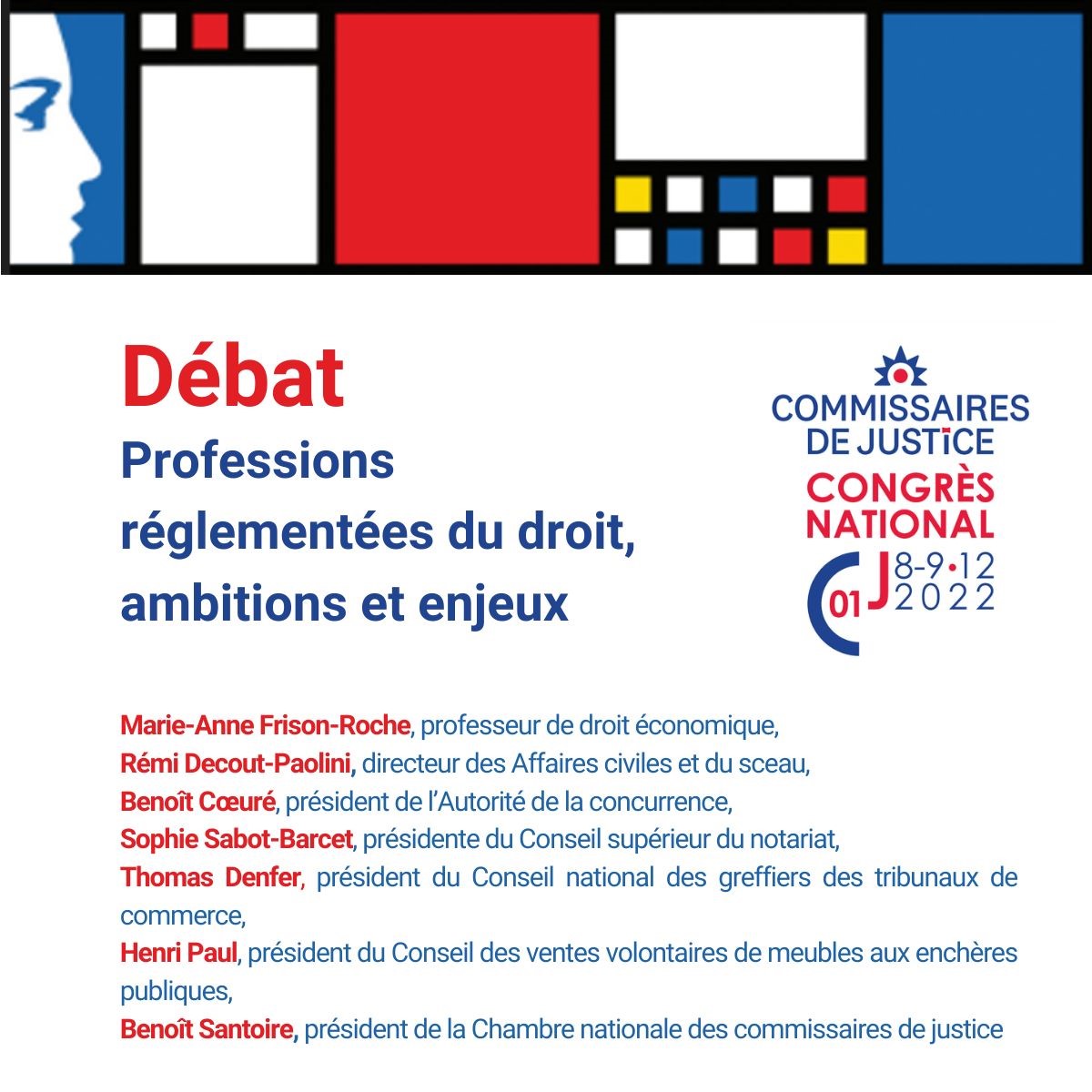
Ce débat fut particulièrement animé et vivant, ne serait-ce qu'en raison de la configuration des lieux, chacun étant placé pour entrer dans un dialogue :
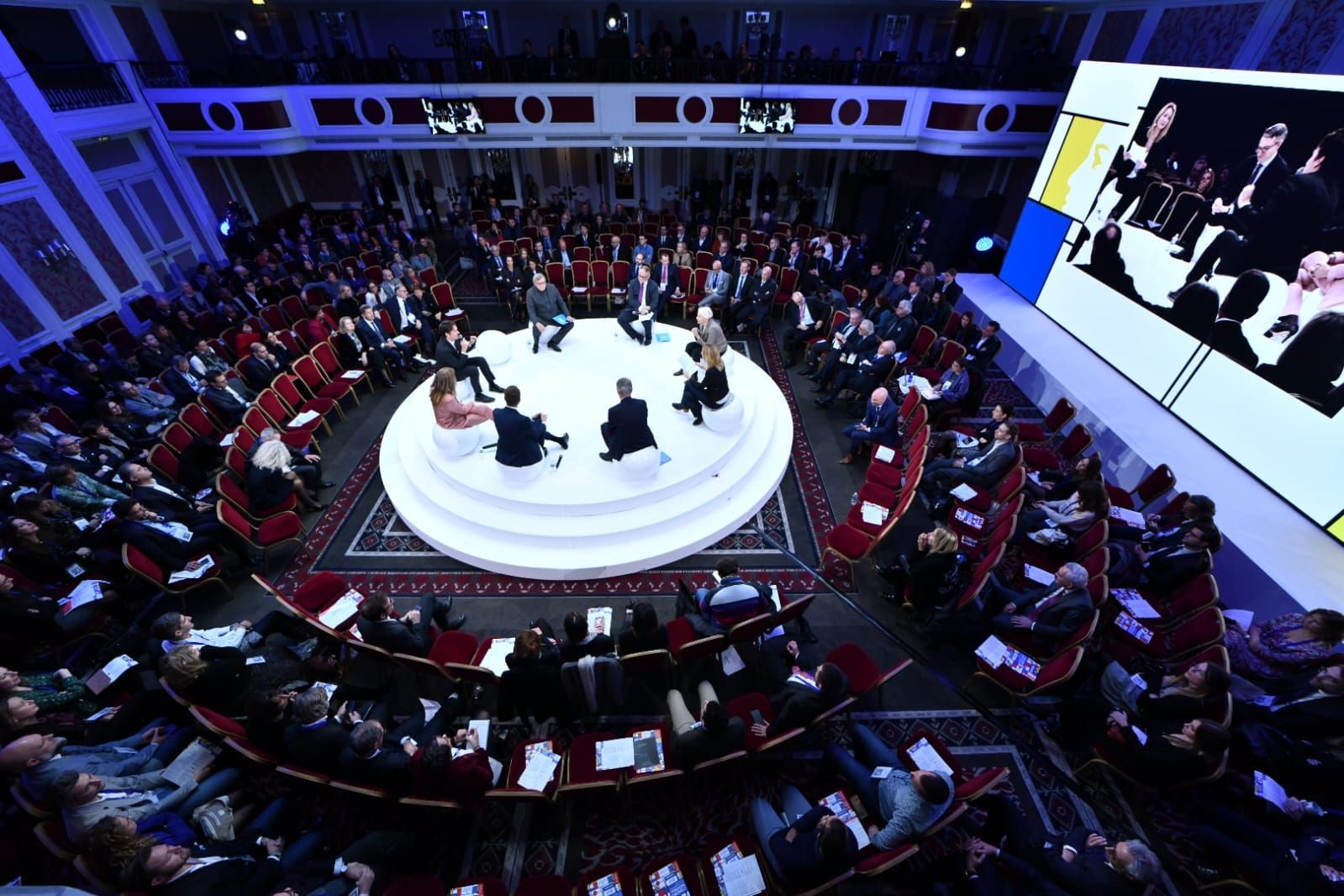
🎤 J'y pris la parole en premier pour insister sur le fait que les "professions" sont des structures qui ont un grand avenir, en ce qu'elles s'articulent avec le système économique libéral, qu'elles sont par nature régulées et porteuses de régulation, dans des systèmes qui, pour demeurer libéraux, vont en avoir de plus en plus besoin. Cela est pertinent pour la profession des Commissaires de justice qui procurent de la sécurité, via de l'incontestabilité reposant aussi sur le lien entre celle-ci et les faits, et qui assurent l'effectivité des engagements en gardant le souci du lien social.
🎤 J'ai repris la parole lorsque la place de la Compliance fut évoquée. Dépassant l'exigence de "conformité", qui n'est qu'un outil de la Compliance, j'ai montré l'avenir du Droit de la Compliance, notamment dans l'Europe qui associe dynamisme économique, souci des personnes et de l'environnement, et l'alliance que cela implique entre les Autorités politiques et publiques et les entités susceptibles de participer à la concrétisation de ces Buts Monumentaux de la Compliance.
📕 Pour aller plus loin : M.-A. Frison-Roche (dir.), Les buts monumentaux de la compliance, 2022.
________

regarder la présentation du colloque par le président du Congrès

Dec. 5, 2022
Teachings : Participation à des jurys de thèses

♾️ suivre Marie-Anne Frison-Roche sur LinkedIn
♾️s'abonner à la Newsletter MAFR Regulation, Compliance, Law
____
► Référence complète : M.-A. Frison-Roche, membre du jury de la thèse d'Antoine Oumedjkane, Compliance et droit administratif, Université de Montpellier, Salle des Actes, Université de Montpellier, 5 décembre 2022, 14h-
____
🪑🪑🪑Autres membres du jury :
🕴🏻Pascale Idoux, directrice de la thèse
🕴🏻Lucie Cluzel-Métayer, rapporteure
🕴🏻Aude Rouyère, rapporteure
🕴🏻Thomas Perroud, professeur à l'Université Panthéon-Assas (Paris II)
____
► La thèse a été ultérieurement publié : cliquer ICI
____

Dec. 1, 2022
Publications

🌐 follow Marie-Anne Frison-Roche sur LinkedIn
🌐subscribe to the Newsletter MAFR Regulation, Compliance, Law
____
► Full Reference: M.-A. Frison-Roche, "Contrat de compliance, clauses de compliance", Chronique of Compliance Law, D.2022, p.2115-2117.
____
📝reac the article (this article is written in French)
____
► English summary of the article: Compliance Law is often seen only as an obligation to comply with regulations. Contract Law is masked by the study of texts and sanctions. Civil liability cases are beginning to highlight the commitments of companies, acts of will. It remains to discern the importance of contracts.
First, there is a specific contract: the "compliance contract". Its purpose is to provide a third party with a service, the means for the company to "comply" with the legal systems requirements ("contract of conformity"), and/or to enable the company to achieve the monumental goals that characterize Compliance Law (contract of compliance). The interpretation and the regime of these compliance contracts must be marked by the Compliance Law that permeates it. Secondly, there are a multitude of stipulations aimed at conformity and Compliance.
____
🚧read the working paper written in English: Compliance contract, Compliance stipulations
____
📚read the other articles published in this chronique of Compliance Law published in the Recueil Dalloz.
________
Nov. 18, 2022
Conferences

♾️ suivre Marie-Anne Frison-Roche sur LinkedIn
♾️s'abonner à la Newsletter MAFR Regulation, Compliance, Law
____
► Référence complète : M.-A. Frison-Roche, "Le juge, tiers régulateur des obligations contractuelles de compliance", in Journal of Regulation & Compliance (JoRC) et Université de Nîmes, Laboratoire CHROME, Compliance et Contrat : les acteurs et leurs stratégies, Nîmes, 18 novembre 2022.
____
🏗️Cette conférence prend place dans le cycle de colloques, organisé par le Journal of Regulation & Compliance (JoRC) et les Universités qui sont ses partenaires académiques, pendant l'année 2022/2023 autour du thème général L'obligation de compliance.
____
🎤 consulter la synthèse également faite de ce colloque
____
🧮Consulter le programme complet de cette manifestation
____
🚧lire le document de travail servant de base à cette conférence
____
📝Cette conférence sera la base d'un article, à paraître dans un ouvrage qui en résultera, dans sa version française, dans la collection 📚Régulation & Compliance coéditée entre le JoRC et les Editions Dalloz, et dans sa version anglaise, dans la collection 📚Compliance & Regulation coéditée entre le JoRC et les Editions Bruylant.
____