Food for thoughts

May 25, 2023
Conferences

♾️ flollow Marie-Anne Frison-Roche on LinkedIn
♾️subscribe to the Newsletter MAFR Regulation, Compliance, Law
____
► Full Reference: M.-A. Frison-Roche, "Conclusions", in Ch. Maubernard et A. Brès (dir.), Institut de droit européen des droits de l'homme et Centre de droit de l'entreprise, Université de Montpellier, Le devoir de vigilance des entreprises : l'âge de la maturité?("The Entreprises duty of vigilance: the maturity age?") , Montpellier, May 25, 2023.
The conference is held in French.
____
🧮see the manifestation programme (in French)
___
🌐 read the report done on LinkedIn (in French)
___
► English summary of this final speech of the manifestation: It is rather difficult to draw a conclusion after listening so many contributions. For three reasons: firstly, because of their richness and extreme diversity; secondly, because of the fact that we do not know whether the duty of vigilance is under the French law of 2017 (known as the Vigilance Law) or in other national, European and international texts or beyond or below the legal rules; thirdly, because we do not know what is meant by the "maturity" of a legal concept. But in the end, since the question posed by the title itself of the colloquium is Duty of Vigilance: the age of maturity? the answer is clearly: no.
But this is regrettable. It is therefore essential to explore the ways in which the duty of vigilance can mature. If we find merit in this duty which has now entered the legal system, there are eight intersecting avenues, which must be exploited.
The first path is progression through the passage of time, rediscovering what in the past was already vigilance and what in the future will be its deployment.
The second way is to progress by fixing the vocabulary, because we are witnessing a great battle of words, overtly or covertly, in French or English.
The third path is progression through the emergence of principles, or even a principle, rediscovered or invented.
The fourth path is progression through coherence brought to the legal system(s), which at present suffer from gaps and inconsistencies, which could be remedied by methods such as centralising litigation or, more radically, ignoring borders.
The fifth path is progression through the fact that it works, because vigilance techniques are those of Compliance, of which vigilance is the leading edge, and the challenge is to find solutions.
The sixth path is progression through using power of the legal system not only to create new areas of relevance - starting with the notion of vigilance, but also that of the value chain - but also to impose new indifferences, namely indifference to the figure of the market (to which laws prefer the company and the value chain) and indifference to borders.
The seventh path is progression through bringing perspectives closer together, in order to find solutions even when interests are opposed. This is where the two techniques of contract and mediation are very welcome.
The eighth path is progression through culture, because the culture of vigilance, like the culture of compliance, must be developed within companies and supply chains, and must become common to them and their stakeholders.
____
________

May 20, 2023
Newsletter MAFR - Law, Compliance, Regulation

♾️ follow Marie-Anne Frison-Roche on LinkedIn
♾️ subscribe to the Newsletter MAFR Regulation, Compliance, Law
____
► Full Reference: M.-A. Frison-Roche, "Le PNF devrait avoir ouvertement compétence en matière de CJIP environnementale : la CJIP "Guy Dauphin Environnement" du 17 mai 2023" ("The French National Financial Prosecutor’s Office should have open jurisdiction over environmental Judicial Public Interest Agreement: the "Guy Dauphin Environnement" Judicial Public Interest Agreement of 17 May 2023"), Newsletter MAFR Law, Compliance, Regulation, 20 May 2023.
____
📧Read by freely subscribing other news of the Newsletter MAFR - Law, Compliance, Regulation
____
🔴 The Judicial Public Interest Agreement GDE of 15 May 2023 or how the French National Prosecutor's Office is rightly meddling in Environmental Compliance
The Parquet National Financier (French National Financial Prosecutor’s Office) does not have jurisdiction over environmental matters, and this is regrettable. For it is very well placed to obtain, in particular for the benefit of associations, adequate measures for the future, which refers to the definition of Compliance Law. This is what he is actually achieving through the Convention judiciaire d'intérêt public - CJIP (Judicial Public Interest Agreement) GDE.
____
📧read the article ⤵️

May 15, 2023
Thesaurus : Convention, contract, settlement, engagement
► Full Reference: Convention judiciaire d'intérêt public - CJIP (Judicial Public Interest Agreement), Parquet national financier - PNF (French National Financial Prosecutor's office) and Guy Dauphin Environnement, 15 May 2023.
____
🏛️read the agreement (in French)
____
📧read the article published in the Newsletter MAFR - Law, Compliance, Regulation, entitled "Le PNF devrait avoir ouvertement compétence en matière de CJIP environnementale : la CJIP "Guy Dauphin Environnement" du 17 mai 2023" ("The French National Financial Prosecutor’s Office should have open jurisdiction over environmental Judicial Public Interest Agreement: the "Guy Dauphin Environnement" Judicial Public Interest Agreement of 17 May 2023")
________

May 11, 2023
Thesaurus : Doctrine
► Référence complète : M. Brenaut, "Les fonctions sans le statut : de quelques hypothèses où le parquetier se fait juge pénal", Droit pénal, n°5, mai 2023, p. 17-21.
____
► Résumé de l'article (fait par l'auteur) : "Le parquetier est-il devenu un juge pénal comme les autres ? La question posée par les professeurs Bonfils et Safi nous inspire une réponse en deux temps : oui, le parquetier ressemble à s'y méprendre à un juge pénal (juge d'instruction ou juge de condamnation), du moins si l'on considère certaines attributions qui lui sont désormais conférées ; non, il n'est pas, pour l'heure, un « juge comme les autres », au regard de son statut".
____
🦉Cet article est accessible en texte intégral pour les personnes inscrites aux enseignements de la professeure Marie-Anne Frison-Roche
________

May 10, 2023
Thesaurus : 03. Conseil d'Etat
► Full Reference: Conseil d'État (French Council of State), 6th and 5th chambers reunited, 10 May 2023, n° 467982, Commune de Grande-Synthe (so-called Grande-Synthe III).
____
🏛️read the decision (in French)
________
May 3, 2023
Thesaurus : Doctrine
► Référence complète : L. Martinet, V. Rouer et L. Bocquillon, "Premiers jugements sur le fondement de la loi sur le devoir de vigilance des entreprises : le juge des référés entre pédagogie et (sur)interprétation", Actu-Juridique, 3 mai 2023.
____
► Résumé de l'article (fait par les auteurs) : Le 28 février 2023, le tribunal judiciaire de Paris s’est prononcé pour la première fois, en référé, sur l’application du devoir de vigilance issu de la loi n° 2017-399 du 27 mars 2017 dans une affaire relative au méga projet pétrolier mené par TotalEnergies et ses filiales en Ouganda et en Tanzanie, à la suite de l’assignation de différentes organisations non gouvernementales françaises et ougandaises. Cette affaire, la première du genre, s’inscrit dans la mise en œuvre d’une loi dont les députés français espéraient qu’elle «marque une rupture dans la mondialisation ».
____
🦉Cet article est accessible en texte intégral pour les personnes inscrites aux enseignements de la professeure Marie-Anne Frison-Roche
________
April 25, 2023
Interviews

♾️follow Marie-Anne Frison-Roche on LinkedIn
♾️subscribe to the Newsletter MAFR Regulation, Compliance, Law
____
► Full Reference: M.-A. Frison-Roche & M. Boissavy, "Enquêtes internes : une activité en plein développement pour les avocats" ("Internal investigations: a growing business for attorneys"), interview with Miren Lartigue, Gazette du Palais, 25 April 2023.
____
💬read the interview (in French)
____
► Presentation of the interview by the journal (in French): "Inspirées des Anglo-saxons et boostées par la loi Sapin II du 9 décembre 2016, les enquêtes internes sont de plus en plus utilisées par les entreprises françaises pour vérifier la réalité de pratiques douteuses en leur sein, découvertes ou alléguées. Parce qu’il s’agit d’un nouveau champ d’activité pour les avocats, le Conseil national des barreaux (CNB) y a consacré une journée lors de son colloque organisé les 20 et 21 avril 2023 sur le thème « Avocat et droits de la défense dans les enquêtes internes et la justice négociée », qui a réuni 750 participants sur deux jours. Matthieu Boissavy et Marie-Anne Frison-Roche, qui ont participé à l’organisation de cet évènement, nous expliquent les contours de ce nouveau métier."
____
► Questions asked (in French):
- Quels sont la place et le rôle de l’avocat dans les enquêtes internes et pourquoi le CNB a-t-il souhaité organiser une journée consacrée à ce sujet ?
- Quel est leur rôle dans la réception des alertes ?
- Et dans l’enquête interne proprement dite ?
- Quelle est la complémentarité de l’avocat avec le juriste interne ?
- Quels sont outils utilisés pour le calcul des préjudices, la collecte et le traitement des données ?
- Comment s’applique la déontologie de l’avocat ?
- Et qu’en est-il des droits de la défense ?
- Quelle est l’étendue du secret professionnel de l’avocat ?
________

April 25, 2023
Publications

🌐follow Marie-Anne Frison-Roche on LinkedIn
🌐subscribe to the Newsletter MAFR Regulation, Compliance, Law
____
 ► Full Reference: M.-A. Frison-Roche, The role of the Judge in the deployment of Regulatory Law through Compliance Law, Working Paper, April 2023.
____
🎤 This working paper was drawn up to serve as the basis for the concluding summary session of the colloquium organised by the Conseil d'Etat (French Administrative Supreme Court) and the Cour de cassation (French Judicial Supreme Court), De la régulation à la compliance: quel rôle pour le juge? ("From Regulation to Compliance: what role for the Judge?") held on 2 June 2023 at the Conseil d'Etat.
____
📝 This working paper also served as the basis for the article that concludes the book De la régulation à la compliance : quel rôle pour le juge, published by the La Documentation Française, 2024.
____
► Working Paper Summary: It is remarkable to note the unity of conception and practice between professionals who tend to work in administrative jurisdictions and professionals who tend to work in judicial jurisdictions: they all note, in similar terms, an essential movement: what Regulatory Law is, how it has been transformed into Compliance Law, and how in one and even more so in the other the Judge is at the centre of it. Judges, as well as regulators and European officials, explain this and use different examples to illustrate the profound transformation this has brought about for the law and for the companies responsible for increasing the systemic effectiveness of the rules through the practice and dissemination of a culture of compliance. The role of the judge participating in this Ex Ante transformation is renewed, whether he is a public law judge or a private law judge, in a greater unity of the legal system.
____
🔓read the Working Paper below⤵️
April 24, 2023
Thesaurus : Autorité des Marchés Financiers (A.M.F.)
Référence complète : AMF, Com. sanctions, Décision n° 4 du 24 avril 2023, Melanion Capital
____
_____
April 21, 2023
Thesaurus : 03. Conseil d'Etat
► Full Reference: Conseil d'État (French Council of State), 2nd and 7th chambers reunited, 21 April 2023, n° 464349, Société Orange.
____
🏛️read the decision (in French)
________
April 20, 2023
Conferences
♾️ suivre Marie-Anne Frison-Roche sur LinkedIn
♾️s'abonner à la Newsletter MAFR Regulation, Compliance, Law
____
► Référence complète : M.-A. Frison-Roche, synthèses de chacune des 8 tables-rondes et synthèse finale, in Conseil National des Barreaux (CNB), L'avocat et les droits de la défense dans les enquêtes internes et la justice négociée, Paris, 20 et 21 avril 2023.
____
🧮Consulter le programme complet de cette manifestation
🧮Retrouver le programme dans lequel les vidéos sont insérées
📕Consulter une première présentation de l'ouvrage dirigé par Marie-Anne Frison-Roche et Matthieu Boissavy.
____
Dans la journée du 20 avril 2023
consacrée plus particulièrement aux enquêtes internes
🎥regarder le film de la première session, ayant pour thème : Des avocats dans les enquêtes internes : pourquoi, avec qui et avec quels outils ? cliquer ICI
____
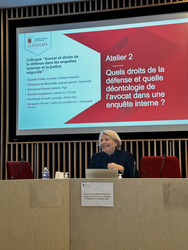
🎥regarder le film de la deuxième session, ayant pour thème : Quels droits de la défense et quelle déontologie de l'avocat dans une enquête interne ? cliquer ICI
____
🎥regarder le film de la troisième session, ayant pour thème : Les enquêtes internes en matière sociale : cliquer ICI
____
🎥regarder le film de la quatrième session, ayant pour thème : Les enquêtes internes dans la lutte anti-corruption et pour le respect du devoir de vigilance : cliquer ICI (la synthèse porta à la fois sur cette 4ième session et sur l'ensemble de la journée)
________
Dans la journée du 21 avril 2023
consacrée plus particulièrement à la CJIP et à la CRPC
🎥regarder le film de la première session, ayant pour thème : Théorie et pratique de la négociation dans la justice pénale cliquer ICI
____
🎥regarder le film de la deuxième session, ayant pour thème : Le rôle du juge, du procureur, du justiciable et de l'avocat dans une CRPC et une CJIP cliquer ICI
____
🎥regarder le film de la troisième session, ayant pour thème : Combinaison des CRPC et des CJIP : enjeux, défis et perspectives cliquer ICI
____
🎥regarder le film de la quatrième session, ayant pour thème : Analyse comparative internationale de la justice négociée et prospective cliquer ICI
____
🎥regarder le film de la troisième session, ayant pour thème : Combinaison des CRPC et des CJIP : enjeux, défis et perspectives cliquer ICI
____

April 17, 2023
Newsletter MAFR - Law, Compliance, Regulation

♾️ follow Marie-Anne Frison-Roche on LinkedIn
♾️ subscribe to the Newsletter MAFR Regulation, Compliance, Law
____
► Full Reference: M.-A. Frison-Roche, "Dans les causes systémiques : "délibérer" plutôt que "se disputer"" ("In systemic causes: 'deliberate' rather than 'argue'"), Newsletter MAFR - Law, Compliance, Regulation, 17 April 2023.
____
📧Read by freely subscribing other news of the Newsletter MAFR - Law, Compliance, Regulation
____
🔴To deal with "systemic causes", including systemic cases of compliance, move from "argument" to "deliberation" from the start
Compliance Law involves systems, for example banking, financial, digital, health, etc. When a dispute is brought before a judge, this dimension remains, whether before a judge of the Law or a judge of the merits, whether before a civil, criminal, commercial, administrative or European judge, etc. The judge's office must be adapted accordingly. And this is in the process of being done.
____
📧read the article ⤵️
April 6, 2023
Interviews

♾️follow Marie-Anne Frison-Roche on LinkedIn
♾️subscribe to the Newsletter MAFR Regulation, Compliance, Law
____
► Full Reference: M.-A. Frison-Roche & M. Boissavy, "Avocat et droits de la défense dans les enquêtes internes et la justice négociée" ("Attorneys and rights of the defence in internal investigations and negociated justice"), interview with Marina Brillié-Champaux, Dalloz Actu Étudiant, 6 April 2023.
____
💬read the interview (in French)
____
► Presentation of the interview by the journal (in French): "Futurs avocats, c’est à vous que s’adresse cette interview de Marie-Anne Frison-Roche, agrégée des Facultés de Droit, directrice du Journal of Regulation & Compliance (JoRC) et de Matthieu Boissavy, avocat aux barreaux de Paris et de New York, médiateur, membre du Conseil National des Barreaux, vice-président de la commission Libertés et droits de l’Homme. Les 20 et 21 avril 2023 le Conseil national des barreaux, sous l’impulsion de ses commissions Libertés et droits de l’Homme et Droit et Entreprise, organise un colloque sur le thème « Avocat et droits de la défense dans les enquêtes internes et la justice négociée ». Si vous êtes déjà dans la profession, il se peut que leurs réponses vous intéressent pour le respect du droit à la justice !"
____
► Questions asked (in French):
- En quoi consistent les enquêtes internes ?
- Qu’appelle-t-on la justice négociée ?
- Qu’attendez-vous de ce colloque ?
Le questionnaire de Désiré Dalloz
- Quel est votre meilleur souvenir d’étudiant ?
- Quels sont votre héros et votre héroïne de fiction préférés ?
- Quel est votre droit de l’Homme préféré ?
________
April 4, 2023
Thesaurus : Doctrine
► Référence complète : A. Danis-Fatôme & N. Hoffschir, "La loi sur le devoir de vigilance rendue ineffective par le juge", Revue des sociétés, 2023, p.793.
____
🦉Cet article est accessible en texte intégral pour les personnes inscrites aux enseignements de la Professeure Marie-Anne Frison-Roche
________
April 4, 2023
Newsletter MAFR - Law, Compliance, Regulation

♾️ follow Marie-Anne Frison-Roche on LinkedIn
♾️ subscribe to the Newsletter MAFR Regulation, Compliance, Law
____
► Full Reference: M.-A. Frison-Roche, "Face aux clauses de Compliance : le Juge (colloque du 7 avril 2023)" ("Facing Compliance clauses: the Judge (symposium of 7 April 2023)"), Newsletter MAFR - Law, Compliance, Regulation, 4 April 2023.
____
📧Read by freely subscribing other news of the Newsletter MAFR - Law, Compliance, Regulation
____
Compliance Law is starting to be known; mainly through two blocks:
Firstly the spectacular sanctions by which it made as its entry in Europe by the "BNPP sanction" of 2014.
🔴M.-A. Frison-Roche, 📝Le Droit de la Compliance, 2016
Secondly, the accumulation of tools, legal and non-legal, with which companies have equipped themselves: plans to detect and prevent breaches, internal investigations, mapping, ad hoc training, etc.
🔴M.-A. Frison-Roche (dir), 📘Compliance Tools, 2021
But what is the "compliance obligation" in the name of which these fearful and heavy sanctions are pronounced and these new and multiple tools are put in place?
We do not have a very clear idea.
That is why the Journal of Regulation & Compliance (JoRC) and its partner universities have chosen to focus on the topic of the Compliance Obligation in a series of symposiums held in 2023.
🔴JoRC, 🏗️L'obligation de compliance, 2023
It could be said that the company is "obliged" by Compliance because it is obliged by the Law, as Compliance would only mean obeying "regulations" (a term used to describe everything that is obligatory, from the Constitution to ethical charters, etc.). The English vocabulary "comply with" suggests this, as does the Chinese practice of Compliance. The difference would then only be the fact that the company shows its "stakeholders" that it does in fact respect all these texts that commit it.
But the practice and the jurist remember that what is sometimes considered as the heart of the Law, since Roman Law, is Obligations Law, having as its object Contract Law and Tort Law.
Yet, in practice, companies have put contracts concerning compliance everywhere, and they are relatively little studied.
🔴M.-A. Frison-Roche, 📝Contrat de compliance, clauses de compliance, 2023
These may be entire contracts whose very purpose is to entrust another with the task of fulfilling all or part of the compliance obligation incumbent on the company, with regard to personal data.
These may be clauses inserted in contracts with another purpose, for instance sales contracts in a value chain, where the company stipulates that the other company will also ensure compliance obligations for itself or for the other company, e.g. detect and prevent corruption, be vigilant, etc.
Contract Law has already taken on compliance in practice, especially in long-term economic transactions with an international dimension.
The judge has always been present in Obligation Law.
How is the triangle articulated: Judge - Compliance - Obligation?
The Judge has been present from the outset in the development of the Compliance Obligation through criminal liability, administrative liability and the obligation for the company to become a judge of itself, particularly through internal investigations.
🔴M.-A. Frison-Roche (dir.), 📘Compliance Jurisdictionalisation, 2023
The Judge is also present through Obligation Law stricto sensu, first of all through liability, which is transformed under the effect of the compliance system, which operates more in the logic of "accountability" and generates legal mechanisms of "ex ante liability".
🔴M.-A. Frison-Roche, 📝La responsabilité Ex Ante, pilier du Droit de la Compliance, 2022
In contractual matters, the Judge will intervene, in particular with regard to the stipulations which, in the contracts which form the architecture of the value chains, ensure the efficacy (and no longer only the effectiveness) of the duty of vigilance.
The Judge will then intervene under the French law of 2017, known as the "Vigilance Law",
🔴M.-A. Frison-Roche, 🚧Vigilance, Buts Monumentaux de la Compliance et "Société vigilante", 2023
but also, because the Judge is the "judge of the contract", he will intervene as such.
To identify the Obligation of Compliance,
🔴M.-A. Frison-Roche (dir.), 📘Compliance Obligation, 2024
it is therefore necessary to analyse the way in which the Judge apprehends or should in the future apprehend contracts and compliance clauses.
That's why, in the above-mentioned cycle of symposiums, a symposium is being held on 7 April 2023. It is co-organised by the Journal of Regulation & Compliance (JoRC) and the Law Faculty of Perpignan, and has been designed under the scientific direction of Walid Chaiehloudj and Marie-Anne Frison-Roche.
________
April 3, 2023
Interviews

♾️follow Marie-Anne Frison-Roche on LinkedIn
♾️subscribe to the Newsletter MAFR Regulation, Compliance, Law
____
► Full Reference: M.-A. Frison-Roche & M. Boissavy, "Colloque : « Avocat et droits de la défense dans les enquêtes internes et la justice négociée »" ("Symposium: "Lawyers and rights of the defence in internal investigations""), interview with Olivia Dufour, Actu-Juridique, 3rd April 2023.
____
💬read the interview (in French)
____
► Presentation of the interview by the journal (in French): "Le Conseil national des barreaux (CNB) organise les 20 et 21 avril prochains un colloque intitulé « Avocat et droits de la défense dans les enquêtes internes et la justice négociée ». Matthieu Boissavy, avocat aux barreaux de Paris et de New York, médiateur et vice-président de la commission Libertés et droits de l’Homme du Conseil national des barreaux et Marie-Anne Frison-Roche, professeure de droit, directrice du Journal of Regulation and Compliance nous expliquent les enjeux de ces nouvelles pratiques judiciaires qui bousculent le rôle traditionnel des acteurs de la justice, qu’il s’agisse des avocats ou des magistrats."
____
► Questions asked (in French):
- Le CNB organise les 20 et 21 avril prochains un colloque sur le thème : Avocats et droits de la défense dans les enquêtes internes et la justice négociée. Pourquoi ce choix ?
- La compliance n’est-elle pas en train de bouleverser le métier d’avocat ?
- Comment cela se traduit-il en pratique ?
- Quelles sont les implications déontologiques, ne faut-il pas inventer de nouvelles règles ?
- Qu’est-ce que la CJIP a changé dans le métier d’avocat ?
- Quels sont les nouveaux risques pour l’avocat ?
- Cela modifie-t-il les relations entre avocats, parquet et juges du siège ?
________
March 30, 2023
Thesaurus : 05.1. CEDH
► Full Reference: ECHR, 5th sect., 30 March 2023, François Ruffin vs France and Association Fakir vs France, req. n° 29854/22 and 29863/22.
____
🏛️read the decision (in French)
________
March 30, 2023
Thesaurus : Doctrine
► Référence complète : J. Gallois, "Approche comparative des caractéristiques principales de la convention judiciaire d'intérêt public. À propos des dernières CJIP rendues en application de l'article 41-1-2 du code de procédure pénale en 2022", AJ Pénal, mars 2023, pp.127-131
____
► Résumé de l'article (fait par l'auteure) : "La fin de l'année 2022 a été assurément placée sous le signe de la convention judiciaire d'intérêt public (CJIP). En effet, pas moins de trois accords ont été conclus en moins de trois mois par le parquet national financier (PNF) et plusieurs enseignements peuvent en être tirés.".
____
🦉Cet article est accessible en texte intégral pour les personnes inscrites aux enseignements de la Professeure Marie-Anne Frison-Roche
________
March 24, 2023
Conferences

♾️ follow Marie-Anne Frison-Roche on LinkedIn
♾️subscribe Newsletter MAFR Regulation, Compliance, Law
____
► Full Reference: M.-A. Frison-Roche, "Propos introductifs : Les buts monumentaux de la vigilance" (Introductory remarks: The Monumental Goals of Vigilance), in La société vigilante ("The Vigilant Company"), Aix-Marseille University, Institut de Droit des Affaires, March 24, 2023.
____
This conference is done in French; read its English Summary below⤵️
🧮see the complete program of the manifestation (in French)
____
► English Summary of the conference: "Vigilance" is intriguing because, although it occurs in many branches of Law and is familiar in "banking compliance", in a form that is moreover reinforced since it is an obligation of vigilance on the part of the banker about a client whom he/she should "know", it is the "duty of vigilance" that made this notion famous. One could almost say scandalously famous because of a French law of 2017 that now bears its name, called the "Vigilance Law", whereas other laws bear the name of the minister who thought of it, which due diligence (vocabulary used for the European directive) does not erase.
The current challenge is to take the right measure of what "vigilance" is.
Vigilance goes beyond the French Loi Vigilance, which is not enough to express what it is in its few dispositions. To say what it is in the legal system, to use it in practice, to propose the intellectuel legal exercice of qualification, Vigilance must be thought of in Compliance Law, of which it is both a "Tool" and the most advanced point, as shown by the European Directive, whose discussions during its elaboration show these design issues.
Thus, like the whole of Compliance Law, Vigilance is understood, deployed, analysed and exercised through what underpins and gives meaning to all these constantly changing regulations, powers, and obligations, through Compliance Monumental Goals which give it stability and simplicity. This is the least that can be done in a mechanism that has the ambition to organise the "sustainability" of economic relations.
But while Vigilance expresses and concretizes Compliance Monumental Goals, it must not go beyond measure.
In fact, to set up structures, use tools and behave in such a way that human rights and nature are effectively and extraterritorially protected, both negatively and positively, these obligations of the company, which is the natural subject of the "duty", more generally the natural subject of Compliance Law, see its legal powers increased, these means being required for the company to fulfil its new obligations, first legal, then contractual, soon to be unilaterally formulated.
Perhaps we should conceive of a "vigilant company" and not just a company that, beyond and through its economic activity, cares for others and the world, but a company that "watches over" everything and on everything would be to go beyond the measure, to make companies the "regents" of the world and the people who live in it.
Faced with this perspective to be excluded, the construction of a Europe of Compliance, which does not be reduced to corruption fighting or environment protection, and draws on its humanist tradition, distinguishing itself in this respect from the American and Chinese compliance systems, is the major challenge.
Companies are not the alpha and omega, but they are one of the elements of an Alliance between the political Authorities and the population, its link, the one that allows us to escape from the limit of the territory, in what we call by this inadequate term of "extraterritoriality". It is rather a question of going beyond territories, required by the Compliance Monumental Goals of Compliance, of which Vigilance is the advanced point.
____
🚧read the English Working Paper, basis of this conference: "Vigilance, Compliance Monumental Goals, and "Vigilant Company""
____
📈see the slides created for this conference (in French)
____
📝read the article published after this conference
________
March 24, 2023
Conferences
♾️ suivre Marie-Anne Frison-Roche sur LinkedIn
♾️s'abonner à la Newsletter MAFR Regulation, Compliance, Law
____
► Référence complète : M.-A. Frison-Roche, "synthèse", in I. Grossi (dir.), La société vigilante, Université d'Aix-Marseille, Institut de Droit des Affaires, 24 mars 2023.
____
____
🧮Consulter le programme complet de cette manifestation
____
Cette réflexion finale a servi de base à un article ; La vigilance, pièce du puzzle européen. Lire le document de travail sous-jacent.
____
► Présentation de la synthèse : La synthèse du colloque a été réalisée sur le vif, à partir des notes prises au fur et à mesure du déroulement de la journée. L'écoute des uns et des autres a fait ressortir 4 points qu'il aurait été difficile d'isoler dans une partie du droit positif, parce qu'il a été manifeste que les propos ont porté parfois sur la Compliance, parfois sure l'obligation de vigilance, parfois sur le devoir de vigilance et le plus souvent sur la loi du 27 mars 2017, laquelle a donc servi de porte d'entrée à l'ensemble des réflexions. Mais elle n'a été qu'une porte d'entrée.
Le premier point est justement l'impression d'une ampleur de tantôt de "gloire" et tantôt d'"indignité" qui ont été déversées sur cette loi Vigilance. Les intervenants ont donc fortement divergé.
Le deuxième point est l'impression à l'inverse générale et commune, pour que les orateurs s'en félicitent, s'en inquiètent, s'en réjouissent ou s'en effondrent, d'un grand mouvement auquel nous assistons et que la Vigilance traduit ou/et porte.
Le troisième point est la multiplicité des branches du Droit qui sont utilisées ou touchées, là encore qu'on s'en réjouisse ou pas, et la nécessité de dépasser ces branches du Droit. Face à la Vigilance, des disciplines peuvent apparaître en opposition, tandis que des branches du Droit semblent entrer comme en résistance. La majorité des intervenants ont souligné que les branches du Droit, cette loi n'étant alors que l'expression d'un mouvement plus vaste, la Vigilance dépassant la Loi Vigilance, sont activées et transformées. Il en est ainsi du Droit international et du Droit processuel. L'idée étant que la Vigilance pourrait bien être l'expression d'une branche du Droit spécifique et nouvelle : le Droit de la compliance. Au-delà de la compréhension de ce qui se passe, l'enjeu technique est d'articuler les branches du Droit concernées, notamment dans le rapport entre dispositions spéciales et principes, entre Droit spécial et Droit commun.
Le quatrième point est l'absence de définition de la vigilance. L'on en a peu davantage entendu de ce que pourrait être une "entreprise vigilante"...L'existence d'un devoir portant sur une situation précise suffit-elle à transformer toute l'entreprise et que devient-elle alors dans son entier ? Art pratique, le Droit n'aime pas les mystères. Car comment bien manier un instrument juridique dont la définition varie, dont on ne connaît que le régime, lequel varie au gré des réglementations, diverses et changeantes, ? Peut-elle varier selon les secteurs, selon les entreprises, selon les divers contrats qui sont partout ?
Peut-être, en conclusion et comme cela fût évoqué par certains, au-delà de la directive attendue sur la Corporate Sustainability Due Diligence, c'est plus largement dans le puzzle des définitions que le Droit de l'Union européenne est en train de construire, en corrélation avec le reporting extra-financier, que l'on pourra trouver, dans la conception systémique et humaniste portant l'identité européenne, voire sa souveraineté, ce qui donne sens et simplicité à la Vigilance.
____
✏️lire les notes prises sur le vif pour opérer la synthèse
____
📝lire l'article publié suite à cette conférence
________
March 23, 2023
Publications

♾️ follow Marie-Anne Frison-Roche on LinkedIn
♾️ subscribe to the Newsletter MAFR Regulation, Compliance, Law
____
► Full reference: M.A. Frison-Roche, Thinking and using Vigilance through its Compliance Monumental Goals, Working Paper, March 2023.
____
🎤 This Working Paper has been done as basis for the introduction of the colloquia La société vigilante ("Vigilant Company") at the Aix-Marseille University on March 24, 2023 (conference given in French)
____
📝It is also the basis of the article that introduces a special issue on La société vigilante
____
► Summary of the Working Paper: The concept of "Vigilance" is difficult to define. Probably because even as it is becoming a standard, it has just entered the legal systems. And what a splash it is! To understand it, it must not be isolated. Neither in the only French law attracting all the attention, all the fears, all the hopes, the so-called Loi Vigilance ("Vigilance Law"), nor in the only technical mechanisms that make Vigilance a reality.
Vigilance is itself only a part of a deeper movement, of which it is the advanced point, allowing us to anticipate the evolution of the whole: Compliance Law.
In this light and for not getting lost in it, because the stakes are so high that one quickly loses the measure of things, with each party lashing out at the others, so Vigilance, the key element of Compliance, requires above all alliances, that we can first examine the entry of Vigilance into the legal system and then understand it through the Monumental Goals which give the measure of it, i.e. both the scope and the limit, each one having to act within the margins that are theirs, States, companies, stakeholders, and judges.
A Will for tomorrow can then emerge today, carried by Europe.
____
🔓read the Working Paper⤵️
March 20, 2023
Publications

♾️ follow Marie-Anne Frison-Roche on LinkedIn
♾️ subscribe to the Newsletter MAFR Regulation, Compliance, Law
____
► Full Reference: M.-A. Frison-Roche, Laws, Compliance, Contracts, and Judges: places and alliances, Working Paper, March 2023.
____.
📝this working paper is the basis for an article published in French (click HERE) in the 📚chronique of Compliance Law held in the Recueil Dalloz.
____
📚Read the other articles published by this Compliance Law Chronicle. open since 2018.
____
►Summary of this Working Paper: To understand the functioning of compliance systems in the articulation of the legal actors and the legal instruments used, whatever the technical sector considered, it is necessary to put the "law", the "contract" and the "judge" back into the perspective of legitimacy and efficiency regarding what Compliance is.
At the very least, it is a 'conformity' mechanism. In this process of simple obedience, legislators, economic operators, and judges find themselves in the position of having to obey the law in a hierarchical conception.
In a more dynamic and ambitious conception, when Compliance Law is not reduced to a more astute method of obedience but draws substantial normativity from the Monumental Goals pursued, legislators and operators enter an alliance. The contract becomes a major instrument, and the Judge becomes a major actor, no longer to punish the non-obedient but to facilitate the links to help a sustainable system.
Faced with issues such as digital, climatic, and technological challenges, where we are each so weak and isolated, we must not limit our conception and practices to the instrument of conformity but choose the substantial Compliance Law, i.e. the alliance of forces, which puts forward the contract and renews the office of the judge, with the Public Authorities remaining legitimate in setting the Monumental Goals since they commit the future of the social group.
________
🔓read bellow the developments⤵️

March 14, 2023
Thesaurus : Soft Law
► Full Reference: Agence française anticorruption - AFA (French Anti-Corruption Agency) and Parquet national financier - PNF (French National Financial Prosecutor's Office), Internal anti-corruption investigations. Practical Guide, march 2023.
____
________

March 12, 2023
Law by Illustrations
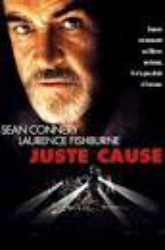
Le Droit se prête si bien au cinéma au travers de ces deux personnages spectaculaires que sont le juge et l'avocat, et leur sorte d'accessoire sans lesquels ils n'existeraient pas que sont le coupable, l'innocent, la victime, le voleur, etc. Des branches du Droit
Et précisément les professeurs de Droit qui enseignent cette immense matière sont presque absents des films. Le peu qu'ils y sont représentés est donc d'autant plus précieux.
Ainsi le film Just Cause, sorti en 1995, met en scène comme personnage principal, interprété par Sean Connery, Paul Amstrong, dans une histoire à rebondissements autour d'un jeune homme noir qui attend son exécution après sa condamnation pour avoir assassiner une petite fille atrocement, ce qu'il nie.
Sa grand-mère vient à une conférence où le professeur défend une position par principe hostile à la peine de mort, soulignant ce qu'il estime être la barbarie de l'électrocution, le nombre d'innocents exécutés et le pourcentage de noirs victimes d'erreurs judiciaires, débattant avec un collègue qui défend la peine de mort au nom des victimes ayant subi des atrocités.
L'on ne le revoit plus dans cette activité-là, où son titre de "professeur" lui est toujours donné, puisqu'il accepte le cas et commence alors pour lui une série d'aventures et de mésaventures.
Mais la représentation du professeur de droit est la suivante :
1. L'on comprend par la suite qu'il exerce à Harvard, qu'il a jadis aussi pratiqué, mais que depuis 25 ans il ne le fait plus. Il veut d'ailleurs refuser de prendre le cas car il considère qu'il ne "connait plus la réalité".
2. L'opposition est toujours faite entre lui, si savant dans les livres (qu'il se garde de citer) mais si ignorant des faits, en général et en particulier, le cas s'étant déroulé dans une petite ville du Sud des Etats-Unis.
L'on retrouve dans ce film l'idée commune que les professeurs de droit sont des sortes d'ânes savants, inaptes à comprendre vraiment ce qu'est la vie, par exemple qui sont les meurtriers et qui sont les victimes, qualifications pour lesquelles du sens commun est préférable (incarné par une institutrice) mais dont il est dépourvu, de par sa science juridique et de par sa classe sociale.
L'on retrouve ici sous ce personnage du "professeur de droit" la question du savant, ici le savant en droit, à comprendre les situations, à les reconstituer et à les qualifier, l'idée - fortement américaine - semblant être que l'enfermement dans un amphithéatre, ne sortant que pour faire des conférences tranchées, ne rendant peu apte.
Voir cependant à propos du Droit de la famille, M.-A. Frison-Roche, ...,
March 1, 2023
Interviews
♾️follow Marie-Anne Frison-Roche on LinkedIn
♾️subscribe to the Newsletter MAFR Regulation, Compliance, Law
____
► Full reference: M.-A. Frison-Roche, , F. Ancel, N. Roret, "Les juges vont être de plus en plus présents dans le droit de la compliance" ("Judges will be more and more involved in Compliance Law"), interview with Olivia Dufour, Actu-Juridique, 1st March 2023.
____
💬read the interview (in French)
____
► Presentation of the interview by the journal (in French) : "À l’instigation du professeur Marie-Anne Frison-Roche, l’École nationale de la magistrature (ENM) a proposé pour la première fois début février une formation en compliance à destination des magistrats et des avocats. François Ancel, conseiller la Cour de cassation, Nathalie Roret, avocate et directrice de l’ENM et Marie-Anne Frison-Roche plaident d’une seule voix pour le renforcement du rôle des acteurs judiciaires dans la compliance."
____
► Questions asked (in French):
- D’où est venue l’idée d’aborder ce droit en cours d’émergence qui semble encore très confidentiel ?
- En effet, on croit souvent savoir ce qu’est la compliance, en la confondant avec la conformité, pouvez-vous expliquer ce qui les distingue ?
- On constate, en lisant le programme de la formation, que toutes les branches du droit sont concernées par la compliance depuis le droit des sociétés jusqu’au pénal en passant par les contrats et la responsabilité. Pouvez-vous nous donner des exemples ?
- Comment se redistribuent les rôles entre les avocats, les juges et les entreprises dans cette nouvelle configuration qu’est la compliance ?
- En quoi est-ce important pour les magistrats d’appréhender ce nouvel univers ?
- Ces transformations sont-elles cantonnées à la compliance ou peuvent-elles sortir de son champ ?
- Par exemple qu’en est-il de la question très controversée du rôle de l’avocat à l’égard du juge ?
- Avez-vous constaté lors de cette formation une amélioration du dialogue entre les différents acteurs ?
- Cette formation va-t-elle être instituée de manière permanente dans la formation des magistrats et des avocats ? Une autre manifestation est-elle prévue ?
________