
Thesaurus : Doctrine
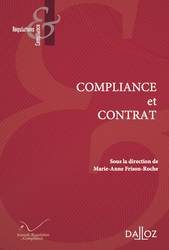
► Référence complète : M. Caffin-Moi, "L’imprégnation des branches du droit par les mécanismes de compliance : le contrat", in M.-A. Frison-Roche (dir.), Compliance et contrat, Journal of Regulation & Compliance (JoRC) et Dalloz, coll. "Régulations & Compliance", à paraître
____
📕lire une présentation de l'ouvrage, Compliance et contrat, dans lequel cet article est publié
___
► Résumé de l'article (fair par le Journal of Regulation & Compliance - JoRC) : L'auteure commence par montrer que les contrats sont de plus en plus présents dans le Droit de la Compliance, celui-ci n'étant plus ce qui est seulement exprimé par des lois d'ordre public, tandis que le contrat ne porterait que les intérêts privés de deux parties particulières. Elle expose comment concrètement aujourd'hui, et chaque jour davantage, les contrats sont utilisés comme un instrument de diffusion de la Compliance, la Vigilance étant exemplaire de cela, les textes incitant les entreprises à le faire, la CS3D mettant "le contrat à l'honneur" par la mise en place de "cascades contractuelles", le contrat agissant à la fois en surface et en profondeur.
Mais il ne faut pas que le contrat soit un moyen de restreindre la responsabilité, et l'on trouve des points de "friction" entre Contrat et Compliance.
Tout d'abord, parce que les réglementations, voire la jurisprudence, obligent les entreprises à contracter, par exemple avec des fournisseurs de rang 2, ce qui est une atteinte à la liberté de ne pas contracter.
En outre, les Buts Monumentaux de la Compliance institutionnalisent une relation contractuelle qui peut être déséquilibrée, voire engendrer une concurrence déloyale si une entreprise s'y plie et l'autre pas, la Compliance conférant de plus des prérogatives exorbitantes à l'entreprise.
Pour ne pas provoquer trop de conflits, et l'auteure souligne que le premier est certainement celui sur la compétence juridictionnelle entre le tribunal de commerce et le Tribunal judiciaire de Paris, il faut impérativement un dialogue des juges.
________

Dec. 16, 2026
Editorial responsibilities : Direction of the collection "Regulations & Compliance", JoRC & Dalloz
🌐follow Marie-Anne Frison-Roche on LinkedIn
🌐subscribe to the Newsletter MAFR Regulation, Compliance, Law
🌐subscribe to the VideoNews MAFR Surplomb
🌐subscribe to the Newsletter MaFR Law & Art
____
► Full Reference: M.-A. Frison-Roche (ed.), Compliance et Contrat ("Compliance and Contract"), coll."Régulations & Compliance", Journal of Regulation & Compliance (JoRC) and Editions Lefebvre-Dalloz, to be published.
____
📘 At the same time, a book in English, Compliance and Contracts, is published in the collection copublished by the Journal of Regulation & Compliance (JoRC) and the Editions Lefebre-Bruylant.
____
🧮the book follows the cycle of colloquia organised by the Journal of Regulation & Compliance (JoRC) and its Universities partners in 2026
____
📚this volume is one of a series of books devoted to Compliance in this collection.
► read the presentations of the other books:
- further books:
🕴️M.-A. Frison-Roche (ed.), 📕Le système probatoire de la Compliance, 2027
- previous books:
🕴️M.-A. Frison-Roche (ed.), 📕L'obligation de compliance 2025
🕴️M.-A. Frison-Roche & M. Boissavy (eds.), 📕Compliance et droits de la défense. Enquête interne - CJIP - CRPC, 2024
🕴️M.-A. Frison-Roche (ed.), 📕La juridictionnalisation de Compliance, 2023
🕴️M.-A. Frison-Roche (ed.), 📕Les Buts Monumentaux de la Compliance, 2022
🕴️M.-A. Frison-Roche (ed.), 📕Les outils de la Compliance, 2021
🕴️M.-A. Frison-Roche (ed.), 📕Pour une Europe de la Compliance, 2019
🕴️N. Borga, 🕴️J.-Cl. Marin and 🕴️J.-Ch. Roda (eds.), 📕Compliance : l'Entreprise, le Régulateur et le Juge, 2018
🕴️M.-A. Frison-Roche (ed.), 📕Régulation, Supervision, Compliance, 2017
🕴️M.-A. Frison-Roche (ed.), 📕Internet, espace d'interrégulation, 2016
📚see the global presentation of all the books of the collection.
___
► General presentation of this book: The book, published in 2025 int the same series "Regulations & Compliance" series, demonstrates that the Obligation of Compliance—which falls upon crucial operators and those concerned with the future of systems and the present and future individuals involved in them—derives from laws and regulations, and is upheld by these operators themselves, regulators and judges. The role played by contracts is discussed therein. This book specifically examines the role that contracts play and will play in the conception, development and implementation of Compliance Law.
This aspect is underestimated because Compliance Law is often analysed through the prism of laws and regulations designed to achieve Monumental Goals set by states and public authorities, to the realisation of which systemic economic operations contribute through compliance tools, rather than through the actors themselves. When they do act, this is referred to outside the realm of Law, generally to Ethics. However, the Contract, the binding legal instrument par excellence, will play an increasingly significant role within global and interconnected compliance systems.
In the European construction of Compliance Law, which places human beings at the heart of efforts to ensure the sustainability of systems, the Contract serves not only as the means by which the entity fulfils its legal obligations, forges relationships with stakeholders and implements the necessary innovations, but also as the means by which it exercises its autonomy to contribute to the realisation of the systemic ambitions in question.
To describe and anticipate the practice and rules that link Compliance Law and Contracts, the book first examines how this new branch of Law, insofar as it draws on the political ideas of the Social Contract, renews Contract Law by embedding it within the strategy of economic operators, a task made all the easier for them as they have built value chains through contracts. These are ‘regulatory contracts’. This demonstrates that Public Law Contracts exemplify the incorporation by General Contract Law of the overarching perspective of compliance, normatively anchored in the Monumental Goals (Title I).
That explained, the book examines how General Contract Law interfaces with the techniques and objectives of Compliance Law. Whether through mandatory requirements, incentives or support, Compliance Law plays a role in contracts, helping to shape them in part, whether they relate to regulated or unregulated activities, with the points of contact with the principle of liberalism – and the limits to it – being determined by the courts. Conversely, however, General Contract Law contributes to Compliance Law and will do so increasingly. This applies equally to the stages of formation, execution, and sanctions, which may take the form of consolidations (Title II).
In practical terms, the Contract itself serves as a Compliance Tol. As such, the company may choose to outsource the compliance function, which it is free to do provided it remains accountable for its performance to the legislator and the persons concerned: this is the concept of the ‘Compliance Contract’, which appears as a specific contract. Furthermore, compliance can be incorporated into multiple contracts—contractual arrangements through which the contracting parties establish one or more obligations that will facilitate or enhance their legal obligations. In doing so, legal entities exercise their freedom, as permitted by general law, and this is also recognised by the Regulator, Supervisor and/or Judge in light of the normative Monumental Goals of Compliance Law (Title III).
Precisely, a new field of ‘contractual compliance litigation’ is emerging. The primary topic here is to examine contractual judicial disputes in which an element of Compliance Law features in the proceedings. Indeed, a dispute concerning a claim for mandatory execution, termination or contractual liability may involve, in the claim itself or in an procedural exception or defence raised, an element of compliance law, ranging from an allegation of lack of jurisdiction to a request for the court to take into account a systemic teological norm that the contract judge should consider. Secondly, in certain emerging systemic compliance litigation, because the role of the judge is transformed and the procedure must be adapted, the contract appears as a particularly suitable tool, either as a ‘procedural framework’ through the contractualisation of the whole, or as a technique used in the strict sense, its ex ante nature allowing, in disputes concerning the future, the development of new adequate techniques (Title IV).
____
► First presentation of the Table of Content :
____
TABLE OF CONTENT
REPORTING ON CONTRACTUAL PRACTICES WITHIN THE COMPLIANCE SYSTEM AND ENHANCING ITS EFFECTIVENESS AND HUMANITY COMPTE DES PRATIQUES CONTRACTUELLES DANS LE SYSTEME DE COMPLIANCE ET ACCROITRE L'EFFICACITE ET L'HUMANISME DE CELUI-CI
(REPORTING ON CONTRACTUAL PRACTICES WITHIN THE COMPLIANCE SYSTEM AND ENHANCING ITS EFFECTIVENESS AND HUMANITY)
♦️ sss, par 🕴️Marie-Anne Frison-Roche
TITRE I.
CONTRAT SOCIAL, DROIT DE LA COMPLIANCE ET STRATEGIE DES OPERATEURS ECONOMIQUES
CHAPITRE I : CONTRAT SOCIAL ET DROIT DE LA COMPLIANCE
Section 1 ♦️ Les Buts Monumentaux de la Compliance, guide d'action pour des opérateurs économiques au service d'une politique globale, par 🕴️Marie-Anne Frison-Roche
Section 2 ♦️ sss, par 🕴️René Sève
CHAPITRE II : AMBITIONS POITIQUES ET STRATEGIES D'ENTREPRISE DANS L'ORGANISATION CONTRACTUELLE DES CHAINES DE VALEUR
Section 1 ♦️ sss
Section 2 ♦️ sss, par
CHAPITRE III : LES CONTRATS PUBLICS, PARANGONS DE L'ACCUEILS DES AMBITIONS POLITIQUES DANS LES STRATEGIES ET L'ALLIANCE DES INSTITUTIONS
Section 1 ♦️ sss
Section 2 ♦️ sss, par
TITRE II.
LE DROIT COMMUN DES CONTRATS CONFRONTE AU DROIT DE LA COMPLIANCE
CHAPITRE I : DISTINGUER LE CONTRACTUEL DE CE QUI S'EN RAPPROCHE DANS LE SYSTEM DE COMPLIANCE
Section 1 ♦️ La ronde des engagements et des contrats dans le droit de la compliance e, par 🕴️Marie-Anne Frison-Roche
Section 2 ♦️ sss,
CHAPITRE II : L'EMPRISE DU DROIT DE LA COMPLIANCE SUR LE DROIT COMMUN DE DES CONTRATS
Section 1 ♦️ sss
Section 2 ♦️ sss,
CHAPITRE III : L'APPORT DU DROIT COMMUN DES CONTRATS AU DROIT DE LA COMPLIANCE
Section 1 ♦️ sss
Section 2 ♦️ sss, par
TITRE III.
CONTRAT DE COMPLIANCE, CLAUSES DE COMPLIANCE
CHAPITRE I : LE "CONTRAT DE COMPLIANCE"
Section 1 ♦️ sss
Section 2 ♦️ sss,
CHAPITRE II : LES CLAUSES DE COMPLIANCE
Section 1 ♦️ sss
Section 2 ♦️ sss, par
TITRE IV.
LE CONTENTIEUX CONTRACTUEL IMPLIQUANT LE DROIT DE LA COMPLIANCE
CHAPITRE I : CE
Section 1 ♦️ sss
Section 2 ♦️ sss,
CHAPITRE II : CE
Section 1 ♦️ sss
Section 2 ♦️ sss, par
________

Nov. 15, 2024
Conferences

🌐follow Marie-Anne Frison-Roche on LinkedIn
🌐subscribe to the Newsletter MAFR Regulation, Compliance, Law
🌐subscribe to the Newsletter Surplomb, par MAFR
____
► Full Reference: M.-A. Frison-Roche, "Considérer la géographie pour réussir le Devoir de Vigilance" ("Taking Geography into account for a successful Vigilance Duty"), concluding speech in Devoir de vigilance, quelles perspectives africaines ? Regards croisés en droit international, droit comparé et droit OHADA (Vigilance Duty : what African perspectives? Cross-analysis of International Law, Comparative Law and OHADA Law), Institut de Recherche en Droit des Affaires et du Patrimoine (IRDAP), Bordeaux, 15 November 2024.
____
🧮see the full programme of this manifestation (in French)
____
► English summary of this concluding speech: This concluding speech was made "on the bench", i.e. directly after listening to all the day's speakers. It is not, therefore, based on an a priori conception of the subject, but on the impression that emerged from the whole, as one speaker followed another.
The general impression is that these compliance instruments, of which the vigilance tool is the spurred head, are only appropriate if they fulfill the purpose for which they were devised and imposed, which presupposes that they are appropriate to the concrete situations to which they apply: to the country, to the legislation that shapes and expresses this country, to its economy, to its population.
There is certainly room for improvement. But Vigilance legal instruments, like Compliance Law, are new mechanisms that are in the process of taking shape: we must seek to improve them and find solutions:
🧱🕴🏻mafr, 🚧Duty of Vigilance: the way forward, 2024
This is not easy, especially if we get lost in the jigsaw puzzle of texts and decisions in which the vigilance technique fits, particularly at French, European and international level:
🧱🕴🏻mafr, 🚧Vigilance, a piece of the European puzzle, 2023
Listening to all the many and varied speakers, it is clear that progress needs to be made to ensure that the Vigilance instrument takes greater account of the concrete situations reflected in the various legal systems of African countries, and in particular the unified OHADA legal system.
It can be done, as long as everyone is willing to bear it in mind.
🧱🕴🏻J.-B. Racine, 📝Geographical dominance in the choice and the use of compliance tools. Introductory remarks, in 🧱🕴🏻mafr (ed.), 📘Compliance Tools, 2021
The speakers demonstrated that the good feelings of Paris or Brussels can pave the way for African hell, for example when about the children labour. The same is true of the fight against corruption, as Mohamed Salah showed.
🧱🕴🏻M.M. Salah ,📝Conception and Application of Compliance in Africa, in 🧱🕴🏻mafr (ed.), 📘Compliance Tools, 2021
____
Meanwhile, listening to each other, it appears that often, despite using the same words, the speakers were not talking about the same thing, particularly not in terms of what the very term "Vigilance" refers to, the difference between the French and English being a challenge because "due diligences" are not the same than Vigilance duty . This is a sign that what we call a duty, or an obligation, or a spontaneous commitment, or a legal order criminally sanctioned, which are not at all the same thing, shows the immaturity of this notion of "Vigilance". What's more, we sometimes talk about the climate, or human rights, or the need to fight corruption or money laundering. These latter concerns are undoubtedly covered by texts classified under Compliance Law, some of which assert that Vigilance is the cutting edge, while others claim that Compliance is alien to or merely a component of Vigilance, because Vigilance embraces ethics, while Compliance is merely obedience to the norm ('conformity').
It is clear that the absence of an agreement on definitions is a handicap in practice, as we do not know which legal regime will apply. This uncertainty is problematic in practice because the regulations don't lay down definitions which alone make it possible to deduce the outline of the obligations of each party, particularly not those of the companies, which ask for instructions for use. Companies receive contradictory interpretations for the same situation, depending on who you are dealing with (a regulator or an NGO for example) or depending on the text (a text specific to the industrial activity, a text specific to the country, or a text from the country of the ordering company on the duty of vigilance, or a text from ordinary contract law or a text that will come from a soft law that remains rather mysterious).
This uncertainty feeds the passion that surrounds the issue of vigilance, with everyone speaking out, the specialists who want to talk about it being suspected of being a technocrat or captured, and those who don't speak out being the local population for whom others speak out.
As a result, two phenomena are set to persist, which we had hardly anticipated but which are set to increase: the contractualisation of all vigilance mechanisms and the jurisdictionalisation of all vigilance organisation.
____
The first phenomenon is the contracting of Vigilance. This contractualisation is the means by which companies have been carrying out their legal compliance obligations for years, using a contractual art that is becoming increasingly sophisticated.
We have very little information on these contracts, which are nonetheless what allow companies to obey the regulations and also to add to them, a combination of obedience and contractual freedom, the effects of which in practice have not yet been fully measured.
🧱🕴🏻mafr, 🚧Will, Heart and Calculation, the Three Traits Encercling the Compliance Obligation, 2024
🧱🕴🏻mafr (ed.), 📘Compliance and Contract, 2025
But they do raise essential questions. Firstly, they will bring back the jurisdiction of general courts , for example the commercial courts (tribunaux de commerce) in France, and the courts of the countries where the industrial operations take place: moreover, they are the natural route to international arbitration. They are a new type of contract, since they structure "value chains" (a managerial concept).
🧱🕴🏻mafr, 🚧Compliance Contract, Compliance Clauses, 2022
There are two key issues concerning these contracts: they directly concern African countries, their economic activity and their populations, as described throughout all the speeches.
The first is to know who governs the structural apparatus constituted by these 'regulatory contracts' through which chains of activity are built as durable structures. Who is strong and who is weak, between companies and states?
The second is to find out how much of the reality of the country and of local economic activity is taken into account by the subsidiary, and how much consideration is given to the local people involved: are the people who are actually involved really "taken into consideration" when we speak for them? Who is best placed to speak on their behalf, to defend them, to get to know them?
If we want to contextualise, refine and get to know the situation as closely as possible, in other words if we want to have definitions so that we know what we are talking about, but at the same time start from geographical and human realities, then it is the Judge who appears because the court starts from the facts.
____
This is the second phenomenon that has emerged and is set to increase: the jurisdictionalisation of Vigilance.
🧱🕴🏻mafr (ed.), 📘Compliance Jurisdictionalisation, 2023
This is understandable, since the judge is able to take cognisance of the facts, the situation in Uganda or Tanzania, and what is often referred to as the "extraterritoriality" of the Compliance mechanisms being thus compensated for.
However, the exclusive jurisdiction of the Paris Court of First Instance (decided in France by a 2021 law) may become more difficult, as it is even further away from Africa than the ordering company is. But it is precisely the contract judges who can be called upon to rule on the basis of Contract Law.
This central role of the judge raises a number of procedural difficulties that have either not yet been resolved, moreover are not still being perceive
🧱🕴🏻mafr (dir.), 🧮Le Droit processuel de la Vigilance (Vigilance Genreral Procedural Law), 2024
At the interface between procedure and substance, evidentiary issues require the development of a new evidentiary system. When the relevant facts are in Africa but the company accountable for them is in France under legislation adopted in Europe, this must be taken into account.
🧱🕴🏻mafr, 📝The Judge, the Compliance Obligation and the Company. The Compliance Evidence System, in 🧱🕴🏻mafr (ed.), 📘Compliance Jurisdictionalisation, 2023
What's more, since the Monumental Goal is to prevent, manage and detect risks, it is the future that is the main object of proof. A difficult subject by its very nature of the future, which calls for caution. Caution is to be expected from Judges, who may prefer the solution of an agreement: the contract and the commitment come back, for example through mediation, among the methods of conflict resolution.
But as close as possible to where it happens, OHADA's courts can then be called upon to hear States and populations.
What is more, in contractualisation (at which point the two major phenomena, contractualisation and jurisdictionalisation, enter into a dialectic), the clauses work together to activate the natural judge of the international contract, including vigilance clauses: the international arbitrator.
🧱🕴🏻L. Aynès, 📝How international arbitration can reinforce the Compliance Obligation, in 🧱🕴🏻mafr (ed.), 📘Compliance Obligation, 2025
OHADA has institutional arbitration mechanisms.
Now is the time to guide them so that they open up Africa to Vigilance and open up Vigilance to Africa.
In concrete terms.
________

April 25, 2024
Newsletter MAFR - Law, Compliance, Regulation
🌐follow Marie-Anne Frison-Roche on LinkedIn
🌐subscribe to the Newsletter MAFR Regulation, Compliance, Law
____
► Full Reference: M.-A. Frison-Roche, "La directive européenne sur le devoir de vigilance est votée. A juste titre, les contrats et le juge y ont la part belle" ("The European directive on duty of vigilance has been passed. Rightly so, contracts and the courts have a major role to play"), Newsletter MAFR Law, Compliance, Regulation, April 25, 2024
____
📧Read by freely subscribing other news of the Newsletter MAFR - Law, Compliance, Regulation
____
🧱Duty of vigilance directive leaves plenty of room for contracts, and therefore for the judge
On April 24, 2024, the European Parliament passed the Corporate Sustainability Due Diligences Directive (CS4D).
After many twists and turns, it is fairly close to the French “Vigilance” law of 2017.
____
Feb. 26, 2024
Hearings by a Committee or Public organisation
🌐suivre Marie-Anne Frison-Roche sur LinkedIn
🌐s'abonner à la Newsletter MAFR Regulation, Compliance, Law
____

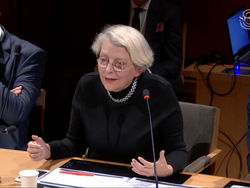
► Référence complète : M.-A. Frison-Roche, "Le juge dans les contentieux de vigilance", participation à la "table ronde sur le devoir de vigilance", audition par la Commission d'enquête du Sénat sur les moyens mobilisés et mobilisables par l'État pour assurer la prise en compte et le respect par le groupe TotalEnergies des obligations climatiques et des orientations de la politique étrangère de la France, 26 février 2024, 16h-17h30
____
____
📺regarder en différé l'ensemble de la table ronde
____
📓lire le rapport de la commission d'enquête du Sénat
____
⚖️ Cette audition a été menée en considération de règles spécifiques à ma situation dans la mesure où d'une part le Droit interdit sous peine de sanction pénale à la personne convoquée de refuser de se présenter et ou d'autre part j'ai immédiatement rappelé au secrétariat de la Commission d'Enquête qu'ayant été Amica Curiae dans le litige opposant les associations Les Amis de la Terre et autres en demande et le groupe TotalEnergie en défense, l'objet du litige portant sur des manquements allégués d'obligations découlant de devoir de vigilance, le statut d'Amica Curiae a conduit pendant cette instance à ne pas connaître le dossier et à continuer de ne pas le connaître pendant une période raisonnable après l'audience du 26 octobre 2022 et le jugement du 28 février 2024 dans le cas dit "Total Ouganda", ce qui conduit nécessairement par application aux règles juridiques et de déontologie à ne pas répondre à certaines questions.
Dans le respect de ces contraintes, il est répondu le mieux possible pour éclairer la Commission d'Enquête.
Cette audition est à mettre en corrélation avec l'audition qui s'est déroulée devant la Commission ... de l'Assemblée Nationale ....
____
► Organisation de la Table Ronde : En accord avec le secrétariat de la Commission d'Enquête, et afin de rendre le plus fructueux possible le premier temps de cette table ronde ayant pour objet Le devoir de vigilance, dans la mesure où il apparaît que dans l'ensemble des auditions programmées, c'est sans doute là où se concentre le plus l'expertise juridique, les 4 intervenants se sont préalablement réunis pour éviter le double écueil soit de traiter deux fois la même chose soit de laisse une dimension du sujet non traité.
Ainsi la première intervenante traite de la façon dont les entreprises élaborent les plans de vigilance, le deuxième intervenant développe la façon dont elles intègrent leur devoir de vigilance dans leur déploiement international, notamment par des mécanismes contractuels, le troisième intervenant expose ce que, dans les contentieux, les demandeurs (qui sont souvent des ONG) allèguent, ce qui m'a conduit en dernier lieu à exposer ce qu'il en est de l'office du juge en la matière.
Il en résulte que mon intervention de 8 minutes aborde plus particulièrement de la question de l'office du juge dans la mise en application du devoir de vigilance.
____
🔲consulter les slides servant de support à cette intervention
____
► Présentation de l'intervention préliminaire : En premier lieu, j'ai souligné qu'en l'état du droit positif, le droit français repose sur le juge puisque la loi pose une Obligation de Vigilance, qui est à la fois une obligation générale et de moyens, l'entreprise devant montrer qu'elle fait ses "meilleurs efforts", cette obligation générale, qui n'est pas limitée à l'environnement, étant déclinée d'une façon particulière par l'entreprise en fonction de ses risques particuliers et de ses engagements propres, notamment contractuels, tandis que le juge applique ce système au cas par cas.
La loi de 2017 a voulu confier ce pouvoir au juge et a voulu un système simple en donnant la seule compétence au seul Tribunal Judiciaire de Paris, ce qui permet d'obtenir une interprétation jurisprudentielle, aussi bien sur les questions procédurales et substantielles, immédiatement unifiée, le dialogue des juges devant être toujours favorisé, tandis que la spécialisation et la formation de ces juges étant un enjeu auquel les juridictions ont répondu concrètement, la Cour d'appel de Paris ayant mis en place une chambre spécialisée, tandis qu'une formation spécialisée sur ces "contentieux systémiques émergents" d'un type nouveau se met en place. Cette spécialisation rend moins impérieuse l'établissement d'une Autorité administrative de supervision.
Cette présence du juge ne doit pas être présentée ni perçue comme pathologique car le procès de vigilance est dans l'ordre des choses, les parties prenantes trouvant une voie d'expression : d'une part plus les entreprises développeront en amont le dialogue et moins il y aura de contentieux et d'autre part le procès lui-même, en continuum, doit favoriser ce dialogue, par le contradictoire et par la médiation.. C'est une part essentielle de l'office du juge qui doit aussi faire respecter le Droit et apporter des solutions à ces enjeux systémiques, la remédiation (plutôt que trancher et sanctionner) étant une voie de son office à développer.
Parce que les juridictions concernées ont su ajuster leur organisation interne et les juges adapter leur office, la généralité de la loi de 2017 permettant précisément cela, la question de l'adoption ou de la non-adoption de la directive CS3D n'étant de ce fait pas un enjeu dramatique parce que le juge est déjà au centre de la vigilance, il convient plutôt de laisser le temps que l'oeuvre de jurisprudence se fasse.
________