Working papers
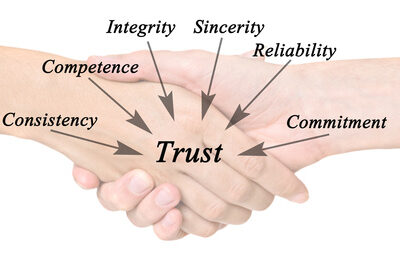
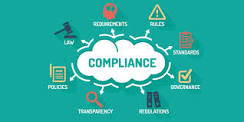
This working paper serves as a support for the article to be published in the book written in French, Ingall-Montagnier, Ph., Marin, J.-Cl., Roda, J.-Ch. (dir.), Compliance : l'entreprise,le régulateur et le juges, in the Serie Regulations, co-edited by Éditions Dalloz and the Journal of Regulation and Compliance (JoRC). This work uses by links the Compliance and Regulation Law bilingual Dictionnary. - Summary. We have to admit it. Because in front of so numerous and so disparate Compliance rules we pain so much to figure out, we are constraint to go in so changing directions, that we console ourselves with their weight, their cost and our misunderstanding by affirming that Compliance is "complex" and "transdisciplinary", as if complicated words could mask our disarray. But "Compliance" is not a cataclysm, a bomb sent by the Americans to annihilate Europe, the new form of a Cold War in legal dress, it is a way of seeing things that comes from afar, with its own coherence and which must first be understood. If one understands where this new corpus comes from, which now obliges companies to prove that they effectively take on the fulfillment of certain goals that go beyond them, notably the fight against money laundering, tax evasion, but also the fight against the sale of human beings or the struggle for the preservation of nature and Earth, then we can continue the story. Indeed, not all companies are targeted by such internalization of "monumental goals" within them." An ordinary firm is destined to develop itself in order to achieve a goal which is its own. The concern of these goals can only be for the "crucial firm. "If there is to be a change in the corporate project, then it can only depend on its" position "in a system, a financial, economic, social, global system, or because it has itself decided that it would be so. The company then bears the burden of proof that such a discourse of new responsibility corresponds to a behavior and an effective culture. The weight of the rules already exists today. And it is for the moment that now, in a negative and passive way, Compliance is perceived, by those who "undergo" it (companies), even by those who apply it (public authorities). The transformation towards a "culture of trust" is the issue between today and tomorrow, because tomorrow, it is a relationship of trust that could be built between these companies and the public authorities, because they would share information (systemic issue), because they would agree on the less technical monumental goals (protection of human beings issue). In this perspective, "Compliance" is above all a bet, that of the place of human beings in globalized markets.