All news

Glossary

Autorité de Régulation des Activités Ferroviaires et de la Route (ARAFER)

The law of December 8, 2009 created the Regulatory Authority for Railway Activities, ARAF. The law of August 6, 2015 (known as the "Macron law") extended its powers on road issues, which justified the modification of its name, now the Railway and Road Activity Authority, ARAFER. The function of this regulatory authority is to support the liberalization of the economic activity of rail transport, first of all freight, then passengers, to end the monopoly of the historical operator, SNCF. This regulator is necessary so that new entrants can fight against the power of an incumbent operator, because it is a network industry and transport is an economically natural monopoly. The 2009 law transferred the ownership of the network to a public establishment, Réseau Ferré de France (RFF) separate from the main public operator, but the 2015 law created a "public rail group" with a holding company. having operational powers, restoring powers to the SNCF, in particular through the stations. The Regulator has issued a reserved opinion on this matter. The regulator ensures non-discriminatory access for competing operators to these essential facilities. ARAFER is an AAI, composed of 7 members, appointed for six years. It has broad investigative powers, can be consulted on any draft law on rail transport and on investment programs in the network. It also has the power to impose penalties on operators.

Glossary

Globalization

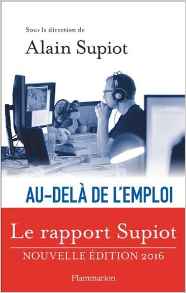
We must give a strict definition of globalization. Globalization isn't simply the intensification of economic exchanges through the lowering of borders and the rapidity of trade, a phenomenon known since antiquity and of which the World Trade Organization (WTO) is today the guardian. Globalization aims at a radically new phenomenon, that of economic exchanges without any constraint of time or place, dealing with goods without corporality since it is information. This is the case for all personal data, all information and all finance (because financial instruments can be analyzed as information), which through technology flows out of space and in an instant. In what can be called "real virtuality", states and law do not know how to grasp normatively this new reality, because until now they had only apprehended palpable objects in spaces enclosed by their borders . Globalization, therefore, is a radical change the world, that has radically changed the game. To answer it, one can certainly look outside the Law and the States, for example to rely on the moral sense of the actors and the self-regulation of the sectors by the actors, the actors themselves being self-regulated. Except for imagining the constitution of a world State, one moves rather towards institutions of public international law, of which the IMF or the WTO can be models, or the networking of all the regulatory authorities that are more technocratic and static, to be a reflection of this globalization: it is then a question of trying to "regulate" it, that is to say not to let occupy this global space, often virtual, by what Alain Supiot calls the "total market", but puts it in balance with other principles, such as public service, risk prevention or fundamental rights. It is especially the issue of "regulation of the digital" .

Glossary

Autorité des Marchés Financiers (AMF)

The Autorité des Marchés Financiers (AMF) is the French regulator of financial markets. It is in charge of ensuring the proper functioning of these, their transparency and the protection of investors. It controls the regulated and organized markets, and since the Community reform of the markets in financial instruments, even over-the-counter markets, built on contracts alone, can be controlled by it, because of their systemic risk. Independent administrative authority (IAA), endowed with legal personality and benefiting from an autonomous budget, outside the general budgetary control of the State and built on a tax from operations, this financial regulator has a residual regulatory power, a power of sanction and a power of administrative composition. In order to respect the principle of impartiality of the European Convention on Human Rights (ECHR) with regard to which the regulator is assimilated to a court, the power of sanction is exercised within the authority by a sanction commission. This is independent of the college of the Authority, governed by the president. To be accountable, the regulator submits an annual report to the Government and Parliament. The AMF participates in European and international regulation and belongs to the competence center of the Prudential Control and Resolution Authority (ACPR).

Glossary

Systemic risk

Systemic risk is defined as what threatens a sector when the behavior and more particularly the failure of a single economic agent leads to chain behaviors (domino effect), which can cause the entire sector to collapse. Banking and financial systems are by their very nature and definitely subject to systemic risk since a financial institution bankruptcy causes depositors to panic and withdraw funds, a behavior that is generalized and causes the market to collapse. The self-fulfilling and inescapable effect of the process makes the prevention of systemic risk imperative, both by the financial regulator and by the central bank. This is why this is the strongest hypothesis where the principle of competition, however very strong between banks, is weighed against the radically necessary prevention of systemic risk. The means to prevent a systemic risk in order to manage a systemic crisis of a realized risk or to get out of the crisis are today a primary concern, leaving the concern for competition far behind. This is why all countries are now seeking to rebuild banking and financial regulation which could not play its role since the financial crisis occurred in 2008. The Banking Union is built in this spirit. The less advanced Capital Markets Union, too.

Conferences

🎥 Le Diable dans la bouteille des Codes de bonne conduite (The Devil in the bottle of Codes of Conduct)

  ► Full Reference: M.-A. Frison-Roche, "Le Diable dans la bouteille des Codes de bonne conduite"  (The Devil in the bottle of Codes of Conduct). Hommage to Gérard Farjat, Center of Economic Law, Nice, France, 10 March 2016 . -   ► see the conference . (in French)  ► see the  construction of this conference (in French)   ► see the  slides, used as basis for this conference (in French). -   ► English presentation of this conference: In 1978, our mutual friend Gérard Farjat wrote a memorable article on "les codes de conduite privés" ('private codes of conduct') (in French), codes of conduct which have since flourished. I remember that it worried him because he was aware of the rhetoric, and even the contradiction, that these codes contain, and at the same time he did not see what could stop this legitimate way for international companies to organise an 'order' at home, since the Law was no longer able to offer them one from the outside, nor was Law capable of limiting the less virtuous tendency of companies to fashion norms by which they exercise power not only to organise themselves but also to govern others and the outside world. When Gérard Farjat wrote this article in 1978, Corporate Social Responsibility had not yet been conceived… Have we reached the same point? Can we even say that the situation has worsened, with the world being "standardised" and "governed" by "global" companies that write and impose codes of "good" conduct that express what is "good" in itself and end up constituting veritable "global constitutions"? No. In fact, the opposite is true. Through the power of Regulators and Supervisors, institutions of public authority, public standards are internalised in "global" companies, which repeat them in codes of conduct and become their own regulators and supervisors. -