All news

Glossary

Price

On markets, prices result in competition. They are "exact" in that they express the meeting of offers and demands, and are sometimes even called "fair prices". Prices are free and constitute the indices of free competition. The simplest and most serious anti-competitive clue is thus abnormal prices. In the same way, the financial market has been qualified by Walras as the "purest market" notably by the quotation which mechanically crystallizes the instantaneousness of the meeting of offers and demands by the mobility of prices. Freedom of competition and contractual freedom have the price as a paradoxical commun point, since both parties use the autonomy of their will to determine freely the price, an essential element of the contract, and it is nevertheless the market which by their "law" brings out a "market price that each contract reflects. But this correctness of price does not exclude a price being "unfair" for example when it is too high for the consumer while it is a necessary good, or even a "common good" for which everyone should have a "right of access" and that in fact the rarity of this one has raised the price. The "fair price" can then be equal to 0, when it realizes such a fundamental right of access and that, rather than solvabilizing the demand, the political choice is made to declare free: free museums one day a week , free education, etc. The amount at which the good is going to be offered to the applicant can then result not so much from a price but from a tariff. One has left the merely competitive market logic to enter the logic of Regulation Law. This corresponds to two hypotheses. First, when there is a monopoly, by definition the absence of competition precluding the development of a price which presupposes competitive pressure, an amount must be fixed by calculation, possibly by reconstituting a hypothetical market, France has been particularly successful in its capacity to develop pricing models for electricity (eg Ramsey-Boiteux) or for telecommunications (eg Laffont-Tirole calculations). Pricing is an art because the company must be encouraged not to make excessive rents while making the necessary investments. Thus, the British preferred tariffs by price cap, while the French favored pricing by costs, the European institutions admitting both. Secondly, pricing can be no longer economic or political when it comes to imposing an amount that is not a market price for the benefit of people who would not have the financial means to enter a market. The social tariffs are then aimed at regulated goods only if they contain common goods such as telephone or electricity, each of which must have access, even at very modest income. It is then for the Legislator to concretize subjective rights that he creates, such as the "right to electricity"


Glossary

Crucial Operator

Any agent who has an economic activity in a space can be qualified as an "operator". Competition law sees in this the very definition of "the enterprise". In this respect, Competition Law "neutralizes" all that the agent can have of specificity, for example the fact that it is the State itself, since in a merely competitive market, an operator is equal to another. . Thus, a dominant operator is not monitored as such. Similarly, the neutrality of capital means that a public operator is not subject to a special regime. In Regulation Law, on the contrary, it is sought to qualify the operators to determine their specific function in the balance between competition and other principles. This is the case of the "crucial operator". The "crucial operator" is one whose existence is absolutely necessary for the proper functioning of the system, for example because it is the transmission system operator, or because it is the clearing house of the financial market or because thank to it a common good is accessible to all. As such, it is established by the legal system as a second level regulator. This can be done directly by the law, as is the case for transmission system operators who constitute economically natural monopolies. It can also be done by its peers, as is the case for professional orders, or when market places constitute their board through the dominant operators of the place itself. This crucial operator, as a second-tier regulator, has more prerogatives than ordinary competitive operators; These prerogatives, which may even be organized on a contractual basis (for example, the network access contract), are "powers" rather than "rights", in that they are conferred and exercised more often in order to the operator be able to fulfill obligations, which often refer to the notions of public service and general interest. Crucial operator also has more obligations (such as opening up their transport networks for anyone) that these competitors, often to the direct benefit of the latter. Because these operators are crucial, public institutions, such as the State, Europe or international institutions, will not allow them to disappear in the event of financial difficulties, and the regulator ensures their profitability so that their activity develops in the time. This is why, for example, banking failure is more than ever excluded by the introduction of the new bank resolution mechanism.

Glossary

Historical operator

Any agent who has an economic activity in a space can be qualified as an "operator". Competition Law sees this as the very definition of "business". In this respect, Competition Law “neutralizes” anything specific that the agent may have, for example the fact that it is the State itself, since in a simply competitive market, any operator is is worth. Thus, a dominant operator is not monitored as such. Likewise, the neutrality of capital means that a public operator is not subject to a special regime. In Regulatory Law, on the contrary, we seek to qualify operators to determine their specific function in the balance between competition and other principles. This is the case with the "incumbent". The historical operator is the one and present at the time of the liberalization of the sector. In this, by nature, it is the obstacle to the realization of competition, the principle of which is laid down by the liberalization law and the realization of which comes up against the very fact of the power of the incumbent operator. This is why asymmetric regulation is implemented by the Regulator. It will consist in harming the incumbent operator, in a way that is nonetheless impartial because it is not a question of making effective the competition, the development of which is the finality of liberalization, by depriving it of its so-called "grandfather" advantages. for the benefit of new entrants. Experience shows that in fact, incumbent operators remain, particularly in network industries, more powerful than new entrants. This is due to the fact that the formerly monopolistic national incumbents are reconstituting their power by making agreements between them.   The great interest of these three qualifications is that they are not legal but economic and therefore make it possible to regulate adequately, even if the operator is not expressly the operator in title of the network, to take its place directly and of its role in the sector.

Glossary

Responsability

First of all the responsibility of the Regulator. Because the Regulator, although independent of the government, belongs to the State, when it commits a fault in the exercise of its functions, it is the responsibility of the State which is engaged. According to the principles of public law in this area, the demonstration of gross negligence is required. Some saw a contradiction between the fact that the government could not give any order to the regulator and that nevertheless the State and the public finances had to answer for its actions. For this reason, more recent laws have conferred legal personality on the new regulator, for example in France the Autorité des Marchés Financiers – AMF (Frech Financial Markets Authority), which makes it possible for the Regulator to own a proprietary asset that enables him to answer for his own faults To third parties. Moreover, according to a problem similar to that developed in relation to judges, the regulator is independent, and as such must remain politically not accountable for the use he makes of his powers. However, he must be held accountable. Accountability, which is difficult to implement, is expressed for all regulators through an annual public report to the Head of State, the government and Parliament. The existence of recourse against its decisions before the judges is a kind of accountability. Finally, some regulators believe that the collegiality of their functioning and that the motivation of their decision is an essential way for them to be accountable. Then, the responsibility of the operators. At first it tends to be "objective". In a system based on the aims and effectiveness of the realization of these, operators will be "responsible" without even intending to do wrong (subjective definition of fault, imputation of damage , f liability), because there was a "breach", because the operator was "in a position" to prevent a situation which was contrary to the aim pursued by the regulatory system, or was in position to ensure that a situation crystallizing a goal pursued by the regulatory system materializes and that this has not happened. This responsibility creates sanctions. What is more, it migrates from the ex-post to the ex-ante, for moving towards a more common sense of what a "responsibility" is: a power to better fulfill a duty, The operator must use his force in an effective way so that the goals of the regulation system become concrete thanks to him, in alliance with the action of regulation: it is the concept and mechanism of compliance.

Glossary

Public Service

The traditional conception of the State is that it serves the general interest through its public services, either directly or by entrusting them to operators, by delegation (eg by the concession technique). The public service is now generally defined in a functional way, ie through public service missions that the organization must carry out, such as ensuring public transport or caring for the population regardless of the solvency of the patient. For a long time, this has been a sort of "fixed sequence": State – public service – public enterprise (eg public school, post office, in France SNCF or EDF). The liberalization of the sectors, the first reference to the market as a means of attaining the general interest, the first reference to Competition and, in Europe, the central play of Community Law have converged to shatter this intimacy. Today, in a fragmented game, regulation retains this concern for public service missions in balance with competition, but this concern is placed in a competitive context and under the control of a regulator. The system is more difficult because this breakdown poses new difficulties, such as the asymmetry of information and the difficulty of long-term planning It better corresponds to an economy open to a globalized system.

Glossary

Prudential Norms / Basel II, Basel III

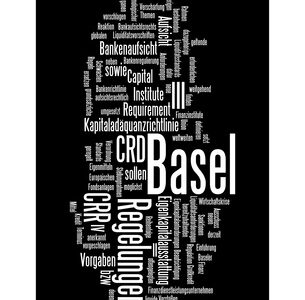
Prudential standards are safety requirements ("prudence") imposed on companies so that they are solid, this solidity being required because a failure would be catastrophic for the sector to which they belong. The banking sector is the paragon of the sector in which prudential standards apply, banks and credit institutions being thus protected from the systemic risk of default, the effectiveness of these standards being ensured by the vigilance of the supervisory authorities, the most often the Central Bank. But prudential and regulatory standards are getting closer and closer, especially since the 2008 global financial crisis. The “Basel Committee”, a committee bringing together in Basel, under the aegis of the Bank for International Settlements, central bankers and regulators, formulated “recommendations” at the end of the 1980s (Basel I Accord, transposed into law national on the basis of state voluntary service) in order to ensure the stability of the international banking system by setting a minimum amount of bank capital. Initially set at 8% of equity in relation to the loans granted, this "Cooke ratio", the main limit of which was to take into account for this calculation only the total amount of loans distributed and not the customer risk attached to them. . It was consolidated and surrounded by two additional guarantees when the Basel II accord was signed in 2004. This is based on three pillars: the first, based on the “McDonough ratio” (not only taking into account the amount of credits allocated but the probabilities of default of the counterparty and of the credit line), was intended to offer a better assessment of credit risks by authorizing the use of ratings from approved agencies (eg Standard & Poor's) or risk models internal to banks; the second allows the regulator to monitor the application of these standards and to increase the capital requirement if necessary; the third requires the transparency of information communicated by banks to the public on assets and their risk. Because the crisis has shown that regulation could not be thought of, only in a regulatory way but had to include a part of prudential, through the notion of "macro prudential", the so-called "Basel III" standards were developed. These are of the "regulatory prudential" type, that is to say prudential standards that have become sensitive to the market context and aim, as regulatory standards do, to maintain effective balances in the markets which cannot establish them. by themselves. In particular, the Basel III agreements take into account the risk, not previously considered, of the widespread practice of derivatives (securities presenting significant off-balance sheet risks), involving prudential measures, which had participated in the misinformation. on the risks that may circulate on the markets, thus requiring regulatory measures, market transparency then being the key means pursued by regulation. Moreover, the Basel III standards revise the definition of “Tier-1 capital” (hard core of banks making it possible to cope with losses linked to a crisis) so that these can no longer be constituted as ordinary shares and profits put in reserves by the bank, thus preventing the risk of contamination of the system. Systemic risk being an objective of a regulatory nature, we can thus see that the regulatory and prudential, previously clearly distinguished, are linked, come closer, or even merge. However, prudential refers to supervision more than regulation and the supervisory authorities are distinct from the regulatory authorities …

Glossary

European Union Law

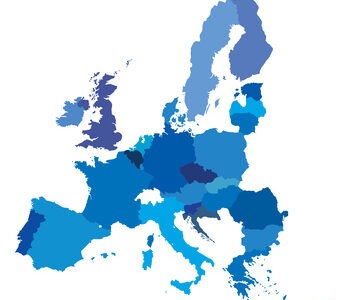
The United States established regulatory authorities at the end of the 19th century: starting from the principle of the market, they tempered it by setting up regulators, after noting market failures, for example in terms of transport, in the event of economically natural monopolies or essential facilities. The tradition of the European Union is the reverse since the States, in particular the French State, have considered that sectors of general interest, deemed unsuitable for the competitive pattern because not corresponding to the operational pattern of the meeting of supply and demand, and to serve the missions of public services, were to be held by the State, either directly by public establishments, or by public enterprises under the supervision of the ministries. Evolution in Europe came from community Law. Indeed, after the Second World War, the idea was to build a market which was to be "common" to European countries so that they could no longer wage war on each other in the future. To achieve this goal, the borders between them were lifted thanks to the principles of free movement of people, goods and capital. In the same way, the defense by each of the States of its own national companies by State aid has been prohibited so that any company, even foreign, can enter its territory, so that a common internal market can be established. Finally, a competition Law was necessary to prohibit companies and States from hindering the free functioning of the market, which would have slowed down or even stopped the construction of this internal market, which was an essentially political goal of the Treaty of Rome. To carry out this political goal, the European Commission and the Court of Justice of the European Union (CJEU, previously called the Court of Justice of the European Communities – CJEC – until the Treaty of Lisbon) have prohibited any behavior of agreement or of abuse of a dominant position, even on the part of public enterprises, as well as any state support (except in the event of a crisis). Likewise, in perfect political logic, but also in perfect contradiction with European national traditions, European texts, regulations or directives have liberalized previously monopolistic sectors, first of all telecommunications and then energy. This was the case for telecommunications with the 1993 directive, the 1996 directive for electricity and the 1998 directive for gas. Because of the hierarchy of standards, the States, except to be sued before the Court of Justice by the European Commission in action for failure, were obliged to transpose by national laws these European texts. Thus, by force, community law, both through general competition Law, but above all to achieve its political goal of building a single and initially peaceful internal market, has triggered in Europe a system of economic regulation in all network industry sectors, a system which was nonetheless foreign to the culture of the Member States. This was not the case with banking and insurance regulations, sectors which have always been threatened by systemic risk, and as such have been regulated and supervised by national central banks for a very long time. Community Law has for 30 years plunged into national Law while ignoring them, which could also be profitable, and on the basis of competition Law, the political dimension of the European project having been forgotten, no doubt over time as the War itself faded from people's minds. The effects of globalization and the financial crisis have constituted a new turning point in Community Law which, since 2010, has been built no longer to modify national Laws – and destroy them in part – but to build a new Community Law which should neither to Competition Law nor to National Law: Community Regulation Law, which makes room for individual rights and attempts to build over time a system that is robust to crises. Thus, by texts of the European Union of 2014, both a Banking Union and a new Law on Market Abuse is being built, which aims to establish a common law for the integrity of financial markets. One of the challenges is what could or should be reconciliation between the two Europe, an economic and still not very social Europe on the one hand and the Europe of Human Rights, which is based on the European Convention on Rights of Man. This is not on the agenda.

Glossary

Accounting Norms

Accounting is a kind of photography of the "value" of the company, of its heritage, balancing its assets and liabilities but also integrating its past activity but possibly its future activity. Accounting, an information tool, becomes a tool not only for the manager, the shareholder, the co-contractors, but also for the present or future investor, that is to say the market. Classical accounting, of German origin, valued the company's assets at their historical cost (for example the purchase price of goods), but the new accounting standards, under British influence and through the proposals of the International Accounting Standards Board (IASB), wanted to bring together the notion of value and that of the market. Indeed, a property has a value corresponding to the price that a potential buyer will give it and not to the price that its current owner has paid to acquire or control it. This notion of fair value or market value has led to the valuation of assets at their net asset value. We have therefore come closer to more exact prices, in line with the very notion of competitive prices but also extremely variable with the markets, the financial markets themselves being disconnected from the real economy by speculation. As a result, weakening markets weakened balance sheets and a domino effect playing between balance sheets and markets, especially with regard to banks, greatly contributed to the 2008 financial crisis. However, while financial activity did not cannot be thought of apart from an accountancy playing a central role in the information and in the confidence of the investors, the basis of the current accountancy, inseparable from the regulation of the banking and financial market, has not been replaced for the moment.

Glossary

Energy

Almost all energies are products whose economic circuit is regulated, in a more or less homogeneous way. Thus, gas and electricity are often regulated by the same authorities, as in France, regulation entrusted to an authority which in 2000 was first the Commission de Régulation de l’Électricité – CRE (French Commission of regulation of the electricity) to become the Commission de Régulation de l'Energie -CRE (French Commission of regulation of the energy), extending its competence to gas. Renewable energies, such as photovoltaic (solar panels), or wind energy (wind) or energy through water (dams) are more subject to State plans in the hands of the traditional administration. As for oil, it is currently regulated only through an agreement between producing countries, OPEC (Organization of Petroleum Exporting Countries), which smooths the market movements  with the perverse effects that are known. Energy is a regulated sector because at the same time it is made up of scarce resources (except the renewable energy hypothesis, which is currently privileged and elevated to the rank of European policy) even though energy is the support of all ordinary markets for goods and services since there can be no economic activity without an efficient and reliable energy system over the long term. As regards transport, which is based on the control of an essential infrastructure, Community aw still tolerates that the companies which manage it remain the property of the incumbent operators of which they are the subsidiaries, There is an accounting separation between its producers and its managers, consolidated by a distinction of legal personalities. The network operator is a "crucial operator", since all energy is a network industry. It therefore has multiple public service obligations, in particular to assure th buyers' and sellers"e right of access of energy. It is common for disputes to arise between the latter and the network operator, which are then brought before the regulator, in France the CRE giving a solution ;;  its decision may be challenged before the Court. The distribution activity is closely linked to the transport activity in terms of energy, and the same difficulties with respect to access to the meter are not found in access to the meter to the local telecommunication loop. Moreover, acts of sales and purchases in the energy sector are not part of a competitive logic. Often, it is still the Government that sets the selling price of electricity and gas, while oil Is left to the price resulting from an agreement between dominant producers of the market. France has experienced the saga of the possibility for consumers to leave the regulated price system to adopt the free price, the French Parliament by the law of 10 July 2008 having chosen to leave the free prices to return to the regulated prices if they are more favorable to the consumer. We therefore see that the aim of energy regulatory system is to open up to competition but also to optimally manage these scarce resources, which are rare even when they are indispensable. That is why the nuclear issue is central to the countries that have made the choice and are continuing to do so. The issue of energy transition is now a major major issue. In France, it is now based on the Law of 17 August 2015 on the Energy Transition for Green Growth. Here we see how long-term regulation, industrial policy and innovation are linked. Finally, energy generates activity both at very long term and at very high risk. This is why it does not support the simple mechanism of the competitive market. We must think of this sector as the banking sector because it is characterized by systemic risks, the system not being able to authorize itself for example a nuclear explosion. The Californian energy crisis is equivalent to a financial crisis. Energy requires decennial planning and considerable investment. States are required.    

Glossary

Equilibrium

In a self-regulated system (such as a market governed by free competition), the equilibrium operates spontaneously by the meeting of the whole of the supply with the whole of the demand, as soon as the information is given on prices. The snag that constitutes an anti-competitive practice, cartel or abuse of a dominant position, which prevents the emergence of the break-even price, is repaired on an ad hoc basis and ex post by the Competition Authority. But Regulation intervenes in the event of a market failure: Regulation then has the primary function of building balances which are not established and do not maintain spontaneously. For example, this will involve a balance between competition between banks on the one hand and the prevention and management of systemic risk on the one hand, which implies a certain coordination between banks, coordination close to the agreement. In the same way, the Regulator will have to build a balance between the principle of competition, with exact prices which can therefore be high, and social tariffs for populations in difficulty having nevertheless to gain access that the Politics will have posed as being a "common good. ", like certain drugs, even electricity. These unstable balances must be maintained in the long term. This is why the Regulator, unlike the Competition Authority, does not intervene on an ad hoc basis but is permanently present, in a way internalized in the sector that it continuously monitors and controls. These long-term balances justify recourse to multi-year plans, in particular through contracts for example in postal matters or concerning airports (regulation contract), the contract making it possible to stabilize apprehension of the future.

Glossary

Dispute Settlements

The power to "settle disputes" is usually less held by the Regulator than is the power to sanction. Indeed, if we can say that a Regulator without the power to sanction effectively loses his grip on the sector, a Regulator does not necessarily need to settle disputes to hold his sector. It is no less important. Indeed, settling a dispute consists in settling an opposition of interest between two legal persons who are expressly opposed. This transforms the Regulator into a sort of "civil judge", while the power of sanction makes him look like a sort of "criminal judge". With regard to the sector, the discipline of this one may require more that the Regulator punishes the breaches and punish the operators who do not respect the standards that it has decreed, more than it comes to separate the operators who quarrel among themselves. for personal interests. However, almost all regulators, except the Autorité des marchés financiers (AMF) (French Financial Regulator), have the power to settle certain types of dispute between operators, for example between the operator of a network and the one who wants to access it, when the manager refuses access or demands a price that is estimated to be too high or requires technical adjustments from his co-contractor. The regulator then intervenes as a sort of civil court which settles the dispute between the parties, outside any idea of ​​administrative police, and it is logically that this type of decision can be challenged before the Cour d'Appel de Paris, judicial judge.  This can be explained by what has been called the "civilization" of economic law, its progress causing it to leave the archaic violence of repression. This is also due to the fact that, by exercising this power, the operators provide information to the Regulator if it lacks it, encouraged to do so by the fact that their interests are thus directly protected, and the fact that through this the Regulator watches over the keys of the sector itself. For example, by settling a dispute over the right of access, it makes the interconnection effective, that is to say what the Regulation is objectively put in place. Thus, even if from a procedural point of view when the Regulator settles a dispute between an operator or sanctions an operator for non-compliance, it acts as a Court and logically receives the qualification, thus being legitimately by the procedure, in particular the fundamental guarantees of parties which it must respect, it uses its power to settle disputes and to sanction in an office which remains of regulation, which continues in substance to distinguish it from an administrative or judicial jurisdiction.

Glossary

Separation of powers

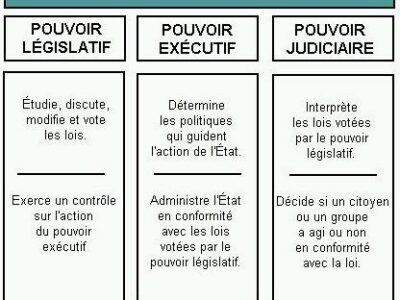
Montesquieu has written the theory of the political separation of powers. The French political model, by its Constitution and since the French Revolution, has separated the legislative power stemming from universal suffrage and, in France, the executive power, the head of state being directly elected. Formally, the judiciary is not a power but a mere "authority". This last statement still corresponds to the letter of the texts, in particular to the letter of the French Constitution, but the evolution of the texts and especially the evolution of practices has led to the formation of a sort of "jurisdictional power",  linking today to the existence of a judicial power, since the judicial power includes both the power of the administrative courts and the judicial courts. There are therefore three Powers which must be "separated": the legislative power, the executive power on the one hand and the jurisdictional power on the other hand. Regulation does not correspond to this constitutional scheme of separation of powers on several fundamental points. In the first place, the Regulator combines the legislative power, of the quasi-legislative type, with the executive power notably when it adopts individual decisions, and the judicial power when sanctioning or resolving the disputes. This cumulation of all powers makes it a kind of "miniature State", or even a sort of "little king", referring to the phenomenon of reforodalisation of society. This has been strongly criticized in the name of the principle of separation of powers. Second, the regulator, an organ of the State, does not obey the executive, since by nature it must be independent. As such, the Regulator, if it most often belongs to the State taking the form of an Independent Administrative Authority (IAA), does not belong to any power. Should we consider that regulators, whose powers are extreme in economically and politically crucial sectors, constitute a kind of fourth political power, going beyond the traditional organization? Some think so. Others also go very far, but in another direction. They believe that the Regulatory Law has destroyed the continental system of separation of powers to lead the countries concerned towards a more English or American political system of check and balance.

Glossary

Telecommunications

The telecommunications sector was the first sector to be liberalized in Europe, not so much by political will but because technological progress had in fact already brought competition into the sector and it was better to organize it rather than to To allow competition to settle in disorder. The telecommunications sector was liberalized by a Community directive, the 1996 transposition law having installed the French Telecommunications Regulatory Authority (ART, now ARCEP), whose task was to favor new entrants and build the The challenge today is no longer liberalization but the accompaniment of technological innovation and the incentive for operators to do so, for example in the ADSL Phenomena such as the failure of the "cable plan" are not renewed, that the "fiber plane" is going better, etc.   Competitive maturity of this sector means that the Competition Authority frequently intervenes in the field of telecommunications, particularly when merger authorizations must be given by the National or European Competition Authorities, since the Regulator gives only one opinion.   On the other hand, the current major issue that has put the discussions around the dialectic between container and content on the agenda is to determine the place that telecommunications have and will have in the digital domain and which could be a specific regulation of Internet, and thereby the Telecommunications Regulator.

Glossary

Health🔤

Health is a common good. This is why, particularly in France, it is largely removed from the market mechanism, which by its nature excludes people who do not have the means, particularly pecuniary, to be applicants, and removed from which is consubstantial with the market, namely competition, to be regulated by the State. This is primarily due to the fact that the State intervenes directly in its public establishments, which are the hospitals and the public officials who work there. This traditional regulation is retained in terms of price, since it is the State which sets the daily price in health establishments, and the pharmaceutical laboratories have validated in the transparency committee the prices of drugs reimbursed through health insurance funds and by the social group, through the Economic Committee for Medicines. Even though there is no monopoly and many private players (pharmaceutical companies, clinics, health workers, etc.), we are very far from a regulatory scheme by authorities independent of the executive. However, France is approaching the Scandinavian model of the agency through the regional health agencies (ARS) which, in a decentralized way, oversee the overall organization of the health sector in a French region. We are thus more in a movement of deconcentration than in the movement of dismemberment that the Regulation Law has expressed. In the same way, the European Agency set up has for the moment a role of concentration of information and observation, more than of regulation. This is undoubtedly due to the fact that health remains a question of political choice of level of protection, such as the social group is ready to pay, through compulsory levies weighing on all, problematic in distance of the competitive pattern.

Glossary

Incitation

The economic theory of incentives implicitly assumes that an operator can not be compelled to act against his will, or at least that it is more efficient to offer him advantages in such a way that he does what he wants . In this, this conception is opposed to the traditional conception of Law, which posits, on the contrary, that subjects obey the order dictated by the legal norm. But in globalized markets, operators have the tools to disobey and the asymmetry of information diminishes the power of control of the Regulators, which raises doubts as to the effectiveness of the legal constraint: it is not enough that the Law orders. In these circumstances, texts, regulators and judges must produce conditions that encourage agents to adopt behaviors that are consistent with the aims sought by the Regulators because the operators themselves have an interest in them. Thus, whilst regulatory systems in any sector become increasingly repressive, even in liberal economies, it is not so much to punish the perpetrator but to incite others who are tempted to commit crimes, To abandon them. It is the system of exemplarity. This thought prior to Beccaria participates in the re-feoadization of the Law, demonstrated by Pierre Legendre, associated with the decline of the State and to which the Regulation fully participates. Judgeshave little inclination to handle repression in this way, which creates a clash between Criminal Law and Regulatory Law, which nevertheless puts repression at its center. In the same way, Regulatory Systems must inject positive incentives, for example rewards for communication of information, which encourages delation, or incentives done by the regulator for the network manager make investments in the maintenance of it, against the immediate interest of its shareholder. Finally, all patent law and economics are now thought of as an incentive to inn/en/article/innovation/ovate. But, some incentives have proven perverse such as stock-options or bonuses. As a result, new texts seek to regulate these.

Glossary

Chain

Regulation has historically been built on the idea of ​​a sector, for example telecommunications, energy, rail, banking, audiovisual etc. This was linked to the fact that the regulations were thought by Europe and more particularly the European Commission as a means of establishing effective competition in a process of liberalization of sectors. But that was to think excessively about regulation over competition, that is, regulation as a means of building competition. In fact, regulation can be today, in a primary way, a means of preventing crises and managing risks, as well as a means of long-term management of goods and services that do not support the instantaneousness of markets, even led to competitive maturity. However, in this second perspective, the risks are in no way confined to a sector. On the contrary, they move from one sector to another. Likewise, a good, over time, passes from one sector to another. Thus, the time has come to qualify the thought of regulation in relation to the sector and to conceive the regulation in relation to the movement of goods that do not only move in a flat way on markets but also in chains within which they develop, which supposes long-term planning (as in energy matters), and in which they carry risks with them, which confinement in a sector does not make it possible to manage. Thus, the contamination of the banking risk inflamed the financial sector and the insurance sector in a manner as devastating as does a health risk ranging from the water sector to that of food, medicine, etc. the same way that data moves from the television sector to the telephone sector, to the digital sector. Moreover, agriculture, whose regulation is still very poorly thought out, except for an old report on the “timber industry”, shows that the good goes from the purely agricultural sector to the food sales or pharmaceutical production sector, themselves. regulated without connection. The agricultural organizations spontaneously coordinated to integrate this reality of the chains. If we better integrate this reality of the chains, which corresponds to the way in which risks spread, a major issue of regulation, a dimension that has nothing to do with competition, we would have to disconnect regulation from its strict link with the notion of sector, or at least, better organize interregulation.

Glossary

Europe

Europe is a political project. This project was conceived at the end of the second world war with the aim of never having a war between the European countries. For this Jean Monnet had the idea of building an economic market as the first step, the second step being a political government. This second stage remains to be established today, since the European Constitution has failed. Europe is therefore in the middle of the ford since Community law has built the three freedoms of movement and competition law, but we have no economic policy or market governance. Thus, for none of the regulated sectors of the European regulator, many say, for example, the need for a European banking and financial regulator. The financial crisis that the United States exported to Europe has generated the secondary benefit of laying the foundations of the European banking Union and coordination of financial markets is being put in place. But historically, Europe has exercised its power and weight on the Member States by its own Competition Law and the principle of freedom of movement and installation without associating or replacing it with European regulatory perpective or that the Member States can effectively oppose their traditional system of centralized regulation, for example, through the mechanism of State control over public monopolistic enterprises. Moreover, in a movement perceived at first as a great aggression but more in line with the prospect of building a "Europe of Regulation", through the directives of liberalization, first of all concerning telecommunications, then Electricity, and then gas, in energy or telecommunications, Europe has imposed on States the guidelines for the new regulatory systems, which continue to remain national. It was spontaneously that the National Regulators were in each of the sectors networked to exchange information, to increase their effectiveness. As long as Europe can not establish an economic government, because there will not be a political Europe, it will be difficult to argue that there is a Europe of Regulation, insofar as regulation is a triangle between economics, law and politics, and the latter is most often lacking at European level, for example in the technological choices to be made in the sectors. The movement has historically been very differently in finance. It did not come from Europe, but from the United States and did not take a binding form. Countries, notably France, wanted to gain the confidence of foreign investors, decided in the late 1960s to opt for models of independent regulators: the "Commission des Opérations de Bourse -COB" was designed on the American model of the Securities and Exchanges Commission -SEC". Only in the aftermath of the financial crisis, itself of banking origin, did Europe appear in these sectors. Europe is in the making. It is based on the European Central Bank (ECB). This evolution can produce a rebalancing of institutions and subjects, with the ECB coming in balance with the European Commission, which remains focused on Competition Law. But there are "two Europes". The first, described above, is "economic" or of the "political economy." The second is the Europe of Human Rights, constructed by the same catastrophe constituted by the Second World War on the European Convention on Human Rights. Human Rights (ECHR). They are articulated closely, but sometimes with difficulty, in the Law of Regulation.    

Glossary

Environment

The environment expresses the concern that man has henceforth of nature, either in itself, or because in destroying it he destroys himself. The interests are thus crossed and cumulated: nature is protected in itself, for him and for the generations to come. A branch of law was born, "Environmental Law", of which it can not be said whether it belongs to public or private law. It was until recently conceived as an administrative police, based on declarations, authorizations, classifications of the activities generating pollution, and organization of the treatment of waste. We are in the process of switching to environmental regulation, as shown by the new texts of European law, designed by the European Commission that link energy regulation and environmental regulation. In the long term, it is a question of planning and organizing a healthy environment, thanks to renewable energies, not so much on the basis of constraints or one-off interventions but rather on the basis of incentives and market mechanisms such as CO2 quotas (allocation of quotas to companies by the state and then emergence of prices by meeting the supply and demand thanks to the market), this construction of long-term equilibria on and from the market being itself the sign of regulation. The "environmental concern" has also been established with financial regulation, in two ways. In the first place, financial techniques are a means of developing tools for the environment, as are the CO2 markets, but also the specific obligations of what would be an environmental compliance for listed companies. Financial regulators of new missions. In the second place, environmental issues are themselves financialized, as if they identify new risks and reveal new uncertainties: as such, the Banking and Financial Regulators appreciate them.  

Glossary

Nuclear

Nuclear power is a way of producing electricity by power plants which at the same time have the advantage of being non-polluting in the immediate future, and of providing the energy autonomy of the country which obtains it, and of producing electricity at low cost. But nuclear power is also a method of producing electricity which involves a very high risk of catastrophe ("nuclear catastrophe", in the event of an accident in a power plant) and stranded costs, the calculation of which if not uncertain to say the least little known. France had made the choice, after the Second World War, of nuclear power, in particular because of its absence of fossil energy resources and taking advantage of the quality of its technical teams. . The French nuclear fleet soon coming to an end and the establishment of a new fleet requiring many years of work and investment, the government had requested a report from François Roussely, former president of EDF, but its classification " secrecy "makes it difficult to expose. The articulation between civilian nuclear power and military nuclear power is a technical, political and regulatory issue. This three-fold question has repercussions on the structuring choices of the crucial operator in the sector. Indeed, while EDF and Areva had been separated, the two companies are reunited again, the reunion of the two operators being justified for technical, economic and governance reasons. The specific risk of nuclear power, which in law translates into a regime of objective liability of the State and the uninsurable nature of the activity, and its proximity to military and defense issues, justify the prospect of liberalization, even of privatization, as they have been experienced in the UK, have gone no further than experimentation. The placing on the financial market of part, even a minority, of the capital of companies which design, build and sell nuclear power plants, was discussed.