All news

Glossary

Media

The very term 'media' is ambiguous since in the literal sense it designates what makes it possible to convey information between two people, that is to say the container rather than the content. In fact, today the media designate the content, that is to say the information as well as the media on which it circulates. If the media are regulated, it is above all for political purposes and in a different way depending on the medium. Indeed, if we take the audiovisual sector, it is above all a question of preserving public television stations from the temptation of political power to use its power as owner to use it as a propaganda tool and to ensure pluralism. politics during election campaigns. The regulator of these public freedoms is the CSA. The print media does not have a regulator per se; it is directly held at arm's length financially by the state through the Directorate of Media Development, attached to the Prime Minister. But today the major medium appears to be the Internet, a space for which global regulation remains to be found. Finally, because it is not possible to distinguish between content and container, the dynamism of communication and the dynamism of content creation are inseparable. Therefore, the regulation of communication must eventually be associated with the regulation of content creation, that is to say, cultural regulation. In the United States, this is left to the market, where a film industry has notably been built, guided by the needs of applicants. France continues to defend the idea that culture and the audiovisual sector are not a neutral object of the market and should therefore be removed from the WTO, the regulation of culture, because it is a question of common good, to which everyone must have access, justifying the entire ex ante system of public aid for creation and the desire for cultural diversity.

Glossary

Infrastructure

Network industries are built on transport infrastructure such as telecommunications waves or data, gas or electricity, which are essential facilities. These essential infrastructures are monitored by regulators not only for the operators to have a concrete right of access but also for a complete network of these infrastructures to be built in a space, especially in Europe, for example to achieve a European railway system. These infrastructures also exist in banking, financial and insurance matters, which it would be futile to oppose too easily to Network industries, as financial centers are based on huge computer systems, internalized clearing houses, which are themselves Infrastructure, deserving Regulation. In this way, the optimal infrastructure solidity, the Regulator having its final responsibility in a permanent control over the manager, whether the State or an operator – whether the operator is an operator Public or a private operator -, and the competitive dynamism of the sector that the system can also entrust to the same regulator. This is particularly the case in Financial Regulation, which aims to optimize the places, which compete with each other, and their respective security, which itself constitutes a competitive advantage, common to all operators.

Glossary

Interregulation

Regulation has arisen from the need to take account of the specific nature of the sectors, often accompanied by their liberalization. But, first of all, goods from different sectors can be substitutable. Thus, both gas and electricity can be heated, as intermodal competition makes the segmentation of regulation of the electricity sector and regulation of the gas sector less relevant to the idea of a single sector of "energy", which nevertheless allows the regulation of water and oil out of its grip. Similarly, a life insurance contract is both an instrument of protection for the future, a product that is therefore covered by insurance Regulation, but also a financial product placed with consumers by banking-insurance companies, objet to the banking regulatory control. This intimacy of regulation with respect to the internal technicality of the object on which it bears can not be erased. The interregulation that will take place is initially institutional. That is why an alternative opens: either the regulatory authorities are merged, and thus the UK's Financial Services Authority (FSA) has merged financial and banking regulation in 2000, what has not done the French system. Thus, the first branch of the alternative is the institutional fusion, at the risk of constituting kinds of titans, or even reconstituting the State. Either procedures for consultation and joint work are established to create contact points, or even a common doctrine among regulators, as it is between ESMA, EBA and EIOPA in the UE regulatory mechanisms. The other branch of the alternative is to respect this initial relationship between regulation and the sector and to take note of the links between sectors through the proposed concept of "interregulation". This involves setting up networks between autonomous authorities, but exchanging information, meeting, collaborating on common issues, and so on. This interregulation may initially be horizontal when authorities from several sectors collaborate, for example, ESMA, EBA and EIOPA. It may also be vertical when the authorities of national sectors collaborate with foreign authorities or European or international authorities, as envisaged by the Lamfalussy process in financial matters (extended to the banking and insurance sectors) or the Florence Process in the field of telecommunications or the Madrid Energy Process, where European national regulators meet and work together. This can take more formal institutional forms, such as in telecommunications, with BEREC, or in energy matters with ACER, with and around the European Commission. The comitology technique has generalized this institutional formula. Interregulation is then notional, a "common law" of regulation developing, common between all sectors. This "common law" (horizontal law) came after the maturity of sectoral regulation laws (vertical laws). It develops in fact because regulated objects are located on the border of several sectors, or even ignore these borders : for example financial derivatives on underlying agricultural or energy. Moreover, "connected objects" generate interregulation in digital space. Thus, even though it is possible that the Internet may give rise to an "interregulation" before giving rise to a specific regulation, the latter can then justify that the first one is dispensed with. That has not happened yet. This regulation of the digital world should be global. It is therefore possible that there remains a mechanism of interregulation.

Glossary

Game

Gambling, as Article 1 of the Law of April 6, 2010 on the regulation of online games shows, is not an ordinary sector left to the competition mechanism. Indeed, in the first place, it is the easy vector of illicit activities, mainly money laundering, and casinos have always been subject to licensing and supervision. Second, some games give rise to personal injury, whether it is inherently dangerous games or what can be done for players to increase their performance, for example by doping them. Third, the activity of gambling presents risks for those who engage in it, in particular that of incurring large sums without consideration and by going broke. It can be considered that this is a market risk that an adult has the right to run but the right of which must protect the weak, here minors. Finally, there is a risk of addiction, which is even stronger for them. France had so far tried to solve the problem by entrusting the monopoly of this activity to a public company, the Française des Jeux. The CJEU by a judgment of September 8, 2009 confirmed, with regard to the Portuguese system, the legitimacy of such a step in the name of the imperious overriding public interest. But in the meantime, the European Commission has designed a liberalization directive, France having then chosen to regulate where it could no longer technically defend its legal monopoly system, that is to say Internet games. This is why the law of May 12, 2010 set up a regulator, ARJEL, which approves operators, imposes warnings for minors, monitors operations, prohibits certain bets, etc.

Glossary

Judge

In Common Law systems, judges are powerful, respected and create the Law. In the countries of Civil Law, to which for example France belongs, since the French Revolution, judges have been neutral agents for the application of the law. France is a country built on the legislation, where Law is synomyne to the legislation. But the decisions of the regulatory authorities, which are nevertheless administrative authorities (Independent Administrative Authorities – IAA), can be challenged not only before the administrative courts, which is often said to be close to the administration (judge- Administrator theory), but more often before the European Court of Human Rights (ECHR) before the European Court of Human Rights (ECHR) because of the applicability of the European Convention on Human Rights or before the ECJ or before the the Constitutional Council. Thus, the judge becomes a central figure in the systems of Regulation, which neither the government nor the administration, nor the companies, nor the economists of the countries of continental law (Civil Law) had until now used. To the extent that the judge has always been at the center of British and American Law, not only the jurists and economists of these anglo-american countries are more at ease, but also the new law which applies in the new Regulatory Systems tends to be inspired by Common Law rather than by Civil Law. It is then often asserted that the former would be more adequate than the latter. This is not established, but there is more a sort of coincidence between the two traditions, between legal Common Law systems and Regulatory concepts. However, Europe is in the process of constructing a corpus of jurisprudential rules, notably through the national Constitutional Courts, with regard to economic regulation, which is peculiar to the European space.

Glossary

Intensification of exchanges

The intensification of the exchanges around the planet is distinguished from globalization in that the first phenomenon refers to the acceleration of economic exchanges without being confused with the disappearance of the space and time of the combined mechanisms of finance and digital, which is expressed by the term "Globalization". In its strict  and classical sense of intensification of exchanges around the globe, globalization ("mondialisation" in French) is not a new phenomenon; it has simply taken on a new dimension: globalization is an intensification of trade in goods and people. It is not a disappearance of circulations, encounters and exchanges, which on the contrary constitutes "globalization,, in the new sense of the term. Free world trade presupposes that borders can not be opposed to the movement of goods and the World Trade Organization (WTO) has been set up for this purpose, the Marrakesh Accords of 1994 conferring on this organization a very great power , Since two conflicting states have their own disputes settled by a dispute settlement body whose report is endorsed by the WTO itself. The State whose enterprises have been the victim of an illegitimate tariff or non-tariff barrier, can itself inflict retaliatory measures on the guilty state by a kind of private justice. The WTO mechanism is concerned with goods and not with financial mechanisms, which do not even need to remove borders and other barriers, since their immateriality has already destroyed the limits and is thus a matter of "globalization", in the second and new sense of this term. Globalization, in its strict sense of intensification of exchanges, is thus establishing market law on a global scale, even though this system has not yet become legalized to the point of establishing a global Competition Law as such, since the absence of a barrier to entry is just the first principle of this Law. But there is also no Regulation, that is to say that for the time being, the principle of free adjustment of supply – even foreign suppliers – and the demand of domestic consumers is not in balance with other principles, such as public service, risk prevention, preservation of common goods, etc. So we are still waiting, not only in the political sense but also in the technical sense, for the establishment of the Regulation of Globalization, in both senses of this term. This is particularly needed in environmental regulation, as the outline of a global environmental organization has not flourished. It is feared that what is called "regulation of globalization", that is to say, such a balance, does not come from the public authorities alone, for lack of a global Public international public order sufficiently powerful and coherent. But it could come from the crucial global operators, through the mechanisms of compliance and social responsibility.  

Glossary

Internet

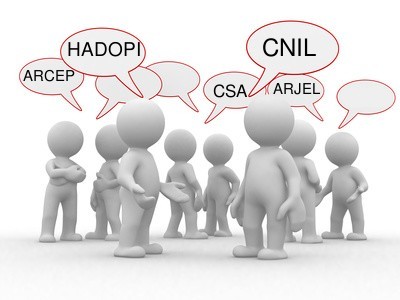
The Internet is a network which first of all allowed computer-connected people to communicate with each other, then to transport not only messages (mails), but also voice, but also images, and finally more generally and abstract: "data". Moreover, the Internet is now referred to as having the base, or even the synonym of "digital". The Internet is not a market but undoubtedly a mode of communication and distribution of goods (e-commerce) or rather a "space", the digital in which markets are developing, that of online advertising for example, and the phenomenon of platforms which refers to the new notion of a two-sided market and which one seeks to regulate in a possibly specific way. Indeed, the Internet calls for regulation, even if some would like it to be only the space for the expression of freedoms, even of subjective rights, the right of which would be the right of access. The principle that we must regulate the digital space is particularly due to the fact that it is the site of many illicit activities, for example money laundering or pedophilia. Discussions focus in advance on the modes of regulation, at first sight difficult to imagine due to the very fact of the immateriality of this "virtual" space. Indeed, information is elusive and circulates in an instant across the entire planet and the avenue often proposed is that of self-regulation by providers of access and content. Public regulation has developed so far intervened on specific issues, for example the protection of intellectual property rights against illegal downloading, entrusted to HADOPI, or the regulation of online games, entrusted to ARJEL) . The regulation of the internet remains to be done and the fundamental questions are not yet decided, in the very principles, that of the "net neutrality. The disputes focus even more on the question of knowing who could be the" Regulator of " Internet ": the telecoms regulator, the audiovisual regulator, the personal data regulator, or the companies themselves.

Glossary

Interoperability

The term interoperability refers to the technical ability of tools or machines to articulate with each other, to work together. This is particularly important in IT, for example between source software and application software, and in finance between market infrastructures. Likewise, the interconnection of networks is a mode of interoperability. Regulation imposes ex ante the interoperability of techniques, for example by unifying standards, by giving the regulator the power to adopt them and impose them on everyone or by condemning the dominant operator to communicate its know-how to others, interoperability then being a form of right of access. The European Commission condemned Microsoft for abuse of a dominant position to give its source codes to its competitors wishing to develop application software which shows that, as for essential facilities, the ex post of the judicial handling of competition law can have the same effects as the ex ante handling of regulatory law.

Glossary

Economic natural Monopoly

A monopoly refers to the power of a person to remove from a good its utility by excluding others. The monopoly refers to a situation on the market, the monopolist being the sole operator in the market. Lawyers are accustomed to the monopoly conferred by Law, for example the one that was the monopoly for the national public enterprise for electricity. In this case, what is done may be defeated, and the legislature may withdraw that privilege especially if the author of this norm is better placed in the hierarchy of norms than the previous author. For example, the European Union legislature withdrew the legal monopolies by means of directives from most of the operators holding them in the regulated sectors in order to liberalize them. But the monopoly can have an economic source. Indeed, it may happen that a first operator constructs a structure, for example a wired telecommunications transport network. Because he is alone, agents on the market must resort to him to carry their communications, his business will be profitable. But from there, if a second operator built such an infrastructure, it would inevitably be in deficit for insufficient applicants. This is why no rational economic agent will build a second network. Thus, this network will remain unique. It is then an economically acquired monopoly that the legislative will can not change its nature. That is why it is called "natural". Since what is can not be changed, Community law has taken note of the monopolistic nature of the majority of networks and the correlated power of their owner or manager, but has correlatively provided for their supervision by a regulator who not only Ex post to resolve possible differences between the infrastructure manager, the natural essential facility, and the one who wants to access it, but also, through an Ex ante power, to negotiate with that manager the return on his capital, his commitments investment in the network, etc., or even more directly by imposing on it the way in which it fixes access tariffs and so on. These economically natural monopolies are therefore more powerful than legal monopolies, which States and lawyers have taken a long time to understand, but this also explains the reverse tendency of economists to write laws, The texts must handle this type of notions, its writers caring little about the political order and legal notions. The fact that the laws and regulations on regulated situations and supervised operators have long been elaborated solely from the point of view of lawyers, particularly of the public service, which was regrettable, does not justify this passage from one extreme to the other.

Glossary

Tarification🔤

Pricing is the result of an act of will whereby an organization determines an amount or method of calculation to obtain an amount it allocates to a good or service. Pricing is in contrast with price, which in turn results spontaneously from the market mechanism and the competition that governs it. Pricing is a preferred ex ante tool for Regulation. It is favored when it comes to fixing access costs for users to essential infrastructure networks, which are economic monopolies. In a process of liberalization, because Regulation is then designed to build competition, competitive maturation will lead to the exit from "regulated prices", ie pricing, to "free prices", that is to say market prices. Electrical experience has shown that sometimes it is politically appropriate to allow those who have chosen the vagaries of market price movements to return under the shelter of tariffs. There are multiple pricing methods, France preferring pricing in relation to costs, U.K. preferring the price cap method.  

Glossary

Crisis

A crisis is an unexpected and destructive dysfunction of an organization. In an ordinary market of goods and services, crises are internal to companies, for example through social conflicts, and may even lead to the disappearance of the firm. But this does not lead to a market crisis because the internal crisis of the company is not communicated to the market. This is why market theories do not need to apprehend the internal functioning of companies which are thus deliberately designated, by reason of this indifference, as "black boxes". Indeed, a corporate bankruptcy in an ordinary market shows the dynamism of the market since it is the weak and inadequate companies that are eliminated for the benefit of the innovative companies, pushing more dynamic third parties to enter the market to take the place, according to the schema of the creative destruction of Schumpeter,which the Law of competition endorses. Thus, the crisis is not only not a problem for the ordinary market but even supposing that we care, it is a sign of good functioning. This is absolutely different in the case of systemic operation in particular sectors. The best known case is the banking and financial markets. Indeed, if investors begin to lose confidence in intermediaries, mainly in banks by a self-realizing effect, the market begins to collapse, leading investors, backed by fear, to withdraw their assets and realize the total collapse of the market by a domino effect that destroys the whole system. By the globalization of the financial and banking markets, now achieved by the dematerialization of securities and technology, the systemic crisis is global. Banking and financial regulators are therefore primarily responsible for fighting the crisis in order to prevent it, through information, transparency and protection of the investor, secondly to manage it, by supporting the defaulting operators And the sanction of the guilty operators, and thirdly to get out of the crisis, by restoring the confidence of the operators in the markets. By the globalization of the financial and banking markets, now achieved by the dematerialization of securities and technology, the systemic crisis is global. Banking and financial regulators are therefore primarily responsible for fighting the crisis in order to prevent it, through information, transparency and protection of the investor, secondly to manage it, by supporting the defaulting operators and the sanction of the guilty operators, and thirdly to get out of the crisis, by restoring the confidence of the operators in the markets. But this prevalence of the crisis in the regulatory system should not be limited to banking and financial markets alone. Indeed, two major phenomena prevent goods and services from being left to the simple and ordinary market system, that is to say, to the simple mere competition law. Indeed, the competitive market presupposes the infinite nature of the production of goods and services as soon as there is demand on the one hand, and the instantaneous nature of production and trade on the other. First, many goods and services are scarce resources. These include energy resources, which are the primary stakes in the global economy. They are then the necessary object of regulation, since it is not possible, for example, to produce gas or oil. The issue of water is even more important, even though the regulation of water is still in its infancy. In the same way, the instantaneous nature of production and trade does not apply to all agricultural activity, which presupposes the passage of time to produce goods, plants and animals, and which is subject to the vagaries of man's climate which, if allowed to play the law of the market, entails an exact price, but of a very great variability (King's law). Agricultural regulation then intervenes to smooth out prices over time and make possible that economic activity which exists only on annual or multiannual rhythms, to which the ordinary market scheme does not correspond. If an agricultural crisis occurs, such as the crisis in the price of pigs or the crisis in the price of milk, the solution is to avoid competition mechanisms to find a solution either through multi-annual contracts between producer and retailer or by State aids justified by the crisis, or even by means of tariffs. We see that the crisis is no longer a peripheral and welcome notion in the model but rather the central and permanent concern of the model. It is true that today we have moved from the competitive model to the regulatory model. This is particularly true in Europe, since 2010, Europe has been building banking Europe, the Banking Union based on regulation.

Glossary

Neutrality

The Regulation is a balance between the principle of competition and another principle. This other principle is a technical principle, for example the prevention of systemic risks or the management of economically natural monopolies. The regulatory system can, maybe must, then remain "neutral". Indeed, neutrality can be defined as the absence of choice made by a few for the future of the group. But Regulatory Mecanism can also mean balancing the principle of competition with a principle that is no longer economic, technical or political, such as access to a common good such as health or culture. In such a case, Regulation ceases to be neutral since there has been a collective choice politically positing that health, education or culture are superior goods. This has direct implications for the very existence of the Regulator. Indeed, regulators often present themselves as technical, neutral bodies that do not need political legitimacy, since they do not make choices for the social group. This is true only in the first hypotheses but not in the second, where only the democratic State is legitimate to operate them, which explains the return of the State to many regulated sector issues, for example as regards the preference in matter of energy production mode, from renewable energy to nuclear energy, involving the return to a ministry of energy, as well as the shift from financial regulation to ever greater power given to central banks. The issue today is about the growing importance of what should be the principle of "net neutrality". The question is: Does the Internet, in that it has given birth to digital, assume that every Internet user can access any site without interference, or can content operators and access providers give priority to some websites by directing users to them, either to manage congestion (neutral technical justification) or because they have been paid contractually by this site (non-neutral justification)? The question remains between the fundamental right of access of Internet users, the technical need to manage congestion, the need not to invest even more to increase bandwidth, and the freedom to undertake operators.

Glossary

Souvereignty

Classically, the People are sovereign and through the game of representation Parliament expresses its will, while a more Hegelian schema confers on the State, being superior, the power to express through the same channels, essentially Law, its general will. The State therefore imposes its will without more justification than the very existence of its upstream legitimacy, since it is the People who have conferred its powers on it: the State is sovereign and is not accountable. This is why Regulation is philosophically a "theory of suspicion", which refuses to grant relevance to these political presuppositions and rather sees in the situation of powers an arrangement of administrations and of particular persons who defend their particular interests, in inside and outside the country. This is why Europe by liberalizing regulated sectors, those even where the State strongly claimed its sovereignty, for example through nuclear planning, by requiring regulatory authorities to attack incumbent operators from within through regulation. asymmetric, destroyed the ideology of sovereign states, reducing them to the ordinary. This question remains open.

Glossary

Regulator (Regulatory Authority)

The Regulator, which generally takes the form of an independent administrative authority (IAA), is the person or body that monitors and controls the sector in order to maintain a balance between the principle of competition and another principle. For example, the telecommunications regulator will ensure the licensing of mobile telephony; or the energy regulator will monitor the access conditions of competitors to the electricity transmission grid ; or the financial regulator will monitor the reliability of the financial information it will make available to investors. The regulator must either build competition to achieve the liberalization of a sector or preserve it of the systemic risks that threaten it. For this it must have very large powers both in ex ante and ex post. Thus, in most cases, it has an ex ante regulatory power, for example through a general power to adopt texts, such has the French Financial Markets Authority (Autorité des Marchés Financiers – AMF). Ex post, it has also an administrative power to sanction and settle the disputes. The diversity of objectives, their heterogeneity, and even their contradiction, makes it difficult to satisfy everyone, but also – and it is another issue – offers the regulatory authority a large margin of discretion since it can easily justify its use of his powers by aiming one objective or another. The theoretical and practical question of the "discretion of the regulator" is a major political problem, especially for those who claim that the regulator would only be an expert and not exercise political power, that is to say do not make discretionary choices for the social group. All these powers are nonetheless exercised in compliance with fundamental procedural safeguards, since the persons concerned may challenge the acts before the courts. Finally, according to Hannah Arendt's model, beyond the law, the Regulator must first of all have "authority" (gravitas), that is, sufficiently impress and the sector and the government to be respected, and its prescriptions taken in consideration. For this, the regulatory body must have the information, belong itself to the same private circles of its interlocutors and widely communicate with its foreign counterparts. In this, the Regulator sometimes appears as a sort of minister, who would hold its power of the sector itself, but must always remain neutral. The issue of its independence and its absence of capture is all the more crucial.

Glossary

Transparency

Transparency is not a natural state, it is not even a legal principle of classical law. Situations, persons and information are only made known to those who are in the same situation, for example the parties to the contract, but they are not known to third parties. Thus the contract is not transparent, consequence of the basic rule that distinguish the parties and third parties to the contract. In the same way, in an ordinary market of goods and services, there is business secrecy, the secrecy of factories, and the secrecy of the strategies that remain the principle, preserved by the competition authorities. Information and transparency play only on the prices offered, not even on how they are established.  

Glossary

Philosophy

Ideas lead the world, even in the disenchanted period in which we live, for disenchantment is a philosophical Weberian idea. Thus, as the market does, Regulation too often appears as a state of nature, the two being correlated since Regulatory mechanisms is simply the response to a market failure. In reality, regulation obeys a certain conception of the State, the common goods, the benefits attributed to competition, the balance between competition and other principles, the balance between political powers, etc. : So many philosophical ideas. If we are to relate the Regulation to a more particular philosophy, it would be a philosophy of liberal economy, which posits that in the ordinary, on ordinary goods, supply and demand produce a satisfactory result The supplier and the applicant, the economic life not summarizing the life of the person. But the Regulation is a philosophy because, independently of the technical market failures, to qualify or not an "ordinary" good is a philosophical position. Thus, the training of people or the level of protection of the health of individuals and the assumption of responsibility for the social group and the assumption of responsibility for this service is a political position reflected in the Regulation. This is why regulation can not be confined to economic science, the law of which being merely its translation. In the same way, regulation, because it is the scientific response to market failures, can not be the pure secular arm of a political will, because economic theory must make its voice heard. Philosophically, Regulation is therefore a complex figure, a triangle whose points are Law, Economics and Politics, none of which can claim to have entirely taken over the others.

Glossary

Intellectual property

Intellectual property is an exclusive right conferred by the right to the author of a work (literary or artistic property) or of a technical invention (industrial property), which allows the latter to prohibit others from duplicating this which it produced without its consent. This exclusive right thwarts the competitive system, in which copying is ordinary behavior, a form of circulation, of increasing wealth, a situation conducive to innovation. Tensions are therefore strong between competition Law and intellectual property and competition authorities tend to see abuses of a dominant position where, for example, pharmaceutical companies believe that they are claiming the use of their intellectual property rights. Digital technology gives rise to theoretical and practical confrontations of the same magnitude. But if intellectual property is inserted intellectually into the Regulation, the State no longer grants this exclusive right ex post to reward the author for having created or invented. In a more dynamic and global way, intellectual property is for the State an incentive public policy tool to lead economic agents to innovate with the prospect of receiving the financial fruits increased by the absence of competition for several years. For example, currently in the field of patents, economists only see them as part of a state-led policy. It is undoubtedly still different in matters of literary and artistic property which remains with a more romantic vision of an artist whose mainspring is not the lure of gain but the desire for the beautiful and whom it does not suit. to encourage creation. This has undoubtedly affected the prospect of creating industries in the cultural sector. Digital technology is converging the two schemes, perhaps towards the same obsolescence.

Glossary

Regulation Law

"Regulation Law" (with a capital on "Regulation" in order to distingu with regulations wihch are simply texts) or "Regulatory Law" is defined as the balance between the principle of competition and another principle, a-competitive, even anticompetitive. It is thus connected with a liberal theory since the principle of competition is always there. However, it does not depend on the complete and sufficient organization of a market, a sector or a channel. This may be due to technical or economic data that make the market itself unworkable: there are  market failures. For example, transport networks constitute economically natural monopolies which make network industries, such as telecommunications, railways or energy, need to be replaced by monopolies, ie powers which no competition will counterbalance and which, except to nationalize, so to leave the liberal perspective, independent regulators will monitor. Thus, regulation always has a political background, since it is a choice of general framework of liberal economy, reacting to market failures in a different way than by the administered economy which operates through state intervention. The heart of the Regulation is therefore the Regulator. In many countries, it often takes the institutional form of independent administrative authorities (IAA), which coordinate operators, whether public or private. But politics is still present in another and very strong way alongside Law and Economy, for the principle weighed against the principle of competition may not be another economic principle as the above-mentioned example of the natural monopoly or the systemic risk of money and financial markets, but a purely political principle. For example, it is necessary to assert, because the People have decided it and accept to pay its collective price through taxes, that everyone is entitled to a certain level of social protection, to access to health, to education, to a healthy environment, to information, etc., with the fair price being able to go as far as being free of charge, without any relation to the fair market price. Each person has to accede to this good because in this he accedes to his very humanity – notion of commons goods or universal good or "good of humanity". This notion is both relative and political but marks a civilization. Whether it is a matter of building a market, of maintaining heterogeneous equilibriums or of maintaining marks of civilization in them, Regulation is always an artefact which presupposes the deployment of a great power ( wich was expressed by the State, but today it is that of the regulators). In this respect, it is the goal of efficiency which is above all the aim sought, for example an effective access to the transport network ora successful management of crisis and risk. All the Regulation Law is deduced from the purpose served, is only an instrument at the service of the finality. That is why its legal reasoning is teleological, that is to say, constructed from ends. This instrumentalisation of Law can be expressed trivially: "the end justifying the means". It has legitimized ample legal powers, including sanctions, cumulated by regulators, against which the classical jurists have protested, to which the Constitutional Courts have set limits. But it is in the nature of regulatory techniques to be teleological. Regulation then engenders a confrontation between Law and Economy, of which Politics holds the scourge. Thus, for example, while technical market failures impose, can – or maybe must – be resolved internationally, and do not require political consensus, the political dimension of the Regulation Law (notably the "rights of access to … .. ") must on the contrary meet the adhesion of peoples and / or nations. This is why Regulation, which is too often enclosed in economic theory alone, has not only a very strong legal translation, but also major political implications. Indeed, by putting the Regulator at heart and the decisions it adopts, Regulation leads to the increasing power of the judges who control these decisions, whereas the legislative acts are unharmed. For example, the continental countries saw the power of judges to increase, bringing them closer to Common Law countries, ni so many crucial sectors, such as network industries, banking and finance. In addition, Regulators are necessarily autonomous of sector but also of government, creating a game of political equilibrium where each is both independent but accountable to each other : a check and balance mechanism, fundamental to the United States but hitherto unknown in many continental countries, such as France. Thus, if one speaks so much of the Regulation, it is on the one hand because it concerns activities which, even if they are locked up in specific sectors such as telecommunications, energy, banking or Finance, are all indispensable underpinners to the prosperity and sustainability of the general economy: there is no proper functioning of ordinary markets and a satisfactory European construction if there is no sectorial regulations.. But it is also because the Regulation Law has upset the organization of political powers in many countries, bringing them to a model close to that which organizes the relations of political powers in the United States..

Glossary

New comer

The expression "new comer" designates an operator outside the sector or the market but who is going or has just entered it. On a fully competitive market, this entry is made for him without difficulty, without "transaction cost", and it is naturally encouraged to do so by his entrepreneurial taste or because he has innovated (Schumpeterian temperament), thus being able to seduce applicants in place, potential customers who will then turn away from their usual supplier. But, when there is liberalization of a monopoly sector, the incumbent operators are powerful enough to establish barriers to entry, because they notably hold the know-how and the confidence of the customers ("stickiness" of the market). It is therefore necessary to institute transitional regulators, most often in the form of Independent Administrative Authorities (IAA) to build competition, which can only occur through asymmetric regulation, notably in the form of systematic favors for the benefit of new comers. Thus, for example, the British telecommunications regulator forced British Telecom to open its entire telecommunications network free of charge to newcomer Mercury. This asymmetrical exercise of power is nevertheless neutral since it is applied mechanically to the detriment of incumbent operators to make room for new entrants, only applying to the benefit of new entrants in a blind manner, so that competition can arise. The European Commission wants the same to be true in the pharmaceutical field, generic drug laboratories being assimilated to new comers compared to originator laboratory drugs on the same active ingredient, but this is undoubtedly confusing the liberalization process and exclusive right arising from an intellectual property right.