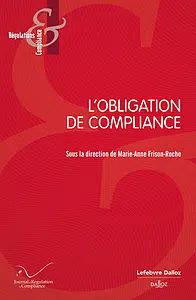
► Full Reference: M. Mekki, “Peut-on repenser la responsabilité à l’aune du devoir de Vigilance, pointe avancée de la Compliance ?” (Can Liability be Rethought in the Light of the Duty of Vigilance, the Cutting Edge of Compliance?), in M.-A. Frison-Roche (dir.), L’Obligation de Compliance, 
____

____
► This article is written in French. English summary of this contribution (done by the Journal of Regulation & Compliance – JoRC): The author develops the tensions that the Vigilance Obligation generates on the very concept of liability. Listing all the very diverse manifestations of Vigilance, according to the fields, he observes that a teleological logic of prevention and management of systemic risks is taking shape, which is what Compliance is, no doubt a remedy for a powerless State, relying on a great plurality of norms.
The question is whether it is possible to move from these special bodies of law, which nevertheless share a common spirit, to a transformed ordinary Law. The first decisions handed down on the 2017 law answer in the negative, but the question remains open.
It is then necessary to return to the very concept of liability, which could accommodate a general mechanism of Vigilance. This concept is very flexible and has the adaptability required to accommodate the logic of Compliance. Indeed, liability, classically Ex Post, can become Ex Ante, through the notion of debt, no longer legal but ethical, because companies must be “trustworthy”.
Preventive liability then aims to restore the balance of systems in the pursuit of the Monumental Goals, for the efficacy and efficiency of systems. Liability becomes a mix of subjectivity and objectivity, risk becoming central (in relation to fault), the dispute going beyond the interest of the parties, and remediation becoming the central issue in a liability trial that needs to be rethought: dialogue must be at its centre, between courts, between companies and stakeholders, within an adapted office of the judge.
________
🦉This article is available in full text to those registered for Professor Marie-Anne Frison-Roche’s courses
________