Vigilance

Working Paper serving as the basis for an article concluding a book

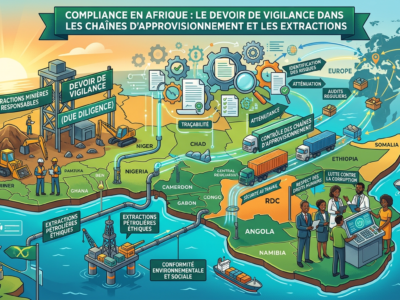
🚧Taking into account the legal landscape in Africa to fulfil the Vigilance Obligation

► Full reference : [rubrique p="Présentation"]M.-A. Frison-Roche[/rubrique], Taking African legal geography into account to achieve an efficient vigilance system, working paper, August 2025/February 2026 - 🎤This working paper follows on from the closing address at the symposium [lien a="geographie-et-vigilance-in-devoir-de-vigilance-que"]Devoir de vigilance, quelles perspectives africaines ? Regards croisés en droit international, droit comparé et droit OHADA[/lien] ([lien a="geographie-et-vigilance-in-devoir-de-vigilance-que"]Vigilance Duty: what are the prospects in Africa? Perspectives from international law, comparative law and OHADA Law, organised by the Faculty of Law of Bordeaux, through its [/lien][lien a="geographie-et-vigilance-in-devoir-de-vigilance-que"]Institut de Recherches en Droit des Affaires et du Patrimoine - IRDAP[/lien] ([lien a="geographie-et-vigilance-in-devoir-de-vigilance-que"]Institute for Research in Business and Property Law), held on 15 November 2024[/lien].  - 📝This working paper forms the basis of the article "Considérer la géographie juridique africaine pour y réussir l'obligation de vigilance", which concludes the volume edited by Eustache da Allada in 2026 by Éditions Lefebvre-Dalloz, in the “Thèmes & Commentaires” collection,📗[lien a="devoir-de-vigilance-quelles-perspectives-africaine"]Devoir de vigilance, quelles perspectives africaines ? Regards croisés en droit international, droit comparé et droit OHADA[/lien] (Vigilance Duty: what are the African perspectives? Comparative perspectives in international law, comparative law and OHADA Law). To this end, following an initial draft in August 2025, it was revised a second time to better incorporate the written contributions that make up the book, since the article on which it is based sets out a personal approach drawing on external research whilst also needing to synthesise these contributions. - ► Summary of the working paper :  The French “Vigilance” Act of 2017 incorporated the technical provisions and the spirit of the “Sapin 2” Act of 2016. They share a common goal. They have been and remain a common source of controversy and passion. At their heart lies the establishment of a “compliance obligation”, for which vigilance techniques form the “edge ” in serving a grand ambition: to protect systems from risks, both now and in the future, in order to protect the people involved in them. The passion that continues to surround the Vigilance Act, which gave rise to the European CS3D , is misguided, because the law and passion are never allies. Some would passionately want to see vigilance triumph by condemning companies to perform miracles; others would passionately want to see the destruction of all the texts that established the very concept of this Compliance Law, built upon these Humanist Monumental Goals. But let us acknowledge that in these debates on the Vigilance Obligation, which is being legally implemented across value chains, Africa is often cited as an example in a general discussion. It is not often considered as a distinct case with its own legal landscape. No reliance is placed on its strengths or on its own legal mechanisms, even though value chains – particularly industrial ones – so often lead to it, both now and in the future. Through analyses of the Vigilance Obligation, Africa is perceived as a place of retribution or of a new form of paternalism, and when its future is envisaged, prospects seem to be lacking, even though the very essence of compliance—and therefore of Vigilance—is the future.  If we take a less confrontational view and focus instead on the ‘legal geography’ of African countries and their social and inter-state structures, we see that the concern for others, both present and future – which ultimately constitutes the Monumental Goal of Compliance Law and thus of the Vigilance Obligation – is more prevalent in Africa than it is in Europe, which is now built upon legal individualism. This concern for others is reflected in legal mechanisms akin to mediation and various legal structures that our own institutions would do well to heed: our legislators before adopting bills, and our judges who might listen to them as amici curiae before reaching a decision. If we turn our attention to the African continent, which is exploited by certain segments of value chains, and to labour organisations, it becomes clear that here too, legislation and sanctions are not the whole story. Compliance techniques that make use of soft law and the contractual frameworks underpinning the chains themselves can remove the element of abstraction that is, by nature, inherent in general legislation. Moving forward through contracts under the supervision and with the support of the courts is an approach that could prove more fruitful than well-intentioned legislation, which has served as a catalyst, in line with the privileged position of contract law within OHADA. This serves to enhance the judge’s authority. The Compliance Judicialisation is also linked to the growing connection between Compliance and Contracts. However, it appears that not only can European judges specialising in Compliance Law and Vigilance Obligation thus rule on matters concerning Africa, which they can only know from a distance – though it is the lot of every judge to be an outsider – but African and inter-state Courts, notably through OHADA, can address the Vigilance Obligation because value chains are constituted by contracts. By developing it not as a foreign concept to be assimilated, but as that which expresses the very heart of the Law in Africa: concern for others, solidarity, the search for compromises and solutions so that the social and environmental system – that is to say, the human system – may endure into the Future. - 🔓Read the developments below⤵️ - 🌐Follow Marie-Anne Frison-Roche on LinkedIn 🌐follow Marie-Anne Frison-Roche on Instagram 🌐Subscribe to the newsletter MAFR Regulation, Compliance, Law 🌐Subscribe to the video newsletter MAFR Surplomb 🌐Subscribe to the newsletter MaFR Law & Art

Working Paper for 📺Overhang (News)

🚧The Contract, a Compliance tool: the Obligation for a platform to control content (French Supreme Judicial Court, 15 January 2025) :

► Full Reference: [rubrique p="Présentation"]M.-A. Frison-Roche[/rubrique], The Contract, a Compliance tool: the Obligation for a platform to control content CE, 27 January 2025, B. c/ CNIL, Working Paper, March 2025. - 🎤 This Working Paper was developed as a basis for the Overhang👁 video  on 29 March 2025 : click HERE (in French) - 🎬🎬🎬In the collection of the Overhangs👁 It falls into the News category. ►Watch the complete collection of the [rubrique p="MAFR TV"]Overhangs[/rubrique]👁 : [rubrique p="MAFR TV"]click HERE[/rubrique] - ► Summary of this Working Paper: The [lien a="arrets-de-la-chambre-commerciale-et-financiere-de-"]ruling handed down on 15 January 2025 by the Commercial, Economic and Financial Chamber of the French Judicial Supreme Court (Cour de cassation)[/lien] provides a solution to the issue of content control in the digital environment. It resolves what appears to be the aporia so often emphasised, and even claimed, namely the impossibility of developing an effective controlling technology. To do this, the Court disregarded the applicable laws and referred to the electronic payment contract between the bank and the platform, which contained a clause on Vigilance against unlawful content, linked to a termination clause. It held that this clause was fully effective. This solution, so simple and so strong, can make a major contribution to regulating the digital space, if the banks so wish, because what platform can do without reliable electronic payment services?   - 🔓read the developments below⤵️ - 🌐follow Marie-Anne Frison-Roche sur LinkedIn 🌐follow Marie-Anne Frison-Roche on Instagram 🌐subscribe to the Newsletter MAFR Regulation, Compliance, Law  🌐subscribe to the Video Newsletter MAFR Surplomb

Working Paper for 📺Overlook

🚧The puzzle of Institutional Compliance Law and Substantive Compliance Law: the example of the European Regulations of 31 May 2024 on AMLA and enterprises compliance obligations

► Full Reference: [rubrique p="Présentation"]M.-A. Frison-Roche[/rubrique], The puzzle of Institutional Compliance Law and Substantive Compliance Law: the example of the European Regulations of 31 May 2024 on AMLA and enterprises compliance obligations​, Working Paper, January 2025.   - 🎤 This Working Paper was developed as a basis for the Overhang👁 video  on 11 January 2024 :   - 🎬🎬🎬In the collection of the Overhangs👁 It falls into the News category. ►Watch the complete collection of the [rubrique p="MAFR TV"]Overhangs[/rubrique]👁 : [rubrique p="MAFR TV"]click HERE[/rubrique] - ► Summary of this Working Paper: Compliance Law is built on 2 legs, Institutions on the one hand and substantive rules on the other. For example in the United States, the 1934 Act established at the same time the prohibition and prevention of financial market abuse and the SEC. In Europe, in 2013, the Banking Union established institutions to build this Union and increased the obligations on banks. This is perfectly illustrated by the 2 European Regulations of 31 May 2024, one creating the AMLA and the other reinforcing the compliance obligations of crucial economic operators, one text referring to the other. Indeed, Institutional Compliance Law and Substantive Compliance Law are like 2 articulated legs. You have to know both and make them work together. This is part of the "European puzzle", a positive expression which implies that, when assessing and interpreting a text, we should always bear in mind that it is only one element of a general picture, which is coloured by its Monumental Goal: in this case to obtain a European area where money laundering is efficiently prevented thanks to the action of the companies themselves under the supervision and support of a Supervisory Authority which coordinates the actions of the States. If we consider only one element, we find everything 'complicated', whereas the overall picture is simple, because the Goal is simple and in Compliance Law, a branch of Teleological Law, everything is in the Monumental Goal.   - 🔓read the developments below ⤵️ - 🌐suivre Marie-Anne Frison-Roche sur LinkedIn 🌐suivre Marie-Anne Frison-Roche sur Instagram 🌐s'abonner à la Newsletter MAFR Regulation, Compliance, Law  🌐s'abonner à la Newsletter en vidéo MAFR Surplomb

Conference

🎤Choix et embranchements de compétences lorsqu’un enjeu de vigilance est allégué (Choice and Branching of Jurisdiction when a Vigilance issue is Alleged), in 🧮Le Droit processuel de la Vigilance (Vigilance General Procedural Law)

► Full Reference: [rubrique p="Présentation"]M.-A. Frison-Roche[/rubrique], "Choix et embranchements de compétences lorsqu'un enjeu de vigilance est allégué" ("Choice and Branching of Jurisdiction when a Vigilance issue is Alleged"), in [lien a="le-droit-processuel-de-la-vigilance-in-cycle-de-co"]Le Droit processuel de la Vigilance [/lien][lien a="le-droit-processuel-de-la-vigilance-in-cycle-de-co"](Vigilance General Procedural Law)[/lien], in [lien a="coordination-du-cycle-de-conferences-de-formation-"]cycle of conference-debates "Contentieux Systémique Émergent" ("Emerging Systemic Litigation")[/lien], organised on the initiative of the Cour d'appel de Paris (Paris Cour of Appeal), with the Cour de cassation (French Court of cassation), the Cour d'appel de Versailles (Versailles Court of Appeal), the École nationale de la magistrature - ENM (French National School for the Judiciary) and the École de formation des barreaux du ressort de la Cour d'appel de Paris - EFB (Paris Bar School), under the scientific direction of Marie-Anne Frison-Roche, November 18, 2024, 11h-12h30, Cour d'appel de Paris, Cassin courtroom - 🕴️An other speaker to this conference is Natalie Fricero, Emeritus Professor at Côte d'Azur University 🧮[lien a="le-droit-processuel-de-la-vigilance-in-cycle-de-co"]see the full programme of this event[/lien] - ⚙️This event was conceived as part of the [lien a="coordination-du-cycle-de-conferences-de-formation-"]"Emerging Systemic Litigation" cycle of conference-debates[/lien], organized by the Paris Court of appeal, in conjunction with the French Court of cassation, the Versailles Court of appeal, the French National School for the Judiciary and the Paris Bar School, under the scientific direction of Marie-Anne Frison-Roche. - ► English Summary of the conference: This speech opens the conference. It therefore logically focuses on the question of "jurisdictional competence". It is divided into successive points which are progressively linked to each other. The first point consists to insist on this rule : the organisation of the courts and their jurisdiction can never be detached from the substance of the matter in dispute. This explains why the issue of jurisdiction is such a source of passion for as long as the very definition of Vigilance remains so contentious, and why the 2021 legislature's belief that it could put out the fire has only served to exacerbate it. The second point relates to the first proposed solution, i.e. maintaining the exclusivity of the Paris First Judicial Court, which is acceptable in principle because by specialising judges acquire a "technical competence" but which presents a very damaging "Bibendum risk". The third point relates to the second solution proposed, namely the reference to the Motulskian notion of the 'basis of demand', which provokes a fork in the road, with the risk of interminable conflicts and divergent interpretations. The fourth point is the need to find the best solution, i.e. the least bad solution, consisting above all of forming practical alliances, without requiring new texts, for this particular type of litigation which does not come under any branch of Law and which justifies a dialogue between the heads of the courts.           - 🔓read the key points of this speech below ⤵️ - 🌐follow Marie-Anne Frison-Roche on LinkedIn 🌐follow Marie-Anne Frison-Roche on Instagram 🌐subscribe to the Newsletter MAFR Regulation, Compliance, Law 🌐subscribe to the Newsletter Surplomb, par MAFR

🧱⚙️scientifi organisation and moderation of 🧮Le Droit processuel de la Vigilance (Vigilance General Procedural Law), in cycle de conférences-débats “Contentieux Systémique Émergent”

► Full Reference: Le Droit processuel de la Vigilance (Vigilance General Procedural Law), in [lien a="coordination-du-cycle-de-conferences-de-formation-"]cycle of conference-debates "Contentieux Systémique Émergent" ("Emerging Systemic Litigation")[/lien], organised on the initiative of the Cour d'appel de Paris (Paris Cour of Appeal), with the Cour de cassation (French Court of cassation), the Cour d'appel de Versailles (Versailles Court of Appeal), the École nationale de la magistrature - ENM (French National School for the Judiciary) and the École de formation des barreaux du ressort de la Cour d'appel de Paris - EFB (Paris Bar School), under the scientific direction of Marie-Anne Frison-Roche, November 18, 2024, 11h-12h30, Cour d'appel de Paris, Cassin courtroom - ► Presentation of the conférence:  - 🧮Programme of this event:  Seventh conference-debate LE DROIT PROCESSUEL DE LA VIGILANCE (VIGILANCE GENERAL PROCEDURAL LAW) Paris Court of Appeal, Cassin courtroom Presentation and moderation par Marie-Anne Frison-Roche, Professor of Regulatory and Compliance Law, Director ot the Journal of Regulation & Compliance (JoRC) 🕰️11h-11h20. 🎤, by 🕴️Marie-Anne Frison-Roche, Professor of Regulatory and Compliance Law, Director ot the Journal of Regulation & Compliance (JoRC) 🕰️11h20-11h40. 🎤, by 🕴️Natalie Fricero, Emeritus Professor of Law at Côte d'Azur University 🕰️11h40-12h30. Debate - 🔴Registrations and information requests can be sent to: inscriptionscse@gmail.com 🔴For the attorneys, registrations have to be sent to the following address: https://evenium.events/cycle-de-conferences-contentieux-systemique-emergent/  ⚠️The conference-debates are held in person only, in the Cour d’appel de Paris (Paris Court of Appeal). -

Conference

🎤Considérer la géographie pour réussir le Devoir de Vigilance (Taking Geography into account for a successful Vigilance Duty), in 🧮Devoir de vigilance, quelles perspectives africaines ? Regards croisés en droit international, droit comparé et droit OHADA

► Full Reference: [rubrique p="Présentation"]M.-A. Frison-Roche[/rubrique], "Considérer la géographie pour réussir le Devoir de Vigilance" ("Taking Geography into account for a successful Vigilance Duty"), concluding speech in Devoir de vigilance, quelles perspectives africaines ? Regards croisés en droit international, droit comparé et droit OHADA (Vigilance Duty : what African perspectives? Cross-analysis of International Law, Comparative Law and OHADA Law), Institut de Recherche en Droit des Affaires et du Patrimoine (IRDAP), Bordeaux, 15 November 2024. - 🧮see the full programme of this manifestation (in French) - ► English summary of this concluding speech: This concluding speech was made "on the bench", i.e. directly after listening to all the day's speakers. It is not, therefore, based on an a priori conception of the subject, but on the impression that emerged from the whole, as one speaker followed another. The general impression is that these compliance instruments, of which the vigilance tool is the spurred head, are only appropriate if they fulfill the purpose for which they were devised and imposed, which presupposes that they are appropriate to the concrete situations to which they apply: to the country, to the legislation that shapes and expresses this country, to its economy, to its population. There is certainly room for improvement. But Vigilance legal instruments, like Compliance Law, are new mechanisms that are in the process of taking shape: we must seek to improve them and find solutions: 🧱🕴🏻mafr, 🚧[lien a="devoir-de-vigilance-comment-progresser"]Duty of Vigilance: the way forward[/lien], 2024   This is not easy, especially if we get lost in the jigsaw puzzle of texts and decisions in which the vigilance technique fits, particularly at French, European and international level: 🧱🕴🏻mafr, 🚧[lien a="la-vigilance-piece-dun-puzzle-europeen"]Vigilance, a piece of the European puzzle[/lien], 2023   Listening to all the many and varied speakers, it is clear that progress needs to be made to ensure that the Vigilance instrument takes greater account of the concrete situations reflected in the various legal systems of African countries, and in particular the unified OHADA legal system. It can be done, as long as everyone is willing to bear it in mind. 🧱🕴🏻J.-B. Racine, 📝[lien a="geographical-dominance-in-the-choice-and-the-use-o"]Geographical dominance in the choice and the use of compliance tools. Introductory remarks[/lien], in 🧱🕴🏻mafr (ed.), 📘[lien a="compliance-tools"]Compliance Tools[/lien], 2021   The speakers demonstrated that the good feelings of Paris or Brussels can pave the way for African hell, for example when about the children labour. The same is true of the fight against corruption, as Mohamed Salah showed. 🧱🕴🏻M.M. Salah ,📝[lien a="conception-et-application-de-la-compliance-en-afri"]Conception and Application of Compliance in Africa[/lien], in 🧱🕴🏻mafr (ed.), 📘[lien a="compliance-tools"]Compliance Tools[/lien], 2021 - Meanwhile, listening to each other, it appears that often, despite using the same words, the speakers were not talking about the same thing, particularly not in terms of what the very term "Vigilance" refers to, the difference between the French and English being a challenge because "due diligences" are not the same than Vigilance duty . This is a sign that what we call a duty, or an obligation, or a spontaneous commitment, or a legal order criminally sanctioned, which are not at all the same thing, shows the immaturity of this notion of "Vigilance". What's more, we sometimes talk about the climate, or human rights, or the need to fight corruption or money laundering. These latter concerns are undoubtedly covered by texts classified under Compliance Law, some of which assert that Vigilance is the cutting edge, while others claim that Compliance is alien to or merely a component of Vigilance, because Vigilance embraces ethics, while Compliance is merely obedience to the norm ('conformity'). It is clear that the absence of an agreement on definitions is a handicap in practice, as we do not know which legal regime will apply. This uncertainty is problematic in practice because the regulations don't  lay down definitions which alone make it possible to deduce the outline of the obligations of each party, particularly not those of the companies, which ask for instructions for use. Companies receive contradictory interpretations for the same situation, depending on who you are dealing with (a regulator or an NGO for example) or depending on the text (a text specific to the industrial activity, a text specific to the country, or a text from the country of the ordering company on the duty of vigilance, or a text from ordinary contract law or a text that will come from a soft law that remains rather mysterious).   This uncertainty feeds the passion that surrounds the issue of vigilance, with everyone speaking out, the specialists who want to talk about it being suspected of being a technocrat or captured, and those who don't speak out being the local population for whom others speak out. As a result, two phenomena are set to persist, which we had hardly anticipated but which are set to increase: the contractualisation of all vigilance mechanisms and the jurisdictionalisation of all vigilance organisation. - The first phenomenon is the contracting of Vigilance. This contractualisation is the means by which companies have been carrying out their legal compliance obligations for years, using a contractual art that is becoming increasingly sophisticated. We have very little information on these contracts, which are nonetheless what allow companies to obey the regulations and also to add to them, a combination of obedience and contractual freedom, the effects of which in practice have not yet been fully measured. 🧱🕴🏻mafr, 🚧[lien a="la-volonte-le-cur-et-le-calcul-les-trois-traits-de"]Will, Heart and Calculation, the Three Traits Encercling the Compliance Obligation[/lien], 2024 🧱🕴🏻mafr (ed.), 📘[lien a="compliance-and-contract"]Compliance and Contract[/lien], 2025   But they do raise essential questions. Firstly, they will bring back the jurisdiction of general courts , for example the commercial courts (tribunaux de commerce) in France, and the courts of the countries where the industrial operations take place: moreover, they are the natural route to international arbitration. They are a new type of contract, since they structure "value chains" (a managerial concept). 🧱🕴🏻mafr, 🚧[lien a="contrat-de-compliance-clauses-de-compliance"]Compliance Contract, Compliance Clauses[/lien], 2022   There are two key issues concerning these contracts: they directly concern African countries, their economic activity and their populations, as described throughout all the speeches. The first is to know who governs the structural apparatus constituted by these 'regulatory contracts' through which chains of activity are built as durable structures. Who is strong and who is weak, between companies and states? The second is to find out how much of the reality of the country and of local economic activity is taken into account by the subsidiary, and how much consideration is given to the local people involved: are the people who are actually involved really "taken into consideration" when we speak for them? Who is best placed to speak on their behalf, to defend them, to get to know them? If we want to contextualise, refine and get to know the situation as closely as possible, in other words if we want to have definitions so that we know what we are talking about, but at the same time start from geographical and human realities, then it is the Judge who appears because the court starts from the facts. - This is the second phenomenon that has emerged and is set to increase: the jurisdictionalisation of Vigilance. 🧱🕴🏻mafr (ed.), 📘[lien a="compliance-juridictionnalisation"]Compliance Jurisdictionalisation[/lien], 2023 This is understandable, since the judge is able to take cognisance of the facts, the situation in Uganda or Tanzania, and what is often referred to as the "extraterritoriality" of the Compliance mechanisms being thus compensated for. However, the exclusive jurisdiction of the Paris Court of First Instance (decided in France by a 2021 law) may become more difficult, as it is even further away from Africa than the ordering company is. But it is precisely the contract judges who can be called upon to rule on the basis of Contract Law. This central role of the judge raises a number of procedural difficulties that have either not yet been resolved, moreover are not still being perceive 🧱🕴🏻mafr (dir.), 🧮[lien a="le-droit-processuel-de-la-vigilance-in-cycle-de-co"]Le Droit processuel de la Vigilance (Vigilance Genreral Procedural Law)[/lien], 2024   At the interface between procedure and substance, evidentiary issues require the development of a new evidentiary system. When the relevant facts are in Africa but the company accountable for them is in France under legislation adopted in Europe, this must be taken into account. 🧱🕴🏻mafr, 📝[lien a="prolegomenes-pour-le-systeme-probatoire-de-la-comp"]The Judge, the Compliance Obligation and the Company. The Compliance Evidence System[/lien], in 🧱🕴🏻mafr (ed.), 📘[lien a="compliance-juridictionnalisation"]Compliance Jurisdictionalisation[/lien], 2023   What's more, since the Monumental Goal is to prevent, manage and detect risks, it is the future that is the main object of proof. A difficult subject by its very nature of the future, which calls for caution. Caution is to be expected from Judges, who may prefer the solution of an agreement: the contract and the commitment come back, for example through mediation, among the methods of conflict resolution. But as close as possible to where it happens, OHADA's courts can then be called upon to hear States and populations.   What is more, in contractualisation (at which point the two major phenomena, contractualisation and jurisdictionalisation, enter into a dialectic), the clauses work together to activate the natural judge of the international contract, including vigilance clauses: the international arbitrator. 🧱🕴🏻L. Aynès, 📝[lien a="larbitre-organe-indirect-et-direct-de-lobligation-"]How international arbitration can reinforce the Compliance Obligation[/lien], in 🧱🕴🏻mafr (ed.), 📘[lien a="publication-of-m-a-frison-roche-ed-compliance-obli"]Compliance Obligation[/lien], 2025   OHADA has institutional arbitration mechanisms. Now is the time to guide them so that they open up Africa to Vigilance and open up Vigilance to Africa. In concrete terms. - 🌐follow Marie-Anne Frison-Roche on LinkedIn 🌐follow Marie-Anne Frison-Roche on Instagram 🌐subscribe to the Newsletter MAFR Regulation, Compliance, Law 🌐subscribe to the Newsletter Surplomb, par MAFR

Article in a collective legal publication

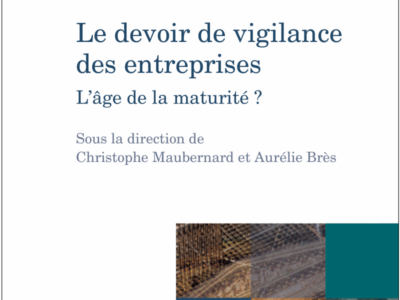
📝Devoir de vigilance : progresser (“Duty of Vigilance: the Way Forward), in 🕴️Ch. Maubernard & 🕴️A. Brès (eds.), 📗Le devoir de vigilance des entreprises. L’âge de la maturité ?

► Full Reference: [rubrique p="Présentation"]M.-A. Frison-Roche[/rubrique], "Devoir de vigilance : progresser" ("Duty of Vigilance: the Way Forward"), in Ch. Maubernard & A. Brès (eds.), [lien a="le-devoir-de-vigilance-des-entreprises-lage-de-la-"]Le devoir de vigilance des entreprises. L'âge de la maturité ? (The duty of vigilance. The age of maturity?)[/lien], Bruylant, "Droit & Economie" Serie, 2024, pp. 221-251 - 📝read the article (in French)  - 🚧 read the [lien a="devoir-de-vigilance-comment-progresser"]bilingual Working Paper which is the basis of this article[/lien], with additional developments, technical references and hyperlinks - ► English Summary of the article: In 2017 in France the so-called Vigilance law expressed great ambition. So did the draft directive. But in 2024 the European institutions moderated this ambition by refusing to increase either the type of companies subject and the constraints to which the duty of vigilance is associated. The directive has essentially halted what was for some the "march of progress". Does the ambition no longer exist? Does the future lie in an extension of the philosophy of the duty of vigilance, i.e. companies that should always be more concerned about others? This would undoubtedly be reaching the "age of maturity", where others see the age of madness, because it would be a contradiction in terms to ask a company to be concerned about anything other than its own development. It is therefore appropriate to consider this very hypothesis of an "age of maturity" as being an ambition maintained despite a European directive which, in its adopted version, is weakened and while the oppositions are intact (I). First of all, it must be admitted that the notion of "maturity" most often conceals a value judgment when applied to a legal concept (I.A.) and that this is blatantly obvious with regard to the duty of vigilance, which is considered by some and by nature by some as a good and by others as an evil (I.B). In order not to remain in what appears to be trench warfare, we must not get too bogged down in the reference French legislation of 2017 and what appears to be a European stutter in 2024, arguing so loudly that we can hear them reasoning in print, by paying attention to less visible and now more promising avenues of progress (II). In fact, the duty of vigilance can progress simply by the passage of time (II.A), by a better definition of the vocabulary (II.B), by the consolidation of the principles of Responsibility and Dialogue (II.C), by the uniqueness of the jurisdictional route (II.D). This last perspective of the progress that will be made possible in France by the uniqueness of the judicial route leads to a final avenue of progress. By their very nature, laws are jolts, all the more violent for being disputed. At the moment, if we want to make progress, these two other sources - the contract and the judge - must be favoured (III). The European directive is rightly concerned with access to the courts and takes a measured view of the effectiveness of contracts as a means of making the duty of vigilance effective, with the courts having to ensure that the contract does not destroy the spirit of the system. This is what the law already organises about the relationship between the contract, the judge and the duty of compliance (III.A). What is new in Europe in 2024 is the introduction of a Supervisor (III.B). Here again, vigilance is the "cutting edge" of Compliance Law, as it is an extension of Regulatory Law.  The result is that, through interpretation and the handling of principles, and to formulate a more general conclusion, it is the judge who holds and will hold the balance of the duty of vigilance. - 🌐follow Marie-Anne Frison-Roche on LinkedIn 🌐follow Marie-Anne Frison-Roche on Instagram 🌐subscribe to the Newsletter MAFR. Regulation, Compliance, Law 🌐s'abonner à la Newsletter Surplomb, par MAFR

Conference

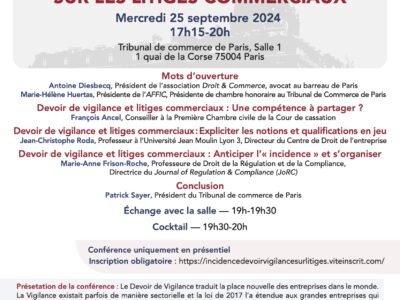
🎤Devoir de vigilance et litiges commerciaux : Anticiper l'”incidence” et s’organiser (Duty of vigilance and Commercial Litigation: Anticipating the “impact” and getting organised), in 🧮L’incidence du devoir de vigilance sur les litiges commerciaux (The Impact of the Duty of Vigilance on Commercial Litigation)

► Full Reference: [rubrique p="Présentation"]M.-A. Frison-Roche[/rubrique], "Devoir de vigilance et litiges commerciaux : Anticiper l'"incidence" et s’organiser" ("Duty of vigilance and Commercial Litigation: Anticipating the "impact" and getting organised"), in L'incidence du devoir de vigilance sur les litiges commerciaux (The Impact of the Duty of Vigilance on Commercial Litigation), Tribunal de commerce de Paris (Paris Commercial Court), Droit & Commerce and Association Française en Faveur de l'Institution Consulaire (AFFIC), Tribunal de commerce de Paris, September 25, 2024, 17.15pm to 20pm - 🌐read the report of this speech on LinkedIn (in French) - 🧮see the full programme of this event (in French) - 🧱[lien a="coordination-de-la-conference-lincidence-du-devoir"]consult the scientific coordination sheet of this event[/lien] - 🌐consult on LinkedIn a general presentation of this event (in French) - ► English Summary of the conference: After listening to the enlightening speeches of François Ancel and Jean-Christophe Roda, I had the great opportunity to emphasise, as they did, that the duty of vigilance, in the respect of French laws of 2017 and 2021, with a view to the transposition of the CS3D, does not imply, so brutally as has been said, a lack of knowledge by judges other than those of the Tribunal judiciaire de Paris (Paris First Instance Civil Court) of this new Law, which is the extension of Compliance Law, as François Ancel reminded us. Because Commercial Court judges deal with Contract Law on a daily basis, and because companies build their value chains through contracts that should be described as "regulatory contracts", the duty of vigilance has an "impact" on these disputes. These disputes may be of a "systemic" nature. This can only result not in jurisdictional trenches, but in "shared jurisdiction", along the lines drawn by François Ancel. This sharing must be built through a dialogue between judges, a necessary method on which Patrick Sayer concluded this elaborate conference on an essential and forward-looking subject. - 🌐follow Marie-Anne Frison-Roche on LinkedIn 🌐follow Marie-Anne Frison-Roche on Instagram 🌐subscribe to the Newsletter MAFR Regulation, Compliance, Law 🌐subscribe to the Video Newsletter MAFR Surplomb

🧱⚙️scientific organisation of 🧮L’incidence du devoir de vigilance sur les litiges commerciaux (The impact of the duty of vigilance on commercial litigation)

► Full Reference: [rubrique p="Présentation"]M.-A. Frison-Roche[/rubrique], coordination of the conference L'incidence du devoir de vigilance sur les litiges commerciaux (The impact of the duty of vigilance on commercial litigation), Tribunal de commerce de Paris (Paris Commercial Court), Droit & Commerce and Association Française en Faveur de l'Institution Consulaire (AFFIC), Tribunal de commerce de Paris, 25 September 2024, 5.15p.m. to 8p.m. - 🧮see the full programme of this event - 🌐consult on LinkedIn a general présentation of this event (in French) - ► General presentation of the conference: The Duty of Vigilance reflects the new role of firms in the world. Vigilance sometimes existed on a sectoral basis, but the 2017 French law extended it to large companies that control value chains. The French so-called "confiance" law gave the Tribunal judiciaire de Paris (Paris First Instance Civil Court) jurisdiction to hear "actions relatives" ("actions relating") to this duty. This does not mean, however, that the commercial courts will no longer have jurisdiction. Firstly, vigilance may go beyond the scope of the 2017 French law. Secondly, vigilance may concern not only the plan drawn up by the firm, but also Commercial Contract Law or Liability Law, special Distribution Law, etc. Commercial courts will have to develop a doctrine for dividing up and coordinating disputes, in particular by staying proceedings within certain disputes. To build a unified or at least non-contradictory case law on vigilance, we need to imagine a dialogue between judges and new procedures. - 🧮Programme of this event:  L'INCIDENCE DU DEVOIR DE VIGILANCE SUR LES LITIGES COMMERCIAUX (THE IMPACT OF THE DUTY OF VIGILANCE ON COMMERCIAL LITIGATION) Paris First Instance Commercial Court, room 1 🕰️5.15pm.-5.30pm. Welcome 🕰️5.30pm.-5.40pm. 🎤Mots d'ouverture (Opening words), by 🕴️Antoine Diesbecq, President of Droit & Commerce, attorney at the Paris Bar and 🕴️Marie-Hélène Huertas, President of AFFIC, Honorary President of Chamber of the Paris First Instance Commercial Court 🕰️5.40pm.-6pm. 🎤Devoir de vigilance et litiges commerciaux : Une compétence à partager ? (Duty of Vigilance and Commercial Litigation: A jurisdiction to share?), by 🕴️François Ancel, Judge at the Première Chambre civile de la Cour de cassation (First Civil Chamber of the French Court of cassation) 🕰️6pm.-6.20pm. 🎤Devoir de vigilance et litiges commerciaux : Expliciter les notions et qualifications en jeu (Duty of Vigilance and Commercial Litigation: Explain the concepts and qualifications involved?), by 🕴️Jean-Christophe Roda, Full Professor at Jean Moulin Lyon 3 University, Director of the Centre de Droit de l’entreprise 🕰️6.20pm.-6.40pm. 🎤[lien a="devoir-de-vigilance-et-litiges-commerciaux-antic-2"]Devoir de vigilance et litiges commerciaux : Anticiper l''incidence" et s’organiser (Duty of Vigilance and Commercial Litigation: Anticipating the "impact" and getting organised)[/lien], by 🕴️Marie-Anne Frison-Roche, Professor of Regulatory Law and Compliance Law, Director of the Journal of Regulation & Compliance (JoRC) 🕰️6.40pm.-7pm. 🎤Conclusion (Conclusion), by 🕴️Patrick Sayer, President of the Tribunal de commerce de Paris (Paris First Instance Commercial Court) 🕰️7pm.-7.30pm. Discussion with the audience 🕰️7.30pm.-8pm. Cocktail - 🌐follow Marie-Anne Frison-Roche on LinkedIn 🌐follow Marie-Anne Frison-Roche on Instagram 🌐subscribe to the Newsletter MAFR Regulation, Compliance, Law

BORGHETTI, Jean-Sébastien🕴️

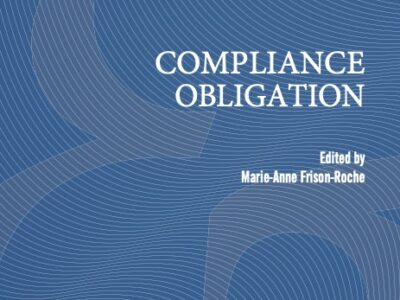
📝The Relation between Tort Law and Compliance Obligation, in 🕴️M.-A. Frison-Roche (ed.), 📘Compliance Obligation

► Full Reference: J.-S. Borghetti, "The Relation between Tort Law and Compliance Obligation", in [rubrique p="Présentation"]M.-A. Frison-Roche[/rubrique] (ed.), [lien a="publication-of-m-a-frison-roche-ed-compliance-obli"]Compliance Obligation[/lien], Journal of Regulation & Compliance (JoRC) and Bruylant, [rubrique p="Responsabilités éditoriales > Direction de la collection Compliance & Regulation, JoRC et Bruylant"]"Compliance & Regulation"[/rubrique] Serie, to be published - 📘read a general presentation of the book, [lien a="publication-of-m-a-frison-roche-ed-compliance-obli"]Compliance Obligation[/lien], in which this article is published - ► Summary of the article (done by the Journal of Regulation & Compliance - JoRC): The Author points out that in order to establish civil liability, it is first necessary to find fault, i.e. a deviation from an obligation, which will trigger a secondary obligation, that of reparation. But it can also be argued that it is from liability that this primary obligation arises, civil liability then revealing an obligation which existed only implicitly. That establishes a two-way relationship between liability and obligation. The Compliance Obligation illustrates this, in particular through the Obligation of Vigilance conceived by the French law of 2017. The author therefore devotes the first part of his contribution to civil liability as a result of an Compliance Obligation, especially the Obligation of Vigilance. issued of the French law of 2017. After discussing whether the constraints generated by compliance should be classified as 'obligations', since there is no creditor, which therefore opens the way to liability in tort, he examines the conditions for incurring such liability, which are difficult, particularly with regard to the burden of proof and the demonstration of the causal link. The requirement concerning the latter may evolve in French law towards the admission of proportional causality, as is now accepted in certain cases in German case law. In the second part of his contribution, the author deals with the hypothesis of civil liability as an indicator of a Compliance Obligation. He points out that the claims made, particularly in the cases of TotalOuganda (France) and Milieudefensie v. Shell (Netherlands) seek to obtain from the judge a such "revelation". The author considers that it is not possible to draw from the  French 2017 law which refers to article 1240 of the French Civil Code on the liability because this article is referred to only in order to organise the consequences of a breach of article L.225-102-4 of the French Commercial Code organising the Obligation of Vigilance (article 1240 being therefore under the secondary obligation described above) and not to feed what this article L.225-102-4 requires under the primary obligation (defined above).  On the other hand, the Shell judgment derives directly from civil liability an obligation to act. This is understandable if one takes the perspective and the measure of the future challenges posed, in this case in the area of climate change. But the author considers that it is up to the legislator to decide on such a development in Liability Law.  - 🦉This article is available in full text to those registered for Professor Marie-Anne Frison-Roche's courses -

MAGNIER, Véronique🕴️

📝The transformation of governance and due diligence, in 🕴️M.-A. Frison-Roche (ed.), 📘Compliance Obligation

► Full Reference: V. Magnier, "The transformation of governance and due diligence", in [rubrique p="Présentation"]M.-A. Frison-Roche[/rubrique] (ed.), [lien a="publication-of-m-a-frison-roche-ed-compliance-obli"]Compliance Obligation[/lien], Journal of Regulation & Compliance (JoRC) and Bruylant, [rubrique p="Responsabilités éditoriales > Direction de la collection Compliance & Regulation, JoRC et Bruylant"]"Compliance & Regulation"[/rubrique] Serie, to be published - 📘read a general presentation of the book, [lien a="publication-of-m-a-frison-roche-ed-compliance-obli"]Compliance Obligation[/lien], in which this article is published - ► Summary of the article (done by the Journal of Regulation & Compliance - JoRC): The author develops the tensions caused by Compliance Law and the Duty of Vigilance on corporate governance. The French "Sapin 2" law targets corruption, while the French "Vigilance" law has a broader scope in terms of risks and the entire value chain. It is logical that this should create tensions in terms of governance, given the monumental goals involved. Companies need to take ownership of the powers delegated to them, which means rethinking their governance and the way in which they exercise their corporate mandates, with the corporate interest, the judge's compass, having to be combined with the adoption of new standards of behaviour formalised voluntarily by ethical charters in line with international standards. On this voluntary and supervised basis, the company must adapt its structure and then contractualise these norms. This ethical approach has an impact on the role of corporate organs, not only in terms of transparency and risk prioritisation, but also proactively in terms of the adoption of commitments whose sincerity will be verified, as reflected, for example, in corporate governance codes (cf.in France the AFEP-MEDEF Code), the setting up of ad hoc committees and the presence of stakeholders, who will be consulted when the vigilance plan is drawn up. She stresses that this creates tensions, that dialogue is difficult, that business secrecy must be preserved, but that stakeholders must become Vigilance watchdogs, a role that should not be left to the public authorities alone. - 🦉This article is available in full text to those registered for Professor Marie-Anne Frison-Roche's courses -

GUTMANN, Daniel🕴️

📝Tax Law and Compliance Obligation, in 🕴️M.-A. Frison-Roche (ed.), 📘Compliance Obligation

► Full Reference: D. Gutmann, "Tax Law and Compliance Obligation", in [rubrique p="Présentation"]M.-A. Frison-Roche[/rubrique] (ed.), [lien a="publication-of-m-a-frison-roche-ed-compliance-obli"]Compliance Obligation[/lien], Journal of Regulation & Compliance (JoRC) and Bruylant, [rubrique p="Responsabilités éditoriales > Direction de la collection Compliance & Regulation, JoRC et Bruylant"]"Compliance & Regulation"[/rubrique] Serie, to be published - 📘read a general presentation of the book, [lien a="publication-of-m-a-frison-roche-ed-compliance-obli"]Compliance Obligation[/lien], in which this article is published - ► Summary of the article (done by the Journal of Regulation & Compliance - JoRC): The author takes up the hypothesis of a Compliance Law defined by its Monumental Goals, the realisation of which is entrusted to "crucial operators" and confronts it with Tax Law. The link is particularly effective since these operators possess what governments need in this area: relevant Information. Going further, Compliance Law can give rise to two types of obligations on the part of these operators, either towards others operators who need to be monitored, corrected or denounced, or towards themselves, when they need to make amends. In the first part of this contribution, the author shows that Compliance Obligation reproduces the mechanism of a Tax Law which, for large companies, is embroiled in a process of increasing Globalisation. It enables Governments to aspire to the "Monumental Goals" of combating tax optimisation and impoverishing governments, victims of the erosion of the tax base, in the face of the strategies of companies that are more powerful than they are themselves, by using this very power of firms to turn it against them. Companies become the willing or de facto allies of governments, particularly when it comes to recovering tax debts, or assist them in their stated ambition to achieve social justice.  In this way, the State "manages" Tax Law by cooperating with companies. In the second part, the author outlines the contours of this business Compliance Obligation, which is no longer simply a matter of paying tax. Beyond this financial obligation, it is more a question of mastering Information, particularly when multinational companies are subject to specific tax reporting obligations and are required to reveal their tax strategy, presumed to be transparent and coherent within the group : this legal presumption gives rise to obligations to seek information and ensure coherence, since a single tax strategy is not self-evident in a group. The author emphasises that companies have accepted the principles governing these new compliance obligations and are tending to transform these obligations, particularly Transparency, into a communication strategy, in line with the ESG criteria that have been developed and a desire for fruitful relations with stakeholders. Therefore the tax relations developed by major companies are being extended not only to the tax authorities, but also to NGOs, by incorporating a strong ethical dimension. This is leading to new strategies, particularly in the area of Vigilance. The author concludes: "A n’en pas douter, l’obligation de compliance existe bel et bien en matière fiscale." ("There is no doubt that the Compliance Obligation does exist in tax matters"). - 🦉This article is available in full text to those registered for Professor Marie-Anne Frison-Roche's courses -

AVOUT, Louis d'🕴️

📝Compliance and conflict of laws. International Law of Vigilance-Conformity, based on recent applications in Europe, in 🕴️M.-A. Frison-Roche (ed.), 📘Compliance Obligation

► Full Reference: L. d'Avout, "Compliance and conflict of laws. International Law of Vigilance-Conformity, based on recent applications in Europe", in [rubrique p="Présentation"]M.-A. Frison-Roche[/rubrique] (ed.), [lien a="publication-of-m-a-frison-roche-ed-compliance-obli"]Compliance Obligation[/lien], Journal of Regulation & Compliance (JoRC) and Bruylant, [rubrique p="Responsabilités éditoriales > Direction de la collection Compliance & Regulation, JoRC et Bruylant"]"Compliance & Regulation"[/rubrique] Serie, to be published - 📘read a general presentation of the book, [lien a="publication-of-m-a-frison-roche-ed-compliance-obli"]Compliance Obligation[/lien], in which this article is published - ► Summary of the article (done by the Author, translated by the Journal of Regulation & Compliance - JoRC): In the absence of constraints derived from the real international law, vigilance-compliance laws themselves determine their scope of application in space. They do so generously, to the extent that they often converge on the same operators and 'overlap' on the world stage. The result is a hybridation of the law applicable to the definition of Compliance Obligations; a law possibly written "with four hands" or more, which is not always harmonious and which exposes unilateral legislators to occasional retouching their work and their applied regulations. - 🦉This article is available in full text to those registered for Professor Marie-Anne Frison-Roche's courses -

RACINE, Jean-Baptiste🕴️

📝Compliance Obligation and Human Rights​, in 🕴️M.-A. Frison-Roche (ed.), 📘Compliance Obligation

► Full Reference: J.-B. Racine, "Compliance Obligation and Human Rights​", in [rubrique p="Présentation"]M.-A. Frison-Roche[/rubrique] (ed.), [lien a="publication-of-m-a-frison-roche-ed-compliance-obli"]Compliance Obligation[/lien], Journal of Regulation & Compliance (JoRC) and Bruylant, [rubrique p="Responsabilités éditoriales > Direction de la collection Compliance & Regulation, JoRC et Bruylant"]"Compliance & Regulation"[/rubrique] Serie, to be published - 📘read a general presentation of the book, [lien a="publication-of-m-a-frison-roche-ed-compliance-obli"]Compliance Obligation[/lien], in which this article is published - ► Summary of the article (done by the Journal of Regulation & Compliance - JoRC): The author asks whether human rights can, over and above the many compliance obligations, form the basis of the Compliance Obligation. The consideration of human rights corresponds to the fundamentalisation of Law, crossing both Private and Public Law, and are considered by some as the matrix of many legal mechanisms, including international ones. They prescribe values that can thus be disseminated. Human rights come into direct contact with Compliance Law as soon as Compliance Law is defined as "the internalisation in certain operators of the obligation to structure themselves in order to achieve goals which are not natural to them, goals which are set by public authorities responsible for the future of social groups, goals which these companies must willingly or by force aim to achieve, simply because they are in a position to achieve them". These "Monumental Goals" converge on human beings, and therefore the protection of their rights by companies.  In a globalised context, the State can either act through mandatory regulations, or do nothing, or force companies to act through Compliance Law. For this to be effective, tools are needed to enable 'crucial' operators to take responsibility ex ante, as illustrated in particular by the French law on the Vigilance Obligation of 2017. This obligation takes the form of both a "legal obligation", expression which is quite  imprecise, found for example in the duty of vigilance of the French 2017 law, and in a more technical sense through an obligation that the company establishes, in particular through contracts. Legal obligations are justified by the fact that the protection of human rights is primarily the responsibility of States, particularly in the international arena. Even if it is only a question of Soft Law, non-binding Law, this tendency can be found in the Ruggie principles, which go beyond the obligation of States not to violate human rights, to a positive obligation to protect them effectively. The question of whether this could apply not only to States but also to companies is hotly debated. If we look at the ICSID Urbaser v. Argentina award of 2016, the arbitrators accepted that a company had an obligation not to violate human rights, but rejected an obligation to protect them effectively. In European Law, the GDPR, DSA and AIA, and in France the so-called Vigilance law, use Compliance Lools, often Compliance by Design, to protect human rights ex ante. Contracts, particularly through the inclusion of multiple clauses in often international contracts, express the "privatisation" of human rights. Care should be taken to ensure that appropriate sanctions are associated with them and that they do not give rise to situations of contractual imbalance. The relationship of obligation in tort makes it necessary to articulate the Ex Ante logic and the Ex Post logic and to conceive what the judge can order. The author concludes that "la compliance oblige à remodeler les catégories classiques du droit dans l’optique de les adosser à l’objectif même de la compliance : non pas uniquement un droit tourné vers le passé, mais un droit ancré dans les enjeux du futur ; non pas un droit émanant exclusivement de la contrainte publique, mais un droit s’appuyant sur de la normativité privée ; non pas un droit strictement territorialisé, mais un droit appréhendant l’espace transnational" ("Compliance requires us to reshape the classic categories of Law with a view to bringing them into line with the very objective of Compliance: not just a Law turned towards the past, but a Law anchored in the challenges of the future; not a Law emanating exclusively from public constraint, but a Law based on private normativity; not a strictly territorialised Law, but a law apprehending the transnational space". - 🦉This article is available in full text to those registered for Professor Marie-Anne Frison-Roche's courses -

Interview

🎥Companies and compliance: more aggressive justice and judges, in the 🎬series of talks on Compliance Law, in 📺Open windows on management

► Full reference:  [rubrique p="Présentation"]M.-A. Frison-Roche[/rubrique], "Entreprises et compliance : une justice et des juges plus offensifs" ("Companies and compliance: more aggressive courts and judges"), interview conducted by Jean-Philippe Denis as part of a series of interviews on Compliance Law, in Fenêtres ouvertes sur la gestion (Open windows on management), broadcast by J.-Ph. Denis, Xerfi Canal, recorded December 12, 2023, released on June 14, 2024. - 🌐consult the December 2023 presentation of the interview on LinkedIn - 🎥watch the interview video on LinkedIn, with English subtitles - 🧱consult the general presentation of this [lien a="enregistrement-et-animation-dune-serie-dentretiens"]series of interviews on Compliance Law[/lien] - ► Starting point: Since 2016, Marie-Anne Frison-Roche has been building Compliance Law, notably through a collection co-published in French with Editions Dalloz and co-published in English with Editions Bruylant:  🧱read the presentation in English of the series in French, Régulations & Compliance ➡️[rubrique p='Responsabilités éditoriales > Direction de la collection "Régulations & Compliance", JoRC & Dalloz']click HERE[/rubrique]  🧱read the presentation of the series in English, Compliance & Regulation ➡️[rubrique p="Responsabilités éditoriales > Direction de la collection Compliance & Regulation, JoRC et Bruylant"]click HERE[/rubrique] - ► Summary of interview:   Jean-Philippe Denis. Question :  Marie-Anne Frison-Roche.  Answer. :  - J.-Ph D. Q. : Thus MaFR. A. : Yes,  - J.-Ph. D. Q. : Thus MaFR. A. : Yes,  -

🏛️Directive (EU) of 13 June 2024 on corporate sustainability due diligence (CS3D)

► Full Reference: Directive (EU) 2024/1760 of the European Parliament and of the Council of 13 June 2024 on corporate sustainability due diligence and amending Directive (EU) 2019/1937 and Regulation (EU) 2023/2859 (CS3D) - ► read the text of the directive - 📧see on LinkedIn the article published by Marie-Anne Frison-Roche in the Newsletter MAFR. Regulation, Compliance, Law, on the occasion of the publication of this directive in the Official Journal of the European Union -