►This working document was intended to serve as a support for a [lien a="la-garde-de-lunite-de-la-personne-dans-un-systeme-"]conference pronounced in French in the conference [/lien][lien a="la-garde-de-lunite-de-la-personne-dans-un-systeme-"]Droit et Ethique[/lien] ( Law & Ethics) of May 31, 2018 in a symposium organized by the Court of Cassation and the Association Française de Philosophie du Droit. French Association of Philosophy of Law on the general theme Law & Ethics. [lien a="la-garde-de-lunite-de-la-personne-dans-un-systeme-"]See a general presentation of this conference[/lien]. Rather, it has served as a support for the article to be published in the Archives de Philosophie du Droit (APD). This article is written in French. ►Summary: It is through the Law that the human being has acquired a unity in the West (I). What religion could have done, the Law also did by posing on each human being the indetachable notion of him of "person" (I.A). But this is what is challenged today, not the personality and the power that the human being has to express his freedom but the unity that implies in the disposition that we have of ourselves in repelling the desire that others have always had to dispose of us. Current law tends to "pulverize" human beings into data and transform into neutral legal services what was considered before as the devouring of others. The legal concept of "consent", ceasing to be proof of a free will but becoming an autonomous concept, would suffice (I.B.). To prevent the reigning of the "law of desires", which merely reflects the adjustment of forces, we must demand here and now the ethical sovereignty of Law, because Law can not be just just be just the interests adjustment (II). We can form this request if we do not want to live in an a-moral universe (II.A), if we see that the unity of the person is the legal invention that protects the weak human being (II.B.). If we admit this imperative, then we must finally ask who in the legal system will express and impose it, especially the legislator or the judge, because we seem to have lost the ability to recall this principle of the Person on which the West was so centered. But the principles that are no longer said disappear. There would then remain only the case-by-case adjustment of interests between human beings in the world field of particular forces. At this yardstick, Law would be more than a technique of securisation of particular adjustments. Law would be reduced at that and would have lost its link with Ethics. (II.C). .
Among all the things that were important to remember, one of the things that struck me most in the extraordinary conference of the President of the Court of Justice of the European Union Koen Lenaerts on "Europe of the Compliance "held on March 2, 2018 was his ability to make" live Europe ". Not only to make it understand but also to make it "live". Here is the challenge: that compliance is not an accumulation of processes without reason and without flesh, but a living whole taking its meaning into consideration of the human being, a person whose judge is concerned. On 2 March 2018, Koen Lenaerts therefore came to an amphitheater at the University Panthéon-Assas (Paris 2) to inaugurate the series of conferences organized by the[rubrique p="JORC"] Journal of Regulation & Compliance (JoRC)[/rubrique], a cycle that has the general title: [lien a="cycle-conferences-pour-une-europe-de-la-compliance"]Pour une Europe de la Compliance (For the Europe of Compliance)[/lien]. The School of Public Affairs of Sciences Po, the Department of Economics of Sciences Po, the Ecole doctorale de droit privé (Doctoral School of Private Law) at the Université Panthéon-Assas- Paris 2 (Panthéon-Assas University - Paris 2) and the School of Law of the University Panthéon-Sorbonne (Paris I), are associated with this cycle. [lien a="les-intervenants-du-cycle-de-conferences-pour-une-"]Many personalities will take the floor.[/lien] Presented by Professor Thierry Bonneau, the conference made by President Koen Lenaerts was extremely rich and solid, perfectly constructed. Everyone had known the quality of the conference to be delivered by the President of the CJEU. The content of his demonstration will be found in the article he will give for the book that will be published in the [rubrique p='Responsabilités éditoriales > Direction de la collection "Régulations & Compliance", JoRC & Dalloz']Régulations & Compliance Series[/rubrique] edited by [rubrique p="Présentation"]Marie-Anne Frison-Roche[/rubrique] at Éditions Dalloz. And the reader will find all the strength of this demonstration. This is necessary to venture into this area of "Compliance" : Koen Lenaerts recalled that we were still looking for the definition and a French term that would do justice to a satisfactory definition[note reference="n2"]. This [lien a="dans-la-conference-inaugurale-du-cycle-de-conferen"]question was echoed by Antoine Garapon in his discussion[/lien]. Embodying the firmness that must be shown when words are uncertain, President Koen Lenaerts emphasized that the European Union is based on "Rule of Law". This means that the behaviors must respect Law. For that, - and that is why it is necessary to take in the literal sense the English expression "to comply with", the enterprise must not be passive but to make sure that its behavior is actually respectful of legal prescriptions. In this, there is a general paradigm shift, which inverses the relation betwenn the operator and the rules, from the Ex Post to the Ex Ante[note reference="n3"] as the entreprise has to be itself active to secure the effectiveness of the rule of Law. This internalization of the rule by the company develops both a procedural culture and a behavioral culture, in which companies can express an ethical dimension and build a "Trust Pact" [note reference="n1"] with states and public authorities. This change has been brought about by globalization, since states no longer have the means to impose ethical norms of behavior on businesses through the Ex Post intervention of their jurisdiction, but States like companies are gaining the benefit of this internalisation of rules in compagnies because the Compliance is inseparable from the accountability by which the company is compelled to justify that it actually tends to achieve the overall goals assigned by the public authority. Thus, after exposing the general movement by which Europe opened up to this upheaval, President Koen Lenaerts took on three technical dimensions crossed by this new conception. The first is the Financial Markets Law. The second is Competition Law, about which the President has notably developed the Court's reflections on whether the adoption of a compliance program by an enterprise found to have violated Competition Law, in particular by "negligence" is neutral, or constitutes a mitigating circumstance or constitutes an aggravating circumstance. [lien a="dans-la-conference-inaugurale-du-2-mars-2018-sur-l"]This question was taken up after the presentation in the discussion with the room[/lien]. The third is that of personal data. Taking again as in a waltz with three times his remarks, the president of the Court of Justice found that the compliance, whereas it consists in transforming the Ex Post into Ex Ante becomes juridicalised and in this the Court of justice holds its not only in Europe but also in relation to the world, without however ever forgetting that it is the States that are drawing up the rules that are the foundation of Europe. We will find in the article that will be published all these precious elements and no doubt that the elegance of the pen will be equal to that of speech. But, written exercise requires, the reader will not find what we had the chance to attend: the story of two cases by the one I would prefer to name the "Professor Koen Lenaerts". Two famous cases, which we teachers, comment and remind in our courses, that students learn and recite, quote in their copies. But never that way. The first case is the Schrerms case, where the court said that Facebook could not transfer this person's personal data to the United States since he was opposed to it. To make it clear, the President revived it through the litigant, who was a student and for this reason he spoke directly to the students present in the amphitheater. He pointed out that the plaintiff at the origin of the case was a law student, like them. He detailed his situation in Austria, making some quotes in perfect German, pointing out that this student was now at the doctoral stage, inviting students to be brave, as he was. At each episode of the story, the speaker told the students, making some detours on his own student life because finally we were all in family ... Alma Mater. But his hands were telling the story even more: they were thrown themselves into the story, they brewed the space, it seemed as if they themselves were no more grandiloquent than the speaker but found their place exactly , in a magisterial position. Yes, here is a president in front of which companies have a hard time hiding the truth, a president with such firm hands and whose torso does not move but turns to the left and right to talk to everyone. The second story was even more beautiful. The Google Spain case, I know it. I even know it by heart. I read it, commented on it, cited it a lot of times ... But all of a sudden that's what happened to a small Spanish merchant: President Koen Lenaerts told us his story, and I rediscovered the case. A small Spanish shopkeeper, whose name the speaker uttered in perfect Spanish, obtained from the Court of Justice that his "right to be forgotten" was recognized. President underlined the apparent paradox of his insistence for the appearance of his surname in the judgment by which this person had thus obtained the erasing of his surname! Yes, I did not notice ... Why did he ask for the mention of his name in the right to have his name deleted? Because it's a matter of honor. This is what the speaker insisted: do not joke with honor. And if you do, even Google will lose. The merchant had been subject to a forced property sale procedure because of financial difficulty, which spanish newspapers had echoed. His honor was been trampled. Then, by a happy return of fortune, he had recovered his property, his prosperity, his reputation. But from that, the press had not talked about it. Some lines in a newspaper of legal announcements, but that it is nothing for the human soul. That's why he wanted these mechanical digital links to disappear, which always and for all end up with articles presenting him as a wretch without ever ending up with articles presenting him as a prosperous merchant (because of the non-existence of these second articles). The speaker emphasized this dimension very much. And we know that the General Regulations that will come into force in May 2018 on personal data, which intrigues so much the Americans, draws in the judgment Google Spain its main solution in the matter: this "right to be forgotten" , subjective right so strange. He emphasized this dimension very much. And we know that the General Regulations that will come into force in May 2018 on personal data, which intrigues so much the Americans, draws in the judgment Google Spain its main solution in the matter: this "right to be forgotten" , subjective right so strange. Listening to President Koen Lenaerts, how not to think of Carbonnier? to his articles of it, especially on sociological rule : "small causes, great effects"? From this conference, it will remain a great article, but as in the theater, where the ephemeral is part of the beauty of this art, what were these two stories, told by the one who knew how to listen when it was necessary to decide the two cases, stories told with the two firm hands that danced inviting students to enter this round, even as the President of the Court of Justice had to leave immediately to Luxembourg to hold such heavy obligations, yes it was simply beautiful .
Read more
DefinitionCompetition lawJudgeLiabilityStateGlobalizationResponsibilityEuropeAccountabilityBusinessGoogleConfidenceFaceBookComplianceDataCourt of Justice of the European UnionGlobal RegulationFinancial markets
Complete reference : Aranda Vasquez, A., Affaire Generali : la Cour de cassation précise les caractéristiques de l'obligation, in Petites affiches, février 2018, n° 39, pp. 12-15. "The Generali case is experiencing a new episode. The Court of Cassation has clarified the essential characteristics of the obligation. It is reverting to the position of the judgment of the Paris Court of Appeal of June 21, 2016 (n ° 15 / 00317), by deciding that the reimbursement of the nominal amount is not an essential characteristic of the obligation. The highest court of the judiciary thus sheds light on the matter. " Sciences-Po students can consult the article via the Drive, "MAFR- Regulation & Compliance" folder
Read more
DefinitionBusiness LawCorporate LawQualificationCourt of CassationCourt of Appeal of ParisLaw of Obligations
The goal for which a mechanism, a solution an institution or a rule is adopted, instituted or elaborated, is in principle external to them. Knowledge of this goal is a tool to better understand them and is only that. On the contrary, in [lien a="regulation"]Regulation [/lien]Law, the goal is the heart itself. By definition, Regulation Law is a set of instruments that articulate to take their meaning in relation to a goal. Moreover, these instruments are legitimate to represent a constraint only because they realize a goal which is itself legitimate. The interpretation of Regulation Law is based on the aims pursued: the reasoning is teleological. This teleological nature explains that [lien a="efficacite"]efficiency [/lien]is no longer merely a concern - as for ordinary legal mechanisms, but rather a principle of Regulation Law. It explains the welcome, especially through the [lien a="droit-de-lunion-europeenne-droit-communautaire"]European Union Law[/lien] of the theory of the useful effect. This link between rules, which are only means, and aims, refers to the principle of proportionality, which requires that constraints and exceptions be applied only when they are necessary, proportionality being the form off the classic principle of necessity. Because the aim is the center, it must be expressed by the author of the [lien a="regulation"]Regulation [/lien]standards, and this is all the more so if they are of a political nature, being not limited to mitigating [lien a="defaillance-de-marche"]technical failures of markets[/lien]. This goal can be varied: the management of [lien a="risque"]systemic risks[/lien], but also the consideration of the fundamental rights of people, the [lien a="environnement"]preservation of the environmen[/lien]t, [lien a="sante"]public health[/lien], civilization, education, etc. The silence of the legislature, which limits itself to the making of rules whereas these are merely instruments, without explicating the goal whereas the latter is a political decision, is a fault in the legislative art. Moreover, in order that the person who applies the Regulation norm, in particular the [lien a="regulateur"]Regulator [/lien]and the [lien a="juge"]Judge[/lien], has no excessive margin for interpretation and does not substitute for political power, the author of the Regulation norm needs to aim specifically for one goal : in this way, the one who applies the norm will be constrained. Or, if the author targets several purposes, then he must articulate them in relation to each other, by hierarchizing them for example. If he fails to do so, the institution which applies the regulatory standards will itself have to choose the purpose and exercise a power which he does not possess. This express designation of purpose has been made for the European Banking Union, this Regulation and Supervision construction, whose primary aim is to prevent [lien a="risque"]systemic risks[/lien] and resolve [lien a="crise"]crises[/lien]. Similarly, the purpose of the Regulation of[lien a="infrastructure"] essentiel infrastructures[/lien] is to provide third parties [lien a="access"]access [/lien]to the [lien a="industrie-de-reseau"]network[/lien]. Similarly, in the case of a transitional regulation introduced following [lien a="liberalisation"]liberalization[/lien], the aim is to establish [lien a="concurrence"]competition[/lien], the principle of which has been declared by the liberalization law. When this is not clearly stated, there is a lapse in the legislative art.
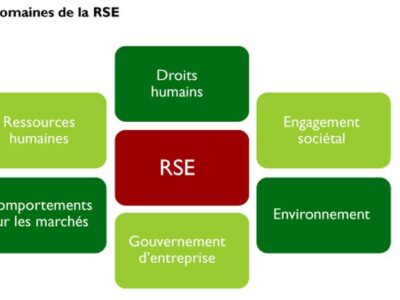
Reference : Frison-Roche, M.-A., Le contrat est-il l'instrument optimal de la RSE ? ("Is the Contract the optimal instrument of CSR?") in Trébulle, F.-G. (modérateur), Les instruments de la RSE : le contrat (The instruments of CSR"), cycle of conferences organized by the Cour de cassation (French Civil Supreme Court and the Universities of Paris-Dauphine, Paris VIII and Paris I),Cour de cassation, Paris, 11 mai 2017. Read the slides (in French) as served as the basis of the conference les slidesRead the program on the Cour de cassation wesite (in French). Read the program of the whole cycle of conferences in which this conference enters (in French) Corporate Social Responsibility belongs to Economic Law. It thus enters into its logic of [lien a="efficacite"]efficiency[/lien], leading to apprehend any legal mechanism as an instrument, the contract as the others. This does not mean that everything is only an instrument, on the contrary. Economic Law, when it takes the form of [lien a="regulation"]Regulation Law[/lien], places the principles in the aims pursued. It is in these principles that it can meet CSR if the goals are the same. In view of these aims, everything is an instrument. On the scale of goals which are "monumental"[note reference="n1"], in that they are [lien a="mondialisation"]global[/lien], in that they seem unattainable, such as the fight against child labor, such as the end of corruption or the sale of human beings, all legal instruments become interchangeable, from the Constitution to the [lien a="contrat"]contract[/lien], from the hard law to the soft law. The only criterion becomes [lien a="efficacite"]efficiency [/lien]to achieve the goal. We then reach the [lien a="efficacite"]efficiency[/lien], criterion of the Regulation Law. New laws, such as in France in 2016 the Sapin 2 law or in 2017 the law establishing a "duty of vigilance" with uncertain contours, may use the contract only as a vehicle for legal obligations to be performed by the company[note reference="n2"]. The contract becomes an instrument of the [lien a="compliance"]Compliance [/lien]Law, chosen as the optimal instrument of the Internalized Regulation Law in the company. But the contract can also be chosen as an instrument by the company in that it pursues the same goals of [lien a="interet-general"]general interest[/lien], becoming global[note reference="n3"]. The contract is then chosen as an [lien a="ex-ante-ex-post"]Ex Ante [/lien]tool, which will be refined to the specificity of the company, exceeded the generality of the law and which will be able to resolve the diversity of national laws by more comprehensive contractual relations. Moreover, the contract can integrate active [lien a="ex-ante-ex-post"]Ex Post[/lien] mechanisms, such as the warning launcher or the controller, audits, or even form an ecosystem by training clauses to disseminate a CSR culture. By these contractual provisions, the contract operates the mixing of times, the Ex-Ante and the Ex Post, which the legislation can not do, refines it to what the particular enterprise is . In this, the contract converges towards what is being constructed: a Compliance Law.
Read more
DefinitionContractCrucial firmGoalCorporate Social ResponsabilityCompliancebut
► Full reference: [rubrique p="Présentation"]M.-A. Frison-Roche[/rubrique], "Le Droit de la compliance" ("Compliance Law"), D.2016, Chron., pp. 1871-1874. - ► English Summary of the article: Constraints weighing on companies in terms of Compliance multiply and get heavier. But the notion is contradictory, uncertain, "strange", the expression of "conformity" being only a transposition in French. Compliance appears today as the world internalisation of a public regulation, often conceived in the United-States, in firms, transformed in effectivity agents of global monumental goals: competition equity, fight against terrorism or States deemed unworthy (embargos). Rather than borrowing scattered solutions, it is essential to build a "Compliance Law", properly European, to which everyone will be accountable.This new branch of Law is built teleologically on its Monumental Goals. It is driven by crucial businesses. The Judge is at its centre. - 📝read the article (in French) - 🚧[lien a="le-droit-de-la-compliance"]Read the bilingual Working Paper on the basis of which the article was written[/lien].
► Full Reference: Frison-Roche, M.-A., Globalization from the point of view of Law, working paper, May 2017. - 🎤 This working paper initially served as a basis for a [lien a="le-droit-et-la-globalisation-rapport-de-synthese"]synthesis report made in French in the colloquium organized by the Association Henri Capitant in the International German Days on the subject of "Le Droit et la Mondialisation" (Law and Globalization)[/lien]. 📝 Il sert dans un second temps de base à [lien a="la-mondialisation-du-point-de-vue-du-droit"]l'article[/lien] paru dans l'ouvrage [lien a="la-mondialisation-2"]La Mondialisation[/lien].📝 it serves as a second basis for the article (written in English, with a Spanish Summary) to be published in the Brezilian journal Rarb - Revista de Arbitragem e Mediação(Revue d`Arbitrage et Médiation). It uses the [rubrique p="Dictionnaire bilingue"]Bilingual Dictionary of the Law of Regulation and Compliance[/rubrique]. - ► Summary of the Working: [lien a="mondialisation"]Globalization[/lien] is a confusing phenomenon for the jurist. The first thing to do is to take its measure. Once it has been taken, it is essential that we allow ourselves to think of something about it, even if we have to think about it. For example, on whether the phenomenon is new or not, which allows a second assessment of what is taking place. If, in so far as the law can and must "pretend" to defend every being, a universal claim destined to face the global field of forces, the following question - but secondary - is formulated: quid facere? Nothing ? Next to nothing ? Or regulate? Or can we still claim that the Law fulfills its primary duty, which is to protect the weak, including the forces of globalization? - read the Working Paper below⤵️
Read more
DefinitionLawyerNeutralityUnited KingdomForceCriminal LawStandardFinancial lawHumanityRegulationMarketWarMigrationMarket failureContractStateBrazilRepressionSovereigntyPublic International LawGlobalizationCommon lawCivil lawComparative LawPersonalityEuropePersonal DataCrucial firmPeaceSoft lawFaceBookCorporate Social ResponsabilityLaw & EconomicsFriendshiplanguagecolonizationHumanitarian LawGlobal LawMoneyTechnologyBaselMachineIFRSTeleologyMondialisationJurist
Référence complète : Frison-Roche, M.-A., Penser le monde à partir de la notion de "donnée", in Frison-Roche, M.-A. (dir.), [lien a="internet-espace-dinterregulation-dir"]Internet, espace d'interrégulation[/lien], série "Régulation", 2016, pp. 7-16. English summary : Law is a reconstruction of the world through definitions and categories, expressed in words, to which are imputed rules. There is always a share of invention in Law, articulated to a share of fidelity to the concrete world that it retranscribes, a combination enabling Law to regulate the latter. Law is put in difficulty by what the term "data", quite new, is not easy to define. The fact that it is strangely formulated in Latin to show that there is plurality, the data, before associating it with an English adjective when there are many, the "big data", does not advance us more on what a "data" is. Law is a practical art that works well only if it manipulates categories whose definition is mastered. This is why, in a first stage, we must recognize the uncertainties of the very notions of "data" (I), in order to orientate the adequate rules in the second step towards what is a given, namely a "pure" value in our consumer information society (II). Read the article (in French) This article is linked to another article published in the same book : [lien a="les-consequences-regulatoires-dun-monde-repense-a-"]Les conséquences régulatoires d'un monde repensé à partir de la notion de "donnée"[/lien] ("the regulatory consequences of a word redesigned from the notion of "data")
Law is a reconstruction of the world through definitions and categories, expressed in words, to which are imputed rules. There is always a share of invention in Law, articulated to a share of fidelity to the concrete world that it retranscribes, a combination enabling Law to regulate the latter. Law is put in difficulty by what the term "data", quite new, is not easy to define. The fact that it is strangely formulated in Latin to show that there is plurality, the data, before associating it with an English adjective when there are many, the "big data", does not advance us more on what a "data" is. Law is a practical art that works well only if it manipulates categories whose definition is mastered. This is why, in a first stage, we must recognize the uncertainties of the very notions of "data" (I), in order to orientate the adequate rules in the second step towards what is a given, namely a "pure" value in our consumer information society (II). [lien a="repenser-le-monde-a-partir-de-la-notion-de-donnee-"]Read the article written in French on the basis à this working paper[/lien]
Read more
DefinitionInternetPersonal DataPublic law / private lawDatadigitalSafe HarborPublic liberty