Compliance

Des étudiants perplexes autour d’une table, deux ouvrages rouges posés devant eux, la chatte Nobelle au premier plan

Videos

Series of drawn videos on Compliance Law — Compliance in Motion

🎭The Mystery of the Monumental Goals

▶ click on the image to watch the episode on YouTube - ► Full reference: M.-A. Frison-Roche, “The Mystery of the Monumental Goals”, in series of drawn videos Compliance in Motion, episode 2, 2 October 2026 - ► Summary of this episode of Compliance in Motion: Students sit around a table; on the table, two books. Three words are given to them — Compliance Monumental Goals — and nobody really sees what that means. The Compliance Ogre, of course, is certain: “Me, me, me! I know what the Monumental Goals are!” And yet, it is no riddle. A Monumental Goal is an edifice: protecting the climate, stopping corruption, respecting others. Compliance Law does not merely forbid, it aims; and because the goal is monumental, no one builds it alone — the judge, the lawyer, the company, the teacher, each brings a stone. That is where Compliance Law draws its normativity, and that is what separates it from mere conformity. They are not decreed. They are built. At the end, the Ogre: “Yes, yes, yes — I said so!” He had not said so. Less than a minute, not a word spoken. One episode every two weeks, in French and in English. - 🌐 watch this episode of the series on YouTube: Compliance in Motion 🎬 watch this episode of the series below Compliance in Motion ⬇️ - Compliance in Motion, by mafr the series of drawn videos devoted to Compliance Law ComplianceTech® - 🌐follow Marie-Anne Frison-Roche on LinkedIn 🌐follow Marie-Anne Frison-Roche on Instagram 🌐subscribe to the Newsletter MAFR Regulation, Compliance, Law 🌐subscribe to the Video Newsletter MAFR Surplomb 🌐subscribe to the Newsletter MaFR Droit & Art

Videos

Series of drawn videos on Compliance Law — Compliance in Motion

🎭Leaving Conformity Behind

▶ click on the image to watch the episode on YouTube - ► Full reference: M.-A. Frison-Roche, “Leaving Conformity Behind”, in series of drawn videos Compliance in Motion, episode 1, 25 September 2026 - ► Summary of this episode of Compliance in Motion: Less than a minute, not a word spoken. A man is buried under files: he complies, with every regulation, every one of them. Then the machine takes his place and does better than he can — it files, it drafts, it will write the contracts, the judgments, the law. Above him stands the Compliance Ogre, who knows only one sentence: “Obey, or I will punish you!” If conformity were the goal of Compliance Law, the matter would be settled: the algorithm would achieve it better than we can. But that is not the goal. Compliance Law was invented to preserve the systems in which human beings live. Its Monumental Goals are its legal foundation; it is through them that it is distinguished from conformity, which is only its instrument. Leaving conformity behind is therefore not leaving Law behind: it is entering it. One episode every two weeks, in French and in English. The series also has its Instagram account: mafr.compliancetech. - 🌐 watch this episode of the series on YouTube: Compliance in Motion 🌐 watch this episode of the series on LinkedIn: Compliance in Motion 🎬 watch this episode of the series below Compliance in Motion ⬇️ - Compliance in Motion, by mafr the series of drawn videos devoted to Compliance Law ComplianceTech® - 🌐follow Marie-Anne Frison-Roche on LinkedIn 🌐follow Marie-Anne Frison-Roche on Instagram 🌐subscribe to the Newsletter MAFR Regulation, Compliance, Law 🌐subscribe to the Video Newsletter MAFR Surplomb 🌐subscribe to the Newsletter MaFR Droit & Art

Conferences

🎤La définition juridique du Contrat de compliance (The legal definition of the Compliance contract”), in 🧮Le “Contrat de compliance” (The “Compliance contract”)

► Full reference: M.-A. Frison-Roche, "La définition juridique du Contrat de compliance (The legal definition of the compliance contract)", in Journal of Regulation & Compliance (JoRC) published by the Centre for Research on Justice and Conflict Resolution (CRJ) and the Centre for Research in Economics and Law (CRED) at Panthéon-Assas University (Paris II), Le "Contrat de compliance" (The "Compliance Contract"),  Paris II Lecture Theatre –  82 Rue Notre Dame des Champs, Paris, 12 June  2026. - 🧮view the full programme for the event - 📶view the slides (in French) - 🌐read the presentation made on LinkedIn - 🚧Read the bilingual working paper on which this conference is based   - 📝This lecture will form the basis of a contribution to the book, 📕Compliance et Contrat (Compliance and Contracts),  To be published in the 📚Regulations & Compliance series, a book co-published by the Journal of Regulation & Compliance (JoRC) and Lefebvre-Dalloz. - ► Overview of this lecture : The lecture is divided into three parts. In the first part, the aim is to describe the reality of the “Compliance Contract”, which can be defined as the decision taken by an entity subject to a “Compliance Obligation” (most often a company, but it may also be a administrative organisation) to entrust the fulfilment of that obligation to a third party. This does not diminish the entity’s obligation to be accountable for the compliance structure, nor for its ability to produce the expected outcomes, in particular the behaviours that will contribute to achieving the Monumental Systemic Goals for which the compliance frameworks were adopted. This outsourcing is lawful; its contractual form falls under Contract Law and the principle of contractual freedom. Even if one considers that, since the subject matter of the contract is Compliance itself, it would constitute a ‘Systemic Contract’—just as Compliance Litigation is ‘Systemic Litigation’—its fundamental nature is indeed a bilateral relationship between a client and a professional (who is often subject to professional rules and codes of conduct). Indeed, there are legal consequences to this practice of “Compliance Contracts”, because it is the Compliance System that is thereby served: on the one hand, “regulatory clauses” will be inserted, whilst others will be removed (“deemed unwritten”). Contractual freedom remains the guiding principle, however. In Contract Law, it would be appropriate for the contracting parties to refer to this contribution to the Monumental Goals, which constitute the  fundamental legal norm of the Compliance System, if only to guide the contract Judge who may be called upon in the event of a dispute, as the interpretation of the parties’ intentions must be carried out in a teleological manner. In the second part, the relationship between this "Compliance Contract" and the various "Compliance Clauses" is analysed. The two should certainly not be confused, since, quite apart from these highly specific contracts through which the various compliance techniques are entrusted, in their drafting and management, to third parties, who thus become the experts, there are also clauses inserted into numerous contracts (sales, distribution, manufacturing, service, etc.), clauses which aim, amongst many other clauses serving different purposes, to incorporate compliance considerations into the contract. But first and foremost, the Compliance Contract contains numerous clauses specific to it, which often derive from compliance system, since Compliance concretisation is the very purpose of this specific contract, et nothing else: it is therefore logical that, by way of a ‘transparency effect’, the legal Compliance Systemic requirements should be incorporated into the isolated contract. Secondly, and more significantly, many various contracts contain clauses that provide for the triggering of a “Compliance Ccontract”. For example, when an audit clause is linked to a specific event and the provision stipulates that a contract will then be entered into with a particular expertal body or person, this will generate a Compliance Contract in a second time. The link between the two may give one of the contracting parties control over the other, notably if the expert is close to them. If the links between Compliance Contracts and Compliance Clauses are developping, this could lead to a return to vertical integration. Competition Law may be justified in looking into this.  It appears that, once we have distinguished between Compliance Contracts and Compliance Clauses, and then linked them together, we can arrive at a Contractual Compliance Strategy that is both legitimate and effective, provided that it contributes to the achievement of the Compliance Monumental Goals set by the political and public authorities.  Indeed, as soon as we distinguish between “conformity” – which is intended solely to compel the operator to obey all applicable regulations blindly and mechanically – and “Compliance Law”, which is legally guided by Monumental Systemic Goals, this contractual strategy becomes essential.   Part Three sets out to clarify the scope of this Compliance Contract. The first implication concerns the Compliance System itself, of which it forms a part; the Compliance Contract having the welcome effect of increasing the operator’s contribution to the achievement of the Monumental Systemic Goals (ensuring that systems – banking, financial, transport, energy, climate, digital, etc.—do not collapse and do not crush human beings, but rather benefit the human beings who are involved in them, whether willingly or not). To this end, the contract must enable the operator – where necessary by means of express provisions – to demonstrate its credibility in contributing to the achievement of these Monumental Goals. Reliable pathways and credible structures must be established. In the cas of technical implementation is outsourced by a Compliance Contract, this obligation to provide evidence may be undermined. To compensate for this, the Compliance Contract may itself include provisions relating to portable technical information, support available through the client's accountability mechanism, or even in the event of legal proceedings. The second aspect concerns the contractors themselves, who adapt their intentions and are bound, above all, by this “little law” which is any contract for the parties. This perspective is surprisingly underdeveloped in practice, no doubt because in Law, when considering Compliance, reference is made to unilateral “regulations” and the vertical relationship of obedience that it engenders in the operator.  This changes with the transformation of "conformity" (which is that) in "Compliance Law" (which is based on Monumental Systemic Goals and justifies contracts). The third aspect concerns third parties, namely the stakedholders (and competitors…). These third parties benefit from Compliance Contracts because they are integrated into the Compliance System and because of the transparency between this system and the Compliance Contracts. In fact, and more technically speaking, this specific Cgreement provides them not only with a accountable(the company, the public body, the State), but also with a contractual debtor. Stakeholders may assert rights against the latter. However, because the contracts themselves are also enforceable against third parties, they can anticipate these relationships with third parties – not only the competitors of the entity subject to the Compliance Obligation, but also its own relationship with stakeholders, and even its relationship with public authorities. Indeed, the object (and effect) of the Compliance Contract is to produce and build up Information that is of interest to everyone. The result is a ‘treasure trove of evidence’. A key question is how, and whether, this treasure trove can remain within the circle of the contracting parties or not. Indeed, the fourth area concerns Public Authorities. As the bodies that “uphold” the compliance system, they consider the Compliance Contract to be legitimate and one of the most effective means of ensuring that regulations are effective, efficient and properly enforced; however, they also wish to benefit from the outcome of the contract’s implementation: to access the systemic information it generates. The contracting parties do not always share this view, but the Compliance Contract is not a means of “obeying” regulations. It is the Judge who will certainly address this question of principle, which relates to the very definition of Compliance Law. This brings us to the fifth area of application, which concerns the Courts. Indeed, a number of courts are responsible for hearing such cases: the contract courts, the competition courts, the courts overseeing the various systems whose sustainability is thus safeguarded, and the courts specialising in vigilance legal duty  (which is the cutting edge of Compliance Law).  The issue of the “natural judge” was examined at the symposium held on 29 May 2026 on: Contractual litigation involving compliance: procedural and jurisdictional aspects. The judge hearing the contract case (civil or commercial judge) will tend to refer first and foremost to the contract. This is also why the Compliance Contract conceptor would be well advised to include provisions in its terms regarding its relationship with the Compliance System, so that it is not the authorities of that system who do so in a too much discretionary manner. In understanding the "Compliance Contract", as Iit was emphasised in 2022, in the judge’s interpretation of the contract, the judge is required to reconcile the parties’ intentions with a teleological approach, that is to say, to establish that the parties intended to serve the purpose of the expertise thus requested and developed (for the operator and ultimately for the stakeholders and for the system itself).  By establishing this convergence, the judge gives full effect to the Cmpliance Contract. Rather than framing the issue, as is so often done when reasoning in terms of ‘conformity’, as a conflict between contractual freedom and public policy (conformity serving a public policy that would be contrary to the contract, inferior norm in the vertical normative hiercharchy).  It must be accepted as a fundamental principle that contractual freedom, freedom of contract and a competitive market for compliance expertise are the most effective means of developing a Compliance System that will safeguard interconnected  different systems and protect the people involved in them. - ⛏️Find out more  : 🕴🏻M.-A. Frison-Roche, 📝Compliance contract, compliance clauses, 2022 🕴🏻M.-A. Frison-Roche, ⚙️Compliance and Contracts, - 🌐Follow Marie-Anne Frison-Roche on LinkedIn 🌐follow Marie-Anne Frison-Roche on Instagram 🌐s'abonner à la Newsletter MAFR Regulation, Compliance, Law 🌐Subscribe to the video newsletter MAFR Overhang 🌐Subscribe to the MaFR Law & Art newsletter


Surplomb - Notion

Serie of videos on Regulation, Compliance and Vigilance 📺Surplomb/Overhang

🎬Monumental Goals, normative anchoring of Compliance Law

► Full Reference: M.-A. Frison-Roche, "Monumental Goals, normative anchoring of Compliance Law", in Series of videos Overhang / Surplomb, 1st February 2025 - 🌐watch on LinkedIn this video of the Series Surplomb/Overhang - 🌐watch on LinkedIn this video of the Serie Surplomb/Overhang, published in the Newsletter Surplomb/Overhang, by MAFR - 🎬watch below this video of the Serie Surplomb/Overhang⤵️ - Surplomb/Overhang, by mafr the Serie of videos dedicated to Regulation, Compliance and Vigilance - 🌐follow Marie-Anne Frison-Roche on LinkedIn 🌐follow Marie-Anne Frison-Roche on Instagram 🌐subscribe to the Newsletter MAFR. Regulation, Compliance, Law 🌐subscribe to the Video Newsletter MAFR. Overhang / Surplomb

Articles in a legal collective publication

Article in a collective book dedicated to an Amicorum

📝Naissance d’une branche du Droit : le Droit de la Compliance (Births of a branch of Law: Compliance Law), in 📗Mélanges en l’honneur de Louis Vogel

► Full Reference: M.-A. Frison-Roche, "Naissance d'une branche du Droit : le Droit de la Compliance" ("Birth of a branch of Law: Compliance Law"), in Mélanges offerts à Louis Vogel. La vie du droit, LexisNexis – Dalloz – LawLex – LGDJ, 2024, pp. 177-188. - 📝read the article (in French) - 🚧read the bilingual Working Paper which is the basis of this article, with additional developments, technical references and hyperlinks - ► English Summary of the article:  The study focuses on the various movements that have given rise to Compliance Law, with particular emphasis on Competition Law. After a preliminary reflection on the construction of the legal system into branches of Law, their classification in relation to each other, the difficulty encountered in this respect by Economic Law, and the various movements that give rise to one of them, the diversity of which the branch subsequently keeps track of, the study is constructed in 4 parts. To find out what gave rise to Compliance Law, the first part invites everyone to reject the narrow perspective of a definition that is content to define it by the fact of "complying" with the applicable regulations in the sens to obey them automatically. This has the effect of increasing the effectiveness of the regulations, but it does not produce a branch of Law, being only an efficiency tool like any other. The second part of the study aims to shed light on what appears to be an "enigma", because it is often claimed that this is the result of a flexible method through the "soft law", or of an American regulation (for instance FCPA), or of as many regulations as there are occasions to make. Instead, it appears that in the United States, in the aftermath of the 1929 crisis, it was a question of establishing an authority and rules to prevent another atrocious collapse of the system, while in Europe, in 1978, in memory of the use of files about Jews, it was a question of establishing an authority and rules to prevent an atrocious attack on human rights. A common element that aims for the future ("never again"), but not the same object of preventive rejection. This difference between the two births explains the uniqueness and diversity of the two Compliance Law, the tensions that can exist between the two, and the impossibility of obtaining a global Compliance Law. The third part analyses the way in which Competition Law has given rise to conformity mechanisms: they had only constituted a secondary branch which is a guarantee of conformity with competition regulations. Developed in particular through the soft law issued by the competition authorities, the result is a kind of "soft obedience", a well-understood collaboration of a procedural type through which the company educates, monitors and even sanctions, without going outside Competition Law, of which compliance  (in the sens of conformity) is the appendix. The distance between a conformity culture and Compliance Law can be measured here. The fourth part aims to show that Competition Law and Compliance Law are two autonomous and articulated branches of Law. Since Compliance Law is a autonomous and strong branch of Law built around Monumental Goals, in particular the sustainability of systems and the preservation of the human beings involved so that they are not crushed by these systems  but benefit from them : the current challenge of European integration is to build the pillar of Compliance Law alongside the competitive pillar. Jurisdictions are in the process of doing this and articulating them. - 🌐follow Marie-Anne Frison-Roche on LinkedIn 🌐follow Marie-Anne Frison-Roche on Instagram 🌐subscribe to the Newsletter MAFR Regulation, Compliance, Law

Videos

Conference

💻Comment s’adapter au Contentieux Émergent de la Compliance (How to adapt to Emerging Compliance Litigation)

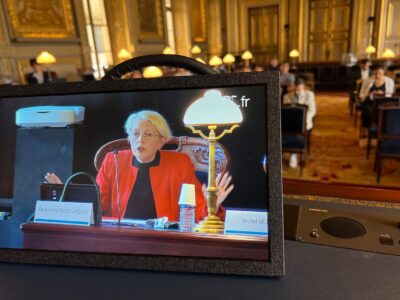
► Full Reference: M.-A. Frison-Roche, "Comment s’adapter au Contentieux Émergent de la Compliance" ("How to adapt to Emerging Compliance Litigation"), in , Association nationale des juristes de banque (ANJB), September 19, 2024, Paris, - This conference is being held with another speaker, Maître Jean-Pierre Picca. It is followed by a discussion with the audience. - 🧮see the full programme of this manifestation - ► English Summary of this conference: Compliance Law is a new branch of Law, teleological in nature, whose legal normativity is rooted in its goals.These are systemic goals of preserving systems by detecting the risks that weaken them and preventing the failures that can destroy them. It is therefore an Ex Ante branch of Law, the implementation of which will weigh on the "entities" in a position to detect risks and prevent failures so that these systemic goals are achieved.  As such, they are "Monumental Goals" in that they are political goals aimed at complete systems. It is therefore essential to distinguish between "conformity Law", which simply consists of "complying" with the applicable regulations, and Compliance Law, which consists of contributing to the achievement of these "Monumental Goals", either by force (legal obligation) or by choice (raison d'être, company with mission, contractual obligation, CSR). In this respect, Compliance Law is both much more limited in its aims and much more ambitious, since it is about building the future rather than mechanically complying with regulations. The banking sector, which can be considered an exception to the principle of Competition, which is based on extreme mobility and the absence of rents, the destruction of the weakest, risk-taking, the lack of solidity of the operator posing no problem, appears to be the paragon of the principle of Compliance, which is based on the sustainability of systems ensured by the solidity of the operators themselves, their solidarity, the exchange of information, and integrated supervisors. For example, the duty of vigilance and the information about others, and the Regulation through Supervision were born in this sector, which has internalised this sectoral concern in the banks, itself the bearer of a general concern, particularly in the European conception of continental banking. the European Banking Union  increasing this concern. As a result, banks will internalise concerns about the future that go beyond safeguarding the banking sector, such as preventing systemic climate risk or educating the population or safeguarding people in vulnerable situations. - The litigation that shall ensue is itself highly specific. The topic of this conference is to provide the keys to understanding how banks must play their part. Emerging Compliance Litigation is systemic in nature. It is a reflection of the Ex Ante organisation whereby entities are asked to make a contribution to the achievement of Monumental Goals. In a dispute between two opposing parties, an individual or an NGO or a trade union or a municipality or a State and a bank, a conflict arises between what might be called the party claiming to represent the present and future interests of a system, for example the climate system or the social relations system, and the bank which has a legally imposed "compliance obligation" to help protect this system. The author who described this perfectly was Chaïm Perelman, particularly in his 1978 book, Logique juridique, which describes audience circles. We need to understand the systemic construction of the judicial instance. The bank must not let to be confined itself solely to its role as litigant, while the other party, for example an NGO, in its role as guardian of "civil society" or the "climate system" or the "effective equality between human beings", going beyond this first circle between the litigants and brings the system itself into the proceedings.  This is where the adaptation has to take place.  - This adaptation is procedural, evidentiary and substantive. The procedural adaptation must take place even before any litigation, since there is a continuum between Ex Ante and Ex Post, with the Judicial System itself being just one accountability method (rendering of accounts) among others. This accountability takes place in relation to a ‘mission’ that is entrusted to the banks in relation to the goals: prevention, detection and the fight against corruption, money laundering, climate change, etc., by building alliances, making good use of information (knowing how to take it, knowing how not to pass it on, knowing how to pass it on). The procedure, i.e. the way in which something is done, must reflect a substantial element, in that it engenders a ‘sense of responsibility’: the purpose of Compliance Law is to ‘make powers accountable’ and to build on positions of power. The proper procedure is to make ‘good use of one's power’ for the benefit of others. Techniques for ‘taking others into consideration’ are an essential element. Consideration by the person who agrees to exercise power (the power to finance, the power to gather information, the power to organise together, the power to contract). Evidentiary’ adaptation: indifference of evidentiary obligations and rights to the procedural position of the parties. The firm has a ‘Compliance Obligation’ even if it is the defendant in the proceedings. The object of proof is given to it by the Monumental Goals that the Law or its own will require it to help achieve. Its burden is to show that it is helping to achieve these goals, by acting for the future (for example, by knowing its customers, or by taking into account the interests of its stakeholders, etc.). - ► Structure of the speech:  I. The current situation: suffering the harmful consequences of reducing Compliance Law to the mechanics of "conformity". II. The opportunity for banks to adapt by understanding Compliance Law and going beyond the mechanics of conformity: the European puzzle, its apparent complexity, its architectural clarity (CSRD/CS3D/DSA). III. The opportunity for banks not to allow themselves to be trapped in proceedings that are merely sanctions, transferred from Ex Post to Ex Ante: the emergence of Systemic Compliance Litigations before the Ordinary Law Courts (French Law of 2017 on Vigilance; Paris Court of appeal decisions of 18 June 2024). IV. What is expected of banks in Systemic Compliance and Vigilance Litigations before the Ordinary Courts, reflecting the dialogue and action required by Compliance Law (article to be published).  V. The opportunity for banks to adapt to the new evidentiary dimension of emerging Compliance and Vigilance Litigation (article to be published). VI. The opportunity for banks to adapt to the new Ex Ante dimension of Systemic Compliance and Vigilance Litigation, Litigation which deals with the future (article to be published). - ► A few bibliographical references:    🕴️M.-A. Frison-Roche, 📝Compliance Law, 2016 🕴️M.-A. Frison-Roche, 📝Compliance and conformity: distinguish them in order to articulate them, 2024 🕴️M.-A. Frison-Roche, 📝Duty of Vigilance: the way forward, 2024 🕴️M.-A. Frison-Roche, 📝Systemic Litigation, 2024 - 🌐follow Marie-Anne Frison-Roche on LinkedIn 🌐follow Marie-Anne Frison-Roche on Instagram 🌐subscribe to the Newsletter MAFR Regulation, Compliance, Law

Conferences

🎤Synthèse, in 🧮Concurrence : les enjeux de la Compliance

► Full Reference: M.-A. Frison-Roche, "Synthèse" ("Synthesis"), in Concurrence : les enjeux de la Compliance​, May 24, 2024, Paris, Collège européen de Paris, Paris Panthéon-Assas University, 28 rue Saint-Guillaume - 🧮see the full programme of this event (in French):  🌐read the  la newsletter MAFR Law, Compliance, Regulation on 26 Mai 2024 about this colloquium and this synthesis (in English) - ► Summary of this concluding conference:The conference was based on the 'framework document' on conformity programmes published by the French Competition Authority, the Autorité de la concurrence, on 24 May 2022 and focused on one of the tools used, namely risk mapping. The care taken to bring together academics whose job it is to give an account of reality by classifying and naming it, which makes it easier to handle, and people who every day in enterprises find solutions to anticipate difficulties so that they can be resolved, or even prevented from arising, has borne fruit. - From all the presentations and discussions, 4 perspectives emerge, each showing what has been achieved, what may still emerge in interaction with all the other mechanisms in Compliance Law that incorporate risk mapping (for instance ,the French 2016 so-called "Sapin 2" law, the French 2017 so-called "Vigilance" law, the CS3D European directive, etc.) and the other mechanisms that are correlated with risk mapping (audit, internal investigations, evidence likely to be raised before a judge by the enterprise and/or by a stakeholder and what remains uncertain in this 2022 framework document.   - The first perspective is the basis of these recommendations, encouragement, methods, advice, etc. The second perspective is the means developed to establish and implement these compliance programmes. The third perspective is the scope of this framework document, which also depends to a large extent on the scope of the compliance programmes adopted by the firms themselves. The fourth perspective is that of the subjects of law who are obliged, or who benefit from the adoption of such  compliance programmes in Competition Law.   - During this conclusion, based solely on what each speaker had to say, I continued my reflections in each of these 4 directions. This reminded me of some of my work made in English on this subject:  M.-A. Frison-Roche (ed.), 📘Compliance Tools, ,2022   M.-A. Frison-Roche, 🚧 Support from Compliance Law for day-to-day management of Competition Law, 2021   M.-A. Frison-Roche, 🚧 Competition Law and Compliance Law, 2018   - 🌐follow Marie-Anne Frison-Roche on LinkedIn 🌐follow Marie-Anne Frison-Roche on Instagram 🌐subscribe to the Newsletter MAFR Regulation, Compliance, Law

MAFR Chronicles Compliance Law

🔄Chronique MAFR Compliance Law

📝Compliance et conformité : les distinguer pour les articuler (Compliance and conformity: distinguish them in order to articulate them)

► Full Reference: M.-A. Frison-Roche, "Compliance et conformité : les distinguer pour les articuler" ("Compliance and conformity: distinguish them in order to articulate them"), D. 2024, chron., pp. 497-499 - 📝read the article (in French) - 🚧read the bilingual Working Paper which is the basis of this article, with additional developments, technical references and hyperlinks - ► English Summary of the article: "Compliance" and "conformité" ("conformity") are sometimes presented as synonyms, with "conformité" simply being the translation of "compliance". On the contrary, they are two opposing concepts. "Conformity" refers to the obligation to obey all applicable regulations, regardless of their content. A godsend for the regulator… Compliance Law is quite different! Political and public authorities set systemic 'Monumental Goals' to ensure that systems do not collapse tomorrow, or even improve, and then entrust large companies with the task of activating the means to achieve these goals. Conformity then resumes its place in Compliance Law: being one of its tools. - 📚read the other articles published in this chronique of Compliance Law published in the Recueil Dalloz   - 🌐follow Marie-Anne Frison-Roche on LinkedIn 🌐follow Marie-Anne Frison-Roche on Instagram 🌐subscribe to the Newsletter MAFR Regulation, Compliance, Law

Working papers

Working Paper

🚧Compliance and conformity: distinguishing them to articulate them

► Full Reference: M.-A. Frison-Roche, Compliance and conformity: distinguishing them to articulate them, Working Paper, February 2024. - 📝 this working paper was drawn up to serve as a basis for the article published in French in the Chronique MAFR –  Compliance Law, published in the Recueil Dalloz.   - ► Summary of this Working Paper: The words "conformité" and "compliance" are sometimes used interchangeably, presenting "conformité" as the translation into good legal French vocabulary of "compliance", which would come from the American system. This is not true, however, because each of these terms refers to two distinct and even opposing concepts.  "conformity"' would require companies to show that they are actively obeying all the 'regulations' applicable to them, regardless of their content. "Compliance Law" is a new substantial branch of Law that derives its normativity from the "Monumental Goals" targeted by the political and public authorities: these monumental goals are intended to ensure that systems do not collapse in the future (Negative Monumental Goals), or even improve (Positive Monumental Goals). The systems concerned are banking, finance, energy, health, transport, digital and climate systems. The scope of Compliance Law is therefore both much more limited and more ambitious. Distinguishing between the two allows us to put conformity back where it belongs, as a tool of Compliance Law. As such, conformity justifies the collation and correlation of information, with the algorithmic system playing a major role in this. On the other hand, the human concern that underpins Compliance Law justifies making training and the actions of in-house lawyers, attorneys and judges, central to it. The evidentiary system of Compliance that is currently being developed is based on evidentiary techniques rooted on the one hand in the tool of conformity and on the other in the culture of Compliance, which can be articulated as soon as they are no longer confused. -   🔓read the working paper below⤵️ - 🌐 follow Marie-Anne Frison-Roche on LinkedIn 🌐follow Marie-Anne Frison-Roche on Instagram 🌐subscribe to the Newsletter MAFR Regulation, Compliance, Law

Working papers

Working Paper basis for an article

🚧Births of a new branch of Law: Compliance Law

► Full Reference: M.-A. Frison-Roche, Births of a branch of Law: Compliance Law, Working Paper, November 2023. - 📕This Working Paper was drawn up as a basis for a contribution to the collective book given to Professor Louis Vogel, published in 2024 - ► Summary of this Working Paper: The study looks at the various movements that have given birth to Compliance Law, with particular emphasis on Competition Law. After a preliminary reflection on the construction of the legal system into branches of Law, their classification in relation to each other, the difficulty encountered in this respect by Economic Law, and the various movements that give birth to one of them, the diversity of which the branch subsequently keeps track of, the study is constructed in 4 parts. To find out what gave rise to Compliance Law, the first part invites us to reject the narrow perspective of a definition that is content to define it by the fact of "being conform" with all the applicable regulations. This has the effect of increasing the efficacy of the regulations, but it does not produce a branch of Law, being just a set of tools like others. The second part of the study aims to shed some light on what appears to be an "enigma", as it is often claimed that this is the result of a soft method, or of an American political decision, or of as many regulations as there are occasions to make. Instead, it appears that in the United States, in the aftermath of the 1929 crisis, it was a decision of establishing an authority and rules to prevent another atrocious collapse of the system, while in Europe in 1978, in memory of the use of files of personal and racial information, it was a question of establishing an authority and rules to prevent an atrocious attack on human rights. A common element that aims for the future ("never again") but not the same object of preventive rejection. This difference between the two births explains the uniqueness and diversity of the two Compliance Laws, the tensions that can exist between the two, and the impossibility of obtaining a global Law. The third part analyses the way in which Competition Law has given rise to conformity: a secondary branch which is a guarantee of conformity with competition rules. Developed in particular through the soft law issued by the competition authorities, the result is a kind of soft obedience, a well-understood collaboration of the procedural type through which the firm educates, monitors and even sanctions, without leaving  the cercle of Competition Law, of which conformity is an appendix. The distance between a culture of conformity and the substantial Compliance Law can be measured here. The fourth part aims to show that Competition Law and Compliance Law are two autonomous and articulated branches of Law. Since Compliance Law is a branch of Law built on Monumental Goals, in particular the sustainability of systems and the preservation of the human beings involved so that they are not crushed by them but benefit from them, the current challenge of European integration is to build the pillar of Compliance Law alongside the competitive pillar. Jurisdictions are in the process of doing this and of linking the two.   - 🔓read the Working Paper below⤵️ - 🌐follow Marie-Anne Frison-Roche on LinkedIn 🌐follow Marie-Anne Frison-Roche on Instagram 🌐subscribe to the Newsletter MAFR Regulation, Compliance, Law  🌐subscribe to the Video Newsletter MAFR Surplomb

Conferences

🎤Participation in the panel “Vigilance (due diligence)”, in 🧮150th Anniversary Symposium of the ILA/ADI

🌐 follow Marie-Anne Frison-Roche sur LinkedIn 🌐subscribe to the Newsletter MAFR Regulation, Compliance, Law  - ► Full Reference: M.-A. Frison-Roche, participation in the panel "Vigilance (due diligence)", in International Law Association (ILA), 150th Anniversary Symposium of the ILA/ADI, Paris, 19 June 2023. - 🧮See the full programme of this event -

MAFR Chronicles Compliance Law

📝Contrat de compliance, clauses de compliance

► Full Reference: M.-A. Frison-Roche, "Contrat de compliance, clauses de compliance", Chronique of Compliance Law, D. 2022, pp. 2115-2117. - 📝reac the article (this article is written in French) - ► English summary of the article: Compliance Law is often seen only as an obligation to comply with regulations. Contract Law is masked by the study of texts and sanctions. Civil liability cases are beginning to highlight the commitments of companies, acts of will. It remains to discern the importance of contracts. First, there is a specific contract: the "compliance contract". Its purpose is to provide a third party with a service, the means for the company to "comply" with the legal systems requirements ("contract of conformity"), and/or to enable the company to achieve the monumental goals that characterize Compliance Law (contract of compliance). The interpretation and the regime of these compliance contracts must be marked by the Compliance Law that permeates it. Secondly, there are a multitude of stipulations aimed at conformity and Compliance. - 🚧read the working paper written in English: Compliance contract, Compliance stipulations - 📚read the other articles published in this chronique of Compliance Law published in the Recueil Dalloz. - 🌐 follow Marie-Anne Frison-Roche sur LinkedIn 🌐follow Marie-Anne Frison-Roche on Instagram 🌐subscribe  to the Newsletter MAFR Regulation, Compliance, Law 

Conferences

🎥La place de l’Intelligence artificielle dans le respect de la Compliance dans l’entreprise : la juste mesure (“Compliance, Artificial Intelligence and Business Management: the right measure”), in M. Mekki (coord.), 🧮L’intelligence artificielle et la gestion des entreprises (“Artificial Intelligence and Business Management”)

🌐follow Marie-Anne Frison-Roche on LinkedIn 🌐subscribe to the  Newsletter MAFR Regulation, Compliance, Law - ► Full Reference: M.-A. Frison-Roche, "Compliance, Artificial Intelligence and Business Management: the right measure" ("Compliance, Intelligence artificielle et gestion des entreprises : la juste mesure"), participation to the Conference coordinated by Mustapha Mekki, L'intelligence artificielle et la gestion des entreprises. July 1st, 2022.  - 🎥 see the conference (in French) -  consult the slides having been used as brief notes for deliver the lecture (inf French) - 🚧read the bilingual Working Paper having been used as basis for this conference - 📝This work will be the basis for an article. - ► Summary of the Lecture: Of the next European Regulation on artificial intelligence, the European Commission has a quite neutral conception of AI for obtaining a consensus between the Member States, while the Regulators and certain States have a more substantial conception of technology, wanting its power to be used to protect people, firstly from these new tools themselves, secondly from what is an amplification of the evils of the classic world, such as hate or misinformation. This is the reflection of two conceptions of Compliance. Firstly, Compliance can be defined as neutral processes that increase the effectiveness of what would be the obligation for companies or their desire for efficient risk management (in particular the consideration of "legal risks") to prove being "conform" to all regulations that are applicable to itself and all persons to whom the firm is accountable. This is often referred to as the "compliance obligation" or "obligation of conformity". This conception implies considerable practical consequences for the company which, in order to succeed in this "total exploit", would then have to resort to artificial intelligence tools constituting a "total and infallible solution", which mechanically generate for it the obligation to "know " all the "regulatory mass", to detect all "non-compliances", to conceive its relationship to the Law in terms of "risk of non-compliance", fully supported by Compliance by Design which could, without human intervention , eliminate legal risk and ensure "compliance total efficiency" in Ex Ante. The "legal price" of this technological dream is extremely high because all the "regulatory" requirements will then be transformed into obligations of result, any failure generating liability. The Compliance probationary system will become overwhelming for the company, both in terms of burden of proof, means of proof, and transfers, without exemption from proof. Objective responsibilities for others will multiply. The "law of conformity" will multiply Ex Ante systemic penalties, the border with criminal law being less and less preserved. It is essential to avoid this, both for businesses and for the Rule of Law. For this, we must use Artificial Intelligence to its proper extent: it may constitute a "massive aid", without ever claiming to be a total and infallible solution, because it is the human who must be at the center of the compliance system functioning thank to the firms and not the machinery. For this, it is necessary to adopt a substantial conception of Compliance Law (and not a sort of Conformity Law or Obedience Law). It does not at all cover all the applicable regulations and it is not at all "neutral", being in no way a series of processes. This new branch of Law is substantially built on Monumental Goals. These are either of a negative nature (preventing a systemic crisis from happening, in many but specific perspectives: banking, financial, health, climate, etc.), or of a positive nature (building a better balance, in particular between human beings, in the company and beyond). In this conception which appears more and more strongly, artificial intelligence finds its place, more modest. As Compliance Law is based on information, Artificial Intelligence is essential to capture it and make first connections, first stages for successive analyses, done by human beings, making what is essential: the commitment of the company, both by the leaders and by all those who are "embarked" by a "culture of Compliance" which is at both built and common. This restores the required seal between Criminal Law and what can be asked of the mechanical use of Artificial Intelligence; this puts the obligation of means back as a principle. This restores the principal place to the lawyer and the compliance officer, so that the culture of compliance is articulated with the specificities of a sector and the identity of the company itself. Indeed, the culture of compliance being inseparable from a culture of values, Compliance by design requires a dual technique, both mathematical and legal culture. It is why European Compliance Law, because it is rooted in the European humanist tradition, is a model. - For further: 📘Frison-Roche, M.-A. (ed.), Compliance Monumental Goals, 2022 📘Frison-Roche, M.-A. (ed.), Compliance Jurisdictionalisation, 2022 📘Frison-Roche, M.-A. (ed.), Compliance Tools, 2021 📓Frison-Roche, M.-A., L'apport du Droit de la Compliance à la Gouvernance d'Internet, 2019  📕Frison-Roche, M.-A. (ed.), Pour une Europe de la Compliance, 2019 📕Frison-Roche, M.-A. (ed.), Régulation, Supervision, Compliance, 2017 📕 Frison-Roche, M.-A. (ed.), Internet, espace d'interrégulation, 2016 📝 Frison-Roche, M.-A., Compliance Monumental Goals, beating heart of Compliance law,  2022, 📝 Frison-Roche, M.-A., Role and Place of Companies in the Creation and Effectiveness of Compliance Law in Crisis, 2022 📝 Frison-Roche, M.-A., Assessment of Whistleblowing, and the duty of Vigilance, 2022 📝Frison-Roche, M.-A., Drawing up Risk Maps as an obligation and the paradox of he "compliance risks", 2021 -

Conferences

📅 Cycle of Colloquia 2021 around Compliance monumental goals

📅 Compliance effectivity and International competitiveness (Effectivité de la Compliance et compétitivité internationale)

This scientific event is  part of the 2021 colloquium cycle, organized by the Journal of Regulation & Compliance (JoRC) and its Universities partners, around the general theme of Compliance Monumental Goals.  It is organized by the Journal of Regulation & Compliance (JoRC) and by the Paris Center for Law and Economics  of the Panthéon-Assas University (Paris II).  This scientific event is placed under the scientific responsibility of Laurent Benzoni, Bruno Deffains and Marie-Anne Frison-Roche.            📅 The colloquium will take place in the Salle du Conseil (Panthéon-Assas University) on Thursday, November 4, 2021 from 1.30pm until 6.30pm. 🎥 The colloquium will be edited on video by the Journal of Regulation & Compliance.    Presentation of the topic :    Speakers: 🎤 Laurent Benzoni, professor of Economics at Panthéon-Assas University (Paris II), Tera Consultants 🎤Bruno Deffains, professor of Economics at Panthéon-Assas University (Paris II), director of the CRED 🎤 Marie-Anne Frison-Roche, Law professor at Sciences Po – Paris, director of the JoRC 🎤 Antoine Gaudemet, Law professor  at Panthéon-Assas Université (Paris II), director of the Compliance Officer D.U.  🎤 Sabine Lochmann, CEO of Vigeo Eiris, Global Director of Moody’s ESG Solutions 🎤Frédéric Marty, economist, researcher at CNRS, member of GREDEG Côte d'Azur University 🎤 Stanislas Pottier, senior advisor to the General Management, Amundi 🎤 Jean-Christophe Roda, Law professor at Lyon 3 University   The different interventions will be then transformed into contributions in the books 📕 Les buts monumentaux de la Compliance and 📘 Compliance Monumental Goals  which will be published in the Regulation & Compliance serie, jointly published by the JoRC and Dalloz for the French edition and by JoRC and Bruylant for the book in English.    Read a detailed presentation of the colloquium below:   

Conferences

Cycle of colloquia 2021 around Compliance Jurisdictionalisation

Compliance Law, between American Procedural Law and European Procedural Law (Le Droit de la Compliance, creuset entre Droit processuel américain et Droit processuel européen)

This scientific event is placed under the scientific responsibility of Marie-Anne Frison-Roche and Arnaud van Waeyenberge. It is organized by the Journal of Regulation & Compliance (JoRC) and by the Centre Perelman of Brussels University. This event is part of the 2021 colloquia cycle around the general theme of Compliance Jurisdictionalisation.     The different interventions will be then transformed into contributions in the books La juridictionnalisation de la Compliance  and Compliance Juridictionnalization  which will be published in the Regulation & Compliance serie, jointly published by the JoRC and Dalloz for the book in French and by JoRC and Bruylant for the book in English.  This colloquium will take place in Brussels in October 2021.   Presentation of the theme:    Notably  will speak: Marie-Anne Frison-Roche, professor at Sciences Po – Paris Arnaud van Waeyenberge, professor at HEC Paris and researcher at Centre Perelman   Read a detailed presentation of the colloquium below: