Compliance

Conferences

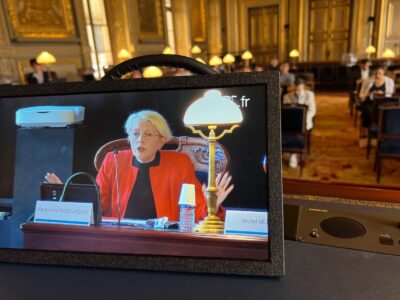
🎤Participation in the panel “Vigilance (due diligence)”, in 🧮150th Anniversary Symposium of the ILA/ADI

follow Marie-Anne Frison-Roche sur LinkedIn subscribe to the Newsletter MAFR Regulation, Compliance, Law  - ► Full Reference: M.-A. Frison-Roche, participation in the panel "Vigilance (due diligence)", in International Law Association (ILA), 150th Anniversary Symposium of the ILA/ADI, Paris, 19 June 2023. - 🧮See the full programme of this event -

MAFR Chronicles Compliance Law

📝Contrat de compliance, clauses de compliance

► Full Reference: M.-A. Frison-Roche, "Contrat de compliance, clauses de compliance", Chronique of Compliance Law, D. 2022, pp. 2115-2117. - 📝reac the article (this article is written in French) - ► English summary of the article: Compliance Law is often seen only as an obligation to comply with regulations. Contract Law is masked by the study of texts and sanctions. Civil liability cases are beginning to highlight the commitments of companies, acts of will. It remains to discern the importance of contracts. First, there is a specific contract: the "compliance contract". Its purpose is to provide a third party with a service, the means for the company to "comply" with the legal systems requirements ("contract of conformity"), and/or to enable the company to achieve the monumental goals that characterize Compliance Law (contract of compliance). The interpretation and the regime of these compliance contracts must be marked by the Compliance Law that permeates it. Secondly, there are a multitude of stipulations aimed at conformity and Compliance. - 🚧read the working paper written in English: Compliance contract, Compliance stipulations - 📚read the other articles published in this chronique of Compliance Law published in the Recueil Dalloz. - 🌐 follow Marie-Anne Frison-Roche sur LinkedIn 🌐follow Marie-Anne Frison-Roche on Instagram 🌐subscribe  to the Newsletter MAFR Regulation, Compliance, Law 

Conferences

🎥La place de l’Intelligence artificielle dans le respect de la Compliance dans l’entreprise : la juste mesure (“Compliance, Artificial Intelligence and Business Management: the right measure”), in M. Mekki (coord.), 🧮L’intelligence artificielle et la gestion des entreprises (“Artificial Intelligence and Business Management”)

🌐follow Marie-Anne Frison-Roche on LinkedIn 🌐subscribe to the  Newsletter MAFR Regulation, Compliance, Law - ► Full Reference: M.-A. Frison-Roche, "Compliance, Artificial Intelligence and Business Management: the right measure" ("Compliance, Intelligence artificielle et gestion des entreprises : la juste mesure"), participation to the Conference coordinated by Mustapha Mekki, L'intelligence artificielle et la gestion des entreprises. July 1st, 2022.  - 🎥 see the conference (in French) -  consult the slides having been used as brief notes for deliver the lecture (inf French) - 🚧read the bilingual Working Paper having been used as basis for this conference - 📝This work will be the basis for an article. - ► Summary of the Lecture: Of the next European Regulation on artificial intelligence, the European Commission has a quite neutral conception of AI for obtaining a consensus between the Member States, while the Regulators and certain States have a more substantial conception of technology, wanting its power to be used to protect people, firstly from these new tools themselves, secondly from what is an amplification of the evils of the classic world, such as hate or misinformation. This is the reflection of two conceptions of Compliance. Firstly, Compliance can be defined as neutral processes that increase the effectiveness of what would be the obligation for companies or their desire for efficient risk management (in particular the consideration of "legal risks") to prove being "conform" to all regulations that are applicable to itself and all persons to whom the firm is accountable. This is often referred to as the "compliance obligation" or "obligation of conformity". This conception implies considerable practical consequences for the company which, in order to succeed in this "total exploit", would then have to resort to artificial intelligence tools constituting a "total and infallible solution", which mechanically generate for it the obligation to "know " all the "regulatory mass", to detect all "non-compliances", to conceive its relationship to the Law in terms of "risk of non-compliance", fully supported by Compliance by Design which could, without human intervention , eliminate legal risk and ensure "compliance total efficiency" in Ex Ante. The "legal price" of this technological dream is extremely high because all the "regulatory" requirements will then be transformed into obligations of result, any failure generating liability. The Compliance probationary system will become overwhelming for the company, both in terms of burden of proof, means of proof, and transfers, without exemption from proof. Objective responsibilities for others will multiply. The "law of conformity" will multiply Ex Ante systemic penalties, the border with criminal law being less and less preserved. It is essential to avoid this, both for businesses and for the Rule of Law. For this, we must use Artificial Intelligence to its proper extent: it may constitute a "massive aid", without ever claiming to be a total and infallible solution, because it is the human who must be at the center of the compliance system functioning thank to the firms and not the machinery. For this, it is necessary to adopt a substantial conception of Compliance Law (and not a sort of Conformity Law or Obedience Law). It does not at all cover all the applicable regulations and it is not at all "neutral", being in no way a series of processes. This new branch of Law is substantially built on Monumental Goals. These are either of a negative nature (preventing a systemic crisis from happening, in many but specific perspectives: banking, financial, health, climate, etc.), or of a positive nature (building a better balance, in particular between human beings, in the company and beyond). In this conception which appears more and more strongly, artificial intelligence finds its place, more modest. As Compliance Law is based on information, Artificial Intelligence is essential to capture it and make first connections, first stages for successive analyses, done by human beings, making what is essential: the commitment of the company, both by the leaders and by all those who are "embarked" by a "culture of Compliance" which is at both built and common. This restores the required seal between Criminal Law and what can be asked of the mechanical use of Artificial Intelligence; this puts the obligation of means back as a principle. This restores the principal place to the lawyer and the compliance officer, so that the culture of compliance is articulated with the specificities of a sector and the identity of the company itself. Indeed, the culture of compliance being inseparable from a culture of values, Compliance by design requires a dual technique, both mathematical and legal culture. It is why European Compliance Law, because it is rooted in the European humanist tradition, is a model. - For further: Frison-Roche, M.-A. (ed.), Compliance Monumental Goals, 2022 Frison-Roche, M.-A. (ed.), Compliance Jurisdictionalisation, 2022 Frison-Roche, M.-A. (ed.), Compliance Tools, 2021 📓Frison-Roche, M.-A., L'apport du Droit de la Compliance à la Gouvernance d'Internet, 2019  Frison-Roche, M.-A. (ed.), Pour une Europe de la Compliance, 2019 Frison-Roche, M.-A. (ed.), Régulation, Supervision, Compliance, 2017  Frison-Roche, M.-A. (ed.), Internet, espace d'interrégulation, 2016 📝 Frison-Roche, M.-A., Compliance Monumental Goals, beating heart of Compliance law,  2022, 📝 Frison-Roche, M.-A., Role and Place of Companies in the Creation and Effectiveness of Compliance Law in Crisis, 2022 📝 Frison-Roche, M.-A., Assessment of Whistleblowing, and the duty of Vigilance, 2022 📝Frison-Roche, M.-A., Drawing up Risk Maps as an obligation and the paradox of he "compliance risks", 2021 -

Conferences

📅 Cycle of Colloquia 2021 around Compliance monumental goals

📅 Compliance effectivity and International competitiveness (Effectivité de la Compliance et compétitivité internationale)

This scientific event is part of the 2021 colloquium cycle, organized by the Journal of Regulation & Compliance (JoRC) and its Universities partners, around the general theme of Compliance Monumental Goals. It is organized by the Journal of Regulation & Compliance (JoRC) and by the Paris Center for Law and Economics  of the Panthéon-Assas University (Paris II). This scientific event is placed under the scientific responsibility of Laurent Benzoni, Bruno Deffains and Marie-Anne Frison-Roche.     📅 The colloquium will take place in the Salle du Conseil (Panthéon-Assas University) on Thursday, November 4, 2021 from 1.30pm until 6.30pm. 🎥 The colloquium will be edited on video by the Journal of Regulation & Compliance.    Presentation of the topic :  Speakers: 🎤 Laurent Benzoni, professor of Economics at Panthéon-Assas University (Paris II), Tera Consultants 🎤Bruno Deffains, professor of Economics at Panthéon-Assas University (Paris II), director of the CRED 🎤 Marie-Anne Frison-Roche, Law professor at Sciences Po – Paris, director of the JoRC 🎤 Antoine Gaudemet, Law professor at Panthéon-Assas Université (Paris II), director of the Compliance Officer D.U. 🎤 Sabine Lochmann, CEO of Vigeo Eiris, Global Director of Moody’s ESG Solutions 🎤Frédéric Marty, economist, researcher at CNRS, member of GREDEG Côte d’Azur University 🎤 Stanislas Pottier, senior advisor to the General Management, Amundi 🎤 Jean-Christophe Roda, Law professor at Lyon 3 University   The different interventions will be then transformed into contributions in the books  Les buts monumentaux de la Compliance and  Compliance Monumental Goals  which will be published in the Regulation & Compliance serie, jointly published by the JoRC and Dalloz for the French edition and by JoRC and Bruylant for the book in English.   Read a detailed presentation of the colloquium below:  

Conferences

Cycle of colloquia 2021 around Compliance Jurisdictionalisation

Compliance Law, between American Procedural Law and European Procedural Law (Le Droit de la Compliance, creuset entre Droit processuel américain et Droit processuel européen)

This scientific event is placed under the scientific responsibility of Marie-Anne Frison-Roche and Arnaud van Waeyenberge. It is organized by the Journal of Regulation & Compliance (JoRC) and by the Centre Perelman of Brussels University. This event is part of the 2021 colloquia cycle around the general theme of Compliance Jurisdictionalisation.     The different interventions will be then transformed into contributions in the books La juridictionnalisation de la Compliance  and Compliance Juridictionnalization  which will be published in the Regulation & Compliance serie, jointly published by the JoRC and Dalloz for the book in French and by JoRC and Bruylant for the book in English.  This colloquium will take place in Brussels in October 2021.   Presentation of the theme:    Notably  will speak: Marie-Anne Frison-Roche, professor at Sciences Po – Paris Arnaud van Waeyenberge, professor at HEC Paris and researcher at Centre Perelman   Read a detailed presentation of the colloquium below:   

Conferences

📅 Cycle of colloquia 2021 around Compliance Juridictionnalization

📅 Which judges for Compliance Law ? (Quels juges pour la Compliance?)

►This scientific event is placed under the scientific responsibility of Marie-Anne Frison-Roche, Juliette Morel Maroger and Sophie Schiller. It is organized by the Journal of Regulation & Compliance (JoRC) and by the Centre de recherche en Droit (CR2D) of Paris Dauphine-PSL University. This event is part of the 2021 colloquia cycle around the general theme of Compliance Jurisdictionalisation.   ►The interventions will be then transformed into a chapter in the books: contributions in the  La Juridictionnalisation de la Compliance , to be published the Regulation & Compliance series ries, jointly published by the Journal of Regulation & Compliance (JoR)C and Dalloz Compliance Jurisdictionalisation, <img class="emoji" style="background-attachment: initial !important; background-clip: initial !important; background-image: none !important; background-origin: initial !important; background-position: initial !important; background-repeat: initial !important; background-size: initial !important; border: none !important; box-shadow: none !important; box-sizing: border-box; color: #666666; display: inline !important; font-family: lato,helvetica,arial,lucida,sans-serif; font-size: 25px; height: 1em !important; margin: 0px 0.07em !important; max-width: 100%; outline: 0px; padding: 0px !important; text-size-adjust: 100%; vertical-align: -0.1em !important; width: 1em !important;" src="https://s.w.org/images/core/emoji/13.0.1/svg/1f4da.svg" alt="” />   to be published in the Compliance & Regulation Series , co published by the Journal of Regulation & Compliance (JoRC) and  Bruylant. - This colloquium will take place in Paris Dauphine-PSL University in September 2021.   Presentation of the topic :  Judges, regulatory and supervisory authorities, or even authorities specially instituted by Compliance Law, such as the Agence Française Anticorruption (French Anticorruption Agency), must implement it. The colloquium aims initially to identify and discuss the procedural rules that they then specifically implement, in particular when the strong requirements of Compliance Law, efficiency and immediacy, new negotiation techniques and commitment, must be articulated with the traditional procedural requirements that remain. The question arises in particular as to whether the rules of a fair trial should apply (or can they be similar in transactional procedures and in the context of judicial procedures, and how the control by judges operates during homologation) in transactional procedures, with more or less specific treatment of the evidence used. Secondly, the colloquium considers the way in which the different judges assess the different constitutive standards of Compliance Law. These are often soft Law and depending on whether the judge is repressive, administrative, or European, his or her assessment will not be legally of the same scope or of the same nature, which together leads to an issue of articulation of method. Due to the breadth of the subject, certain sectors will be particularly examined, in particular the banking sector. Thirdly, the way in which the judge himself or herself applies Compliance Law will be examined, in what appears to be a balance between pedagogy and sanction. It then appears to play a triple role, in that it ensures compliance with standards but also in that it must find effective solutions in a Law which is more in Ex Ante than in Ex Post and that it must support operators so that they act effectively, by mastering their obligations. The motivation for decisions then appears to be a primary issue. Because this last phase concerns the even more direct relationship between the judge and the operators and stakeholders, this theme is intended to give rise to a presentation and a round table. - Will speak notably:    Claudie Boiteau, Professor at Paris Dauphine-PSL University, Member of the Centre de Recherche en Droit de l’Université Paris Dauphine-PSL (CR2D).   Jean-François Bohnert, Financial National Prosecutor   Olivier Catherine, Secretary General at Sonepar   Nicolas Cayrol, Professor at Tours Law School and Director of the Institut d’Etudes Judiciaires François Grua   Jean-Michel Darrois, Attorney, Darrois, Villey, Maillot, Brochier Law Firm   Marie-Laure Denis, President of the CNIL   Eric Dezeuze, Attorney, Bredin Prat Law Firm   Marie-Anne Frison-Roche, Professor at Sciences Po (Paris), Director of the JoRC   Juliette Morel-Maroger, Professor at Paris Dauphine-PSL University   Sophie Scemla, Associate attorney, Gide Law Firm   Sophie Schiller, Professor at Paris Dauphine-PSL University   Read a more detailed presentation below:

Conferences

📅 Cycle of colloquia 2021 around Compliance monumental goals

📅 Public norms and Compliance in time of crisis : monumental goals put to a test (Normes publiques et Compliance en temps de crise : les buts monumentaux à l’épreuve)

This scientific manifestation is placed under the scientific direction of Marie-Anne Frison-Roche, Pascale Idoux, Antoine Oumedjkane and Adrien Tehrani. It is organized by the Journal of Regulation & Compliance (JoRC) and by the Faculté de Droit et de Science Politique de l’Université de Montpellier (Centre de Recherches et d’Etudes Administratives de Montpellier and Centre du Droit de l’Entreprise). 📅 This manifestation is part of the cycle of colloquia organized in 2021 around the general topic of Compliance Monumental Goals.    The interventions will give rise to the production of articles which will be part of   Les bus monumentaux de la Compliance,    to be published in the Series Regulations & Compliance , co-published par the Journal of Regulation & Compliance (JoRC) and Dalloz. Compliance Monumental Goals, <img class="emoji" style="background-attachment: initial !important; background-clip: initial !important; background-image: none !important; background-origin: initial !important; background-position: initial !important; background-repeat: initial !important; background-size: initial !important; border: none !important; box-shadow: none !important; box-sizing: border-box; color: #666666; display: inline !important; font-family: lato,helvetica,arial,lucida,sans-serif; font-size: 25px; height: 1em !important; margin: 0px 0.07em !important; max-width: 100%; outline: 0px; padding: 0px !important; text-size-adjust: 100%; vertical-align: -0.1em !important; width: 1em !important;" src="https://s.w.org/images/core/emoji/13.0.1/svg/1f4da.svg" alt="” />   dans la Série Compliance & Regulation , co-published by par le Journal of Regulation & Compliance (JoRC) and Bruylant. This manifestation took place on Zoom on 17th of May 2021. Registrations: anouk.leguillou@mafr.fr Assistance to this event may be validated as part of the continuing education of lawyers. In addition, scientific videos will be extracted and disseminated later. Presentation of the topic: In the overall problematic of “Monumental goals”, this conference retains a particular case: that of the crisis and the emergency situation that it generates. First of all, in general, does the importance of public norms in the emergency context engendered by a crisis situation imply a marginalization of Compliance? Don’t private actors also have their place in these circumstances, at the service of the “monumental goals” that the public authorities want to maintain, or even which appear specifically? Secondly, more concretely, we have been living for many months in a health crisis. By taking it as a framework and, within it from particular cases, how public and private actors react, act, adjust? and how do the courts assess these movements? Going from the most general to the most specific, this conference aims to identify criteria, limits, of what could be specific rules when the emergency of a crisis meets Compliance, and will examine specific situations.   Working method: The conference is therefore built on a general issue, which was the subject of a “working paper”, written by Antoine Oumedjkane, Adrien Tehrani and Pascale Idoux, on which the speakers will have thought in advance and from which they are intended to study the question from their particular perspective. The conference, which is essentially interactive, therefore begins with an outline of the main lines of this general work. It is followed by the examination of concrete practical cases. They are as follows: 1️⃣ hydro-alcoholic gel, its manufacture, price, availability, 2️⃣ information and regulation on all media in Covid period 3️⃣ the use of the bicycle during the state of health emergency A first conclusion, thematically limited, will relate to Revealed by the crisis situation, the place of private initiative in Compliance Law. A second, more general, undoubtedly open-ended conclusion is drawn from this confrontation between general reflection and concrete cases which must be resolved in a particular crisis.   speakers:  🎤 Jean-Bernard Auby, Emeritus Professor of Sciences po (Paris) 🎤 Julien Bonnet, Professor at Montpellier University and member of the CERCOP 🎤 Guylain Clamour, Dean of Montpellier Law School 🎤 Marie-Anne Frison-Roche, agrégée des Facultés de droit, Professor of Regulation and Compliance Law at Sciences Po (Paris) and Director of the Journal of Regulation & Compliance (JoRC) 🎤 Pascale Idoux, Professor at Montpellier University 🎤 Pascale Léglise, adjointe au directeur des libertés publiques et des affaires juridiques (Deputy Director of Civil Liberties and Legal Affairs) of the Ministère de l’intérieur (Home Ministry) 🎤 Michèle Léridon, Member of the Conseil supérieur de l’audiovisuel (French Media Regulator), President of the working group Pluralisme, déontologie, supervision des plateformes en ligne (Pluralism, Deontology, Supervision of Online Platforms) 🎤 Antoine Oumedjkane, Researcher of the Centre de recherche et d’études administratives (Research and Administrative Studies Center) of Montpellier University 🎤 Nelly Sudres, Maître de conférences at Montpellier University and member of the Centre de Recherches et d’Etudes Administratives (Research and Administrative Studies Center) of Montpellier University 🎤 Adrien Tehrani, Professor at Montpellier University and member of the Centre du Droit de l’Entreprise (Company Law Center) 🎤Xavier Vallad, Group Legal Director, Intermarché   ⤵️Read a more detailed presentation of the manifestation below:

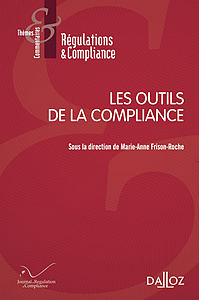
Couverture – Les outils de la Compliance

Articles in a JoRC book

📝Dresser des cartographies des risques comme obligation et le paradoxe des “risques de conformité”, in 🕴️M.-A. Frison-Roche (ed.), Collection Régulations & Compliance Les outils de la Compliance

► Full Reference: M.-A. Frison-Roche, “Dresser des cartographies des risques comme obligation et le paradoxe des “risques de conformité”” (“Drawing up risk maps as an obligation and the paradoxe of the “compliance risks””), in M.-A. Frison-Roche (ed.), Les outils de la Compliance, coll. “Régulations & Compliance“, Journal of Regulation & Compliance (JoRC) and Dalloz, 2021, pp. 53-62. - 📝read the article (in French) - 🚧read the bilingual Working Paper which is the basis of this article, with additional developments, technical references and hyperlinks - read a general presentation of the book, Les outils de la Compliance, in which this article is published - ► Summary of the article (done by the Journal of Regulation & Compliance): There are few synthetic or theoretical studies on Risk Mapping even though it is in fact the Compliance central tool, perhaps because it is more a management tool than a legal one. Risk Mapping is often described but does not receive any other legal qualifications than being a “modality”, suffering in this respect from an evil which affects the whole of Compliance, still little understood by Law, attention often so focused on the Ex Post (sanctions) while Compliance is by nature in the Ex Ante. Going from disarray to incomprehension, everyone can note the existence of “compliance risks” among the mapped risks, because if as so many affirm that it would be necessary to speak only of simple conformity as obedience, demonstrated in Ex Ante, to Law, how a sub-set of a tool would therefore have the same object as the set of Law that this tool serves … This aporia can only be resolved if Compliance Law is defined substantially by its “monumental goals” which exceed obedience to regulations. Consequently, Law taking up Risk Mapping, this mechanism may first appear as an ancillary obligation to the main obligation consisting in achieving “monumental goals”. The ancillary obligation to draw up the maps is an obligation of result, while the main obligation to achieve the monumental goals is an obligation of means. These cartographies being very diverse and being only occasionally targeted by specific laws, it can also constitute only a legal fact or, through the play of various charters, a unilateral legal commitment. But it isnbecoming the basis of an autonomous legal obligation incumbent on enterprises in position to know certain risks, obligation referring to the existence of a subjective right tof knowing and measuring them (“right to be worried”) which the third parties who are going to run them would hold, thus allowing them to choose to run them, or not. -

Working papers

Compliance Law, Health crisis and Future

This interview was conducted in French with Olivia Dufour, for an article published in French in the digital publication Actualité Juridique. Its subject is  the confrontation between the current health crisis situation and the Compliance Law.    Summary. After defining Compliance Law, distinguishing the procedural and poor definition and the substantial and rich definition, the starting point is to admit the aporia: the type of health crisis caused by Covid-19 will be renewed and it is imperative to prevent it, even to manage it, then to organize the crisis exit. Public Authorities are legitimate to do so, but because this type of crisis being global and the State being consubstantially linked to borders, States are hardly powerful. Their traditional International Law shows their  limits in this current crisis and one cannot hope that this configulration will improve radically. In contrast, some companies and markets, notably the financial markets, are global. But the markets are not legitimate to carry out such missions and counting on the generosity of certain large companies is far too fragile in front of the "monumental goal" that is the prevention of the next health crisis, crisis which must never happen. How to get out of this aporia? By Compliance Law, basis of, in a literal and strong sense, the "Law of the Future".  We need to be inspired by the Banking and Financial Compliance Law. Designed in the United States after the 1929 crisis to tend towards the "monumental goal" of the absence of a new devastating crisis in the country and the world,  this set of new legal mechanisms gave duty and power of supervision, regulation and compliance to market authorities and central bankers. These are independent of governments but in constant contact with them. Today, they claim to have as first priority the fight against climate change. Now and for the future, they must also be given the responsibility and the powers to prevent a global health disaster, similar to a global ecological disaster, similar to a global financial disaster. This does not require a modification of the texts because their mandate consists in fighting instability. Stability must become a primary legal principle, of which the fight against monetary instability was only a first example. By the new use that central banks must make of it by preventing and managing health crises, Compliance Law will ensure that the future will be not catastrophic.
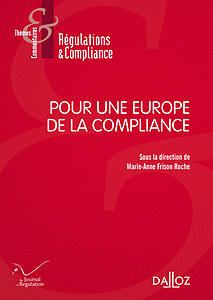
Couverture – Pour une Europe de la Compliance

Publication director

🏗️ copublishing and direction of the collection: 📚Régulations & Compliance

Collection Régulations & Compliance Publication of🕴️M.-A. Frison-Roche (ed.), Collection Régulations & Compliance Pour une Europe de la Compliance (For the Europe of the Compliance), 2019

🌐 follow Marie-Anne Frison-Roche on LinkedIn 🌐 subscribe to the Newsletter MAFR Regulation, Compliance, Law - ► Full Reference: M.-A. Frison-Roche (ed.), Pour une Europe de la Compliance (For the Europe of the Compliance), series “Régulations & Compliance“, Dalloz, 2019, 124 p.  - This volume is the continuation of the books dedicated to Compliance in this collection. ► Read the presentations of the other books in the series: the following books: 🕴️M.-A. Frison-Roche (ed.), Les outils de la Compliance (Compliance Tools), 2021 🕴️M.-A. Frison-Roche (ed.), Les Buts Monumentaux de la Compliance (Compliance Monumental Goals), 2022 🕴️M.-A. Frison-Roche (ed.), La juridictionnalisation de la Compliance (Compliance Jurisdictionalisation), 2023 🕴️M.-A. Frison-Roche and M. Boissavy (eds.), Compliance et droits de la défense. Enquête interne – CJIP – CRPC (Compliance and rights of the defence. Internal investigation – French Judicial Public Interest Agreement – French guilty plea procedure), 2024 🕴️M.-A. Frison-Roche (ed.), L’Obligation de Compliance (Compliance Obligation), 2025 🕴️M.-A. Frison-Roche (ed.), Compliance et Contrat (Compliance and Contract), forthcoming 🕴️L. Laref (ed.), Compliance et vigilance bancaire (Compliance and Banking Vigilance), forthcoming 🕴️M.-A. Frison-Roche, Le système juridique global des noms de domaine. Structure multi-acteurs et durabilité de l’Internet (The Global Legal System of Domain Names. Multi-Stakeholder Structure and Sustainability of the Internet), forthcoming 🕴️M.-A. Frison-Roche (ed.), Le système probatoire de la Compliance, forthcoming   the previous books: 🕴️N. Borga, J.-Cl. Marin and J.-Ch. Roda (eds.), Compliance : l’entreprise, le régulateur et le juge (Compliance: the Company, the Regulator and the Judge), 2018 🕴️M.-A. Frison-Roche (ed.), Régulation, Supervision, Compliance (Regulation, Supervision, Compliance), 2017 🕴️M.-A. Frison-Roche (ed.), Internet, espace d’interrégulation (Internet, Space of Interregulation), 2016 Read the presentations of the other titles of the collection. - ► General presentation of the book: This book is written in French. The topic is : “For the Europe of the Compliance“. See below its general presentation in English.  The political dimension is intrinsic to the Compliance Law. Indeed, compliance mechanisms consist of internalizing in certains companies the obligation to implement goals of general interest set by Public Authorities. These public bodies control the Ex Ante reorganization that implies for these companies and punish Ex Post the possible structural inadequacy of these compagnies, becoming transparent for this purpose.  This new mode of governance establishes a continuum between Regulation, Supervision, Compliance (book published in 2017) and renew the links between Companies, Regulators and Judges1Frison-Roche, M.-A., Compliance, see.  This political dimension must be increased: the Compliance Law of Compliance must today be used to build Europe. One can observe not only the construction of the  European Compliance Law, object-by-object, sector-by-sector, purpose-by-purpose, but also the construction of the European Compliance Law that transcends and unifies them. Becoming independent of American Law and ceasing to be in reaction, even on the defensive, the Compliance Law contributes to the European project, offering it a higher ambition, that Europe can carry and, by this way, can carry the Europe itself, not only to preserve the European economy from corruption or money laundering, but by claiming the protection of nature and human beings. This is why the book describes the “reasons and objectives” of the Europe of the Compliance, which makes it possible to describe, detect and even predict the ways and means. - ► Understand the book through the Table of Contents and the summaries of each article:  🕴️M.-A. Frison-Roche, 📝Avant propos  🕴️K. Lenaerts, 📝Le juge de l’Union européenne dans une Europe de la compliance 🕴️M.-A. Frison-Roche, 📝Un droit substantiel de la compliance, appuyé sur la tradition européenne humaniste   I. LES RAISONS ET LES OBJECTIFS D’UNE EUROPE DE LA COMPLIANCE (THE REASONS AND OBJECTIVES OF THE EUROPE OF THE COMPLIANCE)  🕴️X. Musca, 📝Construire une Europe de la compliance en donnant une meilleure place aux entreprises 🕴️P. Vimont, 📝La place de la diplomatie dans l’avancée d’une Europe de la compliance 🕴️P. Sellal, 📝Les vertus de la compliance : une réponse possible aux faiblesses de l’Union européenne ? 🕴️J.-J. Daigre, 📝Compliance, entreprise et Europe   II. LES VOIES ET MOYENS D’UNE EUROPE DE LA COMPLIANCE  (THE WAYS AND MEANS OF THE EUROPE OF THE COMPLIANCE) 🕴️J.-Cl. Marin, 📝Quels outils pour la construction du droit de la compliance en Europe ? 🕴️M. Canto-Sperber, 📝La compliance et les définitions traditionnelles de la vertu 🕴️T. Bonneau, 📝Compliance et secteur bancaire et financier en Europe 🕴️C. Duchaine, 📝L’Agence française anticorruption, à l’appui de l’Europe de la compliance 🕴️D. Martin, 📝Les contraintes et les vertus de la compliance 🕴️A. de La Cotardière, 📝Construire une Europe de la compliance lisible pour les entreprises -
Couverture – Pour une Europe de la Compliance

Articles in a JoRC book

LENAERTS, Koen🕴️

📝Le juge de l’Union européenne dans une Europe de la Compliance, in 🕴️M.-A. Frison-Roche (ed.), Collection Régulations & Compliance Pour une Europe de la Compliance

► Full Reference : K. Lenaerts, "Le juge de l'Union européenne dans une Europe de la Compliance" ("The Judge of the European Union in the Europe of the Compliance"), in M.-A. Frison-Roche (ed.), Pour une Europe de la Compliance, series "Régulations & Compliance", Dalloz, 2019, pp. 1-12. - read a general presentation of the book, Pour une Europe de la Compliance, in which this article is published - ► Summary of the article (done by the Journal of Regulation & Compliance):  - 🦉This article is available in full text to those registered for Professor Marie-Anne Frison-Roche's courses -
Couverture – Pour une Europe de la Compliance

Articles in a JoRC book

MUSCA, Xavier🕴️

📝Construire une Europe de la compliance en donnant une meilleure place aux entreprises, in 🕴️M.-A. Frison-Roche (ed.), Collection Régulations & Compliance Pour une Europe de la Compliance

► Full Reference: X. Musca, "Construire une Europe de la compliance en donnant une meilleure place aux entreprises" ("Building the Europe of the Compliance by giving companies a greater role to play"), in M.-A. Frison-Roche (ed.), Pour une Europe de la Compliance, series "Régulations & Compliance", Dalloz, 2019, pp. 39-47. - read a general presentation of the book, Pour une Europe de la Compliance, in which this article is published - ► Summary of the article (done by the Journal of Regulation & Compliance):    🦉This article is available in full text to those registered for Professor Marie-Anne Frison-Roche's courses -
Couverture – Pour une Europe de la Compliance

Articles in a JoRC book

VIMONT, Pierre🕴️

📝La place de la diplomatie dans l’avancée d’une Europe de la compliance, in 🕴️M.-A. Frison-Roche (ed.), Collection Régulations & Compliance Pour une Europe de la Compliance

► Full Reference: P. Vimont, "La place de la diplomatie dans l'avancée d'une Europe de la compliance" ("The role of diplomacy in advancing the Europe of the Compliance"), in M.-A. Frison-Roche (ed.), Pour une Europe de la Compliance, series "Régulations & Compliance", Dalloz, 2019, pp. 49-52. - read a general presentation of the book, Pour une Europe de la Compliance, in which this article is published - ► Summary of the article (done by the Journal of Regulation & Compliance):  - 🦉This article is available in full text to those registered for Professor Marie-Anne Frison-Roche's courses -
Couverture – Pour une Europe de la Compliance

Articles in a JoRC book

SELLAL, Pierre🕴️

📝Les vertus de la compliance : une réponse possible aux faiblesses de l’Union européenne ?, in 🕴️M.-A. Frison-Roche (ed.), Collection Régulations & Compliance Pour une Europe de la Compliance

► Full Reference: P. Sellal, "Les vertus de la compliance : une réponse possible aux faiblesses de l'Union européenne ?" ("The virtues of compliance: a possible response to the European Union's weaknesses?"), in M.-A. Frison-Roche (ed.), Pour une Europe de la Compliance, series "Régulations & Compliance", Dalloz, 2019, pp. 53-59. - read a general presentation of the book, Pour une Europe de la Compliance, in which this article is published - ► Summary of the article (done by the Journal of Regulation & Compliance):  - 🦉This article is available in full text to those registered for Professor Marie-Anne Frison-Roche's courses -
Couverture – Pour une Europe de la Compliance

Articles in a JoRC book

DAIGRE, Jean-Jacques🕴️

📝Compliance, entreprise et Europe, in 🕴️M.-A. Frison-Roche (ed.), Collection Régulations & Compliance Pour une Europe de la Compliance

► Référence complète : J.-J. Daigre, "Compliance, entreprise et Europe" ("Compliance, company and Europe"), in M.-A. Frison-Roche (ed.), Pour une Europe de la Compliance, series "Régulations & Compliance", Dalloz, 2019, pp. 61-64. - read a general presentation of the book, Pour une Europe de la Compliance, in which this article is published - ► Summary of the article (done by the Journal of Regulation & Compliance):    🦉This article is available in full text to those registered for Professor Marie-Anne Frison-Roche's courses -
Couverture – Pour une Europe de la Compliance

Articles in a JoRC book

MARIN, Jean-Claude🕴️

📝Quels outils pour la construction du droit de la compliance en Europe ?, in 🕴️M.-A. Frison-Roche (ed.), Collection Régulations & Compliance Pour une Europe de la Compliance

► Full Reference: J.-Cl. Marin, "Quels outils pour la construction du droit de la compliance en Europe ?" ("What tools are needed to build Compliance Law in Europe?"), in M.-A. Frison-Roche (ed.), Pour une Europe de la Compliance, series "Régulations & Compliance", Dalloz, 2019, pp. 67-72. - read a general presentation of the book, Pour une Europe de la Compliance, in which this article is published - ► Summary of the article (done by the Journal of Regulation & Compliance):  - 🦉This article is available in full text to those registered for Professor Marie-Anne Frison-Roche's courses -
Couverture – Pour une Europe de la Compliance

Articles in a JoRC book

CANTO-SPERBER, Monique🕴️

📝La compliance et les définitions traditionnelles de la vertu, in 🕴️M.-A. Frison-Roche (ed.), Collection Régulations & Compliance Pour une Europe de la Compliance

► Full Reference: M. Canto-Sperber, "La compliance et les définitions traditionnelles de la vertu" ("Compliance and traditional definitions of virtue"), in M.-A. Frison-Roche (ed.), Pour une Europe de la Compliance, series "Régulations & Compliance", Dalloz, 2019, pp. 73-77. - read a general presentation of the book, Pour une Europe de la Compliance, in which this article is published - ► Summary of the article (done by the Journal of Regulation & Compliance):  - 🦉This article is available in full text to those registered for Professor Marie-Anne Frison-Roche's courses -