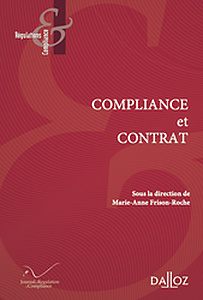
► Full Reference: M. Ubaud-Bergeron, “Les instruments contractuels facilitant l’insertion de l’obligation de compliance” (“Contractual Instruments Facilitating the Insertion of the Compliance Obligation”), in M.-A. Frison-Roche (ed.), Compliance et Contrat (“Compliance and Contract”), Journal of Regulation & Compliance (JoRC) and Lefebvre-Dalloz, “
____
____
► This article is written in French. English summary of this contribution (done by the Journal of Regulation & Compliance – JoRC): Starting from the economists’ criticism that burdening public procurement with social and environmental objectives would be inefficient, the author asks which contractual instruments are the most relevant for inserting the Compliance Obligation into it. She first stresses the profound change in the purposes of public procurement, enshrined by the European directives of 26 February 2014, which place competition on an equal footing with other objectives of general interest.
She then describes the diversity of these instruments: general framework rules, such as procurement planning or the ethics charters of local authorities, and a logic of internalisation of Compliance objectives through exclusion grounds, award criteria and the performance conditions of the contract or concession.
Finally, she assesses their efficacy, which comes up against unavoidable limits and remains weak, while showing that the prevention of conflicts of interest is gradually turning into a broader promotion of transparency. The author concludes that Compliance has spread, without even being named, into the purposes and techniques of public procurement, and that its effects will unfold over the long term.