Resources

Glossary

efficiency

In classical law, efficiency is a quality but it is not the only one and it does not sum up Law. Indeed, if we define effectiveness as the quality of a person or a thing, material or immaterial (such as a law or a judgment, for example) to produce the effect one is looking for, then it is better for the Law to be effective rather than not. Beyond this truism, Law, being a practical art, is particularly sensitive to this quality. But Law is not reduced to that. It expresses values, virtues, symbols, social rules. It institutes human beings as persons. It wants to make these rules effective, but on the one hand it balances this concern with others and, on the other hand, it seeks to express the very nature of what it poses, for example the attribution of prerogatives, of rights for the benefit of a particular person, if necessary in a costly and ineffective manner (eg social rights or procedural guarantees). Regulatory theories, often based on the economic analysis of law, consider law as a "tool", an instrument that must be the most flexible, the simplest and the most secure Possible to achieve a goal that economic theory draws: for example, effectively building competition or preventing banking crises. The concern for the goal becomes the first, it becomes the center: efficiency becomes the center of Law, while the latter becomes teleological. Law is reduced to being an instrument. This instrumental conception, which can be supported but which does not correspond to the classical conception of Law because it breaks its conceptual autonomy, permeates the regulatory law, in particular because it was thought by economists more than by of lawyers. The transformation is particularly strong in matter of repression. The legal system has traditionally constituted criminal law as an autonomous branch. The regulatory repressive rules today tend to be used to increase the effectiveness of the ordinary regulatory rules, whether they are themselves corporate law (governance), civil law or public law. In this, repressive punishment is only intended to render effective a rule which is external to it. This primary concern for efficiency removes the guarantees and increases repression, which is now at the heart of the regulatory systems, which, to be effective, cease to be national, while criminal law is synonymous with the state and the regalian.

Glossary

Compliance

Compliance is a concept born mainly in the United States and it is difficult to translate it, for instance into French, as the term "conformité" is not entirely adequate. Compliance is not only the obligation of certain professionals, such as investment service providers (ISPs) to comply with their professional obligations, nor does it extend to the general obligation to comply to all laws and regulations, this obligation to submit to the Law targeting all persons and characterizing the very power of Law. Compliance is rather the internalization in some companies of specific obligations, resulting from regulatory systems. Thus compliance consists in internalizing the regulatory systems themselves in operators. In order to ensure the effectiveness of this internalization, the companies in question become transparent, the Regulator, or even the criminal judge, who can permanently and in Ex Ante check the proper functioning of the company for the implementation of the rules. The supervision of the company thus allows the effectiveness of the internalization of regulation in the company. The company is then forced, including by criminal law, to use its power to achieve goals that are a priori external to it, such as the fight against money laundering, the fight against international terrorism and even the protection of human rights. The State thus enacts the aims and the enterprise implements them, the State having the legitimacy to do so but being too weak, in particular because it is enclosed within its borders, the enterprise having the power to do so. This implies that compliance refers only to a very specific and legally new category of companies: companies with an international activity and having the power to structure themselves to achieve their goals. Law constructs a companie duty to structure itself in this sense: compliance is inseparable from governance. But these companies thus newly constrained by the consideration by the Law of the globalization do not remain passive. They are actively involved in the normative creation of compliance and, in particular, through ethical charters and codes of conduct, demand the issuance of standards of behavior for all persons who depend on them, both internally and externally, A new culture of compliance, in which respect for meaning is essential and goes beyond the technical differences between legal systems. The emergence of a Global Law can take this path.  

Glossary

Public Service

The State's traditional view is that it serves the general interest through its public services, either directly (by its administrations, or even by public enterprises), or by delegation (eg through the concession mechanism). Public service is generally defined in a functional way, ie through public service missions that the organization must perform, such as providing public transport or caring for the population whatever (Eg in France by the public firm the SNCF). The liberalization of those public sectors, the primary reference to the market as a means of achieving the general interest, the primary reference to competition and the play of the European Law has destroyed this intimacy between public service, general interest, public enterprise and State. Today, in a dialectical game, the Regulation keeps this concern for public service missions in balance with the competition, in a competitive context and under the control of a Regulator. The system is more complex and challenging because it creates new difficulties, such as information asymmetry or less easy integration of long-term planning, but it is better suited to an open and globalized economy.

Glossary

Office of Communications (Ofcom)

The Office of Communications (Ofcom) is the UK's communications regulator. This independent regulator is competent both for television, radio and television services, but also for the post office. In addition, there are very diverse missions, such as not only the allocation of licenses but also data protection or public policies of diversity and equality. We can consider that these are the broadest competences that can be conferred on a regulator with regard to "communication" activities1On the website : "We regulate the TV, radio and video on demand sectors, fixed line telecoms, mobiles, postal services, plus the airwaves over which wireless devices operate.".

Glossary

Federal Communications Commission (FCC)

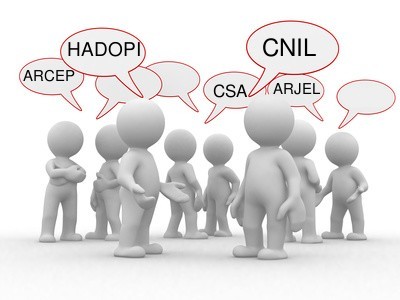
The Federal Communications Commission (FCC) is the independent regulatory authority in the United States that regulates at the federal level both the container and the content of telecommunications. In this, the United States differs from the European Union, a legal space in which most often the regulatory institutions of the container and the content are distinct (for example in France ARCEP / CSA / CNIL) and in which the regulations of communications remain substantially at the level of the Member States of the Union. Like other audiovisual regulators, it ensures pluralism of information by limiting the concentration of capital – and therefore of power – in the television and radio sector. We can thus see that the American system is not in principle different from the European system. In addition, the FCC is characterized first of all by a very great power, imposing at the same time substantial principles on the operators, like that of the "decency", going in the name of this principle until sanctioning television channels which had let show a bare breast of a woman. The control is therefore more substantial than in Europe, this control weighing against the constitutional freedom of expression which is more powerful in the United States than in Europe. It is true that today the leading digital companies tend to formulate for us what is beautiful, good and decent, in place of public authorities. The FCC continued to develop the major principles of the public communication system, as in 2015 that of the Open Internet (Open Internet) or to formulate the principle of "digital neutrality", adopted by a federal law, this principle having considerable economic and political implications. But at the same time, a general mark of American law, the judge moderates this power, according to the principle of Check and Balance. Thus the Supreme Court of the United States in FCC v. Pacifica Foundation in 1978 this power of direct control of the content but also operates the control of the control. The election in 2016 of a new president who is, among other things, totally hostile to the very idea of ​​Regulation is a test in the probative sense of the term. In January 2017, he appointed a new president of the FCC, hostile to any regulation and in particular to the principle of neutrality. The question which arises is to know if technically a regulation already established on these principles can resist, how and for how long, a political will violently and expressly contrary. And what will the judges do.

Glossary

Market Abuse

In principle, the very mechanism of the market is governed by freedom, the freedoms of the agents themselves – the freedom to undertake and contract – and the competitive freedom that marks the market itself, the convergence of these freedoms allowing the self-regulated functioning of The "market law", namely the massive encounter of offers and demands that generates the right price ("fair price"). For this to work, it is necessary but it is enough that there is no barrier to entry the market and there is no behavior by which operators can hinder this competitive market law, by abuse of dominant position and cartel.   But in the case of financial markets, which are regulated markets, "market abuses" are sanctioned at the very heart of regulation. Indeed, the regulation of the financial markets presupposes that the information is distributed there for the benefit of investors, or even other stakeholders, possibly information not exclusively financial. This integrity of the financial markets which, beyond the integrity of information, must achieve transparency, justifies that information is fully and equally shared. That is why those who hold or must hold information that is not shared by others (privileged information) must not use it in the market until they have made it public. Similarly, they should not send bad information to the market. Neither should they manipulate stock market prices. These sanctions were essentially conceived by the American financial theory, concretized by the American courts, then taken back in Europe. To the extent that they sanction both reproachable behavior and constitute a public policy instrument of direction and protection of markets, the question of cumulation of criminal law and administrative repressive law can only be posed with difficulty in Europe.  

Glossary

Independent Public Authority

Formally, the legal system had constructed the regulatory authorities in the form of Independent Administrative Authorities (AAI). The stake being to build their independence in an institutional and consubstantial way, the Legislator conferred a new status: that of Independent Public Authority (API). Thus, the Autorité des Marchés Financiers (AMF), the Commission Nationale Informatique et Libertés (CNIL), the Haute Autorité de Santé (HAS) or HADOPI are classified among APIs and not only among IAAs. We must therefore see two distinct legal categories, AAI on the one hand and APIs on the other. Thus the two laws of January 20, 2017 relate, to better supervise them, both on AAIs and on APIs, but reading the preparatory work shows that the two categories show that they are treated in a fairly common way. Even more if one consults the sites of certain regulatory authorities themselves, such as HADOPI, for example, it presents itself as an "Independent Public Authority" but defines this legal category as being that which targets the Authorities. Independent Administrative ….. It thus appears that the category of Independent Public Authorities is above all marked by the symbol of a greater dignity than that of the category of "simply" Administrative Independent Authorities. From a technical point of view, the two categories are essentially distinguished from a budgetary point of view, financial autonomy being the nerve of independence. This is how the AMF's budget is based on the size of market operations, through tax mechanisms that are not included in the LOLF. Independence does not extend to autonomy, the API does not negotiate its budget with Parliament, since an Independent Public Authority is not a Constitutional Authority.

Glossary

Independant Administrative Authority (IAA)

The Independent Administrative Authority (IAA) is the legal form that the legislator has most often chosen to build regulatory authorities. The IAA is only its legal form, but French law has attached great importance to it, following the often formalistic tradition of public law. They are thus independent administrative authorities, especially in the legal systems of continental law like France, Germany or Italy. The essential element is in the last adjective: the "independent" character of the organism. This means that this organ, which is only administrative so has a vocation to be placed in the executive hierarchy, does not obey the Government. In this, regulators have often been presented as free electrons, which posed the problem of their legitimacy, since they could no longer draw upstream in the legitimacy of the Government. This independence also poses the difficulty of their responsibility, the responsibility of the State for their actions, and the accountability of their use of their powers. Moreover, the independence of regulators is sometimes questioned if it is the government that retains the power to appoint the leaders of the regulatory authority. Finally, the budgetary autonomy of the regulator is crucial to ensure its independence, although the authorities having the privilege of benefiting from a budget – which is not included in the LOLF – are very few in number. They are no longer referred to as "independent administrative authorities" but as "Independent Public Authorities", the legislator making a distinction between the two (French Law of 20 January 2017). The second point concerns the second adjective: that it is an "administrative" body. This corresponds to the traditional idea that regulation is the mechanism by which the State intervenes in the economy, in the image of a kind of deconcentration of ministries, in the Scandinavian model of the agency. If we allow ourselves to be enclosed in this vocabulary, we conclude that this administrative body makes an administrative decision which is the subject of an appeal before a judge. Thus, in the first place, this would be a first instance appeal and not a judgment since the administrative authority is not a court. Secondly, the natural judge of the appeal should be the administrative judge since it is an administrative decision issued by an administrative authority. But in France the Ordinance of 1 December 1986 sur la concurrence et la libéralisation des prix (on competition and price liberalization), because it intended precisely to break the idea of ​​an administered economy in order to impose price freedom on the idea of ​​economic liberalism, required that attacks against the decisions of economic regulators taking the form of IAA are brought before the Court of Appeal of Paris, judicial jurisdiction. Some great authors were even able to conclude that the Paris Court of Appeal had become an administrative court. But today the procedural system has become extremely complex, because according to the IAA and according to the different kinds of decisions adopted, they are subject to an appeal either to the Court of Appeal of Paris or to the Conseil d'État (Council of State) . If one observes the successive laws that modify the system, one finds that after this great position of principle of 1986, the administrative judge gradually takes again its place in the system, in particular in the financial regulation. Is it logical to conclude that we are returning to a spirit of regulation defined as an administrative police and an economy administered by the State? Finally, the third term is the name itself: "authority". It means in the first place an entity whose power holds before in its "authority". But it marks that it is not a jurisdiction, that it takes unilateral decisions. It was without counting the European Court of Human Rights (ECHR) and the judicial judge! Indeed, Article 6§1 of the European Convention on Human Rights states that everyone has the right to an impartial tribunal in civil and criminal matters. The notion of "criminal matter" does not coincide with the formal traditional concept of criminal law but refers to the broad and concrete factual concept of repression. Thus, by a reasoning which goes backwards, an organization, whatever the qualification that a State has formally conferred on it, which has an activity of repression, acts "in criminal matters". From this alone, in the European sense, it is a "tribunal". This automatically triggers a series of fundamental procedural guarantees for the benefit of the person who is likely to be the subject of a decision on his part. In France, a series of jurisprudence, both of the Cour de cassation (Court of Cassation), the Conseil d'État (Council of State) or the Conseil constitutionnel (Constitutional Council) has confirmed this juridictionnalization of the AAI.

Glossary

Economic Analysis of Law

Regulation Law presupposes moving from a political conception of acts (that is to say, a collective decision expressed by the State) or a civilist one (that is, a will expressed by one or several individuals in one Contract) to an economic vision of  organizations whose action is the expression of the market. If one relies on the adjustment of supply and demand, that is to say, the meeting of desires and interests, there will be "self-regulation", which is the "law of the Market ", referring to Competition Law. The act of the operators is only a reflection of this sort of natural law, in action. Regulation is then more complex because it integrates this economic rationality of the actors and systems in which the first onese are agents (homo economicus), but Regulation aims at something other than this mechanical rationality, either because of a market failure (for example in case of natural monopoly) or because the author of the standard, eg the State or the Regulator wants to obtain more than the market can give (eg access to common goods such as health) , even for insolvent claimants). In this case, special written norms are drawn up, ex ante interventions designated in English by the term of "regulations" (and in French by the term of "réglementation"). The Regulation Law, the regulatory system, is adequate if it constitutes an incitation for economic agents to adopt behaviors that concretize the aim sought by the author of the regulatory mechanisms. The Regulation Law will then rely on economic science to produce the right "incentives", leaving agents – producers, supplyers, claimants, consumers, taxpayers, the most diverse stakeholders – free to make choices, but inciting them to make choices that will produce in isolation or in a comprehensive or cross-breeding way, immediately or in the long term, a result corresponding to that which was intended from the outset by the person who designed the standard. In this respect, the Law of Regulation is highly strategic, whether of a technical nature, aimed at mitigating a market failure or more political. In this, it is also of a liberal nature, since it is not orders formulated to obedient people, but spaces of freedoms constructed for the benefit of persons. This strategic use of Law then requires the necessary detour through the economic analysis of Law, that is to say the analysis of Law in its economic effects. It presupposes, among those who use the norm, not only the Legislator but also the Judge, a knowledge of the economic mechanisms, for example the theory of incentives, incomplete contracts or behavioral economics, three liberal theories on which are based the interventions Ex Ante of the public authorities and which the judgments of the Courts extend. That is why the Economic Analysis of Law is a fully discipline. It was created in the United States by Ronald Coase (Nobel Prize for Economics in 1991). It may be merely descriptive and reveal what economic effects the Law has produced. This conception, in particular that of Richard Posner, makes the economic analysis of the law an instrument of expertise for the political decision-maker who can take it into account in order to modify the norms, and for the judge, who can take it into account for Interpreting them. A more radical conception of the so-called normative economic analysis of law is to argue that the conclusions of the analysis would oblige the decision-maker and the judge to adopt the "efficient" interpretation designated by the economic analysis without being legitimate for adopting others. Philosophical in nature, this issue is decisive because in the first case the law and the jurists – in particular the Legislator and the Judge – still have an autonomous existence, in the second case they no longer exist really, are only the formal and explicit binding of the "law of the market" whose nature is non-legal. Law then is a way of execution, a pure and simple effectiveness of a another essential Law that is external to it, that of the "Law of Market, which is the adjustment of the offer and the demand. Common law systems tend to fall into the normative excess of confusing what is merely a description of choice and to adopt what would be a "decision" taken by the economists themselves: Law then, as a normative system, is only  what gives the enforceability and legal certainty of what becomes truly normative, e.g. the economic value of the adjustment of supply and demand. Civil Law systems integrate the Economic Analysis of Law in a manner more in keeping with the thinking of founders or current theorists such as Cass. Sunstein, allowing Legislators and Courts to integrate the economic dimension of situations without their economic reasoning implying the solution to be retained, as choices remain in Law, expressing values, and in legal systems being governed by their own legal notions and rules, at a distance from the Economy. Even in its descriptive form, the economic analysis of the law is generally rejected in France as it disregards the role of the law in that it carries moral values. It is in reality to ignore its  merely descriptive, instructive and useful function, and the fact that it opens instead the amplitude of the rational choice offered to political decision-makers and courts. Moreover, regulation is not only a technical discipline, it is also a political and philosophical issue. Descriptive economic analysis is more appropriate than the normative economic analysis of the law, which claims to vassalize and even destroy the other disciplines, which are substantially ignored.  

Glossary

Asymmetry: asymmetric regulation / asymmetry of information

Asymmetry is a key concept of regulation. Indeed, a competitive market works well when operators are in symmetrical relationships, ie there is no structural obstacle which prevents an agent from increasing his power solely on his merits (" competition by merits "). If there is an asymmetry, for example because a sector is monopolistic and the legislator has just declared it open to competition, there is a temporary asymmetry between the installed companies, the incumbent operators and the willing companies to enter this new market, the "new entrants". Historical operators, such as in the telecommunications or energy sector, when they were opened to competition by European directives, transposed by national laws (in french Law in 1996 for telecommunications and gas, in 2000 for electricity), benefit (sometimes referred to as grandfather clause), in particular because they have all the clients or all the know-how or all the patents, and that, in fact, the competitors can not enter the market. It is then necessary to establish a regulator also a priori temporary itself  to establish to forceps the competition, by an asymmetrical regulation.   Asymmetric regulation, particularly applied in Great Britain at the time of the liberalization of the aforementioned sectors, means that the regulator will systematically favor new entrants, for example by dispossessing the incumbents for their benefit to make them on the market. Today, in the telecommunications sector, competition, notably on mobiles, is established, but the regulator does not intend to leave its place to disappear and today supports "symmetric regulation" …. Instead, it acts as a specialized competition authority.   Asymmetry may not be temporary but definitive, when inequality between operators, regardless of merit, does not come from a context of liberalization but from a structural failure of the market. For example, there are transport networks, transport of passengers or goods, railways or airstrip for airplanes, data or voice communication networks, pipes where gas or electricity circulate, etc., which belong to a single operator because they constitute economically natural monopolies. Under these conditions, the competitors of the monopoly must nevertheless have fair and effective access to this service and a regulator must necessarily be established for the effectiveness of that right (see Access).   Moreover, the Nobel Prize of Joseph Stiglitz (2001) was justified by his work on the asymmetry of information on certain markets, in particular the financial markets on which companies offer securities. Through the theory of the agency, it appears that the ordinary partners or ordinary investors have less information than the managers, even though the latter have the function of making decisions that bring the most to the former. But information asymmetry offers managers an "information rent" that allows them to offer many benefits and transfer risks to others. Regulators, in particular banking and financial regulators, are needed to combat information asymmetry. Transparency is one of the procedural means to combat this asymmetry. The financial and banking crisis of 2008 showed the extent of this asymmetry and, in fact, the inability of regulators to remedy it, for example, the British government estimated in 2010 that it was the financial regulator itself that was responsible for the crisis for not having sufficiently watched over conflicts of interest. In general, the global financial crisis was often later characterized as a crisis of regulators and regulation.    

Books

Droit bancaire

Articles

MARECHAL, Anne and LEGRIS, Bertrand

La composition administrative de l’AMF: un premier bilan très positif (The Administrative composition of AMF: a very positive first appraisal)

Full reference: Marechal, A. and Legris, B., La composition administrative de l'AMF: un premier bilan très positif  (The Administrative composition of AMF: a very positive first appraisal), Bulletin Joly Bourse, December 2016, pp. 539-542 Read the article (in French)