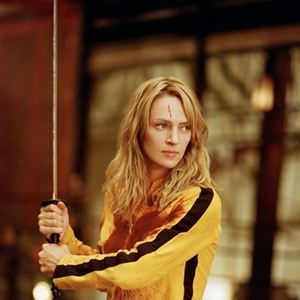
- Définition donnée par l'interdiction d'en posséder émise en 1974 par l'Etat de New-York : " “‘Chuka stick’ means any device designed primarily as a weapon, consisting of two or more lengths of a rigid material joined together by a thong, rope or chain in such a manner as to allow free movement of a portion of the device while held in the hand and capable of being rotated in such a manner as to inflict serious injury upon a person by striking or choking. These devices are also known as nunchakus and centrifugal force sticks.” N.Y. Penal Law § 265.00(14). The Court shall refer to chuka sticks and nunchakus interchangeably.".
- "The Court explained that, with respect to the threshold issue of whether the possession of nunchaku falls outside the scope of the Second Amendment, Defendant cannot meet her burden simply by demonstrating that nunchakus are not “in common use,” but that Defendant must show, at a minimum, that nunchakus are “not typically possessed by law-abiding citizens for lawful purposes.”
- Moreover, Defendant presents no national data on the unlawful use of nunchaku.21 Given Defendant’s concession that the nunchaku is primarily a tool of martial arts, pointing to these isolated incidents falls far short of Defendant’s burden of establishing that the nunchaku’s typical use is an unlawful one. (Dkt. 213, at 2 (Defendant stating that, “[t]here is no question that nunchaku are martial arts weapons”).)22 Moreover, unlike a sawed-off shotgun, gun without a serial number, or pipe bomb—weapons that courts have found to be outside the ambit of Second Amendment protection—nunchaku have no special propensity for unlawful use. Fyock v. Sunnyvale, 779 F.3d 991, 997 (9th Cir. 2015). In fact, its intended use as a weapon for recreational martial arts practice and training appears to greatly outstrip its use in crime.