All news

Logo-partage-JoRC-Paris1-IRJS

Conferences

🎤Synthèse (Synthesis), in 🧮Compliance et Droit commun des contrats (Compliance and General Contract Law)

► Full reference: M.-A. Frison-Roche, “Synthèse” (Synthesis), in Journal of Regulation & Compliance (JoRC) and Université Paris 1 Panthéon-Sorbonne, Institut de recherche juridique de la Sorbonne (IRJS), Compliance et Droit commun des contrats (Compliance and General Contract Law), Paris, 7 October 2026. see on Instagram the carousel devoted to the conference (in French) - 🧮read the full programme of the event 🏗️This colloquium is part of the 2026 cycle of colloquia Compliance and Contract. - 🎤See the presentation of the other intervention made in this colloquium: Autonomie de la volonté, engagements et Compliance (Autonomy of will, commitments and Compliance). - 📝See also the newsletter devoted to this colloquium: Compliance et Droit commun des Contrats : mariage difficile, mariage prometteur (Compliance and General Contract Law: a difficult marriage, a promising marriage, in French). - ► Presentation of this conference: The synthesis closes the colloquium Compliance et Droit commun des contrats (Compliance and General Contract Law), organised by the Journal of Regulation & Compliance (JoRC) and the Institut de recherche juridique de la Sorbonne (IRJS) of Université Paris 1 Panthéon-Sorbonne, under the scientific responsibility of Julia Heinich, Nicolas Bargue and Marie-Anne Frison-Roche. It draws together the contributions of the morning: the autonomy of will as the source of the contractual Compliance Obligation, the regulatory contracts generated by compliance (Jean-Baptiste Barbieri), the position of third parties to contracts with a compliance dimension (Philippe Stoffel-Munck) and the scope of contracts expressing the compliance imperative (Laurent Aynès), in order to bring out what general contract law brings to Compliance Law and what the latter asks of it in return.

Publication director

🏗️ direction of the collection: 📚Cours Dalloz – Série Droit privé

📚Publication of : 🕴️Édouard VERNY, 📕Procédure pénale (Criminal Procedure), 10th ed.

► Full Reference : É. Verny, Procédure pénale (Criminal Procedure), 1st ed. 2005 – 10th ed., 2026, Dalloz, “Cours Dalloz-Série Droit privé” Series, 506 p. - ► General presentation of the book (written in French) : This textbook, up to date with the latest texts, is intended for all law students and all practitioners updating their knowledge. It is built in three parts. The first part sets out the framework of the criminal trial, that is to say the principles and bodies of the criminal trial on the one hand, and the actions arising from the offence on the other. Then, following a chronological approach, the second part describes what happens before the public prosecution is set in motion, before the third part describes what happens from that moment onwards. The second part therefore examines judicial police investigations, the decision to take no further action and the alternatives to prosecution, while the third part deals with referral to the judge, the pre-trial investigation, the hearing and the judgment. - 📚See the entire collection in which the book is published. - 📚Books in the collection directly related to this one : 📕Droit pénal général (General Criminal Law) 📕Droit pénal spécial (Special Criminal Law) 📕Droit pénal des affaires (Business Criminal Law) -
Logo-partage-JoRC-Paris1-IRJS

Conferences

🎤Autonomie de la volonté, engagements et Compliance (Autonomy of will, commitments and Compliance), in 🧮Compliance et Droit commun des contrats (Compliance and General Contract Law)

► Full reference: M.-A. Frison-Roche, “Autonomie de la volonté, engagements et Compliance” (Autonomy of will, commitments and Compliance), in Journal of Regulation & Compliance (JoRC) and Université Paris 1 Panthéon-Sorbonne, Institut de recherche juridique de la Sorbonne (IRJS), Compliance et Droit commun des contrats (Compliance and General Contract Law), Paris, 7 October 2026. see on Instagram the carousel devoted to the conference (in French) see on Instagram the image announcing this lecture (in French) see on Instagram the carousel devoted to this lecture (in French) - 🧮read the full programme of the event 🏗️This colloquium is part of the 2026 cycle of colloquia Compliance and Contract. - 🖥️read the slides supporting this conference (in French) - 🎤See the presentation of the other intervention made in this colloquium: Synthèse (Synthesis). - 📝This conference will give rise to an article, “Autonomie de la volonté, engagements et Compliance”, to be published in the book 📕Compliance et Contrat (Compliance and Contract), in the series 📚Régulations & Compliance, co-published by the Journal of Regulation & Compliance (JoRC) and Lefebvre-Dalloz. - ► Presentation of this conference: Contract law, in its common rules expressed by the “general theory of contracts”, seems at first sight to be given little consideration when it comes to Compliance. Yet the “commitments” that punctuate the techniques and behaviours making up the “compliance culture” hold a central place in Compliance Law, without their place, let alone their equivalence with Contract, being settled. If one stops perceiving Compliance Law only through the prism of repression, the compliance obligation can be thought of as also having contract as a legitimate source, a contract whose source, in general law, is the autonomy of will and all its consequences. It is on the basis of this founding principle that this conference opens the colloquium. At the heart of Contract Law as of Compliance Law lies the will. But whose will? If the will of the Legislator shapes the obligation that companies implement, and if the Monumental Goals stem from the will of the Political power, companies would enter into them only as executors, and the contract would merely be a path taken by the law to apply more effectively: an arranged marriage. The conference proposes to link the compliance contract, or the compliance clause, not to the external will of a Legislator, but to the primary source of the contract: the autonomous wills of the contracting parties who exchange their consents, thus restoring to the autonomy of will its place as the source of the contractual Compliance Obligation. It first measures the concrete stake of designating this source, distinguishing three conceptions: the contract as the mouthpiece of the regulator, the contracting parties as the regulator’s “good soldiers”, and autonomous and convergent wills, which choose the ways and means of taking their part in the legal ambitions — Compliance chosen rather than Compliance endured. It then proposes to put an end to the current confusion between the force of regulation, the binding force of wills and the impetus of commitments, and finally to occupy the contractual sphere freely in order to develop a contractual Compliance system specific to each company.
Logo-partage-JoRC-Paris1-IRJS

Organisation of events

🏗️Cycle of colloquia 2026: Compliance and Contract

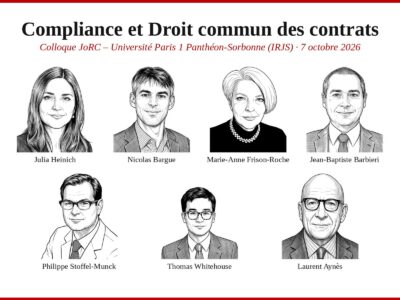
🧮 Compliance et Droit commun des contrats (Compliance and General Contract Law), in 🏗️Compliance and Contract

► Full reference: Journal of Regulation & Compliance (JoRC) and Université Paris 1 Panthéon-Sorbonne, Institut de recherche juridique de la Sorbonne (IRJS) (Sorbonne Legal Research Institute), Compliance et Droit commun des contrats (Compliance and General Contract Law), 7 October 2026. see on Instagram the carousel devoted to the conference (in French) see on Instagram the programme of the conference (in French) - 🏗️ This symposium is part of the series of symposiums organised by the Journal of Regulation & Compliance (JoRC) and its partner universities, focusing in 2026 on the general theme of Compliance and Contract. - The symposium is under the scientific responsibility of 🕴️Nicolas Bargue, Senior Lecturer (maître de conférences) at the Sorbonne Law School (Université Paris 1 Panthéon-Sorbonne), co-director of the Contract, Civil Liability and Insurance Department of the IRJS, 🕴️Marie-Anne Frison-Roche, Professor of Law (agrégée des Facultés de Droit), Director of the Journal of Regulation & Compliance (JoRC) and of the European School of Regulation and Compliance (EeRC), and 🕴️Julia Heinich, Professor at the Sorbonne Law School (Université Paris 1 Panthéon-Sorbonne). - Registration with the IRJS: Registration for the symposium « Compliance et droit commun des contrats » of 7 October 2026 | Labo – IRJS - 🧮The symposium, organised by the Journal of Regulation & Compliance (JoRC) and the Institut de recherche juridique de la Sorbonne (IRJS), will take place on Wednesday 7 October 2026, from 9:15 am to 1 pm, at Université Paris 1 Panthéon-Sorbonne, Room 6 of the Centre Panthéon, 12 place du Panthéon, 75005 Paris. It will be held in French. - Presentation of the topic: While Contract Law, in its common rules expressed by the “general theory of contracts”, is often considered to be the most developed branch of Law in practice and the most studied at university, at first glance it seems to be given little consideration when it comes to Compliance. The relationship between the contract and the documents, standards and ethical acts so numerous in Compliance techniques, to which is added the soft law produced by courts, regulators, supervisors and companies themselves, is an open question. Thus the “commitments” that punctuate the techniques and behaviours making up the “compliance culture” have a central place in Compliance Law; but their place, if not their equivalence with the Contract, is not established. To gain a firmer footing in the analysis of the practices of companies that insert compliance clauses into multiple contracts, to observe that Compliance can be the very subject of a specific contract — the “compliance contract” —, or even to assist in the conception that judges develop of their office when they hear contractual litigation involving Compliance, we must return to general Contract Law. If we stop viewing Compliance Law solely through the prism of repression, the Contract does not have the same place: the compliance obligation can be conceived as also having the contract as a legitimate source, a contract which, under general law, has its source in the autonomy of the will and all its consequences — contractual freedom, binding force, effect on third parties. This is the subject of this symposium which, following the classic diptych of formation and performance, takes up the contractual thread from the founding principles of autonomy and freedoms, binding force and its relativity, the meeting of wills, groups of contracts and regulatory contracts often drawn up to implement compliance policies. Specific performance and contractual liability under general law are themselves coloured in a singular way when a compliance concern has been inserted into the contract. - The proceedings of this symposium will form the basis of a specific chapter in the following publications: 📕Compliance et Contrat, forthcoming in the series 📚Régulations & Compliance, co-published by the Journal of Regulation & Compliance (JoRC) and Lefebvre-Dalloz. 📘Compliance and Contract, forthcoming in the 📚Compliance & Regulation Series, co-published by the Journal of Regulation & Compliance (JoRC) and Lefebvre-Bruylant. 🔻 See the programme below
Publication director

🏗️ direction of the collection: 📚Cours Dalloz – Série Droit privé

📚Publication of : 🕴️Claude BRENNER, 📕Procédures civiles d’exécution (Civil Enforcement Procedures), 13th ed.

► Full Reference : Cl. Brenner, Procédures civiles d’exécution (Civil Enforcement Procedures), 1st ed. 1998 – 13th ed., 2026, Dalloz, “Cours Dalloz-Série Droit privé” Series, 295 p. - ► General presentation of the book (written in French) : In the 13th edition of this textbook, up to date with the reform of the law of security interests, Claude Brenner sets out the rules on civil enforcement procedures as a complement to the Law of Obligations, since they make effective the binding force of contracts and the liability of persons. Up to date with all the successive reforms, this textbook makes it possible to understand the subject as a whole, in its common rules and in the specific procedures that have developed within it. The book is built in two titles, the first dealing with enforcement procedures, the second with distribution procedures. - 📚See the entire collection in which the book is published. - 📚Books in the collection directly related to this one : 🕴️N. Cayrol, 📕Procédure civile (Civil Procedure) 🕴️J.-B. Seube, 📕Droit des sûretés (Law of Security Interests) -
Des étudiants perplexes autour d’une table, deux ouvrages rouges posés devant eux, la chatte Nobelle au premier plan

Videos

Series of drawn videos on Compliance Law — Compliance in Motion

🎭The Mystery of the Monumental Goals

▶ click on the image to watch the episode on YouTube - ► Full reference: M.-A. Frison-Roche, “The Mystery of the Monumental Goals”, in series of drawn videos Compliance in Motion, episode 2, 2 October 2026 - ► Summary of this episode of Compliance in Motion: Students sit around a table; on the table, two books. Three words are given to them — Compliance Monumental Goals — and nobody really sees what that means. The Compliance Ogre, of course, is certain: “Me, me, me! I know what the Monumental Goals are!” And yet, it is no riddle. A Monumental Goal is an edifice: protecting the climate, stopping corruption, respecting others. Compliance Law does not merely forbid, it aims; and because the goal is monumental, no one builds it alone — the judge, the lawyer, the company, the teacher, each brings a stone. That is where Compliance Law draws its normativity, and that is what separates it from mere conformity. They are not decreed. They are built. At the end, the Ogre: “Yes, yes, yes — I said so!” He had not said so. Less than a minute, not a word spoken. One episode every two weeks, in French and in English. - 🌐 watch this episode of the series on YouTube: Compliance in Motion watch this episode of the series on Instagram: Compliance in Motion 🎬 watch this episode of the series below Compliance in Motion ⬇️ - Compliance in Motion, by mafr the series of drawn videos devoted to Compliance Law ComplianceTech®
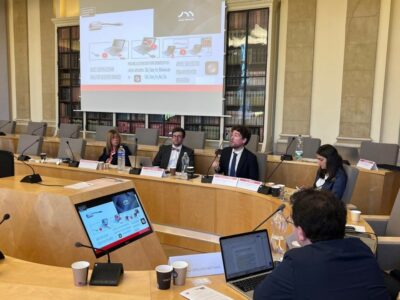
Séance du colloque « La contractualisation de la Compliance : clause après clause », Université Jean Moulin Lyon 3, 25 septembre 2026

Articles

Article in a MAFR newsletter

📝From Clause to Clause: the Emergence of a Contractual Compliance System

► Full reference: M.-A. Frison-Roche, “From Clause to Clause: the Emergence of a Contractual Compliance System”, Newsletter MaFR Law, Compliance, Regulation, 30 September 2026 (linkedin.com/pulse/from-clause-emergence-contractual-compliance-system-marie-anne-v52ie/) - 🌐 read the article published on LinkedIn - 📧 read other issues of the Newsletter MAFR – Law, Compliance, Regulation by free subscription - 🧮 read the presentation of the colloquium “La contractualisation de la Compliance : clause après clause” (Lyon, 25 September 2026) - 🏗️ read the presentation of the 2026 cycle of colloquia Compliance and Contract - 📕 read the presentation of the book Compliance et Contrat - 🇫🇷 read the French version of this newsletter - 📝 ⤵ read the article below ⤵
Logo-partage-JoRC-Lyon3-CPC2

Organisation of events

🏗️2026 conferences series: "Compliance & Contracts"

🧮 La contractualisation de la compliance : clause après clause (Compliance contractualisation: clause by clause)

► Full reference: Journal of Regulation & Compliance (JoRC) and University Jean Moulin – Lyon 3, Centre de recherche Louis Josserand : La contractualisation de la compliance : clause après clause (Compliance and Contracts: clause by clause), 25 September 2026 see on Instagram the « Synthèse » carousel devoted to the conference (in French) 📧 read the newsletter “From Clause to Clause: the Emergence of a Contractual Compliance System”, reporting on the symposium (30 September 2026) - 🏗️ This symposium is part of the series of symposiums organised by the Journal of Regulation & Compliance (JoRC) and its partner universities, focusing in 2023 on the general theme of Compliance and Contracts. - The symposium is under the scientific responsibility of Marie-Anne Frison-Roche and Jean-Christophe Roda. Il will be held in French. - To register: 🧮The event will take place at the University of Jean Moulin – Lyon 3. - Presentation of the topic:  There are numerous compliance clauses. Surprisingly little research has been done on them, which hinders the development of this practice. However, the Compliance Obligation that is so often emphasised in relation to civil liability no doubt because Compliance Law is excessively associated with sanctions, can just as easily originate from contracts and multiple clauses, since this is another way of being bound, without it being anything more than a means for the persons thus bound to fulfil their regulatory obligation. It is therefore practice that has developed compliance clauses, the very existence of which is the subject of this symposium. By highlighting these provisions, their originality can be revealed, as well as the uniqueness conferred on them by Compliance Law and the diversity that may be required depending on criteria related to the purpose of the clauses, but also to the sector of activity or the identity of the contracting parties themselves. From this already established practice, it is certainly the Judge who will determine its uniqueness and specificity. This case law is in its infancy because this practice is the result of compliance requirements arising from an emerging branch of Law, which is still under development. Furthermore, the clauses examined here are not conceived from scratch, but are often adaptations of clauses familiar to lawyers, and as such may be reproduced, regulated, or even restricted or prohibited by rules that fall not only under general Contract Law, but also, clause by clause under Competition Law, Distribution Law, Consumer Law, Judicial and Procedural Law, or Private International law. The logic of Compliance Law, when it takes contractual form, does not always prevail and, in the same way that Compliance Law as a branch of Law is linked to other branches, compliance clauses, if they are to multiply and become more sophisticated, must be subject to this link. x - The proceedings of this symposium will form the basis of a specific chapter in the following publications: 📕Compliance et Contrat, to be published in French in the collection 📚Regulations & Compliance, co-published by the Journal of Regulation & Compliance (JoRC) and Lefebvre-Dalloz. 📘Compliance and Contract, to be published in English in the 📚Compliance & Regulation Serie, co-published by the Journal of Regulation & Compliance (JoRC) and Bruylant (Larcier-Intersentia).   🔻 Read the schedule for the event below ⤵️  
Marie-Anne Frison-Roche au colloque « Clause après clause », Université Jean Moulin Lyon 3, 25 septembre 2026

Conferences

🎤La clause d’audit corrélée à l’Obligation de Compliance (The Audit Clause Correlated with the Compliance Obligation), in 🧮La contractualisation de la Compliance : clause après clause (The Contractualisation of Compliance: Clause by Clause)

► Full reference: M.-A. Frison-Roche, « La clause d’audit corrélée à l’Obligation de Compliance » (The Audit Clause Correlated with the Compliance Obligation), in Journal of Regulation & Compliance (JoRC) and Université Jean Moulin Lyon 3, Centre de recherches Louis Josserand, La contractualisation de la Compliance : clause après clause (The Contractualisation of Compliance: Clause by Clause), Lyon, 25 September 2026. - 🧮view the full programme of the event 🏗️This colloquium is part of the 2026 cycle of colloquia Compliance and Contract. - 🚧This conference is based on a bilingual Working Paper: The Audit Clause, Carousel of the Contractualisation of Compliance. - 🖥️consult the slides supporting this lecture (these slides are in English; the slides projected during the lecture were the original French slides) - 🎤See the presentation of the other lecture given in this colloquium: Unicity and Diversity of Compliance Clauses. - 📘This conference will give rise to an article, “The Audit Clause Correlated with the Compliance Obligation”, to be published in the book 📘Compliance and Contract, in the 📚Compliance & Regulation series, co-published by the Journal of Regulation & Compliance (JoRC) and Bruylant. - ► Presentation of the conference: The audit clause is the most frequently cited and most common Compliance clause: it outsources internal control techniques onto a third party. A distinction must be drawn between the audit clause securing one’s own interests, the audit clause ensuring one’s own conformity and the audit clause carrying out a Compliance project. The audit clause then appears as the “necessary accessory” to the conformity and Compliance clause. It is the “objective reflection” of the legal Compliance Obligation, which requires “detecting” in order to act, and its “subjective reflection”, since the regulated party is in charge of those who, notably in value chains, are “concerned third parties”. In a first part, the conference places itself inside the audit clause. It shows how to draft it in order to obtain the relevant information from the persons who hold it and where it is located: designating in advance the information sought, the persons, documents and places, the event triggering the audit, periodic or linked to an event, who conducts it and its modalities, according to a criterion of proportionality between the extent of the information sought and the objective pursued. It also shows how to integrate from the drafting stage the limits and risks of this audit contractually imposed on others, notably with regard to the rights of the defence and the strategic use of the audit report. In a second part, the conference places itself outside the clause. The audit clause leans on other stipulations, conformity clause or Compliance clause, corporate relationships and governance techniques. Other clauses lean on it, in order to strike (dispute resolution, sanction and termination clauses) or to draw closer (remediation clause). The court will have to interpret it in the light of its purpose, as the “necessary accessory” to the application of Compliance Law. In conclusion, the Compliance audit clause appears as the carousel of the contractualisation of Compliance: where it is knotted, where conformity and Compliance are distinguished, where the judge contributes to the deployment of Compliance Law.
Marie-Anne Frison-Roche au colloque « Clause après clause », Université Jean Moulin Lyon 3, 25 septembre 2026

Conferences

🎤Unicité et Diversité des clauses de Compliance (Unicity and Diversity of Compliance Clauses), in 🧮La contractualisation de la Compliance : clause après clause (The Contractualisation of Compliance: Clause by Clause)

► Full reference: M.-A. Frison-Roche, « Unicité et Diversité des clauses de Compliance » (Unicity and Diversity of Compliance Clauses), in Journal of Regulation & Compliance (JoRC) and Université Jean Moulin Lyon 3, Centre de recherches Louis Josserand, La contractualisation de la Compliance : clause après clause (The Contractualisation of Compliance: Clause by Clause), Lyon, 25 September 2026. see on Instagram the carousel devoted to this lecture (in French) - 🧮read the full programme of the event (in French) 🏗️This colloquium is part of the 2026 cycle of colloquia Compliance and Contract. - 🚧This lecture is based on a bilingual Working Paper: Unicity and Diversity of Compliance Clauses: towards a Contractual Compliance System. - 🖥️consult the slides supporting this lecture (these slides are in English; the slides projected during the lecture were the original French slides) - 🎤See the presentation of the other lecture given in this colloquium: The Audit Clause Correlated with the Compliance Obligation. - 📝This lecture will give rise to an article, « Unicité et Diversité des clauses de Compliance », to be published in the book 📕Compliance and Contract, in the series 📚Compliance & Regulation, co-published by the Journal of Regulation & Compliance (JoRC) and Bruylant. - ► Presentation of this lecture : Practitioners insert into a wide variety of contracts clauses that are expressly designated as “Compliance clauses”. We lack a definition, so their legal regime is uncertain. To consolidate this practice and ensure that its development produces satisfactory effects, these clauses must be classified, named and distinguished from one another. This is what this lecture sets out to do. In a first stage, a strong unicity of Compliance clauses appears. But this unicity is somewhat misleading. It proceeds from a confusion between contract and statute: whether the clause, as a block, obliges the other contracting party to comply with all the regulations, or borrows its unity from the particular corpus of which it claims to be the tool of application, the clause copies the legislation. This is the unified but rather archaic conception to which the Regulator has itself lent credence, by designating the Compliance clause only as a delegation within a normative power that would remain first and foremost its own. So as not to stop there, in a second stage, the lecture shows the great diversity of Compliance clauses, a de jure diversity born of the principle of contractual freedom and a de facto diversity resulting from the porosity of the clause to the activities concerned, the country and the persons. To be mastered, this diversity must be channelled by a nomenclature. It must also be preserved in a lasting way, because it stems from the general policy of the company and the project it wishes to develop, for example in the value chains it has chosen to build through regulatory contracts. Nevertheless, and this is the subject of the third stage of the lecture, there is a deep and programmatic unicity of Compliance clauses, which lies in the systemic goals they serve. In practice, this unicity is built through an interlinked system of clauses, precisely described and specific to each undertaking. At the level of a large company, this can give rise to a Contractual Compliance System, which is articulated and allied with the regulatory system.
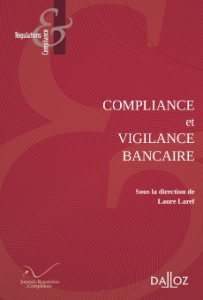
Couverture provisoire – Compliance et vigilance bancaire

Publication director

🏗️ copublishing and direction of the collection: 📚Régulations & Compliance

📚Forthcoming: 🕴️L. Laref (ed.), 📕Compliance et vigilance bancaire (“Compliance and Banking Vigilance”)

► Full reference: L. Laref (ed.), Compliance et vigilance bancaire. Contribution des acteurs bancaires et financiers à la LCB-FT (Compliance and Banking Vigilance. The Contribution of Banking and Financial Actors to AML/CFT), preface by N. Vasse, “Régulations & Compliance” series, Journal of Regulation & Compliance (JoRC) and Lefebvre-Dalloz, forthcoming. - 🧮This book follows the colloquium Compliance et vigilance bancaire : la participation des acteurs du secteur bancaire et financier à la LCB/FT, at which Marie-Anne Frison-Roche spoke: 🎤“Obligation de compliance et gouvernance bancaire” (Compliance Obligation and Banking Governance). - 📝Contribution by 🕴️Marie-Anne Frison-Roche: « La contribution des banques à la lutte contre le blanchiment de capitaux et le financement du terrorisme, illustration de l’Obligation systémique de Compliance » (The Contribution of Banks to the Fight against Money Laundering and Terrorist Financing, an Illustration of the Systemic Compliance Obligation). - ► Read the presentations of the other books in the series: the following books: 🕴️M.-A. Frison-Roche, 📕Le système juridique global des noms de domaine. Structure multi-acteurs et durabilité de l’Internet (The Global Legal System of Domain Names. Multi-Stakeholder Structure and Sustainability of the Internet), forthcoming 🕴️M.-A. Frison-Roche (ed.), 📕Le système probatoire de la Compliance, forthcoming   the previous books: 🕴️M.-A. Frison-Roche (ed.), 📕Compliance et Contrat (Compliance and Contract), forthcoming 🕴️M.-A. Frison-Roche (ed.), 📕L’Obligation de Compliance (Compliance Obligation), 2025 🕴️M.-A. Frison-Roche and M. Boissavy (eds.), 📕Compliance et droits de la défense. Enquête interne – CJIP – CRPC (Compliance and rights of the defence. Internal investigation – French Judicial Public Interest Agreement – French guilty plea procedure), 2024 🕴️M.-A. Frison-Roche (ed.), 📕La juridictionnalisation de la Compliance (Compliance Jurisdictionalisation), 2023 🕴️M.-A. Frison-Roche (ed.), 📕Les Buts Monumentaux de la Compliance (Compliance Monumental Goals), 2022 🕴️M.-A. Frison-Roche (ed.), 📕Les outils de la Compliance (Compliance Tools), 2021 🕴️M.-A. Frison-Roche (ed.), 📕Pour une Europe de la Compliance (For the Europe of the Compliance), 2019 🕴️N. Borga, J.-Cl. Marin and J.-Ch. Roda (eds.), 📕Compliance : l’entreprise, le régulateur et le juge (Compliance: the Company, the Regulator and the Judge), 2018 🕴️M.-A. Frison-Roche (ed.), 📕Régulation, Supervision, Compliance (Regulation, Supervision, Compliance), 2017 🕴️M.-A. Frison-Roche (ed.), 📕Internet, espace d’interrégulation (Internet, Space of Interregulation), 2016 📚See all the books of the series. - ► Provisional table of contents: PROVISIONAL TABLE OF CONTENTS (in French) Preface by 🕴️Nicolas Vasse, Executive Director of the Anti-Money Laundering Authority (AMLA) ♦️ Avant-propos (Foreword), by 🕴️Céline Haye-Kiousis, President of the Association Nationale des Juristes de Banque (ANJB, French National Association of Bank Lawyers) PERSPECTIVE GÉNÉRALE (General Perspective) ♦️ La contribution des banques à la lutte contre le blanchiment de capitaux et le financement du terrorisme, illustration de l’Obligation systémique de Compliance, by 🕴️Marie-Anne Frison-Roche PREMIÈRE PARTIE (PART ONE) LA DIFFUSION DE LA COMPLIANCE DANS LE SECTEUR BANCAIRE ET FINANCIER (THE DIFFUSION OF COMPLIANCE IN THE BANKING AND FINANCIAL SECTOR) ♦️ Quelques rappels terminologiques utiles…, by 🕴️Jérôme Lasserre Capdeville DEUXIÈME PARTIE (PART TWO) LA RÉCEPTION DE L’OBLIGATION DE COMPLIANCE PAR LES PROFESSIONNELS DU SECTEUR BANCAIRE ET FINANCIER (THE RECEPTION OF THE COMPLIANCE OBLIGATION BY BANKING AND FINANCIAL SECTOR PROFESSIONALS) ♦️ La réception de la compliance LCB-FT par le secteur bancaire et financier. Modalités d’appropriation, dysfonctionnements structurels et éthique comme condition d’effectivité, by 🕴️Jennifer Marchand ♦️ L’obligation de compliance LCB-FT, moteur de transformation des pratiques en matière de crédits et de garanties, by 🕴️Patricia Le Besnerais TROISIÈME PARTIE (PART THREE) LA MODULATION DES OBLIGATIONS DES PROFESSIONNELS DU SECTEUR BANCAIRE ET FINANCIER EN MATIÈRE DE LCB-FT (THE MODULATION OF THE AML/CFT OBLIGATIONS OF BANKING AND FINANCIAL SECTOR PROFESSIONALS) ♦️ Le banquier face au défi de la vigilance : entre exigences contradictoires et responsabilités croissantes, by 🕴️Paula Seixas et 🕴️Romain Ducatez ♦️ L’harmonisation européenne face à la modulation de l’obligation de vigilance : les enseignements de l’AMLR, by 🕴️Cassandre Degrande QUATRIÈME PARTIE (PART FOUR) COMPLIANCE ET PERFORMATIVITÉ : LES ENJEUX AUTOUR DE LA REGTECH DANS LE SECTEUR BANCAIRE ET FINANCIER APPLIQUÉE À LA LCB-FT (COMPLIANCE AND PERFORMATIVITY: THE STAKES OF REGTECH IN THE BANKING AND FINANCIAL SECTOR APPLIED TO AML/CFT) ♦️ Compliance, performativité et RegTech : la reconfiguration des dispositifs de vigilance bancaire en matière de LCB-FT, by 🕴️Gurvan Branellec ♦️ Les observations de l’ACPR sur l’usage de l’IA par les banques et néobanques — entre avancées et nouveaux défis (titre provisoire), by 🕴️Jean-Christophe Cabotte PROPOS CONCLUSIFS (Concluding Remarks)
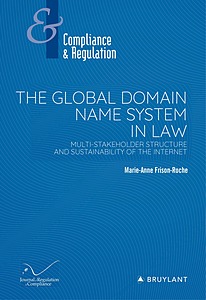
Cover: The Global Domain Name System in Law. Multi-Stakeholder Structure and Sustainability of the Internet

Publication director

🏗️ copublishing and direction of the collection: 📘Compliance & Regulation

📚Forthcoming: 🕴️M.-A. Frison-Roche, 📘The Global Domain Name System in Law. Multi-Stakeholder Structure and Sustainability of the Internet

► Full reference: M.-A. Frison-Roche, The Global Domain Name System in Law. Multi-Stakeholder Structure and Sustainability of the Internet, Journal of Regulation & Compliance (JoRC) and Lefebvre-Bruylant, “Compliance & Regulation” series, forthcoming. - 📕 This book is published in English. It is also published in French, in the “Régulations & Compliance” series: Le système juridique global des noms de domaine. Structure multi-acteurs et durabilité de l’Internet (The Global Legal System of Domain Names. Multi-Stakeholder Structure and Sustainability of the Internet), Journal of Regulation & Compliance (JoRC) and Lefebvre-Dalloz, forthcoming. - ► Read the presentations of the other books in the “Compliance & Regulation” series - ► General presentation of the book: The Internet is a space based on a technical system consisting of IP addresses, all of which can reach one another. This simple technical principle is essential because it is the foundation on which the digital space rests, in that it allows anyone to enter it, move within it and reach others. It is this principle of the open Internet that made possible the construction of the digital space in which we live. This technical system of IP addresses was made easily manageable by domain names. This manageability of IP addresses made the open character of the Internet effective and enabled the expansion of a space that was global from the outset, forming the basis of the digital space. These technical elements were directly translated into the addressing system through domain names, which was built by the Law. The resulting legal system of addressing reflects this technical foundation, and no one can either deny or undo this link: indeed, the Law enables the domain name infrastructure to function effectively on a global scale and in an open manner, where everyone can reach the other. Technical architecture and legal architecture are thus inseparable. This freedom for everyone to create and circulate in the digital space is made possible by technology and guaranteed by the legal organisation of the domain name architecture. This study is structured in two parts. Its first part aims to describe the legal framework of the global domain name system. Its second part examines how to improve this system: it first examines the technical effects produced by scenarios involving changes to the legal framework of addressing, namely a high risk of capture and/or fragmentation of the domain name system by regional zone. It then aims to demonstrate that if the legal organisation of the global domain name system were significantly altered, notably through the establishment of legal addressing zones that are autonomous from one another, the technical imperative of globality remaining paramount, interconnection between the different zones would be necessary and would then be ensured by a public or private actor who could thus effectively seize control of the technical system via these proposed new legal structures of the system, thereby taking over the whole. - PROVISIONAL TABLE OF CONTENTS   In Perspective   PART ONE HOW THE GLOBAL LEGAL SYSTEM OF NAMING IS BUILT   CHAPTER I: ICANN: A LEGAL STRUCTURE OF CLASSIC HARD-LAW FORM, REQUIRED BY THE TECHNICAL INFRASTRUCTURE OF THE ADDRESSING SYSTEM, TRANSPOSED THROUGH STATUTES THAT SEPARATE THE POWER TO PROPOSE FROM THE POWER TO ADOPT IN ORDER TO ESTABLISH A “MULTI-STAKEHOLDER” SYSTEM WHOSE PURPOSE AND EFFECT ARE TO PREVENT CAPTURE CHAPTER II: THE EXERCISE BY STATES OF THEIR PREROGATIVES THROUGH NATIONAL PUBLIC LAWS: ARTICULATION BETWEEN THE TWO GEOGRAPHICAL SPACES OF HARD LAW CHAPTER III: INTERNATIONAL SPACES OF HARD AND SOFT LAW: UN, WIPO, ITU, WSIS CHAPTER IV: MIRRORING THE TECHNICAL INFRASTRUCTURE OF THE ADDRESSING SYSTEM, THE INTERMESHED GLOBAL LEGAL STRUCTURE, ARTICULATING THE SPACE OF HARD LAW AND THE SPACE OF SOFT LAW CHAPTER V: INTERNALISATION WITHIN CRUCIAL OPERATORS THROUGH COMPLIANCE TECHNIQUES LINKED TO THE OBLIGATION OF SUSTAINABILITY   PART TWO HOW TO IMPROVE THE GLOBAL LEGAL SYSTEM OF NAMING   CHAPTER I: ASSESSMENT OF THE RADICAL TECHNICAL TRANSFORMATIONS THAT PROPOSALS TO CHANGE THE LEGAL SYSTEM OF ADDRESSING COULD BRING ABOUT Section 1 ♦️ Assessment of the technical consequences of the legal proposal to transfer the current complex and specific system into an ordinary mechanism of Public International Law Section 2 ♦️ Assessment of the technical consequences of the indirect proposal to establish separate blocks of systems by zone CHAPTER II: MAINTAINING THE LEGAL SYSTEM OF ADDRESSING, GLOBAL, PROTECTED FROM CAPTURE AND ABLE TO ENSURE TECHNICAL SUSTAINABILITY? BY FOSTERING AN INCREMENTAL PROCEDURAL IMPROVEMENT TOWARDS BETTER UNDERSTANDING AND THUS BETTER ACCOUNTABILITY Section 1 ♦️ A grievance, factual but central: the legal system of domain names is hard to understand. Causes and consequences Section 2 ♦️ Making the legal system of domain names more easily understandable to the parties concerned Ex Ante Section 3 ♦️ Explaining clearly, starting from the purposes, the share of technical sustainability and the share of societal sustainability, the former firmly preserved, the latter handled as a debated project Section 4 ♦️ Enhancing soft-law instruments for their discursive, that is explanatory, scope regarding the domain name system within the global governance of the Internet Section 5 ♦️ Making the legal system of domain names understandable to the parties concerned Ex Post: thereby increasing the value of accountability   Selected Bibliographical Sources Index

Publication director

🏗️ direction of the collection: 📚Cours Dalloz – Série Droit privé

📚Publication of : 🕴️Véronique MAGNIER, 📕Droit des sociétés (Company Law), 12th ed.

► Full Reference : V. Magnier, Droit des sociétés (Company Law), 1st ed. 2002 – 12th ed., 2026, Dalloz, “Cours Dalloz-Série Droit privé” Series, 557 p. - ► General presentation of the book (written in French) : This book provides easy access to an understanding of the subject: it starts from the general rules common to all companies and then moves on to the rules specific to particular companies (SA, SARL, SCI, general partnerships, etc.). This twelfth edition deals, in a first part, with « the general law of companies », including the company contract and the legal personality of the company, then turns, in a second part, to « the special law of companies », with partnerships, limited liability companies and joint-stock companies, and ends with the subject of « groups of companies ». - 📚From the same business law perspective, see also : 🕴️Ph. Neau-Leduc & al., 📕Droit bancaire (Banking Law) 🕴️S. Piédelièvre, 📕Droit commercial (Commercial Law) 🕴️G. Beaussonie, 📕Droit pénal des affaires (Business Criminal Law) 🕴️S. Piédelièvre, 📕Instruments de crédit et de paiement (Credit and Payment Instruments) 🕴️F. Gaudu & F. Bergeron, 📕Droit du travail (Labour Law) - 📚See the entire collection in which the book is published. -

Videos

Series of drawn videos on Compliance Law — Compliance in Motion

🎭Leaving Conformity Behind

▶ click on the image to watch the episode on YouTube - ► Full reference: M.-A. Frison-Roche, “Leaving Conformity Behind”, in series of drawn videos Compliance in Motion, episode 1, 25 September 2026 - ► Summary of this episode of Compliance in Motion: Less than a minute, not a word spoken. A man is buried under files: he complies, with every regulation, every one of them. Then the machine takes his place and does better than he can — it files, it drafts, it will write the contracts, the judgments, the law. Above him stands the Compliance Ogre, who knows only one sentence: “Obey, or I will punish you!” If conformity were the goal of Compliance Law, the matter would be settled: the algorithm would achieve it better than we can. But that is not the goal. Compliance Law was invented to preserve the systems in which human beings live. Its Monumental Goals are its legal foundation; it is through them that it is distinguished from conformity, which is only its instrument. Leaving conformity behind is therefore not leaving Law behind: it is entering it. One episode every two weeks, in French and in English. The series also has its Instagram account: mafr.compliancetech. - 🌐 watch this episode of the series on YouTube: Compliance in Motion watch this episode of the series on LinkedIn: Compliance in Motion 🎬 watch this episode of the series below Compliance in Motion ⬇️ - Compliance in Motion, by mafr the series of drawn videos devoted to Compliance Law ComplianceTech®
Diptyque : à gauche le poids de la conformité mécanique, à droite la puissance du concept de Compliance

Breaking news

Article in a MAFR newsletter

🧱The future does not belong to algorithms, but to concepts: in Law as in Mathematics. For example: in Compliance Law

► Full reference: M.-A. Frison-Roche, “The future does not belong to algorithms, but to concepts: in Law as in Mathematics. For example: in Compliance Law”, Newsletter MaFR Law, Compliance, Regulation, 15 September 2026 (linkedin.com/pulse/future-does-belong-algorithms-concepts-law-example-marie-anne-2enee/) - 🌐 read the article published on LinkedIn - 📧 read other issues of the Newsletter MAFR – Law, Compliance, Regulation by free subscription - 🇫🇷 read the French version of this newsletter - 📝 ⤵ read the article below ⤵

Publication director

🏗️ direction of the collection: 📚Cours Dalloz – Série Droit privé

📚Publication of : 🕴️Xavier PIN, 📕Droit pénal général (General Criminal Law), 18th ed.

► Full Reference : X. Pin, Droit pénal général 2027 (General Criminal Law 2027), 18th ed., 2026, Dalloz, “Cours Dalloz-Série Droit privé” Series, 775 p. - ► General presentation of the book (written in French) : The new 2027 edition of this book, up to date with the latest reforms, first deals with the « criminal law » in its determination and application; it then deals with « the offence », its characterisation and its attribution, and ends, in a third part, with « the penalty », distinguishing between the penalty incurred, the penalty imposed and the penalty enforced. - 📚See the entire collection in which the book is published. - 📚Books in the collection directly related to this one : 🕴️Ch. André, 📕Droit pénal spécial (Special Criminal Law) 🕴️É. Verny, 📕Procédure pénale (Criminal Procedure) 🕴️G. Beaussonie, 📕Droit pénal des affaires (Business Criminal Law) -

Publication director

🏗️ direction of the collection: 📚Cours Dalloz – Série Droit privé

📚Publication of : 🕴️Bernard HAFTEL, 📕Droit international privé (Private International Law), 4th ed.

► Full Reference : B. Haftel, Droit international privé (Private International Law), 4th ed., 2026, Lefebvre-Dalloz, “Cours Dalloz-Série Droit privé” Series, 425 p. - ► General presentation of the book (written in French) : The book comprises a general part, devoted to conflicts of laws and conflicts of jurisdictions, and then a special part. The latter covers the application of Private International Law to persons (« personal status »), to property, to obligations and to family property law. - 📚See the entire collection in which the book is published. The subject of Private International Law had previously been covered in this collection by a book written by Daniel Gutmann. - 📚Books in the collection directly related to this one : 🕴️J.-B. Racine, F. Siiriainen, S. Menétrey, 📕Droit du commerce international (International Trade Law) -

Publication director

🏗️ direction of the collection: 📚Cours Dalloz – Série Droit privé

📚Publication of : 🕴️Florence BERGERON, 📕Droit du travail (Labour Law), 13th ed.

► Full Reference : F. Bergeron, Droit du travail 2027 (Labour Law 2027), 13th ed., 2026, Lefebvre-Dalloz, “Cours Dalloz-Série Droit privé” Series, 726 p. - ► General presentation of the book (written in French) : This textbook, up to date with the latest texts, is intended for all law students and all practitioners updating their knowledge. In a first part it develops « individual employment relations » (formation of the contractual relationship, performance and termination of the employment contract), devoting its second part to « collective employment relations » (collective labour disputes, employee representation, collective bargaining and collective agreements). - 📚See the entire collection in which the book is published. - 📚Books in the collection directly related to this one : 🕴️F. Kessler and V. Roulet, 📕Droit de la protection sociale (Social Protection Law) 🕴️V. Magnier, 📕Droit des sociétés (Company Law) -