About

Working papers

Is the French legal system an asset or a handicap for the competitiveness of our companies and our territory?

This working document served as a basis for a lecture given in French at the Académie des Sciences morales et politiques  (French Academy of Moral and Political Sciences) on September 25, 2017, in the cycle of conferences conducted under the presidency of Michel Pébereau,  Quelles réformes ? (What reforms?) Consult the presentation (in French) of the conference cycle (2017). It served as the basis for the publication of an article published  in French in 2018 in the book directed by Michel Pébereau Réformes et transformations (Reforms and transformations).

Working papers

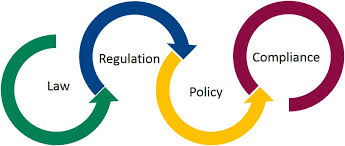
🚧Drawing the Circles of Compliance Law

This working paper is the support for the article to appear in the collective book  dedicated to our very dear friend and colleague Philippe Néau-Leduc. It uses the Bilingual Dictionary of the Regulatory and Compliance Law. Compliance Law has the same teleological functioning as the Economic Law to which it belongs, which consists in placing the normativity of rules, decisions and reasoning in the aims pursued. Once we know what the goals of compliance techniques are, then we know who should be responsible for them, who must be subject to them, who must activate the rules: compliance rules must be activated by those who are in the best position to achieve the outcome in order to achieve the goal sought by the authority which designed the compliance mechanism. The "circles" are thus plotted in a rational and pragmatic way. That, all of it ("useful effect"), but not beyond that. The notion of efficiency does not always imply balancing: on the contrary, it can involve drawing circles which designate those who are "placed" to carry the burden of the rules because they are capable of producing them the desired effects. Within these circles, the rules must apply without restriction and without compromise, but they must not apply beyond these circles. Drawing such circles requires defining the Law of Compliance itself, since on the one hand the choice of those who must implement the Compliance depends on the aims of the Compliance and on the other hand the definition of the Law of Compliance is itself teleological in nature. This is why, contrary to the assertion that the exercise of definition would be useless in these matters, which would be above all on a case-by-case basis, this effort to define and determine the purposes is, on the contrary, necessary in practice to show which enterprise must bear the obligations of compliance and which must not. But it is enough to have posed this to reveal the major difficulty of the Compliance, that explains resistances, and even gives the impression that one is confronted with an aporia. If, as a matter of principle, what is expected of the "users" of the Compliance mechanisms must be articulated to the aim that is affected by the authors of the compliance mechanisms to them, we must have a minimum correspondence between the aims of these authors (Legislators and Regulators) and the aims pursued by those who are responsible for implementing them: companies. However, this correspondence does not exist at first sight, because the compliance mechanisms are found to be uniquely based on "monumental goals" which the public authorities have a legitimate concern, whereas companies have for their own interest . The two circles do not match. The internationalization of concern for these aims in companies would therefore be only a mechanism of violence of which enterprises are the object, violence felt as such. (I). To resolve this violence, it is better to stop confusing the State and enterprises, whose goals are not the same, and draw the circle of subjects of law "eligible" for Compliance. It is highly legitimate to target certain entities, in particular this category of companies, which are the "crucial operators", in a binding way, as it is legitimate to govern companies that have expressed a desire to surpass their own interests. These circles of a different nature can overlap on a concrete operator: for example, if a bank – alway a crucial operator that is structural because it is systemic – is also international – a crucial operator because of its activity – decides to worry about others by commitments verified by the authorities to overcome their own interest (social responsibility), but these different circles are not confused. In any case, companies may belong to only one circle, or even belong to none. In the latter case, they must therefore remain beyond the reach of the pressure and cost of Compliance Law, in particular because they are not objectively required to realize the "monumental goals" aimed at effectiveness and do not want it: in a liberal system, it is for the public authorities to aim at the general interest, the ordinary people indirectly participating in it by paying the tax. (II). It is by making these "Compliance Circles" of eligible subjects of this specific Law to implement the heavy but justified and controlled burden of Compliance with regard to the monumental goals that this new system  aims, that then opens a royal way in order to find a uniqueness and to increase the "monumental function" of the Compliance Law by a relation of Trust towards the global general interest, rather than the mechanical application of rules whose meaning is not understood and whose perception is no longer perceived than violence.

Conferences

The functions of Compliance. A political choice to do

Reférence complète : Frison-Roche, M.-A., Les fonctions de la Compliance. Un choix politique à faire ("The functions of Compliance. A political choice to do"), in  Borga, N. et Roda, J.-Ch. (dir.), La compliance : nouveaux enjeux pour les entreprises, nouveaux rôles pour les juristes ? ("Compliance: new challenges for companies, new roles for lawyers?"), Centre du Droit de l'entreprise Louis Josserand, Université Lyon IIII Jean Moulin, France, Lyon, 2 juin 2017. Read the program (in French) Summary of the conference : Compliance mechanisms are being constituted in "Compliance Law", new branch of Economic Law. Its functions are determined by the goals. But the goals are "monumental", since it is nothing less than the end of corruption, trading in influence, arms trafficking, international terrorism, trafficking in human beings, selling of human organs, the effective safeguard of environmental protection, safeguarding the planet, access to culture for all, preservation of civilization, the effectiveness of human rights … The goals of a company are not a priori of this order, even if every firm understands that it is clever to appear amiable. By comparing the two types of goals, a difference of nature is measured. By the Compliance Law, companies are therefore invited to "get out of themselves. Consequently, the functions that shape the contours of Compliance Law transform those who are the "subjects of law", the enterprises: these are the subjects, insofar as they are agents of legality. But this can not be the case for all companies. If the effect of Compliance were to be generalized to all companies, this would be catastrophic and would make no sense. However, who firmly and precisely drew the circle of "legal subjects eligible to be the legality agent" of Compliance? With the considerable costs and responsibilities that go with it? If it has not been the Legislator, it will have to be the Judge. Because the judge is guardian of the spirit of Law and guardian of legal orders. Especially if it is a global legal order. - Moreover, companies are not only passive subjects of Compliance Law – which would be the case of a misunderstood Compliance Law – but are also active subjects of Compliance Law. Indeed, these "monumental goals" which draw the functions of the Compliance are exactly the same as those of the Corporate Social Responsibility. Thus, if the Compliance is conceived of only as an immense and empty submission of all undertakings to total regulation, the result will be an opposition between the regulatory power and the will of undertakings, a concrete opposition between public authorities and companies. If, on the other hand, we conceive Compliance Law as that by which "crucial enterprises" like the Regulators are moving towards the realization of "monumental goals, then Compliance Law crystallizes a" Trust Pact""between the two, Which goes beyond the borders and becomes a means of regulating globalization. This second conception is the future of European Law. -   See the slides (in French). Read the working paper on which the conference is based (working paper in English)

Conferences

Is the contract the optimal instrument of CSR?

Reference : Frison-Roche, M.-A., Le contrat est-il l'instrument optimal de la RSE ? ("Is the Contract the optimal instrument of CSR?")  in Trébulle, F.-G. (modérateur), Les instruments de la RSE : le contrat (The instruments of CSR"), cycle of conferences organized by the Cour de cassation (French Civil Supreme Court and the Universities of Paris-Dauphine, Paris VIII and Paris I),Cour de cassation, Paris, 11 mai 2017. Read the slides (in French) as served as the basis of the conference les slides Read the program on the Cour de cassation  wesite (in French). Read the program of the whole cycle of conferences in which this conference enters (in French)   Corporate Social Responsibility belongs to Economic Law. It thus enters into its logic of efficiency, leading to apprehend any legal mechanism as an instrument, the contract as the others. This does not mean that everything is only an instrument, on the contrary. Economic Law, when it takes the form of Regulation Law, places the principles in the aims pursued. It is in these principles that it can meet CSR if the goals are the same. In view of these aims, everything is an instrument. On the scale of goals which are "monumental"1On this notion of "Monumental Goal", see Frison-Roche, M-A., Compliance Law, 2016 ; From Regulation Law to Compliance Law, 2017., in that they are global, in that they seem unattainable, such as the fight against child labor, such as the end of corruption or the sale of human beings, all legal instruments become interchangeable, from the Constitution to the contract, from the hard law to the soft law. The only criterion becomes efficiency to achieve the goal. We then reach the efficiency, criterion of the Regulation Law. New laws, such as in France in 2016 the Sapin 2 law or in 2017 the law establishing a "duty of vigilance" with uncertain contours, may use the contract only as a vehicle for legal obligations to be performed by the company2For a whole demonstration, see Frison-Roche, M.-A.,From Regulation Law to Compliance Law, 2017.. The contract becomes an instrument of the Compliance Law, chosen as the optimal instrument of the Internalized Regulation Law in the company. But the contract can also be chosen as an instrument by the company in that it pursues the same goals of general interest, becoming global3On this notion of "global general interest", and maybe of "global public service", see Frison-Roche, M.A., From Regulation Law to Compliance Law, 2017 .. The contract is then chosen as an Ex Ante tool, which will be refined to the specificity of the company, exceeded the generality of the law and which will be able to resolve the diversity of national laws by more comprehensive contractual relations. Moreover, the contract can integrate active Ex Post mechanisms, such as the warning launcher or the controller, audits, or even form an ecosystem by training clauses to disseminate a CSR culture. By these contractual provisions, the contract operates the mixing of times, the Ex-Ante and the Ex Post, which the legislation can not do, refines it to what the particular enterprise is . In this, the contract converges towards what is being constructed: a Compliance Law.

Analyses

Hayao Miyazaki explains that the drawings of video games made by machines are “insults to life”

Through the Open Culture website, it is possible to listen to Hayao Miyazaki who, in March 2017, claimed that video games whose drawings are made on Artificial Intelligence basis are "insults to life". Read below the history, the words that the Master has held, his conception of what is creation and "truly human" work, which is echoed by the definitions given by Alain Supiot, who also reflected on what robots do. This brings us back to the very notion of "creation" and creative work.   - Read below

Working papers

🚧 From Regulation Law to Compliance Law

This working paper is the basis for an article written in French to be published in the French publication RÉGULATION, SUPERVISION, COMPLIANCEE, to be published in the RÉGULATIONS series at Éditions Dalloz. This work uses the Compliance and Regulation Law bilingual Dictionnary. - This Working Paper aims to show the movement that starts from Regulation Law to Compliance Law, now in the process of being born. In order to explain this movement, in order to anticipate the near future, in what it should not be and in what it should be, it is necessary to reconstruct how the Compliance Law was born of the Regulation Law, which has thus found the sources of the Public Services Law of which it had at first cut the roots (I). Indeed Regulation Law has in a happy way renewed the Law but also narrowed its perspective. Today, the phenomenon of globalization and the need for public authority that States can not satisfy according to traditional legal methods implies the establishment of a sort of "global public service". This is done by the Law of Compliance which revolutionizes all legal systems, both Common Law and Civil Law (II). Indeed, Compliance Law internalizes in some companies, the "crucial operators", the duty to make effective the "monumental goals" that the regulatory authorities have formulated and of which these companies must render globally effective. In this respect, the Law of Compliance is the extension of the Law of Regulation, which makes a new scope and in its aims and in its space. It is the whole of Law that is transformed. The near future will tell if it is reflected in clashes, between companies and regulators, between Europe and the United States, or on the contrary by a pact of trust between the crucial operators and the Regulators. If this is achieved, the Law of Compliance, expressing the political dimension of the Law of Regulation, expressing the share of companies that ceases to be neutralized by the mechanics of the markets, will be an advancement of the Law. It is in this perspective that we must build the European Compliance Law.      

Working papers

🚧 Compliance and Trust

Compliance. Trust. Two words that come more and more often than before at our readers' eyes or listeners' ears. And yet they do not seem to match well. They even seem to repel each other. Indeed, Compliance is the way in which Public Authorities trust certain private operators, not in themselves, but with their structural capacities to mechanically capture the information that these authorities need (I). This presupposes a vision of the world in which Companies are powerful and powerful alone but are not virtuous, while Public Authorities, such as the Public Prosecutor's Office or Regulators, are weak but virtuous alone. Such a conception of Compliance transforms companies into automata. Such a vision of the world has no future: only human beings can be trusted, whose fallibility must be accepted, as Compliance is then the expression of a relationship built on trust that is to be seen between non-mechanical operators, namely public Institutions and private Operators, who can both have in common concern for an interest which goes beyond them and which was formerly called the general interest (II). From this reality, no new doubt for private companies, but which explains the strange intimacy between the violent Compliance Law and the new spontaneous order of Corporate Social Responsibility, it is up to them to demonstrate this concern Cf others that it shares with the Public Authorities, except to fall in Compliance reduced to costly procedures, empty endless staked out of sanctions without control. It is thus for Companies to make this branch of Compliance Law emerging become what can be the best, when it is possible that it becomes what would be the worst.