About

Publication director

🏗️ direction of the collection: 📚Cours Dalloz – Série Droit privé

📚Publication of : 🕴️Jean-Baptiste RACINE and 🕴️Fabrice SIIRIAINEN, 📕Droit du commerce international (International Trade Law), 3rd ed.

► Full Reference : J.-B. Racine and F. Siiriainen, Droit du commerce international (International Trade Law), 1st ed. 2007 – 3rd ed., 2018, Dalloz, “Cours Dalloz-Série Droit privé” Series, 496 p. - ► General presentation of the book (written in French) : International trade law has become a fundamental discipline at a time of globalisation of the economy. It is a particular law: a law composite by nature, made up of national and international, public and private rules, which combines conflict rules and substantive rules and which knows the particular phenomenon of the lex mercatoria. Besides the sources of international trade law, fed in particular by the World Trade Organization (WTO), the book studies the operators of international trade, namely companies and States, the operations of international trade (sale, transport, distribution, subcontracting, transfer of intellectual property rights, etc.) and finally international trade litigation through its emblematic figure: arbitration. - 📕Read the back cover (in French) - 📕Read the table of contents (in French) - 📚See the entire collection in which the book is published. -

Working papers

🚧 Compliance : before, now, after

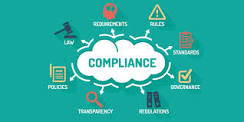
This working paper serves as a support for the article to be published in the book written in French, Ingall-Montagnier, Ph., Marin, J.-Cl., Roda, J.-Ch. (dir.), Compliance : l'entreprise,le régulateur et le juges, in the Serie Regulations, co-edited by Éditions Dalloz and the Journal of Regulation and Compliance (JoRC). This work uses by links the Compliance and Regulation Law bilingual Dictionnary. - Summary. We have to admit it. Because in front of so numerous and so disparate Compliance rules we pain so much to figure out, we are constraint to go in so changing directions, that we console ourselves with their weight, their cost and our misunderstanding by affirming that Compliance is "complex" and "transdisciplinary", as if complicated words could mask our disarray. But "Compliance" is not a cataclysm, a bomb sent by the Americans to annihilate Europe, the new form of a Cold War in legal dress, it is a way of seeing things that comes from afar, with its own coherence and which must first be understood. If one understands where this new corpus comes from, which now obliges companies to prove that they effectively take on the fulfillment of certain goals that go beyond them, notably the fight against money laundering, tax evasion, but also the fight against the sale of human beings or the struggle for the preservation of nature and Earth, then we can continue the story. Indeed, not all companies are targeted by such internalization of "monumental goals" within them." An ordinary firm is destined to develop itself in order to achieve a goal which is its own. The concern of these goals can only be for the "crucial firm. "If there is to be a change in the corporate project, then it can only depend on its" position "in a system, a financial, economic, social, global system, or because it has itself decided that it would be so. The company then bears the burden of proof that such a discourse of new responsibility corresponds to a behavior and an effective culture. The weight of the rules already exists today. And it is for the moment that now, in a negative and passive way, Compliance is perceived, by those who "undergo" it (companies), even by those who apply it (public authorities). The transformation towards a "culture of trust" is the issue between today and tomorrow, because tomorrow, it is a relationship of trust that could be built between these companies and the public authorities, because they would share information (systemic issue), because they would agree on the less technical monumental goals (protection of human beings issue). In this perspective, "Compliance" is above all a bet, that of the place of human beings in globalized markets.

Articles in a legal collective publication

Compliance et confiance

Publication director

🏗️ direction of the collection: 📚Droit et Économie

La petite entreprise

Working papers

The destruction of the de jure distinction between person and things: fabulous gain, catastrophic gain

This working paper serves as a support for an article published in French in the Recueil Dalloz. In Lisbon, in the Web Summit of November 2017, a machine covered with a skin-like material and a sound-producing device gave a speech in public at this conference on digital. For example, a French article tells the event by this title : Le premier robot citoyen donne sa propre conférence au web summit  (The first citizen robot gives his own conference to the web summit). Some time later, reports show the same robot walking and taking more than 60 facial expressions, the text laudatif that accompanies the images designating the automaton by the article: she.1It is true that in 1966, the BBC already presented a sort of robot being the "ideal" servant and designating it by the article "she".. The machine, which falls legally within the category of "things", is thus presented as a person. Let's look elsewhere. Women, who are human beings, sign contracts by which they agree to give birth to children, with whom they claim they have no connection, that they are not mothers, that they will hand them over immediately at the exit of their belly to those who desired their coming, this desire for parenthood creating by hitself the true and only link between the child and his "parents of intent". The mother-carrier is often openly referred to as "oven". The woman, who falls legally within the category of the "person", is thus presented as a thing. The two sensational phenomena are of the same nature. They call two questions: 1.Why? The answer is: money. Because both are the result of the new construction of two fabulous markets by supply. 2.How? The answer is: by the destruction of the distinction between the person and things. The distinction between person and things is not natural, it is legal. It is the base of the western legal systems, their summa divisio. If this distinction disappears, and for money to flow, it must actually disappear, then the weak human being will become the thing of the strong one. Read below the developments.

Articles in a legal collective publication

article dans une publication juridique collective

📝La mondialisation du point de vue du Droit (“Globalisation from a legal perspective”), in📗La mondialisation (“The Globalisation”)

► Full Reference: M.-A. Frison-Roche, "La mondialisation du point de vue du Droit" (Globalisation from a legal perspective), in Association Henri Capitant,  La mondialisation, t. LXVI/2016, Berlin, Bruylant, coll. "Travaux de l'Association Henri Capitant",   2017, pp. 11-30 - 📝read the  article (in French)  - 📗read the general presentation of the book, La mondialisation, in which this contribution for the book's synthesis and conclusion is published - 🚧lire le document de travail bilingue sur la base duquel cet article a été élaboré, doté de développements supplémentaires, de références techniques et de liens hypertextes - ► English summary of this article: Globalisation is a confusing phenomenon for lawyers. The first thing to do is to take the measure of it. Once this has been done, it is essential to allow oneself to think something about it, or even to force oneself to think something about it. For example, on the novelty or otherwise of the phenomenon, which then enables us to assess what is being put in place. If Law can and must "pretend" to defend every human being, a universal ambition that is intended to confront the global field of forces, then the next – but secondary – question is: quid facere? Nothing? Less than nothing? Or regulate? Or do we still affirm that the Law fulfills its primary function, which is to protect the weak, even in the power struggle that is Globalisation? - 📝read the summary and conclusive report of the symposium organised by the Association Henri Capitant, as part of the Journées internationales Allemande about La Mondialisation in Berlin, the 27 May 2016. - 🌐follow Marie-Anne Frison-Roche on LinkedIn 🌐follow Marie-Anne Frison-Roche on Instagram 🌐subscribe to the Newsletter MAFR Regulation, Compliance, Law

Articles in a legal collective publication

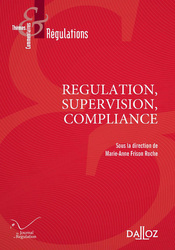
📝From Regulation Law to Compliance Law, in 📕Regulation, Supervision, Compliance

Complete reference: Frison-Roche, M.-A., Du Droit de la régulation au Droit de la compliance, in Frison-Roche, M.-A. (dir.), Régulation, Supervision, Compliance, Série Régulations, Dalloz, 2017, pp. 1-14. This article was published in the book Régulation, Supervision, Compliance, published in the Régulations.  Series. (Dalloz-Journal of Regulation and Compliance -JoRC) It is based on a working paper, available in French and English. Read the article. Summary: It is a question of showing the movement which starts from Regulation Law, today constituted, to Compliance Law, today in the process of being born. To explain this movement, making it possible to anticipate the near future, in what it should not be and in what it should be, it is necessary to restore how the Compliance Law was born from a Law of Regulation which has thus found the sources of a Law of public services whose roots it had first cut (I). In fact, the Law of Regulation has happily renewed the Law but has also narrowed its perspective. Today, the phenomenon of globalization calls for a need for public authority 1 that States cannot be satisfied by traditional legal methods, even when it is necessary to set up a sort of "global public service". This then takes place through Compliance Law which revolutionizes all legal systems, both Common Law and Civil Law (II). In fact, the Compliance Law internalizes in certain companies, the "crucial operators", the duty to make effective the "monumental goals" that the regulatory authorities have formulated and which these companies must make effective worldwide. In this respect, Compliance Law is an extension of Regulation Law, which is taking on a new dimension both in its aims and in its space. It is the whole of the Law which is transformed. The near future will say whether it results in confrontations, between companies and regulators, between Europe and the United States, or on the contrary by a pact of confidence between crucial operators and Regulators. If this is achieved, the Compliance Law, expressing the political dimension of the Law of regulation, expressing the share of companies ceasing to be neutralized by the mechanics of the markets, will be an advance in Law. It is in this perspective that European Compliance Law must be constructed.    

Publication director

🏗️ copublishing and direction of the collection: 📚Régulations & Compliance

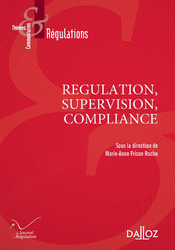
Publication of 🕴️M.-A. Frison-Roche (ed.), 📕Régulation, Supervision, Compliance (Regulation, Supervision, Compliance)

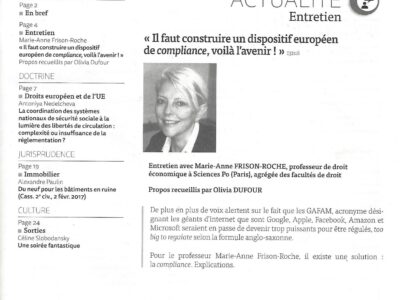
► Full Reference: M.-A. Frison-Roche (ed.), Régulation, Supervision, Compliance (Regulation, Supervision, Compliance), Dalloz, coll. “Thèmes & Commentaires”, “Régulations” Serie, 2017, 148 p. - ► General presentation of the book: Regulation. Supervision. Compliance. Three terms that until recently were virtually unknown in legal systems. Or at least considered to be peculiar to Anglo-American legal systems: Regulation, Supervision, Compliance. These terms are like Trojan horses through which Common Law is taking over our legal traditions to make European companies, especially banks, bend over backwards, take over institutions and impose methods. Three words by which the invasion is carried out. Through the violence of repression and compliance penalties, through the mildness of codes of conduct and corporate social responsibility. By laws as new as they are strange, such as the French so-called “Sapin 2” law or the French law introducing a “duty of vigilance” for companies whose fault would be to have succeeded in expanding internationally. One can have this defensive conception of Compliance, generating a “Compliance Law”, produced by the internalisation of Regulatory Law in global economic operators, who are then subject to supervision by Regulators, even though these firms are not regulated, with Compliance extending beyond the supervised sectors (banks and insurance companies). We can (and maybe must) have a more welcoming, and therefore more offensive, conception of Compliance. It can be the crucible of a relationship of trust on a supra-national scale between these operators and the regulators, the former being able to contribute, like the latter, to serving goals that go beyond them all, of which the fight against corruption and money laundering are but a few examples. In this way, the issue is the construction of the European Compliance Law. - 📝read the interview given by Marie-Anne Frison-Roche to the Petites Affiches, “We need to build a European compliance system – that’s the future! ire l’entretien donné par Marie-Anne Frison-Roche aux Petites Affiches ,“Il faut construire un dispositif européen de compliance, voilà l’avenir !” (“We need to build a European Compliance System – that’s the Future!”), about the publication of this book (in French) - 🧮This book follow a cycle of conférences organised in 2016 by the Journal of Regulation (JoR) in collaboration with the École d’Affaires Publiques and the Département d’Économie of Sciences Po (Paris), under the scientific direction of Marie-Anne Frison-Roche, Director of the Journal of Regulation (JoR) - This volume is the continuation of the books dedicated to Compliance in this collection. ► Read the presentations of the other books in the series: the following books: 🕴️N. Borga, J.-Cl. Marin and J.-Ch. Roda (eds.), 📕Compliance : l’entreprise, le régulateur et le juge, 2018 🕴️M.-A. Frison-Roche (ed.), 📕Pour une Europe de la Compliance, 2019 🕴️M.-A. Frison-Roche (ed.), 📕Les outils de la Compliance, 2021 🕴️M.-A. Frison-Roche (ed.), 📕Les Buts Monumentaux de la Compliance, 2022 🕴️M.-A. Frison-Roche (ed.), 📕La juridictionnalisation de la Compliance, 2023 🕴️M.-A. Frison-Roche and M. Boissavy (eds.), 📕Compliance et droits de la défense. Enquête interne – CJIP – CRPC, 2024 🕴️M.-A. Frison-Roche (ed.), 📕L’Obligation de Compliance, 2025 🕴️M.-A. Frison-Roche (ed.), 📕Compliance et Contrat, forthcoming 🕴️L. Laref (ed.), 📕Compliance et vigilance bancaire, forthcoming 🕴️M.-A. Frison-Roche, 📕Le système juridique de l’adressage de l’Internet. Une structure multi-acteurs, gage de durabilité (The Legal System of Internet Addressing. A Multi-Stakeholder Structure, the Pledge of its Sustainability), forthcoming 🕴️M.-A. Frison-Roche (ed.), 📕Le système probatoire de la Compliance, forthcoming   the previous books: 🕴️M.-A. Frison-Roche (ed.), 📕Internet, espace d’interrégulation, 2016 📚Read the presentations of the other titles of the Serie. - 🏗️General construction of the book:  Consulter le sommaire de l’ouvrage. - ► Understand the book through the Table of Contents and the summaries of each article:  🕴️M.-A. Frison-Roche, 📝Du droit de la régulation au droit de la compliance   I. AUTOUR DE LA NOTION DE COMPLIANCE (AROUND THE NOTION OF COMPLIANCE) 🕴️B. de Juvigny, 📝La compliance, bras armé de la régulation 🕴️I. Falque-Pierrotin, 📝L’Europe des données ou l’individu au coeur d’un système de compliance 🕴️B. Lasserre, 📝Concurrence et bien public 🕴️J.-M. Sauvé, 📝Compliance, droit public et juge administratif 🕴️J.-Cl. Marin, 📝Droit pénal et compliance   II. CHOCS ET ACCLIMATATION DE LA COMPLIANCE DANS LE SYSTÈME JURIDIQUE (SHOCKS AND ACCLIMATISATION OF COMPLIANCE IN THE LEGAL SYSTEM) 🕴️D. Migaud, 📝Le nouveau rapport entre l’État et les normes impliquées dans la compliance 🕴️A. C. Bénichou, 📝Nouvelles technologies : réflexions sur la compliance et l’éthique 🕴️J.-M. Darrois, 📝La loi Sapin II : un défi pour les avocats 🕴️Y. Perrier, 📝“Diplomatie” de la compliance et de sa régulation   III. LES DIALOGUES OUVERTS PAR LA COMPLIANCE (DIALOGUES OPENED UP BY COMPLIANCE) 🕴️J.-B. Auby, 📝Le dialogue de la norme étatique et de la compliance 🕴️L. Donnedieu De Vabres, 📝Pas de compliance sans confiance 🕴️J. Bédier, 📝La compliance, un outil actif de développement de l’entreprise  🕴️A. De La Cotardière, 📝Le rôle de l’avocat en matière de compliance - 🌐follow Marie-Anne Frison-Roche on LinkedIn 🌐follow Marie-Anne Frison-Roche on Instagram 🌐subscribe to the Newsletter MAFR Regulation, Compliance, Law