Market

Working papers

The destruction of the de jure distinction between person and things: fabulous gain, catastrophic gain

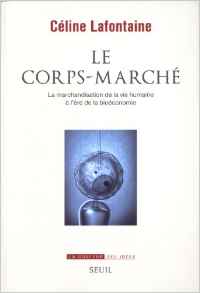
This working paper serves as a support for an article published in French in the Recueil Dalloz. In Lisbon, in the Web Summit of November 2017, a machine covered with a skin-like material and a sound-producing device gave a speech in public at this conference on digital. For example, a French article tells the event by this title : Le premier robot citoyen donne sa propre conférence au web summit  (The first citizen robot gives his own conference to the web summit). Some time later, reports show the same robot walking and taking more than 60 facial expressions, the text laudatif that accompanies the images designating the automaton by the article: she.1It is true that in 1966, the BBC already presented a sort of robot being the "ideal" servant and designating it by the article "she".. The machine, which falls legally within the category of "things", is thus presented as a person. Let's look elsewhere. Women, who are human beings, sign contracts by which they agree to give birth to children, with whom they claim they have no connection, that they are not mothers, that they will hand them over immediately at the exit of their belly to those who desired their coming, this desire for parenthood creating by hitself the true and only link between the child and his "parents of intent". The mother-carrier is often openly referred to as "oven". The woman, who falls legally within the category of the "person", is thus presented as a thing. The two sensational phenomena are of the same nature. They call two questions: 1.Why? The answer is: money. Because both are the result of the new construction of two fabulous markets by supply. 2.How? The answer is: by the destruction of the distinction between the person and things. The distinction between person and things is not natural, it is legal. It is the base of the western legal systems, their summa divisio. If this distinction disappears, and for money to flow, it must actually disappear, then the weak human being will become the thing of the strong one. Read below the developments.
Working papers

🚧Globalization from the point of view of Law

► Full Reference: Frison-Roche, M.-A., Globalization from the point of view of Law, working paper, May 2017. - 🎤 This working paper initially served as a basis for a synthesis report made in French in the colloquium organized by the Association Henri Capitant in the International German Days on the subject of "Le Droit et la Mondialisation" (Law and Globalization). 📝 Il sert dans un second temps de base à l'article paru dans l'ouvrage La Mondialisation. 📝 it serves as a second basis for the article (written in English, with a Spanish Summary) to be published in the Brezilian journal Rarb – Revista de Arbitragem e Mediação  (Revue d`Arbitrage et Médiation). It uses the Bilingual Dictionary of the Law of Regulation and Compliance. - ► Summary of the Working: Globalization is a confusing phenomenon for the jurist. The first thing to do is to take its measure. Once it has been taken, it is essential that we allow ourselves to think of something about it, even if we have to think about it. For example, on whether the phenomenon is new or not, which allows a second assessment of what is taking place. If, in so far as the law can and must "pretend" to defend every being, a universal claim destined to face the global field of forces, the following question – but secondary – is formulated: quid facere? Nothing ? Next to nothing ? Or regulate? Or can we still claim that the Law fulfills its primary duty, which is to protect the weak, including the forces of globalization? - read the Working Paper below⤵️

Monographs

Les mots pour ne pas le dire

Working papers

Droit et Marché : rapports difficiles

Working papers

Home made Family

The family is built on one basic idea which is so powerful that legal rules are organised around it as spontanely. But if the paradigm is changing, then all the rules change with the strength of the evidence. However, in the 1970s, we changed paradigm. Previously, for millennia, the basic idea was the family as a group. Depending on the time or period, the group has varied in its contours, squares and powers granted to individual members, but the idea of group was acquired. Family was a group which was a part of the social group, kept by the State. From the 1970s, the family becomes the developed project done by a free and independent person. This project designed by a person wishing to build family that suits him or her will result in the fact that the individual meets other individuals whose family project crosses his or her. Contract becomes the perfect tool for these home-made families This desires adjustment corresponds to the market model. Concretely, market of ideal family provides services for satisfaction of various projects, all legitimate as expression of desir. The sufficient link between individuals  is affection and will, the center is the child. The market offers new perspectives, such as ideal partner and even more perfect child, becoming jewel. The idea of ​​Market has triumphed.