Publications

Filter by type

Working papers

🚧 To protect human beings, the ethical imperative of the legal concept of person

►   This working document was intended to serve as a support for a conference pronounced in French in the conference Droit et Ethique ( Law & Ethics) of May 31, 2018 in a symposium organized by the Court of Cassation and the Association Française de Philosophie du Droit.  French Association of Philosophy of Law on the general theme Law & Ethics. See a general presentation of this conference.  Rather, it has served as a support for the article to be published in the Archives de Philosophie du Droit (APD). This article is written in French.    ►   Summary: It is through the Law that the human being has acquired a unity in the West (I). What religion could have done, the Law also did by posing on each human being the indetachable notion of him of "person" (I.A). But this is what is challenged today, not the personality and the power that the human being has to express his freedom but the unity that implies in the disposition that we have of ourselves in repelling the desire that others have always had to dispose of us. Current law tends to "pulverize" human beings into data and transform into neutral legal services what was considered before as the devouring of others. The legal concept of "consent", ceasing to be proof of a free will but becoming an autonomous concept, would suffice (I.B.). To prevent the reigning of the "law of desires", which merely reflects the adjustment of forces, we must demand here and now the ethical sovereignty of Law, because Law can not be just just be just the interests adjustment (II). We can form this request if we do not want to live in an a-moral universe (II.A), if we see that the unity of the person is the legal invention that protects the weak human being (II.B.). If we admit this imperative, then we must finally ask who in the legal system will express and impose it, especially the legislator or the judge, because we seem to have lost the ability to recall this principle of the Person on which the West was so centered. But the principles that are no longer said disappear. There would then remain only the case-by-case adjustment of interests between human beings in the world field of particular forces. At this yardstick, Law would be more than a technique of securisation of particular adjustments. Law would be reduced at that and would have lost its link with Ethics. (II.C). .   

Articles

Cambridge Analytica: Probationary Perspective, Accountability Perspective

It is about a particular case that one can rephrase the general questions. If the case is hot, it is even more important to return to the general questions, which are always colder (more boring, too). Thus, Cambridge Analytica is a case of which everyone speaks a lot … It is at the same time particular and very burning. So we talk about it a lot, and with vehemence, and in a way often definitive, as well in attack as in defense. For the prosecution, there are many advocacies, gathered for example in the Guardian's files. For the defense, we find less. But one can read for example the article that has been published in early April 2018: Why (almost) everything reported about the Cambridge Analytica Facebook 'hacking' controversy is wrong. The number of comments, and their more or less inflamed nature, in any case always definitive, does not mean anything in itself. The regulators took the floor a little later, both in a more concrete way, the "group of 29" (bringing together all the European Regulators personal data) establishing the 11 April 2018 a working group on this subject and publishing April 10, 2018 new guidelines on the place that must be made to "consent". But for the moment, if we loof at the media, it looks like a trial, because everyone claims to be entirely right and pretends that the other is entirely wrong. Trial to break the truth and virtue, say the accusers. Trial in witchcraft, says Facebook. And it's always up to us. Because all this is probably due to the fact that we are no longer spectators: we are placed in the judge's position. The financial market was the first judge. It has already condemned. Without really trying to find out. This is because the public good of the financial markets is Trust, it is enough that one can even suspect the wife of Caesar, and so it is not really matter of truth of the facts and goof application of Rule of Law. For the public opinion that we are, this is something else, because we could wait to know more. And we should, since we seek to remain a little attached to the "truth " of the facts and respect for the Rule of Law. However, this case is complex and is above all a matter of judicial analysis which will come and which we cannot lead ourselves, both in terms of the facts-which are complex-as well as the rules of law to be applied which are equally so. What turns us into a court, an ordinary sociological phenomenon, is a new legal mechanism: the "whistleblower". By nature, it gives the bonus to the Attack This logic of the legal mechanism of the whistleblower, a movement of fact to throw facts as one throws a buoy outside but one could also say stones on the firm that the insider denounces, logic today encouraged and protected by the Law, allows a person who knows something, most often because he participated, to let everyone know, without a filter. To denounce it. For the public good.. The successive texts on the whistleblower are nrms of a Compliance Law1Frison-Roche, M.-A., Compliance Law, 2016. which seek, in particular in French Law, to ensure a balance between this "monumental goal"2On this notion, Frison-Roche, M.-A., From Regulation Law to Compliance Law, 2017. which is the respect of the truth, the fight against corruption, the protection of human beings, etc., and the risks to be endured by the company thus denounced. The case is exemplary of this, since Facebook is  "denounced" only in second place, behind Cambridge Analytica, but the notoriety and power of the first makes that it is hit first. French law in the so-called "Sapin 2 Act " of 2016 has ensured to protect the company denounced, but British and American Law are more violent, probably because they encourage more the private enforcement. Temporality is therefore favorable to the attack. The time of the defense is always slower. It is usually the people in situations of weakness who suffer it: slowness of justice, justice outside courthouses, etc. With Compliance mechanisms, it is probably the very powerful who will live this. It is not a matter of rejoicing: the misfortune of some (here the difficulty of a company hasty  "judged") does not console in any way the misfortune of others (the difficulty of ordinary beings accused or having only the right to protect themselves to reach concretely a judge and really get a judgment executed, even as they are in their right). But if we go to general questions, since on the facts of this case we don't have the means to appreciate them, nor on the rules which apply to them, we cannot apply them in an adequate way until a court will have exercised its office? However, the general perspectives highlighted by this singular case are two orders: Probationary order (I) and Accountability order (II).     Read below.          

Articles

Compliance and case study: the “Alstom case”

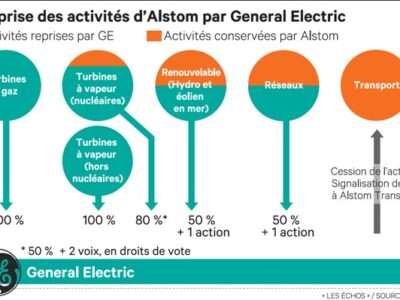
The sale of Alstom to General Electric is an economic, political and legal affair. Intervened in 2014, in France it is today rather told "for the prosecution". Those who participated are now on the defensive; in April 2018, it is in the field of "probity" that they defend themselves, terminology which is that of the Compliance Law, vocabulary chosen by the French legal system ("Sapin 2" Act of 9 December 2016)1Frison-Roche, M.-A., From the Regulation Law to the Compliance Law, 2017. .  Compliance has therefore appeared as a kind of aggression and it is in this way that many French observers are presenting it. In the Alstom case, Compliance is at its worst : as a means of pressure used the U.S. to obtain, in the conditions most convenient for them, the sale of control of the strategic Alstom company.   In this case where it is sometimes difficult to discern the true from the false, the fact of the advocacy, the concern for the truth of the political discourse a posteriori, it is certain that the action of the States interfered with the pretensions of the companies and that it is through a sale of a business in which it was also necessary to take into consideration interests of a different nature from economic and financial interests, not only the general interest but the particular interest which is the interest of a Nation : here the interest of France. That the United States wanted to reach their own interest on one hand,  and on the other hand that the other State needs and wants to preserve it – through the legal mechanisms such as the merger control, this is not to blame per se. Indeed, on the one hand the activity in question, namely the manufacture and sale of turbine for nuclear power plants are crucial activities and directly concern the States and on the other hand a State, here the French State French is legitimate to worry about some companies2Sur cette question, Frison-Roche, M.-A., The "Crucial Companies" and their Regulation, 2014.. It can be considered that if it did not, if the French Government in 2014 did not care to defend the energy sector (general interest) and the interest of France (interest of the country) , only worrying about the economic and financial dimension of the operation, then that is to blame. This is supported by the criticisms made today. This is denied by the people who were negotiating for the company and for the French State at the time. It is indeed this double dimension of national interest and general interest that we find in the French Decree of May 14, 2014  relating to foreign investments subject to prior authorization, the Décret du 14 mai 2014 relatif aux investissements étrangers soumis à autorisation préalable , called "Montebourg", text adopted then and which is legally legitimate because it gives the State the power to defend its own interests. -   But let's look at this case in the perspective of the Compliance Law, and first of all on the side of American Law. Can we blame the Americans for using the prospect of sanctions of the French company Alstom to encourage the shareholder of the latter, namely the French State to hand over control of the company to General Electric, buyer suitable for US public authorities? It is not legitimate to do so because the American Compliance Law gives US public authorities the legal power to prosecute and punish foreign companies when there is evidence to suggest that they are likely to be liable for corruption3Breen, E., FCPA. La France face au droit américain de la lutte anti-corruption, 2017.. One can certainly rant about the fact that this extraterritorial power of legal action is not only objectionable in itself but in fact is used more against European companies than against Chinese companies, and that in the case it was used (and strongly) against a company whose US wanted a transfer of technology and control4Voir à ce propos les observations pertinentes d'Antoine Garapon : Frison-Roche, M.-A., In the inaugural conference on "Europe of Compliance", Antoine Garapon highlights strengths and weaknesses of Europe , 3 mars 2018. . But the French company had given the baton to be beaten: if corruption had not been likely occurred, then the US authorities could not have deployed the force of this legal weapon. Admittedly, everyone replies: "be realistic, everyone corrupts, it's the real norm of the world!" Well, if it is so, it is right to change this sort of law of the world. To replace it with another principle: the principle of Probity.   Because it allows to move to the second perspective of the Compliance Law, on the side of French and European law. Indeed, if it went wrong, if the negotiations were unbalanced because the United States took advantage of the otherwise applicable Law and held Alstom accountable for corruption, including by imprisonment, this which has had the effect, no doubt, of weakening the interlocutor in the negotiations, is also due to the fact that Europe does not demand accountability from companies which, no doubt, commit acts of the same type.  The solution is not in the United States' stop of their behavior, because it is not clear why they would do it and in the name of what they would be asked to no longer apply a lawful and applicable legal requirement against corruption. The extraterritorial scope of their legal system will not diminish: if the criterion of a use of their currency was losing its force, for example by the use of a currency other than the dollar, the use of a means of digital communication would suffice to produce the legal attachment giving them competence. And who does not send emails by Gmail? does not used a data by Outlook? does not transfer a photo by Apple? A first solution could be in the cessation by the French and European companies of behaviors that make them amenable to such legal mechanisms. If that were not possible in fact, because it would be accepted that corruption is the real norm of the world (but then it would be a little less to proclaim the glory of business ethics and other Corporate Social Responsibility or to at the very least, not be surprised if one finds that some people are singing false5On this core question of credibility in Compliance Law, see Frison-Roche, M.-A., Compliance and Trust, 2017. , and even if this is indeed possible and because it is necessary by the Law to tend to this, because the breaches of probity do not neither economically nor ethically desirable, Europe needs to have the same legal capacity to hold any company accountable in this Compliance area. When the Alstom case unfolded, French Law did not allow it. But since French Law has evolved. By the so-called French "Sapin 2 Act" and precisely in reaction to this power that the United States derives from their legal systeme, France has adopted a legal mechanism which, thanks notably to the Agence Française Anticorruption -AFA (French Anti-Corruption Agency), is more offensive than its American model6For a demonstration in this sense, v. Duchaine, Ch., Les causes et les objectifs d'une Europe de la Compliance, Pour une europe de la Compliance, Journal of Regulation & Compliance, 12 April 2018. .  What the Alstom case showed is this: for the moment, Europe is destitute, we must de jure and de facto construct the Europe of Compliance. -

Articles

Bertrand Cantat revendique son “droit à la réinsertion” et le fait qu’il “a payé la dette à laquelle la justice l’a condamné” : en Droit, la justice pénale n’est pas une simple “facture” et c’est en terme de “libertés” et non de “droits” que les questions se posent

Articles

Apprendre le Droit américain avec Miss Sloane

Articles

The Road of Violence

Rose MacGowan spoke not only to denounce the sexual violence against women in the Hollywood system, but to explain why women have not said anything so far, why victims smiled when they were scorned, why they expressed a satisfaction when they were used as things, and that for so many years: they were afraid and ashamed. She explained that at first they had at ceremonies organized by Hollywood to the glory of Hollywood wearing black dresses. She explained that it was not enough and that it took the explosion of this kind of rage that finally the truth comes out. Indeed, weak signals – such as mourning one's own dignity – are not enough when what is involved in overthrowing is what has been built in the last thirty years, from the United States and whose main victims are women: what must be named expressly "The Road of Violence".. - Women are the cobblestones. We are the consumers. We are walking on this Road of Violence, we pay considerable sums to the industrialists who built this Road of Violence and develop it every day more by new highways, by drawing from the body of women, this inexhaustible wealth. We do it happily because the human beings we walk on, instead of shouting their pain and protesting against what we are doing to them, smile, affirm their satisfaction, seem to be asking for more. That must stop. And that can stop. Because if we stop using this Road of Violence, then the industry of human, which is motivated and guided only by the magnitude of the profitability, will stop. If we, active or potential consumers, do not do it, then women will be released themselves by violence, exhausted that we step on them. But if of ourselves we stopped to take this Route? Because it does not take the only form of sexual violence in the film industry. Women are used and offered for the satisfaction of all our other desires. No limit, because they are so happy. This construction of the markets by new offers passes by the erasure of our own conscience. It is above all against our blindness that we must fight. - Indeed, the solution is not that victims wear black dresses, which paradoxically refers to what would be even more "discretion" on their part, even "distinction", a solution that erases them even better. It is certainly not that the victims are fading away, they must not fade any more than they must apologize, they must not "disappear" anymore. However, in order for us as consumers to borrow this "Road of Violence" and pay for the industries that build it, we must not even be aware of the fact that we consume human beings, an act of consumption we are rather reluctant. By ethics or because the Law reminds that the human being is a person and not a thing. To provoke our act of consumption, the woman is thus masked. She is masked by a smile and a "consent". The argument is often returned to the faces of victims, perpetrators or their lawyers reminding that they have good "consented" to get into the bedroom, they "knew very well" that awaited them, they had a " interest "to do so (eg a role in a film). And to show pictures where we see the victims with the perpetrator of violence, both smiling, which would be the proof that they were "agree" or even "friends" and that we should not get involved. The moral order invading private life, that would be the enemy, the State not having to slip under the veil of women. This argument is used systematically when it comes to organizing the transfer of women and children on a large scale. The surrogacy industry encourages us to pay agencies, clinics, doctors and lawyers to get a baby. The images and testimonies of "happy GPA" invite us to participate in the showdown with the States for the easy obtaining of a link of filiation between this child of which we wanted the birth in the world and us. Since for the moment the Law protects women by the prohibition of the GPA, any debate is good to take, any evolution of the Law going towards a "liberalization" of the practice. Industry leads us on the "good road". What becomes of the mother? She disappeared. She is nothing. We are told that she is a "third party" vis-à-vis a relationship of filiation that is derived from the desire to parent. She ? She is only the mechanical instrument from which the child comes. Why worry about her? In the photos that are poured on the networks and in the debates, the women smile. In the recordings, they say: "I am happy, my only happiness is to make the happiness of others". Thus, as consumers of women and children, we can walk on this Road. We know that mothers are poor, that they are paid. But what if they say they are happy? This is inevitably true, since they say it. While we know that they are the mothers, the promotion of this industrial practice by the intermediaries most often established as a non-profit association in London or the United States underlines that these women have "freely consented" and that they have an "interest" because by the money received they can take care of their family. Everybody is happy. Fear, shame and guilt are never mentioned. And so, thanks to our blindness, built by the industry and commerce of the human, and through which they thrive, the Road of Violence is unfolding around the world as never before previously. -   No, the recognition of the practices is not the solution, it is on the contrary the cement that the industry awaits to consolidate the Road of the Violence, this infamous Road paved on the smiles of the victims, so happy to prostitute themselves and to make the "magnificent gifts" of surrogacy), paved with "consents" to fade ("I agree to be nothing, and it gives me pleasure, because my only pleasure is your pleasure" ), paved on altruism and privacy ("do not interfere with anything, do not ban anything, never mention the defense of the human being, let us stay with the administrative difficulties to be regulated, what is the use of State"). You can take a position one way or the other. But we must name the realities. Either we admit to living in a world where everything is yielding and acquiring. And we say Yes to the sale of women. Which are an abundant but valuable raw material. Either we do not admit it. By ethics, which posits that a human being can not have status of thing. And the Law must not only maintain the prohibition of surrogacy, but must achieve the international effectiveness of this prohibition. That it is difficult, yes but this is another question. Do not offer businesses Law, and not only Law but also Ethics, to pave the Road to Violence, still adding to the strength they have to do it.   -    

Articles

Jesus legally replaces Caesar. The image of currencies and the idea of security

Cryptocurrencies seem to be admitted, delivered from the State. And many rejoiced. Let's take the question on the side of Law. In France, we remember an article written in 1968 by the great lawyer Carbonnier : L'imagerie des monnaies  (Imagery of Coins), seeing in Caesar's face engraved on the coin the image of the State itself, guarantor of the entire monetary and exchange system. In Europe, we remember the discussions on the image of the euro, how each state in the zone could express its existence while the guarantee was common and concentrated in the same central bank, preferring a public building to a character. Today the currencies to be virtual do not have less an "image". One could even say that they have only that, since it is no longer the State which, by the face of Caesar is inserted there. But other faces can be imbued. Could the law find fault with it, because some figures would be "reprochable" because only Caesar would be beyond reproach? Could the Law draw any consequences from it, because some figures would be "engaging", less than that of Caesar but still a little? Certainly, not faces that the Criminal Law rejects, not that of Jack the Ripper, not that of Hitler. But other historical figures less clearly banned, in this period where it is easily argued that everything would be "questionable" and therefore admissible and that besides everything would be "to discuss", the currency thus expressing this flow of discussion , speech that goes from hand to hand, from post to post on virtual networks? Still, figures are block around them. This is particularly true in communities that can thus elect them to trust each other: just like their "Caesar", and knowing each other well, lend themselves more easily with confidence, to pay each other, while they would not lend to others, they would not buy from others. Why no. Since we accept the principle of this currency, based on the only technical security (double encryption) and trust between people (intersubjectivity of a circle that has been chosen), without mentioning the issue of the debtor as a last resort, in order to challenge Caesar and public finances. But let us take the hypothesis that the figure embedded in the virtual currency is that of Jesus. And the hypothesis is not fancy. Indeed, the "religious currencies" are multiplying. And the platforms that offer them insist on the fact that these tokens that are exchanged between people who believe in Jesus place great trust in the "son of God" and are therefore particularly trusting each other, for example in their respective capacity to keep their commitment. Outside the Law. On their respective ability to help each other. Outside the Law. Is it necessary to forget the affirmation that it was necessary "to render to Caesar what was Caesar's"? Let's ask some questions in Law. – Reflections on what could or should be the "regulation" of non-state currencies, whether we call them virtual or not (in what does this change the nature of the currency?), That we secure them by encryption technology and / or by the decentralization of information, should they also relate to images? – Are non-state currencies so much that the religious image, as long as it is not contrary to public order, is permissible, notably in legal systems where the constitutional principle of secularism has as its object and effect not only to neutralize the religious significance of religious objects but also to protect religious freedom? – Can "religious currencies" be protected and have specific economic and financial significance, as the United States Supreme Court admitted in the Hobby Lobby judgment of June 30, 2014? Europe is not the United States. – If the image of Jesus is encrusted on the currency, can we consider that the corpus is also inserted so that the platform that attracts a particularly interesting clientele (solvent, "responsible", holding its commitments, etc.) ? This insertion of the religious corpus, as the state was through the face of Caesar would operate not de jure but de facto, so that the company holding the platform should respond to third parties by the factual belief that this may have generated in third parties. – Moreover, do not these "religious currencies" produce a specific systemic risk? Not that such and such a religion could collapse, or this or that religious effigy to undergo a haircut with a domino effect on all the saints, waves of doubt provoking a mistrust of all the faithful ones because the various religions are doing well, but precisely because the mark of these religious communities to which these platforms specifically appeal is to make "their own law" prevailing over the law of the Dtate, considered inferior since it comes only from men and not from God. And now the churches are starting to coin money… At the very least, it will be necessary in Ex Post that the faithful do not come to seek the state by guaranteeing if there is bankruptcy, because Caesar does not meddle in the affairs of Jesus. To each his currency and each to reread Carbonnier, one of the finest readers of the Bible -