This working document is the basis for
an article published in the Archives of Philosophy of Law (APD).
Summary: Painting so well that the canvas is a living object is a technical feat that was achieved by little
1Il est remarquable que pour Bacon, Van Gogh, que le premier considére comme un "héros", a peint d'une "façon littérale" et que c'est grâce à celui qu'il a pu grâce à son "technicité" restitué "la vie" désertique du paysage. . Francis Bacon obtained from the canvas that it made it his business to preserve life in it, while Carbonnier, with a similar modesty before the canvas and the profession, obtained that the Law was only a framework, but that it did not however, leave this place to no one and especially not to public opinion, so that everyone can in their own way and within this framework make their own right, on which the legislator in his delicacy and to use the terms of the Dean n affixes only a "thin varnish". These two masters of art built frames with rudimentary principles so that on this canvas the movement could happen by itself. Thus the Legislator created by Carbonnier offered each family the freedom to weave their rights every day. However, the childhood of the art of stretching the canvas over the loom came back to the Legislator alone. It is then possible, as Bacon did, to obtain an immobile object which allows the mobile figures to constantly arise. Regulatory scribbles are a thousand miles from this Legislative Art. - In numerous writings and interviews,
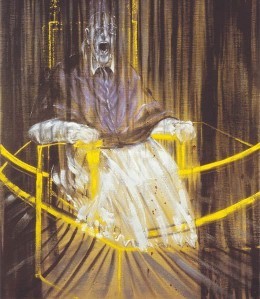
The painter Francis Bacon explains his act as a painter: it is "preserving the vitality of the canvas". In the book he devoted to it, Gilles Deleuze pointed out that Bacon said that "the procedures used do not force the Figure to stand still"
2Deleuze, G., Francis Bacon, rééd. par Badiou, A. et Cassin, B., . With the same pedagogical friendliness, in numerous writings and interviews, the jurist Carbonnier explains his act as a legislator, in particular in his collection of texts
Essais sur les lois: legislate well, and let life unfold through texts, well
after their adoption, because posed on pages which are never white, written compositions which are only the "varnish" of the life which must be able to throb in these Laws which one presents however so often but so strangely as "engraved in marble ". While on the contrary it is only a question of "preserving" the vitality of what is under the letter of the Law, the life of each one, life which does not resemble that of the neighbor, to obtain that the web of the legislative system is so flexible that this system lives by itself after the promulgation of the texts. But it may seem to force the line to find elements common to two characters who undoubtedly were unaware of their reciprocal existence or at least, although living at the same time, did not appear similar. Before showing how similar their action is, therefore, put them face to face beforehand.
PREREQUISITES REQUIRED: FACING FRANCIS BACON AND JEAN CARBONNIER Thus, the family painted in broad outlines by a few new articles of the Civil Code written by Carbonnier could nevertheless flourish afterwards, in each family, without the need to rewrite the text. One might be surprised that Carbonnier expressly only likes the Law and not the judiciary, this association of the Right to the Law often being worth rigidity; yet – and the formula made him famous – he conceived of the Law as only "flexible", without recognizing the judge as a general source of the Law, without recognizing him the power to soften over time the edge of the adapted law formerly, then once. In fact, the F
lexible Droit volume brings together almost only texts relating to laws, while in his latest work,
Droit et passion du Droit sous la Vième République, he challenges the influence of the courts over the Law. Carbonnier abides by the Law. These laws which we are constantly told us that their quality should be never to move …. And to evoke in order to convince us the imperative of legal certainty, predictability, etc., each new report on the subject saying the same thing as the previous one, this one serving as a reference for the next one. Thus, all these numerous works explain to us that, in the ideal towards which one should tend, the Law does not move in the main lines while the judge, by "jurisprudence" comes to adapt it and that thanks to "dialogue ", even to the" dialectic "between legislation and jurisprudence", cahin-caha we arrive at something suitable. In practice. And here is legal security well served, since it would be the only concern. A universal model to apply everywhere , at everything. But this presentation, now very common and also constituting the vulgate of the economic analysis of law, does not correspond to the conception of Carbonnier, who did not admit the creative power of the Judge, being,
like Motulsky, above all a jurist . Because if he asked as a question
"Any law in itself is an evil?", It is only to answer it firmly: No, going so far as to compare in this article the announcement of a new law with the announcement made by the angel Gabriel. Perhaps it is his attachment to the Law, his refusal to consider the jurisprudence as the source of the law, his respect for the legal matter itself that make his work today less cited than the work of sociologists who do not know not more the legal technique than the economists who describe the "legal regulation" to adopt to be effective? It should also be noted that its legislative art is little used today
3...., in Verdier, R. (dir.), Jean Carbonnier. L'homme et l'oeuvre. . When laws are written by experts who do not deem it useful to know the law (for example to reform collective procedures solely on the basis of economic knowledge), who even think it useful to not know it so as not to be captured by his technicality, there is no need to look on the side of Carbonnier. It is true that to make a painting, to have the strength to fade in front of your canvas, you must master the technicality to return to the childhood of art, ambition of all artists, all teachers, all the Masters. Francis Bacon, also
a wise reader of writers, rejecting the modern opposition between painted lines and written texts, repeated at each interview that he awaits "the accident" which comes alone to get the flesh out of the skin that traps him
4Comment dès lors ne pas penser à la définition de l'écriture par Céline, la définition comme le fait de tanner sa peau sur la table de l'écrivain ? . This technicality of the accident, this unexpected preparedness that allows life to find its place in the stretched canvas. Carbonnier did not do anything else: stretch the canvas of the Law so that family life can, in each of the families we make up, unfold overflowing with the text which is only "varnished". But it is nevertheless a law, as Bacon never disputed making paintings. The theme of Carbonnier
Sociologie juridique's book is this necessary presence of law in a sociological analysis which would not betray the law presented while managing to keep its distance: that is to say, let it breathe, allowing us to watch live. This is why,
like Truffaut, he took an interest in children's pocket money. By a game of mirrors, Carbonnier explained, for example about the reform he conceived of the Law of matrimonial regimes and whose genesis he explained in an article in L'Année sociologique
5Terré, Fr., Jean Carbonnier et l'année sociologique, L'Année sociologique, 2007/2, vol.57, pp.555-569., that the sociology of law must allow distant readers that we are faced with the only written sheet of the work to see the living law come out of the pages. As historians aspire, History being living matter, as the author of literature understands it. Carbonnier wrote a novel about himself. A novel about a legislator therefore.
"Self-fiction". We know
judges of absolute modernity who have brought this art to its excellence, similarly concerned with writing life. Admittedly, one could underline that if Francis Bacon signed his tables, which attaches to him the work and holds the Figure which moves there, it was not the case for Carbonnier. You must already be a scholar to know that the author of the train of reforms of the XXth century which transformed the Civil Code has for patronym "Jean Carbonnier": the Legislator is an abstract character, who, like the State, always carries this same title , like the King, and passes indifferently from head to head, from the dead instant to the crowned instant. Whoever looks at the painting will attribute it to Francis Bacon because it is written on it, while on the contrary he will designate for example the law of July 15, 1975 as the law reforming the law of divorce, without referring to the human being who designed it. Yes, it is the Parliament, which, in the name of the People via the Representation, is the author of the Laws. And not such and such. So the comparison would not be worth. But let's take a detour by
Romain Gary. The action of this one showed what one could call "the right of the literature", ie what can go the power of this one. Its power is so great that the author can never appear in it
6"le droit de la littérature est de n'y apparaître jamais comme auteur".. Romain Gary not only wrote under pseudonym, which allowed him to pass under the radar of the legal standard of Gongourt which cannot be given twice – and which was it, but wrote himself a book supposedly written by his ghostwriter after the hoax discovered – and therefore supposedly finished, speaking ill of Romain Gary, against which he protested but nevertheless undertook legally not to complain in court. While he himself wrote the book. The author can be a ghost, which multiplies, ghost of the ghost, is discovered only to hide under his face that is believed to be discovered, etc. But by dint of covering the smoke with smoke, the author himself disappears: and then remains the pure work, the Figure which moves alone, perfectly free. Thus under the mask of the Legislator, it was Carbonnier who designed and wrote, without ever signing, because it is the Law who speaks, and never Carbonnier. No greater tribute a law clerk can pay to the Law than disappearing under his letter. Thus, an author does not recognize his signature, it is only a clue, not a condition. There is no need to go to
Law & Literrature, a current which dries up the Law rather to cover it with a conception of the Law as a fabric of strategic lies and retrospective narratives of justification of decisions. No, Carbonnier, far too erudite and far too good a jurist to go towards a thought above all critical of an object, made sociology to show us a living Law and at the same time had a sociological conception of Legislative Art , writing laws which capture in their austere lines the daily and various lives which will come after the writing of a law which writes only in capital letters, general, aiming nothing special so that the particular remains in the hands of each individual
7Comme le souligne très bien Frédérique Niboyer, pour montrer que les lois actuelles qui visent tous le cas possibles (ce qui est impossible) empruntent une méthode contraire à celle de Carbonnier : ""Le doyen Carbonnier avait une autre conception : une loi générale devait pouvoir s’adapter à tous (d’où le pluralisme du droit de la famille) tout en ouvrant des champs à d’autres ordres normatifs, alors qu’aujourd’hui le « légicentrisme » devient roi : la seule norme à laquelle on fasse confiance serait ici la loi qui, partant, doit être spécialisée pour chaque catégorie.".. But how, if we get the judge out of the normative game, can the law be "flexible"? If not by drawing up laws which "preserve" in themselves, in their "canvas" even their vitality, which allows them to move, in an ink which must never be dry or reach marble? Why not make the connection between the two creators, Francis Bacon and Jean Carbonnier? How even not to do it, the design and the method are so similar to them. When Bacon paints scenes of daily life as a field of ruin, while Carbonnier aims only "the interest of the child", on which one glosses so much, only as "a key which opens on a vacant lot"
8Cité par Frédérique Niboyet, L'héritage de Carbonnier dans le droit matrimonial actuel : entre continuité et rupture, 2012, n°5. , how not to bring them together? For the two authors, painting for one and the law for the other, both must tear them away from their static support so that there is expressed and "preserves" life in its mobility itself. Even more, it is thanks to this support, which we thought motionless, that the fluidity of life appears to us. Thus life is, for them, the common object of painting and the law. This definition is carried by few people, because we find so often in the presentations which are made of the Law the imperative of a choice to operate, to put on the side of the immobile or on the side of the mobile, but not this conception of mobility expressed by an immobile support
(I). It must be recognized that few have the level of technical mastery and thinking of Bacon and Carbonnier. But if we go back to Carbonnier's conception of the law, while at a distance, as would do, in his own words, in his own country a "foreign" legislator
9Carbonnier, "A beau mentir qui vient de loin", in relation to it, laws that 'he nevertheless made with a master's hand, was it not in terms of painter that he described it, evoking the "frame" that it constitutes and the "thin varnish" by which it must simply always cover life which always prevails, since it is the canvas?
(II). The two authors thus put life at the center, one of the tables, the other of the laws. Yet two motionless objects, some made of "canvas", others made of "marble". But both wanted – emphasizing the difficulty of the task – forcibly reinserted into the materially intrinsic immobility of the object – the canvas of the table that the flaking of the paint by the passage of time will damage , the letter of the Law that subsequent reforms will challenge – life. That is to say, finally give them their true object. And yet impossible to restore. And they got there. Undoubtedly by their own qualities: mastered technicality, modesty, perseverance, effacement before life itself which unfolds and occupies all the space and "does its work" on the support, which becomes mobile. Thus Francis Bacon's paintings move as the laws written by Carbonnier live, which is natural since it was directly inserted. What modesty was it worth to fade to this point. Achieve by technical prowess that life is still throbbing in the canvas, in the text published in the Official Journal. Only in what by nature is fixed: the canvas, the Law, not only does life still throb, as if by "inadvertence", as Francis Bacon says, because life has a hard life, but because the masters that they were so delicate and so masters of their Art that they made everything that it was the very object of their work: the canvas of the picture was for Francis Bacon what life was made of, the marble of the law was for Carbonnier that by law life was made. So as when the Master of Sewing removes the thread, the canvas no longer exists, the diary has long been lost, but life is still there. This is no coincidence, as sociologists who seem to boast of knowing nothing about law seem to present, speak of a "legislative vacuum" and always ask for more "new laws", sometimes stressing that Carbonnier was also arbitrary in law that bad in sociology – because there is to say it. On the contrary, it is the Law bringing to its perfection: practical art, the Law relates to life and if in advance, in its very conception, it knows how to fade in front of life, it then joins in practice the art of painting because it takes a painter to force life on canvas (I). This requires a painter, because we often talk about legislative art but it is also appropriate to talk about artists who hold the pen. These do not "regulate", they draw a picture which, through the effect of correspondence, can let life continue to unfold because the ink is never dry. Of this table, it is the law which forms the framework, a light framework which allows to keep contours to what is the Right and what is not. Carbonnier always knew that in relation to life, Law was only a "thin varnish". Like all great masters, it was modest, drawing up great pictures, that were the complete reforms of the Civil Code that he wrote, never forgetting to conceive them only as a varnish so that life always finds its way out, breathe, in the same movement of a
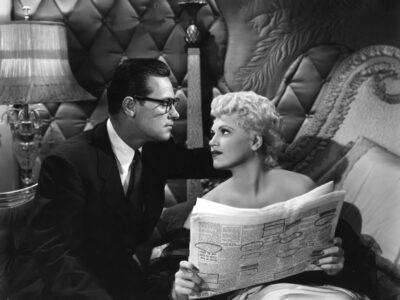
woman coming down the stairs or of a
Pope who rules on his throne (II).