Publications Related to Global Law

Working papers

Working Paper serving as the basis for an article concluding a book

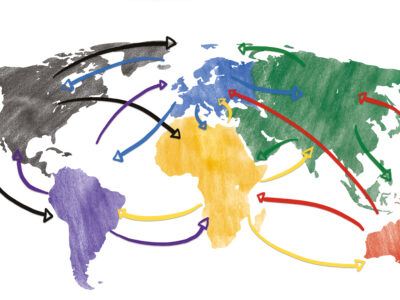
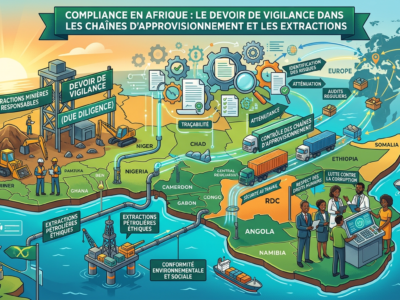
🚧Taking into account the legal landscape in Africa to fulfil the Vigilance Obligation

► Full reference : M.-A. Frison-Roche, Taking African legal geography into account to achieve an efficient vigilance system, working paper, August 2025/February 2026 - 🎤This working paper follows on from the closing address at the symposium Devoir de vigilance, quelles perspectives africaines ? Regards croisés en droit international, droit comparé et droit OHADA (Vigilance Duty: what are the prospects in Africa? Perspectives from international law, comparative law and OHADA Law, organised by the Faculty of Law of Bordeaux, through its Institut de Recherches en Droit des Affaires et du Patrimoine – IRDAP (Institute for Research in Business and Property Law), held on 15 November 2024.  - 📝This working paper forms the basis of the article "Considérer la géographie juridique africaine pour y réussir l'obligation de vigilance", which concludes the volume edited by Eustache da Allada in 2026 by Éditions Lefebvre-Dalloz, in the “Thèmes & Commentaires” collection,📗Devoir de vigilance, quelles perspectives africaines ? Regards croisés en droit international, droit comparé et droit OHADA (Vigilance Duty: what are the African perspectives? Comparative perspectives in international law, comparative law and OHADA Law). To this end, following an initial draft in August 2025, it was revised a second time to better incorporate the written contributions that make up the book, since the article on which it is based sets out a personal approach drawing on external research whilst also needing to synthesise these contributions. - ► Summary of the working paper :  The French “Vigilance” Act of 2017 incorporated the technical provisions and the spirit of the “Sapin 2” Act of 2016. They share a common goal. They have been and remain a common source of controversy and passion. At their heart lies the establishment of a “compliance obligation”, for which vigilance techniques form the “edge ” in serving a grand ambition: to protect systems from risks, both now and in the future, in order to protect the people involved in them. The passion that continues to surround the Vigilance Act, which gave rise to the European CS3D , is misguided, because the law and passion are never allies. Some would passionately want to see vigilance triumph by condemning companies to perform miracles; others would passionately want to see the destruction of all the texts that established the very concept of this Compliance Law, built upon these Humanist Monumental Goals. But let us acknowledge that in these debates on the Vigilance Obligation, which is being legally implemented across value chains, Africa is often cited as an example in a general discussion. It is not often considered as a distinct case with its own legal landscape. No reliance is placed on its strengths or on its own legal mechanisms, even though value chains – particularly industrial ones – so often lead to it, both now and in the future. Through analyses of the Vigilance Obligation, Africa is perceived as a place of retribution or of a new form of paternalism, and when its future is envisaged, prospects seem to be lacking, even though the very essence of compliance—and therefore of Vigilance—is the future.  If we take a less confrontational view and focus instead on the ‘legal geography’ of African countries and their social and inter-state structures, we see that the concern for others, both present and future – which ultimately constitutes the Monumental Goal of Compliance Law and thus of the Vigilance Obligation – is more prevalent in Africa than it is in Europe, which is now built upon legal individualism. This concern for others is reflected in legal mechanisms akin to mediation and various legal structures that our own institutions would do well to heed: our legislators before adopting bills, and our judges who might listen to them as amici curiae before reaching a decision. If we turn our attention to the African continent, which is exploited by certain segments of value chains, and to labour organisations, it becomes clear that here too, legislation and sanctions are not the whole story. Compliance techniques that make use of soft law and the contractual frameworks underpinning the chains themselves can remove the element of abstraction that is, by nature, inherent in general legislation. Moving forward through contracts under the supervision and with the support of the courts is an approach that could prove more fruitful than well-intentioned legislation, which has served as a catalyst, in line with the privileged position of contract law within OHADA. This serves to enhance the judge’s authority. The Compliance Judicialisation is also linked to the growing connection between Compliance and Contracts. However, it appears that not only can European judges specialising in Compliance Law and Vigilance Obligation thus rule on matters concerning Africa, which they can only know from a distance – though it is the lot of every judge to be an outsider – but African and inter-state Courts, notably through OHADA, can address the Vigilance Obligation because value chains are constituted by contracts. By developing it not as a foreign concept to be assimilated, but as that which expresses the very heart of the Law in Africa: concern for others, solidarity, the search for compromises and solutions so that the social and environmental system – that is to say, the human system – may endure into the Future. - 🔓Read the developments below⤵️ - 🌐Follow Marie-Anne Frison-Roche on LinkedIn 🌐follow Marie-Anne Frison-Roche on Instagram 🌐Subscribe to the newsletter MAFR Regulation, Compliance, Law 🌐Subscribe to the video newsletter MAFR Surplomb 🌐Subscribe to the newsletter MaFR Law & Art

Working papers

Working Paper basis for an article in a collective publication

🚧Compliance Law as the Royal Road for regulatinf the Digital Space

► Full Reference: M.-A. Frison-Roche, Compliance law as a Royal Road for regulating the Digital Space, Working Paper, May 2025 - 📝 This Working Paper is the English basis for an article written in French "Le Droit de la compliance, voie royale pour réguler l'espace numérique", in 📕 - ► Summary of this Working Paper: In order to describe the role of Compliance Law in regulating the digital space and to conclude that this new branch of Law is the 'royal road' to this end, this study proceeds in 6 stages. Firstly, at first sight and conceptually, there is a gap between the political idea of Regulating and the ideas (freedom and technology as 'law') on which the digital space has been built and is unfolding. Secondly, in practice, there is such a huge gap between the ordinary methods of Regulatory Law, which are backed by a State, and the organisation of the Digital Space by these economic operators, that are both American and global. Thirdly, the political claim to civilise the Digital Space remains and is growing, relying on the very strength of the entities capable of realising this ambition, these entities being the crucial digital operators themselves, seized as Ex Ante. Fourthly, it corresponds to the conception and practice of a new branch of Law, Compliance Law, which should not be confused with "conformity" and which is normatively anchored in its "Monumental Goals". Fifthly, Compliance Law internalises Monumental Goals in the digital operators which disseminate them through structures and behaviours in the digital space. Sixthly, through the interweaving of legislation, court rulings and corporate behaviour, the Monumental Goals are given concrete expression, willingly or by force, in ways that can civilise the digital space without undermining the primacy of freedom. - 🔓read the Working Paper below⤵️ - 🌐follow Marie-Anne Frison-Roche on LinkedIn 🌐follow Marie-Anne Frison-Roche on Instagram 🌐subscribe to the Newsletter MAFR Regulation, Compliance, Law 🌐subscribe to the Video Newsletter MAFR Overhang 🌐subscribe to the Newsletter MaFR Droit & Art

Working papers

Working Paper for📺MAFR - OverHang (Notion)

🚧Arbitration, a highly appropriate technique for deploying Compliance Law, in particular to satisfy the Vigilance Obligation

► Full Reference: M.-A. Frison-Roche, Arbitration, a highly appropriate technique for deploying Compliance Law, in particular to satisfy the Vigilance Obligation, Working Paper, March 2025. - 🎤 This Working Paper was developed as a basis for the Overhang👁 video  on …  April 2025 : click HERE  - 🎬🎬🎬In the collection of the Overhangs👁 It falls into the Notion category. ►Watch the complete collection of the Overhangs👁 : click HERE - ► Summary of this Working Paper: If Arbitration has so far not developed much in Compliance Law, it is because this new branch of Law is not well known. Indeed, if it were simply a matter of 'conformity' with mandatory regulations, then Arbitration involving rights that are freely available to the parties and Compliance would be 2 worlds that must ignore each other. But Compliance Law is defined quite differently. Its normativity lies in the Monumental Goals set by the political authorities, which oblige large companies, because these compagnies are in a position to do so, to contribute to achieving these Goals, namely the future preservation of the Systems (banking, digital, climate, energy, etc.) and human beings involved. While the Goal is constrained, the company is free to choose the means, as long as these means  are credible. Arbitration is one of them. From the arbitration clause to the appropriate award. One example is the Duty of Vigilance, the cutting edge of Compliance. In order to effectively find solutions in the value chain that the company governs, Arbitration is a suitable means of achieving the Monumental Goals of environmental protection and human rights, under the control of the Judge.       - 🔓read the developments below⤵️ - 🌐follow Marie-Anne Frison-Roche sur LinkedIn 🌐follow Marie-Anne Frison-Roche on Instagram 🌐subscribe to the Newsletter MAFR Regulation, Compliance, Law  🌐subscribe to the Video Newsletter MAFR Surplomb

Working papers

🚧Compliance contract, compliance clauses

🌐 follow Marie-Anne Frison-Roche on LinkedIn 🌐 subscribe to the Newsletter MAFR Regulation, Compliance, Law  - ► Full Reference: M.-A. Frison-Roche, Compliance contract, compliance clauses, working paper, September 2022. - ►Summary of this working paper:  Compliance Law has multiplied obligations. However, although Tort Law is emerging in Compliance issues and contracts are multiplying in practice, for the moment the relationship between Compliance Law and Contract Law is not very visible (I). However, there are contracts whose sole purpose is to give concrete form to Compliance, which creates a specific contract and must influence its implementation (II). Moreover, there is much to learn from the diversity of compliance stipulations scattered throughout a wide range of contracts (III). - 🔓read the developments below⤵️

Books

📕Les Buts Monumentaux de la Compliance

🌐follow Marie-Anne Frison-Roche on LinkedIn 🌐subscribe to the Newsletter MAFR Regulation, Compliance, Law  - ► Full Reference: M.-A. Frison-Roche (ed.), Les Buts Monumentaux de la Compliance (Compliance Monumental Goals), coll. "Régulations & Compliance", Journal of Regulation & Compliance (JoRC) and Dalloz, 2022, 520 p. - 📘In parallel, the English version of this book, Compliance Monumental Goals, is published in the collection co-published by the Journal of Regulation & Compliance (JoRC) and Bruylant.  - 📅This book comes after a cycle of colloquia 2021 organised by the Journal of Regulation & Compliance (JoRC)and its Universities partners.  - 📚This volume is one of the books dedicated to Compliance in the collection Régulations & Compliance: read the presentations of the other titles of this collection. - ► General presentation of the book: Seize Compliance by its mind: its Monumental Goals. The notion of "monumental goals" of Compliance was proposed in 2016 by Marie-Anne Frison-Roche1🕴️M.-A. Frison-Roche, 📝Le Droit de la compliance, 2016. . It has become explicit in the texts and the resolution of cases, for example to fight against climate change, make human beings effectively equal, force to be extraterritorially vigilant about suppliers.  Compliance Monumental Goals are targeted ex ante by regulations, contracts, CSR, and international treaties. Creating an alliance between business and political authorities, aiming for a new form of sovereignty. The presence in litigation of these Monumental Goals of global dimension renews the responsibilities and the Judge office. Describing and conceiving these Monumental Goals makes it possible to anticipate Compliance Law, which is more powerful every day. - 🏗️General construction of the book: The book opens with a double Introduction, the first summarizing the book (in free access) ​and the second, more substantial, proposing  the Monumental Goals as definition of Compliance Law putting them at its "beating heart", giving this new branch of law its originality and specificity, explaining what, in the History of the United States and Europe, gave birth to this singular corpus and justifies a substantial definition of Compliance Law. The concept of Monumental Goals is explained, justifying both systemic and political nature of Compliance Law, the practical consequences of which legal specific rules are thus better identified and limited, since Compliance Law does not lead to all-obedience. We can then determine what we can expect from this Law of the Future that is Compliance Law. From there, the book unfolds in 5 titles. A first Title is devoted to the "radioscopy" of this notion, in itself and branch of Law by branch of Law. A second Title aims to measure how the Monumental Goals are questioned by a crisis, for example in a health situation, but not in that example, if they aggravate it and must be discarded, or if, on the contrary, they are exactly conceived for this hypothesis. of crisis, risks, catastrophes and that it is advisable to exploit them, in order, in this "test", to benefit from the alliance between the political authorities, public powers and crucial operators. Once made explicit and tested, the Monumental Goals must find a sure way to be considered. Therefore, a third Title aims to measure in principle and in practice how the Proportionality method can help the integration of Compliance, thus giving a new dimension to the Law without dragging it into insecurity and illegitimate grabbing of powers. But because Compliance Monumental Goals express a very great ambition, the question of a bearable, even beneficial relationship with the international competitiveness of companies, standards and systems must be opened. This is the object of the fourth Title.   Finally, because the Monumental Goals express by nature a new ambition of the Law in a world which must not give up in what could be the prospect of its abyss, the fifth Title has for object the relationship between the Monumental Goals of Compliance and Sovereignty. - ► Understand the book through the Table of Contents and the summaries of each article:   DOUBLE INTRODUCTION 🕴️M.-A. Frison-Roche, 📝Résumé de l'ouvrage Les buts monumentaux du droit de la compliance (free access : click here to read this article (in French))  🕴️M.-A. Frison-Roche, 📝Les Buts Monumentaux, cœur battant du Droit de la Compliance   I. LA NOTION DE BUTS MONUMENTAUX DE LA COMPLIANCE ("THE IDEA OF COMPLIANCE MONUMENTAL GOALS")  🕴️R.-O. Maistre, 📝Quels buts fondamentaux pour le régulateur dans un paysage audiovisuel et numérique en pleine mutation ? 🕴️A.V. Le Fur, 📝Intérêt et raison d’être de l’entreprise : quelle articulation avec les Buts Monumentaux de la Compliance ?   🕴️A. Le Goff, 📝La part des banques dans la concrétisation des Buts Monumentaux de la Compliance 🕴️J.-F. Vaquieri,📝Les "Buts Monumentaux" perçus par l'entreprise. L'exemple d'Enedis 🕴️M. Malaurie-Vignal, 📝Les Buts Monumentaux du droit du marché. Réflexion sur la méthode 🕴️D. de La Garanderie, 📝Sur les Buts Monumentaux de la Compliance sociale  🕴️C. Peicuti & 🕴️J. Beyssade, 📝La féminisation des postes à responsabilité dans les entreprises comme But de la Compliance. Exemple du secteur bancaire 🕴️I. Gavanon, 📝Le droit des données personnelles dans l’économie numérique à l’épreuve des Buts Monumentaux 🕴️B. Petit, 📝Les Buts Monumentaux du droit (européen) des relations de travail : un système mouvant aux équilibres à consolider    🕴️G. Beaussonie, 📝Droit pénal et Compliance font-ils système ? 🕴️Ch. Huglo, 📝À quelles conditions le Droit climatique pourrait-il constituer un But Monumental prioritaire ?   II. MISE EN OEUVRE DES BUTS MONUMENTAUX DE LA COMPLIANCE EN ARTICULATION DU PRINCIPE MAJEUR DE LA PROPORTIONNALITÉ ("IMPLEMENTATION OF COMPLIANCE MONUMENTAL GOALS IN ARTICULATION OF THE MAJOR PRINCIPLE OF PROPORTIONALITY")  🕴️L. Rapp, 📝Conformité, proportionnalité et normativité   🕴️B. Bär-Bouyssière, 📝Les obstacles pratiques à la place effective de la proportionnalité dans la Compliance 🕴️A. Mendoza-Caminade, 📝Compliance, proportionnalité et évaluation 🕴️L. Meziani, 📝Proportionnalité en Compliance, garant de l’ordre public en entreprise 🕴️M. Segonds, 📝Compliance, proportionnalité et sanction   🕴️M.-A. Frison-Roche, 📝Définition du principe de proportionnalité et définition du Droit de la Compliance     III. LES BUTS MONUMENTAUX DE LA COMPLIANCE ÉPROUVÉS PAR LES SITUATIONS DE CRISES ("THE COMPLIANCE MONUMENTAL GOALS TESTED BY CRISIS SITUATIONS") 🕴️A. Oumedjkane, A. Tehrani et P. Idoux, 📝Normes publiques et Compliance en temps de crise : les Buts Monumentaux à l'épreuve. Éléments pour une problématique 🕴️J. Bonnet, 📝La crise, occasion de saisir la Compliance comme mode de communication des autorités publiques   🕴️N. Sudres, 📝Gel hydroalcoolique, Covid-19 et Compliance. Des insuffisances de la démarche de conformité à l'émergence d'îlots de Compliance 🕴️M.-A. Frison-Roche, 📝Place et rôle des entreprises dans la création et l'effectivité du Droit de la Compliance en cas de crise    IV. EFFECTIVITÉ DES BUTS MONUMENTAUX DE LA COMPLIANCE ET COMPÉTITIVITÉ INTERNATIONALE ("EFFECTIVENESS OF COMPLIANCE MONUMENTAL GOALS AND INTERNATIONAL COMPETITIVENESS")  🕴️B. Deffains, 📝L’enjeu économique de compétitivité internationale de la Compliance 🕴️J.-Ch. Roda, 📝Compliance, enquêtes internes et compétitivité internationale : quels risques pour les entreprises françaises (à la lumière du droit antitrust) ? 🕴️F. Marty, 📝L'apport des programmes de conformité à la compétitivité internationale : une perspective concurrentielle 🕴️S. Lochmann, 📝Les agences de notation ESG et l'effectivité de la Compliance face à la compétitivité internationale 🕴️M.-A. Frison-Roche, 📝Appréciation du lancement d'alerte et de l'obligation de vigilance au regard de la compétitivité internationale     V. LA COMPLIANCE PORTÉE PAR LES BUTS MONUMENTAUX, NOUVELLE VOIE DE SOUVERAINETÉ ("COMPLIANCE SUPPORTED BY MONUMENTAL GOALS AND NEW WAY OF SOVEREIGNTY")  🕴️R. Bismuth, 📝Compliance et souveraineté : relations ambigües 🕴️L. Benzoni, 📝Commerce international, compétitivité des entreprises et souveraineté : vers une économie politique de la Compliance 🕴️M.-A. Boursier, 📝Les Buts Monumentaux de la Compliance : mode d'expression des États 🕴️S. Pottier, 📝Pour une Compliance européenne, vecteur d'affirmation économique et politique 🕴️Ch. André, 📝Souveraineté étatique, souveraineté populaire : quel contrat social pour la Compliance ? 🕴️M.-A. Frison-Roche, 📝Le principe de proximité systémique active, corollaire du renouvellement du principe de souveraineté par le Droit de la Compliance -

Working papers

🚧Duty of Vigilance, Whistleblowing and International Competitiveness

► Full Reference: Frison-Roche, M.-A., Duty of Vigilance, Whistleblowing and International Competitiveness, Working Paper, September 2021. -   🎤 this Working Paper is the basis for a conference , in the colloquium Effectiveness of Compliance and International Competitiveness, co-organised  by the Journal of Regulation & Compliance (JoRC) and the Center for Law and Economics of the Panthéon-Assas University (Paris II),   November 4, 2021 - 📝this Working Paper is also the basis for an article. This article is to be published ⤵ in its French version in the book 📕Les buts monumentaux de la Compliance, in the series 📚Régulations & Compliance  in its English version in the book 📘Compliance Monumental Goals, in the series la collection 📚Compliance & Regulation - ► Working Paper Summary: The "Compliance Tools" are very diverse. If it has been chosen to study more particularly among these the obligation of vigilance and the whistleblower, these rather than others and to study them together, it is because they present in the perspective of the specific topic chosen, namely "international competitiveness", and for companies, and for economic zones considered, and for legal system inseparable from them, a uniqueness: these are mechanisms which release Information.  By order of the law, the company will not only stop ignoring what it covered with the handkerchief that Tartuffe held out to it or that a conception of Company Law legitimately allowed it to ignore. This article does not examine if this revolution made by Compliance Law expresses in the legal system is on the one hand legitimate and on the other hand effective: the article measures what is happening at the regard to "international competitiveness". Compliance Law is therefore be examined here through its instruments, and not in relation to its normativity. In fact, its instruments are intended to provide Information and to make this information available, in its presentation, in its intelligibility and in the hands of those who are able to use Information in perspective of the Compliance Monumental Goals, achieving them.  Regarding this central notion of Information, international competitiveness will be more particularly concerned because Compliance Law will oblige the company itself to seek out, then expose to everyone's eyes, in particular its competitors, its weaknesses, its projects, its alliances, its flaws. This does not pose a problem if its competitors themselves are often subject to this new branch of Law, which goes far beyond transparency, which is already a new mechanism because a company is not a transparent organization and Competition Law that governs ordinary businesses never required this. But if they are not subject to this incredibly special branch of Law that is Compliance Law, then there is a distortion of competitiveness by the very fact of the Law. It is possible to pretend that the markets like virtue, that they give it credit because they are themselves based on the idea of "promise", which is ultimately based on a moral concept, but this provision of Information to others, while others remain opaque, is a major problem of competitiveness, which the legal requirement of "loyal commercial practices" only very partially considers. Therefore, it is necessary to first examine what is the economic and financial power of the information captured by the company on itself thank to Compliance Law making available to all but firstly to the compagny itself through the whistblowing mechanism, organised by the laws, differently in the US and Europe (I). Compliance Law also obliges companies to be accountable not only for what they do but also for what others do for them. Through the obligation of Vigilance, objective Ex Ante obligation and duty, the company obtains a power of Information on others which could well resolve what is often presented as the dispute aporetic of the extraterritoriality of Compliance Law, thus making accountable companies hitherto protected by their "preserved" legal system and thereby affected by the effectiveness of Compliance Law (II). - read below the developments

Working papers

Working Paper

🚧The Hypothesis of the category of Systemic Cases brought before the Judge

► Full Reference: M.-A. Frison-Roche, The Hypothesis of the category of Systemic Cases brought before the Judge, Working Paper, October 2021 and April 2022. - ► This working paper has served as the basis for an introductory speech 🎤L'hypothèse de la catégorie des causes systémiques (The Hypothesis of the cateory of Systemic Cases), in a more general conference which I coordinated and moderated, 🧱L'office du juge et les causes systémiques, which is part of a general cycle covering Penser l'office du juge, specific conference attending the 9th May 2002 into the Grand Chamber of the Cour de cassation.   This Working Paper was drawn up in October 2021 to build the conference on the assumption that among the diversity of "cases" brought to the courts by litigants, some constitute a specific category: "systemic cases", justifying treatment that is both specific (in that they are systemic, calling in particular for procedural solutions common to all and distinguishable from the treatment of non-systemic cases) and common treatment beyond the diversity of judges who deal with them (judicial and administrative judges, criminal and non-criminal judges, French and non-French judges, judges of the member-States legal orders and European Union judges, etc.).  This working paper does not aim to deal with the whole subject, i.e. both to determine this category of "systemic causes" and the consequences that must be drawn from it for the judge's office, since that is the very purpose of the conference, which is built around several presentations: it aims to deal with the first part of the subject, i.e. the very existence of this new processual category, which is "systemic causes", leaving for other work the practical consequences to be drawn from it in the processual treatment that it calls for. - 📝This Working Paper is also the basis of a forthcoming article - ► Summary of the Working Paper: xx - Read below the developments⤵️ - 🌐follow Marie-Anne Frison-Roche on LinkedIn 🌐follow Marie-Anne Frison-Roche on Instagram 🌐subscribe to the Newsletter MAFR. Regulation, Compliance, Law

Working papers

🚧Ex Ante Responsibility

► Full Reference: M.-A. Frison-Roche, Ex Ante Responsibility, Working Paper, December 2021. - 📝This Working Paper has been the basis for an article written in French, "La responsabilité Ex Ante", published in the Archives de Philosophie du droit (APD), in the book 📗La Responsabilité (2022). - ►  Working Paper Summary: Quel est le temps auquel s'articule la responsabilité ? La question est si classique que toutes les réponses ont été dessinées : si l'on est responsable plus aisément par rapport au temps, car l'on peut alors plus aisément faire un lien entre la situation appréhendée, sa réalisation dans le passé la rendant plus facilement connaissable, et le poids de "responsabilité" que l'on impute sur une personne, l'on peut articuler la responsabilité avec le futur. Si l'on brise le poids de cette responsabilité avec un évènement ou une situation, par exemple. Le Principe Responsabilité de Jonas ou l'Ethique de la Responsabilité font ainsi voyager la Responsabilité dans le temps, par un rapport entre le Droit et l'Ethique.  D'ailleurs l'on pourrait soutenir que le Droit peut faire ce qu'il veut et imputer une responsabilité à quiconque pour le temps qu'il désigne, par exemple désigne comme porteur d'une responsabilité, c'est-à-dire d'un poids, celui qu'il veut. Le "responsable" serait alors le titulaire d'une sorte de "poids pur", qui le charge parce que le Droit l'a voulu pour le temps qu'il veut, par exemple un devoir d'agir pour que le futur soit dessiné comme le veut le Droit, alors même que le Responsable n'a rien à se reprocher dans le passé.  Mais les Cours constitutionnelle défendent un rapport minimal entre la Responsabilité et le poids que celle-ci fait porter une personne, fut-t-elle morale, gardant ainsi le lien consubstantiel entre le Droit et la Morale, la technique juridique de la Responsabilité ne pouvant équivaloir à celle d'un prélèvement obligatoire. Ainsi l'idée d'une Responsabilité Ex Ante est simple dans son principe (I). Elle est celle d'un poids juridiquement posé sur une personne soit par elle-même (engagement), soit par la Loi ou par le Juge sur une personne de faire quelque chose pour que n'advienne pas quelque chose qui adviendrait ou pour qu'advienne quelque chose qui n'adviendrait pas si elle ne le faisait pas. Mais les conditions juridiques pour admettre un tel poids alors même que le lien avec une situation passée serait brisé est plus difficile (II). On continue certes continuer à voir dans le futur le passé, ce qui facilite le voyage dans le temps, et fonda par exemple le contrôle Ex Ante du contrôle des concentrations. Mais l'on peut se briser même de cette facilité et regarder non plus le rapport entre le passé et le futur, mais le présent et le futur : ce que l'on sait déjà aujourd'hui du futur, ce qui met en jeu le rapport entre le Droit et la Science ; ce que l'on observe de l'emprise de la personne présente sur le moment présent, c'est-à-dire le Pouvoir, ce qui fait en jeu le rapport entre le Droit et l'Economie politique. Dans cette dimension-là, la contrainte de la Responsabilité Ex Ante est alors maniée par le Juge, dont l'office lui-même devient un office Ex Ante. Les pouvoirs obligés Ex Ante par une telle responsabilité maniée par le Juge étaient les personnes en situation de pouvoir, sont non seulement les entreprises, mais encore les Etats, qui perdent le privilège – partagé avec les contractants – de disposer juridiquement du futur, et notamment en leur sein le Législateur.  Une telle révolution, qui se déroule sous nos yeux, s'explique parce qu'il faut agir maintenant pour que le futur ne soit pas catastrophique. La science nous informe qu'il le sera entéléchiquement. Il est donc juridiquement requis de désigner des responsables, non pas parce qu'ils auraient fait quelque chose, la dimension Ex Post n'étant pas le sujet, mais pour qu'ils fassent quelque chose, la Responsabilité Ex Ante étant un élément central de cette nouvelle branche du Droit qu'est le Droit de la Compliance.   

Working papers

🚧 Monumental Goals, beating heart of Compliance Law

🌐follow Marie-Anne Frison-Roche on LinkedIn 🌐subscribe to the Newsletter MAFR Regulation, Compliance, Law  - ► Full Reference: M.-A. Frison-Roche, Monumental Goals, beating heart of Compliance Law, Working Paper, August 2021 - 📝This Working Paper is the basis for the article, "Les buts monumentaux, cœur battant du droit de la compliance", constituting the introduction ⤵ 📕in its French version, of the book Les buts monumentaux de la Compliance, in  the Series 📚Régulations & Compliance  📘in its English version, of the book, Compliance Monumental Goals, in the Series 📚Compliance & Regulation - ► Summary of the Working Paper: Compliance Law can be defined as the set of processes requiring companies to show that they comply with all the regulations that apply to them. It is also possible to  define this branch of Law by a normative heart: the "Monumental Goals". These explain the technical new legal solutions, thus made them clearer, accessible and anticipable. This definition is also based on a bet, that of caring for others that human beings can have in common, a universality.  Through the Monumental Goals, appears a definition of Compliance Law that is new, original, and specific. This new term "Compliance", even in non-English vocabulary, in fact designates a new ambition: that a systemic catastrophe shall not be repeated in the future. This Monumental Goal was designed by History, which gives it a different dimension in the United States and in Europe. But the heart is common in the West, because it is always about detecting and preventing what could produce a future systemic catastrophe, which falls under "negative monumental goals", even to act so that the future is positively different ("positive monumental goals"), the whole being articulated in the notion of "concern for others", the Monumental Goals thus unifying Compliance Law. In this, they reveal and reinforce the always systemic nature of Compliance Law, as management of systemic risks and extension of Regulation Law, outside of any sector, which makes solutions available for non-sector spaces, in particular digital space. Because wanting to prevent the future (preventing evil from happening; making good happen) is by nature political, Compliance Law by nature concretizes ambitions of a political nature, in particular in its positive monumental goals, notably effective equality between human beings, including geographically distant or future human beings. The practical consequences of this definition of Compliance Law by Monumental Goals are immense. A contrario, this makes it possible to avoid the excesses of a "conformity law" aimed at the effectiveness of all applicable regulations, a very dangerous perspective. This makes it possible to select effective Compliance Tools with regard to these goals, to grasp the spirit of the material without being locked into its flow of letters. This leads to not dissociating the power required of companies and the permanent supervision that the public authorities must exercise over them. We can therefore expect a lot from such a definition of Compliance Law by its Monumental Goals. It engenders an alliance between the Political Power, legitimate to enact the Monumental Goals, and the crucial operators, in a position to concretize them and appointed because they are able to do so. It makes it possible to find global legal solutions for global systemic difficulties that are a priori insurmountable, particularly in climate matters and for the effective protection of people in the now digital world in which we live. It expresses values that can unite human beings. In this, Compliance Law built on Monumental Goals is also a bet. Even if the requirement of "conformity" is articulated with this present conception of what Compliance Law is, this conception based on Monumental Law is based on the human ability to be free, while conformity law supposes more the human ability to obey. Therefore Compliance Law, defined by the Monumental Goals, is essential for our future, while conformity law is not. - Read the developments below⤵️

Breaking news

📧 To regulate food sector, do not legally design everything in terms of markets, design in terms of chains, and companies connecting upstream and downstream

►Under the scientific direction of Professor Emmanuelle Claudel, the French Association Droit et Commerce  devotes its annual conference to ➡️📅 "La concurrence dans tous ses états". In her introduction retracing the entire evolution of this Law, Emmanuelle Claudel underlined that competition Law takes a distance from its basic concepts, such as the notion of "market". The branch of Law is finding more and more points of contact with Regulatory and Compliance Law. -   In fact, in an economic and social system whose organization needs to be readjusted, the notion of “chain" must find its rightful place in conjunction with the notion of "market". For many objects, it is relevant to think not only in terms of "market" but in terms of chains. Indeed the "chain" gives consistency to the object itself. For example forests or food, as European Commission did (I). But looking more concretely at the economic space, directly seeing people and things, such as agricultural products and what they are used for, that is to say to feed human beings, then this "Monumental Goal" must be entrusted to Crucial Entreprises the task of achieving it (II). Compliance Law can in the future caring of this, by setting new obligations, but also by loosening the so violent relationship, by its very indifference, between competition and food products.   I. NO LONGER THINK ONLY IN TERMS OF "MARKETS" BUT IN TERMS OF CHAIN: THE EXAMPLE FROM THE FARM TO THE FORK We are starting to assert this for the forest but also for agriculture that the European Commission now connects with food. So food should not be seen simply as a succession of "markets". In fact, if we only conceive them in this way, the agricultural markets, which should benefit from the financing offered by financial markets, are sometimes grabbed by them, which can literally starve the world rather than helping to feed it. Today, we agree to think about agriculture as a "chain" and, as the European Commission writes: From farm to fork. Indeed if agriculture is an important "sector" it is because it allows to feed the population. This basic fact has often been forgotten, in particular because competition Law, based on trade in products and not on the products themselves (of which it only measures the substituability, to identify the relevant markets) is not interested in what things are made for. We should not blame it, but in return, it cannot claim to dominate everything, since it is only pertinent for this small part of our life. European Commission, which is emerging more and more from the neutral notion of the market to move towards the substantive notions of products and of what they are made for, of their results (happy or unhappy), is in the process of setting up an industrial policy and what could be a real agricultural policy, which is not made only of subsidies. It consists in saying that it is necessary to design a chain which starts from the soil, its agricultural and livestock use to achieve what it is for: feeding the population. It seems simple, but in a Law dominated by the sole Competition Law, which fought for example by the techniques of price support, it is a new way, because it is concrete, to conceive. But how to do it ? Because Economy does not necessarily have to be administered, Compliance Law can be of great help, especially through the wholesale markets.   II. INTERNALIZING THE MONUMENTAL GOALS OF AGRICULTURAL SECTORS IN THEIR CRUCIAL ENTERPRISES Rather than administering the sectors, it is advisable to internalize in crucial companies the Monumental Goals which concern the future of the social group, for example feeding the population. It is for this reason that we must conceive "wholesale markets", not only as does Competition Law, which qualifies them as markets between the producers and the resellers, but as companies which are, within vital chains, are in charge of supervising the link between upstream and downstream so that the goal is realized. This is why these companies are directly concerned by Compliance Law, in its not mechanical definition of Compliance with the legal requirements applicable to them (which is our obligation to all) but in its definition which puts Compliance as something beyond Competition Law (➡️📝Frison-Roche, M.-A., Competition Law and Compliance Law, 2018) Wholesale markets for food therefore have a decisive role to play, as demonstrated by the French Rungis market company which, during the time of the health crisis, helped to ensure the continuity of supply (see more generally Journal of Regulation & Compliance (JoRC) and Montpellier University, ➡️📅colloquium Public Norms and Compliance in times of crisis: monumental goals put to the test, contributions serving as a basis for a chapter in ➡️📘Compliance Monumental Goals, 2022). The internalization of these Goals in Companies resolves the aporia with which States are confronted in their intimacy with the notion of borders. Indeed, il is useful to adopt a definition of "wholesale markets" no longer through the definition of the "market" but through the definition of "the crucial enterprise", which is itself "regulated" (Frison- Roche, M.-A., ➡️📝The Crucial Companies and their Regulation, 2014). "Wholesale markets" are businesses where retailers go to get their supplies every day, remembering what the market place was like, remembering the time when the market is the place where human beings met, where the exchanges were not between capital and commodities but between people (Supiot, A., ➡️📕Mondialisation ou Globalisation, 2019). These companies are grouped together in a global association: the World Union of Wholesale Markets. For wholesale companies, it is a question of coming together to ensure that the chains operate from soil maintenance to the mouths of human beings. Because it is so difficult to find a World Regulator which is at the same time legitimate and effective in agricultural matters. It is possible that a public regulator is more legitimate but it is for the moment impossible to establish worldwide (see generally ➡️📕Collart-Dutilleul, Fr. and Le Dolley, E., ed., Droit, économie et marchés de matières premières agricoles, 2013). Therefore, an alliance between the political authorities, which care about public health and crucial companies, of which these "wholesale markets" are an example, by "Compliance Obligations" thus understood, is a concrete prospect. This then results in an obligation and a power of Vigilance and coordination, which can already be found in banking (a sector where Compliance Law is more mature than elsewhere) which must develop, rather than being the object of the segmentation that, by nature, traditional Competition Law generates, market by market, market against market. - ► subscribe to the French Newsletter MaFR ComplianceTech®

Working papers

🚧The dreamed Compliance Law

🌐follow Marie-Anne Frison-Roche on LinkedIn 🌐subscribe to the Newsletter MAFR Regulation, Compliance, Law  - ► Full Reference: M.-A. Frison-Roche, The dreamed Compliance Law, Working Paper, June 2020.  - This Working Paper, "The Dreamed Compliance Law", is the basis for an article, written in French, "La compliance" (Compliance), inserted in the collective work to be published under the direction of Jean-Baptiste Racine, Le Droit économique du XXIème siècle (The XXIe century Economic Law , in the Serie Droit & Economie,   Lextenso – LGDJ, 2020. -   No one can know what the Law of the 21st century will be. Pretending to know it is just not to realize its ignorance. Why then writing about it, since the future is always surprising? One can only write about the unknown part of the Law of tomorrow. If the future is then modeled on what was written, so much the better for the prophet, a tribute that can, for example, be paid to Pierre Godé1Mélanges Pierre Godé, off-trade book, 2019.  who described in 1999 what was going to be 10 years later "Law of the future" constituted by Environmental Law2Godé, P., Le Droit de l'avenir (Un Droit en devenir), 1999. . If the future denies the author or if its contours in no way follow the lines of the written word, this is not serious since the writing of the Law, even if it has the specificity of being partly prescriptive in that it has the power to write the future, a normative pen that rounds up letters3It is in particular the idea of the movement of analysis of Law & Literature which poses that by telling the past in one way or another, by thus inventing it, Law, and in particular the Judge, invents the future and being written, creates it. On this movement which was powerful in the United States, v. Cabrillac, R. et Frison-Roche, M.-A., Droit et Littérature, à paraître. , it participates in all writing: above all to be that of a dream. Lévi-Strauss argued that teaching is defined as dreaming out loud. Teaching and describing the Law of a century that we will never know gives even more freedom to dream about it. This freedom increases when the object is a branch of Law in the process of being born, state of the stammering "Compliance Law" of which some still maintain, as it was made for Regulation Law, that there is not existing. The hand can then, as it pleases, trace its beautiful or hideous features: what face will Compliance Law have, as soon as we assume that it will exist? It may as well be a nightmare (I) as a happy dream (II). It is up to us to choose in which category this branch of Law will flourish. Because what we can be sure of is this fulfillment. It is certainly already taking sides to presuppose the very existence of Compliance Law. Not only to consider it possibility with hostility because to be an enemy of something or someone is already to recognize their existence. Before that, two objections radically block the very existence of Compliance Law and their shadow remains in the future of it4See infra I. Compliance Law as nightmarish octopus. . Firstly, it is said that Compliance does not come under Law, but for example only ethics since it would consist in keeping well in companies which care about the interest of others or the planet, for example by spontaneous care of the environment; Compliance being a crystallization of social responsibility, the one for which we have our conscience, we express our "raison d'être" and we are not accountable5On the fact that "social responsibility" makes it possible not to be legally responsible, cf. Supiot, A., Du nouveau au self-service normatif: la responsabilité sociale des entreprises, 2004; this is not the subject of this article and this question will not be developed here.. Or it would consist in technologically putting in place tools for capturing technical information using data storage and processing methods. Compliance is then a sub-category of "Data Regulation"!6See, for instance, ..., Replace Regulation by norm by Regulation by Data, 2020. , a mechanical concept in which Law is no more present. In these two perspectives, Compliance Law cannot exist, no more tomorrow than it would exist today. These two radical conceptions, completely entrusting Compliance mechanisms to everyone except lawyers, do not make sense because it suffices to note the development of judgments and laws to measure the legal phenomenon already present7See, for instance, Frison-Roche, M.-A., Compliance Law (monography), 2016 ; Compliance Law, 2020. . Second, there would be many Compliance mechanisms but insufficient to constitute a branch of Law. Indeed we would find Compliance in Company Law, Labor Law, Financial Law, Banking Law, Criminal Law, Administrative Law, European Law, International Law, etc. These classic branches, which have been formed for so long, depending on the point of view adopted, would gain in modernity or be threatened with decay by this kind of extension which will be Compliance. There would thus be as many "little legal sectoral rules" as there are branches of law. These new internal developments would be like a new bud, on which care should be taken – if the tree regains its strength – or a weed to be eradicated – if the French garden loses its perspective. Thus the matter being scattered as many as specialist lawyers, often criminalists or specialists in banking and Financial Law, then tomorrow all specialists in all branches of Law, this could constitute the most radical obstacle to the constitution of Compliance Law. Indeed, we would come back to confuse Compliance and the "modernization" of Law itself as a whole, since it would only be a question of perfecting each of the classic branches of the legal system. If we keep in this half-sleep that is any projection in the future the hope of a constituted branch of Law, we must discard these two perspectives of annihilation, either in the total absence of Law or in recovery by all Law. To dismiss the sorrowful spirits who see no future in Compliance and keep only its enemies in the space of this article, let us assume that Compliance Law will exist in the 21st century. In what form and by what means, in the palm of which institutions, in the shadow of which legal system? Since it is a question of projecting ourselves onto the black screen of our nights of dreamy lawyers, let us take the current state only as a trailer. Like the one developed by the genius who by the contempt not only brought down into the flames of hell the cinema which has become a consumer industry with which producers force-feed us but offered us the vision of its future. What is what we see today the trailer? We let our imagination run wild since the trailer films are autonomous works compared to the film which follows them. We have no idea what will happen and what we are watching from the brief and violent current images of Compliance Law, the cinema of which rather makes a hero of the whistleblower8On what the cinema does with the whistleblower, with the availability of trailers and extracts from the films, see Frison-Roche, M.-A., introduction of the article The impossible unicity of the legal category of whistleblowers, 2019.  and a character of the narrow and ridiculous importance of the compliance officer9Frison-Roche, M.-A., ... (retrouver sur LinkedIn). , does little to help us. But if we force the features of the present lineaments, the alternative of this Law in childhood is therefore that of a nightmare (I) or an idyllic solution for difficulties that will increase (II). Everything will depend on the concept that we will retain of Compliance Law. Because the script is not written, because Compliance Law is a Law with a political dimension, that it is defined by the ambitions that we can claim to have by setting monumental goals that we are going to achieve, a claim that will make it one major branch of the Law of tomorrow, or we can abandon any claim, lower our heads and arms, and reject any claim. It is then that the power of Compliance Law, which will be no less great, will turn against us, human beings, as in a nightmare.  

Working papers

The part and the all: the Amazon is related to what? For Brazil and the United States, the “part”; for France, the “All”. The issue is here

  Summary : In August 2019, about the fire devastating the Amazon, the French Minister of Ecology says that this fact "is not just the business of a state" (n'est pas que l'affaire d'un Etat). This assertion denies the postulates of Public International Iaw (I). This supposes a new system, based on the idea that the power of the State on its territory is erased when the object that is there is no longer related to this "part" but to the All that is Universe (II). Let's accept the augur. First question: if it is not only the case of a State, whose business is it? (III). Second question: to anticipate the other cases that fall under this regime, what should be the criteria in the name of which the All will have to prevail over the part and who will then take care of the case of which the "local" State is divested? (IV). Because the perspective goes beyond the environment, beyond Brazil, beyond the States. It leads to Compliance Law animated by "monumental goals" that are the concern for the Universe and humans, in a humanist spirit. Let's go.   - On August 27, 2019, on the French radio France Inter, Elisabeth Borne, French Minister of Ecology (Transition écologique) expresses it clearly:  "Quand on est sur un enjeu tel que l'Amazonie, ça n'est pas que l'affaire d'un État", that can be translated : "When we are on a stake such as the Amazon, it is not only the business of one State ". Starting from one case, "the Amazon", the Minister, thus taking up the position of the French President, associates a general consequence: "it is not only the affair of one State". This is not a trivial sentence.   This affirmation denies, and why not, the entire system of Public International Law (I). By a new reasoning based on the idea that the All prevails, as by an effect of nature, on the Part (II).   Admitting this, it leads to opening two sets of questions. The first is related to the following main question: if it is not only the case of one State, of which is this the concern (III)? The second set of questions revolves around the questioning of the criteria on behalf of which other cases must be seized in the name of "All " and how to do it (IV).     I. THE QUESTIONING OF THE CLASSIC SYSTEM OF PUBLIC INTERNATIONAL LAW   Since forever, but this is not suffcient to keep the system only for that, the world is legally organized around the concept of territory, which has as for corollary the notion – already more legal – of border. On this basis rests the postulate of International Law: parties, taking the legal form of States, which, if they have common interests, come into contact (A). Admittedly, the notion of "right of interference" has called into question that (B), but in the name of an altruism that does not destroy the territory. The new idea that appears here is that the territory would be no more than a part of an All, in the name of which one would be legitimate to speak, even to decide in the place of the State in whose territory an event takes place (C).   A. The postulate of Public (and Private) International Law: parties (States) which, because of common interests, are in contact The notion of State includes in its very definition the notion of territory (a territory, a population, institutions). Thus the State governs through its institutions what is happening on its territory. For example, if there is a fire, or a risk of fire, the State makes arrangements through all legal, financial, technical and human instruments available to it. It is accountable for what it does through its political and legal responsibility. When what is happening on its territory exceeds this one, in fact (epidemic, catastrophe with the consequences exceeding the borders, migrations, etc.) either according to its own opinion or according to that of the other States, the States, being sovereign subjects of Law in  the international system, act together on a pre-built legal basis: bilateral or/and multilateral treaties, having created legal integrated zones (like the European Union or the United States) or international institutions (like the IMF). A particular technique has been developed for several millennia – but here again the seniority is not sufficient to keep the system: diplomacy, anchored in each state in a particular ministry: the Ministry of Foreign Affairs, which each national government has. If one State totally excludes one phenomenon in the territory of another, the progressive procedure of ceasing diplomatic ties begins. This can result in wars. In the "case of the Amazon" both the President of Brazil and the President of the United States stick to the classical construction of Law. Indeed, the former asserted that the Amazon is in the territory of Brazil, thus falls under the jurisdiction of the power of the Brazilian State and the Brazilian Law, from which it follows that another State does not have to come to interfere. However, the French President takes the floor not as this forest extends also on a French territory but as it is the business of the World. On the contrary, the President of Brazil claims the closing effect, which excludes a third State from taking over directly something – even a difficulty – that takes place in the territory of another. The President of the US federal State has said that these are joint decisions between the President of Brazil and other heads of State, sovereign subjects of Law, who must agree to organize a solution to solve a local problem . Because in the same way that States can declare war, they can help each other. The whole Public (and Private) International Law is therefore based on this assumption: "parts" of the world, on which sovereign parties (States) have taken contact, because circumstances make something that falls within one of them or several others. This is precisely what is called into question. The notion of the "right of interference", whose evocation we hardly hear any more, had already done so. But on another basis.   B. The "right of interference": idea that somebody can directly interfere with what happens in a country , an idea that does not question the postulate of the International Maw, an idea that rests on something else: a " right for the other " The "right of interference" is the idea that in certain territories, things happen that are inadmissible. In memory of the jus cogens, a kind of "Natural Law" of Public International Law, Another, that could be another state, can come to meddle with what is happening in a territory that is closed, without declaring war. to the state that keeps its borders. It is the need of others, for example those who die in mass on this territory, or the nature that is devastated in the indifference of the State on whose soil the disaster is happening, which founds this "right" of another state to come and take charge. The foundation of this "right" is therefore a "duty".   C. The new idea: a territory is only part of the Globe, whose fate is everyone's concern The idea is new because it is not based on altruism. And no more about self-interest. Yet, de facto and de jure , the Amazon is not on the sole territory of Brazil. France is particularly well placed to say something about it since part of the Amazon is on French territory. Thus the inaction of the main concerned Brazil directly affects the interest of France, a "forest" being a block that can not be divided. If we were in Property Law, we would say that we are in indivision with Brazil and that in this respect, with the other States on whose territories this forest extends, a solution must be found. Because of the indivisibility of this particular object which is this particular fores, it is necessary that the States whose territory is concerned have a say in the matter. But this is not the argument put forward by France, particularly by the President of the Republic. It is said that the whole world is concerned about the fate of the Amazon. It could be said that, in this respect, when what could be described as a "global forest" is well treated, its management does indeed fall within the power of Brazil, Brazilian companies and the Brazilian State, but when it is abused to the point of seeing its future compromised, when fires may make it disappear, then this forest appears not to be localized in Brazil but being located in the World, of which Brazil is only a part. This reasoning, which then gives voice to everyone, for in the world every state is included in it, is a new reasoning. The economic-political theory of the "commons" does not account for it because it is not a very legal theory.    II. THE NEW REASONING THAT COVERS THE CLASSIC REASONING OF PUBLIC INTERNATIONAL LAW The new reasoning adopted by the Minister consists in saying that the Amazon does not concern only Brazil. This forest should therefore be directly related to the World (A). This is a welcome change in the system but based on a paradox (B).   A. When the Amazon is in danger of death, then it should no longer be attached to this part of the World that is Brazil, but directly to the World This forest is presented as the "lung" of the planet, it is the "future" of humanity. In this, it can concern only one State, not even the one on whose territory this "Humanity good" is located.  As such, without the need to declare war to Brazil, another State may speak, for example the French State through the one that represents it in the international order, that is to say its President, to say what to do, since according to him the President of Brazil does not say or do what it is absolutely necessary to do for the whole planet and for the future of Humanity. This induces a complete renewal of international institutions. Indeed a direct attachment to the World and no longer to Brazil gives the forest object a special status because of a goal that exceeds Brazil: save the Amazon would impose because it would save the world. Therefore, it can no longer be the subject of Brazil, which would be like "dispossessed" by a goal that is imposed on it: to save the Amazon rainforest, even though it is mainly on its territory, while other States become legitimate to dispose of this object, even if the forest would not be in part in their territory, even if they would not be affected in their own interests. This contradicts all Public International Law; because the agreement of the political representatives of Brazil is no longer required and no one yet evokes the need to declare war to Brazil, and fortunately! Such an upheaval justifies that such an affirmation is accepted with difficulty. One understands better than first consequence, which is not so innocuous, one of the first rules of diplomacy which is the politeness, between the heads of state, with regard to the spouses of these , have be broken, that the remarks have slipped on personal questions, etc.   B. A welcome but paradoxical change in the system Why not change the system? This is difficult to admit, not only because it is brutal, but because it is paradoxical. The paradox is the following. It is recognized that the theme of the disappearance of borders by "globalization" no longer reproduces the reality of facts, especially not the Chinese situation, the digitalization having on the contrary allowed the construction of even stronger boundaries. What we called "globalization" now belongs to the pastWhat we called "globalization" now belongs to the past. So today we should recognize on one side the reality of borders – which had not disappeared or are reborn – but only to better step over them, since – based on the concern of the world – states, yet each in their borders, would be legitimate to go directly to intervene in the business of others.  The paradox is therefore, on the one hand, the rejection of the allegation of a de facto disappearance of borders by an economic interdependence, technology having denied "globalization" as a fact  and the linked resurgence of borders allowing States to affirm more than ever that they would be "sovereign masters at home", which should logically lead to let Brazil decide for the Amazon, while yet on the other side we witness the questioning of the postulate of Public International Law as recognition of sovereignty and construction from agreements between states, requiring the agreement of the state whose territory is concerned (except war), questioning which leads to allow all to meddle with the fate of the Amazon, as if there was no border. This paradox leads to two questions. The first question is: if "it's not juste one State affair", who's concerned? The second question is: after the "case of the Amazon", what are the other cases? And how are we going to provide solutions, if we no longer have the solutions of Public International Law, that is to say, the agreement of the country whose territory is concerned and which we do not want not go to war? If we have clear ideas on the answers to be given to these two sets of questions, then because indeed when the future of all is in progress it can not be the affair of a single State, it is necessary to question Public International Law. But do we have clear ideas on these two questions? And what are the possibilities for possible solutions?   See the text following below.
Reports

📓 L’apport du Droit de la Compliance dans la Gouvernance d’Internet (The contribution of Compliance Law in the Governance of Internet))

► Full Reference: M.-A. Frison-Roche, L'apport du Droit de la Compliance dans la Gouvernance d'Internet  (The contribution of Compliance Law to the Internet Governance), Report asked by the French Government, published the 15th of July 2019, 139 p. - ► Report Summary. Governing the Internet? Compliance Law can help. Compliance Law is for the Policy Maker to aim for global goals that they require to be achieved by companies in a position to do so. In the digital space built on the sole principle of Liberty, the Politics must insert a second principle: the Person. The respect of this One, in balance with the Freedom, can be required by the Policy Maker via Compliance Law, which internalises this specific pretention in the digital companies. Liberalism and Humanism become the two pillars of Internet Governance. The humanism of European Compliance Law then enriches US Compliance law. The crucial digital operators thus forced, like Facebook, YouTube, Google, etc., must then exercise powers only to better achieve these goals to protect persons (against hatred, inadequate exploitation of data, terrorism, violation of intellectual property, etc.). They must guarantee the rights of individuals, including intellectual property rights. To do this, they must be recognized as "second level regulators", supervised by Public Authorities. This governance of the Internet by Compliance Law is ongoing. By the European Banking Union. By green finance. By the GDPR. We must force the line and give unity and simplicity that are still lacking, by infusing a political dimension to Compliance: the Person. The European Court of Justice has always done it. The European Commission through its DG Connect is ready.   ► 📓 Read the reporte (in French) 📝 Read the Report Summary in 3 pages (in English) 📝 Read the Report Summary in 6 pages (in English) -   ►  Plan of the Report (4 chapters): an ascertainment of the digitization of the world (1), the challenge of civilization that this constitutes (2), the relations of Compliance mechanisms as it should be conceived between Europe and the United States, not to mention that the world is not limited to them, with the concrete solutions that result from this (3) and concrete practical solutions to better organize an effective digital governance, inspired by what is particularly in the banking sector, and continuing what has already been done in Europe in the digital field, which has already made it exemplary and what it must continue, France can be force of proposal by the example (4). -   📝  Read the written presentation of the Report done by Minister Cédric O (in French). 🏛 Listen to the oral  presentation of the Report by Minister Cédric O durant the parliamentary discussion of the law against hate contente on the Internet (in French). -   💬 Read the interview published the 18 July 2019 : "Gouvernance d'Internet : un enjeu de civilisation" ( "Governing Internet: an Issue of Civilization"), given in French,  📻 Listen the Radio broadcast of July 21, 2019 during which its consequences are applied to the cryptocurrency "Libra" (given in French) 🏛 Presentation of the Report to the Conseil Supérieur de l'Audiovisuel- CSA (French Council of Audiovisual) on Septembre 5, by a discussion with its members presentation (in French) 💬 Read the  Interview published the 20 December 2019 : "Le droit de la compliance pour réguler l'Internet" ("Compliance Law for regulate Internet"), given in French -     read below the 54 propositions of the Report ⤵️ - 🌐 follow Marie-Anne Frison-Roche on LinkedIn 🌐follow Marie-Anne Frison-Roche on Instagram 🌐subscribe to the Newsletter MAFR Regulation, Compliance, Law