Conferences

Conferences

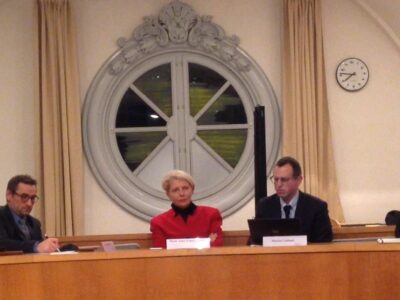
🎤 The judge-judged / Articulate words and things face to the stressful conflict of interests, in “The Firm established as Prosecutor and Judge of itself by Compliance Law

Full reference: Frison-Roche, M.-A., The judge-judged: Articulate words and things face to the difficult conflicts of interest, in L'entreprise instituée Procureur et Juge d'elle-même par le Droit de la Compliance, colloquium co-organized by the Journal of Regulation & Compliance (JoRC) and Lyon 3 Law School, 23rd of June 2021. -   This conference was in French ; the Working Paper on which this conference was based is in French and in English: The judge-judged: Articulate words and things face to the stressful conflicts of interest  📅  June 23, 2021, 9h30 – 18h30  🧭 Lyon,  Lyon 3 Law School, "Salle de la Rotonde" and online -   📊 Read the slides on which this conference is based (in French) 🎥 See the video of this conference.    📝 Read the general program of this colloquium (in French) 📝 Read the working paper on which this conference is based  (in English) - 📅 This colloquium is part of the cycle of colloquia in 2021 organized by the Journal of Regulation & Compliance (JoRC) and its partners about Compliance Juridictionnalization.  📕 📘 The conference is the first basis for the writing of an article, forthcoming in a book whose the French version is La juridictionnalisation de la Compliance,  co-published by the Journal of Regulation & Compliance (JoRC and Dalloz, and whose the English version Compliance Juridictionnalisation, is co-published by the Journal of Regulation & Compliance (JoRC) and Bruylant.     The book in French will be published in the collection "Régulation & Compliance " while the book in English will be published in the same collection "Compliance & Regulation".  - 🔻 Summary of the conference: read below.

Conferences

📅 Cycle of colloquia 2021 around Compliance Jurisdictionalisation

📅 The Firm instituted as prosecutor and judge of itself by Compliance Law (L’entreprise instituée procureur et juge d’elle-même par le Droit de la Compliance)

►This scientific manifestation is placed under the scientific responsibility of Marie-Anne Frison-Roche and Jean-Christophe Roda. It is organized by the Journal of Regulation & Compliance (JoRC) and the Centre de Droit de l'Entreprise of Lyon 3 University.   📅  It is one of the colloquia of the cycle of colloquia organized in 2021 around the general topic of Jurisdictionalisation of Compliance.        ►The interventions will be then transformed into a chapter in the books:   📕 La Juridictionnalisation de la Compliance  ,  to be published in the Regulation & Compliance series, jointly published by the Journal of Regulation & Compliance (JoR)C and Dalloz  📘Compliance Jurisdictionalisation,    to be published in the Compliance & Regulation Series , co published by the Journal of Regulation & Compliance (JoRC) and  Bruylant. - This colloquium will take place in Lyon 3 on 23rd of June 2021 with a limited audience. It will also be broadcasted in live on Zoom.  To register: https://zoom.us/webinar/register/8516215084724/WN_GoQ25I7pRoKhHuGomVMxYw    ► Presentation of the topic: Initially, it was through Criminal Law, inseparable from the trial, which forced companies to take charge of monitoring within themselves behavior likely to be deviant, the requirement of Ex Ante to be designed by the 'Ex Post of the jurisdictional. From this reversal of things, there has always remained this presence of the judge and the prosecution bodies in a Compliance Law which is nevertheless defined by its concern for the future and the Ex Ante tools within the company. In doing so, the company becoming on the one hand a judge of itself, on the other hand a prosecutor of itself, it splits up, taking in reverse the most established procedural principles. Moreover, because of the monumental goals which constitute Compliance Law, companies become attorneys and judges of the others, or for the others, the cutting machines and the "supreme courts" being by name instituted to regulate in Ex Ante all different before that it does not become litigation. The Ex Ante of Compliance would then make the Ex Post disappear. ► Method:  The colloquium which had to take place initially on 8th of April has been postponed to 23rd of June to enable speakers to meet and talk in face to face, with a limited audience.  These exchanges will be captured so that third parties can benefit from them, even before the publication of the works, La Juridictionnalisation de la Compliance and Compliance Juridictionalization, within which this work constitutes the basis for the development of a specific chapter. Five practical cases will first be examined in five specific sectors, where this institution of the firm as prosecutor and judge of itself is particularly observable before both specific and more cross-sectoral themes are examined and discussed.   ►speakers : 🎤 Luc-Marie Augagneur, Attorney before Lyon Court of Appeal, CVS Law Firm 🎤Ale xis Bavitot, Senior lecturer at Lyon 3 University  🎤 Alain Bruneau, Chief compliance officer at Natixis 🎤 Jean-Marc Coulon, Head of Legal Infrastructure at Bouygues Construction 🎤 Marie-Anne Frison-Roche, Director of the Journal of Regulation & Compliance (JoRC) 🎤 Cécile Granier, Senior lecturer at Lyon 3 University  🎤 Xavier Hubert, Director of Compliance at Engie 🎤 Jérémie Jourdan-Marques,  Professor at Lyon 2 University 🎤 Jérémy Heymann, Professor at Lyon 3 University 🎤 Daphnée Latour, Attorney, DL Avocats, Paris  🎤 Christophe Lapp, Founding partner of Altana law firm 🎤 Samir Merabet, Senior lecturer at Lyon 3 University  🎤 Béatrice Oeuvrard, Public Policy Manager at Facebook France 🎤 Jean du Parc, Bâtonnier  🎤 Jean-Christophe Roda, Professor at Lyon 3 University and director of the Centre de droit de l'entreprise (Center of Company Law) 🎤 Jean-Baptiste Siproudhis, Director Ethics, Integrity and CSR at Thalès

Conferences

📅 Cycle of colloquia 2021 around Compliance monumental goals

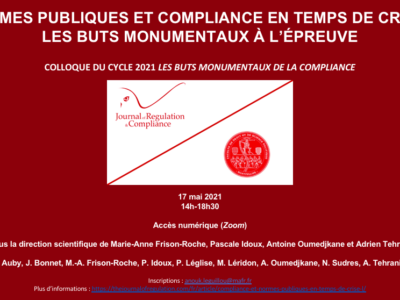
📅 Public norms and Compliance in time of crisis : monumental goals put to a test (Normes publiques et Compliance en temps de crise : les buts monumentaux à l’épreuve)

This scientific manifestation is placed under the scientific direction of Marie-Anne Frison-Roche, Pascale Idoux, Antoine Oumedjkane and Adrien Tehrani. It is organized by the Journal of Regulation & Compliance (JoRC) and by the Faculté de Droit et de Science Politique de l'Université de Montpellier (Centre de Recherches et d'Etudes Administratives de Montpellier and Centre du Droit de l'Entreprise). 📅 This manifestation is part of the cycle of colloquia organized in 2021 around the general topic of Compliance Monumental Goals.        The interventions will give rise to the production of articles which will be part of  📕  Les bus monumentaux de la Compliance,    to be published in the Series Regulations & Compliance , co-published par the Journal of Regulation & Compliance (JoRC) and Dalloz. 📘Compliance Monumental Goals,    dans la Série Compliance & Regulation , co-published by par le Journal of Regulation & Compliance (JoRC) and Bruylant.   This manifestation took place on Zoom on 17th of May 2021.  Registrations: anouk.leguillou@mafr.fr  Assistance to this event may be validated as part of the continuing education of lawyers. In addition, scientific videos will be extracted and disseminated later.   Presentation of the topic: In the overall problematic of "Monumental goals", this conference retains a particular case: that of the crisis and the emergency situation that it generates. First of all, in general, does the importance of public norms in the emergency context engendered by a crisis situation imply a marginalization of Compliance? Don't private actors also have their place in these circumstances, at the service of the "monumental goals" that the public authorities want to maintain, or even which appear specifically? Secondly, more concretely, we have been living for many months in a health crisis. By taking it as a framework and, within it from particular cases, how public and private actors react, act, adjust? and how do the courts assess these movements? Going from the most general to the most specific, this conference aims to identify criteria, limits, of what could be specific rules when the emergency of a crisis meets Compliance, and will examine specific situations.   Working method: The conference is therefore built on a general issue, which was the subject of a "working paper", written by Antoine Oumedjkane, Adrien Tehrani and Pascale Idoux, on which the speakers will have thought in advance and from which they are intended to study the question from their particular perspective. The conference, which is essentially interactive, therefore begins with an outline of the main lines of this general work. It is followed by the examination of concrete practical cases. They are as follows: 1️⃣ hydro-alcoholic gel, its manufacture, price, availability, 2️⃣ information and regulation on all media in Covid period 3️⃣ the use of the bicycle during the state of health emergency A first conclusion, thematically limited, will relate to Revealed by the crisis situation, the place of private initiative in Compliance Law. A second, more general, undoubtedly open-ended conclusion is drawn from this confrontation between general reflection and concrete cases which must be resolved in a particular crisis.   speakers:  🎤 Jean-Bernard Auby, Emeritus Professor of Sciences po (Paris) 🎤 Julien Bonnet, Professor at Montpellier University and member of the CERCOP 🎤 Guylain Clamour, Dean of Montpellier Law School 🎤 Marie-Anne Frison-Roche, agrégée des Facultés de droit, Professor of Regulation and Compliance Law at Sciences Po (Paris) and Director of the Journal of Regulation & Compliance (JoRC) 🎤 Pascale Idoux, Professor at Montpellier University  🎤 Pascale Léglise, adjointe au directeur des libertés publiques et des affaires juridiques (Deputy Director of Civil Liberties and Legal Affairs) of the Ministère de l'intérieur (Home Ministry) 🎤 Michèle Léridon, Member of the Conseil supérieur de l'audiovisuel (French Media Regulator), President of the working group Pluralisme, déontologie, supervision des plateformes en ligne (Pluralism, Deontology, Supervision of Online Platforms) 🎤 Antoine Oumedjkane, Researcher of the Centre de recherche et d'études administratives (Research and Administrative Studies Center) of Montpellier University 🎤 Nelly Sudres, Maître de conférences at Montpellier University and member of the Centre de Recherches et d'Etudes Administratives (Research and Administrative Studies Center) of Montpellier University 🎤 Adrien Tehrani, Professor at Montpellier University and member of the Centre du Droit de l'Entreprise (Company Law Center) 🎤Xavier Vallad, Group Legal Director, Intermarché   ⤵️Read a more detailed presentation of the manifestation below:
Conferences

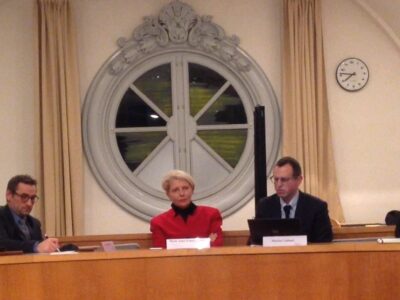
🎤 Note taken during the colloquium “Compliance and Arbitration” for doing its conclusion: a backing (Conclusion, in “Compliance and Arbitration))

Full reference: Frison-Roche, M.-A., Compliance et arbitrage. Rapport de synthèse: un adossement (Compliance and Arbitration: a Backing. Conclusion), in Frison-Roche, M.-A. & Racine, J.-B., Compliance et Arbitrage (Compliance and Arbitration), Colloquium co-organised by the Journal of Regulation & Compliance (JoRC) and the Centre de recherches sur la Justice et le Règlement des Conflits (CRJ) of Panthéon-Assas University (Paris II), with the support avec the International Court of Arbitration, Paris, 31st of March 2021 -   Read the program of this colloquium See Marie-Anne Frison-Roche's conclusion in video (in French, with English subtitles) These notes of the conclusion have been written as the colloquium took place.  See the video of the entire colloquium (in French, with English subtitles) - This colloquium is part of the Cycle of colloquium 2021 organized by the Journal of Regulation & Compliance (JoRC) and its partners around the topic Compliance Juridictionnalization.   This manifestation is in French but the interventions will be the basis for a specific chapter of the English collective book directed by Marie-Anne Frison-Roche, Compliance Juridictionnalization, co-published by the JoRC and Bruylant. An equivalent book in French, La Juridictionnalisation de la Compliance, directed by Marie-Anne Frison-Roche, will be co-published by the JoRC and Dalloz.    Read the notes established for the conclusion below ⤵️

Conferences

Cycle JoRC of colloquia 2021 : Compliance Juridictionnalization

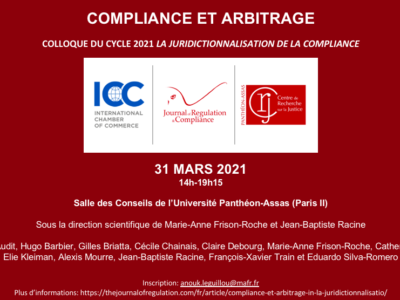
Compliance and Arbitration (Compliance et arbitrage)

This scientific event is placed under the scientific responsibility of Marie-Anne Frison-Roche and Jean-Baptiste Racine. It is organized by the Journal of Regulation & Compliance (JoRC) and by the Centre de recherche sur la Justice et le Règlement des Conflits (CRJ)  of the  Panthéon-Assas (Paris II) University, with the active support of the International Chamber of Commerce ICC. This event is the third colloquium of the 2021 colloquia cycle around the general theme of Compliance Jurisdictionalisation.       ►The interventions will be then transformed into a chapter in the books: contributions in the 📕 La Juridictionnalisation de la Compliance  , to be published the Regulation & Compliance series ries, jointly published by the Journal of Regulation & Compliance (JoR)C and Dalloz  📘Compliance Jurisdictionalisation,    to be published in the Compliance & Regulation Series , co published by the Journal of Regulation & Compliance (JoRC) and  Bruylant. -   This colloquium took  place the 31st of March 2021. The manifestation was live broadcasted on Zoom.   Presentation of the theme:  The arbitrator is the ordinary judge of international trade. It was natural that he or she encountered Compliance: by definition Compliance Law takes hold of the whole world and follows the paths of international trade while it can only be deployed with the help of institutions which, by nature are spreading around the world and need authorities like the Courts. The conference is based on the already perceptible connection points between Compliance and Arbitration to better identify what is emerging for tomorrow: contradiction or convergence between the two; weakening or consolidation. We are already seeing the impact that Compliance can have on the arbitrator's treatment of corruption or the consideration of money laundering. More generally, where do we stand with the arbitrator's knowledge of the many technical issues related to compliance? Beyond these, will the courts and arbitrators be able to achieve the goals, themselves new, sometimes monumental, pursued by Compliance Law? Through this joint exploration of these avenues, the fate of compliance clauses inserted in contracts, the relevance in the matter of private codes of conduct, etc. will be examined. Tomorrow, as of today, is the arbitrator a full and complete judge of Compliance Law? How, with what specificities and what controls?   Notably will speak: Mathias Audit, professeur à l'Université Panthéon-Sorbonne – Paris I (full professor at Sorbonne – University – Paris)   Dominique Bourrinet, General Counsel of Société générale group  ​ Cécile Chainais, director of the Centre de Recherche sur la Justice et le Règlement des Conflits (CRJ) and professeur à l'Université Panthéon-Assas (Paris II) (Full professor at Panthéon-Assas (Paris II) University)    Claire Debourg, professeure à l'Université Paris X- Nanterre (Full professor at Paris X – Nanterre)    Marie-Anne Frison-Roche, professeur à Sciences Po – Paris (Full Professor at Sciences Po – Paris)) and Director of the Journal of Regulation & Compliance (JoRC)   Catherine Kessedjian, professeur émérite de l'Université Panthéon-Assas (professor emeritus of Panthéon-Assas – Paris II University)   Elie Kleiman, partner, Jones Day Law Firm   Alexis Mourre, president of the ICC International Court of Arbitration   Jean-Baptiste Racine, professeur à l'Université Panthéon-Assas – Paris II (Full Professor at Panthéon-Assas – Paris II University)   François-Xavier Train, professeur à l'Université Paris X-Nanterre (Full Professor at Paris X-Nanterre University)   Eduardo Silva-Romero, Dechert Law Firm      Read a detailed presentation of the colloquium below:     

Conferences

Jonathan L. ZITTRAIN

Gaining Power, Losing Control

Full reference: Zittrain, J. L., "Gaining Power, Losing Control", Clare Hall Tanner Lecture 2020, 2020 See the intervention Read the intervention's report   This intervention is divided in two parts:  Between Abdication and Suffocation: Three Eras of Governing Digital Platforms  With Great Power Comes Great Ignorance: What’s Wrong When Machine Learning Gets It Right 

Conferences

Cycle of colloquia: “Jurisdictionalisation of Compliance” (La juridictionnalisation de la Compliance)

Like the previous cycles devoted to the general theme of Compliance and aiming to build a "Compliance Law", intended like them to be published in the Regulations & Compliance collection, this cycle addresses a particular aspect of this branch of Law in progress. to develop. "Compliance tools" having been the subject of the previous cycle of conferences and showing judges, lawyers, jurisdictions, this new cycle addresses a new phenomenon in Compliance: La juridictionnalisation de la Compliance (The jurisdictionalisation of Compliance). It will take place in parallel with the series of conferences on the theme: Les buts monumental de la Compliance (The monumental goals of Compliance). There have always been judges and lawyers in Compliance Law, in particular because this is the extension of Regulatory Law in which they have a full place. This results from the fact that the decisions taken in respect of Compliance are contestable in court, those issued by the company, such as those of States or Authorities. The novelty lies more in the phenomenon of "legalization", that is to say that the jurisdictional model penetrates all Compliance Law, and not only the Ex Post part that this includes. Furthermore, it seems that this jurisdictionalization influences the non-legal dimension of Compliance. This movement has effects that must be measured and causes that must be understood. Advantages and disadvantages that must be balanced. If only to form an opinion on this "juridictionalization of Compliance".   📅 Inaugural colloquium:  Compliance jurisdictionalisation: why? Who? How? Where? and Toward What? , organized by the JoRC under the scientific direction of Marie-Anne Frison-Roche : read more information here   📅 Colloquium of March 31, 2021 :  Arbitration and Compliance, co-organized by the JoRC and Paris II University, under the scientific direction of Marie-Anne Frison-Roche and Jean-Baptiste Racine : read more information here   📅 Colloquium of June 23, 2021 : The firm instituted as Court by Compliance Law, co-organized by the JoRC and the équipe de recherche Louis Josserand of Lyon 3 University, under the scientific direction of Marie-Anne Frison-Roche and Jean-Christophe Roda : read more information here    📅 Colloquium of September 23, 2021 :  Which judges for Compliance? , co-organized by the JoRC and the CR2D of Paris-Dauphine University, under the scientific direction of Marie-Anne Frison-Roche and  Sophie Schiller : read more information here ​ 📅 Colloquium of October 2021 :  Compliance Law, crucible between American Procedure Law and Procedure Law, co-organized by the JoRC and the Brussels University, under the scientific direction of Marie-Anne Frison-Roche and Arnaud van Waeyenberge: read more information here   Technical registration modes are specific to each colloquium.    The Journal of Regulation & Compliance (JoRC) benefits from the partnership of :    🏫 L’École d’Affaires Publiques de Sciences Po, 🏫 Le Département d’Économie de Sciences Po, 🏫 L' École de Droit de l'Université Panthéon-Sorbonne (Paris I), 🏫 L’École doctorale de Droit privé de l'Université Panthéon-Assas (Paris 2), 🏫 La Faculté de droit et de sciences politiques de l'Université de Montpellier 🏫 Le Centre Perelman de l'Université Libre de Bruxelles, 🏫 Le GREDEG de l'Université de Nice, 🏫 La Fédération de recherche "L'Europe en mutation" de l'Université de Strasbourg 🏫 Le Centre Louis Josserand de la Faculté de Droit de Lyon III. 🏫 La Faculté de droit et de sciences politiques de l'Université de Toulouse-I-Capitole, 🏫 L'école de droit de l'Université de Clermont-Ferrand. 🏫 Le centre de recherche Droit-Dauphine de l'Université Paris-Dauphine 🏫 L'École des hautes études commerciales de Paris (HEC Paris)   The cycle is supported by : La Chambre de Commerce et d'Industrie de Paris. L'Ecole de Formation du Barreau de Paris.

Conferences

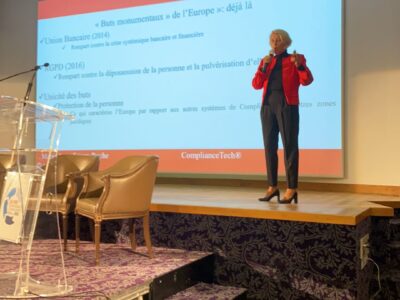
Le “Droit européen de la Compliance” : un rempart contre la crise ? (“European Compliance Law”: a bulwark against the crisis?), in “Les Défis Conformité / Compliance”

Full reference : Frison-Roche, M.-A., Le "Droit européen de la Compliance" : un rempart contre la crise ? ("European Compliance Law": a bulwark against the crisis?") in Option Finances, Les Défis Conformité / Compliance (Conformity/Compliance Challenges), 15th of September 2020, Paris. Read the program (in French) Read the slides of the intervention (in French)   It was possible to attend to the manifestation in live A bilingual video will be aviaible soon.   Summary of the intervention: This intervention as keynote speaker was at the articulation between the first two sessions, one on "strategy in times of crisis" and the other on "good governance", and the third session on technology. Because the question is: "?Does Europe has the pretension to prevent crisis, thank to Compliance Law ?" The answer must be: Yes or No. If Europe has this pretension to allow answering Yes, and it must have it, it must have, through its public institutions and the crucial European companies – expressing their raison d'être – a clear, simple and coherent vision of the "monumental goals" that it pursues. Compliance Law is adequate for such an "enterprise" (an "enterprise" always being an "adventure") since it is defined through its monumental goals, including crisis prevention, for which Europe must and is able to develop an exemplary model. When this is done, and it is in the process of being done, it is necessary but sufficient to carry out the technical work of adjusting the legal technical tools with these monumental goals. -

Conferences

Cycle of scientific manifestations 2021: “Les buts monumentaux de la Compliance (Compliance Monumental Goals)

Like the previous cycles devoted to the general theme of Compliance and aiming to build a "Compliance Law", intended like them to be published in the Regulations & Compliance collection, this cycle addresses a particular aspect of this branch of Law in progress. to develop, which was applied even before it was conceived. The Compliance mechanisms having preceded the conceptualization of this way of doing things, the "Compliance Tools" having been the subject of the previous cycle of conferences, this new cycle addresses what characterizes Compliance : Les  buts monumentaux de la Compliance (Monumental Goals of Compliance) . This cycle of scientific manifestation will take place in parallel with the cycle of conferences on the theme of  La juridictionnalisation de la Compliance (Juridictionalisation of Compliance) . The notion of "monumental goals" was proposed in 20161Frison-Roche, M.-A., Le Droit de la Compliance, 2016.. It is central in the compliance mechanisms in that they can only claim to constrain and cost those in which they are inserted in that they tend to achieve goals whose substantial quality is to be "monumental" . This notion is not self-evident, having to be justified, detailed, put into perspective and concretely illustrated, a series of conferences organized by numerous universities is therefore devoted to it.   These various conferences will be held in several places, according to the part taken by the various university structures which bring their support to the Journal of Regulation & Compliance (JoRC) for the realization of the cycle. This will result in two collective books, one in French: Les buts monumental de la Compliance, the other in English: Compliance Monumental Goals. This cycle of colloquia Compliance Monumental Goals will take place between April 2021 and November 2021.   📅 Colloquium of May 17, 2021: Public norms and Compliance in time of crisis: monumental goals put to a test, co-organized by the Journal of Regulation & Compliance (JoRC) and the Montpellier University Law School, under the scientific direction of Marie-Anne Frison-Roche, Pascale Idoux, Antoine Oumedjkane and Adrien Tehrani: more information about this manifestation here   📅 Colloquium of September 16, 2021, Compliance Monumental Goals: Radioscopy of a Notion, co-organised by the Journal of Regulation & Compliance (JoRC) and Saclay University, under the scientific direction of Christophe André, Marie-Anne Frison-Roche, Marie Malaurie and Benoît Petit  : more information about this manifestation here   📅 Colloquium of October 14, 2021: Compliance and Proportionality, co-organised by the Journal of Regulation & Compliance (JoRC) and the IDETCOM of Toulouse University, under the scientific direction of Marie-Anne Frison-Roche and Lucien Rapp: more information about this manifestation here   📅 Colloquium of November 4, 2021: Effectivity of Compliance and international competitiveness, co-organized by the Journal of Regulation & Compliance (JoRC) and the Centre de recherches en Economie et Droit de l'Université Paris II, under the scientific direction of Laurent Benzoni, Bruno Deffains and Marie-Anne Frison-Roche: more information about this manifestation here    The technical modes of registration are specific to each colloquium.    The Journal of Regulation & Compliance (JoRC) benefits from the partnership of :  🏫 L’École d’Affaires Publiques de Sciences Po, 🏫 Le Département d’Économie de Sciences Po, 🏫 L' École de Droit de l'Université Panthéon-Sorbonne (Paris I), 🏫 L’École doctorale de Droit privé de l'Université Panthéon-Assas (Paris 2), 🏫 La Faculté de droit et de sciences politiques de l'Université de Montpellier 🏫 Le Centre Perelman de l'Université Libre de Bruxelles, 🏫 Le GREDEG de l'Université de Nice, 🏫 La Fédération de recherche "L'Europe en mutation" de l'Université de Strasbourg 🏫 Le Centre Louis Josserand de la Faculté de Droit de Lyon III. 🏫 La Faculté de droit et de sciences politiques de l'Université de Toulouse-I-Capitole, 🏫 L'école de droit de l'Université de Clermont-Ferrand. 🏫 Le centre de recherche Droit-Dauphine de l'Université Paris-Dauphine 🏫 L'École des hautes études commerciales de Paris (HEC Paris)   The cycle is supported by : La Chambre de Commerce et d'Industrie de Paris. L'Ecole de Formation du Barreau de Paris.       

Conferences

March 5, 2020. Measuring the efficience and the effectiveness of Compliance tools (La mesure de l’efficacité des outils de la Compliance)

The cycle of conferences Les outils de la Compliance (The Compliance tools) began in November 2019 and runs until June 2020. It is organized by The Journal of Regulation & Compliance and all of its partner universities. It includes a conference more particularly devoted to the theme of "Measuring the effectiveness of Compliance Tools (Mesurer l'effectivité des outils de la Compliance)".   See the other thematics, others dates and other particular manifestations,  builting the complete cycle   Conference and Debate    March, 5, 2020, 18h30-20h in the Amphitheater of Panthéon-Assas (Paris 2) University,  391, rue de Vaugirard 75015 Paris   General presentation of the Conference After having examined various specific tools, such as Risk mapping or Incentives, and before tackling others such as those falling under a "Compliance by Design", it also deserves to be examined with some distance in its claim to be the solution to any compliance issue, it is worth looking at how we measure the effectiveness of all these Compliance Tools. Indeed, since all techniques are "tools", they only take on meaning with regard to a purpose that they must effectively achieve. This effectiveness must be measured, and this immediately in Ex Ante, the company constantly having to show the effectiveness of the performance of the Compliance tools. But at the same time as the standards proliferate, the discourses multiply, the commitments are made, the techniques for measuring the effectiveness of the whole seem quite weak. The subjects of law obliged by Compliance obligations or freely wishing to achieve the systemic or common good goals targeted by Compliance do wish to have these measurement instruments. But they seem still little built, often declarative or discursive, or too mechanical. Therefore, is it starting from the goal of Compliance  that we must measure the effectiveness of the Compliance tools, without by this way transforming the tasks weighing (willingly or by force) on operators in obligation to result? Or is it by staying upstream, by a single "conformity" to what is asked of them, as behavior and as structural organization, that companies show that they have effectively fulfilled their task, without worrying about the effects products about the reality, this reality that those who designed the Compliance norms and standards had in mind? This question has major implications in terms of burden of proof and responsibility, involving organizations which place Trust, the heart of Compliance, rather in technological instruments – only but so efficiency connecting data – or rather in people with a sense of common good. This question is now open.   Inscription : anouk.leguillou@mafr.fr -   Under the scientific direction of Marie-Anne Frison-Roche, full professof de Regulatory & Compliance Law at Sciences Po (Paris).   Articulate the instruments for measuring Effectiveness with the purposes of the Compliance tools (Articuler les instruments de mesure de l'effectivité avec les finalités des outils de la compliance) Laurent Benzoni, full professor of Economics at Panthéon-Assas University (Paris 2) Paris Center for Law & Economics, president of TERA Consultants.   Freedom and constraints of the company in its implementation of measures of the effectiveness of compliance tools (Liberté et contraintes de l’entreprise dans sa mise en place des mesures de l’effectivité des outils de compliance) Bertrand Bréhier, deputy head, Banking and Finaical Regulation Departement, Société Générale Group, associate professor Paris I University, Groupe Société Générale   Control by the Regulator of the effectiveness of compliance instruments implemented by the company (The contrôle par le Régulateur de l’effectivité des instruments de compliance mis en place par l’entreprise) Maxime Galland, Director – Legal and International Cooperation at the Autorité des Marchés financiers – AMF (French Financial Markets Authority)   -   Read the registration procedure  for this conference. Consult the calendar of precedent and upcoming events. Consult the presentation of the book to be published: Compliance Tools.   Go back to general presentation of the Conferences' cycle "Compliance Tools".   Inscription : anouk.leguillou@mafr.fr -