Articles in a non-legal collective publication

Articles in a non-legal collective publication

CHATAIN, O.

📝If Meta and Google are investing massively in submarine telecommunications cables, it is not for the false good reason you imagine

► Full Reference: O. Chatain, « Si Meta et Google investissent massivement dans les câbles de télécommunication sous-marins, ce n’est pas pour la fausse bonne raison que vous imaginez » (If Meta and Google are investing massively in submarine telecommunications cables, it is not for the false good reason you imagine), The Conversation France, 30 September 2026. - 🌐 read the article on The Conversation (open access) - ► Summary of the article: Olivier Chatain, Professor of Strategy and Business Policy at HEC Paris, shows that we are mistaken about the reason why Google and Meta invest so massively in submarine cables: it is not the ordinary diversification of a “big consumer” of bandwidth, but the theory of the firm, according to which a firm integrates what constitutes a specific investment. Google and Meta alone finance 23% of the submarine bandwidth installed in 2020-2025 and 32% of ongoing projects. Their model — a real-time personalised feed and a global self-service advertising platform — requires controlled latency and flawless resilience. Their new routes, such as Meta’s Waterworth project (50,000 km), bypass the chokepoints: Suez, the Red Sea, Bab-el-Mandeb, Hormuz, Malacca, Taiwan. The result is a privatisation and concentration of resilience, which creates a new dependency and raises the question of a “resilience market”, at a time when digital infrastructures are weaponised. It is thus crucial operators that carry, through their private investments, the infrastructure of the system: the issue falls within Regulation Law and Compliance Law. - read the presentation of the book Le système juridique global des noms de domaine. Structure multi-acteurs et durabilité de l’Internet (The Global Legal System of Domain Names. Multi-Stakeholder Structure and Sustainability of the Internet) 📧 read « Si le Droit de la Compliance donne des pouvoirs aux opérateurs numériques cruciaux, c’est pour qu’ils remplissent leurs obligations légales » (If Compliance Law gives powers to crucial digital operators, it is so that they fulfil their legal obligations) 🧮 read the presentation of the symposium « Durabilité de l’Internet : le rôle des opérateurs du système des noms de domaine » (Sustainability of the Internet: the role of the operators of the domain name system) - 🌐follow Marie-Anne Frison-Roche on LinkedIn 🌐follow Marie-Anne Frison-Roche on Instagram 🌐subscribe to the Newsletter MAFR Regulation, Compliance, Law


Articles in a non-legal collective publication

Article in a non-legal collective publication

📝Réguler le numérique, ou Sisyphe heureux (Regulating Digital, or a happy Sisyphus), in 📚Enjeux numérique, 📗Compliance et nouvelles régulations (Compliance and New Regulations)

► Full Reference: P. Bonis & M.-A. Frison-Roche, "Réguler le numérique, ou Sisyphe heureux" (Regulating Digital, or a happy Sisyphus), in P. Bonis & L. Castex (dir.), Compliance et Nouvelles Régulations, Les Annales des Mines, series "Enjeux numériques, June 2025, pp. 5-7. - 📝read the article (in French) - 📗read the table of content of this special issue of Enjeux numérique, Régulation et Compliance (in French), in which this introductory article is published. - ► English Summary of this article: This introduction to the collective publication on Regulation and Compliance, which aims to bring order to the Digital space, takes up the idea expressed by Camus when he referred to 'happy' Sisyphus, and expresses the idea that Regulation and Compliance are applied to this area with difficulty, relentlessness and failure, with texts constantly being adopted, modified and amplified on all sides, while the Digital Space is constantly changing, and the slope is constantly being climbed again. But this should not be seen as a failure, not even a flaw, because it is in the nature of digital regulation to always place the regulatory apparatus on our shoulders. This weight is shared by all, by the Authorities of all countries, because there is something common to all and also because there is something specific for each, because the techniques differ and because the visions of the world that the Politicians print in the texts and project in the Digital will always differ. This weight is also shared by companies, which internalise the rules through Compliance mechanisms, making them necessary agents for the efficiency and sustainability of the digital system, but also players in it, in articulation with Internet users in a permanent and unstable articulation with the local to the finest and this global that the Internet has invented. This presentation opens the series of contributions to the collective publication Régulation et Compliance, which makes up this special issue of Enjeux numériques in Annales des Mines. - 🌐read also the English presentation of:🕴️Marie-Anne Frison-Roche, 📝Le Droit de la compliance, voie royale pour réguler l'espace numérique (Compliance Law as a Royal Road for regulating the Digital Space)

Articles in a non-legal collective publication

article in a non-legal collective publication

📝Le Droit de la compliance, voie royale pour réguler l’espace numérique (Compliance Law as a Royal Road for regulating the Digital Space​), in📚Enjeux numérique,📗Régulation et Compliance

► Full Reference: M.-A. Frison-Roche, "Le Droit de la compliance, voie royale pour réguler l'espace numérique" (Compliance Law as a Royal Road for regulating the Digital Space), in P. Bonis et L. Castex (dir.), Compliance et nouvelles régulation, Annales des Mines, coll. "Enjeux numériques", juin 2025, pp. 69-77. - 📝 read the article (in French)  - 🚧This article is underpinned by a English Working Paper in English, with additional technical developments and hypertext links. : Compliance Law as a Royal Road for regulating the Digital Space - ► English Summary of this article:  In order to describe the role of Compliance Law in regulating the digital space and to conclude that this new branch of Law is the 'royal road' to this end, this study proceeds in 6 stages.  Firstly, at first sight and conceptually, there is a gap between the political idea of Regulating and the ideas (freedom and technology as 'law') on which the digital space has been built and is unfolding.  Secondly, in practice, there is such a huge gap between the ordinary methods of Regulatory Law, which are backed by a State, and the organisation of the Digital Space by these economic operators, that are both American and global.  Thirdly, the political claim to civilise the Digital Space remains and is growing, relying on the very strength of the entities capable of realising this ambition, these entities being the crucial digital operators themselves, seized as Ex Ante.  Fourthly, it corresponds to the conception and practice of a new branch of Law, Compliance Law, which should not be confused with "conformity" and which is normatively anchored in its "Monumental Goals".  Fifthly, Compliance Law internalises Monumental Goals in the digital operators which disseminate them through structures and behaviours in the digital space.  Sixthly, through the interweaving of legislation, court rulings and corporate behaviour, the Monumental Goals are given concrete expression, willingly or by force, in ways that can civilise the digital space without undermining the primacy of freedom.
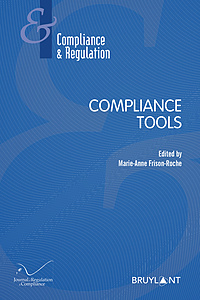
Couverture – Compliance Tools

Articles in a non-legal collective publication

Data Sovereignty and Compliance, in Frison-Roche, M.-A. (ed.), “Compliance Tools”

Full Reference : Tardieu, H.., Data Sovereignty and Compliance, in M.-A. (ed.), Compliance Tools, série "Régulations & Compliance", Journal of Regulation & Compliance et Dalloz, 2020, à paraître.   See the General Presentation of the book   - Article Summary (done by Marie-Anne Frison-Roche) L   Read the other articles summaries.     -      

Articles in a non-legal collective publication

Roda, Jean-Christophe

La crise du droit antitrust

Full reference: Roda, J.-C., La crise du droit antitrust in Mélanges en l'honneur de Jacques Mestre, coll. Mélanges, Lextenso – LGDJ, 2019, pp. 839-854 - 🦉This article is available in full text to those registered for Professor Marie-Anne Frison-Roche’s courses -

Articles in a non-legal collective publication

FRISON-ROCHE, Marie-Anne

Creating “Regulation Law” at Dauphine

Full reference: Frison-Roche, M.-A., Creating "Regulation Law" at Dauphine, in Huault, I. and Bouchard, B. (ed.), 50 years of Research in Dauphine. 1968-2019, 2019, pp. 110-114 Read Marie-Anne Frison-Roche's article (in French)   Read also:  The foreword of the book written by Bruno Bouchard (in French) The preface of the book written by Ivar Ekeland (in French) The table of contents of the book (in French)