Oct. 16, 2025
Thesaurus : Doctrine

► Full Reference: M. Lamoureux, "L’obligation de vigilance des opérateurs énergétiques", in M.-A. Frison-Roche (dir.), L'obligation de Compliance, Journal of Regulation & Compliance (JoRC) and Dalloz, coll. "Régulations & Compliance", 2024, to be published
____
📕read the general presentation of the book, L'obligation de Compliance, in which this contribution is published
____
► English summary of this article de l'article (done by the Journal of Regulation & Compliance - JoRC): Firstly, the author shows, despite the diversity of energy activities (electricity by its very nature involves fewer international value chains, oil by its very nature involves more), the operators in this sector are sufficiently unique to justify their being considered globally in terms of vigilance obligation. Currently in French case law, they are directly concerned, not only because they have been summoned before the French courts in duty of vigilance cases, but also, and above all, because they are a sign of the intensity of the vigilance expected of them.
The first part of the article develops the characteristics of energy operators, which influence the intensity of the obligation of vigilance. Their uniqueness stems precisely from the enterprises themselves, which are 'giants', subject to the obligation to draw up vigilance plans, firms often vertically integrated, in a sector concentrated on multinationals with very substantial resources and present throughout the value chain, whose activity involves infrastructures.
The second part of the article justifies this intensity of the obligation of vigilance by the risks specifically linked to the activities of these energy operators. Indeed, even if it is true that their activity is very heterogeneous, the risks are very significant, in that on the one hand they build diverse and gigantic infrastructures, are involved in extractive activity, and on the other hand have a long-term impact on the environment. Firms are being asked to be vigilant themselves about these infrastructures and impacts. The administrative police have been doing this for a long time in this sector.
But the third part of the article shows precisely that this is nothing new: the culture of risk prevention is already very present in these enterprises, not least because of the very strong presence of the State and regulations. There is a culture of 'regulatory conformity'. In fact, climate vigilance relies mainly on these operators.
Energy operators are therefore at the centre, not only because they generate risks, but also because they hold many of the solutions for achieving the Monumental Goals targeted by the vigilance system: they are making a decisive contribution to the fight against climate change because they have the means to do so. This is one of the reasons why the major operators have all adopted a raison d'être.
________
Oct. 2, 2025
Publications

🌐follow Marie-Anne Frison-Roche on LinkedIn
🌐subscribe to the Newsletter MAFR Regulation, Compliance, Law
🌐subscribe to the Video Newsletter MAFR Surplomb
____
► Full Reference: M.-A. Frison-Roche, "La Vigilance, pointe avancée et part totale de l’Obligation de Compliance" (Vigilance, the cutting edge and a full part of the Compliance Obligation), in M.-A. Frison-Roche (ed.), L'Obligation de Compliance, Journal of Regulation & Compliance (JoRC) and Dalloz, coll. "Régulations & Compliance" 2025, pp. 511-536.
____
📝read the article (in French)
____
____
📕read a general presentation of the book, L'Obligation de Compliance, in which this article is published
____
► English summary of this contribution : The "duty of vigilance" unleashes all the more radical and passionate positions, sometimes among Law professors, because it has not been precisely defined. One word is used for another, either inadvertently or deliberately, deliberately if it can attract this or that element from one legal corpus and import it into another. The very exercise of definition is therefore required in practice. There are specific obligations of vigilance that come under such and such a body of regulations and are imposed on such and such a category of operators to fulfill such and such a function. These are precise circles which are not confused and must not be confused. This is superimposed on what the French 2017 law so-called "Vigilance law", which is much more encompassing since it applies to all large companies in the operation of the value chains they have set up. The European 2024 directive is in the same way. But there is no general duty or obligation of Vigilance. Such a claim would be based on confusing or shifting each of these 3 levels, which must be avoided because no positive law does support this (I).
If the duty of vigilance is attracting so much attention, whether or not the European CS3D is fully effective, it is because Vigilance is the "cutting edge" of Compliance Obligation (II). Vigilance requires companies, by consideration of their power and without reproaching them for it or demanding that it be reduced, to detect risks of damage to the environment and climate, but also to human rights, because they are in a position to do so in order to prevent them from turning into disasters. In this respect, the Vigilance duty makes clearer the exact legal nature of the Compliance Obligation.
Moreover, Vigilance appears as the Total Part of the Compliance Obligation (III). Indeed, although it is restricted to one area, the value chain, and to two types of risk, deterioration of the environment and deterioration of human rights, it expresses the totality of the Compliance Obligation by means of tools that the 2017 French "Vigilance law" had itself duplicated from the 2016 so-called "Sapin 2 law": to preserve systems today, but above all tomorrow, in order they do not collapse (Negative Monumental Goals), or even consolidate them (Positive Monumental Goals), so that the human beings who are willingly or unwillingly involved in them are not crushed by them but benefit from them. This is why large companies are subject to the Obligation of Compliance and Vigilance, particularly in the humanist conception that Europe is developing.
The result is a new type of Litigation, of a systemic nature, for which the Courts have spontaneously become specialised, and for which the procedures will have to be adapted and the office of the Judge shall have to evolve.
________
Oct. 2, 2025
Publications

🌐follow Marie-Anne Frison-Roche on LinkedIn
🌐subscribe to the Newsletter MAFR Regulation, Compliance, Law
🌐subscribe to the Video Newsletter MAFR Surplomb
🌐subscribe to the Newsletter MaFR Droit & Art
____
► Full Reference: M.-A. Frison-Roche, "Compliance, Vigilance et Responsabilité civile : mettre en ordre et raison garder" (Compliance, Vigilance and Civil Liability: put in Order and keep the sense of Reason), in M.-A. Frison-Roche (dir.), L'Obligation de Compliance, Journal of Regulation & Compliance (JoRC) and Lefebvre-Dalloz, coll. "Régulations & Compliance", 2025, pp.635-659.
____
📝read the article (in French)
____
____
📕read the general presentation of the book, L'Obligation de Compliance, in which this article is published
📚see the general presentation of the series "Régulations & Compliance" in which this book is published
____
► English summary of this article: The descriptions of the Liability incurred by large companies as a result of their compliance obligations are very diverse, even contradictory, going beyond the wishes that may be expressed as to what this liability should be. The first part of this study therefore sets out the various liabilities incurred by companies, which differ in the conditions under which they are implemented and in their scope, so as not to confuse them.
Indeed, as the various laws establish specific legal compliance obligations, they give rise to liabilities of varying conditions and scope, and it is not possible to avail of the regime of one in a situation that falls within the scope of another. It is therefore necessary to review the various bodies of compliance legislation, the GDPR, the ALM-FT regulations, the French so-called Sapin 2 law, the French so-called Vigilance law , the European IA Act , the European European DGA Act, etc., to recall the inflexion that each of these bodies of legislation has made to the liability rules applied to the companies subject to them. Nevertheless, the unicity of the Compliance Obligation, overcoming this necessary diversity of situations, regulations and liability regimes, can provide grouping lines to indicate beyond this diversity the extent of the liability incurred by companies.
Once this classification has been made, the second part of the study develops the observation that none of this can create any principle of general liability on large companies in terms of compliance, and in particular not in terms of vigilance. It is not possible to deduce a general principle of specific obligations of liability or specific obligations to reparation, for example in the area of vigilance, as the texts creating specific vigilance obligation refer to the conditions of commun Tort Law (proof damage and causality), and International Public Law does not have the force to generate a general principle binding companies in this respect.
The third part stresses that it is nevertheless always possible to invoke Tort Law, and companies cannot claim to escape this. This may involve contractual liability, a situation becoming increasingly frequent as companies contractualise their legal compliance obligations, reproducing them but also modifying them, and as Vigilance duty is an obligation that goes beyond the specific situations covered by the regulations.
But it is essential, and this is the subject of the fourth part, not to make companies pure and simple guarantors of the state of the world, present and future. Indeed, if we were to transform sectoral compliances into illustrations of what would then be a new general principle, but one that applied only to them, they would consequently exercise the other side of this coin, namely power over others.
________
Oct. 2, 2025
Thesaurus : Doctrine

► Full Reference: J.-Ch. Roda "Obligations de compliance et concurrence : les liaisons dangereuses ? (Compliance obligations and Competition: dangerous liaisons?)", in M.-A. Frison-Roche (ed.), L'Obligation de Compliance, Journal of Regulation & Compliance (JoRC) and Éditions Lefebvre - Dalloz, coll. "Régulations & Compliance", 2025, pp.287-297.
____
📕read a general presentation of the book, L'Obligation de Compliance, in which this contribution is published
____
► English summary of this contribution (done by the Journal of Regulation & Compliance - JoRC): The author stresses that if Compliance Law and Competition Law may seem far apart today, it is because many people today have a restricted and inaccurate view of Competition Law. Indeed, if Competition Law is reduced to being no more than that which enables offer and demand rule to function fully, then 'compliance obligations' need to be injected into this sort of 'natural law' of the market backed up by the legal system, compliance obligations giving humanity to the whole. But if Competition Law is given back its rightful dimension, which it has in its more classical conception, the links between the obligations arising from the 2 branches of Law find harmonious relationships.
They are all the more necessary because, particularly through the Duty of Vigilance, Civil Competition Law is going to interfere because of the contractualisation of this legal obligation and the possible significant imbalance that could be identified, the article stressing that the application of Compliance stipulations on a partner could end up being analysed as a power, justifying merger control or at the very least a dominant position legal qualification, the abuse of which will be sanctioned. It is for this reason that the 2024 CS3D reminds us that it must be implemented in respect with competition legal rules. However, the author emphasises that it is towards a kind of 'Ethical Competition' that compliance obligations are leading, leading to new practices.
The results, described in the second part of the article, are increasing the influence of the Compliance Obligation, which embodies the ambition of a "just transition" and a "social Europe". These ambitions are rejected by the advocates of the so-called "neo-liberal" conception of what Competition Law should be, but the conception of "Competition-Means" was indeed that of the American designers of the corpus of appropriate rules in the nineteenth century, when it was necessary in particular to fight against the large infrastructure monopolies, and it was also that of the jurists who founded the European Union.
Only the minimal view of what falls within the scope of competition leads to opposition to the Compliance Obligation. The author therefore stresses that "il semble aujourd’hui évident que la compliance doit être la boussole du droit de la concurrence (it seems obvious today that Compliance must be the compass of Competition Law)". It is in this spirit that companies must draft the compliance clauses that will multiply to structure the value chains they have set up, providing in particular for the resolution of tensions, or even conflicts, with partners.
The author concludes that it is in this way that crucial companies will demonstrate their "particular responsibility" both and in the same way with regard to Competition Law and Compliance Law.
________
🦉This article is available for people who follow Professor Marie-Anne Frison-Roche teaching
Oct. 2, 2025
Thesaurus : Doctrine

► Full Reference: R. Gauvain & B. Balian, "Opposition et convergence des systèmes juridiques américains et européens dans les règles et cultures de compliance" ("Opposition and Convergence of American and European Legal Systems in Compliance Rules and Cultures"), in M.-A. Frison-Roche (ed.), L'Obligation de Compliance, Journal of Regulation & Compliance (JoRC) and Editions Lefebvre - Dalloz, "Régulations & Compliance" Serie, 2025, pp.401-417.
____
📕read the general presentation of the book, L'Obligation de Compliance, in which this article is published
____
► English Summary of this contribution (done by the Journal of Regulation & Compliance - JoRC) : The authors approach Compliance Law through its tools, mainly compliance programmes through which companies comply with regulations and investigations conducted by companies at the request of public authorities to identify risks and new modes of defence consisting of entering into agreements with prosecuting authorities.
The article highlights the American inspiration behind this movement, whereby the State, primarily for the sake of efficiency, transfers the responsibility for pursuing "Monumental Goals" to businesses. Based on this, the article first shows how American mechanisms have been imported into Europe, particularly France, with the Convention judiciaire d'intérêt public, taking on many of the characteristics of the DPA, even if some specific features remain, for example in the alert mechanisms. Secondly, the convergence between the two systems is shown, because through the compliance obligations that form the core of these compliance tools, it is always Western values that are expressed, values that are common to American Law and European Law and European countries. It has enabled this importation, and we can now see that these values are more strongly upheld by Europe, particularly through the Vigilance duty and the DSA.
____
🦉This article is available in full text (in French) to those registered for Professor Marie-Anne Frison-Roche's courses
________
Oct. 2, 2025
Thesaurus : Doctrine

► Full Reference: A.-C. Rouaud, "L’intensité de l’obligation de vigilance selon les secteurs : le cas des opérateurs financiers" (The intensity of the obligation of vigilance depending on the sector: the case of financial operators), in M.-A. Frison-Roche (dir.), L'Obligation de Compliance, Journal of Regulation & Compliance (JoRC) an Dalloz, coll. "Régulations & Compliance", 2025, pp.539-550.
____
📕read the general presentation of the book, L'Obligation de Compliance, in which this contribution is published
____
► English summary of this contribution (done by the Journal of Regulation & Compliance - JoRC) : The author develops the case of financial operators and shows that if they are subject to very heavy obligations of vigilance, it is above all because of the systemic risks of the markets, obligations which are consubstantial with their activities, because these operators are often in charge of market infrastructures or operating services, which make them all belong to the category of regulated professions.
Despite this uniqueness, the obligation of vigilance has many facets, ranging from policing and customer surveillance to warning and protection, which can be very limited, as the fight against money laundering aims to protect the system (kyc).
In addition, this obligation to exercise vigilance serves different goals, which explains the diversity of sanctions, because the intensity of the obligation also varies. The fight against systemic risk is certainly a common goal, but there are also concerns about protecting specific categories, such as investors (from a more European perspective).
However, the general interest is now being renewed, as market protection is coupled with a concern for Sustainability. This is reflected in the variability of sanctions, ranging from disciplinary sanctions, handled by the financial markets regulatory bodies, to the obligation to put in place compliance programmes against which breaches are sanctioned per se. Private enforcement is developing in tandem with public enforcement, with a transformation of the litigation risk for companies, which is highly sensitive to extraterritoriality and the scope of soft law.
________
Oct. 2, 2025
Thesaurus : Doctrine

► Full Reference: D. Gutmann, "Droit fiscal et obligation de compliance" (Tax Law and Compliance Obligation), in M.-A. Frison-Roche (dir.), L'Obligation de Compliance, Journal of Regulation & Compliance (JoRC) and Dalloz, coll. "Régulations & Compliance", 2025, pp.199-207.
____
► English summary of this contribution (done by the Journal of Regulation & Compliance): The author takes up the hypothesis of a Compliance Law defined by its Monumental Goals, the realisation of which is entrusted to "crucial operators" and confronts it with Tax Law. The link is particularly effective since these operators possess what governments need in this area: relevant Information.
Going further, Compliance Law can give rise to two types of obligations on the part of these operators, either towards others operators who need to be monitored, corrected or denounced, or towards themselves, when they need to make amends.
In the first part of this contribution, the author shows that Compliance Obligation reproduces the mechanism of a Tax Law which, for large companies, is embroiled in a process of increasing Globalisation. It enables Governments to aspire to the "Monumental Goals" of combating tax optimisation and impoverishing governments, victims of the erosion of the tax base, in the face of the strategies of companies that are more powerful than they are themselves, by using this very power of firms to turn it against them. Companies become the willing or de facto allies of governments, particularly when it comes to recovering tax debts, or assist them in their stated ambition to achieve social justice. In this way, the State "manages" Tax Law by cooperating with companies.
In the second part, the author outlines the contours of this business Compliance Obligation, which is no longer simply a matter of paying tax. Beyond this financial obligation, it is more a question of mastering Information, particularly when multinational companies are subject to specific tax reporting obligations and are required to reveal their tax strategy, presumed to be transparent and coherent within the group : this legal presumption gives rise to obligations to seek information and ensure coherence, since a single tax strategy is not self-evident in a group.
The author emphasises that companies have accepted the principles governing these new compliance obligations and are tending to transform these obligations, particularly Transparency, into a communication strategy, in line with the ESG criteria that have been developed and a desire for fruitful relations with stakeholders. Therefore the tax relations developed by major companies are being extended not only to the tax authorities, but also to NGOs, by incorporating a strong ethical dimension. This is leading to new strategies, particularly in the area of Vigilance.
The author concludes: "A n’en pas douter, l’obligation de compliance existe bel et bien en matière fiscale." ("There is no doubt that the Compliance Obligation does exist in tax matters").
____
📕read the general presentation of the book, L'obligation de Compliance, in which this contribution is published
________
Oct. 2, 2025
Thesaurus : Doctrine

► Full Reference: J.-Ch. Roda "La preuve de la bonne exécution de la Vigilance au regard du système probatoire de Compliance (Proof that Vigilance has been properly carried out with regard to the Compliance evidence system)", in M.-A. Frison-Roche (ed.), L'Obligation de Compliance, Journal of Regulation & Compliance (JoRC) and Éditions Lefebvre - Dalloz, coll. "Régulations & Compliance", 2025, pp.679-689.
____
📕read a general presentation of the book, L'Obligation de Compliance, in which this article is published
____
► English summary of this contribution : Taking the Duty of Vigilance as an illustration, the first part of the article examines the question of who must prove about that and in what order. There are no rules in the legal dispositions specific to the Vigilance Duty duty that expressly reverse the burden of proof, to the extent of placing it on the company that should demonstrate that it has correctly fulfilled its obligation. Instead, it is needed to return to general law, which makes the burden of proof vary according to the nature of the obligations incumbent on the company as a result of its Duty of Vigilance, in particular between simplly drawing up a plan and drawing it up such that its effectiveness can be expected to give rise to an obligation on those who dispute it to demonstrate its ineffectiveness. In any event, the 2 litigant parties immediately seek to fuel the debate with elements in their favour, whatever their position in the process.
This brings us to the second part of the article, devoted to the question of what constitutes proof of proper performance of the Vigilance Duty. Requiring proof of a positive fact and the constitution of a self-evidence of conformity would both be excessive and would distance the company from the Monumental Goals that are its compass. Instead, it is pertinent to distinguish between Compliance Structures, for which the proof requirements must be high, and Expected Compliance Actions, for which proof of efforts is sufficient, the obligation being only of means. In fact, companies will be wise to provide proof of their efforts as early as possible.
The third part therefore deals logically with the means of proof available to the parties. Claimants act on the principle of freedom of evidence and benefit from numerous sources of information, but the most serious difficulties arise when the facts to be proven are located outside the European Union. The company can establish that the plan has been implemented using various types of evidence, but it would appear that the standard of proof is high, even if the Vigilance Plan were to be regarded as an act of management.
________
🦉This article is available in full texte for people who follow Professor Marie-Anne Frison-Roche teaching
Oct. 2, 2025
Editorial responsibilities : Direction of the collection "Regulations & Compliance", JoRC & Dalloz

🌐follow Marie-Anne Frison-Roche on LinkedIn
🌐subscribe to the Newsletter MAFR Regulation, Compliance, Law
🌐subscribe to the VideoNews MAFR Surplomb
🌐subscribe to the Newsletter MaFR Law & Art

____
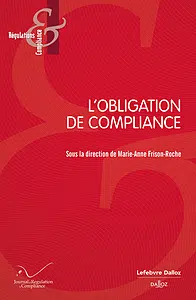
► Full Reference: M.-A. Frison-Roche (dir.), L'Obligation de Compliance, coll."Régulations & Compliance", Journal of Regulation & Compliance (JoRC) and Dalloz, to be published.
____
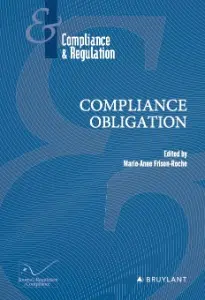
📘 At the same time, a book in English, Compliance Obligation, is published in the collection copublished by the Journal of Regulation & Compliance (JoRC) and the Éditions Bruylant.
____
🧮the book follows the cycle of colloquia organised by the Journal of Regulation & Compliance (JoRC) and its Universities partners in 2023 and 2024.
____
📚this volume is one of a series of books devoted to Compliance in this collection.
► read the presentations of the other books:
🕴️M.-A. Frison-Roche (ed.), 📕Le système probatoire de la Compliance, 2027
🕴️M.-A. Frison-Roche (ed.), 📕Compliance et Contrat, 2026
🕴️M.-A. Frison-Roche & M. Boissavy (eds.), 📕Compliance et droits de la défense. Enquête interne - CJIP - CRPC, 2024
🕴️M.-A. Frison-Roche (ed.), 📕La juridictionnalisation de Compliance, 2023
🕴️M.-A. Frison-Roche (ed.), 📕Les Buts Monumentaux de la Compliance, 2022
🕴️M.-A. Frison-Roche (ed.), 📕Les outils de la Compliance, 2021
🕴️M.-A. Frison-Roche (ed.), 📕Pour une Europe de la Compliance, 2019
🕴️N. Borga, 🕴️J.-Cl. Marin and 🕴️J.-Ch. Roda (eds.), 📕Compliance : l'Entreprise, le Régulateur et le Juge, 2018
🕴️M.-A. Frison-Roche (ed.), 📕Régulation, Supervision, Compliance, 2017
🕴️M.-A. Frison-Roche (ed.), 📕Internet, espace d'interrégulation, 2016
📚see the global presentation of all the books of the collection.
___
► General presentation of this book: Compliance is sometimes presented as something that cannot be avoided, which is tantamount to seeing it as the legal obligation par excellence, Criminal Law being its most appropriate mode of expression. It is sometimes presented as something that the company does out of ethical concern, self-regulation which is the opposite of legal obligation. For the moment, therefore, there is no single vision of the Compliance Obligation. This is all the less the case because of the multitude of texts, themselves constantly evolving and changing, which inject such a wide range of compliance obligations that we give up trying to establish any unity, thinking that, on a case-by-case basis, we will define a regime and a legal constraint of greater or lesser strength, aimed at one subject or debtor or another, for the benefit of one or other.
This lack of unity, due to the absence of a definition of the Compliance Obligation, makes the application of the texts difficult to foresee and therefore makes the Judge fearful, even though he/she is going to take on more and more importance.
This book asks the practical questions: What is Compliance obliging? Who is obliged to comply? and How far are we obliged to comply? and provides answers, Compliance practices, constraints and innovations will be better mastered and anticipated by all those they affect: companies, stakeholders, technicians, lawyers, consultants, institutions and courts.
____
🏗️general construction of this Book: The book opens with a double Introduction. The first, which is freely accessible, consists of a summary of the book, while the second, which is substantial, deals with the unified conception that we can, and indeed should, have, of the "Compliance Obligation", without losing the concrete and active character that characterises this branch of law.
The first Part of the book aims to define the Compliance Obligation. To this end, Chapter I deals with the Nature of this obligation. Chapter II deals with the Spaces of the Compliance Obligation.
The Part II aims to articulate the Compliance Obligation with other branches of Law.
The Part III of the book looks at the way in which the possibility of obliging and the means of obliging are provided. To this end, Chapter I deals with the Convergence of the Sources of the Compliance Obligation. Chapter II considers International Arbitration as a reinforcement of the Compliance Obligation. To this end, Chapter I deals with the Convergence of the Sources of the Compliance Obligation. Chapter II considers International Arbitration as a reinforcement of the Compliance Obligation.
The last Part of the book is devoted to Vigilance, the leading edge of the Compliance Obligation. Chapter I is devoted to a study of the various sectors, and analyses the Intensities of the Vigilance Obligation. Chapter II deals with the Variations in Tension generated by the Vigilance Obligation. Finally, Chapter III deals with the New Modalities of the Compliance Obligation, highlighted by the Vigilance Imperative.
____
ANCRER LES OBLIGATIONS DE COMPLIANCE SI DIVERSES
DANS LEUR NATURE, LEURS REGIMES ET LEUR FORCE
POUR DEGAGER L'UNITE DE L'OBLIGATION DE COMPLIANCE
LA RENDANT COMPREHENSIBLE ET PRATIQUABLE
(ANCHOR COMPLIANCE OBLIGATIONS, SO DIVERSE
IN THEIR NATURE, THEIR REGIMES AND THEIR FORCE,
TO BRING OUT THE UNITY OF THE COMPLIANCE OBLIGATION
MAKING IT COMPREHENSIBLE AND PRACTICABLE)
TITRE I.
CERNER L’OBLIGATION DE COMPLIANCE
(IDENTIFYING THE COMPLIANCE OBLIGATION)
CHAPITRE I : LA NATURE DE L’OBLIGATION DE COMPLIANCE (THE NATURE OF THE COMPLIANCE OBLIGATION)
Section 1 ♦️ La volonté, le cœur et le calcul, les trois traits cernant l'Obligation de Compliance (Will, Heart and Calculation, the three traits encercling the Compliance Obligation), by 🕴️Marie-Anne Frison-Roche
Section 2 ♦️ De la dette à l’obligation de compliance (From the Debt to the Compliance Obligation), by 🕴️Bruno Deffains
Section 3 ♦️ Obligation de Compliance et droits humains (Compliance Obligation and Human Rights), by 🕴️Jean-Baptiste Racine
Section 4 ♦️ L'Obligation de Compliance et les mutations de la souveraineté et de la citoyenneté (Compliance Obligation and changes in Sovereignty and Citizenship), by 🕴️René Sève
Section 5 ♦️ La définition de l''obligation de compliance confrontée au droit de la cybersécurité (The definition of the Compliance Obligation in Cybersecurity Law) by🕴️Michel Séjean
CHAPITRE II : LES ESPACES DE L’OBLIGATION DE COMPLIANCE (SPACES OF THE COMPLIANCE OBLIGATION)
Section 1 ♦️ Entités industrielles et Obligation de compliance (Industrial entities and Compliance Obligation), by 🕴️Etienne Maclouf
Section 2 ♦️ L'Obligation de Compliance dans les chaînes de valeur (The Compliance Obligation in Value Chains), by 🕴️Lucien Rapp
Section 3 ♦️ Compliance et conflits de lois. Le droit international de la vigilance-conformité à partir de quelques applications récentes sur le continent européen (Compliance and conflict of laws. International Law of Vigilance-Conformity, based on recent applications in Europe), by 🕴️Louis d'Avout
TITRE II.
ARTICULER L’OBLIGATION DE COMPLIANCE AVEC DES BRANCHES DU DROIT
(ARTICULATING THE COMPLIANCE OBLIGATION WITH BRANCHES OF LAW)
Section 2 ♦️ Droit fiscal et obligation de compliance (Tax Law and Compliance Obligation), by 🕴️Daniel Gutmann
Section 3 ♦️ Le droit processuel, prototype de l'Obligation de Compliance (General Procedural Law, prototype of the Compliance Obligation), by 🕴️Marie-Anne Frison-Roche
Section 4 ♦️ Le droit des sociétés et des marchés financiers face à l'Obligation de Compliance (Corporate and Financial Markets Law facing the Compliance Obligation), by 🕴️Anne-Valérie Le Fur
Section 4 ♦️ Transformation de la gouvernance et obligation de vigilance, by 🕴️Véronique Magnier
Section 5 ♦️ Le rapport entre le Droit de la responsabilité civile et l'Obligation de Compliance (The link between Tort Law and Compliance Obligation), by 🕴️Jean-Sébastien Borghetti
Section 6 ♦️ Dimensions environnementales et climatiques de l'Obligation de Compliance (Environmental and Climatic Dimensions of the Compliance Obligation), by 🕴️Marta Torre-Schaub
Section 7 ♦️ Droit de la concurrence et Droit de la Compliance (Competition Law and Compliance Law), by 🕴️Jean-Christophe Roda
Section 8 ♦️ L'Obligation de Compliance en Droit global (The Compliance Obligation in Global Law), by 🕴️Benoît Frydman & 🕴️Alice Briegleb
Section 9 ♦️ Les juges du droit des entreprises en difficulté et les obligations de compliance (Judges of Insolvency Law and Compliance Obligations), by 🕴️Jean-Baptiste Barbièri
TITRE III.
COMPLIANCE : DONNER ET SE DONNER LES MOYENS D’OBLIGER
(COMPLIANCE : GIVE AND TAKE THE MEANS TO OBLIGE)
CHAPITRE I : LA CONVERGENCE DES SOURCES (CONVERGENCE OF SOURCES)
Section 1 ♦️ Obligation sur obligation vaut (Compliance Obligation on Obligation works), by 🕴️Marie-Anne Frison-Roche
Section 2 ♦️ Les technologies disponibles, prescrites ou proscrites pour satisfaire Compliance et Vigilance (Technologies available, prescribed or prohibited to meet Compliance and Vigilance requirements), by 🕴️Emmanuel Netter
Section 3 ♦️ Contrainte légale et stratégie des entreprises en matière de Compliance (Legal Constraint and Company Strategies in Compliance matters), by 🕴️Jean-Philippe Denis & Nathalie Fabbe-Costes
Section 4 ♦️ La loi, source de l’Obligation de Compliance (The Law, source of the Compliance Obligation), by 🕴️Jean-Baptiste Blanc
Section 5 ♦️ Opposition et convergence des systèmes juridiques américains et européens dans les règles et cultures de compliance (Opposition and Convergence of American and European Legal Systems in Compliance Rules and Cultures), by 🕴️Raphaël Gauvain & 🕴️Blanche Balian
Section 6 ♦️ Ce à quoi les engagements engagent qu'est un engagement (What a ), by 🕴️Marie-Anne Frison-Roche
CHAPITRE II : L’ARBITRAGE INTERNATIONAL EN RENFORT DE L’OBLIGATION DE COMPLIANCE (INTERNATIONAL ARBITRATION IN SUPPORT OF THE COMPLIANCE OBLIGATION)
Section 1 ♦️ Comment l'arbitrage international peut être un renfort de l'Obligation de Compliance (How International Arbitration can reinforce the Compliance Obligation), by 🕴️Laurent Aynès
Section 2 ♦️ La considération par l'Arbitrage de l'Obligation de Compliance pour une place d'arbitrage durable (Arbitration' consideration of Compliance Obligation for a Sustainable Arbitration Place), by 🕴️Marie-Anne Frison-Roche
Section 3 ♦️ L’usage de l’arbitrage international pour renforcer l’obligation de Compliance : l’exemple du secteur de la construction (The use of International Arbitration to reinforce the Compliance Obligation: the example of the construction sector), by 🕴️Christophe Lapp
Section 4 ♦️ L’arbitre, juge, superviseur, accompagnateur ? (The Arbitrator, Judge, Supervisor, Support) , by 🕴️Jean-Baptiste Racine
TITRE IV.
LA VIGILANCE, POINTE AVANCÉE DE L’OBLIGATION DE COMPLIANCE
(VIGILANCE, SPEARHEAD OF THE COMPLIANCE OBLIGATION)
Section 1 ♦️ La Vigilance, pointe avancée et part totale de l'Obligation de Compliance (....), by 🕴️Marie-Anne Frison-Roche
CHAPITRE I : LES INTENSITÉS DE L’OBLIGATION DE VIGILANCE, POINTE AVANCÉE DU SYSTÈME DE COMPLIANCE (INTENSITIES OF THE VIGILANCE OBLIGATION, SPEARHEAD OF THE COMPLIANCE SYSTEM)
Section 2 ♦️ L’intensité de l’Obligation de Vigilance selon les secteurs : le cas des opérateurs financiers (Intensity of the Vigilance Obligation by Sectors: the case of Financial Operators), by 🕴️Anne-Claire Rouaud
Section 3 ♦️ L’intensité de l’Obligation de Vigilance selon les secteurs : le cas des opérateurs bancaires et d’assurance (Intensity of the Vigilance Obligation by Sectors: the case of Banking and Insurance Operators), by 🕴️Mathieu Françon
Section 4 ♦️ L’intensité de l’obligation de vigilance selon les secteurs : le cas des opérateurs numériques (Intensity of the Vigilance Obligation by Sectors: the case of Digital Operators), by 🕴️Grégoire Loiseau
Section 5 ♦️ L’Obligation de vigilance des opérateurs énergétiques (The Vigilance obligation of Energy Operators), by 🕴️Marie Lamoureux
CHAPITRE II : LES DISPUTES AUTOUR DE L'OBLIGATION DE VIGILANCE, POINTE AVANCÉE DU SYSTÈME DE COMPLIANCE, DANS SON RAPPORT AVEC LA RESPONSABILITÉ
Section 1 ♦️ Le rapport entre le droit de la responsabilité civile et l'obligation de compliance, by 🕴️Jean-Sébastien Borghetti
Section 2 ♦️ Repenser le concept de responsabilité civile à l’aune du devoir de vigilance, pointe avancée de la compliance (Rethinking the Concept of Civil Liability in the light of the Duty of Vigilance, Spearhead of Compliance), by 🕴️Mustapha Mekki
Section 3 ♦️ Tensions et contradictions entre les instruments relatifs à la vigilance raisonnable des entreprises, by 🕴️Laurence Dubin
Section 4 ♦️ Compliance, Vigilance et Responsabilité civile : mettre en ordre et raison garde (Compliance, Vigilance and Civil Liability: put in order and keep the Reason), by 🕴️Marie-Anne Frison-Roche
CHAPITRE III : LES MODALITÉS NOUVELLES DE L'OBLIGATION DE COMPLIANCE, MISES EN LUMIÈRE PAR L'IMPÉRATIF DE VIGILANCE (NEW MODALITIES OF THE COMPLIANCE OBLIGATION, HIGHLIGHTED BY THE VIGILANCE IMPERATIVE)
Section 1 ♦️ Clauses et contrats, modalités de l’obligation de vigilance (Clauses and Contracts, terms and conditions of implementation of the Vigilance Obligation), by 🕴️Gilles J. Martin
Section 2 ♦️ La preuve de la bonne exécution de la Vigilance au regard du système probatoire de Compliance (Proof that Vigilance has been properly carried out with regard to the Compliance Evidence System), by 🕴️Jean-Christophe Roda
TITRE V.
LE JUGE ET L'OBLIGATION DE COMPLIANCE
(THE JUDGE AND THE COMPLIANCE OBLIGATION)
Section 1 Section 1 ♦️ Devoir de vigilance et litiges commerciaux : une compétence à partager ?, par 🕴️François Ancel
Section 2 ♦️ Les enjeux présents à venir de l’articulation des principes de procédure civile et commerciale avec la logique de compliance (Present and Future Challenges of Articulating Principles of Civil and Commercial Procedure with the Logic of Compliance), by 🕴️Thibault Goujon-Bethan
Section 3 ♦️ Le juge de l’amiable et la compliance (The amicable settlement judge and compliance), by 🕴️Malik Chapuis
Section 4 ♦️ Le Juge requis pour une Obligation de Compliance effective (The Judge required for an Effective Compliance Obligation), by 🕴️Marie-Anne Frison-Roche
L’OBLIGATION DE COMPLIANCE : VISION D’ENSEMBLE
(COMPLIANCE OBLIGATION : OVERVIEW)
♦️ L'obligation de compliance, charge portée par les entreprises systémiques donnant vie au Droit de la Compliance. - lignes de force de l'ouvrage (The Compliance Obligation, a burden borne by Systemic Companies giving life to Compliance Law - key points of the book (free access) by 🕴️Marie-Anne Frison-Roche
________
Oct. 2, 2025
Thesaurus : Doctrine

► Full Reference: L. d'Avout, "Compliance et conflits de lois. Le droit international de la vigilance-conformité à partir de quelques applications récentes sur le continent européen" ("Compliance and conflict of laws. International Law of Vigilance-Conformity, based on recent applications in Europe"), in M.-A. Frison-Roche (dir.), L'Obligation de Compliance, Journal of Regulation & Compliance (JoRC) and Dalloz, coll. "Régulations & Compliance", 2025, pp.173-196.
____
📕read the general presentation of the book, L'obligation de Compliance, in which this article is published
____
► English Summary of this Article (done par the Author) : In the absence of constraints derived from the real international law, vigilance-compliance laws themselves determine their scope of application in space. They do so generously, to the extent that they often converge on the same operators and 'overlap' on the world stage. The result is a hybridisation of the law applicable to the definition of Compliance Obligations; a law possibly written "with four hands" or more, which is not always harmonious and which exposes unilateral legislators to occasional retouching their work and their applied regulations.
________
Sept. 10, 2025
Publications

🌐follow Marie-Anne Frison-Roche on LinkedIn
🌐subscribe to the Newsletter MAFR Regulation, Compliance, Law
🌐subscribe to the Video Newsletter MAFR Surplomb
🌐subscribe to the Newsletter MaFR Droit & Art
____
► Full Reference:: M.-A. Frison-Roche, "Compliance", in J.-Fr. Kerléo & E. Lemaire (dir.), Dictionnaire de l'éthique publique, LexisNexis, 2025, pp.
____
📗 read the general presentation of the Dictionary.
____
📝read the article (in French).
_____
► English Summary of the article defining what is Compliance: The article explains Compliance in 7 points.
Firstly, it states that Compliance oscillates between a weak and a strong definition. It can be defined weakly as the demonstration of obedience to all applicable regulations, or it can be defined strongly as active participation in the achievement of 'monumental' ambitions for the future of the social group. Positive legal rules and case law are increasingly revealing the relevance of the strong definition, with the weak definition referring only to conformity to the Law.
Secondly, this understanding of the new branch of Law known as Compliance Law will enable us to master the regulations specifically relating to compliance (RGPD, French laws such as Sapin 2 Act and Vigilance Act, AML/FT, European AI Act, etc.), which are both more specific and more restrictive than the general obligation to comply with the applicable legal rules.
Thirdly, everyone can see the move from "extraterritoriality" to another thing which is the indifference to territoryd: Compliance is the right instrument for the digital space and for chains of activities.
Fourthly, this is due to the very nature of Compliance, which consists in internalising in companies in a position to be active the “Monumental Negative Goal” of preventing the collapse of systems (energy, climate, digital, banking, financial, algorithmic, etc.).
Fifthly, this internalisation is carried out by States and public authorities in entities in a position to act, i.e. in concrete terms in companies in a position to be active to reach the “Monumental Goals” by contributing to the improvement of systems so that these systems benefit in the present and the future the people who are de jure and de facto involved in them.
Sixthly, these goals become positive when it comes to educating people about probity and effective equality between human beings, notably through training policies. In this respect, Vigilance is the “cutting edge” of Compliance.
Seventhly, an “ex ante responsibility” of Crucial Operators subject to Compliance is emerging, and is articulated by Systemic Litigation which aims to balance and maintain systems, carried by States and these crucial companies.
____
📝read the preentation of the other article written by Marie-Anne Frison-Roche for this Dictionary: "Régulation"
________
Sept. 4, 2025
Thesaurus : Doctrine

► Full Reference: V. Magnier, "Transformation de la gouvernance et obligation de vigilance" (The transformation of governance and due diligence), in M.-A. Frison-Roche (dir.), L'Obligation de Compliance, Journal of Regulation & Compliance (JoRC) and Dalloz, coll. "Régulations & Compliance", 2024, forthcoming
____
📕read the general presentation of the book, L'Obligation de Compliance, in which this contribution is published
____
► English summary of this contribution (done by the Journal of Regulation & Compliance - JoRC) : The author develops the tensions caused by Compliance Law and the Duty of Vigilance on corporate governance.
The French "Sapin 2" law targets corruption, while the French "Vigilance" law has a broader scope in terms of risks and the entire value chain. It is logical that this should create tensions in terms of governance, given the monumental goals involved. Companies need to take ownership of the powers delegated to them, which means rethinking their governance and the way in which they exercise their corporate mandates, with the corporate interest, the judge's compass, having to be combined with the adoption of new standards of behaviour formalised voluntarily by ethical charters in line with international standards. On this voluntary and supervised basis, the company must adapt its structure and then contractualise these norms.
This ethical approach has an impact on the role of corporate organs, not only in terms of transparency and risk prioritisation, but also proactively in terms of the adoption of commitments whose sincerity will be verified, as reflected, for example, in corporate governance codes (cf.in France the AFEP-MEDEF Code), the setting up of ad hoc committees and the presence of stakeholders, who will be consulted when the vigilance plan is drawn up.
She stresses that this creates tensions, that dialogue is difficult, that business secrecy must be preserved, but that stakeholders must become Vigilance watchdogs, a role that should not be left to the public authorities alone.
____
🦉this article is available in full text pour the persons following the Professor Marie-Anne Frison-Roche teaching
________
Sept. 4, 2025
Thesaurus : Doctrine

► Référence complète : J.-Ph. Denis et N. Fabbe-Costes, "Contrainte légale et stratégie des entreprises en matière de Compliance", in M.-A. Frison-Roche (dir.), L'Obligation de Compliance, Journal of Regulation & Compliance (JoRC) et Éditions Lefebvre - Dalloz, coll. "Régulations & Compliance", 2025, sous presse.
____
📕lire une présentation générale de l'ouvrage, L'Obligation de Compliance, dans lequel cet article est publié
____
► Résumé de cet article (fait par le Journal of Regulation & Compliance - JoRC) : Dans une perspective de sciences de gestion, les auteurs replacent les lois successivement adoptées dans l'émergence du "développement durable" en matière environnementale, qui a façonné la façon de gérer les entreprises. Cela est venu d'une prise de conscience mondiale des "buts monumentaux" que constitue la préservation de la planète, reposant principalement sur les entreprises. Le changement n'est néanmoins opéré davantage sous la contrainte que d'une façon volontaire, des lois impératives relayant les pressions des parties prenantes.
Les auteurs montrent que les entreprises y ont réagi en intégrant les buts imposés mais n'ont pas pu suivre jusqu'au bout de telles ambitions, faute notamment de comprendre les réglementations très complexes, relayées par des responsabilités pénales et civiles. Les recherches croisant le Droit et la Gestion ont vocation à faciliter en pratique cette mise en oeuvre.
_________
🦉Cet article est accessible en texte intégral pour les personnes inscrites aux enseignements de la Professeure Marie-Anne Frison-Roche
Sept. 4, 2025
Thesaurus : Doctrine

► Full Reference: B. Frydman & A. Briegleb, "L'obligation de compliance en Droit global ("Compliance Obligation in Global Law)", in M.-A. Frison-Roche (ed.), L'Obligation de Compliance, Journal of Regulation & Compliance (JoRC) and Éditions Lefebvre - Dalloz, coll. "Régulations & Compliance", 2025, forthcoming.
____
📕read a general presentation of the book, L'Obligation de Compliance, in which this contribution is published
____
► English summary of this contribution (done by the Journal of Regulation & Compliance - JoRC): The authors stress that the Contracts Law and Tort Law are essential in Compliance Law, particularly in its global legal perspective, since it goes beyond the legal systems of States and develops new normativities, at the level of each company, but also allows a new expression of public power through the Monumental Goals that Compliance Law claims to achieve globally. The weaker the States, the greater the delegation to the first level is operating.
In concrete terms, the authors examine a series of situations in which various organisations use compliance techniques to appropriate global power over things or people, which has the effect, and sometimes the purpose, of reducing the freedoms of people controlled in this way. Thus CSR, which was initially non-binding, is now the source of binding obligations, and the moral obligation expressed in codes of conduct can become a civil obligation, as the Supreme Court of California decided in 2002 in the Nike case.
In addition, "Comply or Explain" clauses are now commonplace, allowing the person subject to the legislation not to comply if they can justify it, which is the basis of the many information reports that companies are now required to publish.
Then, returning to the issue of liability, particularly in the digital environment, the article stresses the importance of 'conditional immunity from liability', taking the view from the European DSA that certain operators, such as hosting providers, are not liable unless they take on obligations, such as monitoring functions on contents published.
Finally, with regard to the duty of vigilance, it tends for the first time to align the scope of "responsibility" with the scope of "power", moral responsibility thus becoming legal responsibility, which would be like a new responsibility for others.
The result of all this is an "obligation to regulate others".
________
🦉This article is available for people who follow the Professor Marie-Anne Frison-Roche teaching
Sept. 4, 2025
Thesaurus : Doctrine

► Référence complète : G. J. Martin, "Clauses et contrats, modalités de l’obligation de vigilance", in M.-A. Frison-Roche (dir.), L'obligation de Compliance, Journal of Regulation & Compliance (JoRC) et Éditions Lefebvre - Dalloz, coll. "Régulations & Compliance", 2025, sous presse
____
📕lire une présentation générale de l'ouvrage, L'obligation de Compliance, dans lequel cet article est publié
____
► Résumé de l'article (fait par le Journal of Regulation & Compliance - JoRC) : L'auteur se consacre à ce qui est souvent désigné comme les "clauses RSE" en ce qu'elles constituent une façon pour les entreprises de mettre en oeuvre leur Obligation de Compliance. Dans une pratique encore "balbutiante", les entreprises contractualisent ainsi leur aspiration éthique et leur obligation légale, définissant au passage plus précisément ce qu'est pour elle l'obligation de compliance et/ou de vigilance, notamment par des référentiels internes ou/et externes, en y associant des mécanismes d'évaluation, d'audit et de sanctions spécifiques, comme la résiliation.
En outre, le contrat organise l'articulation avec des clauses commerciales ayant un autre objet, Cela est d'autant plus requis que l'objet de ces clauses est aussi de "faire ruisseler" l'obligation légale au-delà du premier cercle contractuel. Le risque de déséquilibre devra être évité. Les clauses devront être précises et limitées, notamment au regard de l'espace et du temps.
Dans un second temps, l'auteur examine l'articulation du Droit commun des contrats et du Droit spécial de la Vigilance. En effet, après avoir posé que le contrat soit le moyen, et même le seul moyen, de transformer la soft Law en hard Law dans les relations entre les parties contractantes, l'auteur estime que si une telle clause figure dans un contrat commercial figurant dans une situation visée par la lo de 2017 (chaine de valeur, rapport société-mère et filiale) il y a cumul de qualités. Il en naît donc des conflits de compétence avec le Tribunal judiciaire de Paris et l'on peut regretter l'abandon de la solution retenue par la Cour de cassation ouvrant une option de compétence.
Une autre articulation difficile devra être faite en cas de nullité de la clause RSE, annulation que le juge de droit commun peut prononcer, suivant qu'elle sera estimée par le juge déterminante ou non d'autres clauses, voire du contrat. En cas d'inexécution de la clause, la rupture des relations commerciales peut être prononcée, mais l'on peut penser qu'un préavis doit être respecté.
Enfin si l'objet même du contrat est l'exécution de l'obligation de vigilance, il faut que cela n'équivaille pas à une délégation qui anéantirait le principe légal d'une responsabilité personnelle.
_________
🦉Cet article est accessible en texte intégral pour les personnes inscrites aux enseignements de la Professeure Marie-Anne Frison-Roche
________
Sept. 4, 2025
Thesaurus : Doctrine

► Référence complète : M. Mekki, "Peut-on repenser la responsabilité à l’aune du devoir de Vigilance, pointe avancée de la Compliance ?", in M.-A. Frison-Roche (dir.), L'obligation de Compliance, Journal of Regulation & Compliance (JoRC) et Dalloz, coll. "Régulations & Compliance", 2025, sous presse.
____
📕lire une présentation générale de l'ouvrage, L'obligation de Compliance, dans lequel cet article est publié
____
► Résumé de l'article (fait par le Journal of Regulation & Compliance - JoRC) : L'auteur développe les tensions que l'Obligation de Vigilance engendre sur le concept même de responsabilité. Répertoriant toutes les manifestations, très diverses, de la Vigilance, selon les domaines, il observe que se forme une logique téléologique de prévention et de gestion des risques systémiques, ce qu'est la compliance, sans doute remède à un État impuissant, s'appuyant sur une grande pluralité des normes.
La question est de savoir si l'on peut passer de ces droits spéciaux mais d'un esprit commun à un droit commun transformé. Les premières décisions rendues à propos de la loi de 2017 répondent par la négative, mais la question est ouverte.
Il faut alors revenir sur le concept même de responsabilité, qui pourrait accueillir un mécanisme général de Vigilance. Ce concept est très flexible et présente l'adaptabilité requise pour accueillir la logique de compliance. En effet, la responsabilité, classiquement ex post peut passer ex ante, à travers la notion de dette, non plus juridique mais éthique, car les entreprises doivent être "dignes de confiance".
La responsabilité préventive vise alors à restaurer l'équilibre des systèmes dans la poursuite des Buts Monumentaux, pour l'efficacité et l'efficience des systèmes. La responsabilité se mixte de subjectivité et d'objectivité, le risque devenant central (par rapport à la faute), le litige dépassant l'intérêt des parties, la remédiation devenant le sujet central dans un procès en responsabilité à repenser : le dialogue doit y être au centre, entre les juridictions, entre les entreprises et les parties prenantes, dans un office du juge adapté.
________
🦉Cet article est accessible en texte intégral pour les personnes inscrites aux enseignements de la Professeure Marie-Anne Frison-Roche
June 17, 2025
Thesaurus : 08. Juridictions du fond
► Référence complète : Paris, pôle 5, ch. 12, 17 juin 2025, RG n° 24-05193, S.A. La Poste
____
____
📝Lire une analyse de l'arrêt à l'occasion d'un débat sur la vigilance comme pointe avancée de la Compliance, la responsabilité des entreprises et l'office du juge : "De l'obligation de compliance à l'obligation de vigilance" (à propos de l'arrêt La Poste)
________
June 12, 2025
Publications

🌐suivre Marie-Anne Frison-Roche sur LinkedIn
🌐s'abonner à la Newsletter MAFR Regulation, Compliance, Law
🌐s'abonner à la Newsletter en vidéo MAFR Surplomb
🌐s'abonner à la Newsletter MaFR Droit & Art
____
► Référence complète : M.-A. Frison-Roche, La polysémie de la "Vigilance": la Vigilance bancaire précisée par les lignes directrices du 23 avril 2025 face à la Vigilance de la loi du 23 mars 2017, document de travail , juin 2025
____
📝 Ce document de travail est le sous-jacent de la Newsletter Video Surplomb du .... 2025 : regarder la Video
____
► Résumé du document de travail : A
____
🔓lire le document de travail ci-dessous ⤵️
April 30, 2025
Thesaurus : Doctrine

► Full Reference: A. Nicollet, "La charge du devoir de vigilance sur les entreprises s'inscrivant dans les chaines de valeur(The burden of Vigilance Duty on companies in value chains)", in M.-A. Frison-Roche (ed.), L'Obligation de Compliance, Journal of Regulation & Compliance (JoRC) and Dalloz, coll. "Régulations & Compliance", 2025, to be published.
____
📕read a general presentation of the book, L'Obligation de Compliance, in which this article is published
____
► English summary of this contribution : This article identifies the factors that lead to companies being held liable under the Vigilance Duty for which they are responsible. The first element is the notion of "chain", a new concept for the Law that has been incorporated into the legal system (I). This may be explicit or implicit, referring to the value chain, the activity chain or the supply chain. These vocabulary variations, depending on the texts and national laws, are aimed at cases where there is no overlap, but the duty of vigilance is transparently aimed at the value chain of which the others are part. The concept of the "chain" could therefore play an increasingly important role in Economic Law, in that it is its very existence that gives rise to a duty of vigilance on the part of the company that governs the structure of the chain.
The second part of the article shows that this Vigilance Duty places a shared burden on the companies in the chain. Indeed, while the company that is the master, either through corporate techniques or because it governs the structure of the chain more factually, must always fulfill this obligation, the companies along the chain cannot be relieved of it. The burden is cumulative, as stated in German legal system, but this principle should be generalised: performance may be joint, articulated, and performance by one may presume performance by the other, the obligation of the other may be performed by the other, but this does not amount to exemption. This concept allows for a global group policy without destroying the effectiveness of the Compliance Obligation.
Indeed, and this is the third part of the article, Liability is cumulative. The master company's liability is personal and it must not be able to shirk it. The companies in the value chain, while benefiting from a presumption of conformity by the very fact of the chain phenomenon and the multiple contracts and corporate shareholdings that structure it, are also liable if they fail in their Duty of Vigilance. National legislation varies widely in terms of the extent of liability incurred, with some not addressing the issue at all while others go into great detail, but they are not intended to call this principle into question.
________
April 23, 2025
Thesaurus : Soft Law
► Référence complète : ACPR & Tracfin, Lignes directrices conjointes à l'Autorité de Contrôle Prudentiel et de Résolution et de Tracfin relatives aux obligations de vigilance sur les opérations et aux obligations de déclaration et d'information à Tracfin, 23 avril 2025
____
____
________
March 29, 2025
Publications

🌐follow Marie-Anne Frison-Roche sur LinkedIn
🌐subscribe to the Newsletter MAFR Regulation, Compliance, Law
🌐subscribe to the Video Newsletter MAFR Surplomb
____
► Full Reference: M.-A. Frison-Roche, The Contract, a Compliance tool: the Obligation for a platform to control content CE, 27 January 2025, B. c/ CNIL, Working Paper, March 2025.
____
🎤 This Working Paper was developed as a basis for the Overhang👁 video on 29 March 2025 : click HERE (in French)
____
🎬🎬🎬In the collection of the Overhangs👁 It falls into the News category.
►Watch the complete collection of the Overhangs👁 : click HERE
____
► Summary of this Working Paper: The ruling handed down on 15 January 2025 by the Commercial, Economic and Financial Chamber of the French Judicial Supreme Court (Cour de cassation) provides a solution to the issue of content control in the digital environment. It resolves what appears to be the aporia so often emphasised, and even claimed, namely the impossibility of developing an effective controlling technology.
To do this, the Court disregarded the applicable laws and referred to the electronic payment contract between the bank and the platform, which contained a clause on Vigilance against unlawful content, linked to a termination clause. It held that this clause was fully effective. This solution, so simple and so strong, can make a major contribution to regulating the digital space, if the banks so wish, because what platform can do without reliable electronic payment services?
____
🔓read the developments below⤵️
Jan. 11, 2025
Publications

🌐suivre Marie-Anne Frison-Roche sur LinkedIn
🌐s'abonner à la Newsletter MAFR Regulation, Compliance, Law
🌐s'abonner à la Newsletter en vidéo MAFR Surplomb
____
► Full Reference: M.-A. Frison-Roche, The puzzle of Institutional Compliance Law and Substantive Compliance Law: the example of the European Regulations of 31 May 2024 on AMLA and enterprises compliance obligations, Working Paper, January 2025.
____
🎤 This Working Paper was developed as a basis for the Overhang👁 video on 11 January 2024 :
____
🎬🎬🎬In the collection of the Overhangs👁 It falls into the News category.
►Watch the complete collection of the Overhangs👁 : click HERE
____
► Summary of this Working Paper: Compliance Law is built on 2 legs, Institutions on the one hand and substantive rules on the other. For example in the United States, the 1934 Act established at the same time the prohibition and prevention of financial market abuse and the SEC. In Europe, in 2013, the Banking Union established institutions to build this Union and increased the obligations on banks.
This is perfectly illustrated by the 2 European Regulations of 31 May 2024, one creating the AMLA and the other reinforcing the compliance obligations of crucial economic operators, one text referring to the other.
Indeed, Institutional Compliance Law and Substantive Compliance Law are like 2 articulated legs. You have to know both and make them work together.
This is part of the "European puzzle", a positive expression which implies that, when assessing and interpreting a text, we should always bear in mind that it is only one element of a general picture, which is coloured by its Monumental Goal: in this case to obtain a European area where money laundering is efficiently prevented thanks to the action of the companies themselves under the supervision and support of a Supervisory Authority which coordinates the actions of the States.
If we consider only one element, we find everything 'complicated', whereas the overall picture is simple, because the Goal is simple and in Compliance Law, a branch of Teleological Law, everything is in the Monumental Goal.
____
🔓read the developments below ⤵️
Updated: Dec. 31, 2024 (Initial publication: Jan. 1, 2024)
Organization of scientific events

► Full Reference: M.-A. Frison-Roche, Coordination of the cycle of conference-debates Contentieux Systémique Émergent (Emerging Systemic Litigation), organised on the initiative of the Cour d'appel de Paris (Paris Cour of Appeal), with the Cour de cassation (French Court of cassation), the Cour d'appel de Versailles (Versailles Court of Appeal), the École nationale de la magistrature - ENM (French National School for the Judiciary) and the École de formation des barreaux du ressort de la Cour d'appel de Paris - EFB (Paris Bar School), under the scientific direction of Marie-Anne Frison-Roche
____
► This Cycle in few words: Duty of vigilance, supervision of platforms, non-financial information (CSRD), etc.: as many new texts that bring new types of disputes before the courts.
Despite their diversity, the cases brought before the most diverse judges present a unity: through the dispute that pits the parties against each other, it is a system that is at stake, for example the climate system, digital system, energy system, financial system, etc.
New regulations are just the illustration of this "Emerging Systemic Litigation"; the conference-debates aiming at showing the new fields, new techniques, new standards, etc., in relation to the scale and diversity of stakeholders' expectations. This cycle is designed to encourage cross-fertilisation, so as to provide judges with food for thought ahead of the litigation they will be called upon to deal with.
Les réglementations nouvelles ne sont que l’illustration de ce « contentieux systémique émergent » dont la formation a pour objet de montrer les nouveaux champs, les nouvelles techniques, les nouvelles normes, etc., en lien avec l’ampleur et la diversité des attentes des parties prenantes. Le cycle vise à favoriser les échanges croisés, afin d’alimenter la réflexion des magistrats en amont des litiges qui leurs seront soumis.
____
🔴Registrations and information requests can be sent to: inscriptionscse@gmail.com
🔴For the attorneys, registrations have to be sent to the following address: https://evenium.events/cycle-de-conferences-contentieux-systemique-emergent/
⚠️The conference-debates are held in person only, in the Cour d’appel de Paris (Paris Court of Appeal).
____
► General Presentation of the Cycle: In 2024, the Cour d’appel de Paris (Paris Court of Appeal) created a new specialised chamber: chamber 5-12 Contentieux émergent – Devoir de vigilance et responsabilité écologique (Emerging litigation - Duty of vigilance and environmental liability). Vigilance litigation is an example of what is emerging more generally: Systemic Litigation, often linked to technologies. This calls for a new way of judging, organising procedures and relations between professionals. A series of conference-debates on Emerging Systemic Litigation (ESL) is being organised jointly by the Paris Court of Appeal, the Versailles Court of Appeal, the Cour de cassation (French Court of cassation), the École nationale de la magistrature - ENM (French National School for the Judiciary) and the École de formation des barreaux du ressort de la Cour d'appel de Paris - EFB (Paris Bar School), under the scientific responsibility of Professor Marie-Anne Frison-Roche.
In this context, a series of conference-debates involving professionals from a wide range of backgrounds is being proposed on the following themes:
____
🧮read below the full programme of this cycle of conference-debates⤵️
Nov. 18, 2024
Conferences

🌐follow Marie-Anne Frison-Roche on LinkedIn
🌐subscribe to the Newsletter MAFR Regulation, Compliance, Law
🌐subscribe to the Newsletter Surplomb, par MAFR
____
► Full Reference: M.-A. Frison-Roche, "Choix et embranchements de compétences lorsqu'un enjeu de vigilance est allégué" ("Choice and Branching of Jurisdiction when a Vigilance issue is Alleged"), in Le Droit processuel de la Vigilance (Vigilance General Procedural Law), in cycle of conference-debates "Contentieux Systémique Émergent" ("Emerging Systemic Litigation"), organised on the initiative of the Cour d'appel de Paris (Paris Cour of Appeal), with the Cour de cassation (French Court of cassation), the Cour d'appel de Versailles (Versailles Court of Appeal), the École nationale de la magistrature - ENM (French National School for the Judiciary) and the École de formation des barreaux du ressort de la Cour d'appel de Paris - EFB (Paris Bar School), under the scientific direction of Marie-Anne Frison-Roche, November 18, 2024, 11h-12h30, Cour d'appel de Paris, Cassin courtroom
____
🕴️An other speaker to this conference is Natalie Fricero, Emeritus Professor at Côte d'Azur University
🧮see the full programme of this event
____
⚙️This event was conceived as part of the "Emerging Systemic Litigation" cycle of conference-debates, organized by the Paris Court of appeal, in conjunction with the French Court of cassation, the Versailles Court of appeal, the French National School for the Judiciary and the Paris Bar School, under the scientific direction of Marie-Anne Frison-Roche.
____
► English Summary of the conference: This speech opens the conference. It therefore logically focuses on the question of "jurisdictional competence". It is divided into successive points which are progressively linked to each other.
The first point consists to insist on this rule : the organisation of the courts and their jurisdiction can never be detached from the substance of the matter in dispute. This explains why the issue of jurisdiction is such a source of passion for as long as the very definition of Vigilance remains so contentious, and why the 2021 legislature's belief that it could put out the fire has only served to exacerbate it.
The second point relates to the first proposed solution, i.e. maintaining the exclusivity of the Paris First Judicial Court, which is acceptable in principle because by specialising judges acquire a "technical competence" but which presents a very damaging "Bibendum risk".
The third point relates to the second solution proposed, namely the reference to the Motulskian notion of the 'basis of demand', which provokes a fork in the road, with the risk of interminable conflicts and divergent interpretations.
The fourth point is the need to find the best solution, i.e. the least bad solution, consisting above all of forming practical alliances, without requiring new texts, for this particular type of litigation which does not come under any branch of Law and which justifies a dialogue between the heads of the courts.
____
🔓read the key points of this speech below ⤵️
________
Nov. 18, 2024
Conferences

🌐follow Marie-Anne Frison-Roche on LinkedIn
🌐subscribe to the Newsletter MAFR Regulation, Compliance, Law
🌐subscribe to the Newsletter Surplomb, par MAFR
____
► Full Reference: M.-A. Frison-Roche, "Les spécificités à concevoir dans l'audience publique des contentieux systémiques de vigilance" ("The Specific Features of Public Hearings to conceive on Vigilance Systemic Litigation"), in Le Droit processuel de la Vigilance (Vigilance General Procedural Law), in cycle of conference-debates "Contentieux Systémique Émergent" ("Emerging Systemic Litigation"), organised on the initiative of the Cour d'appel de Paris (Paris Cour of Appeal), with the Cour de cassation (French Court of cassation), the Cour d'appel de Versailles (Versailles Court of Appeal), the École nationale de la magistrature - ENM (French National School for the Judiciary) and the École de formation des barreaux du ressort de la Cour d'appel de Paris - EFB (Paris Bar School), under the scientific direction of Marie-Anne Frison-Roche, November 18, 2024, 11h-12h30, Cour d'appel de Paris, Cassin courtroom
____
🕴️An other speaker to this conference is Natalie Fricero, Emeritus Professor at Côte d'Azur University
🧮see the full programme of this event
____
⚙️This event was conceived as part of the "Emerging Systemic Litigation" cycle of conference-debates, organized by the Paris Court of appeal, in conjunction with the French Court of cassation, the Versailles Court of appeal, the French National School for the Judiciary and the Paris Bar School, under the scientific direction of Marie-Anne Frison-Roche.
____
► English Summary of the conference:
________