Systemic Risk

Working papers

🚧Compliance Law and Climate. Prevent Climate Risk and build Climate Balance

  🌐follow Marie-Anne Frison-Roche on LinkedIn 🌐subscribe to the Newsletter MAFR Regulation, Compliance, Law  - ► Full Reference: M.-A. Frison-Roche, Compliance Law and Climate. To prevent Climate Risk and build Climate Balance, January 2022. - 🎤 In its French version, this Working Paper had been written for a speech  for  the colloquium held under the scientific direction of Marta Torre-Schaub, Béatrice Lormeteau, & Anne Stevignon, Les risques climatiques à l’épreuve du droit Comment le droit fait-il face aux nouveaux risques engendrés par la crise climatique ? , at the University Panthéon-Sorbonne (Paris I), Amphithéâtre Liard, on March 17, 2022. - 📝it is also the basis of an article : "Droit de la compliance et climat. Pour prévenir le risque et construire l'équilibre climatiques" ("Compliance Law and climate. Prevent the climate risk and build the climate balance") - ► Summary of this Working Paper: Compliance Law is beginning to emerge in climate topic, through the expression  "Climate Compliance Law", but the climate issue itself is the most perfect example of why General Compliance Law is made for.  It is indeed a new branch of Law, a global Law claiming to provide Ex Ante solutions here and now for global issues, so that in the future systemic catastrophies will not occur, will not happen: it is these "Monumental Goals" that give meaning, coherence, and simplicity to Compliance Law. Compliance Law, linked to the Rule of Law principle, makes it possible to go beyond the choice often presented between the effectiveness of the protection of the planet and the renunciation of freedoms, in particular the freedom to do business and the freedom of individuals, especially the protection of their data. Climate is thus exemplary of the object of Monumental Goals of Compliance Law (I). The systemic risk that it now constitutes is analogous to Banking or Digital Systemic Risks and therefore calls for the application of identical legal Compliance Tools, formerly put in place for Banking Regulatory and Compliance Law, recently invented for Digital. Compliance Law, extending Regulation Law, itself from the precondition of the Sector and the Territory, is therefore the branch which makes it possible to put in place new legal solutions, either by force (judicial agreements, compliance programs, etc.), or by will (commitments, global charters, etc.). Therefore, an alliance can exist between political and public authorities, and crucial economic operators (II), that the rise in power of the "raison d'être" is the sight and whose technical challenge is the collection of information that must be put in correlation. Scientists pooling Information, this public good, provided by public and private entities. The courts are at the center of this articulation between Compliance Law and Climate, which object is the Future. -   🔓read the developments below⤵️ -

Working papers

Working Paper

🚧The Hypothesis of the category of Systemic Cases brought before the Judge

► Full Reference: M.-A. Frison-Roche, The Hypothesis of the category of Systemic Cases brought before the Judge, Working Paper, October 2021 and April 2022. - ► This working paper has served as the basis for an introductory speech 🎤L'hypothèse de la catégorie des causes systémiques (The Hypothesis of the cateory of Systemic Cases), in a more general conference which I coordinated and moderated, 🧱L'office du juge et les causes systémiques, which is part of a general cycle covering Penser l'office du juge, specific conference attending the 9th May 2002 into the Grand Chamber of the Cour de cassation.   This Working Paper was drawn up in October 2021 to build the conference on the assumption that among the diversity of "cases" brought to the courts by litigants, some constitute a specific category: "systemic cases", justifying treatment that is both specific (in that they are systemic, calling in particular for procedural solutions common to all and distinguishable from the treatment of non-systemic cases) and common treatment beyond the diversity of judges who deal with them (judicial and administrative judges, criminal and non-criminal judges, French and non-French judges, judges of the member-States legal orders and European Union judges, etc.).  This working paper does not aim to deal with the whole subject, i.e. both to determine this category of "systemic causes" and the consequences that must be drawn from it for the judge's office, since that is the very purpose of the conference, which is built around several presentations: it aims to deal with the first part of the subject, i.e. the very existence of this new processual category, which is "systemic causes", leaving for other work the practical consequences to be drawn from it in the processual treatment that it calls for. - 📝This Working Paper is also the basis of a forthcoming article - ► Summary of the Working Paper: xx - Read below the developments⤵️ - 🌐follow Marie-Anne Frison-Roche on LinkedIn 🌐follow Marie-Anne Frison-Roche on Instagram 🌐subscribe to the Newsletter MAFR. Regulation, Compliance, Law

Articles

Why do we regulate? If it is to prevent systemic risks, systemic “family offices” must be subject to it (Archegos case) (Pourquoi régule-t-on? Si c’est pour prévenir les risques systémiques, les “family offices” systémiques doivent y être soumis (cas Archegos))

Full reference: Frison-Roche, M.-A., Why do we regulate? If it is to prevent systemic risks, systemic "family offices" must be subject to it (Archegos case) (Pourquoi régule-t-on? Si c'est pour prévenir les risques systémiques, les "family offices" systémiques doivent y être soumis (cas Archegos)), Newsletter MAFR – Law, Compliance, Regulation, 30th of March 2021 Read by freely subscribing other news of the Newsletter MAFR – Law, Compliance, Regulation   Summary of the news:  Archegos was a wealth management company whose activity consisted mainly in managing funds that were not themselves from the financial markets (hence its title of "family office"). Obviously, Archegos was proving to be too fragile financially in view of the highly speculative commitments it made on the financial markets and systemic banks were particularly deeply affected by the liquidation of large amounts by Archegos to be able to respond to margin calls. As the mandate of the financial regulatory authorities is aimed almost exclusively at the protection of public savings, Archegos completely escaped the regulation and supervision of the Securities and Exchange Commission (SEC). However, Regulation Law also aims to prevent and manage systemic risks, which are often multi-sectoral and even trans-sectoral, and this in a teleological way. In view of this and the increasingly important place taken by speculative behavior in the financial markets, the financial regulatory authorities must give up the condition of using public savings in their consideration of operators which should be regulated because even an operator not handling public savings can threaten the existence of financial markets. From this perspective, "family offices", not handling public savings but having a systemic dimension, must come under the regulation and supervision of financial regulatory authorities.

Articles in a legal collective publication

📝The impossible legal unicity of the category of “whistleblowers” (“L’impossible unicité juridique de la catégorie des “lanceurs d’alertes” “)

Full reference: Frison-Roche, M.-A., L'impossible unicité juridique de la catégorie des "lanceurs d'alertes" ("The impossible legal unicity of the category of "whistleblowers""), in Chacornac, J. (dir.), Lanceurs d'alertes, regards comparatistes, ("Whistleblowers, comparative perspectives"), Publications of the Centre français de droit comparé ("French Comparative Law Center"), May 2020, Volume 21, pp. 13-31.    Read the article (in French).    Read the general presentation of the collective book in which this article is published Read the bilingual working paper which had served of basis for this article.  Read the presentation of the conference "Les lanceurs d'alertes: glose" (Whistleblowers: glose") and especially the slides elabored for the colloquium organized by the Centre français de droit comparé ("French Comparative Law Center") on 23th of November 2018 under the direction of Jérôme Chacornac - Introduction of the article "Whistleblowers". This is a new expression. Which is a great success. Barely heard once, we hear it everywhere … A topic not of course or knowledge test, but rather a topic of daily conversation. Because it is spoken to us every day, in more or less gracious terms. For example President Donald Trump on October 1, 2019 declared to the press "want to question" the whistleblower who would have illegally denounced him and would not, according to him, have the right to conceal his identity, proof in this according to him of the lying character of his assertions against him, while his lawyer indicates on October 6, 2019 that he is not speaking on behalf of a single whistleblower thus taken to task but of a plurality of people who gave information against the President of the United States. Even the most imaginative screenwriters would not have written such brutal and rapid twists and turns. Spectators, we are waiting for the next episode, secretly hoping for the escalation. And precisely if we go to the cinema, it is still a whistleblower whose dedication and success, we are told about, even the drama, for the benefit of global society, and in particular democracy, since the secrets are fought for the benefit of the truth. The Secret Man designates Mark Felt as the first whistleblower. Returning to what we often present as being a more "serious" media1On the more general fact that cinema is undoubtedly the medium which most seriously restores the state of the Law, c. Frison-Roche, M.-A., Au coeur du Droit, du cinéma et de la famille : la vie, 2016., we listen to France-Culture and here is another story told by a historian who worked as an archivist on events that political power would have liked to keep hidden by possibly destroying their traces but which its trade led to preserve: here it is expressly presented to the studious listeners like a "whistleblower" …. While the same radio tries to find the one who could well be, as in a kind of contest the "first whistleblower"2L'histoire du premier lanceur d'alerte, France Culture, septembre 2019. ? …. This rewriting of History can be defended because ultimately what did other Voltaire do for Calas, or Zola for Dreyfus? It is also a subject of legislative discussion since in the United States the Dodd-Frank law of 2010 inserted in the law of 1934 which established the Securities & Exchanges Commission a complete device of remuneration and remuneration of the whistleblowers, whereas after having developed flexible but guiding lines in this regard in 20123European Commission, Guidelines on Whistleblowing, 6 of December 2012, SEC(2012) 679 final, updated on 23 of April 2018. , the European Commission published on November 20, 2018 the text of what will become a Directive intended to give a unified European status to the character, in the system gradually developed to protect the one who was presented in 2018 as that "cannot be punished for having done what is right". In Europe, the Directive first approved by a Resolution of the European Parliament on April 16, 2019 on the protection of persons denouncing breaches of Union Law and then adopted on October 7, 2019 (Directive of the European Parliament and of the Council of European Union on the Protection of Persons who Report Violations of European Union Law, different title, it should be noted, will have to be transposed into the laws of the Member States within the next two years. , since only "violations of Union Law" are targeted, but the character of the "whistleblower" is more generally targeted: he is "whole"4However, precisely the so common use of plurality ("whistleblowers") raises doubts about the uniqueness of the character. On this question, see. all the first part of the developments of this study, which leads to the conclusion rather than beyond the multitude of particular cases, there are rather two kinds of whistleblowers. V. infra I.. In short, the whistleblower is a star5The director of the film La fille de Brest says that she considers the whistleblower at the origin of the case of the Pick as a "movie character".. A sort of historical figure, covered in blows and glory, going from Voltaire to Snowden, both of whom find themselves embodied on the screens6Thus, the adventures of Snowden were brought to the screen by Oliver Stone in 2016, Snowden. On the question of knowing whether this film "faithfully reproduces" or not the case, Schetizer, P., Le film Snowden est-il à la hauteur de la réalité?, 2017. This article is favorable to the whistleblower, and to the film which tells us with emotion his case, in particular because (sic), it is easier than to read the Washington Post. …., Consecrated by law, which associates with it a legal regime of protection to such an extent that, like a Nessus tunic, it is this legal regime which will define the character and not the reverse. When we read the law of December 9, 2016 relating to transparency in the fight against corruption and the modernization of economic life, known as "Sapin 2", we notice that the Legislator makes much of this character, since 'he dedicates its chapter II to him7Underlined by us.: "From the protection of whistleblowers", and that it is by his very protection that he formally opens the door of Right to him. But why a plural? Admittedly when we read the recitals of the Community Directive of October 7, 2019 on the protection of whistleblowers8About this directive, v. the developments infra, it is only a list of all the subjects on which it is a good idea to protect them, which therefore prompts us to see in this plural only the index of this non-exhaustive list of subjects which it is good to tell us, a sign of the lack of definition of who should alert us. Reading the French law known as "Sapin 2" makes it less severe but more perplexing. Indeed, this plurality referred to by the title of the chapter devoted to "whistleblowers", there is no longer any question in the rest of the law, in the very definition which follows, article 6 which opens this chapter devoted to "whistleblowers" offering the reader immediately a singular since it begins as follows: "A9Underlined by us. whistleblower is a person …". No mention of diversity. The art of legislative writing would however have required that the qualifying article not only be singular but that it should not yet be undefined. Stendhal if he had still deigned to have the law for bedside book would have wanted to find at the beginning of chapter a sentence like: "The10Underlined by us. whistleblower is a person …". Thus seem to contradict themselves within the law "Sapin 2 the very title which presents the character, in that it uses a defined plural (the) while the defining article which presents it is in the undefined singular (one). … Here is a first reason not to advance any more but in a very careful way, in this "step by step" that constitutes a reading word for word: a gloss. This consists of taking the expression itself literally. The second reason for this technical choice is that the gloss is well suited to the introduction of a collective work, thus allowing more targeted developments to take place in other contributions, on the techniques, the difficulties and the limits of this protection, or on its history, or the reasons for the arrival in French law of these whistleblowers and the way they develop, or not, elsewhere. I am therefore going to content myself with taking this already legal expression to the letter: The (I) whistle (III). blowers (II).       

Articles in The Journal of Regulation & Compliance « JoRC »

On June 18, 2019, during its meetings with the banking sector, the Single Resolution Board tells what it expects for it (and its Regulators) for the effectiveness of the Resolution mechanism.

The European Banking Union is based on supervision as much as on regulation: it concerns the operators as much as the structures of the sector, because the operators "hold" the sector. This is why the "regulator – supervisor" holds the operators by the supervision and is close to them. He meets them officially and in "soft law" relations. This is all the more necessary since the distinction between the Ex Ante and the Ex Post must be nuanced, in that its application is too rigid, in that it involves a long time (first of all the rules, then to apply them, then to notice a gap between rules and behaviors, then to repair it) is not appropriate if the system aims at the prevention of systemic crises, whose source is inside the operators. This is why the body in charge of solving the difficulties of the systemic banks for the salvation of the systeme meets the banking sector itself, to ensure that they are permanently "resolvable", so that the hypothesis of their resolution never arises. This is the challenge of this system: that it is always ready, for never be applying. - In the European Banking Union, the Single Resolution Board (SRB) is in charge of "resolve" the difficulties of European systemic banks in difficulty. It is the public body of the second pillar of the Banking Union. The first pillar is the prevention of these difficulties and the third is the guarantee of deposits. The resolution is therefore more like an Ex Post mechanism. But in this continuum through these three pillars between the Ex Ante and the Ex Post, the SRB does not wait passively – as would a traditional judge do – that the file of the troubled bank reaches it. Like a supervisor – which brings it closer to the first public in the system (Single Supervisory Board -SSB), which supervises all the banks, it is in direct contact with all the banks, and it approaches the hypothesis of a bank in trouble by a systemic perspective: it is therefore to the entire banking system that the SRB addresses itself. As such, it organizes meetings, where he is located: in Brussels. Thus, on June 18, 2019, all banks came to discuss with the Single Resolution Board to know what it wants from the banks and for the banks, in what is called a "dialogue meeting". To resolve in Ex Post the difficulties of a bank, it has to present a quality (a little known concept in Bankruptcy Law): "resolvability". How build it? Who build it ? In its very design and in its application, bank by bank. For the resolution body vis-à-vis all players in the banking and financial sector, it's clear: "Working together" is crucial in building resolvability ". In the projection that is made, it is affirmed that there can be a successful resolution only if the operator in difficulty is not deprived of access to what makes to stay it alive, that is to say the banking and financial system itself, and more specifically the "Financial Market Infrastructures", for example payment services. Does the Single Resolution Board expect spontaneous commitments from the FMIs for such a "right of access"? In this case, as the Single Resolution Board says, this right of access corresponds to "critical functions" for a bank, the resolution situation can not justify the closure of the service. By nature, these crucial operators are entities that report to regulators who oversee them. Who enforces – and immediately – this right of access? When one can think that it is everyone, it risks being nobody …. That is why the resolution body, relaying in this a concern of the Financial Stability Board, underlines that it is necessary to articulate the supervisors, regulators and "resolvers" between them. - To read this program, since it is a proposed program of work for the banking sector, four observations can be made: 1. We are moving more and more towards a general "intermaillage" (which will perhaps replace the absence of a global State, but it is an similar nature because it is always to public authorities that it refers and not to self-regulation); 2. But as there is no political authority to keep these guardians, the entities that articulate all these various public structures, with different functions, located in different countries, acting according to different temporalities, these are the companies themselves that internalize the concern that animates those who built the system: here the prevention of systemic risk. This is the definition of Compliance, which brings back to companies, here more clearly those those which manage the Market Infrastructures, the obligations of Compliance (here the management of systemic risk through the obligation of giving access). 3. Even without a  single systemic guard, there is always a recourse. That will be the judge. There are already many, there will probably be more in a system of this type, more and more complex, the articulation of disputes is sometimes called "dialogue". And it is undoubtedly "decisions of principle" that will set the principles common to all of these particular organisms. 4. We then see the emergence of Ex Ante mechanisms for the solidity of the systems, and the solidity of the players in the systems, and then the Ex Post resolution of the difficulties of the actors according to access to the solidity of the infrastructures of these systems, which ultimately depend on judges (throughout the West) facing areas where all of this depends much less on the judge: the rest of the world. -  

Working papers

🚧 THE IMPOSSIBLE UNICITY OF THE LEGAL CATEGORY OF WHISTLEBLOWERS

This working paper served as a basis for a conference done in French for the Centre de droit comparé (Center for Comparative Law) in Paris on 23 November 2018. Updated, it has served as a basis for an article published in French in a book of the Société de Législation comparé (Society of Comparative Legislation).   -   "The whistleblowers". This is a new expression. Which wins a full success. Barely heard once, we hear it everywhere … A theme not only of academic teaching, but rather a topic of daily conversation. Because it is every day that we speak about it, in terms more or less graceful. For example President Donald Trump on October 1, 2019 told the press he "wants to interrogate" the whistleblower who would have unlawfully denounced him and would not have, according to him, the right to conceal his own identity, evidence in this according Donald Trump of the false character of his assertions against him, while his lawyer indicates on October 6, 2019 that he does not speak on behalf of a single whistleblower thus taken apart but of a plurality people who gave information against the President of the United States. Even the most imaginative scriptwriters would not have written twists as abruptly or so fast. Spectators, we wait for the next episode, secretly hoping for climbs and slashs. Precisely if we go to the cinema, it is still a whistleblower whose dedication and success, or even drama, we are told, for the benefit of the global society, and especially of Democracy, since the secrets are fought for the benefit of the truth. Thus, the movie The Secret Man designates Mark Felt as the first whistleblower. Returning to what is often presented as a more "serious" media, for example in France the radio "France Culture" we can learn the story of a historian who worked as an archivist on events that the political power would have wanted to keep hidden by possibly destroying their traces but that his profession led to preserve1On the more general fact that cinema is undoubtedly the medium which most seriously restores the state of the Law, c. Frison-Roche, M.-A., Au coeur du Droit, du cinéma et de la famille : la vie, 2016.: here it is expressly presented to the studious listeners as a "whistleblower" … While the same radio is trying to find the one that could be, as in a kind of contest, the "first whistleblowers"2L'histoire du premier lanceur d'alerte, France Culture, septembre 2019. ?. This rewriting of History can be made because finally Voltaire for Calas, or Zola for Dreyfus did they anything else?  It is also a topic of legislative debate since in the United States the Dodd-Frank Act of 2010 inserted in the 1934 law that established the Securities & Exchanges Commission (SEC) a complete system for retribution and remuneration of whistleblowers, while after elaborating guidelines about about in 20123European Commission, Guidelines on Whistleblowing, 6 of December 2012, SEC(2012) 679 final, updated on 23 of April 2018. , the European Commission has published the text on November 20, 2018 in order to give the character a unified European status, in the device gradually developed to protect the one that was presented in 2018 as who  like that : ""The new whistleblowers' protection rules will be a game changer. In the globalised world where the temptation to maximise profit sometimes at the expense of the law is real we need to support people who are ready to take the risk to uncover serious violations of EU law. We owe it to the honest people of Europe.". Step for the Directive of October 7, 2019.  In Europe, the Directive first approved by a Resolution of the European Parliament on 16 April 2019 on protection of persons reporting breaches of Union law and then adopted on 7 October 2019 (Directive 2019/78 (EU) of the European Parliament European Union and the Council of the European Union on the Protection of Persons Reporting Breaches of Union law, will have to be transposed in the next two years to the legal systems of the Member States. is not general, since only "violations of European Union Law" are targeted but the character of the "whistleblower" is more generally referred to: it is "whole"4However, precisely the so common use of plurality ("whistleblowers") raises doubts about the uniqueness of the character. On this question, see. all the first part of the developments of this study, which leads to the conclusion rather than beyond the multitude of particular cases, there are rather two kinds of whistleblowers. V. infra I.. In short, the whistleblower is a star 5The director of the film La fille de Brest says that she considers the whistleblower at the origin of the case of the Pick as a "movie character".. A kind of historical character, covered with blows and glory, going from Voltaire to Snowden, one as the other being incarnated on the screens6Thus, the adventures of Snowden were brought to the screen by Oliver Stone in 2016, Snowden. On the question of knowing whether this film "faithfully reproduces" or not the case, Schetizer, P., Le film Snowden est-il à la hauteur de la réalité?, 2017. This article is favorable to the whistleblower, and to the film which tells us with emotion his case, in particular because (sic), it is easier than to read the Washington Post. …. Recognized by national legislations, which associate to him a legal regime of protection to such a point that, like a tunic of Nessus, it is this legal regime which will define his character and not the opposite. When we read the French law of December 9, 2016 relative à la transparence à la lutte contre la corruption et à la modernisation de la vie économique (on transparency in the fight against corruption and the modernization of economic life), usually known as "Sapin 2 Act", we note that the lawmaker makes much of this character, because he devotes to him the chapter II: "De la protection des7Underlined by us. lanceurs d'alerte" ("The protection of7Underlined by us. whistle-blowers") and that it is by his very protection that the French Parliament formally opens the door of Law to him and throws it openly. But why a plural? Certainly when we read the recitals of the European Directive of 7 October 2019 on the protection of whistleblowers8About this directive, v. the developments infra, this is only an enumeration of all the subjects about which it is a good idea to to protect them, which encourages us to see in this plural only the index of this non-exhaustive list of topics about which it is good that we are alerted, sign of the lack of definition … Reading the French law known as "Sapin 2" makes us less severe but more perplex. Indeed, from this plurality covered by the title of the chapter devoted to Les lanceurs d'alerte ("The whistleblowers"), there is no longer any question in the rest of the law, in the very definition that follows, Article 6 which opens this chapter devoted the "whistleblowers" offering the player immediately a singular since it begins as follows:  "Un9Underlined by us. lanceur d'alerte est une personne …" (A! footnote-1684 whistleblower is a person …"). No more mention of diversity. The art of legislative writing would have even required that the qualifying article should not be singular but not yet indefinite.  Thus seem to contradict in this law "Sapin 2" itself the very title which presents the character, in that it uses a definite plural ("the whistleblowers") while the article of definition which presents the topic does it by using the singular indefinite : "a whistleblower….". This is a first reason to move forward only in a very cautious way, in this "step by step" that constitutes a word-by-word reading: a gloss. This method consists in taking literally the expression itself. The second reason for this technical choice is that the gloss is well suited to an introduction of a collective work, allowing more specific developments to take place in other contributions, for example on the techniques, the difficulties and the limits of this protection, or the history of it, or the reasons for the arrival in French law of these American or Brithish whistleblowers and the way they develop, or not, in other legal systems or other countries. I will therefore content myself with taking again literally this already legal expression: The (I) launchers (II) of alert (III). See below developments.  

Glossary

Bank (Banking Regulation)

Banks are regulated because they do not engage in an ordinary economic activity, as their are likely to create systemic risk. In the real economy indeed, banks play the role of providing credit to entrepreneurs who operate on the markets for goods and services. These credits are mainly financed through deposits made by depositors and, to a lesser extent, by shareholders (i.e., capitalists). That is how liberalism and capitalism are bound up. However, banks also have the power to create money by the book entries they make when they grant loans ('book money'). As such, the banks share with the State this extraordinary power to exercise monetary authority, which some describe as sovereign power. It is possible that the digital eventually calls this power into question, since the Regulation currently hesitates to seize control over new instruments that are called "virtual currency" and that are used as proper "currency" or as an ordinary instrument for cooperative relation. Banks' prominent sovereign character justifies, first and foremost, that the State is granted the power to choose the institutions which benefit from the privilege of creating book money- in this regard, the banking industry has always been a monopoly. Hence, Banking Regulation is first an ex ante control to enter the profession, and also a careful monitor of the people and institutions that claim they are in. In addition, banks and credit institutions lend more money than their own funds can allow: the whole banking system is necessarily based on the trust that each creditors place within the bank, including depositaries who leave their funds at the banks' disposal for it to use them. That is where Bank Regulation intervenes to establish what is called 'prudential ratios', i.e., ratios that ensure the soundness of the institution by determining the amount of money that banks can lend based on the equity and quasi-equity they actually have. Moreover, banks are constantly monitored by their supervisory Regulator, the Central Bank (in France, the Banque de France) that ensures the safety of the whole system by setting the State as the lender of last resort. This can, however, incentivize a large financial institution to take excessive risks based on its reliance on the fact that the State will save it eventually- that is what the 'moral hazard' theory systematized. All monetary and financial systems are built on these central banks that are independent from governments, which are far too reliant on political strategies and which cannot generate the same trust that a Central Bank inspires. Since the missions of central banks have increased over the years, and since the notions of Regulation and Supervision have come together, we tend to consider that Central Banks are now fully fledged Regulators. Besides, Banking Regulation has become all the more central since banking is no longer primarily about loaning but rather about financial intermediation.  Banking Regulation and Financial Regulation are mixing. In Europe , European Central Bank is in the center.

1-2.8: Prudential banking regulation: selective activism or neutrality?

Translated Summaries The translated summaries are done by the Editors and not by the Authors. ENGLISH Prudential regulation applied to banks is caught swinging back and forth between two objectives. FRENCH La réglementation prudentielle appliquée aux banques oscille constamment d’un objectif à l’autre.

I-1.39: An illustration of regulation’s irony: how Moody’s downgraded 12 German banks after regulatory change.

Translated Summaries In The Journal of Regulation the summaries’ translation are done by the Editors and not by the authors ENGLISH While financial regulation aims at achieving market stability, regulating markets can sometimes take an ironic turn when regulations end up having consequences that differ from their original regulatory purpose. The article provides such an example of regulation’s irony: how a regulatory change in Germany led Moody’s to downgrade 12 banks, therefore weakening such institutions and consequently enhancing the current issues of market volatility and credit cost.   FRENCH Bien que la réglementation financière vise à assurer la stabilité du marché, la régulation des marchés peut parfois prendre une tournure ironique quand la régulation finit par avoir des conséquences qui diffèrent de son objectif de régulation d’origine. L’article fournit un exemple de l’ironie de la régulation : comment un changement de réglementation en Allemagne a conduit Moody’s à déclasser 12 banques allemandes,, donc à affaiblir ces institutions et par conséquent à accroître les problèmes actuels de la volatilité du marché et le coût du crédit. ITALIAN Quando la regolazione è volta ad ottenere la stabilità del mercato, l’evoluzione di questi mercati oggetto di tale regolazione può essere particolarmente ironica quando la regolazione ha delle conseguenze ben differenti da quelle originariamente prepostesi. Questo articolo cerca quindi di mettere in evidenza un esempio di questa ironia: in effetti, un cambio di regolatore in Germania ha portato Moody’s a tagliare il rating di 12 banche, indebolendo ancora di più tali istituzioni ed aumentando si conseguenza le questioni relative alla volatilità del mercato e del costo del credito. ………………….. Other translations forthcoming

I-2.5: Neutralization using impact surveys before the adoption of Acts and Regulation

Translated Summaries In The Journal of Regulation the summaries’ translation are done by the Editors and not by the authors ENGLISH: Nowadays, it’s necessary to define, initially, the framework of an impact survey. An impact survey is an analysis estimating the economic consequences of a bill (in Europe or in the US) in order to limit, reduce or compensate for negative impacts. It requires the prior adoption of the text. ITALIAN Nei giorni nostri, è necessario definire, inizialmente, la struttura di una valutazione d’impatto. Una valutazione d’impatto è uno studio che cerca di fare una stima delle conseguenze economiche dell’adozione di una legge (in Europa o negli Stati Uniti) in modo tale da limitare, ridurre o compensare le sue conseguenze negative. Tuttavia questo richiede l’adozione preliminare del testo. ………………… Other translations forthcoming.

Articles in a legal collective publication

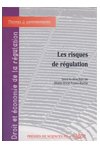
📝The hypothesis of Interregulation (“L’hypothèse de l’interrégulation”) in Frison-Roche, M.-A. (ed.), 📕Les risques de Regulation (“Regulatory Risks”)

Full Reference : Frison-Roche, M.-A., "L’hypothèse de l’interrégulation", in Frison-Roche, M.-A. (ed.) Les risques de régulation, coll. « Droit et Économie de la Régulation », t.3, Dalloz / Presses de Sciences-Po, 2005, pp. 69-80. The topic of of this article is to propose a new notion, already presented in 2001 in the article "Regulation Law": "Interregulation". This mechanism will makes more easier a unified decision when several autonomous, even contradictory, regulations are legitimate to rule a situation. This creation therefore responds to a gap in the general system, of which the antimony is a variant. Political power no longer has the means to unify these disparate sources because it is "overtaken by the globalization of sectors and markets. Likewise, the hierarchical mode of traditional law cannot be suitable for autonomous sectorial regulations. There is therefore a need for interregulation between regulators, for the creation of a common "doctrine", or by procedural means, such as "authorized advice". Read the article. (written in French) Read the general presentation, written in English, of the collective book, Les risques de régulation, in which this article has been published.   Below, read the article Summary.   

Publication director

🏗️ direction of the collection: 📚Droit et Économie de la Régulation

📚 Publication de : Frison-Roche, M.-A. (dir.),📕 Les risques de régulation [Regulatory risks]

After defining what may be a "crisis of Regulation" and stressing that the crisis is a political phenomenon, the book devotes its first part of "systemic risk," which refers to the assumption of the general crisis. This hypothesis is exposed to prospectively or from cases in different sectors, e.g. financial, energy and health, before wondering how to organize post-crisis. The regulation itself including risk, the book chooses to study especially the inconsistency because it is the higher legal risk for an economic system. Therefore, it is proposed to organize inter-regulation mechanisms. Finally, the specific risks Regulator is able to address are conflicts, through the dispute settlement mechanism, derived from judicial system. It is examined in each of the regulated sectors.