Conferences
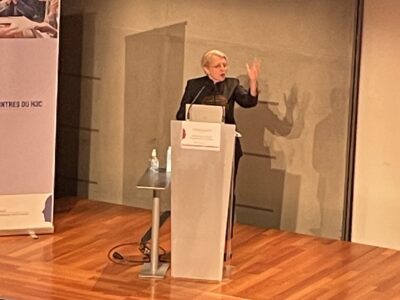
► Full Reference: M.-A. Frison-Roche, "L'esprit des Lois en matière de vigilance" ("Spirit of Law in Vigilance (Due Diligences) matters"), in Haut Conseil du Commissariat aux Comptes (H3C), Réalités et défis de la CSRD – Perspectives du devoir de vigilance, Paris, 14 June 2023. - 🎥watch the video of a part of the speech (in French) - 🧱read the description of the speeches of other speakers of this panel (in French) - The speech took place during the third-round table devoted to the Perspectives du devoir de vigilance (Perspectives of the duty of vigilance), the first round table having been devoted to the lessons that the DPEF can provide for the CSRD, and the second to the transposition work of the CSRD. 🧮See the full programme of this annual event (in French) - ► English summary of the speech: In consideration of and in addition to what has been said, explained and even affirmed by other speakers, I have emphasised that 'vigilance" laws is not a 'regulation' like any other, but the leading edge of a very vast movement, Compliance Law, in which the 2017 French law is the driving force. For its application, the Judge, who is at the centre because of the will of the Legislator, is already taking into consideration the CS3D, the twin text of the CSRD. The texts must not be seen in isolation. If we isolate them from each other, they become almost incomprehensible, their meaning appearing uncertain, even threatening: we need to understand the spirit of these texts, which are indeed new, because they aim to provide answers to the new world we have entered. We must all rejoice in this political ambition, which is taking a legal form, and work to make it efficient: Legislators, companies, auditors, Regulators and Judges. If we do not stop at the letter, which would be to reduce Compliance to conformity, whereas Compliance Law, particularly Vigilance, is the extension of Regulation, finds its meaning in the Goals, we see that the French law of 2017, known as the "Vigilance law", which copies all the techniques of the French law known as "Sapin 2", gives goals simple to understand to the companies subject to the Legislator's will: detect and prevent environmental and human rights abuses in the value chains. The logic is therefore Ex-Ante. This Ex-Ante logic is retained by the CS3D directive. The Judge is central to it. But the responsibility which the NGOs will ask him to trigger is itself an "Ex Ante responsibility", the Compliance trials being like "accountability" trials, to ensure that companies act in accordance with the Goals set by the Legislator. This is transforming the role of the Judge, who must find effective solutions for the future. The discussion and the adversarial principle will become more important. Mediation will be encouraged. Stakeholders and the company will have to work together, and this method, which was intended by the Legislator for drawing up the vigilance plan, will be continued in the supporting legal proceedings. This will also transform the company, and the role played by those who accredit the information on the company's actions and long-term strategies: auditors therefore have a central role to play. - 🌐follow Marie-Anne Frison-Roche on LinkedIn 🌐follow Marie-Anne Frison-Roche on Instagram 🌐subscribe to the Newsletter MAFR Regulation, Compliance, Law