Interregulatory mecanism

Articles

Interregulation: way of “cooperation protocol”​ between Regulatory Bodies.Example between French Financial Markets Authority and Anticorruption Agency

Full reference: Frison-Roche, M.-A., Interregulation: way of "cooperation protocol"​ between Regulatory Bodies. Example between French Financial Markets Authority and Anticorruption Agency, Newsletter MAFR – Law, Compliance, Regulation, 22nd of September 2020 Read by freely subscribing other news of the Newsletter MAFR – Law, Compliance, Regulation   Summary of the news:  Although Regulation Law was born from the notion "sector", constant interferences between sectors and frequent interactions between some sectors and more general questions common to different sectors, make interregulation necessary. Compliance Law being the extension of Regulation Law, this interregulation mechanism is also necessary in Compliance Law.  This interregulation can take many legal paths like letters exchanges between regulators, the creation of a network of regulators and supervisors at the world level or about some specific question or the adoption of a "cooperation protocol" as the AMF (French Financial Market Regulator) and the AFA (French Anticorruption Agency) did on 16th of September 2020 to reinforce their respective fight against corruption, against market abuses and for the protection of investors.  This cooperation protocol between the AFA and the AMF has the following subjects: A more efficient methodology concerning the research and the analysis of corruption and market abuses. A more efficient prevention of corruption and market abuses. A better capacity to give recommendations of new regulations to the Legislator. A more rigorous monitoring of international works on the topic.  A more coherent information for the public. Are regulators the new teachers? 

Articles

“Interregulation”​ between Payments System and Personal Data Protection: how to organize this “interplay”​?

Full reference: Frison-Roche, M.-A., "Interregulation"​ between Payments System and Personal Data Protection: how to organize this "interplay"​?, Newsletter MAFR – Law, Compliance, Regulation, 27th of August 2020 Read by freely subscribing the other news of the Newsletter MAFR – Law, Compliance, Regulation   Summary of the news Regulation Law, in order to recognize and draw the consequences from the specificities of some objects, has been build, at the start, around the notion of "technical sector" although their delimitation is partially related to a political choice. But, in facts, there are multiple points of contacts between sectors, actors moving from one to another as objects. The regulatory solution is so to climb over some technical borders through the methodology of interregulation which is by the way the only one to enable the regulation of some phenomena going beyond the notion of sector and related to Compliance Law.  This news takes the exemple of companies furnishing new payment services. In order to they can provide these services, these firms needs to access to banking accounts of concerned people and so to very sensitive personal data. Regulation of such a configuration needs a cooperation between the banking regulator and the personal data regulator. Legislation being not sufficient to organize in Ex Ante this interregulation, the European Data Protection Board has published some guidelines on 17th of July 2020 about the way it conceives the articulation between the PSD2 (European directive about payment services) and GDPR and has announced that it intended to expand the circle of its interlocutors to do this interregulation. Such an initiative from EDPB can be justified by the uncertainty  about how interpreting both texts and articulating them.   

Working papers

THE REGULATORY CONSEQUENCES OF A WORLD REDESIGNED FROM THE CONCEPT OF “DATA”

This Working paper will be used to support an  French written article to be published in a book, set in the Regulations Series, Dalloz Publishing This working paper was the basis for intervention in the symposium organized by the Journal of Regulation, Internet, Space of Interregulation. View the slides used as support at the conference (in French). -   After emphasizing that the concept of "data" is uncertain, the first perspective is to draw the regulatory consequences of the fact that what is often referred to as the "object" of the data item (the person, the company for financial data, the economy for rating data, etc.), is only its source, "underlying", the data which is manufactured by a company : the real objet of the data is  its purpose being the use for which the data is intended. The data is independent its underlying, is consolidated in the affected masses, takes an economic value based on the desires that have users, becomes available outside of time and space in the digital. This implies a specific interregulation. But the data is also the Janus of digital because new black gold, pure financial instrument, immaterial by nature, the data also keep a record of people, the underlying that would protect, that we would like inseparable, or the structure that one would want legitimately to attack thank to the new mechanism of compliance. This double-sided of the data item leads to shocks of regulatory mechanisms in Internet In addition, any Internet links back to the user, in whom we would gladly see "The Grand Interregulato" ". But is it so appropriate, legitimate and effective? The "consent" which refers this interregulation provided by the user himself raises doubts. However, as the displaced term of "right to be forgotten" hides a very effective weapon that can strike those who monopolize the data in a digital economy that seems to be in an ante-market mechanism. This regression pulverizes the market self-regulation itself to replace the legal acts of exchange by connective legal acts, that for now Law and Regulation are struggling to understand, lack of legal qualifications to do so.  

Articles in a legal collective publication

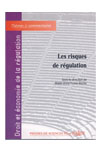
📝The hypothesis of Interregulation (“L’hypothèse de l’interrégulation”) in Frison-Roche, M.-A. (ed.), 📕Les risques de Regulation (“Regulatory Risks”)

Full Reference : Frison-Roche, M.-A., "L’hypothèse de l’interrégulation", in Frison-Roche, M.-A. (ed.) Les risques de régulation, coll. « Droit et Économie de la Régulation », t.3, Dalloz / Presses de Sciences-Po, 2005, pp. 69-80. The topic of of this article is to propose a new notion, already presented in 2001 in the article "Regulation Law": "Interregulation". This mechanism will makes more easier a unified decision when several autonomous, even contradictory, regulations are legitimate to rule a situation. This creation therefore responds to a gap in the general system, of which the antimony is a variant. Political power no longer has the means to unify these disparate sources because it is "overtaken by the globalization of sectors and markets. Likewise, the hierarchical mode of traditional law cannot be suitable for autonomous sectorial regulations. There is therefore a need for interregulation between regulators, for the creation of a common "doctrine", or by procedural means, such as "authorized advice". Read the article. (written in French) Read the general presentation, written in English, of the collective book, Les risques de régulation, in which this article has been published.   Below, read the article Summary.