Business

Jurisprudence

Cour de Cassation (French Judicial Supreme Court)

Decision of 22nd of November 2016, BLCM

Full reference: Cour de cassation, civile, Chambre commerciale, 22nd of November 2016, BLCM, 15-11.063   Read the decision (in French)

Conferences

🎥 Le Diable dans la bouteille des Codes de bonne conduite (The Devil in the bottle of Codes of Conduct)

  ► Full Reference: M.-A. Frison-Roche, "Le Diable dans la bouteille des Codes de bonne conduite"  (The Devil in the bottle of Codes of Conduct). Hommage to Gérard Farjat, Center of Economic Law, Nice, France, 10 March 2016 . -   ► see the conference . (in French)  ► see the  construction of this conference (in French)   ► see the  slides, used as basis for this conference (in French). -   ► English presentation of this conference: In 1978, our mutual friend Gérard Farjat wrote a memorable article on "les codes de conduite privés" ('private codes of conduct') (in French), codes of conduct which have since flourished. I remember that it worried him because he was aware of the rhetoric, and even the contradiction, that these codes contain, and at the same time he did not see what could stop this legitimate way for international companies to organise an 'order' at home, since the Law was no longer able to offer them one from the outside, nor was Law capable of limiting the less virtuous tendency of companies to fashion norms by which they exercise power not only to organise themselves but also to govern others and the outside world. When Gérard Farjat wrote this article in 1978, Corporate Social Responsibility had not yet been conceived… Have we reached the same point? Can we even say that the situation has worsened, with the world being "standardised" and "governed" by "global" companies that write and impose codes of "good" conduct that express what is "good" in itself and end up constituting veritable "global constitutions"? No. In fact, the opposite is true. Through the power of Regulators and Supervisors, institutions of public authority, public standards are internalised in "global" companies, which repeat them in codes of conduct and become their own regulators and supervisors. -

Books

SUPIOT, Alain🕴️ (dir.)

📗L’entreprise dans un monde sans frontières. Perspectives économiques et juridiques

Full reference : Supiot, Alain (dir.), L'entreprise dans un monde sans frontières. Perspectives économiques et juridiques, coll. "Les sens du droit", Dalloz, 2015, 320 p. Read the forth of cover. Read the table of contents. Read the introduction by Alain Supiot : L'entreprise face au Marché total. Read Marie-Anne Frison-Roche's contribution : Les "entreprises cruciales" et leur régulation.

Monographs

71. Regulate ” critical firms” (Réguler les entreprises cruciales)

At first glance, only areas are regulated and the State doesn't enter private enterprises. But the imperative is reversed when a company absorbs the entire area, or when a firm has the project to absorb the area, such as Google has. The firm becomes "crucial" and the State must enter the company and intervene.  It is necessary to give the definition of a "crucial firm". A firm is "crucial", in a negative sense, when its failures could cause the collapse of the system; a firm is positively "crucial" if through it the industry is facing the purpose to serve the future of the social group. The State is then legitimate to enter the company to make its voice heard, sometimes to exercise its decision-making powers. The competitive dynamism and power of property don't exclude the superimposition of the common concern for the future, which some call the general interest.

Working papers

Working Paper.

The “crucial companies” and their regulation

The expression "regulated company" may appear as an oxymoron : the State  regulates areas (markets, networks, etc.) because of their structural failures, but the State doesn't enter a company that develops its activities autonomously. But on reflection, it is sometimes necessary to "regulate a company" and this necessity is increasingly imposed. This is imperative if a company absorbs the entire area, because it is a monopoly or because it wants to become the heart of a crucial area, such as Google which has the project to become the future global brain. In a more general way, it is a necessity to  locate businesses which are "crucial", banks are only one example, and organize, beyond supervision, providing direct regulation of such firms. This regulatory power on critical firms must take the form of attendance of public power and policy within the company itself, so that the state interfere in decisions which social group suffers the consequences. The control can go beyond this "public presence" to take the form of "public authority", the state ruling as operator. Under such conditions of "cruciality", the neutralization of "public enterprise" by the competition law must cease, the public company must be better recognized as a regulatory instrument in distance with the simple game of competition.

Articles in a legal collective publication

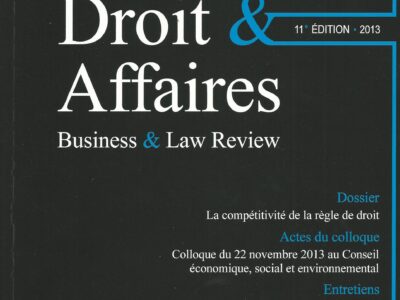
📝Les décisions des juges et des régulateurs favorisent-elles la compétitivité des entreprises françaises ?

📝Les décisions des juges et des régulateurs favorisent-elles la compétitivité des entreprises françaises ?, in 📗La compétitivité de la règle de droit

Documents decisions_des_juges.pdf 4em_de_couv.pdf programme_22_11_2013.pdf

Books

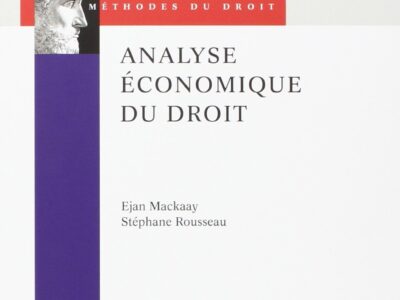
Analyse économique du droit

Jurisprudence

Cour de Cassation (French judicial Supreme Court), Chambre commercial (commercial chamber)

Decision of 28th of February 2006, Etablissement français du sang

Full reference: Com, 28th of February 2006, Etablissement français du sang, n°05-12.138 Read the decision (in French)   Summary of the decision In this judgment, the judge condemns the Etablissement français du sang (French blood establishment – ESF) for an abuse of a dominant position committed by the company Reims Bio, whose activities were subsequently recovered by ESF after its financial liquidation

Articles in a legal collective publication

Du nouveau au self-service normatif : la responsabilité sociale des entreprises

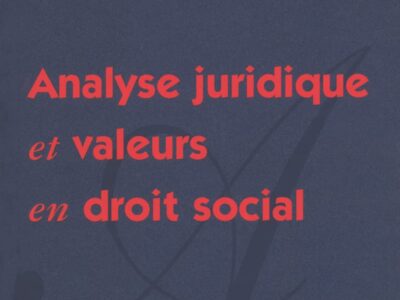
Full reference : Supiot, A., Du nouveau au self-service normatif : la responsabilité sociale des entreprises, in Etudes offertes à Jean Pélisser. Analyses juridiques et valeurs en droit social, Dalloz, 2004, pp. 541-558.     Sciences Po Students can read this text via the Drive in the folder MAFR – Droit de la Régulation et de la Compliance

Articles

Transparence

Jurisprudence

Conseil d'Etat (French Administrative Supreme Court)

Decision of 22nd of November 2000, Société Crédit Agricole Indosuez Cheuvreux

Full reference: Conseil d'État, 22nd of November 2000, Société Crédit Agricole Indosuez Cheuvreux, n° 207697 Read the decision (in French) Read the analysis of the decision by the Conseil d'État   Summary of the decision In this judgment, the Conseil d'État condemns the company Crédit Agricole Indosuez Cheuvreux for a breach of its professional obligations committed by a negotiator at the arbitration table of the company Dynabourse, subsequently absorbed by the company Crédit Agricole Indosuez Cheuvreux.