Publications

Filter by type

Working papers

🚧 From Regulation Law to Compliance Law

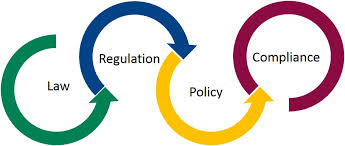
This working paper is the basis for an article written in French to be published in the French publication RÉGULATION, SUPERVISION, COMPLIANCEE, to be published in the RÉGULATIONS series at Éditions Dalloz. This work uses the Compliance and Regulation Law bilingual Dictionnary. - This Working Paper aims to show the movement that starts from Regulation Law to Compliance Law, now in the process of being born. In order to explain this movement, in order to anticipate the near future, in what it should not be and in what it should be, it is necessary to reconstruct how the Compliance Law was born of the Regulation Law, which has thus found the sources of the Public Services Law of which it had at first cut the roots (I). Indeed Regulation Law has in a happy way renewed the Law but also narrowed its perspective. Today, the phenomenon of globalization and the need for public authority that States can not satisfy according to traditional legal methods implies the establishment of a sort of "global public service". This is done by the Law of Compliance which revolutionizes all legal systems, both Common Law and Civil Law (II). Indeed, Compliance Law internalizes in some companies, the "crucial operators", the duty to make effective the "monumental goals" that the regulatory authorities have formulated and of which these companies must render globally effective. In this respect, the Law of Compliance is the extension of the Law of Regulation, which makes a new scope and in its aims and in its space. It is the whole of Law that is transformed. The near future will tell if it is reflected in clashes, between companies and regulators, between Europe and the United States, or on the contrary by a pact of trust between the crucial operators and the Regulators. If this is achieved, the Law of Compliance, expressing the political dimension of the Law of Regulation, expressing the share of companies that ceases to be neutralized by the mechanics of the markets, will be an advancement of the Law. It is in this perspective that we must build the European Compliance Law.      

Working papers

🚧 Compliance and Trust

Compliance. Trust. Two words that come more and more often than before at our readers' eyes or listeners' ears. And yet they do not seem to match well. They even seem to repel each other. Indeed, Compliance is the way in which Public Authorities trust certain private operators, not in themselves, but with their structural capacities to mechanically capture the information that these authorities need (I). This presupposes a vision of the world in which Companies are powerful and powerful alone but are not virtuous, while Public Authorities, such as the Public Prosecutor's Office or Regulators, are weak but virtuous alone. Such a conception of Compliance transforms companies into automata. Such a vision of the world has no future: only human beings can be trusted, whose fallibility must be accepted, as Compliance is then the expression of a relationship built on trust that is to be seen between non-mechanical operators, namely public Institutions and private Operators, who can both have in common concern for an interest which goes beyond them and which was formerly called the general interest (II). From this reality, no new doubt for private companies, but which explains the strange intimacy between the violent Compliance Law and the new spontaneous order of Corporate Social Responsibility, it is up to them to demonstrate this concern Cf others that it shares with the Public Authorities, except to fall in Compliance reduced to costly procedures, empty endless staked out of sanctions without control. It is thus for Companies to make this branch of Compliance Law emerging become what can be the best, when it is possible that it becomes what would be the worst.

Articles

In the same way that blood was to be “The Law”, culture was only to be the return to “Nature”: this is the “Nazi revolution” explained by Johann Chapoutot in a new book

Johann Chapoutot takes the Nazi system seriously. Not only as a machine for the destruction of human beings, as an administrative machine, as a machine producing the fascination of human beings, brought to serve the machine, but as an intellectual machine to be taken seriously. Taking a system seriously is to understand it. This is not admitting it. It is to underline its bone to better identify it, to attach markers, to recognize some traces here and now. Yes, we must take an interest in the Nazi system  (I), to continue to seek to understand Nazi legal system (II), to admit the part that intellectuals took in building a system that revolutionized the intellectual vision of the world by inventing a Nature predominate on everything, even human beings, an intellectual construction in which Law and professors of law had a great place. This allows us to ask ourselves, not without fear, if we are not confronted today with a similar "cultural revolution", the scale of which we do not want to see, which we maybe collaborate (IV).   Read below.  

MAFR Chronicles Compliance Law

monograph

📝Le Droit de la compliance (“Compliance Law”)

► Full reference: M.-A. Frison-Roche, "Le Droit de la compliance" ("Compliance Law"), D.2016, Chron., pp. 1871-1874. - ► English Summary of the article: Constraints weighing on companies in terms of Compliance multiply and get heavier. But the notion is contradictory, uncertain, "strange", the expression of "conformity" being only a transposition in French.  Compliance appears today as the world internalisation of a public regulation, often conceived in the United-States, in firms, transformed in effectivity agents of global monumental goals: competition equity, fight against terrorism or States deemed unworthy (embargos).  Rather than borrowing scattered solutions, it is essential to build a "Compliance Law", properly European, to which everyone will be accountable.This new branch of Law is built teleologically on its Monumental Goals. It is driven by crucial businesses. The Judge is at its centre.   - 📝read the article (in French) -   🚧Read the bilingual Working Paper on the basis of which the article was written.