
Publications

Filter by type

Articles in a legal collective publication

📝Compliance, in 🕴️J.-Fr. Kerléo et 🕴️E. Lemaire (dir.), 📗Dictionnaire de l’éthique publique

► Full Reference: M.-A. Frison-Roche, "Régulation" (Regulatory Law), in J.-Fr. Kerléo et E. Lemaire (dir.), Dictionnaire de l'éthique publique, LexisNexis, 2025, pp.  - 📗read the general presentation of the Dictionary. - 📝read the article  (in French) - ► English Summary of this article defining Regulation: To define Regulation (Regulatory Law), the article begins with its origins, which were a source of misunderstanding, since the term Regulation might refer to simple regulations, thus masking the real branch of Law which is the Law of Regulation. But this confusion with simple and formal regulations has diminished Regulatory Law its importance, its novelty and its originality, and, by placing it within Public Law, equated Regulation on the one hand with the transition from public monopolies to a competitive organisation, and on the other hand privileged the legal study of what fell within the remit of the Administrative Courts, i.e. telecommunications, transport and energy, leaving out the Regulatory Law of banking and financial sector . As a result, the unity and strength of Regulatory Law is still difficult to perceive and manage today, while its relationship with competition and Europe remains difficult. Regulatory Law is all the more difficult to define because it is still common to oppose, as was the case in the 1980s, "Economic Regulatory Law", which would aim to set economic efficiency objectives within the State, and "Public Liberties Regulatory Law", which would be alternatives to each other, preventing the audiovisual, media and digital sectors in particular from being legally perceived as an industry. We are still paying for this initial conception. All the more so since Regulatory Law is the second pillar on which Europe is built, along with Competition, with which it is linked. It can be identified by the existence of a regulated 'sector', most often through the establishment of a regulatory authority, generally in the form of an Independent Administrative Body. But it is defined by the prevalence of the technical and political goals pursued, which are not spontaneously achieved and which aim to favour the human beings involved in economic organisations. While the function of Competition Authorities is to maintain the dynamism of competitive markets and to punish behaviour that hinders them without creating that dynamism, Regulatory Law, through its own rules, principles, institutions, procedures and decisions, will create non-spontaneous équilibra and maintain them over time.  To do this, it will inject non-spontaneous procedures, such as transparency, or generate obligations and powers because these are necessary for this balance to be achieved. This can take the form of exclusive rights, which can go as far as the creation of monopolies, particularly on transport infrastructures, or the form of pricing and tarification, which can go as far as free access. Access rights are essential, whether technical or political (access to networks, access to healthcare). The political dimension of Regulatory Law is very much in evidence, as Europe is developing its own form of Regulation compared with the USA or China, demonstrating the link between Regulation and Sovereignty, the criterion? of the technical sector becoming less significant. This is illustrated by the clash over algorithmic systems (AI).  In this way, regulation is not a technical reaction to a "market failure", but the manifestation of a zone's political power both internally and externally. The DSA (2022) is an example of this, imposing this same logic extraterritoriality in the digital space through the Digital Services Act (DSA) adopted in 2022. - 📝read the presentation of the other article written by Marie-Anne Frison-Roche for this Dictionary: "Compliance" - follow Marie-Anne Frison-Roche on LinkedIn follow Marie-Anne Frison-Roche on Instagram subscribe to the Newsletter MAFR Regulation, Compliance, Law subscribe to the Video Newsletter MAFR Surplomb subscribe to the Newsletter MaFR Droit & Art

Working papers

Working Paper, basis for an article (in French)

🚧Compliance Law and Systemic Litigation

► Full Reference: M.-A. Frison-Roche, Compliance Law and Systemic Litigation, Working Paper, August 2025. - 📝 This bilingual Working Paper is the basis of the article published in French "Droit de la compliance et contentieux systémique" - ► Summary of this Working Paper: Legal systems have changed, and Compliance Law, in its uniqueness, reflects this change and plays a powerful role in it. New sets of compliance rules, particularly at European Union level, covering data protection (GDPR), anti-money laundering (AMLA), climate balance protection (CS3D) and banking and financial system sustainability (Banking Union), have been developed and imposed on large companies, which must implement them: alerts, mapping, assessment, sanctions, etc. These new regulatory frameworks only make sense in relation to their ‘Monumental Goals’: to detect systemic risks ex ante and prevent crises so that the systems in question do not collapse, but ‘last’. All the legal instruments in the corpus are normatively rooted in these monumental goals, which are the core that unifies Compliance Law (I). The judge is the guardian of this new and highly ambitious regulatory framework, which relies on the practical ability of companies to implement it (II). Courts ensure that the legal technical provisions are applied in a teleological manner in each of these compliance blocks and that the regulations support each other, because all compliance regulations serve the same systemic goal: to ensure that the systems (banking, financial, climate, digital, energy, etc.) do not collapse, but sustains, and that present and future human beings are not crushed by them, but rather benefit from them. This unity is still little perceived because so meticulous regulations pulverise this profound unity of Compliance Law into a myriad of changing provisions. Entrusting the ‘regulatory mass’ to algorithms increases this fragmentation, making the whole even more incomprehensible and therefore impossible to handle. On the contrary, recognising the judge's place, i.e. at the centre, makes it possible to master this new branch of law. But the judge's sole function is not to restore clarity to a body of law covered by the dust of its own technicality. There is a transfer to Litigation of the systemic object of Compliance Law. Indeed, the litigation that emerges from the new Compliance Law is itself fundamentally new, by transitivity. Indeed, the purpose of Compliance Law is to make systems sustainable (or resilient, or robust, depending on the terminology used). This results in litigation that is itself ‘Systemic Litigation’ (III), most often brought by an organisation against a systemic operator. The place and role of each party are transformed (IV). - 🔓read the developments below⤵️ - follow Marie-Anne Frison-Roche on LinkedIn follow Marie-Anne Frison-Roche on Instagram subscribe to the Newsletter MAFR Regulation, Compliance, Law subscribe to the Video Newsletter MAFR Surplomb subscribe to the Newsletter MaFR Droit & Art

Working papers

Working Paper serving as the basis for an article concluding a book

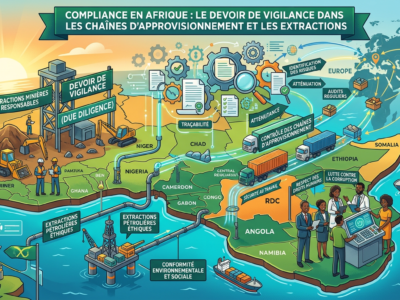
🚧Taking into account the legal landscape in Africa to fulfil the Vigilance Obligation

► Full reference : M.-A. Frison-Roche, Taking African legal geography into account to achieve an efficient vigilance system, working paper, August 2025/February 2026 - 🎤This working paper follows on from the closing address at the symposium Devoir de vigilance, quelles perspectives africaines ? Regards croisés en droit international, droit comparé et droit OHADA (Vigilance Duty: what are the prospects in Africa? Perspectives from international law, comparative law and OHADA Law, organised by the Faculty of Law of Bordeaux, through its Institut de Recherches en Droit des Affaires et du Patrimoine – IRDAP (Institute for Research in Business and Property Law), held on 15 November 2024.  - 📝This working paper forms the basis of the article "Considérer la géographie juridique africaine pour y réussir l'obligation de vigilance", which concludes the volume edited by Eustache da Allada in 2026 by Éditions Lefebvre-Dalloz, in the “Thèmes & Commentaires” collection,📗Devoir de vigilance, quelles perspectives africaines ? Regards croisés en droit international, droit comparé et droit OHADA (Vigilance Duty: what are the African perspectives? Comparative perspectives in international law, comparative law and OHADA Law). To this end, following an initial draft in August 2025, it was revised a second time to better incorporate the written contributions that make up the book, since the article on which it is based sets out a personal approach drawing on external research whilst also needing to synthesise these contributions. - ► Summary of the working paper :  The French “Vigilance” Act of 2017 incorporated the technical provisions and the spirit of the “Sapin 2” Act of 2016. They share a common goal. They have been and remain a common source of controversy and passion. At their heart lies the establishment of a “compliance obligation”, for which vigilance techniques form the “edge ” in serving a grand ambition: to protect systems from risks, both now and in the future, in order to protect the people involved in them. The passion that continues to surround the Vigilance Act, which gave rise to the European CS3D , is misguided, because the law and passion are never allies. Some would passionately want to see vigilance triumph by condemning companies to perform miracles; others would passionately want to see the destruction of all the texts that established the very concept of this Compliance Law, built upon these Humanist Monumental Goals. But let us acknowledge that in these debates on the Vigilance Obligation, which is being legally implemented across value chains, Africa is often cited as an example in a general discussion. It is not often considered as a distinct case with its own legal landscape. No reliance is placed on its strengths or on its own legal mechanisms, even though value chains – particularly industrial ones – so often lead to it, both now and in the future. Through analyses of the Vigilance Obligation, Africa is perceived as a place of retribution or of a new form of paternalism, and when its future is envisaged, prospects seem to be lacking, even though the very essence of compliance—and therefore of Vigilance—is the future.  If we take a less confrontational view and focus instead on the ‘legal geography’ of African countries and their social and inter-state structures, we see that the concern for others, both present and future – which ultimately constitutes the Monumental Goal of Compliance Law and thus of the Vigilance Obligation – is more prevalent in Africa than it is in Europe, which is now built upon legal individualism. This concern for others is reflected in legal mechanisms akin to mediation and various legal structures that our own institutions would do well to heed: our legislators before adopting bills, and our judges who might listen to them as amici curiae before reaching a decision. If we turn our attention to the African continent, which is exploited by certain segments of value chains, and to labour organisations, it becomes clear that here too, legislation and sanctions are not the whole story. Compliance techniques that make use of soft law and the contractual frameworks underpinning the chains themselves can remove the element of abstraction that is, by nature, inherent in general legislation. Moving forward through contracts under the supervision and with the support of the courts is an approach that could prove more fruitful than well-intentioned legislation, which has served as a catalyst, in line with the privileged position of contract law within OHADA. This serves to enhance the judge’s authority. The Compliance Judicialisation is also linked to the growing connection between Compliance and Contracts. However, it appears that not only can European judges specialising in Compliance Law and Vigilance Obligation thus rule on matters concerning Africa, which they can only know from a distance – though it is the lot of every judge to be an outsider – but African and inter-state Courts, notably through OHADA, can address the Vigilance Obligation because value chains are constituted by contracts. By developing it not as a foreign concept to be assimilated, but as that which expresses the very heart of the Law in Africa: concern for others, solidarity, the search for compromises and solutions so that the social and environmental system – that is to say, the human system – may endure into the Future. - 🔓Read the developments below⤵️ - Follow Marie-Anne Frison-Roche on LinkedIn follow Marie-Anne Frison-Roche on Instagram Subscribe to the newsletter MAFR Regulation, Compliance, Law Subscribe to the video newsletter MAFR Surplomb Subscribe to the newsletter MaFR Law & Art

Working papers

🚧The part of Non-contentious in the judicial treatment of Compliance cases

► Full reference : M.-A. Frison-Roche, The role of Discretionary Jurisdictio in the judicial treatment of Compliance cases, working paper, August 2025.   - 📗This working document was prepared as a contribution to the collective book offered to Professor Dominique d'Ambra, published  in June 2026. - ► Summary of the working document  : Based on the definition of Judicial Office, the procedural principles that derive from it and the consequent powers that judges exercise, the objet of this study is to measure the degree of discretion that exists in the judicial treatment of compliance, without direct consideration for the dispute between litigants. This part is very ignored, when it should be given top priority. Indeed, because Systems are involved in compliance cases brought before civil or commercial judges, we are seeing a development of this discretionary element in judicial fonction. Discretionary matters differ from unilateral discretionary procedures, and this discretionary element relates to what the judge examines, possibly in the context of a dispute. The first part of this contribution therefore aims to describe the natural development of the discretionary power of the judge to deal with compliance cases brought before them. This role stems from the fact that, even when triggered by a dispute, what is submitted to the judge is a situation composed of a system, which cannot defend its interests before the civil or commercial judge in this Systemic Litigation arising from the very nature of Compliance Law and the Compliance Obligations it engenders on systemic entites. Moreover, it is the Future whose interests must be considered and protected, which the judge must do directly. This leads to the second part of the contribution, calling for a rethinking of the procedure and the role of the Compliance Judge, so that ex gratia matters can be dealt with. The judge must therefore verify that there are no conflicts of interest between the litigants, including hidden ones, and must learn about the systems involved. The inquisitorial principle must therefore be strengthened. But at the same time, since the primary aim is not to settle a dispute but to resolve a systemic problematic situation, the judge must facilitate the movements of the parties, and the adversarial principle must also be strengthened. Must be encouraged this activation of a powerful and discretionary approach, not as an exception but as a principle fully articulated with a contentious principle, with the dispute being only a means used by the necessary parties to enable systemic compliance situations to be resolved. - Follow Marie-Anne Frison-Roche on LinkedIn follow Marie-Anne Frison-Roche on Instagram Subscribe to the Newsletter MAFR Regulation, Compliance, Law  Subscribe to the video newsletter MAFR Overhang

Articles in a non-legal collective publication

Article in a non-legal collective publication

📝Réguler le numérique, ou Sisyphe heureux (Regulating Digital, or a happy Sisyphus), in 📚Enjeux numérique, 📗Compliance et nouvelles régulations (Compliance and New Regulations)

► Full Reference: P. Bonis & M.-A. Frison-Roche, "Réguler le numérique, ou Sisyphe heureux" (Regulating Digital, or a happy Sisyphus), in P. Bonis & L. Castex (dir.), Compliance et Nouvelles Régulations, Les Annales des Mines, series "Enjeux numériques, June 2025, pp. 5-7. - 📝read the article (in French) - 📗read the table of content of this special issue of Enjeux numérique, Régulation et Compliance (in French), in which this introductory article is published. - ► English Summary of this article: This introduction to the collective publication on Regulation and Compliance, which aims to bring order to the Digital space, takes up the idea expressed by Camus when he referred to 'happy' Sisyphus, and expresses the idea that Regulation and Compliance are applied to this area with difficulty, relentlessness and failure, with texts constantly being adopted, modified and amplified on all sides, while the Digital Space is constantly changing, and the slope is constantly being climbed again. But this should not be seen as a failure, not even a flaw, because it is in the nature of digital regulation to always place the regulatory apparatus on our shoulders. This weight is shared by all, by the Authorities of all countries, because there is something common to all and also because there is something specific for each, because the techniques differ and because the visions of the world that the Politicians print in the texts and project in the Digital will always differ. This weight is also shared by companies, which internalise the rules through Compliance mechanisms, making them necessary agents for the efficiency and sustainability of the digital system, but also players in it, in articulation with Internet users in a permanent and unstable articulation with the local to the finest and this global that the Internet has invented. This presentation opens the series of contributions to the collective publication Régulation et Compliance, which makes up this special issue of Enjeux numériques in Annales des Mines. - 🌐read also the English presentation of:🕴️Marie-Anne Frison-Roche, 📝Le Droit de la compliance, voie royale pour réguler l'espace numérique (Compliance Law as a Royal Road for regulating the Digital Space) - follow Marie-Anne Frison-Roche on LinkedIn follow Marie-Anne Frison-Roche on Instagram subscribe to the Newsletter MAFR Regulation, Compliance, Law subscribe to the Video Newsletter MAFR Surplomb subscribe to the Newsletter MaFR Droit & Art
Articles in a non-legal collective publication

article in a non-legal collective publication

📝Le Droit de la compliance, voie royale pour réguler l’espace numérique (Compliance Law as a Royal Road for regulating the Digital Space​), in📚Enjeux numérique,📗Régulation et Compliance

► Full Reference: M.-A. Frison-Roche, "Le Droit de la compliance, voie royale pour réguler l'espace numérique" (Compliance Law as a Royal Road for regulating the Digital Space), in P. Bonis et L. Castex (dir.), Compliance et nouvelles régulation, Annales des Mines, coll. "Enjeux numériques", juin 2025, pp. 69-77. - 📝 read the article (in French)  - 🚧This article is underpinned by a English Working Paper in English, with additional technical developments and hypertext links. : Compliance Law as a Royal Road for regulating the Digital Space - ► English Summary of this article:  In order to describe the role of Compliance Law in regulating the digital space and to conclude that this new branch of Law is the 'royal road' to this end, this study proceeds in 6 stages.  Firstly, at first sight and conceptually, there is a gap between the political idea of Regulating and the ideas (freedom and technology as 'law') on which the digital space has been built and is unfolding.  Secondly, in practice, there is such a huge gap between the ordinary methods of Regulatory Law, which are backed by a State, and the organisation of the Digital Space by these economic operators, that are both American and global.  Thirdly, the political claim to civilise the Digital Space remains and is growing, relying on the very strength of the entities capable of realising this ambition, these entities being the crucial digital operators themselves, seized as Ex Ante.  Fourthly, it corresponds to the conception and practice of a new branch of Law, Compliance Law, which should not be confused with "conformity" and which is normatively anchored in its "Monumental Goals".  Fifthly, Compliance Law internalises Monumental Goals in the digital operators which disseminate them through structures and behaviours in the digital space.  Sixthly, through the interweaving of legislation, court rulings and corporate behaviour, the Monumental Goals are given concrete expression, willingly or by force, in ways that can civilise the digital space without undermining the primacy of freedom. - follow Marie-Anne Frison-Roche on LinkedIn follow Marie-Anne Frison-Roche on Instagram subscribe to the Newsletter MAFR Regulation, Compliance, Law subscribe to the Video Newsletter MAFR Surplomb subscribe to the Newsletter MaFR Droit & Art

Working papers

Working Paper for a Newsletter

🚧Pour maîtriser la masse réglementaire de la Compliance, la penser comme un puzzle

► Full Reference : M.-A. Frison-Roche, To master the regulatory mass of Compliance, think of it as a jigsaw puzzle,  Working Paper , May 2025 - 📝 This Working Paper underpins the Newsletter MAFR Law -Compliance – Regulation  of 2 June 2025 :  - ► Summary of this Working Paper:  People are rightly complaining that Europe's regulatory and compliance regulations are too numerous, too complicated and too changeable. As a result, they are said to be unmanageable. Three solutions are proposed: specialise lawyers, regulatory corpus by regulatory corpus; deregulate; entrust everything to algorithms. These are inadequate solutions, because regulations cannot be understood unless they are put into perspective with the rest of the legal rules .; we have entered a new world, and these new regulations reflect the need for a new Law (unless we want to destroy the Law itself, which is what some people are dreaming of doing); algorithms reproduce past solutions and do not produce the new legal conception required. For an appropriate solution, we need to move away from a word-by-word understanding of the regulatory and compliance regulations and understand them as a whole, not only in relation to the purpose that gives them meaning, but also in relation to each other. In the positive sense of the term, they form a European 'jigsaw puzzle'. We need to look at the overall picture in which each regulation fits and makes sense. It finds its simplicity in relation to its purpose. It is always a question of working towards the sustainability of systems by asking companies to contribute so that the systems do not crush human beings but benefit them. Thus, in practice, the Monumental Goals of Compliance Law give clarity to the body of regulations which, when seen as a whole, are manageable and practical. Judges interpret them in this way. - 🔓read the Working Paper below⤵️ - follow Marie-Anne Frison-Roche on LinkedIn follow Marie-Anne Frison-Roche on Instagram subscribe to the Newsletter MAFR Regulation, Compliance, Law subscribe to the Video Newsletter MAFR Surplomb subscribe to the Newsletter MaFR Droit & Art

Articles in a legal collective publication

article in a collective legal publication

📝100 fois remettre la Compliance sur le métier de la Stratégie (“100 times put Compliance back on the Strategy agenda”)

► Full Reference: M.-A. Frison-Roche, "100 fois remettre la Compliance sur le métier de la Stratégie" (100 times put Compliance back on the Strategy agenda), in Lettre d'information Compliance. Groupe SNCF, 100ième issue, 28 may 2025. - 📝read the article (in French) - ► English presentation of this article: This anniversary article sets out what Compliance is and should be in a large group. It expresses it in 4 points: 1. Actively master regulations by understanding their spirit 2. Improving risk detection without taking away the entrepreneurial spirit 3. Promoting convergence and managing conflict 4. Strengthen the company's identity by focusing on its strategic ambitions     - follow Marie-Anne Frison-Roche on LinkedIn follow Marie-Anne Frison-Roche on Instagram subscribe to the Newsletter MAFR Regulation, Compliance, Law subscribe to the Video Newsletter MAFR Surplomb

Monographs

monograph in a legal publication

📝Le “Grand Arrêt” de la Cour d’Appel de Paris du 7 mai 2025, Dalloz et al. c/ Forseti

► Full Reference : M.-A. Frison-Roche, Le "Grand Arrêt" de la Cour d'appel de Paris du 7 mai 2025, Dalloz et al. c/Forseti, D. 2025, p. - 📝reread the article (in French) - ► Ench presentation of this article: The first part of the article describes the Paris Court of Appeal's ruling against the company that created a Legaltech platform under the trade name 'Doctrine', which offers a large number of court rulings, particularly from lower courts. Sued for unfair competition by a group of publishers offering a similar service, they were not convicted at first instance, but were convicted by the Court of Appeal because it appeared that they had fraudulently obtained thousands of judgments, which, under Civil Law, constitutes unfair competition to the detriment of the plaintiffs. The second part of the article draws 6 lessons from this. The power of general law. On the benefits that the perpetrator has derived from the slowness of justice.  On the importance of Open Data. On the fact that the law is not mastered by accumulating data but by putting it into perspective through the thinking of authors and publishers. On the indifference for this of the financiers who built and resold the "Doctrine" website. On the very nature of a 'Grand Arrêt', such as this one.   -    

Working papers

Working Paper basis for an article in a collective publication

🚧Compliance Law as the Royal Road for regulatinf the Digital Space

► Full Reference: M.-A. Frison-Roche, Compliance law as a Royal Road for regulating the Digital Space, Working Paper, May 2025 - 📝 This Working Paper is the English basis for an article written in French "Le Droit de la compliance, voie royale pour réguler l'espace numérique", in 📕 - ► Summary of this Working Paper: In order to describe the role of Compliance Law in regulating the digital space and to conclude that this new branch of Law is the 'royal road' to this end, this study proceeds in 6 stages. Firstly, at first sight and conceptually, there is a gap between the political idea of Regulating and the ideas (freedom and technology as 'law') on which the digital space has been built and is unfolding. Secondly, in practice, there is such a huge gap between the ordinary methods of Regulatory Law, which are backed by a State, and the organisation of the Digital Space by these economic operators, that are both American and global. Thirdly, the political claim to civilise the Digital Space remains and is growing, relying on the very strength of the entities capable of realising this ambition, these entities being the crucial digital operators themselves, seized as Ex Ante. Fourthly, it corresponds to the conception and practice of a new branch of Law, Compliance Law, which should not be confused with "conformity" and which is normatively anchored in its "Monumental Goals". Fifthly, Compliance Law internalises Monumental Goals in the digital operators which disseminate them through structures and behaviours in the digital space. Sixthly, through the interweaving of legislation, court rulings and corporate behaviour, the Monumental Goals are given concrete expression, willingly or by force, in ways that can civilise the digital space without undermining the primacy of freedom. - 🔓read the Working Paper below⤵️ - follow Marie-Anne Frison-Roche on LinkedIn follow Marie-Anne Frison-Roche on Instagram subscribe to the Newsletter MAFR Regulation, Compliance, Law subscribe to the Video Newsletter MAFR Overhang subscribe to the Newsletter MaFR Droit & Art

Working papers

Working Paper for📺MAFR - OverHang (Notion)

🚧Arbitration, a highly appropriate technique for deploying Compliance Law, in particular to satisfy the Vigilance Obligation

► Full Reference: M.-A. Frison-Roche, Arbitration, a highly appropriate technique for deploying Compliance Law, in particular to satisfy the Vigilance Obligation, Working Paper, March 2025. - 🎤 This Working Paper was developed as a basis for the Overhang👁 video  on …  April 2025 : click HERE  - 🎬🎬🎬In the collection of the Overhangs👁 It falls into the Notion category. ►Watch the complete collection of the Overhangs👁 : click HERE - ► Summary of this Working Paper: If Arbitration has so far not developed much in Compliance Law, it is because this new branch of Law is not well known. Indeed, if it were simply a matter of 'conformity' with mandatory regulations, then Arbitration involving rights that are freely available to the parties and Compliance would be 2 worlds that must ignore each other. But Compliance Law is defined quite differently. Its normativity lies in the Monumental Goals set by the political authorities, which oblige large companies, because these compagnies are in a position to do so, to contribute to achieving these Goals, namely the future preservation of the Systems (banking, digital, climate, energy, etc.) and human beings involved. While the Goal is constrained, the company is free to choose the means, as long as these means  are credible. Arbitration is one of them. From the arbitration clause to the appropriate award. One example is the Duty of Vigilance, the cutting edge of Compliance. In order to effectively find solutions in the value chain that the company governs, Arbitration is a suitable means of achieving the Monumental Goals of environmental protection and human rights, under the control of the Judge.       - 🔓read the developments below⤵️ - follow Marie-Anne Frison-Roche sur LinkedIn follow Marie-Anne Frison-Roche on Instagram subscribe to the Newsletter MAFR Regulation, Compliance, Law  subscribe to the Video Newsletter MAFR Surplomb

Working papers

Working Paper for 📺Overhang (News)

🚧The Contract, a Compliance tool: the Obligation for a platform to control content (French Supreme Judicial Court, 15 January 2025) :

► Full Reference: M.-A. Frison-Roche, The Contract, a Compliance tool: the Obligation for a platform to control content CE, 27 January 2025, B. c/ CNIL, Working Paper, March 2025. - 🎤 This Working Paper was developed as a basis for the Overhang👁 video  on 29 March 2025 : click HERE (in French) - 🎬🎬🎬In the collection of the Overhangs👁 It falls into the News category. ►Watch the complete collection of the Overhangs👁 : click HERE - ► Summary of this Working Paper: The ruling handed down on 15 January 2025 by the Commercial, Economic and Financial Chamber of the French Judicial Supreme Court (Cour de cassation) provides a solution to the issue of content control in the digital environment. It resolves what appears to be the aporia so often emphasised, and even claimed, namely the impossibility of developing an effective controlling technology. To do this, the Court disregarded the applicable laws and referred to the electronic payment contract between the bank and the platform, which contained a clause on Vigilance against unlawful content, linked to a termination clause. It held that this clause was fully effective. This solution, so simple and so strong, can make a major contribution to regulating the digital space, if the banks so wish, because what platform can do without reliable electronic payment services?   - 🔓read the developments below⤵️ - follow Marie-Anne Frison-Roche sur LinkedIn follow Marie-Anne Frison-Roche on Instagram subscribe to the Newsletter MAFR Regulation, Compliance, Law  subscribe to the Video Newsletter MAFR Surplomb

Working papers

Working Paper for 📺Overhang

🚧Dans le silence des textes, vers qui se tourner en cas de manquement à une disposition du Droit de la Compliance ?

► Full Reference: M.-A. Frison-Roche, Who is responsible for making the Compliance provision effective? Is it the company or the public authority? Example of data: CE, 27 January 2025, B. c/ CNIL, Working Paper, February 2025.   - 🎤 This Working Paper was developed as a basis for the Overhang👁 video  on 8 February 2025 : click HERE (in French) - 🎬🎬🎬In the collection of the Overhangs👁 It falls into the News category. ►Watch the complete collection of the Overhangs👁 : click HERE - ► Summary of this Working Paper: In its decision of 27 January 2025, B. v CNIL, the French Administrative Supreme Court (Conseil d'État ) had to provide a solution to a case that the Compliance rules applicable to data had not expressly provided for. Can a person who believes that another person has failed to fulfill their obligations under the GDPR refer the matter to the French Data Protection Regulator (CNIL) and not the data controller? The Conseil d'État considers that the question is clear and that there is no point in referring a preliminary question to the ECJ. Indeed, the texts require the person alleging that his or her right has been infringed to first contact the data controller to have the information deleted before subsequently referring the matter to the CNIL. Furthermore, this case involved personal information inserted by doctors in an expert report submitted to a court. The Conseil d'État agreed with the CNIL that it was not required to review and assess the evidence, which is the role of the court. This shows that, while the right to alert can be used to refer cases directly to the administrative authorities, here the specific takes precedence over the general, with the spirit of the Law entrusting the direct preservation of rights to the data controller, with the CNIL's supervisory and sanctioning role coming only at a later stage. This illustrates the more general nature of Compliance Law, which relies primarily on the operators themselves. Furthermore, as a melting pot of various subjective rights, in this case the right to erasure but also the right to contribute to the debates, the Conseil d'État stresses that it is the role of the judicial judge to ensure the fairness of the debates. - 🔓read the developments below⤵️ - follow Marie-Anne Frison-Roche sur LinkedIn follow Marie-Anne Frison-Roche on Instagram subscribe to the Newsletter MAFR Regulation, Compliance, Law  subscribe to the Video Newsletter MAFR Surplomb

Working papers

Working Paper for 📺Overhang

🚧The French Judicial Public Interest Agreement and the time saved: the Areva and Orano CJIP of 2 December 2024

► Full Reference: M.-A. Frison-Roche, The French Judicial Public Interest Agreement and the time saved: the Areva and Orano CJIP of 2 December 2024, Working Paper, January 2025. - 🎤 This Working Paper was developed as a basis for the Overhang👁 video  on 25 January 2025 : click HERE (in French) - 🎬🎬🎬In the collection of the Overhangs👁 It falls into the News category. ►Watch the complete collection of the Overhangs👁 : click HERE - ► Summary of this Working Paper: On 2 December 2024, Areva/Orano signed a Public Interest Judicial Agreement (CJIP) with the French National Financial Prosecutor's Office, validated by the order of 9 December 2024 of the President of the Paris Judicial Court. The case concerns the bribery of a foreign public official in Mongolia through the use of an intermediary. This perfectly illustrates the primary advantage of this Compliance Tool, which consists of closing a situation that could deprive a company of the means to act in the future. Even if neither the CJIP nor the validation order constitutes an admission of guilt or a conviction, the acts of bribery of a foreign public official can no longer give rise to prosecution. However, the future has been taken care of, because as soon as Tracfin passed the first information to the Public Prosecutor's Office, the company cooperated and set up a programme to actively fight corruption ("compliance programme"). The CJIP extends this by a compliance programme supervised by the French Anticorruption Agency. One month after the CJIP, the Mongolian government and the company, in the presence of the French government, announced on 17 January 2025 the signing of a contract to operate a uranium mine, the same industrial coopération that had given rise to these reprehensible acts. The CJIP made it possible to move forward in time.       - 🔓read the developments below⤵️ - follow Marie-Anne Frison-Roche sur LinkedIn follow Marie-Anne Frison-Roche on Instagram subscribe to the Newsletter MAFR Regulation, Compliance, Law  subscribe to the Video Newsletter MAFR Surplomb

Working papers

Working Paper for 📺Overlook

🚧Status and Role of the ‘trajectory’ in Regulatory and Compliance Law

► Full Reference: M.-A. Frison-Roche, Status and Role of the 'trajectory' in Regulatory and Compliance Law​, Working Paper, January 2025.   - 🎤 This Working Paper was developed as a basis for the Overhang👁 video  on 18 January 2024 : click HERE (in French) - 🎬🎬🎬In the collection of the Overhangs👁 It falls into the Notions category. ►Watch the complete collection of the Overhangs👁 : click HERE - ► Summary of this Working Paper: The notion of Trajectory is a key concept in Compliance Law. This is shown in 4 steps. – 1. the decisive use of the trajectory in the 3 Grande-Synthe decisions of the French Conseil d'État, – 2. defining the trajectory, – 3. the application of the trajectory in various sectoral Compliances and Compliance tools, – 4. the probationary dimension of the trajectory and the consequences for subjected entities          - 🔓read the developments below⤵️ - follow Marie-Anne Frison-Roche sur LinkedIn follow Marie-Anne Frison-Roche on Instagram subscribe to the Newsletter MAFR Regulation, Compliance, Law  subscribe to the Video Newsletter MAFR Surplomb

Working papers

Working Paper for 📺Overlook

🚧The puzzle of Institutional Compliance Law and Substantive Compliance Law: the example of the European Regulations of 31 May 2024 on AMLA and enterprises compliance obligations

► Full Reference: M.-A. Frison-Roche, The puzzle of Institutional Compliance Law and Substantive Compliance Law: the example of the European Regulations of 31 May 2024 on AMLA and enterprises compliance obligations​, Working Paper, January 2025.   - 🎤 This Working Paper was developed as a basis for the Overhang👁 video  on 11 January 2024 :   - 🎬🎬🎬In the collection of the Overhangs👁 It falls into the News category. ►Watch the complete collection of the Overhangs👁 : click HERE - ► Summary of this Working Paper: Compliance Law is built on 2 legs, Institutions on the one hand and substantive rules on the other. For example in the United States, the 1934 Act established at the same time the prohibition and prevention of financial market abuse and the SEC. In Europe, in 2013, the Banking Union established institutions to build this Union and increased the obligations on banks. This is perfectly illustrated by the 2 European Regulations of 31 May 2024, one creating the AMLA and the other reinforcing the compliance obligations of crucial economic operators, one text referring to the other. Indeed, Institutional Compliance Law and Substantive Compliance Law are like 2 articulated legs. You have to know both and make them work together. This is part of the "European puzzle", a positive expression which implies that, when assessing and interpreting a text, we should always bear in mind that it is only one element of a general picture, which is coloured by its Monumental Goal: in this case to obtain a European area where money laundering is efficiently prevented thanks to the action of the companies themselves under the supervision and support of a Supervisory Authority which coordinates the actions of the States. If we consider only one element, we find everything 'complicated', whereas the overall picture is simple, because the Goal is simple and in Compliance Law, a branch of Teleological Law, everything is in the Monumental Goal.   - 🔓read the developments below ⤵️ - suivre Marie-Anne Frison-Roche sur LinkedIn suivre Marie-Anne Frison-Roche sur Instagram s'abonner à la Newsletter MAFR Regulation, Compliance, Law  s'abonner à la Newsletter en vidéo MAFR Surplomb

Working papers

Working Paper

🚧Identifying and anticipating the practice of Emerging Systemic Litigation: a necessity for organizing it

► Full Reference: M.-A. Frison-Roche, Identifying and anticipating the practice of Emerging Systemic Litigation: a necessity for organizing it​ , Working Paper, December 2024. - 🎤This working paper was drawn up to serve as the basis for the speech that opened the colloquium L’expérience des juridictions dans le Contentieux Systémique Émergent, in the cycle of conferences-debates "Contentieux Systémique Émergent," which was held in French on 16 December 2024 at the Paris Court of Appeal.   - 📝It will also constitute the basis of the first contribution to the book to be published in French in 2025, Le contentieux systémique émergent (Emerging Systemic Litigation). - ► Summary of this Working Paper : Systemic Litigation is for the moment a practice that has not been clearly identified. This is a handicap in practice, firstly because it can be confused with other things, such as the "systemic method" that this category of Litigation calls for and to which it cannot be reduced and which this method exceeds, and secondly because if this practice is not conceptualised, secondly, because if this practice is not conceptualised, even if only by a shared definition, it is difficult for the courts to organise themselves and for the potential parties to the dispute and to the proceedings to anticipate the procedural and substantive solutions that will be adopted tomorrow. The difficulty is compounded by the fact that not all emerging disputes are Systemic and not all systemic disputes are emerging. For example, banking regulation litigation and litigation concerning the operation of competitive markets or sectoral regulation are systemic disputes that are not emerging. But it so happens that technological developments have given rise to new systemic litigation, which the courts, judges and parties have had to adapt to because the systems themselves are entering the courthouses. A series of conferences has been organised to report on this practice, focusing on technology, legislation, management, court organisation, procedure and the role of the judge. They have thus made it possible to build up common, cross-disciplinary knowledge so that innovations can be developed and expressed in the organisation of the courts, in procedures, particularly in the relationship between judges and lawyers, and in the openness of proceedings, in the conception of the judge's office, which must be singular when the case, because a systemic is implied, is systemic. This specificity leads to judges who are less hierarchical among themselves and more specialised, leading to procedural forms that place dialogue and adversarial proceedings no longer as a desire and support but as the primary guiding principle.   - 🔓read the developments of this Working Paper below⤵️ - follow Marie-Anne Frison-Roche sur LinkedIn follow Marie-Anne Frison-Roche on Instagram subscribe to the Newsletter MAFR Regulation, Compliance, Law subscribe to the Video Newsletter MAFR Surplomb