JoRC

Conferences

March 5, 2020. Measuring the efficience and the effectiveness of Compliance tools (La mesure de l’efficacité des outils de la Compliance)

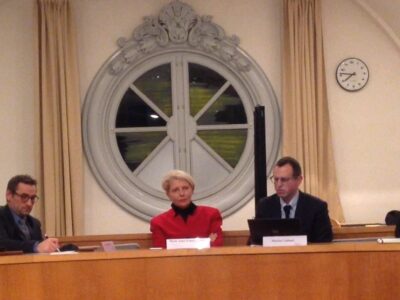
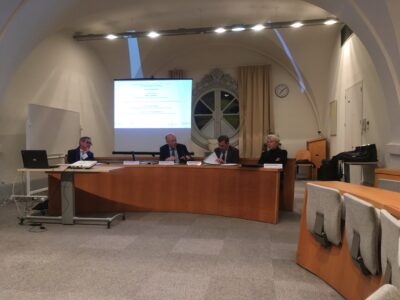
The cycle of conferences Les outils de la Compliance (The Compliance tools) began in November 2019 and runs until June 2020. It is organized by The Journal of Regulation & Compliance and all of its partner universities. It includes a conference more particularly devoted to the theme of "Measuring the effectiveness of Compliance Tools (Mesurer l'effectivité des outils de la Compliance)".   See the other thematics, others dates and other particular manifestations,  builting the complete cycle   Conference and Debate    March, 5, 2020, 18h30-20h in the Amphitheater of Panthéon-Assas (Paris 2) University,  391, rue de Vaugirard 75015 Paris   General presentation of the Conference After having examined various specific tools, such as Risk mapping or Incentives, and before tackling others such as those falling under a "Compliance by Design", it also deserves to be examined with some distance in its claim to be the solution to any compliance issue, it is worth looking at how we measure the effectiveness of all these Compliance Tools. Indeed, since all techniques are "tools", they only take on meaning with regard to a purpose that they must effectively achieve. This effectiveness must be measured, and this immediately in Ex Ante, the company constantly having to show the effectiveness of the performance of the Compliance tools. But at the same time as the standards proliferate, the discourses multiply, the commitments are made, the techniques for measuring the effectiveness of the whole seem quite weak. The subjects of law obliged by Compliance obligations or freely wishing to achieve the systemic or common good goals targeted by Compliance do wish to have these measurement instruments. But they seem still little built, often declarative or discursive, or too mechanical. Therefore, is it starting from the goal of Compliance  that we must measure the effectiveness of the Compliance tools, without by this way transforming the tasks weighing (willingly or by force) on operators in obligation to result? Or is it by staying upstream, by a single "conformity" to what is asked of them, as behavior and as structural organization, that companies show that they have effectively fulfilled their task, without worrying about the effects products about the reality, this reality that those who designed the Compliance norms and standards had in mind? This question has major implications in terms of burden of proof and responsibility, involving organizations which place Trust, the heart of Compliance, rather in technological instruments – only but so efficiency connecting data – or rather in people with a sense of common good. This question is now open.   Inscription : anouk.leguillou@mafr.fr -   Under the scientific direction of Marie-Anne Frison-Roche, full professof de Regulatory & Compliance Law at Sciences Po (Paris).   Articulate the instruments for measuring Effectiveness with the purposes of the Compliance tools (Articuler les instruments de mesure de l'effectivité avec les finalités des outils de la compliance) Laurent Benzoni, full professor of Economics at Panthéon-Assas University (Paris 2) Paris Center for Law & Economics, president of TERA Consultants.   Freedom and constraints of the company in its implementation of measures of the effectiveness of compliance tools (Liberté et contraintes de l’entreprise dans sa mise en place des mesures de l’effectivité des outils de compliance) Bertrand Bréhier, deputy head, Banking and Finaical Regulation Departement, Société Générale Group, associate professor Paris I University, Groupe Société Générale   Control by the Regulator of the effectiveness of compliance instruments implemented by the company (The contrôle par le Régulateur de l’effectivité des instruments de compliance mis en place par l’entreprise) Maxime Galland, Director – Legal and International Cooperation at the Autorité des Marchés financiers – AMF (French Financial Markets Authority)   -   Read the registration procedure  for this conference. Consult the calendar of precedent and upcoming events. Consult the presentation of the book to be published: Compliance Tools.   Go back to general presentation of the Conferences' cycle "Compliance Tools".   Inscription : anouk.leguillou@mafr.fr -

Conferences

February 4, 2020. Conference “Geographic significance in the choice and use of Compliance tools”, in “Compliance tools”

The cycle of conferences Les outils de la Compliance (The Compliance tools) began in November 2019 and runs until June 2020. It is organized by The Journal of Regulation & Compliance and all of its partner universities. It includes a conference more particularly devoted to the theme of "La prégnance géographique dans le choix et l'usage des outils de la Compliance" ("Geographic significance in the choice and use of Compliance tools"). See the other thematics, others dates and other particular manifestations,  builting the complete cycle   Conference and Debate  (in French)  Thuesday, February 4, 2020, 16h30– 19h30  Law & Political Sciences School Doyen Louis Trotabas Avenue, 06050 Nice Cedex. Amphithéâtre Bonnecarrère, Villa Passiflore,   General Presentation:  Compliance is a global phenomenon. In this, it illustrates the problematic of a Global Law. However, it should not be inferred that Compliance is applied in the same way everywhere in the world. Like any legal institution, it is integrated into a preexisting legal framework, shaped by culture and history. The aim of the conference is to explore geographic significance in Compliance Tools, that is to say the potentially different way in which these tools are chosen and used depending on the geographic area concerned. The three geographic areas studied will mainly be Europe, the United States and Africa. Opportunity will thus be given to highlight the convergences and divergences in the implementation of Compliance Tools in a geographic vision of the institution.   Under the scientific direction of Jean-Baptiste Racine, professor at the University Côté d'Azur (Law & Political Sciences School of Nice), GREDEG-CREDECO, CNRS UMR 7321 With the interventions of: – Jean-Baptiste Racine, professor at the University Côté d'Azur , Nice – Mahmoud Mohammed Salah, Law professor at the University of Nouakchott, Mauritany – Karen Coppens, Dechert LLP – Mads Andenas, Law professor at the University of Oslo, Norway – Marie-Anne Frison-Roche, Law professor at Sciences Po, Paris   -   -   Read the registration procedure  for this conference. Consult the gele calendar of upcoming events. Consult the presentation of the book to be published "Compliance Tools".   Go back to general presentation of the Conferences' cycle "Compliance Tools".   Inscription : anouk.leguillou@mafr.fr -      

Conferences

January 29, 2020. Conference “The expertises required in the Ex Ante of Compliance”, in “Compliance tools”

The cycle of conferences Les outils de la Compliance (The Compliance tools) began in November 2019 and runs until June 2020. It is organized by The Journal of Regulation & Compliance (JoRC) and all of its partner universities. It includes a conference more particularly devoted to the theme of "Les expertises requises dans l'Ex Ante de la Compliance" ("The expertises required in the Ex Ante of Compliance"). See the other thematics, other dates and other particular manifestations,  building the complete cycle   Conference – Debate  Wednesday, January 29, 2020, 18h30-20h  in the amphitheater of the Paris Chamber of Commerce and Industry  Friedland Avenue, 27, 75008 Paris   General Presentation After examining various specific tools, such as Risk mapping or Incentives, these showing that the tools only have their efficiency through their use designed and carried out by human beings, endowed themselves with the required expertise. But it is often because it is very difficult to identify and define these "skills" that operators subject to the Ex Ante Compliance obligations end up entrusting this observance to machines, via Compliance by Design … The mass of what should actually be observed leads to favoring massification expertise, as the "Regtech" handle it. But the rules being a living thing, Company Law adjoins Governance and one must know both. In the same way as the mastery of Ex Ante supposes that one always thinks of Ex Post (sanction for failure in the Ex Ante), so that this Ex Post does not appear, under its unwelcome face of Repressive Law which therefore must be anticipated and therefore present in Ex Ante. In the same way, Tax Compliance presupposes that the State must be present in the good technical conception of Compliance. Compliance being the means by which States internalize their "monumental goals", or even confront each other under the mask of companies, it is then international policies in question, and this political expertise is required in Ex Ante. -   under the scientific direction of Marie-Anne Frison-Roche, professor fo Regulatory Law Compliance Law at Sciences Po.   with  : –  –  Antoinette Gutierrez-Crespin, partner, department  Forensic & Integrity Services EY France. – François Barrière and Sidne Koenigsberg, Skadden – Pierre Vimont, Senior Fellow, Carnegie Europe –  Benjamin Jean, president of Open Law –  Thomas Amico, Linklaters     - Read the registration procedure  for this conference. Consult the general calendar of upcoming events. Consult the presentation of the book to be published "Compliance Tools".   Go back to general presentation of the Conferences' cycle "Compliance Tools".   Inscription : anouk.leguillou@mafr.fr        

Conferences

November 28, 2019. 1st event of the cycle “Les outils de la Compliance /Compliance tools”: “La cartographie des risques /Risk mapping” at Sciences Po

The conferences cycle Les outils de la Compliance (The Compliance tools) taking place between November 2019 and June 2020 organized by The Journal of Regulation & Compliance and all the Partner Universities will start this year on the theme of "La cartographie des risques" (Risk Mapping) .    -   Conference – Debate (in French)  jeudi Thursday, November 28, 2019. 19h15 – 21h15 at the Economics Department of Sciences Po  28 rue des Saints-Pères 75007 Paris Amphithéâtre Simone Veil   Under the scientific coordination of Guillaume Sarrat de Tramezaigues, Executive Director fo the  Economics Department of Sciences po.   Risk Mapping is defined as a process of identifying, evaluating and prioritizing risks: it is an integral and fundamental part of an effective global strategy for managing these risks.  As a central tool for Compliance, this approach may not be radically new, but the Risk Mapping Technique is now renewed and sometimes compromised by the emergence of new Risks, often due to their new mutiform nature. Moreover, the primacy of the new pair of "Political Risks/Compliance Risks" tends to increase the vulnerability of organizations obliged by new legal provisions to draw up these maps, whereas these tools must also protect these organizations.  Before discussing it with the audience, the speakers will explain through their experience the place of this tool in Compliance, by looking at how Risk Mapping is articulated with the logic of value creation through risk-taking, inherent in entrepreneurial and political action. This good understanding is not only essential for the company, but also for the administrative and judicial authorities which control or sanction firms.   Especially with the interventions of: – Marie-Anne Frison-Roche, full professor of Regulatory Law and Compliance Law, Sciences Po – Jean-François Guillemin, former general secretary of the Bouygues Group – Lamia Liabes, Chief Operating Office, HSBC France – Guillaume Sarrat de Tramezaigues, executive Director fo the  Economics Department of Sciences po     Inscription : anouk.leguillou@mafr.fr -   This first event is more specifically   organized by the Economics Department of Sciences po. It opens the cycle of conferences organized by the Journal of Regulation & Compliance (JoRC) (see the partners of this cycle), whose general theme is Les outils de la Compliance (The Compliance tools). Read the General Presentation of the Conferences Cycles.   This manifestation will be the basis for a book.    Read the conditions for inscription, and conditions for access les conditions d'accès (in French). -  

Articles

The Law of Compliance unleashes the moorings of the Law of Regulation but retains its principles: consequences on companies

The Law of Compliance is a branch of law so recent that some still doubt its very existence. This paper does not take up this question again, nor that so often evoked of the "definition" of the Compliance and the Law that goes, nor the issue of the translation which is appropriate for it. The purpose of the reflection is rather to observe the movement that started from the requirements of specific sectoral Law, such as Financial Law and Banking Law, which undeniably correspond to "sectors", the Law of Compliance being the extension of the Law of Regulation, an extension that metamorphoses it, extending beyond the regulated sectors.   THE CONSEQUENCES ON COMPANIES OF THE COMPLIANCE LAW  BEYOND THE REGULATION LAW Read below

Breaking news

In the inaugural conference of March 2, 2018, Koen Lenaerts brings the “Europe of Compliance” to life

Among all the things that were important to remember, one of the things that struck me most in the extraordinary conference of the President of the Court of Justice of the European Union Koen Lenaerts on "Europe of the Compliance "held on March 2, 2018 was his ability to make" live Europe ". Not only to make it understand but also to make it "live". Here is the challenge: that compliance is not an accumulation of processes without reason and without flesh, but a living whole taking its meaning into consideration of the human being, a person whose judge is concerned. On 2 March 2018, Koen Lenaerts therefore came to an amphitheater at the University Panthéon-Assas (Paris 2) to inaugurate the series of conferences organized by the Journal of Regulation & Compliance (JoRC), a cycle that has the general title: Pour une Europe de la Compliance (For the Europe of Compliance). The School of Public Affairs of Sciences Po, the Department of Economics of Sciences Po, the Ecole doctorale de droit privé  (Doctoral School of Private Law) at the Université Panthéon-Assas- Paris 2 (Panthéon-Assas University – Paris 2) and the School of Law of the University Panthéon-Sorbonne (Paris I), are associated with this cycle. Many personalities will take the floor. Presented by Professor Thierry Bonneau, the conference made by President Koen Lenaerts was extremely rich and solid, perfectly constructed. Everyone had known the quality of the conference to be delivered by the President of the CJEU. The content of his demonstration will be found in the article he will give for the book that will be published in the Régulations & Compliance Series edited by Marie-Anne Frison-Roche at Éditions Dalloz. And the reader will find all the strength of this demonstration. This is necessary to venture into this area of "Compliance" : Koen Lenaerts recalled that we were still looking for the definition and a French term that would do justice to a satisfactory definition1Frison-Roche, M.-A., Compliance Law, 2016.. This question was echoed by Antoine Garapon in his discussion. Embodying the firmness that must be shown when words are uncertain, President Koen Lenaerts emphasized that the European Union is based on "Rule of Law". This means that the behaviors must respect Law. For that, – and that is why it is necessary to take in the literal sense the English expression "to comply with", the enterprise must not be passive but to make sure that its behavior is actually respectful of legal prescriptions. In this, there is a general paradigm shift, which inverses the relation betwenn the operator and the rules, from the Ex Post to the Ex Ante2On this passage, which internalises the "Regulatory Law" in the company, c. not. Frison-Roche, M.-A., From Regulation Law to Compliance Law, 2017, and the book, Régulation, Supervision, Compliance (Regulation, Supervision, Compliance), 2017.  as the entreprise has to be itself active to secure the effectiveness of the rule of Law. This internalization of the rule by the company develops both a procedural culture and a behavioral culture, in which companies can express an ethical dimension and build a "Trust Pact" 3About this notion, s. Frison-Roche, M.-A., Compliance and Trust, 2017 ; Drawing the Circles of Compliance Law, 2017. with states and public authorities. This change has been brought about by globalization, since states no longer have the means to impose ethical norms of behavior on businesses through the Ex Post intervention of their jurisdiction, but States like companies are gaining the benefit of this internalisation of rules in compagnies because the Compliance is inseparable from the accountability by which the company is compelled to justify that it actually tends to achieve the overall goals assigned by the public authority. Thus, after exposing the general movement by which Europe opened up to this upheaval, President Koen Lenaerts took on three technical dimensions crossed by this new conception. The first is the Financial Markets Law. The second is Competition Law, about which the President has notably developed the Court's reflections on whether the adoption of a compliance program by an enterprise found to have violated Competition Law, in particular by "negligence" is neutral, or constitutes a mitigating circumstance or constitutes an aggravating circumstance. This question was taken up after the presentation in the discussion with the room. The third is that of personal data. Taking again as in a waltz with three times his remarks, the president of the Court of Justice found that the compliance, whereas it consists in transforming the Ex Post into Ex Ante becomes juridicalised and in this the Court of justice holds its not only in Europe but also in relation to the world, without however ever forgetting that it is the States that are drawing up the rules that are the foundation of Europe. We will find in the article that will be published all these precious elements and no doubt that the elegance of the pen will be equal to that of speech. But, written exercise requires, the reader will not find what we had the chance to attend: the story of two cases by the one I would prefer to name the "Professor Koen Lenaerts". Two famous cases, which we teachers, comment and remind in our courses, that students learn and recite, quote in their copies. But never that way. The first case is the Schrerms case, where the court said that Facebook could not transfer this person's personal data to the United States since he was opposed to it. To make it clear, the President revived it through the litigant, who was a student and for this reason he spoke directly to the students present in the amphitheater. He pointed out that the plaintiff at the origin of the case was a law student, like them. He detailed his situation in Austria, making some quotes in perfect German, pointing out that this student was now at the doctoral stage, inviting students to be brave, as he was. At each episode of the story, the speaker told the students, making some detours on his own student life because finally we were all in family … Alma Mater. But his hands were telling the story even more: they were thrown themselves into the story, they brewed the space, it seemed as if they themselves were no more grandiloquent than the speaker but found their place exactly , in a magisterial position. Yes, here is a president in front of which companies have a hard time hiding the truth, a president with such firm hands and whose torso does not move but turns to the left and right to talk to everyone. The second story was even more beautiful. The Google Spain case, I know it. I even know it by heart. I read it, commented on it, cited it a lot of times … But all of a sudden that's what happened to a small Spanish merchant: President Koen Lenaerts told us his story, and I rediscovered the case. A small Spanish shopkeeper, whose name the speaker uttered in perfect Spanish, obtained from the Court of Justice that his "right to be forgotten" was recognized. President underlined the apparent paradox of his  insistence for the appearance of his surname in the judgment by which this person had thus obtained the erasing of his surname! Yes, I did not notice … Why did he ask for the mention of his name in the right to have his name deleted? Because it's a matter of honor. This is what the speaker insisted: do not joke with honor. And if you do, even Google will lose. The merchant had been subject to a forced property sale procedure because of financial difficulty, which spanish newspapers had echoed. His honor was been trampled. Then, by a happy return of fortune, he had recovered his property, his prosperity, his reputation. But from that, the press had not talked about it. Some lines in a newspaper of legal announcements, but that it is nothing for the human soul. That's why he wanted these mechanical digital links to disappear, which always and for all end up with articles presenting him as a wretch without ever ending up with articles presenting him as a prosperous merchant (because of the non-existence of these second articles). The speaker emphasized this dimension very much. And we know that the General Regulations that will come into force in May 2018 on personal data, which intrigues so much the Americans, draws in the judgment Google Spain its main solution in the matter: this "right to be forgotten" , subjective right so strange. He emphasized this dimension very much. And we know that the General Regulations that will come into force in May 2018 on personal data, which intrigues so much the Americans, draws in the judgment Google Spain its main solution in the matter: this "right to be forgotten" , subjective right so strange. Listening to President Koen Lenaerts, how not to think of Carbonnier? to  his articles of it, especially on sociological rule : "small causes, great effects"? From this conference, it will remain a great article, but as in the theater, where the ephemeral is part of the beauty of this art, what were these two stories, told by the one who knew how to listen when it was necessary to decide the two cases, stories told with the two firm hands that danced inviting students to enter this round, even as the President of the Court of Justice had to leave immediately to Luxembourg to hold such heavy obligations, yes it was simply beautiful .