Justice and procedure

Articles in a legal collective publication

contribution in a Round Table

📝De l’obligation de compliance à l’obligation de vigilance : le rôle du juge

► Full reference : M.-A. Frison-Roche, "De l'obligation de compliance à l'obligation de vigilance : le rôle du juge (From the obligation of compliance to the obligation of vigilance: the role of the judge)", in Round table De la compliance au devoir de vigilance. Une nouvelle responsabilité des entreprises (From Compliance to the Vigilance duty. A new responsibility for businesses," Lettre des juristes d'affaires, Oct. 2025. - 📝read the article reproducing the entire discussion (in French) - ► Summary of my contribution:  In this debate, the terms of which have been reproduced in the journal, I was asked to explain how the legal system had evolved, first by establishing Compliance Law, built on systemic ambitions to prevent sectoral disasters (banking, finance, energy), ambitions that constitute "Monumental Negative Goals", and then evolving on the one hand "Monumental Positive Goals", namely the protection of human beings involved willingly or unwillingly in these systems, on the other hand, outside even sectors with clearly defined boundaries, such as environmental or digital ambitions. The duty of vigilance extends this regulatory law and gives concrete form to the "compliance obligation" to which companies are subject. It is important to maintain a sense of proportion in the conception of the responsibility attached to it so as not to lose everything. Companies are bound by the goals but must remain free in their choice of means, and in particular be encouraged to use contractual techniques. This measure is entrusted to the judge because, due to the Compliance Jurisdictionalisation, it is at the heart of this new branch of Law, which is developing independently of fluctuations in the regulations. During the discussion, I was asked for my opinion on the ruling handed down by the Paris Court of Appeal on 17 June 2025, known as La Poste case. I pointed out that the comments had often focused only on the developments regarding risk mapping, whereas this ruling first establishes the principle that the vigilance plan is the work of the company's decision-making bodies and is not co-constructed, as consultation is a process of discussion and taking in consideration, which is not the same thing, with the judge himself pointing out that they must not interfere in management. In the discussion, I emphasised that if we were to highlight the essence of what would be a "new responsibility", it would primarily concern a new probative dimension that the company must implement in Ex Ante. The implementation of the CSRD, even if it has been excessively standardised, is in line with this, and this probative culture must be developed. - ⛏️Further reading on the subject : 🕴️M.-A. Frison-Roche (ed.), 📘Compliance Obligation, 2026 🕴️M.-A. Frison-Roche, 📝Vigilance, the front line and integral part of the compliance obligation, 2025 🕴️M.-A. Frison-Roche, 📝Compliance, Vigilance and Civil Liability: put in Order and keep the sense of Reason, 2025 🕴️M.-A. Frison-Roche (ed.), 📘Compliance Jurisdictionalisation, 2024 -   -   - ► Article summary : The  - 🌐Follow Marie-Anne Frison-Roche on LinkedIn 🌐follow Marie-Anne Frison-Roche on Instagram 🌐Subscribe to the Newsletter MAFR Regulation, Compliance, Law 🌐Subscribe to the video newsletter MAFR Overhang 🌐Subscribe to the Newsletter MaFR Law & Art

Conferences

participation in a Round-Table

🎥Adéquation et inadéquation de la sanction comme outil de régulation financière et sa transformation par la Compliance (Adequacy and inadequacy of sanctions as a tool of Financial Regulation and its transformation through Compliance), in🧮Quel rôle pour la sanction dans la Régulation ? (what role for the Sanction in the Financial Regulatory System?)

► Full reference: M.-A. Frison-Roche, "Adéquation et inadéquation de la sanction comme outil de régulation financière et sa transformation par la Compliance" (Adequacy and inadequacy of sanctions as a tool of Financial Regulation and its transformation through Compliance)", contribution to the round-table discussion on"Quel rôle pour la sanction dans la Régulation ? (What role for sanctions in Regulatory System)", Annual conference of the Commission des sanctions (Enforcement Committee) of the Autorité des marchés financiers – AMF (French Financial Markets Authority), Paris,  14 October 2025. - ► see the general programme of this manifestation (in French) The event comprises two round tables. The theme of the first round table is: La preuve des abus de marché entre l’AMF et le juge pénal : vers une convergence ? (Proof of market abuse between the AMF and the criminal courts: towards convergence?) 🪑🪑🪑AutresOther participants in this 2nd round table, moderated by Sophie Schiller, member of the Enforcement Committe on the topic: Quel rôle pour la sanction dans la Régulation ? (What role for sanctions in Regulatory System?) 🕴🏻Sébastien Raspiller, Secretary General of the AMF 🕴🏻Martine Samuelian, Partner, Jeantet Law Firm 🕴🏻Vincent Villette, Secretary General of the CNIL (French Personal Data Regulatory Body) - ► Summary of this intervention : In the round-table discussion on the role of sanctions, a number of contributions will be made, depending on the nature of the discussion itself. They will be brief in nature and will be aimed at an audience with a good knowledge of financial regulation. It is the occasion for me to insist on 2 things, the first naturely and probably for ever attached to the role of sanctions in all Regulatory Systems, the secund very new. The first is the indissociability between Criminal Law and Sanction, even if sanctions is defined as a regulatory tools. The secund is the conception and the use of sanctions through Compliance Law. Therefore, in the first idea, my first intervention, aimed more at establishing the subject and describing the Intangible, is on the very idea that sanctions have a role to play in financial regulation. By its very nature. But this does not make it any less difficult. It is not obvious, because if penalties are seen as a 'regulatory tool', then it is the regulatory perspective that predominates and 'colours' the tool that is the penalty. Regulation, of which the texts on the basis which sanctions are issued are only one tool and which is not the set of applicable rules, Regulation which is an apparatus of institutions, rules and decisions aimed at establishing the equilibrium of a sector and maintaining this equilibrium, which is by nature unstable, over time, which the sector could not do by its own efforts alone (Regulatory Law, which is Ex Ante Law, thus distinguishing itself from Competition Law, which is Ex Post Law). From the perspective of Financial Regulatory System, as in other sectoral regulatory systems, and in the general Regulatory Law, sanctions are a tool (and a tool like any other, simply more powerful than the others. This is the pragmatic perspective adopted by the State and the Regulatory body itself, which will use it in conjunction with other tools, such as an Information, Education and Incentive mechanism. Moreover, it shall use sanction as informative tool, as educational tool, as incentive tool. However, the principle of the autonomy of Criminal Law, and the European concept of "Criminal Matters" mean that the sanction can be seen in terms of the autonomous criteria of the seriousness of the act imputed and the sanction imposed on the legal person. In this respect, the penalty is inseparable from the way in which it is imposed (Criminal Law is constitutionally inseparable from Criminal Procedure). In this respect, the sanction is not a tool coloured by the overall objective served by the Financial Markets Regulatory Body: the sustainability of the financial system. The Enforcement Committee is not the AMF's "armed wing"; it is a "court", as the Oury ruling reminded us. Therefore, the question is and I would like to ask it directly to the Enforcement Committed: Can you be both?   As they say, could you be both carp and rabbit? Depending on whether you are viewed from one angle or another, you will be seen as the body that makes financial markets effective (a tool among the tools) or as the body that punishes misconduct (a court among the courts). It is possible, and in practice it is often true. But if we are honest, we will admit that regulation feeds on information and that the procedure before a criminal court is built on secrecy and the weapons of those who, innocent or guilty, are at risk because they are, or will be, prosecuted. We've never got out of this difficulty. We always try to strike a balance between the fact that it is in itself a repressive sanction for a person who will suffer and the fact that it is also a systemic tool: there is a 'balance' between the search for systemic benefit (which reduces the protection of individuals for the benefit of the system) and the concern for the people involved (which reduces the present and future protection of the system). The balance goes more or less in one direction. It is often public opinion, the place, the legislator and, even above all,  the civil appeal judge (vertical dialogue) and those in dialogue, between the regulator and the criminal judge (horizontal dialogue) which cause the scales of diverse technical solutions. It is also the way in which the Enforcement Committee, in defining itself as the armed wing of the AMF (carp) or as a repressive court (rabbit), chooses in its procedural behaviour the role of sanctions in Financial Regulatory System, more or less instrumentalised (carp) or jurisdictionalised (rabbit). - The second point, if there is to be one, concerns the development of the role of sanctions in Financial Regulatory System . On the basis of these fundamentals, an evolution in the role of sanctions in financial regulatory system (an evolution that can be observed in all sectoral regulatory systems) consists of internalising sanctions (in their conception by the texts, their elaboration by the Sanctions Committees, their application) in the economic operators sanctioned, in the economic sectors concerned, in the opinion concerned (the figure of Peelmanian circles of the audiences applying). This internalisation transforms Regulatory mission of the administrative body (which deals with market structures) into Rupervision (which deals directly with market operators) since the sanction penetrates the operator, the operator adopting commitments. This concept corresponds to the new branch of Law known as Compliance Law.  Compliance Law uses sanctions as an "incentive like any other", and (we must be careful on this point), because it is systemic in nature, the concern for the system being internalised in the operator, it is relatively insensitive to procedural rights. With the emphasis on information, it is the principle of adversarial debate (which provides information) rather than the rights of the defence that is valued. The cooperation of the person being prosecuted is highly valued, and non-cooperation becomes incomprehensible. The internalisation of sanctions by operators has led to two major changes. Firstly, these economic operators themselves must sanction, detect and prevent market abuse. The number of special obligations of vigilance is increasing. The obligation of vigilance of operators themselves is becoming a pillar of Regulation, transformed in Supervision.  The other development is the liberalisation of regulatory system in relation to territory, thank to Compliance Law. As operators are less dependent on borders than are regulators and authors of legal texts (but soft law is spreading, including repression), market abuses can be apprehended in several jurisdictions at the same time, notably through global compliance programmes. - 🌐follow Marie-Anne Frison-Roche on LinkedIn 🌐follow Marie-Anne Frison-Roche on Instagram 🌐subscribe to the Newsletter MAFR Regulation, Compliance, Law 🌐subscribe to the VideoNews  MAFR Surplomb 🌐subscribe to the Newsletter MaFR Law & Art


Publication director

🏗️ copublishing and direction of the collection: 📚Régulations & Compliance

📚Publication of🕴️M.-A. Frison-Roche (ed.), 📕L’Obligation de Compliance

  - ► Full Reference: M.-A. Frison-Roche (dir.), L’Obligation de Compliance, coll.”Régulations & Compliance“, Journal of Regulation & Compliance (JoRC) and Dalloz, 2025. - 📘 At the same time, a book in English, Compliance Obligation, is published in the collection copublished by the Journal of Regulation & Compliance (JoRC) and the Éditions Bruylant. - 🧮the book follows the cycle of colloquia organised by the Journal of Regulation & Compliance (JoRC) and its Universities partners in 2023 and 2024. - 📚this volume is one of a series of books devoted to Compliance in this collection. ► Read the presentations of the other books in the series: the following books: 🕴️M.-A. Frison-Roche (ed.), 📕Compliance et Contrat, forthcoming 🕴️L. Laref (ed.), 📕Compliance et vigilance bancaire, forthcoming 🕴️M.-A. Frison-Roche, 📕Le système juridique de l’adressage de l’Internet. Une structure multi-acteurs, gage de durabilité (The Legal System of Internet Addressing. A Multi-Stakeholder Structure, the Pledge of its Sustainability), forthcoming 🕴️M.-A. Frison-Roche (ed.), 📕Le système probatoire de la Compliance, forthcoming   the previous books: 🕴️M.-A. Frison-Roche and M. Boissavy (eds.), 📕Compliance et droits de la défense. Enquête interne – CJIP – CRPC, 2024 🕴️M.-A. Frison-Roche (ed.), 📕La juridictionnalisation de la Compliance, 2023 🕴️M.-A. Frison-Roche (ed.), 📕Les Buts Monumentaux de la Compliance, 2022 🕴️M.-A. Frison-Roche (ed.), 📕Les outils de la Compliance, 2021 🕴️M.-A. Frison-Roche (ed.), 📕Pour une Europe de la Compliance, 2019 🕴️N. Borga, J.-Cl. Marin and J.-Ch. Roda (eds.), 📕Compliance : l’entreprise, le régulateur et le juge, 2018 🕴️M.-A. Frison-Roche (ed.), 📕Régulation, Supervision, Compliance, 2017 🕴️M.-A. Frison-Roche (ed.), 📕Internet, espace d’interrégulation, 2016 📚see the global presentation of all the books of the collection. - ► General presentation of this book: Compliance is sometimes presented as something that cannot be avoided, which is tantamount to seeing it as the legal obligation par excellence, Criminal Law being its most appropriate mode of expression. It is sometimes presented as something that the company does out of ethical concern, self-regulation which is the opposite of legal obligation. For the moment, therefore, there is no single vision of the Compliance Obligation. This is all the less the case because of the multitude of texts, themselves constantly evolving and changing, which inject such a wide range of compliance obligations that we give up trying to establish any unity, thinking that, on a case-by-case basis, we will define a regime and a legal constraint of greater or lesser strength, aimed at one subject or debtor or another, for the benefit of one or other. This lack of unity, due to the absence of a definition of the Compliance Obligation, makes the application of the texts difficult to foresee and therefore makes the Judge fearful, even though he/she is going to take on more and more importance. This book asks the practical questions: What is Compliance obliging? Who is obliged to comply? and How far are we obliged to comply? and provides answers, Compliance practices, constraints and innovations will be better mastered and anticipated by all those they affect: companies, stakeholders, technicians, lawyers, consultants, institutions and courts. - 🏗️general construction of this Book: The book opens with a double Introduction.  The first, which is freely accessible, consists of a summary of the book, while the second, which is substantial, deals with the unified conception that we can, and indeed should, have, of the “Compliance Obligation”, without losing the concrete and active character that characterises this branch of law. The first Part of the book aims to define the Compliance Obligation. To this end, Chapter I deals with the Nature of this obligation. Chapter II deals with the Spaces of the Compliance Obligation. The Part II aims to articulate the Compliance Obligation with other branches of Law.  The Part III of the book looks at the way in which the possibility of obliging and the means of obliging are provided.  To this end, Chapter I deals with the Convergence of the Sources of the Compliance Obligation. Chapter II considers International Arbitration as a reinforcement of the Compliance Obligation. To this end, Chapter I deals with the Convergence of the Sources of the Compliance Obligation. Chapter II considers International Arbitration as a reinforcement of the Compliance Obligation.  The last Part of the book is devoted to Vigilance, the leading edge of the Compliance Obligation. Chapter I is devoted to a study of the various sectors, and analyses the Intensities of the Vigilance Obligation. Chapter II deals with the Variations in Tension generated by the Vigilance Obligation. Finally, Chapter III deals with the New Modalities of the Compliance Obligation, highlighted by the Vigilance Imperative. - TABLE OF CONTENTS    ANCRER LES OBLIGATIONS DE COMPLIANCE SI DIVERSES    DANS LEUR NATURE, LEURS REGIMES ET LEUR FORCE  POUR DEGAGER  L’UNITE DE L’OBLIGATION DE COMPLIANCE LA RENDANT COMPREHENSIBLE ET PRATIQUABLE  (ANCHOR COMPLIANCE OBLIGATIONS, SO DIVERSE  IN THEIR NATURE, THEIR REGIMES AND THEIR FORCE, TO BRING OUT THE UNITY OF THE COMPLIANCE OBLIGATION MAKING IT COMPREHENSIBLE AND PRACTICABLE) ♦️ Obligation de Compliance : construire une structure de compliance produisant des effets crédibles au regard des Buts Monumentaux visés par le Législateur (Compliance Obligation: building a compliance structure that produces credible results with regard to the Monumental Goals targeted by the Legislator), by 🕴️Marie-Anne Frison-Roche   TITRE I. CERNER L’OBLIGATION DE COMPLIANCE  (IDENTIFYING THE COMPLIANCE OBLIGATION)   CHAPITRE I : LA NATURE DE L’OBLIGATION DE COMPLIANCE (THE NATURE OF THE COMPLIANCE OBLIGATION) Section 1 ♦️ La volonté, le cœur et le calcul, les trois traits cernant l’Obligation de Compliance  (Will, Heart and Calculation, the three traits encercling the Compliance Obligation), by 🕴️Marie-Anne Frison-Roche Section 2 ♦️ De la dette à l’obligation de compliance (From the Debt to the Compliance Obligation), by 🕴️Bruno Deffains Section 3 ♦️ Obligation de Compliance et droits humains (Compliance Obligation and Human Rights), by 🕴️Jean-Baptiste Racine Section 4 ♦️ L’Obligation de Compliance et les mutations de la souveraineté et de la citoyenneté (Compliance Obligation and changes in Sovereignty and Citizenship), by 🕴️René Sève Section 5 ♦️ La définition de l”obligation de compliance confrontée au droit de la cybersécurité (The definition of the Compliance Obligation in Cybersecurity Law) by🕴️Michel Séjean   CHAPITRE II : LES ESPACES DE L’OBLIGATION DE COMPLIANCE (SPACES OF THE COMPLIANCE OBLIGATION) Section 1 ♦️ Entités industrielles et Obligation de compliance (Industrial entities and Compliance Obligation), by 🕴️Etienne Maclouf Section 2 ♦️ L’Obligation de Compliance dans les chaînes de valeur (The Compliance Obligation in Value Chains), by 🕴️Lucien Rapp Section 3 ♦️ Compliance et conflits de lois. Le droit international de la vigilance-conformité à partir de quelques applications récentes sur le continent européen (Compliance and conflict of laws. International Law of Vigilance-Conformity, based on recent applications in Europe), by 🕴️Louis d’Avout    TITRE II. ARTICULER L’OBLIGATION DE COMPLIANCE AVEC DES BRANCHES DU DROIT (ARTICULATING THE COMPLIANCE OBLIGATION WITH BRANCHES OF LAW)   Section 2 ♦️ Droit fiscal et obligation de compliance (Tax Law and Compliance Obligation), by 🕴️Daniel Gutmann Section 3 ♦️ Le droit processuel, prototype de l’Obligation de Compliance (General Procedural Law, prototype of the Compliance Obligation), by 🕴️Marie-Anne Frison-Roche Section 4 ♦️ Le droit des sociétés et des marchés financiers face à l’Obligation de Compliance (Corporate and Financial Markets Law facing the Compliance Obligation), by 🕴️Anne-Valérie Le Fur Section 4 ♦️ Transformation de la gouvernance et obligation de vigilance, by 🕴️Véronique Magnier Section 5 ♦️ Le rapport entre le Droit de la responsabilité civile et l’Obligation de Compliance (The link between Tort Law and Compliance Obligation), by 🕴️Jean-Sébastien Borghetti Section 6 ♦️ Dimensions environnementales et climatiques de l’Obligation de Compliance (Environmental and Climatic Dimensions of the Compliance Obligation), by 🕴️Marta Torre-Schaub Section 7 ♦️ Droit de la concurrence et Droit de la Compliance (Competition Law and Compliance Law), by 🕴️Jean-Christophe Roda Section 8 ♦️ L’Obligation de Compliance en Droit global (The Compliance Obligation in Global Law), by 🕴️Benoît Frydman & 🕴️Alice Briegleb Section 9 ♦️ Les juges du droit des entreprises en difficulté et les obligations de compliance (Judges of Insolvency Law and Compliance Obligations), by 🕴️Jean-Baptiste Barbièri   TITRE III. COMPLIANCE : DONNER ET SE DONNER LES MOYENS D’OBLIGER (COMPLIANCE : GIVE AND TAKE THE MEANS TO OBLIGE)   CHAPITRE I : LA CONVERGENCE DES SOURCES (CONVERGENCE OF SOURCES) Section 1 ♦️ Obligation sur obligation vaut (Compliance Obligation on Obligation works), by 🕴️Marie-Anne Frison-Roche Section 2 ♦️ Les technologies disponibles, prescrites ou proscrites pour satisfaire Compliance et Vigilance (Technologies available, prescribed or prohibited to meet Compliance and Vigilance requirements), by 🕴️Emmanuel Netter Section 3 ♦️ Contrainte légale et stratégie des entreprises en matière de Compliance (Legal Constraint and Company Strategies in Compliance matters), by 🕴️Jean-Philippe Denis & Nathalie Fabbe-Costes Section 4 ♦️ La loi, source de l’Obligation de Compliance (The Law, source of the Compliance Obligation), by 🕴️Jean-Baptiste Blanc Section 5 ♦️ Opposition et convergence des systèmes juridiques américains et européens dans les règles et cultures de compliance (Opposition and Convergence of American and European Legal Systems in Compliance Rules and Cultures), by 🕴️Raphaël Gauvain & 🕴️Blanche Balian Section 6 ♦️ Ce à quoi les engagements engagent qu’est un engagement (What a ), by 🕴️Marie-Anne Frison-Roche   CHAPITRE II : L’ARBITRAGE INTERNATIONAL EN RENFORT DE L’OBLIGATION DE COMPLIANCE (INTERNATIONAL ARBITRATION IN SUPPORT OF THE COMPLIANCE OBLIGATION) Section 1 ♦️ Comment l’arbitrage international peut être un renfort de l’Obligation de Compliance (How International Arbitration can reinforce the Compliance Obligation), by 🕴️Laurent Aynès Section 2 ♦️ La considération par l’Arbitrage de l’Obligation de Compliance pour une place d’arbitrage durable (Arbitration’ consideration of Compliance Obligation for a Sustainable Arbitration Place),  by 🕴️Marie-Anne Frison-Roche  Section 3 ♦️ L’usage de l’arbitrage international pour renforcer l’obligation de Compliance : l’exemple du secteur de la construction (The use of International Arbitration to reinforce the Compliance Obligation: the example of the construction sector), by 🕴️Christophe Lapp Section 4 ♦️ L’arbitre, juge, superviseur, accompagnateur  ? (The Arbitrator, Judge, Supervisor, Support) , by 🕴️Jean-Baptiste Racine   TITRE IV. LA VIGILANCE, POINTE AVANCÉE DE L’OBLIGATION DE COMPLIANCE (VIGILANCE, SPEARHEAD OF THE COMPLIANCE OBLIGATION) Section 1 ♦️ La Vigilance, pointe avancée et part totale de l’Obligation de Compliance (….), by 🕴️Marie-Anne Frison-Roche CHAPITRE I : LES INTENSITÉS DE L’OBLIGATION DE VIGILANCE, POINTE AVANCÉE DU SYSTÈME DE COMPLIANCE (INTENSITIES OF THE VIGILANCE OBLIGATION, SPEARHEAD OF THE COMPLIANCE SYSTEM) Section 2 ♦️ L’intensité de l’Obligation de Vigilance selon les secteurs : le cas des opérateurs financiers (Intensity of the Vigilance Obligation by Sectors: the case of Financial Operators), by 🕴️Anne-Claire Rouaud Section 3 ♦️ L’intensité de l’Obligation de Vigilance selon les secteurs : le cas des opérateurs bancaires et d’assurance (Intensity of the Vigilance Obligation by Sectors: the case of Banking and Insurance Operators), by 🕴️Mathieu Françon Section 4 ♦️ L’intensité de l’obligation de vigilance selon les secteurs : le cas des opérateurs numériques (Intensity of the Vigilance Obligation by Sectors: the case of Digital Operators), by 🕴️Grégoire Loiseau Section 5 ♦️ L’Obligation de vigilance des opérateurs énergétiques (The Vigilance obligation of Energy Operators), by 🕴️Marie Lamoureux   CHAPITRE II : LES DISPUTES AUTOUR DE L’OBLIGATION DE VIGILANCE, POINTE AVANCÉE DU SYSTÈME DE COMPLIANCE, DANS SON RAPPORT AVEC LA RESPONSABILITÉ Section 1 ♦️ Le rapport entre le droit de la responsabilité civile et l’obligation de compliance, by 🕴️Jean-Sébastien Borghetti Section 2 ♦️ Repenser le concept de responsabilité civile à l’aune du devoir de vigilance, pointe avancée de la compliance (Rethinking the Concept of Civil Liability in the light of the Duty of Vigilance, Spearhead of Compliance), by 🕴️Mustapha Mekki Section 3 ♦️ Tensions et contradictions entre les instruments relatifs à la vigilance raisonnable des entreprises, by 🕴️Laurence Dubin Section 4 ♦️ Compliance, Vigilance et Responsabilité civile : mettre en ordre et raison garde (Compliance, Vigilance  and Civil Liability: put in order and keep the Reason), by 🕴️Marie-Anne Frison-Roche   CHAPITRE III : LES MODALITÉS NOUVELLES DE L’OBLIGATION DE COMPLIANCE, MISES EN LUMIÈRE PAR L’IMPÉRATIF DE VIGILANCE (NEW MODALITIES OF THE COMPLIANCE OBLIGATION, HIGHLIGHTED BY THE VIGILANCE IMPERATIVE) Section 1 ♦️ Clauses et contrats, modalités de l’obligation de vigilance (Clauses and Contracts, terms and conditions of implementation of the Vigilance Obligation), by 🕴️Gilles J. Martin Section 2 ♦️ La preuve de la bonne exécution de la Vigilance au regard du système probatoire de Compliance (Proof that Vigilance has been properly carried out with regard to the Compliance Evidence System), by 🕴️Jean-Christophe Roda   TITRE V. LE JUGE ET L’OBLIGATION DE COMPLIANCE (THE JUDGE AND THE COMPLIANCE OBLIGATION) Section 1 Section 1 ♦️ Devoir de vigilance et litiges commerciaux : une compétence à partager ?, par 🕴️François Ancel Section 2 ♦️ Les enjeux présents à venir de l’articulation des principes de procédure civile et commerciale avec la logique de compliance (Present and Future Challenges of Articulating Principles of Civil and Commercial Procedure with the Logic of Compliance), by 🕴️Thibault Goujon-Bethan Section 3 ♦️ Le juge de l’amiable et la compliance (The amicable settlement judge and compliance), by 🕴️Malik Chapuis Section 4 ♦️ Le juge adéquat pour l'effectivité de l'Obligation de Compliance (The Adequate Judge for the Effectiveness of the Compliance Obligation), by 🕴️Marie-Anne Frison-Roche     L’OBLIGATION DE COMPLIANCE : VISION D’ENSEMBLE (COMPLIANCE OBLIGATION : OVERVIEW) ♦️ L’obligation de compliance, charge portée par les entreprises systémiques donnant vie au Droit de la Compliance. – lignes de force de l’ouvrage (The Compliance Obligation, a burden borne by Systemic Companies giving life to Compliance Law –  key points of the book (free access) by 🕴️Marie-Anne Frison-Roche - 🌐follow Marie-Anne Frison-Roche on LinkedIn 🌐follow Marie-Anne Frison-Roche on Instagram 🌐subscribe to the Newsletter MAFR Regulation, Compliance, Law 🌐subscribe to the VideoNews  MAFR Surplomb 🌐subscribe to the Newsletter MaFR Law & Art
Articles in The Journal of Regulation & Compliance « JoRC »

Article in a book copublished by the Journal of Regulation & Compliance

📝Le droit processuel, prototype de l’Obligation de Compliance (General Procedural Law, prototype of Compliance Obligation), in 🕴️M.-A. Frison-Roche (dir.), 📕L’obligation de Compliance

► Full Reference: M.-A. Frison-Roche, "Le droit processuel, prototype de l'Obligation de Compliance " ("General Procedural Law, prototype of Compliance Obligation"), in M.-A. Frison-Roche (ed.), L'Obligation de Compliance, Journal of Regulation & Compliance (JoRC) and Dalloz, coll. "Régulations & Compliance" 2025, pp. 209-233. - 📝read the article (in French) - 🚧read the bilingual Working Paper on the basis this contribution has been built, with  more developments, technical references and hyperlinks.  - 📕read a general presentation of the book, L'Obligation de Compliance, in which this article is published  - ► English summary of this contribution : At first glance, General Procedural Law seems to be the area the least concerned by the Compliance Obligation, because if the person is obliged by it, mainly large companies, it is precisely, thanks to this Ex Ante, in order to never to have to deal with proceedings, these path that leads to the Judge, that Ex Post figure that in return for the weight of the compliance obligation they have been promised they will never see: any prospect of proceedings would be seeming to signify the very failure of the Compliance Obligation (I). But not only are the legal rules attached to the Procedure necessary because the Judge is involved, and increasingly so, in compliance mechanisms, but they are also rules of General Procedural Law and not a juxtaposition of civil procedure, criminal procedure, administrative procedure, etc., because the Compliance Obligation itself is not confined either to civil procedure or to criminal procedure, to administrative procedure, etc., which in practice gives primacy to what brings them all together: General Procedural Law (II). In addition to what might be called the "negative" presence of General Procedural Law, there is also a positive reason, because General Procedural Law is the prototype for "Systemic Compliance Litigation", and in particular for the most advanced aspect of this, namely the duty of vigilance (III). In particular, it governs the actions that can be brought before the Courts (IV), and the principles around which proceedings are conducted, with an increased opposition between the adversarial principle, which marries the Compliance Obligation, since both reflect the principle of Information, and the rights of the defence, which do not necessarily serve them, a clash that will pose a procedural difficulty in principle (V). Finally, and this "prototype" status is even more justified, because Compliance Law has given companies jurisdiction over the way in which they implement their legal Compliance Obligations, it is by respecting and relying on the principles of General Procedural Law that this must be done, in particular through not only sanctions but also internal investigations (VI). - 🌐follow Marie-Anne Frison-Roche on LinkedIn 🌐follow Marie-Anne Frison-Roche on Instagram 🌐subscribe to the Newsletter MAFR Regulation, Compliance, Law 🌐subscribe to the Video Newsletter MAFR Surplomb

Books

📕L’Obligation de Compliance (dir.)

► Full Reference: M.-A. Frison-Roche (dir.), L'Obligation de Compliance, coll."Régulations & Compliance", Journal of Regulation & Compliance (JoRC) and Dalloz, 2025, 816 p. - 📘 At the same time, a book in English, Compliance Obligation, is published in the collection copublished by the Journal of Regulation & Compliance (JoRC) and the Éditions Bruylant. - 📚This volume is one of a series of books devoted to Compliance in the series edited by Marie-Anne Frison-Roche. - ► General presentation of this book: Compliance is sometimes presented as something that cannot be avoided, which is tantamount to seeing it as the legal obligation par excellence, Criminal Law being its most appropriate mode of expression. It is sometimes presented as something that the company does out of ethical concern, self-regulation which is the opposite of legal obligation. For the moment, therefore, there is no single vision of the Compliance Obligation. This is all the less the case because of the multitude of texts, themselves constantly evolving and changing, which inject such a wide range of compliance obligations that we give up trying to establish any unity, thinking that, on a case-by-case basis, we will define a regime and a legal constraint of greater or lesser strength, aimed at one subject or debtor or another, for the benefit of one or other. This lack of unity, due to the absence of a definition of the Compliance Obligation, makes the application of the texts difficult to foresee and therefore makes the Judge fearful, even though he/she is going to take on more and more importance. This book asks the practical questions: What is Compliance obliging? Who is obliged to comply? and How far are we obliged to comply? and provides answers, Compliance practices, constraints and innovations will be better mastered and anticipated by all those they affect: companies, stakeholders, technicians, lawyers, consultants, institutions and courts. - 🏗️general construction of this Book: The book opens with a double Introduction.  The first, which is freely accessible, consists of a summary of the book, while the second, which is substantial, deals with the unified conception that we can, and indeed should, have, of the "Compliance Obligation", without losing the concrete and active character that characterises this branch of law. The first Part of the book aims to define the Compliance Obligation. To this end, Chapter I deals with the Nature of this obligation. Chapter II deals with the Spaces of the Compliance Obligation. The Part II aims to articulate the Compliance Obligation with other branches of Law.  The Part III of the book looks at the way in which the possibility of obliging and the means of obliging are provided.  To this end, Chapter I deals with the Convergence of the Sources of the Compliance Obligation. Chapter II considers International Arbitration as a reinforcement of the Compliance Obligation. To this end, Chapter I deals with the Convergence of the Sources of the Compliance Obligation. Chapter II considers International Arbitration as a reinforcement of the Compliance Obligation.  The last Part of the book is devoted to Vigilance, the leading edge of the Compliance Obligation. Chapter I is devoted to a study of the various sectors, and analyses the Intensities of the Vigilance Obligation. Chapter II deals with the Variations in Tension generated by the Vigilance Obligation. Finally, Chapter III deals with the New Modalities of the Compliance Obligation, highlighted by the Vigilance Imperative. - TABLE OF CONTENTS    ANCRER LES OBLIGATIONS DE COMPLIANCE SI DIVERSES    DANS LEUR NATURE, LEURS REGIMES ET LEUR FORCE  POUR DEGAGER  L'UNITE DE L'OBLIGATION DE COMPLIANCE LA RENDANT COMPREHENSIBLE ET PRATIQUABLE  (ANCHOR COMPLIANCE OBLIGATIONS, SO DIVERSE  IN THEIR NATURE, THEIR REGIMES AND THEIR FORCE, TO BRING OUT THE UNITY OF THE COMPLIANCE OBLIGATION MAKING IT COMPREHENSIBLE AND PRACTICABLE) ♦️ Obligation de Compliance : construire une structure de compliance produisant des effets crédibles au regard des Buts Monumentaux visés par le Législateur (Compliance Obligation: building a compliance structure that produces credible results with regard to the Monumental Goals targeted by the Legislator), by 🕴️Marie-Anne Frison-Roche   TITRE I. CERNER L’OBLIGATION DE COMPLIANCE  (IDENTIFYING THE COMPLIANCE OBLIGATION)   CHAPITRE I : LA NATURE DE L’OBLIGATION DE COMPLIANCE (THE NATURE OF THE COMPLIANCE OBLIGATION) Section 1 ♦️ La volonté, le cœur et le calcul, les trois traits cernant l'Obligation de Compliance  (Will, Heart and Calculation, the three traits encercling the Compliance Obligation), by 🕴️Marie-Anne Frison-Roche Section 2 ♦️ De la dette à l’obligation de compliance (From the Debt to the Compliance Obligation), by 🕴️Bruno Deffains Section 3 ♦️ Obligation de Compliance et droits humains (Compliance Obligation and Human Rights), by 🕴️Jean-Baptiste Racine Section 4 ♦️ L'Obligation de Compliance et les mutations de la souveraineté et de la citoyenneté (Compliance Obligation and changes in Sovereignty and Citizenship), by 🕴️René Sève Section 5 ♦️ La définition de l''obligation de compliance confrontée au droit de la cybersécurité (The definition of the Compliance Obligation in Cybersecurity Law) by🕴️Michel Séjean   CHAPITRE II : LES ESPACES DE L’OBLIGATION DE COMPLIANCE (SPACES OF THE COMPLIANCE OBLIGATION) Section 1 ♦️ Entités industrielles et Obligation de compliance (Industrial entities and Compliance Obligation), by 🕴️Etienne Maclouf Section 2 ♦️ L'Obligation de Compliance dans les chaînes de valeur (The Compliance Obligation in Value Chains), by 🕴️Lucien Rapp Section 3 ♦️ Compliance et conflits de lois. Le droit international de la vigilance-conformité à partir de quelques applications récentes sur le continent européen (Compliance and conflict of laws. International Law of Vigilance-Conformity, based on recent applications in Europe), by 🕴️Louis d'Avout    TITRE II. ARTICULER L’OBLIGATION DE COMPLIANCE AVEC DES BRANCHES DU DROIT (ARTICULATING THE COMPLIANCE OBLIGATION WITH BRANCHES OF LAW)   Section 2 ♦️ Droit fiscal et obligation de compliance (Tax Law and Compliance Obligation), by 🕴️Daniel Gutmann Section 3 ♦️ Le droit processuel, prototype de l'Obligation de Compliance (General Procedural Law, prototype of the Compliance Obligation), by 🕴️Marie-Anne Frison-Roche Section 4 ♦️ Le droit des sociétés et des marchés financiers face à l'Obligation de Compliance (Corporate and Financial Markets Law facing the Compliance Obligation), by 🕴️Anne-Valérie Le Fur Section 5 ♦️ Le rapport entre le Droit de la responsabilité civile et l'Obligation de Compliance (The link between Tort Law and Compliance Obligation), by 🕴️Jean-Sébastien Borghetti Section 6 ♦️ Dimensions environnementales et climatiques de l'Obligation de Compliance (Environmental and Climatic Dimensions of the Compliance Obligation), by 🕴️Marta Torre-Schaub Section 7 ♦️ Droit de la concurrence et Droit de la Compliance (Competition Law and Compliance Law), by 🕴️Jean-Christophe Roda Section 8 ♦️ L'Obligation de Compliance en Droit global (The Compliance Obligation in Global Law), by 🕴️Benoît Frydman & 🕴️Alice Briegleb Section 9 ♦️ Les juges du droit des entreprises en difficulté et les obligations de compliance (Judges of Insolvency Law and Compliance Obligations), by 🕴️Jean-Baptiste Barbièri   TITRE III. COMPLIANCE : DONNER ET SE DONNER LES MOYENS D’OBLIGER (COMPLIANCE : GIVE AND TAKE THE MEANS TO OBLIGE)   CHAPITRE I : LA CONVERGENCE DES SOURCES (CONVERGENCE OF SOURCES) Section 1 ♦️ Obligation sur obligation vaut (Compliance Obligation on Obligation works), by 🕴️Marie-Anne Frison-Roche Section 2 ♦️ Les technologies disponibles, prescrites ou proscrites pour satisfaire Compliance et Vigilance (Technologies available, prescribed or prohibited to meet Compliance and Vigilance requirements), by 🕴️Emmanuel Netter Section 3 ♦️ Contrainte légale et stratégie des entreprises en matière de Compliance (Legal Constraint and Company Strategies in Compliance matters), by 🕴️Jean-Philippe Denis & Nathalie Fabbe-Costes Section 4 ♦️ La loi, source de l’Obligation de Compliance (The Law, source of the Compliance Obligation), by 🕴️Jean-Baptiste Blanc Section 5 ♦️ Opposition et convergence des systèmes juridiques américains et européens dans les règles et cultures de compliance (Opposition and Convergence of American and European Legal Systems in Compliance Rules and Cultures), by 🕴️Raphaël Gauvain & 🕴️Blanche Balian Section 6 ♦️ Ce à quoi les engagements engagent qu'est un engagement (What a ), by 🕴️Marie-Anne Frison-Roche   CHAPITRE II : L’ARBITRAGE INTERNATIONAL EN RENFORT DE L’OBLIGATION DE COMPLIANCE (INTERNATIONAL ARBITRATION IN SUPPORT OF THE COMPLIANCE OBLIGATION) Section 1 ♦️ Comment l'arbitrage international peut être un renfort de l'Obligation de Compliance (How International Arbitration can reinforce the Compliance Obligation), by 🕴️Laurent Aynès Section 2 ♦️ La considération par l'Arbitrage de l'Obligation de Compliance pour une place d'arbitrage durable (Arbitration' consideration of Compliance Obligation for a Sustainable Arbitration Place),  by 🕴️Marie-Anne Frison-Roche  Section 3 ♦️ L’usage de l’arbitrage international pour renforcer l’obligation de Compliance : l’exemple du secteur de la construction (The use of International Arbitration to reinforce the Compliance Obligation: the example of the construction sector), by 🕴️Christophe Lapp Section 4 ♦️ L’arbitre, juge, superviseur, accompagnateur  ? (The Arbitrator, Judge, Supervisor, Support) , by 🕴️Jean-Baptiste Racine   TITRE IV. LA VIGILANCE, POINTE AVANCÉE DE L’OBLIGATION DE COMPLIANCE (VIGILANCE, SPEARHEAD OF THE COMPLIANCE OBLIGATION) Section 1 ♦️ La Vigilance, pointe avancée et part totale de l'Obligation de Compliance (….), by 🕴️Marie-Anne Frison-Roche CHAPITRE I : LES INTENSITÉS DE L’OBLIGATION DE VIGILANCE, POINTE AVANCÉE DU SYSTÈME DE COMPLIANCE (INTENSITIES OF THE VIGILANCE OBLIGATION, SPEARHEAD OF THE COMPLIANCE SYSTEM) Section 2 ♦️ L’intensité de l’Obligation de Vigilance selon les secteurs : le cas des opérateurs financiers (Intensity of the Vigilance Obligation by Sectors: the case of Financial Operators), by 🕴️Anne-Claire Rouaud Section 3 ♦️ L’intensité de l’Obligation de Vigilance selon les secteurs : le cas des opérateurs bancaires et d’assurance (Intensity of the Vigilance Obligation by Sectors: the case of Banking and Insurance Operators), by 🕴️Mathieu Françon Section 4 ♦️ L’intensité de l’obligation de vigilance selon les secteurs : le cas des opérateurs numériques (Intensity of the Vigilance Obligation by Sectors: the case of Digital Operators), by 🕴️Grégoire Loiseau Section 5 ♦️ L’Obligation de vigilance des opérateurs énergétiques (The Vigilance obligation of Energy Operators), by 🕴️Marie Lamoureux Section 2 ♦️ Transformation de la gouvernance et obligation de Vigilance (Transformation of Governance and Vigilance Obligation), by 🕴️Véronique Magniermag   CHAPITRE II : LES DISPUTES AUTOUR DE L'OBLIGATION DE VIGILANCE, POINTE AVANCÉE DU SYSTÈME DE COMPLIANCE, DANS SON RAPPORT AVEC LA RESPONSABILITÉ Section 1 ♦️ Le rapport entre le droit de la responsabilité civile et l'obligation de compliance, by 🕴️Jean-Sébastien Borghetti Section 2 ♦️ Repenser le concept de responsabilité civile à l’aune du devoir de vigilance, pointe avancée de la compliance (Rethinking the Concept of Civil Liability in the light of the Duty of Vigilance, Spearhead of Compliance), by 🕴️Mustapha Mekki Section 3 ♦️ Tensions et contradictions entre les instruments relatifs à la vigilance raisonnable des entreprises, by 🕴️Laurence Dubin Section 4 ♦️ Compliance, Vigilance et Responsabilité civile : mettre en ordre et raison garde (Compliance, Vigilance  and Civil Liability: put in order and keep the Reason), by 🕴️Marie-Anne Frison-Roche   CHAPITRE III : LES MODALITÉS NOUVELLES DE L'OBLIGATION DE COMPLIANCE, MISES EN LUMIÈRE PAR L'IMPÉRATIF DE VIGILANCE (NEW MODALITIES OF THE COMPLIANCE OBLIGATION, HIGHLIGHTED BY THE VIGILANCE IMPERATIVE) Section 1 ♦️ Clauses et contrats, modalités de l’obligation de vigilance (Clauses and Contracts, terms and conditions of implementation of the Vigilance Obligation), by 🕴️Gilles J. Martin Section 2 ♦️ La preuve de la bonne exécution de la Vigilance au regard du système probatoire de Compliance (Proof that Vigilance has been properly carried out with regard to the Compliance Evidence System), by 🕴️Jean-Christophe Roda   TITRE V. LE JUGE ET L'OBLIGATION DE COMPLIANCE (THE JUDGE AND THE COMPLIANCE OBLIGATION) Section 1 Section 1 ♦️ Devoir de vigilance et litiges commerciaux : une compétence à partager ?, par 🕴️François Ancel Section 2 ♦️ Les enjeux présents à venir de l’articulation des principes de procédure civile et commerciale avec la logique de compliance (Present and Future Challenges of Articulating Principles of Civil and Commercial Procedure with the Logic of Compliance), by 🕴️Thibault Goujon-Bethan Section 3 ♦️ Le juge de l’amiable et la compliance (The amicable settlement judge and compliance), by 🕴️Malik Chapuis Section 4 ♦️ Le Juge requis pour une Obligation de Compliance effective (The Judge required for an Effective Compliance Obligation), by 🕴️Marie-Anne Frison-Roche     L’OBLIGATION DE COMPLIANCE : VISION D’ENSEMBLE (COMPLIANCE OBLIGATION : OVERVIEW) ♦️ L'obligation de compliance, charge portée par les entreprises systémiques donnant vie au Droit de la Compliance. – lignes de force de l'ouvrage (The Compliance Obligation, a burden borne by Systemic Companies giving life to Compliance Law –  key points of the book (free access) by 🕴️Marie-Anne Frison-Roche - 🌐follow Marie-Anne Frison-Roche on LinkedIn 🌐follow Marie-Anne Frison-Roche on Instagram 🌐subscribe to the Newsletter MAFR Regulation, Compliance, Law 🌐subscribe to the VideoNews  MAFR Surplomb 🌐subscribe to the Newsletter MaFR Law & Art

Working papers

Working Paper serving as the basis for a contribution to a collective book dedicated to a Friend

🚧If King Solomon’s probationary strategy hadn’t worked

► Full Reference: M.-A. Frison-Roche, If King Solomon's probationary strategy hadn't worked, Working Paper, October 2025. - 📝 This Working Paper is the basis of the article published in 2026 in the collective book dedicated to Professor Pierre Crocq. - ► Summary of this Working Paper:  As renowned and significant in biblical scholarship as it is in legal culture and imagination, Solomon’s Judgement is a procedural measure, an evidential stratagem (I). But even a King cannot be certain of the success of an investigative measure that his authority allows him to impose; nothing guarantees the success of the evidential stratagem he has devised, that is to say, the discovery of the truth. The investigative measure he devised presupposes a maternal love that leads the woman – who might prefer to continue disputing – to choose instead not to keep the child and to leave him in a state of death, a mere inert prey to the claim of appropriation made by the plaintiff. It is the woman’s virtue that enables the Judge’s wisdom. The evidence stratagem might not have worked (II). This is scarcely considered, as King Solomon is always portrayed as wise and the mother as preferring the child to herself. But if we step outside the Book of Kings, where virtue reigns – that of the mother as well as that of the judge – to confront the passion of the woman who smothered her newborn in the night and now seeks the force of justice to seize the second, one might reflect, whilst wandering through the lobby of a courthouse, that it is all too often the case that adults put themselves before children. What if the second mother had put herself before the child? What would have happened if the judge’s order, already being carried out, had not been halted by the virtue of the defendant? (III). What would the King then have done to exercise his office as Judge justly, since the truth would not have been accessible to him? (IV). If one changes an element of the narrative, because justice is human, because passions drive the parties, because children are often the silent victims on both sides, is justice still possible?   - 🔓read the developments below⤵️ - 🌐follow Marie-Anne Frison-Roche on LinkedIn 🌐follow Marie-Anne Frison-Roche on Instagram 🌐subscribe to the Newsletter MAFR Regulation, Compliance, Law 🌐subscribe to the Video Newsletter MAFR Surplomb / Overhang 🌐subscribe to the Newsletter MaFR Droit & Art

Articles in The Journal of Regulation & Compliance « JoRC »

contribution à un ouvrage juridique collectif

📝La considération par l’arbitrage de l’obligation de Compliance pour une place d’arbitrage durable (“Arbitration consideration of Compliance Obligation for a sustainable Arbitration Place”), in 🕴️M.-A. Frison-Roche (dir.), 📕L’Obligation de Complianc

► Full Reference: M.-A. Frison-Roche, "La considération par l'arbitrage de l'obligation de Compliance pour une place d'arbitrage durable" (Arbitration consideration of Compliance Obligation for a sustainable Arbitration Place), in M.-A. Frison-Roche (ed.), L'Obligation de Compliance, Journal of Regulation & Compliance (JoRC) and Dalloz, coll. "Régulations & Compliance", 2025, pp. 451-470. - 📝read the article (in French) - 🚧read the bilingual Working Paper on the basis this contribution has been built, with  more developments, technical references and hyperlinks.  - 📕read a general presentation of the book, L'Obligation de Compliance, in which this article is published  - ► English summary of this contribution : The first part of this study assesses the evolving relationship between Arbitration Law and Compliance Law, which depends on the very definition of the Compliance Obligation (I). Indeed, these relations have been negative for as long as Compliance has been seen solely in terms of "conformity", i.e. obeying the rules or being punished. These relationships are undergoing a metamorphosis, because the Compliance Obligation refers to a positive and dynamic definition, anchored in the Monumental Goals that companies anchor in the contracts that structure their value chains. Based on this development, the second part of the study aims to establish the techniques of Arbitration and the office of the arbitrator to increase the systemic efficiency of the Compliance Obligation, thereby strengthening the attractiveness of the Place (II). First and foremost, it is a question of culture: the culture of Compliance must permeate the world of Arbitration, and vice versa. To achieve this, it is advisable to take advantage of the fact that in Compliance Law the distinction between Public and Private Law is less significant, while the concern for the long term of contractually forged structural relationships is essential. To encourage such a movement to deploy the Compliance Obligation, promoting the strengthening of a Sustainable Arbitration Place (III), the first tool is the contract. Since contracts structure value chains and enable companies to fulfill their legal Compliance Obligation but also to add their own will to it, stipulations or offers relating to Arbitration should be included in them. In addition, the adoption of non-binding texts can set out a guiding principle to ensure that concern for the Monumental Goals is appropriate in order the Compliance Obligation to be taken into account by Arbitrators. - 🌐follow Marie-Anne Frison-Roche on LinkedIn 🌐follow Marie-Anne Frison-Roche on Instagram 🌐subscribe to the Newsletter MAFR Regulation, Compliance, Law 🌐subscribe to the Video Newsletter MAFR Surplomb

Working papers

Working Paper, basis for an article (in French)

🚧Compliance Law and Systemic Litigation

► Full Reference: M.-A. Frison-Roche, Compliance Law and Systemic Litigation, Working Paper, August 2025. - 📝 This bilingual Working Paper is the basis of the article published in French "Droit de la compliance et contentieux systémique" - ► Summary of this Working Paper: Legal systems have changed, and Compliance Law, in its uniqueness, reflects this change and plays a powerful role in it. New sets of compliance rules, particularly at European Union level, covering data protection (GDPR), anti-money laundering (AMLA), climate balance protection (CS3D) and banking and financial system sustainability (Banking Union), have been developed and imposed on large companies, which must implement them: alerts, mapping, assessment, sanctions, etc. These new regulatory frameworks only make sense in relation to their ‘Monumental Goals’: to detect systemic risks ex ante and prevent crises so that the systems in question do not collapse, but ‘last’. All the legal instruments in the corpus are normatively rooted in these monumental goals, which are the core that unifies Compliance Law (I). The judge is the guardian of this new and highly ambitious regulatory framework, which relies on the practical ability of companies to implement it (II). Courts ensure that the legal technical provisions are applied in a teleological manner in each of these compliance blocks and that the regulations support each other, because all compliance regulations serve the same systemic goal: to ensure that the systems (banking, financial, climate, digital, energy, etc.) do not collapse, but sustains, and that present and future human beings are not crushed by them, but rather benefit from them. This unity is still little perceived because so meticulous regulations pulverise this profound unity of Compliance Law into a myriad of changing provisions. Entrusting the ‘regulatory mass’ to algorithms increases this fragmentation, making the whole even more incomprehensible and therefore impossible to handle. On the contrary, recognising the judge's place, i.e. at the centre, makes it possible to master this new branch of law. But the judge's sole function is not to restore clarity to a body of law covered by the dust of its own technicality. There is a transfer to Litigation of the systemic object of Compliance Law. Indeed, the litigation that emerges from the new Compliance Law is itself fundamentally new, by transitivity. Indeed, the purpose of Compliance Law is to make systems sustainable (or resilient, or robust, depending on the terminology used). This results in litigation that is itself ‘Systemic Litigation’ (III), most often brought by an organisation against a systemic operator. The place and role of each party are transformed (IV). - 🔓read the developments below⤵️ - 🌐follow Marie-Anne Frison-Roche on LinkedIn 🌐follow Marie-Anne Frison-Roche on Instagram 🌐subscribe to the Newsletter MAFR Regulation, Compliance, Law 🌐subscribe to the Video Newsletter MAFR Surplomb 🌐subscribe to the Newsletter MaFR Droit & Art

Working papers

Working Paper serving as the basis for an article concluding a book

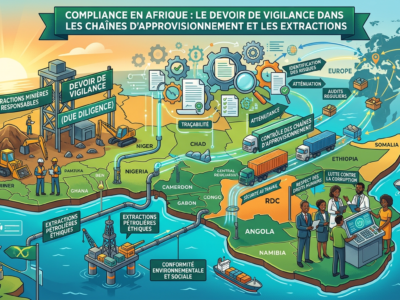
🚧Taking into account the legal landscape in Africa to fulfil the Vigilance Obligation

► Full reference : M.-A. Frison-Roche, Taking African legal geography into account to achieve an efficient vigilance system, working paper, August 2025/February 2026 - 🎤This working paper follows on from the closing address at the symposium Devoir de vigilance, quelles perspectives africaines ? Regards croisés en droit international, droit comparé et droit OHADA (Vigilance Duty: what are the prospects in Africa? Perspectives from international law, comparative law and OHADA Law, organised by the Faculty of Law of Bordeaux, through its Institut de Recherches en Droit des Affaires et du Patrimoine – IRDAP (Institute for Research in Business and Property Law), held on 15 November 2024.  - 📝This working paper forms the basis of the article "Considérer la géographie juridique africaine pour y réussir l'obligation de vigilance", which concludes the volume edited by Eustache da Allada in 2026 by Éditions Lefebvre-Dalloz, in the “Thèmes & Commentaires” collection,📗Devoir de vigilance, quelles perspectives africaines ? Regards croisés en droit international, droit comparé et droit OHADA (Vigilance Duty: what are the African perspectives? Comparative perspectives in international law, comparative law and OHADA Law). To this end, following an initial draft in August 2025, it was revised a second time to better incorporate the written contributions that make up the book, since the article on which it is based sets out a personal approach drawing on external research whilst also needing to synthesise these contributions. - ► Summary of the working paper :  The French “Vigilance” Act of 2017 incorporated the technical provisions and the spirit of the “Sapin 2” Act of 2016. They share a common goal. They have been and remain a common source of controversy and passion. At their heart lies the establishment of a “compliance obligation”, for which vigilance techniques form the “edge ” in serving a grand ambition: to protect systems from risks, both now and in the future, in order to protect the people involved in them. The passion that continues to surround the Vigilance Act, which gave rise to the European CS3D , is misguided, because the law and passion are never allies. Some would passionately want to see vigilance triumph by condemning companies to perform miracles; others would passionately want to see the destruction of all the texts that established the very concept of this Compliance Law, built upon these Humanist Monumental Goals. But let us acknowledge that in these debates on the Vigilance Obligation, which is being legally implemented across value chains, Africa is often cited as an example in a general discussion. It is not often considered as a distinct case with its own legal landscape. No reliance is placed on its strengths or on its own legal mechanisms, even though value chains – particularly industrial ones – so often lead to it, both now and in the future. Through analyses of the Vigilance Obligation, Africa is perceived as a place of retribution or of a new form of paternalism, and when its future is envisaged, prospects seem to be lacking, even though the very essence of compliance—and therefore of Vigilance—is the future.  If we take a less confrontational view and focus instead on the ‘legal geography’ of African countries and their social and inter-state structures, we see that the concern for others, both present and future – which ultimately constitutes the Monumental Goal of Compliance Law and thus of the Vigilance Obligation – is more prevalent in Africa than it is in Europe, which is now built upon legal individualism. This concern for others is reflected in legal mechanisms akin to mediation and various legal structures that our own institutions would do well to heed: our legislators before adopting bills, and our judges who might listen to them as amici curiae before reaching a decision. If we turn our attention to the African continent, which is exploited by certain segments of value chains, and to labour organisations, it becomes clear that here too, legislation and sanctions are not the whole story. Compliance techniques that make use of soft law and the contractual frameworks underpinning the chains themselves can remove the element of abstraction that is, by nature, inherent in general legislation. Moving forward through contracts under the supervision and with the support of the courts is an approach that could prove more fruitful than well-intentioned legislation, which has served as a catalyst, in line with the privileged position of contract law within OHADA. This serves to enhance the judge’s authority. The Compliance Judicialisation is also linked to the growing connection between Compliance and Contracts. However, it appears that not only can European judges specialising in Compliance Law and Vigilance Obligation thus rule on matters concerning Africa, which they can only know from a distance – though it is the lot of every judge to be an outsider – but African and inter-state Courts, notably through OHADA, can address the Vigilance Obligation because value chains are constituted by contracts. By developing it not as a foreign concept to be assimilated, but as that which expresses the very heart of the Law in Africa: concern for others, solidarity, the search for compromises and solutions so that the social and environmental system – that is to say, the human system – may endure into the Future. - 🔓Read the developments below⤵️ - 🌐Follow Marie-Anne Frison-Roche on LinkedIn 🌐follow Marie-Anne Frison-Roche on Instagram 🌐Subscribe to the newsletter MAFR Regulation, Compliance, Law 🌐Subscribe to the video newsletter MAFR Surplomb 🌐Subscribe to the newsletter MaFR Law & Art

Publication director

🏗️ direction of the collection: 📚Cours Dalloz – Série Droit privé

📚Publication of : 🕴️Maylis DOUENCE and 🕴️Marc AZAVANT, 📕Institutions juridictionnelles (Jurisdictional Institutions), 6th ed.

► Full Reference : M. Douence and M. Azavant, Institutions juridictionnelles (Jurisdictional Institutions), 1st ed. 2010 – 6th ed., 2025, Dalloz, “Cours Dalloz-Série Droit privé” Series, 425 p. - ► General presentation of the book (written in French) : The new edition of this book sets out the « Institutions juridictionnelles » (Jurisdictional Institutions), an expression which has happily replaced that of « Institutions judiciaires » (Judicial Institutions), that is to say the principles, structures and persons that make it possible to fulfil the mission of settling disputes and stating the law. The book thus analyses administrative and judicial justice, the courts and the actors that are judges and officers of the court, in particular lawyers. The book is intended for students and for those preparing for civil service competitive examinations or, for example, the entrance examination to the Bar schools. - 📚In the same collection, it is linked with the books : 📕Procédure civile (Civil Procedure) 📕Procédure pénale (Criminal Procedure) - 📕Read the table of contents (in French) - 📚See the entire collection in which the book is published.

Publication director

🏗️ direction of the collection: 📚Cours Dalloz – Série Droit privé

📚Publication of : 🕴️Nicolas CAYROL, 📕Procédure civile (Civil Procedure), 5th ed.

► Full Reference : N. Cayrol, Procédure civile (Civil Procedure), 5th ed., 2025, Dalloz, “Cours Dalloz-Série Droit privé” Series, 569 p. - ► General presentation of the book (written in French) : The study of civil procedure is essential for all students wishing to embark on a « judicial career »: judge, lawyer, bailiff, etc. In many respects, civil procedure is indeed a professional law, a law for the use of litigation professionals. The subject is moreover part of the competitive examinations and entrance examinations for these professions. But civil procedure is not only a professional law: it deals with problems that concern all lawyers, whoever they are, whether or not they practise procedure. Knowledge of the basic procedural notions is necessary for a proper understanding of many legal questions. - 📚See all the books of the same collection “Cours Dalloz – Série Droit privé“, created and directed by Marie-Anne Frison-Roche, and in particular those dealing with the branches of Law interacting with Civil Procedure : 📕Procédure pénale (Criminal Procedure) 📕Procédures civiles d’exécution (Civil Enforcement Procedures) 📕Institutions juridictionnelles (Jurisdictional Institutions) -

Working papers

🚧The part of Non-contentious in the judicial treatment of Compliance cases

► Full reference : M.-A. Frison-Roche, The role of Discretionary Jurisdictio in the judicial treatment of Compliance cases, working paper, August 2025.   - 📗This working document was prepared as a contribution to the collective book offered to Professor Dominique d'Ambra, published  in June 2026. - ► Summary of the working document  : Based on the definition of Judicial Office, the procedural principles that derive from it and the consequent powers that judges exercise, the objet of this study is to measure the degree of discretion that exists in the judicial treatment of compliance, without direct consideration for the dispute between litigants. This part is very ignored, when it should be given top priority. Indeed, because Systems are involved in compliance cases brought before civil or commercial judges, we are seeing a development of this discretionary element in judicial fonction. Discretionary matters differ from unilateral discretionary procedures, and this discretionary element relates to what the judge examines, possibly in the context of a dispute. The first part of this contribution therefore aims to describe the natural development of the discretionary power of the judge to deal with compliance cases brought before them. This role stems from the fact that, even when triggered by a dispute, what is submitted to the judge is a situation composed of a system, which cannot defend its interests before the civil or commercial judge in this Systemic Litigation arising from the very nature of Compliance Law and the Compliance Obligations it engenders on systemic entites. Moreover, it is the Future whose interests must be considered and protected, which the judge must do directly. This leads to the second part of the contribution, calling for a rethinking of the procedure and the role of the Compliance Judge, so that ex gratia matters can be dealt with. The judge must therefore verify that there are no conflicts of interest between the litigants, including hidden ones, and must learn about the systems involved. The inquisitorial principle must therefore be strengthened. But at the same time, since the primary aim is not to settle a dispute but to resolve a systemic problematic situation, the judge must facilitate the movements of the parties, and the adversarial principle must also be strengthened. Must be encouraged this activation of a powerful and discretionary approach, not as an exception but as a principle fully articulated with a contentious principle, with the dispute being only a means used by the necessary parties to enable systemic compliance situations to be resolved. - 🌐Follow Marie-Anne Frison-Roche on LinkedIn 🌐follow Marie-Anne Frison-Roche on Instagram 🌐Subscribe to the Newsletter MAFR Regulation, Compliance, Law  🌐Subscribe to the video newsletter MAFR Overhang

Working papers

Working Paper for a Newsletter

🚧Pour maîtriser la masse réglementaire de la Compliance, la penser comme un puzzle

► Full Reference : M.-A. Frison-Roche, To master the regulatory mass of Compliance, think of it as a jigsaw puzzle,  Working Paper , May 2025 - 📝 This Working Paper underpins the Newsletter MAFR Law -Compliance – Regulation  of 2 June 2025 :  - ► Summary of this Working Paper:  People are rightly complaining that Europe's regulatory and compliance regulations are too numerous, too complicated and too changeable. As a result, they are said to be unmanageable. Three solutions are proposed: specialise lawyers, regulatory corpus by regulatory corpus; deregulate; entrust everything to algorithms. These are inadequate solutions, because regulations cannot be understood unless they are put into perspective with the rest of the legal rules .; we have entered a new world, and these new regulations reflect the need for a new Law (unless we want to destroy the Law itself, which is what some people are dreaming of doing); algorithms reproduce past solutions and do not produce the new legal conception required. For an appropriate solution, we need to move away from a word-by-word understanding of the regulatory and compliance regulations and understand them as a whole, not only in relation to the purpose that gives them meaning, but also in relation to each other. In the positive sense of the term, they form a European 'jigsaw puzzle'. We need to look at the overall picture in which each regulation fits and makes sense. It finds its simplicity in relation to its purpose. It is always a question of working towards the sustainability of systems by asking companies to contribute so that the systems do not crush human beings but benefit them. Thus, in practice, the Monumental Goals of Compliance Law give clarity to the body of regulations which, when seen as a whole, are manageable and practical. Judges interpret them in this way. - 🔓read the Working Paper below⤵️ - 🌐follow Marie-Anne Frison-Roche on LinkedIn 🌐follow Marie-Anne Frison-Roche on Instagram 🌐subscribe to the Newsletter MAFR Regulation, Compliance, Law 🌐subscribe to the Video Newsletter MAFR Surplomb 🌐subscribe to the Newsletter MaFR Droit & Art

Conferences

🖥️Traduire dans l’institution judiciaire l’articulation entre l’international et le systémique, in🧮Le contentieux systémique émergent, un contentieux international justifiant la création de juridictions spécialisées ?

  - ► Référence complète : M.-A. Frison-Roche, "Traduire dans l'institution judiciaire l'articulation entre l'international et le systémique" in CREDIP, Faculté de Droit de l'Université Jean Moulin – Lyon 3, Le contentieux systémique émergent, un contentieux international justifiant la création de juridictions spécialisées, cycle de conférences sur Le contentieux international et la spécialisation des juges, Lyon , 18 avril 2025, 10h-12h. - 🪑🪑🪑Participent aussi à cette manifestation : 🪑Jacques Boulard, Premier président de la Cour d'appel de Paris 🪑Brigitte Brun-Lallemand, Première présidente de chambre de la Cour d'appel de Paris (Pôle économique) 🪑Jérémy Heymann, professeur de droit à l'Université Jean Moulin – Lyon 3 🪑Sabine Abravanel-Jolly, Professeure de droit au sein de l'Equipe Louis Josserand 🪑Marylou Françoise, maîtresse de conférences à l'Université Jean Moulin – Lyon 3 - 🧮consulter le programme complet de cette manifestation - ► Résumé de l'intervention : cette intervention ayant eu lieu après les présentations du Premier Président Jacques Boulard et Madame la Première Présidente Brigitte Brun-Lallemand, elle s'articule sur ces deux interventions.   I. Contentieux systémique et Contentieux international. On peut ainsi se demander si la nature d'un "contentieux systémique" se prête à ce qu'est un "contentieux international" ? A première vue, non. L'on pourrait poser que, d'une part, si le "contentieux systémique émergent" était "nécessairement international", alors l'on ne comprendrait pas pourquoi la Chambre spéciale internationale de la Cour d'appel de Paris ne suffisait pas et d'autre part, l'on ne comprendrait pas comment deux jugements ont été rendus sur le Devoir de Vigilance, dont on ne conteste pas qu'il appartient au Contentieux Systémique Emergent, alors qu'ils ne portent pas sur une chaine internationale de valeur : jugement TJ Paris 5 décembre 2023 dit La Poste, cas systémique actuellement devant la chambre spécialisée de la Cour d'appel de Paris ; TJ Paris 13 février 2025, dit SNCF, cas systémique, n'ayant pas fait l'objet d'appel.   II. Deux chambres spécialisées en miroir Dès lors, l'on pourrait dire que le contentieux systémique est de fait international mais pas par nature. Parce que cela n'est pas une subdivision du contentieux international, cela explique certes que la chambre 5-12 soit autonome par rapport à la chambre 5-16 (chambre internationale), mais parce que la perspective est de fait souvent transnationale, ces 2 chambres ont vocation à fonctionner en miroir. Car le système est un fait global. Et c'est plus en terme de fait global qu'il convient de le traiter, ce qui est plus facile dans des systèmes qui ne sont pas construit sur cette summa divisio du fait et du droit, qui convient mal au contentieux systémique.   III. Par nature, un contentieux dans lequel un système est "impliqué". Cela nous amène donc vers la définition du "Contentieux Systémique Emergent". Elle est simple : c'est un Cause dans laquelle un système est impliqué, dans lequel les intérêts de celui-ci sont en jeu, le premier de ses intérêts étant sa survie. C'est pourquoi la durabilité est une notion-clé, que l'on retrouve quelque soit le système impliqué. C'est pourquoi l'avenir est présent dans le contentieux systémique. C'est pourquoi l'office du juge est renouvelé car il s'agit d'un office Ex Ante, renouvellement à la fois procédural et substantiel qui conduit en pratique à un Droit processuel. Le fait systémique mène donc de droit à une dialogue des juges qui se spécialisent sur des faits globaux et les obligent, sauf à méconnaître ceux-ci, à se prendre en considération. Cela donne un nouveau statut au "droit comparé".   IV. Un contentieux émergent par le fait de systèmes nouveaux, globaux, saisis par des opérateurs locaux qui en fixent la stratégie.  Les systèmes ont déjà donné lieu à des contentieux : c'est la juridictionnalisation du Droit de la Régulation. Mais la Régulation a quitté ce prérequis des systèmes pour entrer à l'intérieur des opérateurs économiques dont le pouvoir de stratégie est situé localement. Le Droit de la Compliance internalise les besoins systémiques. Le Droit de la Compliance dont on affirma, parce qu'Ex Ante, qu'il allait dispenser du Juge, s'est lui-même juridictionnalisé. L'obligation de vigilance étant elle-même la pointe avancée de la Compliance, ne pouvait que donner une large place au Juge. Tandis que le système est l'enjeu du procès et de sa bonne solution, la partie au litige est l'opérateur cruciale : non seulement les entreprises régulées (comme les banques) mais encore les entreprises maîtresses des chaines de valeur (ce qui fait sortir le Droit de la Régulation des secteurs régulés). Or, les chaines de valeur sont un espace global contractuellement structuré transnational rattachées à un juge local qui est confronté à un office renouvelé avec le DIP.    V. Une culture juridictionnelle propre à des zones distinctes. Le Droit de la Vigilance, de la Compliance et de la Régulation tel qu'on le voit manier par les juges dépasse nos distinctions entre droit public et droit privé, entre les systèmes juridique, mais les décisions que l'on lit expriment trois cultures, procédurales et substantielles, différentes : l'Asie, les Etats-Unis et l'Europe. Cette culture de place porteuse d'une identité européenne de Vigilance, de Compliance et de Régulation repose notamment sur une culture juridictionnelle propre à cette zone-là. - 🌐suivre Marie-Anne Frison-Roche sur LinkedIn 🌐suivre Marie-Anne Frison-Roche sur Instagram 🌐s'abonner à la Newsletter MAFR Regulation, Compliance, Law 🌐s'abonner à la Newsletter en vidéo MAFR Surplomb 🌐s'abonner à la Newsletter MaFR Droit & Art

Working papers

Working Paper for📺MAFR - OverHang (Notion)

🚧Arbitration, a highly appropriate technique for deploying Compliance Law, in particular to satisfy the Vigilance Obligation

► Full Reference: M.-A. Frison-Roche, Arbitration, a highly appropriate technique for deploying Compliance Law, in particular to satisfy the Vigilance Obligation, Working Paper, March 2025. - 🎤 This Working Paper was developed as a basis for the Overhang👁 video  on …  April 2025 : click HERE  - 🎬🎬🎬In the collection of the Overhangs👁 It falls into the Notion category. ►Watch the complete collection of the Overhangs👁 : click HERE - ► Summary of this Working Paper: If Arbitration has so far not developed much in Compliance Law, it is because this new branch of Law is not well known. Indeed, if it were simply a matter of 'conformity' with mandatory regulations, then Arbitration involving rights that are freely available to the parties and Compliance would be 2 worlds that must ignore each other. But Compliance Law is defined quite differently. Its normativity lies in the Monumental Goals set by the political authorities, which oblige large companies, because these compagnies are in a position to do so, to contribute to achieving these Goals, namely the future preservation of the Systems (banking, digital, climate, energy, etc.) and human beings involved. While the Goal is constrained, the company is free to choose the means, as long as these means  are credible. Arbitration is one of them. From the arbitration clause to the appropriate award. One example is the Duty of Vigilance, the cutting edge of Compliance. In order to effectively find solutions in the value chain that the company governs, Arbitration is a suitable means of achieving the Monumental Goals of environmental protection and human rights, under the control of the Judge.       - 🔓read the developments below⤵️ - 🌐follow Marie-Anne Frison-Roche sur LinkedIn 🌐follow Marie-Anne Frison-Roche on Instagram 🌐subscribe to the Newsletter MAFR Regulation, Compliance, Law  🌐subscribe to the Video Newsletter MAFR Surplomb

Working papers

Working Paper for 📺Overhang (News)

🚧The Contract, a Compliance tool: the Obligation for a platform to control content (French Supreme Judicial Court, 15 January 2025) :

► Full Reference: M.-A. Frison-Roche, The Contract, a Compliance tool: the Obligation for a platform to control content CE, 27 January 2025, B. c/ CNIL, Working Paper, March 2025. - 🎤 This Working Paper was developed as a basis for the Overhang👁 video  on 29 March 2025 : click HERE (in French) - 🎬🎬🎬In the collection of the Overhangs👁 It falls into the News category. ►Watch the complete collection of the Overhangs👁 : click HERE - ► Summary of this Working Paper: The ruling handed down on 15 January 2025 by the Commercial, Economic and Financial Chamber of the French Judicial Supreme Court (Cour de cassation) provides a solution to the issue of content control in the digital environment. It resolves what appears to be the aporia so often emphasised, and even claimed, namely the impossibility of developing an effective controlling technology. To do this, the Court disregarded the applicable laws and referred to the electronic payment contract between the bank and the platform, which contained a clause on Vigilance against unlawful content, linked to a termination clause. It held that this clause was fully effective. This solution, so simple and so strong, can make a major contribution to regulating the digital space, if the banks so wish, because what platform can do without reliable electronic payment services?   - 🔓read the developments below⤵️ - 🌐follow Marie-Anne Frison-Roche sur LinkedIn 🌐follow Marie-Anne Frison-Roche on Instagram 🌐subscribe to the Newsletter MAFR Regulation, Compliance, Law  🌐subscribe to the Video Newsletter MAFR Surplomb

Organisation of events

⚙️Co-organisation of the symposium 🧮Durabilité de l’Internet : le rôle des opérateurs du système des noms de domaine. Compliance et Régulation de l’espace numérique (Sustainability of the Internet: the role of the operators of the domain name system. Compliance and regulation of the digital space)

  - ► Full Reference: M.-A. Frison-Roche & G. Loiseau (dir.), Durabilité de l'Internet : le rôle des opérateurs du système des noms de domaine. Compliance et régulation de l'espace numérique (Sustainability of the Internet: the role of the operators of the domain name system. Compliance and regulation of the digital space), Journal of Regulation & Compliance (JoRC) and Institut de Recherche Juridique de la Sorbonne (André Tunc – IRJS), Paris 1 Panthéon-Sorbonne University, 21 Fabruary 2025 - ► General presentation of this symposium: The digital space has been built on and as a system. Its primary interest is of a negative nature: it consists of to be preserved against the prospect of systemic failure, of not collapsing. Like all other systems, this 'Monumental Goal' specific to the digital system justifies resources that incorporate this concern for the future. As with all systems, it integrates and relies on the specific technical nature of this system. The digital space is largely based on the invention, technology and architecture of domain names. Domain names, as an addressing system, enable users to enter the digital space and find other Internet users. The uniqueness and solidity of the domain name system, entrusted to a single root and decentralisation, makes this community possible for those who use the digital space and ensures the technical durability required, without which the digital space would be compromised. The architecture, operation, operators and what they do under the control of legislators, regulators, judges and legal subjects are therefore examined from a dual technical and legal perspective, in the light of the imperative of sustainability. This allows to progress in 4 stages. Firstly, to examine the permanence in time and space of the domain name system, insofar as it is the foundation of the Internet and the digital system. This technical construction gives rise to legal qualifications, not only for the present but also for the future, since the Web3 offers new technical solutions. Secondly, this technical sustainability is an imperative that is built into the operators of the domain names themselves, which are inter-linked not only at national level but also at global level, this cross-linking being necessary for the security of the system. The State is present through public law techniques that enable surveillance, control and possible recovery. Thirdly, it imposes constraints on the operators subject to them in order to serve this monumental goal of technical sustainability, and these constraints themselves generate as many powers as they need to usefully achieve this mission. This proportionality must be at the heart of the method and the requirements. The relationship between constraints and powers also stems from it. Fourthly, this imperative of technical sustainability, which is global in nature, gives way to imperatives of societal sustainability, more localised in space and time, when domain name operators are called upon by the legitimate authors of binding standards, legislators in the first instance, to express concerns such as the protection of people involved in the digital space and whose rights are compromised or who are in danger. This second type of sustainability, which is more localised and less inherent in the architecture of the Internet, is justified by the available power of the operators concerned and their adherence to social imperatives. The resulting constraints and powers are therefore not the same. The 2 sustainabilities must then be articulated in a conception that is both teleological and pragmatic. - - ► Speakers (they will speak in French, but the book to be published will be in English):  🎤Pierre Bonis, Chief Executive Officer of the Association française pour le nommage Internet en coopération (Afnic) 🎤Lucien Castex, Adviser of the Afnic Chief Executive Officer for Research internet and society and Internet governance 🎤Marie-Anne Frison-Roche, Full Professor of Regulatory and Compliance Law, Director of the Journal of Regulation & Compliance (JoRC) 🎤Claire Leveneur, Senior Lecturer at Paris-Est Créteil University 🎤Grégoire Loiseau, Full Professor at Paris 1 Panthéon-Sorbonne University 🎤Samir Merabet, Full Professor at the University of West Indies 🎤Antoine Oumedjkane, Senior Lecturer at Lille University 🎤Frédéric Sardain, attorney at law, Jeantet law firm - read below a detailed presentation of this event⤵️ - 🌐follow Marie-Anne Frison-Roche on LinkedIn 🌐follow Marie-Anne Frison-Roche on Instagram 🌐subscribe to the Newsletter MAFR. Regulation, Compliance, Law 🌐subscribe to the Newsletter Surplomb, par MAFR

Conferences

🏛️Hearing before a public body

🏛️ hearing before the French Working Group on the modernisation of French Arbitration Law, about the issue Arbitrage et Droit de la Compliance : est-il besoin d’un texte ? (“Arbitration and Compliance Law: is a text required?”)

► Full Reference: M.-A. Frison-Roche, hearing before the French working group on the modernisation of French Arbitration Law, about the issue Arbitrage et Droit de la Compliance : est-il besoin d'un texte ? ("Arbitration and Compliance Law: is a text required?"), Directorate of Civil Affairs' French Ministry of Justice, 13 February 2025. - ► Result of this presentation and the ensuing discussion, recorded in the working group's report published in March 2025 (published in French, translated her: "This report on the guiding principles would not be complete without mentioning the discussions in the working group on the introduction of a guiding principle requiring the arbitral tribunal to take into account "human, environmental and compliance issues, as well as respect for the fundamental rights and freedoms of the parties".This proposal gave rise to particularly heated discussions. Some saw it as a scarecrow likely to make French Arbitration Law less attractive and to weaken Arbitration awards, opening up cases of recourse on the pretext of bad faith, even though these values would already be taken into account in the review of domestic or international public policy.  Others, on the other hand, felt that such a text would have the advantage of enshrining an Arbitration Law connected to values that are not exclusively economically oriented, pointing out, moreover, that such a principle would not be redundant with the control of public policy, which intervenes ex post, whereas this text imposes Ex Ante responsability, and that this principle would allow a noteworthy introduction of Compliance Law in rbitration.  They added that the promotion of such values could make it possible to demonstrate a commitment to virtuous arbitration practice. In the light of these differences, after much hesitation, the decision was made not to include it in the draft Code, considering that the final choice was more a question of political dimension that the working group felt it could not decide on its own. ". (p. 36).   - ► English Summary of the presentation: My presentation deals with the relationship between Compliance Law and Arbitration, particularly International Arbitration. It is built around 12 successive points. The work I have carried out on these various points is associated with it. It precedes the answers I shall give to the questions put by the members of the working group and the ensuing discussion.   1. stagnation in the relationship between Arbitration and Compliance Law, due to continuing misunderstandings about Compliance 2. progress towards a better understanding of Compliance and the appropriateness of the arbitrator's role within Compliance Law 3. prospects for the growing relationship between Compliance Law and Arbitration, particularly with regard to the value chains built up by international companies 4. educational issues 5. time required to build a "culture of place" in this matter 6. "Doctrinal" difficulties 7. benefit from the production of a "doctrine of place" on this subject 8. going beyond the continental summa divisio of Public Law and Private Law 9. practical assimilation of Regulatory Contracts in sustainable sectors and chains 10. opening up the Arbitration World to this articulation with Compliance Law 11.  Can an official legal text contribute to this? 12.  example of the guiding principles of the French Code of Civil Procedure. -   🔓read the presentation developments below⤵️ - 🌐follow Marie-Anne Frison-Roche on LinkedIn 🌐follow Marie-Anne Frison-Roche on Instagram 🌐subscribe to the Newsletter MAFR Regulation, Compliance, Law 🌐 subscribe to the Video Newsletter MAFR Overhang/Surplomb