Economic Law, Regulation and Compliance

Analyses

Hayao Miyazaki explains that the drawings of video games made by machines are “insults to life”

Through the Open Culture website, it is possible to listen to Hayao Miyazaki who, in March 2017, claimed that video games whose drawings are made on Artificial Intelligence basis are "insults to life". Read below the history, the words that the Master has held, his conception of what is creation and "truly human" work, which is echoed by the definitions given by Alain Supiot, who also reflected on what robots do. This brings us back to the very notion of "creation" and creative work.   - Read below

Working papers

🚧 From Regulation Law to Compliance Law

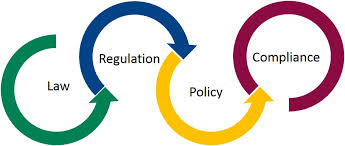
This working paper is the basis for an article written in French to be published in the French publication RÉGULATION, SUPERVISION, COMPLIANCEE, to be published in the RÉGULATIONS series at Éditions Dalloz. This work uses the Compliance and Regulation Law bilingual Dictionnary. - This Working Paper aims to show the movement that starts from Regulation Law to Compliance Law, now in the process of being born. In order to explain this movement, in order to anticipate the near future, in what it should not be and in what it should be, it is necessary to reconstruct how the Compliance Law was born of the Regulation Law, which has thus found the sources of the Public Services Law of which it had at first cut the roots (I). Indeed Regulation Law has in a happy way renewed the Law but also narrowed its perspective. Today, the phenomenon of globalization and the need for public authority that States can not satisfy according to traditional legal methods implies the establishment of a sort of "global public service". This is done by the Law of Compliance which revolutionizes all legal systems, both Common Law and Civil Law (II). Indeed, Compliance Law internalizes in some companies, the "crucial operators", the duty to make effective the "monumental goals" that the regulatory authorities have formulated and of which these companies must render globally effective. In this respect, the Law of Compliance is the extension of the Law of Regulation, which makes a new scope and in its aims and in its space. It is the whole of Law that is transformed. The near future will tell if it is reflected in clashes, between companies and regulators, between Europe and the United States, or on the contrary by a pact of trust between the crucial operators and the Regulators. If this is achieved, the Law of Compliance, expressing the political dimension of the Law of Regulation, expressing the share of companies that ceases to be neutralized by the mechanics of the markets, will be an advancement of the Law. It is in this perspective that we must build the European Compliance Law.      

Working papers

🚧 Compliance and Trust

Compliance. Trust. Two words that come more and more often than before at our readers' eyes or listeners' ears. And yet they do not seem to match well. They even seem to repel each other. Indeed, Compliance is the way in which Public Authorities trust certain private operators, not in themselves, but with their structural capacities to mechanically capture the information that these authorities need (I). This presupposes a vision of the world in which Companies are powerful and powerful alone but are not virtuous, while Public Authorities, such as the Public Prosecutor's Office or Regulators, are weak but virtuous alone. Such a conception of Compliance transforms companies into automata. Such a vision of the world has no future: only human beings can be trusted, whose fallibility must be accepted, as Compliance is then the expression of a relationship built on trust that is to be seen between non-mechanical operators, namely public Institutions and private Operators, who can both have in common concern for an interest which goes beyond them and which was formerly called the general interest (II). From this reality, no new doubt for private companies, but which explains the strange intimacy between the violent Compliance Law and the new spontaneous order of Corporate Social Responsibility, it is up to them to demonstrate this concern Cf others that it shares with the Public Authorities, except to fall in Compliance reduced to costly procedures, empty endless staked out of sanctions without control. It is thus for Companies to make this branch of Compliance Law emerging become what can be the best, when it is possible that it becomes what would be the worst.
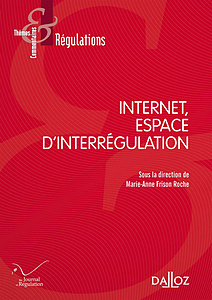
Couverture – Internet, espace d’interrégulation

Publication director

🏗️ copublishing and direction of the collection: 📚Régulations & Compliance

Collection Régulations & Compliance Internet, espace d’interrégulation (dir.)

Complete references :  Frison-Roche, M.-A. (dir.), Internet, espace d’interrégulation, Serie “Régulations”, coll. “Thèmes & Commentaires”, Dalloz, Paris, 2016. ► Read the presentations of the other books in the series: the following books: 🕴️M.-A. Frison-Roche (ed.), Régulation, Supervision, Compliance (Regulation, Supervision, Compliance), 2017 🕴️N. Borga, J.-Cl. Marin and J.-Ch. Roda (eds.), Compliance : l’entreprise, le régulateur et le juge (Compliance: the Company, the Regulator and the Judge), 2018 🕴️M.-A. Frison-Roche (ed.), Pour une Europe de la Compliance (For the Europe of the Compliance), 2019 🕴️M.-A. Frison-Roche (ed.), Les outils de la Compliance (Compliance Tools), 2021 🕴️M.-A. Frison-Roche (ed.), Les Buts Monumentaux de la Compliance (Compliance Monumental Goals), 2022 🕴️M.-A. Frison-Roche (ed.), La juridictionnalisation de la Compliance (Compliance Jurisdictionalisation), 2023 🕴️M.-A. Frison-Roche and M. Boissavy (eds.), Compliance et droits de la défense. Enquête interne – CJIP – CRPC (Compliance and rights of the defence. Internal investigation – French Judicial Public Interest Agreement – French guilty plea procedure), 2024 🕴️M.-A. Frison-Roche (ed.), L’Obligation de Compliance (Compliance Obligation), 2025 🕴️M.-A. Frison-Roche (ed.), Compliance et Contrat (Compliance and Contract), forthcoming 🕴️L. Laref (ed.), Compliance et vigilance bancaire (Compliance and Banking Vigilance), forthcoming 🕴️M.-A. Frison-Roche, Le système juridique global des noms de domaine. Structure multi-acteurs et durabilité de l’Internet (The Global Legal System of Domain Names. Multi-Stakeholder Structure and Sustainability of the Internet), forthcoming 🕴️M.-A. Frison-Roche (ed.), Le système probatoire de la Compliance, forthcoming Read the presentation of the book (written in French). Read the presentation of the  authors of the contributions (written in French) “Regulate the Internet”. Some argue that any regulation is contrary to the nature of digital. Others argue that this is indispensable, for its economic deployment and for public freedoms. Internet renews conceptions and practices. Notably those of the Law of the Regulation. Indeed, the Internet makes it possible to offer and obtain services that are in often regulated sectors: financial, audiovisual, healthcare, gaming. Moreover, they converge in new objects: the connected objects. Often described as a “legal desert”, digital appears as a kind of jumble of systems of various regulations that overlap, deform and contradict each other. In reaction, an “interregulation”, de facto or de jure, in law more or less flexible, is in the process of being established. Who will be the Regulator: The States? The judge? The Internet users? The future is open. The book first determines the “Interregulation Needs” and then describes and conceives solutions for the interregulation of the digital space. Read the presentation of the two articles written by Marie-Anne Frison-Roche:      Thinking the world from the notion of “data”      To draw the regulatory consequences of a rethinked world from the notion of “data” The working papers which are the base of these articles are written in English.