Cryptocurrencies seem to be admitted, delivered from the State. And many rejoiced. Let's take the question on the side of Law. In France, we remember an
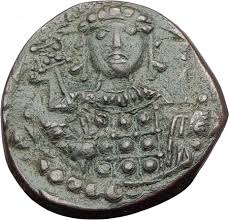
article written in 1968 by the great lawyer Carbonnier : L'imagerie des monnaies (Imagery of Coins), seeing in Caesar's face engraved on the coin the image of the State itself, guarantor of the entire monetary and exchange system. In Europe, we remember the discussions on the image of the euro, how each state in the zone could express its existence while the guarantee was common and concentrated in the same central bank, preferring a public building to a character. Today the currencies to be virtual do not have less an "image". One could even say that they have only that, since it is no longer the State which, by the face of Caesar is inserted there. But other faces can be imbued. Could the law find fault with it, because some figures would be "reprochable" because only Caesar would be beyond reproach? Could the Law draw any consequences from it, because some figures would be "engaging", less than that of Caesar but still a little? Certainly, not faces that the Criminal Law rejects, not that of Jack the Ripper, not that of Hitler. But other historical figures less clearly banned, in this period where it is easily argued that everything would be "questionable" and therefore admissible and that besides everything would be "to discuss", the currency thus expressing this flow of discussion , speech that goes from hand to hand, from post to post on virtual networks? Still, figures are block around them. This is particularly true in communities that can thus elect them to trust each other: just like their "Caesar", and knowing each other well, lend themselves more easily with confidence, to pay each other, while they would not lend to others, they would not buy from others. Why no. Since we accept the principle of this currency, based on the only technical security (double encryption) and trust between people (intersubjectivity of a circle that has been chosen), without mentioning the issue of the debtor as a last resort, in order to challenge Caesar and public finances. But let us take the hypothesis that the figure embedded in the virtual currency is that of Jesus. And the hypothesis is not fancy. Indeed,
the "religious currencies" are multiplying. And the platforms that offer them insist on the fact that these tokens that are exchanged between people who believe in Jesus place great trust in the "son of God" and are therefore particularly trusting each other, for example in their respective capacity to keep their commitment. Outside the Law. On their respective ability to help each other. Outside the Law. Is it necessary to forget the affirmation that it was necessary "to render to Caesar what was Caesar's"? Let's ask some questions in Law. – Reflections on what could or should be the "regulation" of non-state currencies, whether we call them virtual or not (in what does this change the nature of the currency?), That we secure them by encryption technology and / or by the decentralization of information, should they also relate to images? – Are non-state currencies so much that the religious image, as long as it is not contrary to public order, is permissible, notably in legal systems where the constitutional principle of secularism has as its object and effect not only to neutralize the religious significance of religious objects but also to protect religious freedom? – Can "religious currencies" be protected and have specific economic and financial significance, as the
United States Supreme Court admitted in the Hobby Lobby judgment of June 30, 2014? Europe is not the United States. – If the image of Jesus is encrusted on the currency, can we consider that the corpus is also inserted so that the platform that attracts a particularly interesting clientele (solvent, "responsible", holding its commitments, etc.) ? This insertion of the religious corpus, as the state was through the face of Caesar would operate not de jure but de facto, so that the company holding the platform should respond to third parties by the factual belief that this may have generated in third parties. – Moreover, do not these "religious currencies" produce a specific systemic risk? Not that such and such a religion could collapse, or this or that religious effigy to undergo a haircut with a domino effect on all the saints, waves of doubt provoking a mistrust of all the faithful ones because the various religions are doing well, but precisely because the mark of these religious communities to which these platforms specifically appeal is to make "their own law" prevailing over the law of the Dtate, considered inferior since it comes only from men and not from God. And now the churches are starting to coin money… At the very least, it will be necessary in Ex Post that the faithful do not come to seek the state by guaranteeing if there is bankruptcy, because Caesar does not meddle in the affairs of Jesus. To each his currency and each to reread
Carbonnier, one of the finest readers of the Bible -