Whistleblower

Articles in The Journal of Regulation & Compliance « JoRC »

LATOUR, Daphné🕴️

📝Internal investigations within companies, in 🕴️M-A. Frison-Roche (ed.), 📘Compliance Jurisdictionalisation

► Full Reference: D. Latour, "Internal investigations within companies", in M.-A. Frison-Roche (ed.), Compliance Jurisdictionalisation,  Journal of Regulation & Compliance (JoRC) and Bruylant, "Compliance & Regulation" Serie, 2024, pp. 184-201 - 📘read a general presentation of the book, Compliance Jurisdictionalisation, in which this article is published - ► Summary of the article ():  - 🦉This article is available in full text to those registered for Professor Marie-Anne Frison-Roche's courses -

Breaking news

💬Enquêtes internes : une activité en plein développement pour les avocats (“Internal investigations: a growing business for attorneys”)

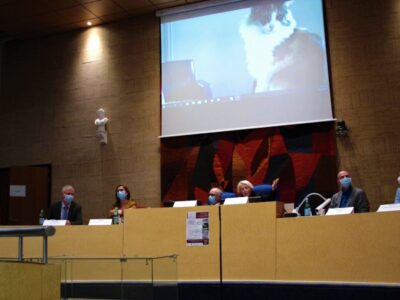
🌐follow Marie-Anne Frison-Roche on LinkedIn 🌐subscribe to the Newsletter MAFR Regulation, Compliance, Law - ► Full Reference: M.-A. Frison-Roche & M. Boissavy, "Enquêtes internes : une activité en plein développement pour les avocats" ("Internal investigations: a growing business for attorneys"), interview with Miren Lartigue, Gazette du Palais, 25 April 2023. - 💬read the interview (in French) - ► Presentation of the interview by the journal (in French): "Inspirées des Anglo-saxons et boostées par la loi Sapin II du 9 décembre 2016, les enquêtes internes sont de plus en plus utilisées par les entreprises françaises pour vérifier la réalité de pratiques douteuses en leur sein, découvertes ou alléguées. Parce qu’il s’agit d’un nouveau champ d’activité pour les avocats, le Conseil national des barreaux (CNB) y a consacré une journée lors de son colloque organisé les 20 et 21 avril 2023 sur le thème « Avocat et droits de la défense dans les enquêtes internes et la justice négociée », qui a réuni 750 participants sur deux jours. Matthieu Boissavy et Marie-Anne Frison-Roche, qui ont participé à l’organisation de cet évènement, nous expliquent les contours de ce nouveau métier." - ► Questions asked (in French):  Quels sont la place et le rôle de l’avocat dans les enquêtes internes et pourquoi le CNB a-t-il souhaité organiser une journée consacrée à ce sujet ?   ​​​Quel est leur rôle dans la réception des alertes ?   Et dans l’enquête interne proprement dite ?   Quelle est la complémentarité de l’avocat avec le juriste interne ?   Quels sont outils utilisés pour le calcul des préjudices, la collecte et le traitement des données ?   Comment s’applique la déontologie de l’avocat ?   Et qu’en est-il des droits de la défense ?   Quelle est l’étendue du secret professionnel de l’avocat ? -

Articles in a legal collective publication

📝 Assessment of whistleblowing and the obligation of vigilance regarding international competitiveness, in 🕴️ M.-A. Frison-Roche (ed.), 📘Compliance Monumental Goalsnce Monumental Goals

► Full Reference: M.-A. Frison-Roche, " Assessment of whistleblowing and the obligation of vigilance regarding international competitiveness", in M.-A. Frison-Roche (ed.), Compliance Monumental Goals, series "Compliance & Regulation", Journal of Regulation & Compliance (JoRC) et Bruylant, 2023, p. - ► Article Summary: Taking up the legal tools of Compliance and confronting them with the concern that Law must have for the Competitiveness of companies, it is necessary that these legal instruments not harm it because Compliance Law, because of its immense ambitions, can only function through an alliance between political wills with great pretensions (save the planet) and the entities which are able to achieve these goals (the crucial economic operators : the political drawing on the compagnies" power, it would be contradictory for the legal instruments put in place by Law to harm the ability of companies to face global economic competition, or worse to favor international competitors acting under legal systems which do not integrate Compliance obligations.   From this principle, it is possible to assess these two legal techniques of whistleblowing and vigilance obligation: both consist in capturing Information, which gives them a strong uniqueness and fits them into the global competition for Information. Taking the whistleblowing, its first beneficiary is the company itself since the firm discovers a weakness and can therefore remedy it. Therefore, beyond the principle of protection of the whistleblower by their access to the legal statute, for instance the one conceived by the French 2016 law known as "Sapin 2", it is questionable that all the incentives are not put in place so that the holder of such information transmits it to the manager. It is not the European solution, even after the European Directive of 2019, national legal systems continuing to require the absence of financial compensation, the "heroic figure of the whistleblower and the refusal of their remuneration depriving the company of Information and improvement. First to the manager, with external transmission taking place if the latter does nothing, the internal manager is thus encouraged to act and put an end to the dysfunction, which increases the competitiveness of the company. But the French legislation has on the contrary developed the right incentive as to the person to whom the information is transmitted because by obliging to transmit first to the manager, the external transmission intervening if the internal management does nothing, the incentive is thus made to the internal manager to act and put an end to the dysfunction, this legal solution increasing the competitiveness of the company. Even more, and even if it seems counter-intuitive, the obligation of vigilance increases the competitiveness of the obliged companies. Indeed, Law by obliging them to prevent and fight against violations of human rights and the environment has tacitly given them all the necessary powers to do so, notably the power to collect Information on third-party companies, including (and even above all) those which are not subject to transparency obligations. In this respect, companies, as far as they are personally responsible, hold supervisory power over others, a power which allows to globalize Compliance Law and which, in the process, increases the Companies' own power. Therefore, the obligation of vigilance is in many respects a boon for the companies which are subject to it. The resumption of the mechanism by the next European Directive, itself indifferent to the territory, will only strengthen this global power of vigilant companies over possibly foreign companies which become its passive subjects. - 🚧 read the bilingual Working Paper, basis for this article  - 📘​ read the general presentation of the book, Compliance Monumental Goals, in which this article is published - ► read the presentations of the other Marie-Anne Frison-Roche's contributions in this book:  📝Compliance Monumental Goals, beating heart of Compliance Law,  📝Definition of Principe of Proportionality and Definition of Compliance Law, 📝 Role and Place of Companies in the Creation and Effectiveness of Compliance Law in Crisis,  -    

Articles in The Journal of Regulation & Compliance « JoRC »

📝Appréciation du lancement d’alerte et de l’obligation de vigilance au regard de la compétitivité internationale, in 🕴️M.-A. Frison-Roche (ed.), 📕Les Buts Monumentaux de la Compliance

► Full Reference: M.-A. Frison-Roche, "Appréciation du lancement d'alerte et de l'obligation de vigilance au regard de la compétitivité internationale" ("Assessment of whistleblowing and of the obligation of vigilance with regard to international competitiveness"), in M.-A. Frison-Roche (ed.), Les Buts Monumentaux de la Compliance, coll. "Régulations & Compliance", Journal of Regulation & Compliance (JoRC) and Dalloz, 2022, pp. 413-436. - 📝read the article (in French) - 🚧read the bilingual Working Paper which is the basis of this article, with additional developments, technical references and hyperlinks - 📕read a general presentation of the book, Les Buts Monumentaux de la Compliance, in which this article is published - ► English summary of the article (done by the Journal of Regulation & Compliance): Taking up the legal tools of Compliance and confronting them with the concern that Law must have for the Competitiveness of companies, it is necessary that these legal instruments not harm it because Compliance Law, because of its immense ambitions, can only function through an alliance between political wills with great pretensions (save the planet) and the entities which are able to achieve these goals (the crucial economic operators : the political drawing on the compagnies" power, it would be contradictory for the legal instruments put in place by Law to harm the ability of companies to face global economic competition, or worse to favor international competitors acting under legal systems which do not integrate Compliance obligations.   From this principle, it is possible to assess these two legal techniques of whistleblowing and vigilance obligation: both consist in capturing Information, which gives them a strong uniqueness and fits them into the global competition for Information. Taking the whistleblowing, its first beneficiary is the company itself since the firm discovers a weakness and can therefore remedy it. Therefore, beyond the principle of protection of the whistleblower by their access to the legal statute, for instance the one conceived by the French 2016 law known as "Sapin 2", it is questionable that all the incentives are not put in place so that the holder of such information transmits it to the manager. It is not the European solution, even after the European Directive of 2019, national legal systems continuing to require the absence of financial compensation, the "heroic figure of the whistleblower and the refusal of their remuneration depriving the company of Information and improvement. First to the manager, with external transmission taking place if the latter does nothing, the internal manager is thus encouraged to act and put an end to the dysfunction, which increases the competitiveness of the company. But the French legislation has on the contrary developed the right incentive as to the person to whom the information is transmitted because by obliging to transmit first to the manager, the external transmission intervening if the internal management does nothing, the incentive is thus made to the internal manager to act and put an end to the dysfunction, this legal solution increasing the competitiveness of the company. Even more, and even if it seems counter-intuitive, the obligation of vigilance increases the competitiveness of the obliged companies. Indeed, Law by obliging them to prevent and fight against violations of human rights and the environment has tacitly given them all the necessary powers to do so, notably the power to collect Information on third-party companies, including (and even above all) those which are not subject to transparency obligations. In this respect, companies, as far as they are personally responsible, hold supervisory power over others, a power which allows to globalize Compliance Law and which, in the process, increases the Companies' own power. Therefore, the obligation of vigilance is in many respects a boon for the companies which are subject to it. The resumption of the mechanism by the next European Directive, itself indifferent to the territory, will only strengthen this global power of vigilant companies over possibly foreign companies which become its passive subjects. - 🌐 follow Marie-Anne Frison-Roche on LinkedIn 🌐follow Marie-Anne Frison-Roche on Instagram 🌐 subscribe to the Newsletter MAFR Regulation, Compliance, Law 

Working papers

🚧Duty of Vigilance, Whistleblowing and International Competitiveness

► Full Reference: Frison-Roche, M.-A., Duty of Vigilance, Whistleblowing and International Competitiveness, Working Paper, September 2021. -   🎤 this Working Paper is the basis for a conference , in the colloquium Effectiveness of Compliance and International Competitiveness, co-organised  by the Journal of Regulation & Compliance (JoRC) and the Center for Law and Economics of the Panthéon-Assas University (Paris II),   November 4, 2021 - 📝this Working Paper is also the basis for an article. This article is to be published ⤵ in its French version in the book 📕Les buts monumentaux de la Compliance, in the series 📚Régulations & Compliance  in its English version in the book 📘Compliance Monumental Goals, in the series la collection 📚Compliance & Regulation - ► Working Paper Summary: The "Compliance Tools" are very diverse. If it has been chosen to study more particularly among these the obligation of vigilance and the whistleblower, these rather than others and to study them together, it is because they present in the perspective of the specific topic chosen, namely "international competitiveness", and for companies, and for economic zones considered, and for legal system inseparable from them, a uniqueness: these are mechanisms which release Information.  By order of the law, the company will not only stop ignoring what it covered with the handkerchief that Tartuffe held out to it or that a conception of Company Law legitimately allowed it to ignore. This article does not examine if this revolution made by Compliance Law expresses in the legal system is on the one hand legitimate and on the other hand effective: the article measures what is happening at the regard to "international competitiveness". Compliance Law is therefore be examined here through its instruments, and not in relation to its normativity. In fact, its instruments are intended to provide Information and to make this information available, in its presentation, in its intelligibility and in the hands of those who are able to use Information in perspective of the Compliance Monumental Goals, achieving them.  Regarding this central notion of Information, international competitiveness will be more particularly concerned because Compliance Law will oblige the company itself to seek out, then expose to everyone's eyes, in particular its competitors, its weaknesses, its projects, its alliances, its flaws. This does not pose a problem if its competitors themselves are often subject to this new branch of Law, which goes far beyond transparency, which is already a new mechanism because a company is not a transparent organization and Competition Law that governs ordinary businesses never required this. But if they are not subject to this incredibly special branch of Law that is Compliance Law, then there is a distortion of competitiveness by the very fact of the Law. It is possible to pretend that the markets like virtue, that they give it credit because they are themselves based on the idea of "promise", which is ultimately based on a moral concept, but this provision of Information to others, while others remain opaque, is a major problem of competitiveness, which the legal requirement of "loyal commercial practices" only very partially considers. Therefore, it is necessary to first examine what is the economic and financial power of the information captured by the company on itself thank to Compliance Law making available to all but firstly to the compagny itself through the whistblowing mechanism, organised by the laws, differently in the US and Europe (I). Compliance Law also obliges companies to be accountable not only for what they do but also for what others do for them. Through the obligation of Vigilance, objective Ex Ante obligation and duty, the company obtains a power of Information on others which could well resolve what is often presented as the dispute aporetic of the extraterritoriality of Compliance Law, thus making accountable companies hitherto protected by their "preserved" legal system and thereby affected by the effectiveness of Compliance Law (II). - read below the developments

Articles

New SEC Report to Congress about Whistleblower Program: what is common between American and European conception

Full reference: Frison-Roche, M.-A., New SEC Report to Congress about Whistleblower Program: what is common between American and European conception, Newsletter MAFR – Law, Compliance, Regulation, 1st of December 2020 Read by freely subscribing other news of the Newsletter MAFR – Law, Compliance, Regulation   Summary of the news Like every year since the adoption of the Dodd-Frank Act, the Securities and Exchanges Commission (SEC) and especially its Office of the Whistleblowers (OWB) handed to the Congress of the United-States a report about the success of its program concerning whistleblowers, especially estimated with the amount of financial rewards granted to them during the year. This report especially presents the amount granted to whistleblowers, the quality of the collected information and the efficacy of SEC's whistleblowers' protection process. If Americans condition the effectiveness of whistleblowing to the remuneration of whistleblowers, Europeans oppose the "ethical whistleblower" who shares information for the love of Law to the "bounty hunter" uniquely motivated by financial reward and favor the former to the later, as it is proven in the French Law Sapin II of 2016 (which do not propose financial reward to whistleblowers) or the British Public Interest Disclosure of 1998 (which just propose a financial compensation of the whistleblower's losses linked to whistleblowing).  However, American and European conceptions are not so far from each other. As United-States, Europe has a real care for legal effectivity, even if, because of their different legal traditions, Americans favor effectivity of rights while European favor effectivity of Law. If it places effectivity at the center of its preoccupations, Europe should conceive with less aversion the possibility to financially incite whistleblowers. Moreover, United-States and Europe share the same common willingness to protect whistleblowers and if rewarding would enable a better protection, then Europe should not reject it, as shows the recent declarations of the French Defenders of Rights. It is not excluded that both systems converges in a close future. 

Reports

US Securities and Exchanges Commission (SEC)

Whistleblower Program

Full reference: US Securities and Exchanges Commission, Whistleblower Program. 2020 Annual Report to Congress, 16th of November 2020 Read the report   Read, to go further on the question of whistleblowers: Frison-Roche, M.-A., The impossible unicity of the legal category of whistleblowers, working paper, 2019  

Articles in a legal collective publication

📝The impossible legal unicity of the category of “whistleblowers” (“L’impossible unicité juridique de la catégorie des “lanceurs d’alertes” “)

Full reference: Frison-Roche, M.-A., L'impossible unicité juridique de la catégorie des "lanceurs d'alertes" ("The impossible legal unicity of the category of "whistleblowers""), in Chacornac, J. (dir.), Lanceurs d'alertes, regards comparatistes, ("Whistleblowers, comparative perspectives"), Publications of the Centre français de droit comparé ("French Comparative Law Center"), May 2020, Volume 21, pp. 13-31.    Read the article (in French).    Read the general presentation of the collective book in which this article is published Read the bilingual working paper which had served of basis for this article.  Read the presentation of the conference "Les lanceurs d'alertes: glose" (Whistleblowers: glose") and especially the slides elabored for the colloquium organized by the Centre français de droit comparé ("French Comparative Law Center") on 23th of November 2018 under the direction of Jérôme Chacornac - Introduction of the article "Whistleblowers". This is a new expression. Which is a great success. Barely heard once, we hear it everywhere … A topic not of course or knowledge test, but rather a topic of daily conversation. Because it is spoken to us every day, in more or less gracious terms. For example President Donald Trump on October 1, 2019 declared to the press "want to question" the whistleblower who would have illegally denounced him and would not, according to him, have the right to conceal his identity, proof in this according to him of the lying character of his assertions against him, while his lawyer indicates on October 6, 2019 that he is not speaking on behalf of a single whistleblower thus taken to task but of a plurality of people who gave information against the President of the United States. Even the most imaginative screenwriters would not have written such brutal and rapid twists and turns. Spectators, we are waiting for the next episode, secretly hoping for the escalation. And precisely if we go to the cinema, it is still a whistleblower whose dedication and success, we are told about, even the drama, for the benefit of global society, and in particular democracy, since the secrets are fought for the benefit of the truth. The Secret Man designates Mark Felt as the first whistleblower. Returning to what we often present as being a more "serious" media1On the more general fact that cinema is undoubtedly the medium which most seriously restores the state of the Law, c. Frison-Roche, M.-A., Au coeur du Droit, du cinéma et de la famille : la vie, 2016., we listen to France-Culture and here is another story told by a historian who worked as an archivist on events that political power would have liked to keep hidden by possibly destroying their traces but which its trade led to preserve: here it is expressly presented to the studious listeners like a "whistleblower" …. While the same radio tries to find the one who could well be, as in a kind of contest the "first whistleblower"2L'histoire du premier lanceur d'alerte, France Culture, septembre 2019. ? …. This rewriting of History can be defended because ultimately what did other Voltaire do for Calas, or Zola for Dreyfus? It is also a subject of legislative discussion since in the United States the Dodd-Frank law of 2010 inserted in the law of 1934 which established the Securities & Exchanges Commission a complete device of remuneration and remuneration of the whistleblowers, whereas after having developed flexible but guiding lines in this regard in 20123European Commission, Guidelines on Whistleblowing, 6 of December 2012, SEC(2012) 679 final, updated on 23 of April 2018. , the European Commission published on November 20, 2018 the text of what will become a Directive intended to give a unified European status to the character, in the system gradually developed to protect the one who was presented in 2018 as that "cannot be punished for having done what is right". In Europe, the Directive first approved by a Resolution of the European Parliament on April 16, 2019 on the protection of persons denouncing breaches of Union Law and then adopted on October 7, 2019 (Directive of the European Parliament and of the Council of European Union on the Protection of Persons who Report Violations of European Union Law, different title, it should be noted, will have to be transposed into the laws of the Member States within the next two years. , since only "violations of Union Law" are targeted, but the character of the "whistleblower" is more generally targeted: he is "whole"4However, precisely the so common use of plurality ("whistleblowers") raises doubts about the uniqueness of the character. On this question, see. all the first part of the developments of this study, which leads to the conclusion rather than beyond the multitude of particular cases, there are rather two kinds of whistleblowers. V. infra I.. In short, the whistleblower is a star5The director of the film La fille de Brest says that she considers the whistleblower at the origin of the case of the Pick as a "movie character".. A sort of historical figure, covered in blows and glory, going from Voltaire to Snowden, both of whom find themselves embodied on the screens6Thus, the adventures of Snowden were brought to the screen by Oliver Stone in 2016, Snowden. On the question of knowing whether this film "faithfully reproduces" or not the case, Schetizer, P., Le film Snowden est-il à la hauteur de la réalité?, 2017. This article is favorable to the whistleblower, and to the film which tells us with emotion his case, in particular because (sic), it is easier than to read the Washington Post. …., Consecrated by law, which associates with it a legal regime of protection to such an extent that, like a Nessus tunic, it is this legal regime which will define the character and not the reverse. When we read the law of December 9, 2016 relating to transparency in the fight against corruption and the modernization of economic life, known as "Sapin 2", we notice that the Legislator makes much of this character, since 'he dedicates its chapter II to him7Underlined by us.: "From the protection of whistleblowers", and that it is by his very protection that he formally opens the door of Right to him. But why a plural? Admittedly when we read the recitals of the Community Directive of October 7, 2019 on the protection of whistleblowers8About this directive, v. the developments infra, it is only a list of all the subjects on which it is a good idea to protect them, which therefore prompts us to see in this plural only the index of this non-exhaustive list of subjects which it is good to tell us, a sign of the lack of definition of who should alert us. Reading the French law known as "Sapin 2" makes it less severe but more perplexing. Indeed, this plurality referred to by the title of the chapter devoted to "whistleblowers", there is no longer any question in the rest of the law, in the very definition which follows, article 6 which opens this chapter devoted to "whistleblowers" offering the reader immediately a singular since it begins as follows: "A9Underlined by us. whistleblower is a person …". No mention of diversity. The art of legislative writing would however have required that the qualifying article not only be singular but that it should not yet be undefined. Stendhal if he had still deigned to have the law for bedside book would have wanted to find at the beginning of chapter a sentence like: "The10Underlined by us. whistleblower is a person …". Thus seem to contradict themselves within the law "Sapin 2 the very title which presents the character, in that it uses a defined plural (the) while the defining article which presents it is in the undefined singular (one). … Here is a first reason not to advance any more but in a very careful way, in this "step by step" that constitutes a reading word for word: a gloss. This consists of taking the expression itself literally. The second reason for this technical choice is that the gloss is well suited to the introduction of a collective work, thus allowing more targeted developments to take place in other contributions, on the techniques, the difficulties and the limits of this protection, or on its history, or the reasons for the arrival in French law of these whistleblowers and the way they develop, or not, elsewhere. I am therefore going to content myself with taking this already legal expression to the letter: The (I) whistle (III). blowers (II).       
Books

Chacornac, Jérôme (ed.)

Lanceurs d’alerte: Regards comparatistes

Full reference: Chacornac, J. (ed.), Lanceurs d'alerte: regards comparatistes (written in French), Editions de la Société de Législation Comparée, Vol. 21, avril 2020, 192 p. This book follows the conference organized by the Centre français de droit Comparé on 23rd of November 2018   Read the fourth of cover (in French) Read the table of contents (in French) Read the presentation of Marie-Anne Frison-Roche's article: L'impossible unicité de la catégorie des lanceurs d'alerte, which is the introduction of the book     -

Working papers

🚧 THE IMPOSSIBLE UNICITY OF THE LEGAL CATEGORY OF WHISTLEBLOWERS

This working paper served as a basis for a conference done in French for the Centre de droit comparé (Center for Comparative Law) in Paris on 23 November 2018. Updated, it has served as a basis for an article published in French in a book of the Société de Législation comparé (Society of Comparative Legislation).   -   "The whistleblowers". This is a new expression. Which wins a full success. Barely heard once, we hear it everywhere … A theme not only of academic teaching, but rather a topic of daily conversation. Because it is every day that we speak about it, in terms more or less graceful. For example President Donald Trump on October 1, 2019 told the press he "wants to interrogate" the whistleblower who would have unlawfully denounced him and would not have, according to him, the right to conceal his own identity, evidence in this according Donald Trump of the false character of his assertions against him, while his lawyer indicates on October 6, 2019 that he does not speak on behalf of a single whistleblower thus taken apart but of a plurality people who gave information against the President of the United States. Even the most imaginative scriptwriters would not have written twists as abruptly or so fast. Spectators, we wait for the next episode, secretly hoping for climbs and slashs. Precisely if we go to the cinema, it is still a whistleblower whose dedication and success, or even drama, we are told, for the benefit of the global society, and especially of Democracy, since the secrets are fought for the benefit of the truth. Thus, the movie The Secret Man designates Mark Felt as the first whistleblower. Returning to what is often presented as a more "serious" media, for example in France the radio "France Culture" we can learn the story of a historian who worked as an archivist on events that the political power would have wanted to keep hidden by possibly destroying their traces but that his profession led to preserve1On the more general fact that cinema is undoubtedly the medium which most seriously restores the state of the Law, c. Frison-Roche, M.-A., Au coeur du Droit, du cinéma et de la famille : la vie, 2016.: here it is expressly presented to the studious listeners as a "whistleblower" … While the same radio is trying to find the one that could be, as in a kind of contest, the "first whistleblowers"2L'histoire du premier lanceur d'alerte, France Culture, septembre 2019. ?. This rewriting of History can be made because finally Voltaire for Calas, or Zola for Dreyfus did they anything else?  It is also a topic of legislative debate since in the United States the Dodd-Frank Act of 2010 inserted in the 1934 law that established the Securities & Exchanges Commission (SEC) a complete system for retribution and remuneration of whistleblowers, while after elaborating guidelines about about in 20123European Commission, Guidelines on Whistleblowing, 6 of December 2012, SEC(2012) 679 final, updated on 23 of April 2018. , the European Commission has published the text on November 20, 2018 in order to give the character a unified European status, in the device gradually developed to protect the one that was presented in 2018 as who  like that : ""The new whistleblowers' protection rules will be a game changer. In the globalised world where the temptation to maximise profit sometimes at the expense of the law is real we need to support people who are ready to take the risk to uncover serious violations of EU law. We owe it to the honest people of Europe.". Step for the Directive of October 7, 2019.  In Europe, the Directive first approved by a Resolution of the European Parliament on 16 April 2019 on protection of persons reporting breaches of Union law and then adopted on 7 October 2019 (Directive 2019/78 (EU) of the European Parliament European Union and the Council of the European Union on the Protection of Persons Reporting Breaches of Union law, will have to be transposed in the next two years to the legal systems of the Member States. is not general, since only "violations of European Union Law" are targeted but the character of the "whistleblower" is more generally referred to: it is "whole"4However, precisely the so common use of plurality ("whistleblowers") raises doubts about the uniqueness of the character. On this question, see. all the first part of the developments of this study, which leads to the conclusion rather than beyond the multitude of particular cases, there are rather two kinds of whistleblowers. V. infra I.. In short, the whistleblower is a star 5The director of the film La fille de Brest says that she considers the whistleblower at the origin of the case of the Pick as a "movie character".. A kind of historical character, covered with blows and glory, going from Voltaire to Snowden, one as the other being incarnated on the screens6Thus, the adventures of Snowden were brought to the screen by Oliver Stone in 2016, Snowden. On the question of knowing whether this film "faithfully reproduces" or not the case, Schetizer, P., Le film Snowden est-il à la hauteur de la réalité?, 2017. This article is favorable to the whistleblower, and to the film which tells us with emotion his case, in particular because (sic), it is easier than to read the Washington Post. …. Recognized by national legislations, which associate to him a legal regime of protection to such a point that, like a tunic of Nessus, it is this legal regime which will define his character and not the opposite. When we read the French law of December 9, 2016 relative à la transparence à la lutte contre la corruption et à la modernisation de la vie économique (on transparency in the fight against corruption and the modernization of economic life), usually known as "Sapin 2 Act", we note that the lawmaker makes much of this character, because he devotes to him the chapter II: "De la protection des7Underlined by us. lanceurs d'alerte" ("The protection of7Underlined by us. whistle-blowers") and that it is by his very protection that the French Parliament formally opens the door of Law to him and throws it openly. But why a plural? Certainly when we read the recitals of the European Directive of 7 October 2019 on the protection of whistleblowers8About this directive, v. the developments infra, this is only an enumeration of all the subjects about which it is a good idea to to protect them, which encourages us to see in this plural only the index of this non-exhaustive list of topics about which it is good that we are alerted, sign of the lack of definition … Reading the French law known as "Sapin 2" makes us less severe but more perplex. Indeed, from this plurality covered by the title of the chapter devoted to Les lanceurs d'alerte ("The whistleblowers"), there is no longer any question in the rest of the law, in the very definition that follows, Article 6 which opens this chapter devoted the "whistleblowers" offering the player immediately a singular since it begins as follows:  "Un9Underlined by us. lanceur d'alerte est une personne …" (A! footnote-1684 whistleblower is a person …"). No more mention of diversity. The art of legislative writing would have even required that the qualifying article should not be singular but not yet indefinite.  Thus seem to contradict in this law "Sapin 2" itself the very title which presents the character, in that it uses a definite plural ("the whistleblowers") while the article of definition which presents the topic does it by using the singular indefinite : "a whistleblower….". This is a first reason to move forward only in a very cautious way, in this "step by step" that constitutes a word-by-word reading: a gloss. This method consists in taking literally the expression itself. The second reason for this technical choice is that the gloss is well suited to an introduction of a collective work, allowing more specific developments to take place in other contributions, for example on the techniques, the difficulties and the limits of this protection, or the history of it, or the reasons for the arrival in French law of these American or Brithish whistleblowers and the way they develop, or not, in other legal systems or other countries. I will therefore content myself with taking again literally this already legal expression: The (I) launchers (II) of alert (III). See below developments.