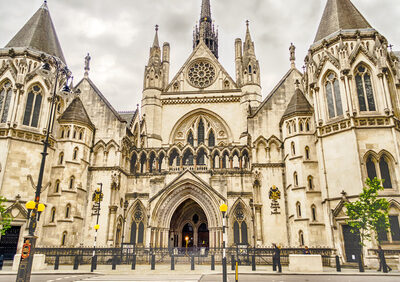
United Kingdom

Breaking news

📧 On June 3, 2021, UK Financial Markets Authority skillfully expresses its position on the interference of cryptocurrencies on criminal interference and consumer protection

►  Money Laundering, Cryptocurrency and the Art of Saying It: the Financial Conduct Authority (FCA) statement of June 3, 2021 and the Art of Saying It. Law is softer than ever.   The English have their way of saying things: thus the Financial Conduct Authority -FCA, the British financial market regulator, published on June 3, 2021 a press release whose expression is remarkable. Its subject matter is crypto-assets and, like in an essay plan à la française, it is built in two parts.  In the part I, it is just mentioned that the deadline for companies in this industry to obtain a registration, which was due to end soon, will be postponed to March 2022. Why? Because almost all of them have not been able to demonstrate their ability not to be resistant to money laundering and other criminal activities. This is in no way presented as a conviction, just the objective cause of a postponement of the date, the time for the Financial Regulatory Authority to better examine the files, themselves to be completed by applicants. The part II concerns consumer protection. The Authority point out that the consumer can lose everything in an extremely risky products and underlines that it is unlikely that this ruined layman will even be able to access the ombudsman to obtain anything. It is purely informative. This is how the English bodies formulate their opinion on cryptoasset. It's elegant (the press is more direct). This also makes it possible not to be covered with insults by the worshipers of these objects: are expressed just a technical delay granted and not a conviction that cryptoasset could be per se  an instrument of criminality, just a probationary difficulty ; and just a regret on the non-access to the ombudsman for these cryptoassets consumers. But if the evolution of the bubble leads these investors to ruine shows, the Regulator will have warned and expressed in advance the regrets he had of the lack of legal technique to protect them. And if the facts show that it is massively through cryptocurrency that the crime is whitewashed, the Regulator has shown everyone his prudence, the delay it will have take to examine the files  and its kind foresight. No one more than a British knows what Liability is.    -        
Articles

FRISON-ROCHE, Marie-Anne

Judge between Platform and Regulator: current example of Uber case in U.K.

Full reference: Frison-Roche, M.-A., Judge between Platform and Regulator: current example of Uber case in U.K., Newsletter MAFR – Law, Compliance, Regulation, 29th of September 2020 Read by freely subscribing the other news of the Newsletter MAFR – Law, Compliance, Regulation   Summary of the news: On 22nd of September 2017, Transport of London (TFL), London Transport Regulator, refused to renew the licence, granted on 31st of May 2012 for 5 years, authorizing Uber to transport people because of criminal offenses committed by Uber's drivers. On 26th of June 2018, The Westminster Court prolonged Uber's licence for 15 months under the condition that the platform prevent the reproachable behaviors of its drivers. After these 15 months, the TFL refused once again to prolonge Uber's licence because of the persistence of aggressions against passengers. Uber, once again, contest this decision before the Westminster Court.  In a decision of 28th of September 2020, the Court observes that during the 15 months, the platform implemented many measures to prevent aggressions, that the level of maturity of these measures has improved over time and that the number of offenses was reduced over the period (passing from 55 in 2018 to 4 in 2020). The Court estimated the the implementation of this actions is sufficient to grant a new licence to Uber.  We can learn three lessons from this decision:  The Compliance obligation is not a result obligation but a mean obligation, which means that it is not reasonable to expect from a crucial operator (Uber, for instance) that it prevent every cases of agression but that it is salient to judge it on the effort it deploys to try to be closer to this ideal situation. Moreover, the crucial operator must be proactive, that is going away from the figure of passive subject of Law who apply measures enacted by the regulator in terms of fighting against aggressions to be an actor of the research of the best way to fight abusive behaviors, internalizing this "monumental goal.  The judge appreciates the violation committed by those whose the firm is responsible "in context", that is evaluates the concrete situation in a reasonable way.  It is the judge who decides in last resort and like the crucial operator, it must be reasonable.    Read to go further: Frison-Roche, M.-A., Firm, Regulator and Judge: thinking Compliance through these three characters, 2018 The report of the Assemblée nationale (French Parliament chamber) on the question 

Working papers

🚧Globalization from the point of view of Law

► Full Reference: Frison-Roche, M.-A., Globalization from the point of view of Law, working paper, May 2017. - 🎤 This working paper initially served as a basis for a synthesis report made in French in the colloquium organized by the Association Henri Capitant in the International German Days on the subject of "Le Droit et la Mondialisation" (Law and Globalization). 📝 Il sert dans un second temps de base à l'article paru dans l'ouvrage La Mondialisation. 📝 it serves as a second basis for the article (written in English, with a Spanish Summary) to be published in the Brezilian journal Rarb – Revista de Arbitragem e Mediação  (Revue d`Arbitrage et Médiation). It uses the Bilingual Dictionary of the Law of Regulation and Compliance. - ► Summary of the Working: Globalization is a confusing phenomenon for the jurist. The first thing to do is to take its measure. Once it has been taken, it is essential that we allow ourselves to think of something about it, even if we have to think about it. For example, on whether the phenomenon is new or not, which allows a second assessment of what is taking place. If, in so far as the law can and must "pretend" to defend every being, a universal claim destined to face the global field of forces, the following question – but secondary – is formulated: quid facere? Nothing ? Next to nothing ? Or regulate? Or can we still claim that the Law fulfills its primary duty, which is to protect the weak, including the forces of globalization? - read the Working Paper below⤵️

Questions

LAW AND HISTORY: In British Law, Is the obligation to drive on the left an arbitrary rule?

One of the reasons why the law has a bad reputation is that it would be "arbitrary". It would be composed of rules, imposing to do this or not to to do that, without strong reasons. Ultimately, what we do does not matter, as long as we all behave in a similar way. No matter the substance in the legal rule which is adopted, the law, is primarily question of order. And a frequent example is the rule to drive on the left or to drive on the right on the roads.. Because it is a legal rule. It is often said that the law is "like that" and it is made just for the sole purpose of ensuring that everyone does the same, so there is no accident . But is that such an arbitrary rule ? Do the British, driving on the left, have no more reason to do so  that French who drive on the right ? If we can show that British legal rule has a more rational basis, then we must end up suspecting that no rule of law is established "without reason."

I.1-35: A regulators perspective on the policies of Audit Regulation

ENGLISH The Financial Reporting Council is the UK’s independent regulator responsible for promoting high quality corporate governance and reporting to foster investment. We set audit standards, conduct audit inspections and run the disciplinary scheme for misconduct. We are responsible for the UK Corporate Governance and Stewardship Codes. ITALIAN Articolo: La prospettiva dei regolatori sulle politiche di regolazione dell’audit Il Financial Reporting Council è l’autorità di regolazione indipendente responsabile della promozione di un corretto governo d’impresa e dell’incoraggiamento degli investimenti nel Regno Unito. Stabiliamo gli standard dell’audit, svolgiamo tutte le operazioni di audit e applichiamo la procedura disciplinare in caso di infrazione. Siamo responsabili del governo d’impresa e dei codici di condotta. SPANISH Artículo: La perspectiva de reguladores en la política de auditas regulatorias.   El “Financial Reporting Council” (FRC – Consejo de Reportaje Financiero) es el regulador independiente británico responsable por asegurar una alta calidad de gobernanza y reportaje corporativo para promover la inversión. Promovemos estándares de auditoría, conducimos inspecciones de auditoría y manejamos el esquema disciplinario para la mala conducta. Somos los responsables para el UK Corporate Governance and Setwardship Codes (la gerencia corporativa británica y los códigos administrativos).     Other translations fortcoming.

I-1.33: Transport, competition and competition policy

Translated Summaries ENGLISH : This article provides an economic perspective on the role played by competition policy in the development of competition in various transport sectors. After a brief reminder of some economic features that are shared by different transport modes, it mainly examines the principles and practical underpinnings of merger control as it is implemented in the present context of rapid consolidation in some transport sectors. Thereby, it stresses some potential shortcomings of the traditional merger regula tion approach in the particular context of transportation services, pointing to an excessive attention paid to potential competition issues on overly narrow relevant markets while largely ignoring global efficiency-enhancing effects of mergers and alliances. ITALIAN Articolo: Trasporti, concorrenza e politica in material di concorrenza. Questo articolo delinea una prospettiva economica del ruolo della politica in materia di concorrenza nello sviluppo della libera concorrenza in vari settori dei trasporti. Dopo un breve richiamo ad alcuni aspetti economici, comuni a diversi tipi di trasporto, l’articolo passa in esame i principi e le pratiche fondamentali del controllo delle concentrazione cosi come applicato nell’attuale contesto di consolidamento di alcuni settori dell’industria dei trasporti. Tuttavia, l’articolo mette in rilievo ugualmente alcune carenze potenziali di un approccio classico della regolazione delle concentrazioni nello specifico settore dei trasporti, tra cui l’eccessiva attenzione data alle questioni di concorrenza potenziale su mercati di dimensioni ridotte e la noncuranza generalizzata degli effetti di alleanze e fusioni in materia di efficacia e di progresso. SPANISH Artículo: Transporte, competencia y política competitiva Este artículo da una perspectiva económica sobre el rol jugador por la política de la competencia y el desarrollo de la competencia en varios sectores de transporte. Después de un breve recordatorio sobre las características económicas compartidas por diferentes modales de transporte, examina principalmente los principios y detalles prácticos de la implementación de control de uniones en el contexto presente de consolidación rápida en algunos sectores de transporte. El artículo pone énfasis algunos de los defectos potenciales del la regulación tradicional de uniones, particularmente en el contexto de los servicios de transporte, indicando un enfoque excesivo a cuestiones de competencia potencial en mercados demasiado estrechos y a la vez ignorando los efectos del mejoramiento de eficacia global de las uniones y las alianzas.    PORTUGUESE Artigo: Transporte, concorrência e política concorrencial Este artigo fornece uma perspectiva econômica sobre o papel exercido pela política concorrencial no desenvolvimento da concorrência em diversos setores de transporte. Após uma breve retomada de conceitos econômicos compartilhados por modos de transporte diferentes, ele examina principalmente os princípios e os problemas práticos do controle como implementado no contexto presente de rápida consolidação em alguns setores de transporte. Assim, ele sublinha alguns potenciais conflitos no enfoque da regulação tradicional no contexto particular de serviços de transporte, apontando para uma atenção excessiva concedida para problemas de concorrência potencial em muito relevantes mercados enquanto são amplamente ignorados os efeitos na eficiência global. Transporte aéreo – Avião – Aeroporto – Aliança – Comportamento anti-concorrencial – Falência – Concorrência – Autoridade de concorrência – Política de concorrência – Concentração – Contrato – Subsídios cruzados – Economia de escala – Eficiência – Ganho de eficiência – Barreiras de entrada – Equilíbrio – Comissão Europeia – Custo fixo – França – Londres – Incentivo – Operador incumbente – Infraestrutura – Interconexão – Investimento – Monopólio legal – Liberalização – Rede de longa distância – Estrutura de mercado – Controle – Firma de multiprodução – Rede – Mercado oligopolístico – Concorrência potencial – Preço – Elasticidade de preço – Trilho – Transporte por trilhos – Mercado relevante – Transporte rodoviário – Segmento – Serviço – Tempo – Transporte – Reino Unido – Comunidade urbana – Veículo.* * Em The Journal of Regulation, estas palavras-chave são fornecidas pelo Editor e não pelo Autor. ………………… Other translations forthcoming.

Texts

United-Kingdom Parliament

UK Bribery Act

Full reference: United-Kingdom Parliament, UK Bribery Act, 2010 Read the text