Professional order

Articles

Interview

💬”Géomètres-experts : une profession qui assume concrètement sa responsabilité territoriale” (Chartered Surveyors: a Profession that takes its territorial responsibility seriously)

► Full reference : M.-A. Frison-Roche, ""Géomètres-experts : une profession qui assume concrètement sa responsabilité territoriale Géomètres-experts : une profession qui assume concrètement sa responsabilité territoriale (Chartered Surveyors: a Profession that takes its territorial responsibility seriously)", interview for JurisHebdo, 27 November 2025 - ► Read the interview  (in French) in which the questions (translated below in English) were answered⤵ - Q.You helped define the raison d'être of the profession of chartered surveyors and its Professional Order. In your opinion, what is its true consequences?   Q. Can the raison d'être become a tool for Compliance or Governance?   Q. What conflicts arise around the source of compliance norms and their implementation?    Q. Is this initiative part of a broader move towards social responsibility?   Q. How can the raison d'être influence the mission of the chartered surveyor, particularly in relation to land and environmental matters?  - ⛏️Further reading on the subject: 🕴🏻M.-A. Frison-Roche, 🎤Designing a raison d'être and explaining it, 2025 🕴🏻M.-A. Frison-Roche, 📝The Monumental Goals of Compliance, the beating heart of Compliance Law, 2023 - 🌐Follow Marie-Anne Frison-Roche on LinkedIn 🌐follow Marie-Anne Frison-Roche on Instagram 🌐Subscribe to the Newsletter MAFR Regulation, Compliance, Law 🌐Subscribe to the video newsletter MAFR Overhang 🌐Subscribe to the Newsletter MaFR Law & Art

Conferences

🎤Concevoir une raison d’être et l’expliciter (Conceiving a raison d’être and explaining it), in🪑🪑🪑Dire sa raison d’être (Expressing your Raison d’être)

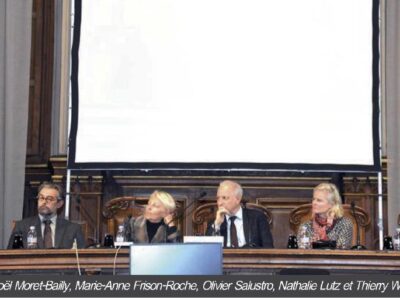
► Full reference : M.-A. Frison-Roche, "Concevoir une Raison d'être et l'explicitre (Conceiving a Raison d'être and explaining it)", speech at the round table discussion "Dire sa Raison d'être (Expressing your Raison d'être)", National Conference of the Géomètres Expert (French Chartered Surveyors), 6 November 2025, Paris. - ► Presentation of the Round Table : This round table opens two days of work bringing together all the leaders, members of the Council of the Order of Chartered Surveyors and Regional Councils of Chartered Surveyors, in the presence of the relevant Ministry, in specific sessions during which the two Raison d'être that have been developed over several years of work and adopted, the Raison d'être of the profession and the Raison d'être of the Order, are presented. 🪑🪑🪑Other participants in the round table discussion, moderated by Hervé Grélard, General Deputy of the French Order of Chartered Surveyors: 🕴🏻Thomas Bonnel, chartered surveyor 🕴🏻Luc Lanoy, chartered surveyor, 🕴🏻Séverine Vernet, Chairwoman of the French Order of Chartered Surveyors - ► Summary of my presentation : Firstly, I spoke to remind everyone what a "raison d'être" is, in itself, and why it is particularly important when the entity that embodies it also constitutes a "profession", the raison d'être expressing this hybrid nature that is destined to endure in today's societies. It moves those who uphold the raison d'être – the professional, the profession, the umbrella organisation that is the Order – from the past to the future. To effectively carry this raison d'être, its bearer cannot remain isolated. Unlike the agent who operates in a market and whose strategy is solitary dynamism against others, the bearer of the raison d'être must find allies who share similar or compatible ideas and develop points of contact to carry out a collective project (the "Monumental Goals"). This is why it is just as important to communicate, explain and share the raison d'être with the outside world. Secondly, as the discussion surrounding the statement of purpose of the French Order of Surveyors and the profession progressed, I was led to point out that the raison d'être is not, or not only, ethical in nature, but also legal in nature, constituting at the very least a legal fact that can become enforceable against those who recognise themselves in it and claim it. This kind of reward, which is the "ex ante responsibility" expressed by the raison d'être and relayed by Compliance Law, anchored in its monumental goals of sustainability and responsibility, justifies that the profession that embraces its raison d'être is not simply an efficient profession in a supply and demand market, but establishes the Order as a regulator. This places both in the long term. - ⛏️Further reading on the subject: (with English Summaries) 🕴🏻M.-A. Frison-Roche, 💬"Géomètres-experts : une profession qui assume concrètement sa responsabilité territoriale", 2025 🕴🏻M.-A. Frison-Roche, 📝A quoi engagent les engagements, 2025 🕴🏻M.-A. Frison-Roche et 🕴🏻S. Vernet, 📝La profession investit le Droit de la compliance et détermine sa Raison d'être, 2023 🕴🏻M.-A. Frison-Roche, 📧Quels sont les points de contact entre la Raison d'être des entreprises et le Droit de la Compliance ?, 2022   - 🌐Follow Marie-Anne Frison-Roche on LinkedIn 🌐follow Marie-Anne Frison-Roche on Instagram 🌐Subscribe to the Newsletter MAFR Regulation, Compliance, Law 🌐Subscribe to the video newsletter MAFR Overhang 🌐Subscribe to the Newsletter MaFR Law & Art

Breaking news

💬La profession investit le Droit de la compliance et détermine sa Raison d’être

🌐follow Marie-Anne Frison-Roche on LinkedIn 🌐subscribe to the Newsletter MAFR Regulation, Compliance, Law - ► Full Reference: M.-A. Frison-Roche & S. Vernet, "La profession investit le Droit de la compliance et détermine sa Raison d’être" ("The profession invests Compliance Law and determines its Raison d'être"), Actualités, Ordre des Géomètres-Experts, July 28, 2023 - 💬read the interview (in French) - ► Presentation of the interview by the Ordre des Géomètres-Experts: "Pour mieux répondre aux défis d’une société en pleine mutation, ainsi qu’aux attentes de ses clients et concitoyens, la profession détermine sa Raison d’être. Séverine Vernet, première Vice-présidente de l’Ordre des géomètres-experts et Marie-Anne Frison-Roche, professeur de droit économique et spécialiste du droit de la régulation et de la compliance, nous expliquent cette démarche innovante." ("To better meet the challenges of a rapidly changing society and the expectations of its customers and fellow citizens, the profession is defining its raison d'être. Séverine Vernet, First Vice-President of the Ordre des géomètres-experts, and Marie-Anne Frison-Roche, Professor of Economic Law and specialist in Regulatory and Compliance Law, explain this innovative approach."). - ► Questions asked (in French):  Séverine Vernet, vous êtes la première Vice-présidente de l’OGE et présidente de la nouvelle commission compliance. Permettez-moi tout d’abord de vous féliciter pour votre réélection. Quels seront les prochains chantiers du mandat qui démarre ? Et votre ambition pour ce nouveau mandat ?​ Marie-Anne Frison-Roche (mafr), vous êtes professeur d’université, spécialiste de droit économique et plus particulièrement du droit de la régulation et de la compliance, vous accompagnez l’Ordre dans la mise en place de cette démarche. Séverine Vernet parle de compliance. Pourriez-vous nous en proposer une définition ?   L’OGE a créé une commission compliance spécifique que vous présidez. Pouvez-vous nous en dire un peu plus ?   Comment passe-t-on d’un organisme de régulation à un acteur de la compliance ? En quoi est-ce innovant pour un Ordre professionnel ?   Comment allez-vous vous y prendre pour engager la profession ?   Quelles seront les étapes pour passer de la régulation à la compliance ? -

Articles

💬Les notaires, agents d’effectivité de la compliance

🌐follow Marie-Anne Frison-Roche on LinkedIn 🌐subscribe to the Newsletter MAFR Regulation, Compliance, Law  - ► Full reference: M.-A. Frison-Roche, "Les notaires "agents d'effectivité de la compliance"", interview with  Sarah Bertone, Solution Notaire Hebdo, 9 February 2023. - 💬read the interview (in French) - ► Presentation of the interview by the journal (in French): "Souvent envisagée comme un ensemble des processus visant à s’assurer du respect de certaines réglementations et/ou valeurs éthiques par les professionnels, la compliance est aujourd’hui encore mal appréhendée. Marie-Anne Frison-Roche, professeur de droit, spécialisée en droit de la régulation et de la compliance, nous explique en quoi le notariat trouve pourtant toute sa place dans cette démarche." - ► Questions asked (in French):  Quelle conception de la compliance doit-on adopter pour être efficace ?  En quoi ces organisations sont-elles clés ? Concrètement, puisque ces organisations anciennes se révèlent si adéquates, ont-elles besoin de s’adapter ? Ne faudrait-il pas que ces professions se modifient ? -

Conferences

🎥 Regulatory Law and Compliance, expression of the Professional Order missions, in🧮Une profession face aux défis de la société

  ► Full Reference: Frison-Roche, M.A., Régulation et Compliance, expression des missions d'un Ordre, in📅 Ordre des Géomètres-experts, Une profession face aux défis de la société, Le Havre, September 15, 2022.  - 📅 read the general of the manifestation de la manifestation (in French) - 🎥watch the one-minute video summarizing the twenty-minutes intervention (in French) - 🚧 read English Presentation of the Working Paper which has been the basis of this conference   ► English Summary of this intervention: Professional orders should not present themselves as exceptions, however legitimate they may be, in relation to a principle, which would be the competitive system, but as the expression of a principle. This principle is expressed by two branches of Law whose importance is constantly growing in European Law, liberal branches which are based on the conception of economic life and the definition of company, turned towards the future: the Regulatory Law and Compliance Law, two branches of Law both related and distinct. Indeed, and this is the topic of the first part, Competition Law conceives professional orders as exceptions since these "corporations" constitute structural agreements. French domestic legal system both consolidates the professional orders by backing them up to the State, which would sub-delegate its powers to them, but involves them in the questioning by the European Union of the States and their tools. Most often the temptation is then to recall with a kind of nostalgia the times when the professional orders were the principle but, except to ask for a restoration, the time would be no more. A more dynamic approach is possible, in accordance with the more general evolution of Economic Law. Indeed, the Professional Order is the expression of a profession, a little-exploited concept in Economic Law, over which the Order exercises the function of "Second-level Regulator", the public authorities exercising the function of "First-level Regulator". The Banking and Financial Regulatory Law is built in this way and operates thank to that, at national, European, and global level. This is what should be linked. The Professional Orders therefore have the primary function of spreading a "Culture of Compliance" among the professionals they supervise and beyond them (clients and stakeholders). This culture of Compliance is developed regarding the missions which are concretized by the professionals themselves. Therefore, the second part of the Working Paper deals with the legal evolution of the notion of "Mission" which has become central in Economic and General Law, through the technique of the mission-based company. However, there are multiple points of contact between the raison d'être, the company with a mission and Compliance Law as soon as the latter is defined by the concrete and overly ambitious goals that it pursues. : the Monumental Goals. Each structure, for example the French Ordre des Géomètres-Experts, is legitimate to set the Monumental Goal that it pursues and that it inculcates, in particular the conception of territory and the living environment, joining what unites all the Monumental Goals of Compliance: concern for others. The French Ordre des Géomètres-Experts, is adequate because it has a more flexible relationship, both tighter and broader, with the territory than the State itself. By instilling this in professionals, the Professional Order develops in the practitioner an "ex ante responsibility", which is a pillar of Compliance Law, constituting both a charge and a power that the practitioner exercises, and of which the Professional Order must be the supervisor. - ► to go further ⤵️  Frison-Roche, M.-A., 📘Compliance Monumental Goals, 2021 Frison-Roche, M.-A., 💻Appliquer la notion de "Raison d'être" à la profession du Notariat, 2021 -

Working papers

🚧 Regulatory and Compliance Law, expression of the missions of a professional Order

🌐 follow Marie-Anne Frison-Roche on LinkedIn 🌐 subscribe to the Newsletter MAFR Regulation, Compliance, Law  - ► Full reference: M.-A. Frison-Roche, Regulatory and Compliance Law, expression of the missions of a professional Order, Working Paper, July 2022. - 🎤 This Working Paper has been done as basis for an intervention in the Annual Congress of the French Professional Order of the Géomètres-Experts, September 15, 2022 (conference given in French)  - 🎥watch the short presentation of this speech (in French)  - 🎥watch the full speech given on 15 September 2022, based on this working paper - ► Summary of the Working Paper: Professional orders should not present themselves as exceptions, however legitimate they may be, in relation to a principle, which would be the competitive system, but as the expression of a principle. This principle is expressed by two branches of Law whose importance is constantly growing in European Law, liberal branches which are based on the conception of economic life and the definition of company, turned towards the future: the Regulatory Law and Compliance Law, two branches of Law at the same time related and distinct. Indeed, and this is the topic of the first part, Competition Law conceives professional orders as exceptions since these "corporations" constitute structural agreements. French domestic legal system both consolidates the professional orders by backing them up to the State, which would sub-delegate its powers to them, but involves them in the questioning by the European Union of the States and their tools. Most often the temptation is then to recall with a kind of nostalgia the times when the professional orders were the principle but, except to ask for a restoration, the time would be no more. A more dynamic approach is possible, in accordance with the more general evolution of Economic Law. Indeed, the Professional Order is the expression of a profession, a little-exploited concept in Economic Law, over which the Order exercises the function of "Second-level Regulator", the public authorities exercising the function of "First-level Regulator". The Banking and Financial Regulatory Law is built in this way and operates thank to that, at national, European, and global level. This is what should be linked. The Professional Orders therefore have the primary function of spreading a "Culture of Compliance" among the professionals they supervise and beyond them (clients and stakeholders). This culture of Compliance is developed regarding the missions which are concretized by the professionals themselves. Therefore, the second part of the Working Paper deals with the legal evolution of the notion of "Mission" which has become central in Economic and General Law, through the technique of the mission-based company. However, there are multiple points of contact between the raison d'être, the company with a mission and Compliance Law as soon as the latter is defined by the concrete and overly ambitious goals that it pursues. : the Monumental Goals. Each structure, for example the French Ordre des Géomètres-Experts, is legitimate to set the Monumental Goal that it pursues and that it inculcates, in particular the conception of territory and the living environment, joining what unites all the Monumental Goals of Compliance: concern for others. The French Ordre des Géomètres-Experts, is adequate because it has a more flexible relationship, both tighter and broader, with the territory than the State itself. By instilling this in professionals, the Professional Order develops in the practitioner an "ex ante responsibility", which is a pillar of Compliance Law, constituting both a charge and a power that the practitioner exercises, and of which the Professional Order must be the supervisor. - 🔓read the Working Paper⤵️

Glossary

Professional body

Professions play a key role in self-regulatory systems, especially the liberal professions, as soon as they are respected by companies and professionals. Professions are increasingly institutionalized, either by orders or by professions, which form networks or international associations. In this way, unlike the States, which are challenged by their borders, the professions are adapted to globalization because they develop global associations that adopt common technical standards and ethical charters of behavior. The other side of the coin is probably procedural, in the transparency of procedures and sanctions, since professional organizations take responsibility for sanctioning their own members themselves, exposing them to capture or even pushing them to conflict of interest. Professions such as banking and finance must now demonstrate that they can create the confidence they need and fuel their industry.

Glossary

Liberal profession

The liberal professions such as lawyers, doctors or accountants are organized into professional bodies and consider that they can not be reduced to mere companies operating in markets because the service they offer includes a human and moral dimension, translated by ethics, under the supervision of their internal professional organization, particularly through ex ante their power to adopt their own standards of behavior, and in ex post, the disciplinary power of their professional order. Competition law refutes this organization from the Old Regime and simply considers the "markets of legal or medical services, firms having to compete with each other and not having to organize the sector, by  or fixing Numerus clausus, etc. In the perspective of regulation, the liberal professions are, on the contrary, the ones most pertinento organize self-regulation in a globalized economy from the moment they give rise to a credible surveillance system and thus deserve the confidence of customers and public regulators.