Person

Working papers

🚧 YES TO THE PRINCIPLE OF WILL, NO TO PURE CONSENTS

► Complete reference: Frison-Roche, M.-A., Yes to the principle of the will, No to the pure consents, working document for an article written in French Oui au principe de volonté, Non aux consentements purs, to Mélanges dedicated to Pierre Godé, 2018, available at #lien192 en / article / yes-in-principle-of-the-desire-not in the consent /   ► Summary: Pierre Godé devoted his thesis to defend the freedom of the human being, freedom that the person exercises by showing his will. This will manifests itself, even tacitly, by this trace of "consent". In a liberal society, politically and economically, that is to say a society based on the principle of the will of the person, consent must always be defined as the manifestation of the will, this link between consent and will being indivisible ( I). But by a perversion of liberalism, "consent" has become an autonomous object of the freedom of the person, mechanical consent that has made it possible to transform human beings into machines, machines to desire  and machines to be desired, in a world of " pure consents","where we keep clicking, consenting to all without ever wanting. This consent, which has been split from the free will of the person, is the basis of the markets of the Human and the illiberal democracies, threats against human beings (II). The future of Law, in which Pierre Godé believed, is to continue to aspire to protect the human being and, without countering the free will of the human being as the movement of the law of the consumption had been tempted to, to renew with a liberal movement of Law and to fight against these systems of pure consents (III).   🔻read the article below (in French).

Working papers

🚧 To protect human beings, the ethical imperative of the legal concept of person

►   This working document was intended to serve as a support for a conference pronounced in French in the conference Droit et Ethique ( Law & Ethics) of May 31, 2018 in a symposium organized by the Court of Cassation and the Association Française de Philosophie du Droit.  French Association of Philosophy of Law on the general theme Law & Ethics. See a general presentation of this conference.  Rather, it has served as a support for the article to be published in the Archives de Philosophie du Droit (APD). This article is written in French.    ►   Summary: It is through the Law that the human being has acquired a unity in the West (I). What religion could have done, the Law also did by posing on each human being the indetachable notion of him of "person" (I.A). But this is what is challenged today, not the personality and the power that the human being has to express his freedom but the unity that implies in the disposition that we have of ourselves in repelling the desire that others have always had to dispose of us. Current law tends to "pulverize" human beings into data and transform into neutral legal services what was considered before as the devouring of others. The legal concept of "consent", ceasing to be proof of a free will but becoming an autonomous concept, would suffice (I.B.). To prevent the reigning of the "law of desires", which merely reflects the adjustment of forces, we must demand here and now the ethical sovereignty of Law, because Law can not be just just be just the interests adjustment (II). We can form this request if we do not want to live in an a-moral universe (II.A), if we see that the unity of the person is the legal invention that protects the weak human being (II.B.). If we admit this imperative, then we must finally ask who in the legal system will express and impose it, especially the legislator or the judge, because we seem to have lost the ability to recall this principle of the Person on which the West was so centered. But the principles that are no longer said disappear. There would then remain only the case-by-case adjustment of interests between human beings in the world field of particular forces. At this yardstick, Law would be more than a technique of securisation of particular adjustments. Law would be reduced at that and would have lost its link with Ethics. (II.C). .   

Working papers

The destruction of the de jure distinction between person and things: fabulous gain, catastrophic gain

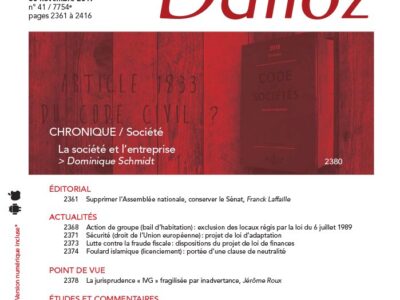
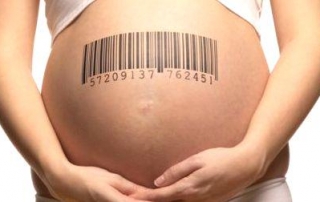
This working paper serves as a support for an article published in French in the Recueil Dalloz. In Lisbon, in the Web Summit of November 2017, a machine covered with a skin-like material and a sound-producing device gave a speech in public at this conference on digital. For example, a French article tells the event by this title : Le premier robot citoyen donne sa propre conférence au web summit  (The first citizen robot gives his own conference to the web summit). Some time later, reports show the same robot walking and taking more than 60 facial expressions, the text laudatif that accompanies the images designating the automaton by the article: she.1It is true that in 1966, the BBC already presented a sort of robot being the "ideal" servant and designating it by the article "she".. The machine, which falls legally within the category of "things", is thus presented as a person. Let's look elsewhere. Women, who are human beings, sign contracts by which they agree to give birth to children, with whom they claim they have no connection, that they are not mothers, that they will hand them over immediately at the exit of their belly to those who desired their coming, this desire for parenthood creating by hitself the true and only link between the child and his "parents of intent". The mother-carrier is often openly referred to as "oven". The woman, who falls legally within the category of the "person", is thus presented as a thing. The two sensational phenomena are of the same nature. They call two questions: 1.Why? The answer is: money. Because both are the result of the new construction of two fabulous markets by supply. 2.How? The answer is: by the destruction of the distinction between the person and things. The distinction between person and things is not natural, it is legal. It is the base of the western legal systems, their summa divisio. If this distinction disappears, and for money to flow, it must actually disappear, then the weak human being will become the thing of the strong one. Read below the developments.

Analyses

Hayao Miyazaki explains that the drawings of video games made by machines are “insults to life”

Through the Open Culture website, it is possible to listen to Hayao Miyazaki who, in March 2017, claimed that video games whose drawings are made on Artificial Intelligence basis are "insults to life". Read below the history, the words that the Master has held, his conception of what is creation and "truly human" work, which is echoed by the definitions given by Alain Supiot, who also reflected on what robots do. This brings us back to the very notion of "creation" and creative work.   - Read below