Working papers
Working Paper serving as the basis for a contribution to a collective book dedicated to a Friend
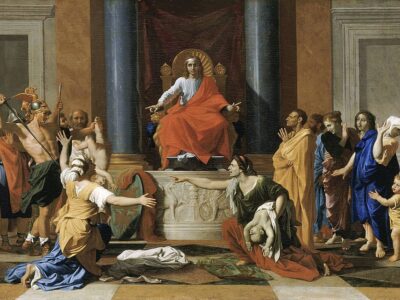
► Full Reference: M.-A. Frison-Roche, If King Solomon's probationary strategy hadn't worked, Working Paper, October 2025. - 📝 This Working Paper is the basis of the article published in 2026 in the collective book dedicated to Professor Pierre Crocq. - ► Summary of this Working Paper: As renowned and significant in biblical scholarship as it is in legal culture and imagination, Solomon’s Judgement is a procedural measure, an evidential stratagem (I). But even a King cannot be certain of the success of an investigative measure that his authority allows him to impose; nothing guarantees the success of the evidential stratagem he has devised, that is to say, the discovery of the truth. The investigative measure he devised presupposes a maternal love that leads the woman – who might prefer to continue disputing – to choose instead not to keep the child and to leave him in a state of death, a mere inert prey to the claim of appropriation made by the plaintiff. It is the woman’s virtue that enables the Judge’s wisdom. The evidence stratagem might not have worked (II). This is scarcely considered, as King Solomon is always portrayed as wise and the mother as preferring the child to herself. But if we step outside the Book of Kings, where virtue reigns – that of the mother as well as that of the judge – to confront the passion of the woman who smothered her newborn in the night and now seeks the force of justice to seize the second, one might reflect, whilst wandering through the lobby of a courthouse, that it is all too often the case that adults put themselves before children. What if the second mother had put herself before the child? What would have happened if the judge’s order, already being carried out, had not been halted by the virtue of the defendant? (III). What would the King then have done to exercise his office as Judge justly, since the truth would not have been accessible to him? (IV). If one changes an element of the narrative, because justice is human, because passions drive the parties, because children are often the silent victims on both sides, is justice still possible? - 🔓read the developments below⤵️