Notary

Conferences

introductory conference

🎥Le juriste, requis et bien placé pour le futur ((The lawyer needed and well placed for the future), in 🧮Les Eclaireurs du Droit

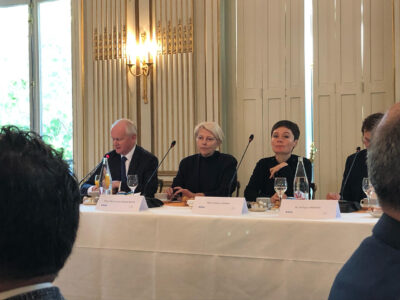
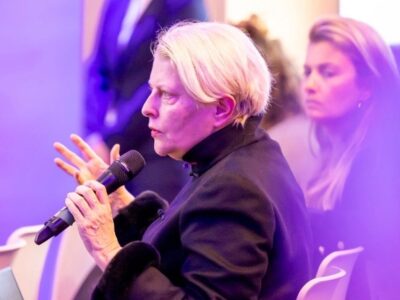
► Full Reference : M.-A. Frison-Roche, "Le juriste, requis et bien placé pour le futur" (The lawyer needed and well placed for the future), in Groupe Lamy Liaisons, Les Éclaireurs du Droit,  Hôtel de l’Industrie, Place Saint Germain des Près, Paris, 11 March 2025, 16h. - This speech opens a series of 4 workshops on the following themes: – The challenge of Trust – The challenge of Risk – The challenge of Transmission – The challenge of  leadership - 🧮see the full programme of this manifestation (in French) - ⬜see the slides basis made for this speech (which were not projected) (in French) - 🎥 watch the short video made after the conference (in French) - ► English Summary of this introductory conference: The 4 sessions will address the successive themes of trust, risk, transmission and leadership, which legal professionals are facing, particularly as a result of algorithms. For an introductory analysis, it is possible to make a distinction inside the Future. The future has a part of Stability: the jurist can contribute to this stability, i.e. the preservation of the past (I). The future has an part of Predictability: the lawyer must increase this part in the present itself (II). The future has a part of radical novelty (III): at this point, which may correspond to a precipice, if no one had imagined it, the lawyer can also be there. Until now, we think of lawyers more in the first 2 hypotheses, less in this one. Is it pertinent? In each of these dimensions, the algorithmic system (AI) is presented as replacing or dominating the human. In each of these 3 dimensions, Lawyers must be present, as they form a community that must remain united around the very idea of Law (algorithms do not conceive ideas, it is humans who transmit them to other humans, and the algorithmic system must remain a medium). As far as the Stability of the future is concerned, the Lawyer can and must contribute to it, in particular through Transmission, because there is less of a blank page as algorithmic 'creation' is based on past data, and training, where the human being will be all the more central as machines have to be handled. As far as the Predictability of the future is concerned, it is a question of assessing the Risks, whether specific or systemic, legal or non-legal, in order not to take them or on the contrary to take them. The more the Lawyer is involved in risk-taking, the more he or she will be in the right place, before and during the action. As far as the Radically New future is concerned, it is not easy to qualify AI as such or not, but now the possible disappearance of the Rule of Law in the United States is one of them. All Lawyer are expected. Every lawyer must have two virtues (which the algorithm cannot not have): the virtue of Justice and the virtue of Courage. It is these virtues that we must pass on and share.       - Current events have led me to devote the time available to me to focusing on a single perspective, the third, to say what is expected of Lawyers if we perceive something radically new in the near future, what everyone does. Indeed, in the United States, on the one hand there is a head of state for whom the Law does not exist and who uses the power of regulation to express his absolute indifference to other states, companies and human beings, and on the other an entrepreneur who claims that he is going to become the master of algorithmic technology, a system over which he already wields great power. Faced with this Radical Novelty, we expect the community of Lawyers, all lawyers, whatever their place, their technical mastery, their level, their nationality, to speak out and say No. As Kelsen, Cassin or Ginsberg did. Say No and help others to say No. To do this, Lawyers, as human beings who care about other human beings, must be aware of the twofold virtue expected of them: the virtue of commitment to Justice and the virtue of Courage.       - 🌐follow Marie-Anne Frison-Roche sur LinkedIn 🌐follow Marie-Anne Frison-Roche on Instagram 🌐subscribe to the Newsletter MAFR Regulation, Compliance, Law 🌐subscribe to the Video Newslette MAFR Surplomb

Articles

💬Les notaires, agents d’effectivité de la compliance

🌐follow Marie-Anne Frison-Roche on LinkedIn 🌐subscribe to the Newsletter MAFR Regulation, Compliance, Law  - ► Full reference: M.-A. Frison-Roche, "Les notaires "agents d'effectivité de la compliance"", interview with  Sarah Bertone, Solution Notaire Hebdo, 9 February 2023. - 💬read the interview (in French) - ► Presentation of the interview by the journal (in French): "Souvent envisagée comme un ensemble des processus visant à s’assurer du respect de certaines réglementations et/ou valeurs éthiques par les professionnels, la compliance est aujourd’hui encore mal appréhendée. Marie-Anne Frison-Roche, professeur de droit, spécialisée en droit de la régulation et de la compliance, nous explique en quoi le notariat trouve pourtant toute sa place dans cette démarche." - ► Questions asked (in French):  Quelle conception de la compliance doit-on adopter pour être efficace ?  En quoi ces organisations sont-elles clés ? Concrètement, puisque ces organisations anciennes se révèlent si adéquates, ont-elles besoin de s’adapter ? Ne faudrait-il pas que ces professions se modifient ? -

Videos

🎤Compliance Law in Entreprise: theory and practices, in 📅Notarial engineering

🌐 follow Marie-Anne Frison-Roche on LinkedIn 🌐subscribe to the Newsletter MAFR Regulation, Compliance, Law  - ► Full Reference: Frison-Roche, M.A., La compliance en entreprise : aspects théoriques et pratiques, in 118ième Congrès des Notaires, L'ingénierie notariale, Marseilles, October 12, 2022.  This Masterclass is given in French. - ► English Presentation of this Masterclass: This two-hour Masterclass aims to introduce, regarding the role of the Notary in companies and vis-à-vis them, Compliance Law.  This discover of Compliance Law is built on a description of the new Compliance techniques of which companies are the object or the source (I) then, faced with such a mass of new standards, because this is incomprehensible and uncontrollable if these so many regulations are not "conceived", explain what can give meaning to this Compliance Law, namely the "Monumental Goals" which animate it and give it meaning (II). Like the Regulation Law that Compliance prolongs, Compliance Law is a teleological branch of law that requires that the application and interpretation of norms be done by these Monumental Goals. -   This Masterclass is given in French: see some technical references in English ⤵️

Conferences

🎥 Regulatory Law and Compliance, expression of the Professional Order missions, in🧮Une profession face aux défis de la société

  ► Full Reference: Frison-Roche, M.A., Régulation et Compliance, expression des missions d'un Ordre, in📅 Ordre des Géomètres-experts, Une profession face aux défis de la société, Le Havre, September 15, 2022.  - 📅 read the general of the manifestation de la manifestation (in French) - 🎥watch the one-minute video summarizing the twenty-minutes intervention (in French) - 🚧 read English Presentation of the Working Paper which has been the basis of this conference   ► English Summary of this intervention: Professional orders should not present themselves as exceptions, however legitimate they may be, in relation to a principle, which would be the competitive system, but as the expression of a principle. This principle is expressed by two branches of Law whose importance is constantly growing in European Law, liberal branches which are based on the conception of economic life and the definition of company, turned towards the future: the Regulatory Law and Compliance Law, two branches of Law both related and distinct. Indeed, and this is the topic of the first part, Competition Law conceives professional orders as exceptions since these "corporations" constitute structural agreements. French domestic legal system both consolidates the professional orders by backing them up to the State, which would sub-delegate its powers to them, but involves them in the questioning by the European Union of the States and their tools. Most often the temptation is then to recall with a kind of nostalgia the times when the professional orders were the principle but, except to ask for a restoration, the time would be no more. A more dynamic approach is possible, in accordance with the more general evolution of Economic Law. Indeed, the Professional Order is the expression of a profession, a little-exploited concept in Economic Law, over which the Order exercises the function of "Second-level Regulator", the public authorities exercising the function of "First-level Regulator". The Banking and Financial Regulatory Law is built in this way and operates thank to that, at national, European, and global level. This is what should be linked. The Professional Orders therefore have the primary function of spreading a "Culture of Compliance" among the professionals they supervise and beyond them (clients and stakeholders). This culture of Compliance is developed regarding the missions which are concretized by the professionals themselves. Therefore, the second part of the Working Paper deals with the legal evolution of the notion of "Mission" which has become central in Economic and General Law, through the technique of the mission-based company. However, there are multiple points of contact between the raison d'être, the company with a mission and Compliance Law as soon as the latter is defined by the concrete and overly ambitious goals that it pursues. : the Monumental Goals. Each structure, for example the French Ordre des Géomètres-Experts, is legitimate to set the Monumental Goal that it pursues and that it inculcates, in particular the conception of territory and the living environment, joining what unites all the Monumental Goals of Compliance: concern for others. The French Ordre des Géomètres-Experts, is adequate because it has a more flexible relationship, both tighter and broader, with the territory than the State itself. By instilling this in professionals, the Professional Order develops in the practitioner an "ex ante responsibility", which is a pillar of Compliance Law, constituting both a charge and a power that the practitioner exercises, and of which the Professional Order must be the supervisor. - ► to go further ⤵️  Frison-Roche, M.-A., 📘Compliance Monumental Goals, 2021 Frison-Roche, M.-A., 💻Appliquer la notion de "Raison d'être" à la profession du Notariat, 2021 -