► Full Reference: J.-B. Blanc, “
La loi, source de l’Obligation de Compliance” (“The Law, source of the Compliance Obligation”),
in M.-A. Frison-Roche (ed.),
L’Obligation de Compliance,
Journal of Regulation & Compliance (JoRC) and Lefebvre-Dalloz, “Régulations & Compliance” Serie, 2025, pp. 393-400. -
read the general presentation of the book,
L’Obligation de Compliance, in which this article is published -
► This article is written in French. English summary of this contribution (done by the
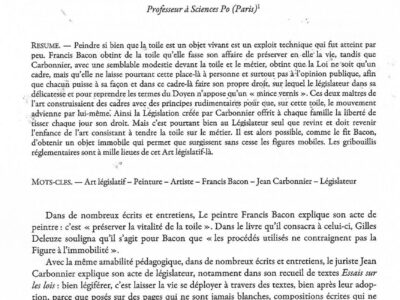
Journal of Regulation & Compliance – JoRC): From the Legislator’s perspective, the author considers that, in matters of Compliance, primacy must be given to the Legislator, since the definition of Compliance as the “privatisation of Regulation” is debatable and must in any event not result in dispossessing the Legislator of its power and its duty to lay down the essential rules. Secondly, developing what could be described as “legal Compliance”, the author stresses that essential laws, notably the so-called “Sapin 2” law, have laid down the fundamental principles, because this is the prerogative of the Legislator, Article 17 of the “Sapin 2” law prescribing what the company must do. It is thus the application of the law that is delegated, and not legislative power itself. The same logic is found in the so-called
Egalim 3 law. Thirdly, the author stresses that it is again the Legislator that frames the way in which companies will implement the system of principles that it has designed and imposed. Indeed, the effectiveness of the “Monumental Goals” is a matter for the Legislator, who must look at the efficacy of the system put in place by the companies subject to it. The author concludes that Compliance can be seen as an extension of the legislative will, whereby Parliament, through its laws, entrusts companies with part of the responsibility for Regulation, whose implementation by them it frames, which obliges Parliament itself to adapt and evolve constantly. -
🦉This article is available in full text to those registered for Professor Marie-Anne Frison-Roche’s courses -