Legislative Art

Articles

Illustrated Law🎬Law & Cinema

🎭𝐅𝐢𝐜𝐭𝐢𝐨𝐧🎬The talks in the Town: what can a law professor do about it?”

  ► Full reference : M.-A. Frison-Roche, "Fiction🎬The talks in the Town  : what can a law professor do about it?", article from the Newsletter Law & Art, December 2025. - 🎬Watch the trailer - ► Summary of this article : This 1942 film seems to have left little trace. However, the main character, an innocent man whom the villain manipulates into being designated as the culprit by the small town's population, leading him to behave like a guilty person, is played by Cary Grant. This film inspired lawyers even more. And even more so law professors, because it was a law professor, the dean of Harvard Law School, who saved the innocent man who had been caught in the trap. And even more so today, since it was by playing on rumours, by creating them from the outset, in what we would call disinformation, that the powerful villain intended to win and, in the process, become mayor of the town, after escaping bankruptcy by setting fire to his own factory, a crime he blames on the innocent man thrown to the wolves of public opinion as citizens gather in the square. It's almost as if we were there… - 🔓read the article below⤵️ - 🌐Follow Marie-Anne Frison-Roche on LinkedIn 🌐follow Marie-Anne Frison-Roche on Instagram 🌐Subscribe to the Newsletter MAFR Regulation, Compliance, Law 🌐Subscribe to the video newsletter MAFR Overhang 🌐Subscribe to the Newsletter MaFR Law & Art

Articles in The Journal of Regulation & Compliance « JoRC »

BLANC, Jean-Baptiste🕴️

📝La loi, source de l’Obligation de Compliance (The Law, source of the Compliance Obligation), in 🕴️M.-A. Frison-Roche (ed.), 📕L’Obligation de Compliance

► Full Reference: J.-B. Blanc, "La loi, source de l’Obligation de Compliance" ("The Law, source of the Compliance Obligation"), in M.-A. Frison-Roche (ed.), L'Obligation de Compliance, Journal of Regulation & Compliance (JoRC) and Dalloz, "Régulations & Compliance" Serie, 2025, pp. 393-400. - 📕read the general presentation of the book, L'Obligation de Compliance, in which this article is publish - ► Summary of this contribution  (done by the Journal of Regulation & Compliance) : - 🦉This article is available in full text to those registered for Professor Marie-Anne Frison-Roche's courses -

Working papers

Working Paper

🚧Will, Heart and Calculation, the three traits encercling the Compliance Obligation

► Full Reference: M.-A. Frison-Roche, The will, the heart and the calculation, the three traits encercling the Compliance Obligation, March 2024. - 📝 This Working Paper is the basis for the contribution "The will, the heart and the calculation, the three traits encercling the Compliance Obligation", in📘Compliance Obligation. - ► Summary of this Working Paper: There is often a dispute over the pertinent definition of Compliance Law, but the scale and force of the resulting obligation for the companies subject to it is clear.  It remains difficult to define. First, we must not to be overwhelmed by the many obligations through which the Compliance Obligation takes shape, such as the obligation to map, to investigate, to be vigilant, to sanction, to educate, to collaborate, and so on. Not only this obligations list is very long, it is also open-ended, with companies themselves and judges adding to it as and when companies, sectors and cases require.  Nor should we be led astray by the distance that can be drawn between the contours of this Compliance Obligation, which can be as much a matter of will, a generous feeling for a close or distant other in space or time, or the result of a calculation. This plurality does not pose a problem if we do not concentrate all our efforts on distinguishing these secondary obligations from one another but on measuring what they are the implementation of, this Compliance Obligation which ensures that entities, companies, stakeholders and public authorities, contribute to achieving the Goals targeted by Compliance Law, Monumental Goals which give unity to the Compliance Obligation.  Thus unified by the same spirit, the implementation of all these secondary obligations, which seem at once disparate, innumerable and often mechanical, find unity in their regime and the way in which Regulators and Judges must control, sanction and extend them, since the Compliance Obligation breathes a common spirit into them.  In the same way that the multiplicity of compliance techniques must not mask the uniqueness of the Compliance Obligation, the multiplicity of sources must not produce a similar screen. Indeed, the Legislator has often issued a prescription, an order with which companies must comply, Compliance then often being perceived as required obedience. But the company itself expresses a will that is autonomous from that of the Legislator, the vocabulary of self-regulation and/or ethics being used in this perspective, because it affirms that it devotes forces to taking into consideration the situation of others when it would not be compelled to do so, but that it does so nonetheless because it cares about them. However, the management of reputational risks and the value of bonds of trust, or a suspicious reading of managerial choices, lead us to say that all this is merely a calculation. Thus, the contribution sets out to identify the Compliance Obligation by recognising the role of all these different sources. It emphasises that, in monitoring the proper performance of technical compliance obligations by Managers, Regulators and Judges, insofar as they implement the Compliance Obligation, it is pointless to limit oneself to a single source or to rank them abruptly in order of importance. The Compliance Obligation is part of the very definition of Compliance Law, built on the political ambition to achieve these Monumental Goals of preserving systems – banking, financial, energy, digital, etc. – in the future, so that human beings who cannot but depend on them are not crushed by them, or even benefit from them. This is the teleological yardstick by which the Compliance Obligation is measured, and with it all the secondary obligations that give it concrete form, whatever their source and whatever the reason why the initial standard was adopted. In order to define Compliance's Obligation, the contribution endeavours to recognise the contribution of all these three sources: Will, Heart and Calculation.  - 🔓read the developments below ⤵️ - 🌐follow Marie-Anne Frison-Roche on LinkedIn 🌐follow Marie-Anne Frison-Roche on Instagram 🌐subscribe to the Newsletter MAFR Regulation, Compliance, Law  🌐subscribe to the Video Newsletter MAFR Surplomb

Conferences

🎤Les voies d’innovations juridiques face aux nouveaux “défis climatiques” (“Innovative legal solutions to the new “climate challenges””), in 🧮Nouveaux défis – Regards croisés : Droit, Économie et Finance. Quel Droit face au Changement Climatique ? (“New challenges – Crossed perspectives : Law, Economics and Finance. What Law in the Face of Climate Change?”)

► Full Reference: M.-A. Frison-Roche, "Les voies d'innovations juridiques face aux nouveaux "défis climatiques" ("Innovative legal solutions to the new "climate challenges""), in C. Arnaud, O. de Bandt et B. Deffains (dir.), Nouveaux défis – Regards croisés : Droit, Économie et Finance. Quel Droit face au Changement Climatique ? (("New challenges – Crossed perspectives : Law, Economics and Finance. What Law in the Face of Climate Change?"), Banque de France (French Central Bank) and CRED/Paris Panthéon-Assas University, Paris, Centre de Conférence de la Banque de France, April 2, 2024 - 🧮See the full programme of this event - 🔲see the slides, basis of this conference (in French) - ► Summary of this conference: In response to the question of how the Law can produce 'innovations' to meet the 'climate challenges', the process is based on the three traditional sources of Law, which are, firstly, laws and regulations, secondly, the commitments of individuals, mainly contracts, and thirdly, court rulings. At first sight, the Law in its traditional conception and practice is weak in the face of climate change. This weakness is inherent in the nature of climate change, which is at once future, global and systemic, in the face of these three sources of Law, which do not address all three dimensions at once. The scale of the legal innovation required to ensure that one or more articulated sources can grasp the future, the global and the systemic is therefore clear. And yet this is what is happening. As far as laws and regulations are concerned, they do not seem very appropriate because they are, by their very nature, a territorial limit, and international treaties are very difficult to negotiate. The interweaving of European regulations, for example the CSRD and the CS3D, which mirror each other, may be more effective. As far as 'commitments' are concerned, a concept which in Law is not very precise outside of contracts and liability cases📎1🕴️M.-A. Frison-Roche, 📝What a commitment is, in 🕴️M.-A. Frison-Roche (ed.), 📘Compliance Obligation, 2024., contracts are above all a means for companies to fulfill their legal obligations, and a contract always implies a judge. At first sight, however, the judge is the least well placed to respond to 'climate challenges', particularly in France where he is said or wished to be powerless, where he rules on the past and where, especially the civil judge, he settles a one-off dispute between two singular parties. But a major change has occurred with the emergence of a new branch of law: the Compliance Law, a teleological branch of Law whose legal normativity is lodged in the Monumental Goals📎2🕴️M.-A. Frison-Roche, 📝Compliance Monumental Goals, beating heart of Compliance Law, in 🕴️M.-A. Frison-Roche (ed.), 📘Compliance Monumental Goals, 2023. that it pursues, namely the preservation of systems, for example the climate system. In France, the so-called "Sapin 2" law in 2016, followed by the so-called "Vigilance" law in 2017, illustrate this. And the Judge is at the centre of it all. In this global, systemic, extraterritorial perspective, the object of which is the future – Compliance Law is, moreover, rejected by many legal experts – the legislative innovation is major. Indeed, the law of 23 March 2017, known as "Vigilance" designated large companies, because they are "powerful", because they are "in a position to act" to "detect and prevent" breaches of the environment and human rights. The 2017 law copied the "compliance tools"📎3🕴️M.-A. Frison-Roche (ed.), 📘Compliance Tools, 2021. put in place by the Sapin 2 anti-corruption law: risk mapping, plans, alerts, audits, internal investigations, and so on.  Only large companies are subject to the Compliance Law, notably the Vigilance Law, since they are the only ones in a position to act, in this case "parent companies or principals", and borders are no longer limits since the obligation, creating personal liability for the company📎4🏛️Conseil constitutionnel (French Constitutional Council), March 23, 2017, decision No. 2017-750 DC, Loi relative au devoir de vigilance des sociétés mères et des entreprises donneuses d’ordre., extends throughout the "value chain". The notion and fact of "systemic dispute" is emerging before the courts. In France, the Paris Court of First Instance has exclusive jurisdiction. European legislation is proving more difficult to draw up, because although it is compulsory to provide information on these "extra-financial" subjects (CSRD), the directive on the duty of vigilance, which has just been adopted, does not go any further than the French law of 2017. On the second point, that of commitments, we are only at the beginning. Judges do not transform ethical statements into "unilateral legal commitments", and vigilance does not transform company law into co-management. But contracts do form a global network through which companies adjust their various legal obligations. This is why arbitrators, the only "global judges", will soon be involved in this systemic litigation📎5🕴️M.-A. Frison-Roche (ed.), 📘Compliance Obligation, 2024, of which a chapter is dedicated to "International Arbitration in support of the Compliance Obligation"., and more general case law is to come on "compliance contracts and clauses"📎6🕴️M.-A. Frison-Roche, 🚧Compliance contract, compliance clauses, 2022 ; 🕴️M.-A. Frison-Roche (ed.), 📘Contrat and Contract, 2024.. But the most innovative aspect undoubtedly comes from the courts. Perhaps and notably in France because it is from where we least expect it, the civil courts, that the imagination comes, but also the guarding of the great principles of the Rule of Law, because for the moment the case law is reasonable. This innovation has not come about proprio motu: the judges are not taking action, it is the NGOs that are conducting a kind of litigation policy, systematically giving formal notice to the major energy companies, but also to the major banks and insurers on climate issues, alleging non-compliance with their vigilance plans. The interim relief judge at the Paris Court of First Instance must then provide answers in systemic disputes, of which the so-called "Total Uganda"📎7🏛️Tribunal judiciaire de Paris (Paris First Instance Civil Court), summary rulings, February 28, 2023, No. RG 22/53943 and 22/53942, Total Ouganda. case is an example. The courts are demonstrating a great deal of innovation. The Court of First Instance's interim relief judge has appointed amici curiae📎8🕴️N. Cayrol, 📝L'amicus curiae, mesure d'instruction ordinaire, 2022., the Paris Court of Appeal has set up a specialised chamber📎9On the creation on the new 5-12 Chamber, Contentieux émergent – Devoir de vigilance et responsabilité écologique see 🕴️J. Boulard, 💬Contentieux systémique : "Il est important, pour les magistrats, de rester au plus près des réalités" (Systemic litigation: "It is important for judges to remain as close as possible to reality"), March 28, 2024., and training conferences have been set up on this "Emerging Systemic Litigation"📎10🕴️M.-A. Frison-Roche, 💬"Nous voyons émerger aujourd’hui le contentieux systémique" ("We are now seeing the emergence of the Systemic Litigation"), March 28, 2024 ; 🕴️M.-A. Frison-Roche, Coordination and animation of cycle of conference-debates 🧮Contentieux Systémique Émergent (Emerging Systemic Litigation). . In conclusion, Law is in the process of being rebuilt through a new branch of Law, Compliance Law, whose the very purpose, as an extension of and going beyond Regulatory Law📎11🏛️Conseil d'État (French Council of State) and 🏛️Cour de cassation (French Court of cassation), 📗De la régulation à la compliance : quel rôle pour le juge ? (From Regulation to Compliance: what role for the Judge?), 2024; 🕴️M.-A. Frison-Roche, 🚧The deployment of Regulatory Law through Compliance Law in the European project, 2023 ; 🚧Compliance Law loses the ties of Regulation Law but retains its principles : consequences for companies, 2018 ; 🚧From Regulation Law to Compliance Law, 2017., is to preserve systems, in particular the climate system, in a profoundly renewed role for judges📎12🕴️M.-A. Frison-Roche, 📝Le rôle du juge dans le déploiement du droit de la régulation par le droit de la compliance et ;🕴️Fr. Ancel, 📝Quel rôle pour le juge aujourd’hui dans la compliance ? Quel office processuel du juge dans la compliance ?, in 🏛️Conseil d'État et 🏛️Cour de cassation, 📗De la régulation à la compliance : quel rôle pour le juge ?, 2024 ; 🕴️Fr. Ancel, 📝Le principe processuel de compliance, un nouveau principe directeur du procès ?, in M.-A. Frison-Roche (dir.), 📕La juridictionnalisation de la Compliance, 2023 ; 🕴️M.-A. Frison-Roche, 📝Le Juge requis pour une Obligation de Compliance effective, in 🕴️M.-A. Frison-Roche (dir.), 📕L'Obligation de Compliance, 2024.. - 🌐follow Marie-Anne Frison-Roche on LinkedIn 🌐follow Marie-Anne Frison-Roche on Instagram 🌐subscribe to the Newsletter MAFR Regulation, Compliance, Law

Articles

La loi sur le devoir de vigilance des sociétés multinationales : parcours d’une loi improbable

►Full Reference: Delalieu, G., La loi sur le devoir de vigilance des sociétés multinationales : parcours d’une loi improbable, Droit et Société, 2020/3, n°106, pp. 649-665. - ►English Summary of the Article (done by the Author): (Corporate Duty of Vigilance in France: The Path of an Improbable Statute). This article offers an analysis of the resistance encountered by defenders (NGOs and trade unions) of the French Law on Corporate Duty of Vigilance. These actors sought to behave as institutional entrepreneurs deploying intense advocacy and lobbying efforts to successfully have this bill tabled, examined, and ultimately passed by the French government. Considering this case, the concept of “institutional entrepreneurship” is discussed and then relativized using Machiavelli’s notion of “Fortuna,” to describe the “improbable” adoption of this statute. The results tend to put into perspective the importance that individual actors, including collective ones, can have in the explanation of institutional change, in favor of a multilevel analysis of change (micro, meso, macro). -  

Articles in a legal collective publication

📝The impossible legal unicity of the category of “whistleblowers” (“L’impossible unicité juridique de la catégorie des “lanceurs d’alertes” “)

Full reference: Frison-Roche, M.-A., L'impossible unicité juridique de la catégorie des "lanceurs d'alertes" ("The impossible legal unicity of the category of "whistleblowers""), in Chacornac, J. (dir.), Lanceurs d'alertes, regards comparatistes, ("Whistleblowers, comparative perspectives"), Publications of the Centre français de droit comparé ("French Comparative Law Center"), May 2020, Volume 21, pp. 13-31.    Read the article (in French).    Read the general presentation of the collective book in which this article is published Read the bilingual working paper which had served of basis for this article.  Read the presentation of the conference "Les lanceurs d'alertes: glose" (Whistleblowers: glose") and especially the slides elabored for the colloquium organized by the Centre français de droit comparé ("French Comparative Law Center") on 23th of November 2018 under the direction of Jérôme Chacornac - Introduction of the article "Whistleblowers". This is a new expression. Which is a great success. Barely heard once, we hear it everywhere … A topic not of course or knowledge test, but rather a topic of daily conversation. Because it is spoken to us every day, in more or less gracious terms. For example President Donald Trump on October 1, 2019 declared to the press "want to question" the whistleblower who would have illegally denounced him and would not, according to him, have the right to conceal his identity, proof in this according to him of the lying character of his assertions against him, while his lawyer indicates on October 6, 2019 that he is not speaking on behalf of a single whistleblower thus taken to task but of a plurality of people who gave information against the President of the United States. Even the most imaginative screenwriters would not have written such brutal and rapid twists and turns. Spectators, we are waiting for the next episode, secretly hoping for the escalation. And precisely if we go to the cinema, it is still a whistleblower whose dedication and success, we are told about, even the drama, for the benefit of global society, and in particular democracy, since the secrets are fought for the benefit of the truth. The Secret Man designates Mark Felt as the first whistleblower. Returning to what we often present as being a more "serious" media1On the more general fact that cinema is undoubtedly the medium which most seriously restores the state of the Law, c. Frison-Roche, M.-A., Au coeur du Droit, du cinéma et de la famille : la vie, 2016., we listen to France-Culture and here is another story told by a historian who worked as an archivist on events that political power would have liked to keep hidden by possibly destroying their traces but which its trade led to preserve: here it is expressly presented to the studious listeners like a "whistleblower" …. While the same radio tries to find the one who could well be, as in a kind of contest the "first whistleblower"2L'histoire du premier lanceur d'alerte, France Culture, septembre 2019. ? …. This rewriting of History can be defended because ultimately what did other Voltaire do for Calas, or Zola for Dreyfus? It is also a subject of legislative discussion since in the United States the Dodd-Frank law of 2010 inserted in the law of 1934 which established the Securities & Exchanges Commission a complete device of remuneration and remuneration of the whistleblowers, whereas after having developed flexible but guiding lines in this regard in 20123European Commission, Guidelines on Whistleblowing, 6 of December 2012, SEC(2012) 679 final, updated on 23 of April 2018. , the European Commission published on November 20, 2018 the text of what will become a Directive intended to give a unified European status to the character, in the system gradually developed to protect the one who was presented in 2018 as that "cannot be punished for having done what is right". In Europe, the Directive first approved by a Resolution of the European Parliament on April 16, 2019 on the protection of persons denouncing breaches of Union Law and then adopted on October 7, 2019 (Directive of the European Parliament and of the Council of European Union on the Protection of Persons who Report Violations of European Union Law, different title, it should be noted, will have to be transposed into the laws of the Member States within the next two years. , since only "violations of Union Law" are targeted, but the character of the "whistleblower" is more generally targeted: he is "whole"4However, precisely the so common use of plurality ("whistleblowers") raises doubts about the uniqueness of the character. On this question, see. all the first part of the developments of this study, which leads to the conclusion rather than beyond the multitude of particular cases, there are rather two kinds of whistleblowers. V. infra I.. In short, the whistleblower is a star5The director of the film La fille de Brest says that she considers the whistleblower at the origin of the case of the Pick as a "movie character".. A sort of historical figure, covered in blows and glory, going from Voltaire to Snowden, both of whom find themselves embodied on the screens6Thus, the adventures of Snowden were brought to the screen by Oliver Stone in 2016, Snowden. On the question of knowing whether this film "faithfully reproduces" or not the case, Schetizer, P., Le film Snowden est-il à la hauteur de la réalité?, 2017. This article is favorable to the whistleblower, and to the film which tells us with emotion his case, in particular because (sic), it is easier than to read the Washington Post. …., Consecrated by law, which associates with it a legal regime of protection to such an extent that, like a Nessus tunic, it is this legal regime which will define the character and not the reverse. When we read the law of December 9, 2016 relating to transparency in the fight against corruption and the modernization of economic life, known as "Sapin 2", we notice that the Legislator makes much of this character, since 'he dedicates its chapter II to him7Underlined by us.: "From the protection of whistleblowers", and that it is by his very protection that he formally opens the door of Right to him. But why a plural? Admittedly when we read the recitals of the Community Directive of October 7, 2019 on the protection of whistleblowers8About this directive, v. the developments infra, it is only a list of all the subjects on which it is a good idea to protect them, which therefore prompts us to see in this plural only the index of this non-exhaustive list of subjects which it is good to tell us, a sign of the lack of definition of who should alert us. Reading the French law known as "Sapin 2" makes it less severe but more perplexing. Indeed, this plurality referred to by the title of the chapter devoted to "whistleblowers", there is no longer any question in the rest of the law, in the very definition which follows, article 6 which opens this chapter devoted to "whistleblowers" offering the reader immediately a singular since it begins as follows: "A9Underlined by us. whistleblower is a person …". No mention of diversity. The art of legislative writing would however have required that the qualifying article not only be singular but that it should not yet be undefined. Stendhal if he had still deigned to have the law for bedside book would have wanted to find at the beginning of chapter a sentence like: "The10Underlined by us. whistleblower is a person …". Thus seem to contradict themselves within the law "Sapin 2 the very title which presents the character, in that it uses a defined plural (the) while the defining article which presents it is in the undefined singular (one). … Here is a first reason not to advance any more but in a very careful way, in this "step by step" that constitutes a reading word for word: a gloss. This consists of taking the expression itself literally. The second reason for this technical choice is that the gloss is well suited to the introduction of a collective work, thus allowing more targeted developments to take place in other contributions, on the techniques, the difficulties and the limits of this protection, or on its history, or the reasons for the arrival in French law of these whistleblowers and the way they develop, or not, elsewhere. I am therefore going to content myself with taking this already legal expression to the letter: The (I) whistle (III). blowers (II).       

Working papers

The Legislation, Painting of Life

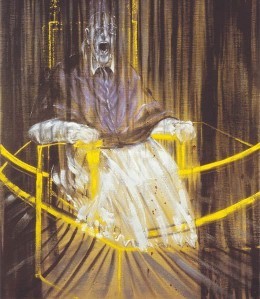
This working document is the basis for an article published in the Archives of Philosophy of Law (APD). Summary: Painting so well that the canvas is a living object is a technical feat that was achieved by little1Il est remarquable que pour Bacon, Van Gogh, que le premier considére comme un "héros",  a peint d'une "façon littérale" et que c'est grâce à celui qu'il a pu grâce à son "technicité" restitué "la vie" désertique du paysage. . Francis Bacon obtained from the canvas that it made it his business to preserve life in it, while Carbonnier, with a similar modesty before the canvas and the profession, obtained that the Law was only a framework, but that it did not however, leave this place to no one and especially not to public opinion, so that everyone can in their own way and within this framework make their own right, on which the legislator in his delicacy and to use the terms of the Dean n affixes only a "thin varnish". These two masters of art built frames with rudimentary principles so that on this canvas the movement could happen by itself. Thus the Legislator created by Carbonnier offered each family the freedom to weave their rights every day. However, the childhood of the art of stretching the canvas over the loom came back to the Legislator alone. It is then possible, as Bacon did, to obtain an immobile object which allows the mobile figures to constantly arise. Regulatory scribbles are a thousand miles from this Legislative Art. - In numerous writings and interviews, The painter Francis Bacon explains his act as a painter: it is "preserving the vitality of the canvas". In the book he devoted to it, Gilles Deleuze pointed out that Bacon said that "the procedures used do not force the Figure to stand still"2Deleuze, G., Francis Bacon, rééd. par Badiou, A. et Cassin, B., .   With the same pedagogical friendliness, in numerous writings and interviews, the jurist Carbonnier explains his act as a legislator, in particular in his collection of texts Essais sur les lois: legislate well, and let life unfold through texts, well after their adoption, because posed on pages which are never white, written compositions which are only the "varnish" of the life which must be able to throb in these Laws which one presents however so often but so strangely as "engraved in marble ". While on the contrary it is only a question of "preserving" the vitality of what is under the letter of the Law, the life of each one, life which does not resemble that of the neighbor, to obtain that the web of the legislative system is so flexible that this system lives by itself after the promulgation of the texts. But it may seem to force the line to find elements common to two characters who undoubtedly were unaware of their reciprocal existence or at least, although living at the same time, did not appear similar. Before showing how similar their action is, therefore, put them face to face beforehand. PREREQUISITES REQUIRED: FACING FRANCIS BACON AND JEAN CARBONNIER   Thus, the family painted in broad outlines by a few new articles of the Civil Code written by Carbonnier could nevertheless flourish afterwards, in each family, without the need to rewrite the text. One might be surprised that Carbonnier expressly only likes the Law and not the judiciary, this association of the Right to the Law often being worth rigidity; yet – and the formula made him famous – he conceived of the Law as only "flexible", without recognizing the judge as a general source of the Law, without recognizing him the power to soften over time the edge of the adapted law formerly, then once. In fact, the Flexible Droit volume brings together almost only texts relating to laws, while in his latest work, Droit et passion du Droit sous la Vième République, he challenges the influence of the courts over the Law. Carbonnier abides by the Law. These laws which we are constantly told us that their quality should be never to move …. And to evoke in order to convince us the imperative of legal certainty, predictability, etc., each new report on the subject saying the same thing as the previous one, this one serving as a reference for the next one. Thus, all these numerous works explain to us that, in the ideal towards which one should tend, the Law does not move in the main lines while the judge, by "jurisprudence" comes to adapt it and that thanks to "dialogue ", even to the" dialectic "between legislation and jurisprudence", cahin-caha we arrive at something suitable. In practice. And here is legal security well served, since it would be the only concern. A universal model to apply everywhere , at everything.   But this presentation, now very common and also constituting the vulgate of the economic analysis of law, does not correspond to the conception of Carbonnier, who did not admit the creative power of the Judge, being, like Motulsky, above all a jurist . Because if he asked as a question "Any law in itself is an evil?", It is only to answer it firmly: No, going so far as to compare in this article the announcement of a new law with the announcement made by the angel Gabriel. Perhaps it is his attachment to the Law, his refusal to consider the jurisprudence as the source of the law, his respect for the legal matter itself that make his work today less cited than the work of sociologists who do not know not more the legal technique than the economists who describe the "legal regulation" to adopt to be effective? It should also be noted that its legislative art is little used today3...., in Verdier, R. (dir.), Jean Carbonnier. L'homme et l'oeuvre. . When laws are written by experts who do not deem it useful to know the law (for example to reform collective procedures solely on the basis of economic knowledge), who even think it useful to not know it so as not to be captured by his technicality, there is no need to look on the side of Carbonnier.  It is true that to make a painting, to have the strength to fade in front of your canvas, you must master the technicality to return to the childhood of art, ambition of all artists, all teachers, all the Masters. Francis Bacon, also a wise reader of writers, rejecting the modern opposition between painted lines and written texts, repeated at each interview that he awaits "the accident" which comes alone to get the flesh out of the skin that traps him4Comment dès lors ne pas penser à la définition de l'écriture par Céline, la définition comme le fait de tanner sa peau sur la table de l'écrivain ? . This technicality of the accident, this unexpected preparedness that allows life to find its place in the stretched canvas. Carbonnier did not do anything else: stretch the canvas of the Law so that family life can, in each of the families we make up, unfold overflowing with the text which is only "varnished". But it is nevertheless a law, as Bacon never disputed making paintings.   The theme of Carbonnier Sociologie juridique's book is this necessary presence of law in a sociological analysis which would not betray the law presented while managing to keep its distance: that is to say, let it breathe, allowing us to watch live. This is why, like Truffaut, he took an interest in children's pocket money. By a game of mirrors, Carbonnier explained, for example about the reform he conceived of the Law of matrimonial regimes and whose genesis he explained in an article in L'Année sociologique5Terré, Fr., Jean Carbonnier et l'année sociologique, L'Année sociologique, 2007/2, vol.57, pp.555-569., that the sociology of law must allow distant readers that we are faced with the only written sheet of the work to see the living law come out of the pages. As historians aspire, History being living matter, as the author of literature understands it. Carbonnier wrote a novel about himself. A novel about a legislator therefore. "Self-fiction". We know judges of absolute modernity who have brought this art to its excellence, similarly concerned with writing life. Admittedly, one could underline that if Francis Bacon signed his tables, which attaches to him the work and holds the Figure which moves there, it was not the case for Carbonnier. You must already be a scholar to know that the author of the train of reforms of the XXth century which transformed the Civil Code has for patronym "Jean Carbonnier": the Legislator is an abstract character, who, like the State, always carries this same title , like the King, and passes indifferently from head to head, from the dead instant to the crowned instant. Whoever looks at the painting will attribute it to Francis Bacon because it is written on it, while on the contrary he will designate for example the law of July 15, 1975 as the law reforming the law of divorce, without referring to the human being who designed it. Yes, it is the Parliament, which, in the name of the People via the Representation, is the author of the Laws. And not such and such.   So the comparison would not be worth. But let's take a detour by Romain Gary. The action of this one showed what one could call "the right of the literature", ie what can go the power of this one. Its power is so great that the author can never appear in it6"le droit de la littérature est de n'y apparaître jamais comme auteur".. Romain Gary not only wrote under pseudonym, which allowed him to pass under the radar of the legal standard of Gongourt which cannot be given twice – and which was it, but wrote himself a book supposedly written by his ghostwriter after the hoax discovered – and therefore supposedly finished, speaking ill of Romain Gary, against which he protested but nevertheless undertook legally not to complain in court. While he himself wrote the book. The author can be a ghost, which multiplies, ghost of the ghost, is discovered only to hide under his face that is believed to be discovered, etc. But by dint of covering the smoke with smoke, the author himself disappears: and then remains the pure work, the Figure which moves alone, perfectly free. Thus under the mask of the Legislator, it was Carbonnier who designed and wrote, without ever signing, because it is the Law who speaks, and never Carbonnier. No greater tribute a law clerk can pay to the Law than disappearing under his letter. Thus, an author does not recognize his signature, it is only a clue, not a condition. There is no need to go to Law & Literrature, a current which dries up the Law rather to cover it with a conception of the Law as a fabric of strategic lies and retrospective narratives of justification of decisions. No, Carbonnier, far too erudite and far too good a jurist to go towards a thought above all critical of an object, made sociology to show us a living Law and at the same time had a sociological conception of Legislative Art , writing laws which capture in their austere lines the daily and various lives which will come after the writing of a law which writes only in capital letters, general, aiming nothing special so that the particular remains in the hands of each individual7Comme le souligne très bien Frédérique Niboyer, pour montrer que les lois actuelles qui visent tous le cas possibles (ce qui est impossible) empruntent une méthode contraire à celle de Carbonnier : ""Le doyen Carbonnier avait une autre conception : une loi générale devait pouvoir s’adapter à tous (d’où le pluralisme du droit de la famille) tout en ouvrant des champs à d’autres ordres normatifs, alors qu’aujourd’hui le « légicentrisme » devient roi : la seule norme à laquelle on fasse confiance serait ici la loi qui, partant, doit être spécialisée pour chaque catégorie.".. But how, if we get the judge out of the normative game, can the law be "flexible"? If not by drawing up laws which "preserve" in themselves, in their "canvas" even their vitality, which allows them to move, in an ink which must never be dry or reach marble?   Why not make the connection between the two creators, Francis Bacon and Jean Carbonnier? How even not to do it, the design and the method are so similar to them. When Bacon paints scenes of daily life as a field of ruin, while Carbonnier aims only "the interest of the child", on which one glosses so much, only as "a key which opens on a vacant lot"8Cité par Frédérique Niboyet, L'héritage de Carbonnier dans le droit matrimonial actuel : entre continuité et rupture, 2012, n°5. , how not to bring them together? For the two authors, painting for one and the law for the other, both must tear them away from their static support so that there is expressed and "preserves" life in its mobility itself. Even more, it is thanks to this support, which we thought motionless, that the fluidity of life appears to us. Thus life is, for them, the common object of painting and the law. This definition is carried by few people, because we find so often in the presentations which are made of the Law the imperative of a choice to operate, to put on the side of the immobile or on the side of the mobile, but not this conception of mobility expressed by an immobile support (I). It must be recognized that few have the level of technical mastery and thinking of Bacon and Carbonnier. But if we go back to Carbonnier's conception of the law, while at a distance, as would do, in his own words, in his own country a "foreign" legislator9Carbonnier, "A beau mentir qui vient de loin",  in relation to it, laws that 'he nevertheless made with a master's hand, was it not in terms of painter that he described it, evoking the "frame" that it constitutes and the "thin varnish" by which it must simply always cover life which always prevails, since it is the canvas? (II).       The two authors thus put life at the center, one of the tables, the other of the laws. Yet two motionless objects, some made of "canvas", others made of "marble". But both wanted – emphasizing the difficulty of the task – forcibly reinserted into the materially intrinsic immobility of the object – the canvas of the table that the flaking of the paint by the passage of time will damage , the letter of the Law that subsequent reforms will challenge – life. That is to say, finally give them their true object. And yet impossible to restore. And they got there. Undoubtedly by their own qualities: mastered technicality, modesty, perseverance, effacement before life itself which unfolds and occupies all the space and "does its work" on the support, which becomes mobile. Thus Francis Bacon's paintings move as the laws written by Carbonnier live, which is natural since it was directly inserted. What modesty was it worth to fade to this point. Achieve by technical prowess that life is still throbbing in the canvas, in the text published in the Official Journal. Only in what by nature is fixed: the canvas, the Law, not only does life still throb, as if by "inadvertence", as Francis Bacon says, because life has a hard life, but because the masters that they were so delicate and so masters of their Art that they made everything that it was the very object of their work: the canvas of the picture was for Francis Bacon what life was made of, the marble of the law was for Carbonnier that by law life was made.   So as when the Master of Sewing removes the thread, the canvas no longer exists, the diary has long been lost, but life is still there. This is no coincidence, as sociologists who seem to boast of knowing nothing about law seem to present, speak of a "legislative vacuum" and always ask for more "new laws", sometimes stressing that Carbonnier was also arbitrary in law that bad in sociology – because there is to say it. On the contrary, it is the Law bringing to its perfection: practical art, the Law relates to life and if in advance, in its very conception, it knows how to fade in front of life, it then joins in practice the art of painting because it takes a painter to force life on canvas (I). This requires a painter, because we often talk about legislative art but it is also appropriate to talk about artists who hold the pen. These do not "regulate", they draw a picture which, through the effect of correspondence, can let life continue to unfold because the ink is never dry. Of this table, it is the law which forms the framework, a light framework which allows to keep contours to what is the Right and what is not. Carbonnier always knew that in relation to life, Law was only a "thin varnish". Like all great masters, it was modest, drawing up great pictures, that were the complete reforms of the Civil Code that he wrote, never forgetting to conceive them only as a varnish so that life always finds its way out, breathe, in the same movement of a woman coming down the stairs or of a Pope who rules on his throne (II).

Working papers

🚧 THE IMPOSSIBLE UNICITY OF THE LEGAL CATEGORY OF WHISTLEBLOWERS

This working paper served as a basis for a conference done in French for the Centre de droit comparé (Center for Comparative Law) in Paris on 23 November 2018. Updated, it has served as a basis for an article published in French in a book of the Société de Législation comparé (Society of Comparative Legislation).   -   "The whistleblowers". This is a new expression. Which wins a full success. Barely heard once, we hear it everywhere … A theme not only of academic teaching, but rather a topic of daily conversation. Because it is every day that we speak about it, in terms more or less graceful. For example President Donald Trump on October 1, 2019 told the press he "wants to interrogate" the whistleblower who would have unlawfully denounced him and would not have, according to him, the right to conceal his own identity, evidence in this according Donald Trump of the false character of his assertions against him, while his lawyer indicates on October 6, 2019 that he does not speak on behalf of a single whistleblower thus taken apart but of a plurality people who gave information against the President of the United States. Even the most imaginative scriptwriters would not have written twists as abruptly or so fast. Spectators, we wait for the next episode, secretly hoping for climbs and slashs. Precisely if we go to the cinema, it is still a whistleblower whose dedication and success, or even drama, we are told, for the benefit of the global society, and especially of Democracy, since the secrets are fought for the benefit of the truth. Thus, the movie The Secret Man designates Mark Felt as the first whistleblower. Returning to what is often presented as a more "serious" media, for example in France the radio "France Culture" we can learn the story of a historian who worked as an archivist on events that the political power would have wanted to keep hidden by possibly destroying their traces but that his profession led to preserve1On the more general fact that cinema is undoubtedly the medium which most seriously restores the state of the Law, c. Frison-Roche, M.-A., Au coeur du Droit, du cinéma et de la famille : la vie, 2016.: here it is expressly presented to the studious listeners as a "whistleblower" … While the same radio is trying to find the one that could be, as in a kind of contest, the "first whistleblowers"2L'histoire du premier lanceur d'alerte, France Culture, septembre 2019. ?. This rewriting of History can be made because finally Voltaire for Calas, or Zola for Dreyfus did they anything else?  It is also a topic of legislative debate since in the United States the Dodd-Frank Act of 2010 inserted in the 1934 law that established the Securities & Exchanges Commission (SEC) a complete system for retribution and remuneration of whistleblowers, while after elaborating guidelines about about in 20123European Commission, Guidelines on Whistleblowing, 6 of December 2012, SEC(2012) 679 final, updated on 23 of April 2018. , the European Commission has published the text on November 20, 2018 in order to give the character a unified European status, in the device gradually developed to protect the one that was presented in 2018 as who  like that : ""The new whistleblowers' protection rules will be a game changer. In the globalised world where the temptation to maximise profit sometimes at the expense of the law is real we need to support people who are ready to take the risk to uncover serious violations of EU law. We owe it to the honest people of Europe.". Step for the Directive of October 7, 2019.  In Europe, the Directive first approved by a Resolution of the European Parliament on 16 April 2019 on protection of persons reporting breaches of Union law and then adopted on 7 October 2019 (Directive 2019/78 (EU) of the European Parliament European Union and the Council of the European Union on the Protection of Persons Reporting Breaches of Union law, will have to be transposed in the next two years to the legal systems of the Member States. is not general, since only "violations of European Union Law" are targeted but the character of the "whistleblower" is more generally referred to: it is "whole"4However, precisely the so common use of plurality ("whistleblowers") raises doubts about the uniqueness of the character. On this question, see. all the first part of the developments of this study, which leads to the conclusion rather than beyond the multitude of particular cases, there are rather two kinds of whistleblowers. V. infra I.. In short, the whistleblower is a star 5The director of the film La fille de Brest says that she considers the whistleblower at the origin of the case of the Pick as a "movie character".. A kind of historical character, covered with blows and glory, going from Voltaire to Snowden, one as the other being incarnated on the screens6Thus, the adventures of Snowden were brought to the screen by Oliver Stone in 2016, Snowden. On the question of knowing whether this film "faithfully reproduces" or not the case, Schetizer, P., Le film Snowden est-il à la hauteur de la réalité?, 2017. This article is favorable to the whistleblower, and to the film which tells us with emotion his case, in particular because (sic), it is easier than to read the Washington Post. …. Recognized by national legislations, which associate to him a legal regime of protection to such a point that, like a tunic of Nessus, it is this legal regime which will define his character and not the opposite. When we read the French law of December 9, 2016 relative à la transparence à la lutte contre la corruption et à la modernisation de la vie économique (on transparency in the fight against corruption and the modernization of economic life), usually known as "Sapin 2 Act", we note that the lawmaker makes much of this character, because he devotes to him the chapter II: "De la protection des7Underlined by us. lanceurs d'alerte" ("The protection of7Underlined by us. whistle-blowers") and that it is by his very protection that the French Parliament formally opens the door of Law to him and throws it openly. But why a plural? Certainly when we read the recitals of the European Directive of 7 October 2019 on the protection of whistleblowers8About this directive, v. the developments infra, this is only an enumeration of all the subjects about which it is a good idea to to protect them, which encourages us to see in this plural only the index of this non-exhaustive list of topics about which it is good that we are alerted, sign of the lack of definition … Reading the French law known as "Sapin 2" makes us less severe but more perplex. Indeed, from this plurality covered by the title of the chapter devoted to Les lanceurs d'alerte ("The whistleblowers"), there is no longer any question in the rest of the law, in the very definition that follows, Article 6 which opens this chapter devoted the "whistleblowers" offering the player immediately a singular since it begins as follows:  "Un9Underlined by us. lanceur d'alerte est une personne …" (A! footnote-1684 whistleblower is a person …"). No more mention of diversity. The art of legislative writing would have even required that the qualifying article should not be singular but not yet indefinite.  Thus seem to contradict in this law "Sapin 2" itself the very title which presents the character, in that it uses a definite plural ("the whistleblowers") while the article of definition which presents the topic does it by using the singular indefinite : "a whistleblower….". This is a first reason to move forward only in a very cautious way, in this "step by step" that constitutes a word-by-word reading: a gloss. This method consists in taking literally the expression itself. The second reason for this technical choice is that the gloss is well suited to an introduction of a collective work, allowing more specific developments to take place in other contributions, for example on the techniques, the difficulties and the limits of this protection, or the history of it, or the reasons for the arrival in French law of these American or Brithish whistleblowers and the way they develop, or not, in other legal systems or other countries. I will therefore content myself with taking again literally this already legal expression: The (I) launchers (II) of alert (III). See below developments.  

Glossary

Goal

The goal for which a mechanism, a solution an institution or a rule is adopted, instituted or elaborated, is in principle external to them. Knowledge of this goal is a tool to better understand them and is only that. On the contrary, in Regulation Law, the goal is the heart itself. By definition, Regulation Law is a set of instruments that articulate to take their meaning in relation to a goal. Moreover, these instruments are legitimate to represent a constraint only because they realize a goal which is itself legitimate. The interpretation of Regulation Law is based on the aims pursued: the reasoning is teleological. This teleological nature explains that efficiency is no longer merely a concern – as for ordinary legal mechanisms, but rather a principle of Regulation Law. It explains the welcome, especially through the European Union Law of the theory of the useful effect. This link between rules, which are only means, and aims, refers to the principle of proportionality, which requires that constraints and exceptions be applied only when they are necessary, proportionality being the form off the classic principle of necessity. Because the aim is the center, it must be expressed by the author of the Regulation standards, and this is all the more so if they are of a political nature, being not limited to mitigating technical failures of markets. This goal can be varied: the management of systemic risks, but also the consideration of the fundamental rights of people, the preservation of the environment, public health, civilization, education, etc. The silence of the legislature, which limits itself to the making of rules whereas these are merely instruments, without explicating the goal whereas the latter is a political decision, is a fault in the legislative art. Moreover, in order that the person who applies the Regulation norm, in particular the Regulator and the Judge, has no excessive margin for interpretation and does not substitute for political power, the author of the Regulation norm needs to aim specifically for one goal : in this way, the one who applies the norm will be constrained. Or, if the author targets several purposes, then he must articulate them in relation to each other, by hierarchizing them for example. If he fails to do so, the institution which applies the regulatory standards will itself have to choose the purpose and exercise a power which he does not possess. This express designation of purpose has been made for the European Banking Union,  this Regulation and Supervision construction, whose primary aim is to prevent systemic risks and resolve crises. Similarly, the purpose of the Regulation of essentiel infrastructures is to provide third parties access to the network. Similarly, in the case of a transitional regulation introduced following liberalization, the aim is to establish competition, the principle of which has been declared by the liberalization law. When this is not clearly stated, there is a lapse in the legislative art.