Legal system

Articles in The Journal of Regulation & Compliance « JoRC »

GAUVAIN, Raphaël🕴️ & BALIAN, Blanche🕴️

📝Opposition et convergence des systèmes juridiques américains et européens dans les règles et cultures de compliance (Opposition and Convergence of American and European Legal Systems in Compliance Rules and Cultures), in 🕴️M.-A. Frison-Roche (dir.), 📕L’Obligation de Compliance

► Full Reference: R. Gauvain & B. Balian, "Opposition et convergence des systèmes juridiques américains et européens dans les règles et cultures de compliance" ("Opposition and Convergence of American and European Legal Systems in Compliance Rules and Cultures"), in M.-A. Frison-Roche (ed.), L'Obligation de Compliance, Journal of Regulation & Compliance (JoRC) and Editions Lefebvre – Dalloz, "Régulations & Compliance" Serie, 2025, pp. 401-417. - 📕read the general presentation of the book, L'Obligation de Compliance, in which this article is published - ► English Summary of this contribution (done by the Journal of Regulation & Compliance – JoRC) : The authors approach Compliance Law through its tools, mainly compliance programmes through which companies comply with regulations and investigations conducted by companies at the request of public authorities to identify risks and new modes of defence consisting of entering into agreements with prosecuting authorities.  The article highlights the American inspiration behind this movement, whereby the State, primarily for the sake of efficiency, transfers the responsibility for pursuing "Monumental Goals" to businesses. Based on this, the article first shows how American mechanisms have been imported into Europe, particularly France, with the Convention judiciaire d'intérêt public, taking on many of the characteristics of the DPA, even if some specific features remain, for example in the alert mechanisms.   Secondly, the convergence between the two systems is shown, because through the compliance obligations that form the core of these compliance tools, it is always Western values that are expressed, values that are common to American Law and European Law and European countries. It has enabled this importation, and we can now see that these values are more strongly upheld by Europe, particularly through the Vigilance duty and the DSA.  - 🦉This article is available in full text  (in French) to those registered for Professor Marie-Anne Frison-Roche's courses -

Articles in a legal collective publication

Article in a collective book dedicated to an Amicorum

📝Naissance d’une branche du Droit : le Droit de la Compliance (Births of a branch of Law: Compliance Law), in 📗Mélanges en l’honneur de Louis Vogel

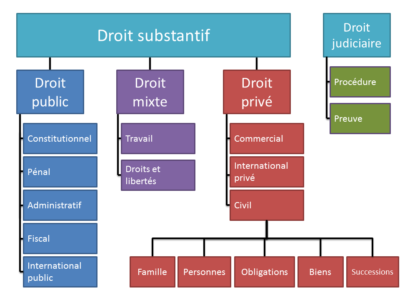
► Full Reference: M.-A. Frison-Roche, "Naissance d'une branche du Droit : le Droit de la Compliance" ("Birth of a branch of Law: Compliance Law"), in Mélanges offerts à Louis Vogel. La vie du droit, LexisNexis – Dalloz – LawLex – LGDJ, 2024, pp. 177-188. - 📝read the article (in French) - 🚧read the bilingual Working Paper which is the basis of this article, with additional developments, technical references and hyperlinks - ► English Summary of the article:  The study focuses on the various movements that have given rise to Compliance Law, with particular emphasis on Competition Law. After a preliminary reflection on the construction of the legal system into branches of Law, their classification in relation to each other, the difficulty encountered in this respect by Economic Law, and the various movements that give rise to one of them, the diversity of which the branch subsequently keeps track of, the study is constructed in 4 parts. To find out what gave rise to Compliance Law, the first part invites everyone to reject the narrow perspective of a definition that is content to define it by the fact of "complying" with the applicable regulations in the sens to obey them automatically. This has the effect of increasing the effectiveness of the regulations, but it does not produce a branch of Law, being only an efficiency tool like any other. The second part of the study aims to shed light on what appears to be an "enigma", because it is often claimed that this is the result of a flexible method through the "soft law", or of an American regulation (for instance FCPA), or of as many regulations as there are occasions to make. Instead, it appears that in the United States, in the aftermath of the 1929 crisis, it was a question of establishing an authority and rules to prevent another atrocious collapse of the system, while in Europe, in 1978, in memory of the use of files about Jews, it was a question of establishing an authority and rules to prevent an atrocious attack on human rights. A common element that aims for the future ("never again"), but not the same object of preventive rejection. This difference between the two births explains the uniqueness and diversity of the two Compliance Law, the tensions that can exist between the two, and the impossibility of obtaining a global Compliance Law. The third part analyses the way in which Competition Law has given rise to conformity mechanisms: they had only constituted a secondary branch which is a guarantee of conformity with competition regulations. Developed in particular through the soft law issued by the competition authorities, the result is a kind of "soft obedience", a well-understood collaboration of a procedural type through which the company educates, monitors and even sanctions, without going outside Competition Law, of which compliance  (in the sens of conformity) is the appendix. The distance between a conformity culture and Compliance Law can be measured here. The fourth part aims to show that Competition Law and Compliance Law are two autonomous and articulated branches of Law. Since Compliance Law is a autonomous and strong branch of Law built around Monumental Goals, in particular the sustainability of systems and the preservation of the human beings involved so that they are not crushed by these systems  but benefit from them : the current challenge of European integration is to build the pillar of Compliance Law alongside the competitive pillar. Jurisdictions are in the process of doing this and articulating them. - 🌐follow Marie-Anne Frison-Roche on LinkedIn 🌐follow Marie-Anne Frison-Roche on Instagram 🌐subscribe to the Newsletter MAFR Regulation, Compliance, Law

Conferences

🎤participation à la table ronde “Le droit à l’enfant : réalité ou faux concept ?”, in 🧮Regards croisés sur les nouvelles filiations

► Full Reference: M.-A. Frison-Roche, participation to the round table "Le droit à l'enfant : réalité ou faux concept ?" ("The right to a child: reality or false concept?"), in Regards croisés sur les nouvelles filiations, Cour d'appel de Paris (Paris Court of Appeal), September 12, 2024 - 🧮see the full programme of this event - ► Summary of the conference:  -   🌐follow Marie-Anne Frison-Roche on LinkedIn 🌐follow Marie-Anne Frison-Roche on Instagram 🌐subscribe to the Newsletter MAFR Regulation, Compliance, Law

Working papers

Working Paper

🚧Vigilance, a piece of the European puzzle

► Full reference: M.-A. Frison-Roche, Vigilance, a piece of the European puzzle, Working Paper, March 2023. - 🎤This Working Paper has been done as was made the  conclusion of the colloquiul La société vigilante ("Vigilant Company") at the Aix-Marseille University on March 24, 2023 (conference given in French)  - 📝It is also the basis of the article that introduces a special issue on La société vigilante - ► Summary of this Working Paper: The contributions form a contrasted whole. It should not be concluded that some of them are correct and others false: through the reading that each one makes of the so-called French 2017 "Vigilance law," it is a vision of the world as it should be that each author proposes. Because Compliance Law, which Vigilance is a part, claims to draw the future, it is normal that each author should draw the present Law with a hand that bends in one direction or the other, following their conception of the future world. The whole contributions must be seen as a dialogue. A lively dialogue, with this French 2017 law receiving a lot of "glory" and a lot of "indignity" on both sides, from which it is necessary to emerge in order to find solutions, because it is a fundamental movement of which this law is only a gateway (I).  Whatever one thinks of it, it is all the branches of law that are used, affected, and transformed by Vigilance (II). To master this profound transformation, we must turn to Europe, to the great puzzle of texts recently adopted or in the process of being adopted in the European Union, of which Vigilance is the hallmark (III). - 🔓read the Working Paper⤵️ - 🌐 follow Marie-Anne Frison-Roche on LinkedIn 🌐follow Marie-Anne Frison-Roche on Instagram 🌐subscribe to the Newsletter MAFR Regulation, Compliance, Law  🌐subscribe to the Video Newsletter MAFR Surplomb

Articles in The Journal of Regulation & Compliance « JoRC »

WENNERSTRÖM, Erik🕴️

📝Some Reflections on Compliance and the European Court of Human Rights, in 🕴️M.-A. Frison-Roche (ed.), 📘Compliance Jurisdictionalisation

► Full Reference: E. Wennerström, "Some Reflections on Compliance and the European Court of Human Rights", in M.-A. Frison-Roche (ed.), Compliance Jurisdictionalisation, Journal of Regulation & Compliance (JoRC) and Bruylant, coll. "Compliance & Regulation", to be published.  - 📘read a general presentation of the book, Compliance Jurisdictionalisation, in which this article is published   - ► Summary of the article (done by the Journal of Regulation & Compliance): The development of the European Court of Human Rights case law, contributing to European integration, has incorporated the substantial concept of ​​"compliance" which goes beyond the idea of ​​legality with respect to which companies remain passive, and promotes legal orders as systems in interaction with one another. The author develops the spirit and scope of Protocol 15 by which both the principle of subsidiarity and the margins of appreciation the signatory States are organized, mechanisms governed by the principle of proportionality. Subsidiarity means that the States are in the best position to design the most adequate application of the Convention, the close links between the States allowing its effective application. In addition, the new opinion procedure which allows a national court to have during a case the non-binding opinion of the ECHR ensures better compliance with the objectives of the Convention. The case-law of the Court takes up this substantial requirement through its doctrine, in particular identified in the Bosphorus case, by stressing that the accession of a State to the European Union presumes its compliance when implementing EU law with the obligations arising from the ECHR, even if this presumption can be refuted if the protection is manifestly lacking, which was admitted in several cases, in particular concerning the right to an impartial tribunal in matters of economic regulation. The different legal orders are thus articulated.  The author concludes that the European Court of Human Rights, like the Court of Justice of the Union, contributes to the construction of Compliance Law in Europe, from an Ex Ante perspective favoring opinions rather than Ex Post sanctions and creating, in particular through the Bosphorus doctrine, elements of security and confidence for European integration around common values. -   🦉This article is available in full text to those registered for Professor Marie-Anne Frison-Roche's courses -

Articles

La compliance, un progrès

Working papers

Is the French legal system an asset or a handicap for the competitiveness of our companies and our territory?

This working document served as a basis for a lecture given in French at the Académie des Sciences morales et politiques  (French Academy of Moral and Political Sciences) on September 25, 2017, in the cycle of conferences conducted under the presidency of Michel Pébereau,  Quelles réformes ? (What reforms?) Consult the presentation (in French) of the conference cycle (2017). It served as the basis for the publication of an article published  in French in 2018 in the book directed by Michel Pébereau Réformes et transformations (Reforms and transformations).

MAFR Chronicles Compliance Law

monograph

📝Le Droit de la compliance (“Compliance Law”)

► Full reference: M.-A. Frison-Roche, "Le Droit de la compliance" ("Compliance Law"), D.2016, Chron., pp. 1871-1874. - ► English Summary of the article: Constraints weighing on companies in terms of Compliance multiply and get heavier. But the notion is contradictory, uncertain, "strange", the expression of "conformity" being only a transposition in French.  Compliance appears today as the world internalisation of a public regulation, often conceived in the United-States, in firms, transformed in effectivity agents of global monumental goals: competition equity, fight against terrorism or States deemed unworthy (embargos).  Rather than borrowing scattered solutions, it is essential to build a "Compliance Law", properly European, to which everyone will be accountable.This new branch of Law is built teleologically on its Monumental Goals. It is driven by crucial businesses. The Judge is at its centre.   - 📝read the article (in French) -   🚧Read the bilingual Working Paper on the basis of which the article was written.     

Books

The legal order

Full reference : Romano, S, The Legal Order, 1st ed. 1917-1918, 2nd ed. 1948, GlassHouse Book, 180 p.