Articles in a JoRC book

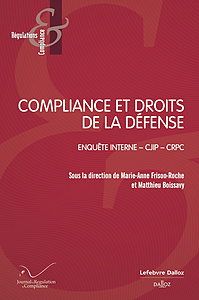
► Full reference : C. Lanta de Bérard & P. Dufourq, « Défendre les intérêts de la personne physique confrontée à la justice négociée : préserver l’effectivité des droits de la défense et le respect de la présomption d’innocence » (Defending the Interests of the Natural Person Facing Negotiated Justice: Preserving the Effectiveness of the Rights of the Defence and Respect for the Presumption of Innocence), in M.-A. Frison-Roche and M. Boissavy (eds.), Compliance et droits de la défense. Enquête interne – CJIP – CRPC, Journal of Regulation & Compliance (JoRC) and Dalloz, coll. “Régulations & Compliance“, 2024, pp. 329-337. - ► English Summary of this article (made by the Journal of Regulation & Compliance – JoRC) : For the authors of the contribution, natural persons, in particular the corporate officers of legal persons, are the “poor relations” of negotiated justice, even though it presents many risks for them. This would be due first to the fact that the CRPC is inadequate for them, in particular because it is not the equivalent of the CJIP and involves an admission of liability, whereas the CJIP precisely excludes it, while the CJIP, like the internal investigation that often precedes it, targets natural persons, facts directly attributable to corporate officers who have no room for manoeuvre left when the time of their own trial comes. The so-called Bolloré case clearly showed this. The internal investigation is thus at once an object of cooperation and a basis for the prosecution of the natural person, and the company may negotiate against its employees, natural persons, without them even knowing, the presumption of innocence hardly operating in what is nevertheless a delegated criminal investigation. Solutions are listed by the authors to remedy this unfavourable situation: a legislative reform so that the negotiated settlement covers globally both the legal person and the natural persons involved; a firmer framework for internal investigations, for better respect of the principles of criminal procedure for the benefit of the persons interviewed and involved; more effective respect for the presumption of innocence when entering into negotiations for a CJIP; and, borrowing from British Law, a prohibition on using before a judge any information resulting from a CJIP.