ex ante

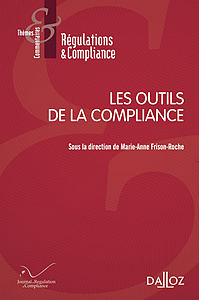
Couverture – Les outils de la Compliance

Articles in a JoRC book

AMICO, Thomas🕴️

📝La Compliance ou le passage de l’ex post à l’ex ante. Une révolution copernicienne pour l’avocat pénaliste ?, in 🕴️M.-A. Frison-Roche (ed.), 📕Les outils de la Compliance

► Full Reference : Th. Amico, "La Compliance ou le passage de l'ex post à l'ex ante. Une révolution copernicienne pour l'avocat pénaliste ?" ("Compliance or the passage from ex post to ex ante: a Compernican revolution for the criminal lawyer?"), in M.-A. Frison-Roche (ed.), Les outils de la Compliance, coll. "Régulations & Compliance", Journal of Regulation & Compliance (JoRC) and Dalloz, 2021, p. 145-154. - 📕read a general presentation of the book, Les outils de la Compliance, in which this article is published - ► Summary of the article (done by the Journal of Regulation & Compliance): After referring to various definitions of Compliance Law, the author insists on the usefulness of the criminal lawyer in that he, familiar with the Ex-Post that constitutes the sanction, can be of good advice. in the Ex-Ante in which new compliance mechanisms are being developed, such as risk mapping or third-party assessment. Addressing the punitive dimension of Compliance Law, the author shows that the criminal lawyer therefore naturally has a place there, whether it concerns the powers exercised by an administrative authority or the criminal law itself. In that he can "anticipate criminal proceedings", the criminal lawyer is therefore best able to ensure that the company does not expose itself to them, in particular in a good mastery of internal investigations, thus ruling out the criminal risk. -

Videos

🎤 Devoir de vigilance pour les entreprises: vers un droit de la responsabilité ex ante? (Duty of vigilance for companies: towards an ex ante liability law?)

Full reference : Frison-Roche, M.-A., Devoir de vigilance des entreprises : vers un Droit de la responsabilité ex ante ? (Duty of vigilance for companies: towards an ex ante liability law?), conference-debate, The Faculty of Law, University of Oslo, Norway, 9th of February 2021.  The conference-debate is moderated by Catherine Banet, Associate Professor, Scandinavian Insitute of Maritime Law, Department of Energy and Resources Law, University of Oslo

Articles

Against money laundering, what time matters? Does it work, between ExAnte and ExPost? (BIL case)

Full reference: Frison-Roche, M.-A., Against money laundering, what time matters? Does it work, between ExAnte and ExPost? (BIL case), Newsletter MAFR – Law, Compliance, Regulation, 11th of August 2020 Read, by freely subscribing, the other news in the Newsletter MAFR – Law, Compliance, Regulation   Summary of the news The activity of money laundering is detrimental not only in itself but also because it permits the development and the sustainability of other criminal activities such as drug trafficking, weapon trafficking or human beings selling. Fighting against money laundering could permit to indirectly fight against these underlying activities, by the way very difficult to fight. Thus, the fight against money laundering has become a "monumental goal", which justifies the adoption of tools sometimes much more powerful than those used by classical criminal Law. For the sake of efficiency, the legal obligation to prevent money laundering is given to every body able to do it, as banks, real estate agents or gaming society, under the penalty of sanction.  On 10th of August 2020, the Luxembourgish financial market supervisor convicts the International Bank of Luxembourg to pay a fine of 4,5 millions of euros because of weaknesses detected in its process of fight against money laundering. However, when the sanction has been pronounced, the bank had already remedied the weaknesses identified. It is important to observe that what is important for Compliance Law, it is not that a non compliant behavior is punished but rather that the crucial firm modifies its behavior in order to being more efficient in the realization of the "monumental goal", only concern of the public authority. Thus, an Ex Post sanction against the crucial operator is not an end in itself and can be justified only if it permits to incite the crucial operator to act or rather to desincite to do anything. Compliance Law is an Ex Ante legal system.    To go further, read:  Frison-Roche, M.-A., Le couple Ex Ante – Ex Post, justificatif d'un droit spécifique et propre de la Régulation, 2006 (in French)

Working papers

Compliance Law, Health crisis and Future

This interview was conducted in French with Olivia Dufour, for an article published in French in the digital publication Actualité Juridique. Its subject is  the confrontation between the current health crisis situation and the Compliance Law.    Summary. After defining Compliance Law, distinguishing the procedural and poor definition and the substantial and rich definition, the starting point is to admit the aporia: the type of health crisis caused by Covid-19 will be renewed and it is imperative to prevent it, even to manage it, then to organize the crisis exit. Public Authorities are legitimate to do so, but because this type of crisis being global and the State being consubstantially linked to borders, States are hardly powerful. Their traditional International Law shows their  limits in this current crisis and one cannot hope that this configulration will improve radically. In contrast, some companies and markets, notably the financial markets, are global. But the markets are not legitimate to carry out such missions and counting on the generosity of certain large companies is far too fragile in front of the "monumental goal" that is the prevention of the next health crisis, crisis which must never happen. How to get out of this aporia? By Compliance Law, basis of, in a literal and strong sense, the "Law of the Future".  We need to be inspired by the Banking and Financial Compliance Law. Designed in the United States after the 1929 crisis to tend towards the "monumental goal" of the absence of a new devastating crisis in the country and the world,  this set of new legal mechanisms gave duty and power of supervision, regulation and compliance to market authorities and central bankers. These are independent of governments but in constant contact with them. Today, they claim to have as first priority the fight against climate change. Now and for the future, they must also be given the responsibility and the powers to prevent a global health disaster, similar to a global ecological disaster, similar to a global financial disaster. This does not require a modification of the texts because their mandate consists in fighting instability. Stability must become a primary legal principle, of which the fight against monetary instability was only a first example. By the new use that central banks must make of it by preventing and managing health crises, Compliance Law will ensure that the future will be not catastrophic.

Working papers

The attorney, vector of conviction in the new Compliance system

This Working Paper written in English is the basis for an article published in French in the French journal Dalloz Avocat , in March 2020.       Summary of the working Paper. If we perceive Compliance Law as an aggression of the private company and a binding set of mechanisms that have no meaning and added value for it, then the attorney has a utility: defending the business. It can do so not only during the sanctions phase, but also to prevent it. But this function is not central. It becomes so if we understand Compliance Law as a body of substantial rules, pursuing a "monumental goal": the protection of the person, goal injected by political bodies and taken up by the operator. From this, the company must convince everyone to take it back, inside the company and outside. In a general and contradictory debate, the attorney carries this conviction, because he and she is always convincing those who at the end judge (market, public opinion, etc.) that is their raison d'être.   (In this short document, the pop-ups refer to the different works that develop each of the points)

Glossary

Market Failure

The market is normally self-regulated. It suffers from one-time failures when economic agents engage in anti-competitive behavior, mainly the abuse of dominant positions in the ordinary markets, or the abuse of markets in the financial markets, sanctioned ex post by the authorities in individual decisions. But some sectors suffer from structural failures, which prevent them, even without malicious intent of agents, from reaching this mechanism of adjustment of supply and demand. The existence of an economically natural monopoly, for example a transport network, constitutes a structural failure. Another agent will not duplicate once the first network has been built, which prevents competition. An a-competitive regulation, either by nationalization, by a state control or by a control by a regulatory authority, is needed to ensure everyone's access to an essential facility. Also constitutes a market failure asymmetry of information, theorized through the notion of agency that hinders the availability and circulation of exhaustive and reliable information on markets, especially financial markets. This market failure carries with it a systemic risk, against which regulation is definitely built and entrusted to financial regulators and central banks. In these cases, the implementation of regulations is a reaction of the State not so much by political rejection of the Market, but because the competitive economy is unfit to function. This has nothing to do with the hypothesis that the State is distancing itself from the Market, not because it is structurally flawed in relation to its own model, but because politics wants to impose higher values, expressed By the public service, whose market does not always satisfy the missions.    

Glossary

Liberal profession

The liberal professions such as lawyers, doctors or accountants are organized into professional bodies and consider that they can not be reduced to mere companies operating in markets because the service they offer includes a human and moral dimension, translated by ethics, under the supervision of their internal professional organization, particularly through ex ante their power to adopt their own standards of behavior, and in ex post, the disciplinary power of their professional order. Competition law refutes this organization from the Old Regime and simply considers the "markets of legal or medical services, firms having to compete with each other and not having to organize the sector, by  or fixing Numerus clausus, etc. In the perspective of regulation, the liberal professions are, on the contrary, the ones most pertinento organize self-regulation in a globalized economy from the moment they give rise to a credible surveillance system and thus deserve the confidence of customers and public regulators.